
Your Story Matters, Here’s Mine

LEAN ON ME, WHEN YOU’RE NOT STRONG

From the time I became very aware of what my parents did for a living, I firmly decided that I did not want to follow in their educational footsteps. They worked too hard for too little compensation for all the time and effort they spent on their work, students, and school. They were outstanding educators (my dad retired as an elementary principal, and my mom retired as a psychological examiner for an educational cooperative). In college, as I considered my major area of study and degree options, Dad pointed out that careers define where we live. At the time, I wanted to write for a magazine, so I was considering a Bachelor of Arts in English. However, Dad suggested that if I completed a Bachelor of Science in Education with an English major, then magazine companies would still view it as an English degree, but I would have the flexibility to become a teacher as well, allowing me to live anywhere.

AND I’LL BE YOUR FRIEND

I took over my first classroom a few years later in October, becoming the third Spanish teacher that year for McDonald County High School after working for Missouri State University for 3 years. I nearly hyperventilated the night before my first day as I pondered all of the responsibility I had just agreed to shoulder, but the next morning, as I stood in front of my first class of thirty high school students, I realized that I was finally home. Education was where I belonged.

I’LL HELP YOU CARRY ON

Thoughts of my greatest accomplishments in education over the years always have me looking outward, not inward for impact. Have I made a difference in anyone’s life? Many have made a difference in mine. Am I transmitting inspiration and motivation? Many have inspired and motivated me. Have I equipped students to be able to walk through any door they want in life to fulfill their dreams? Am I walking through my own doors? These questions are why I am never satisfied with my own knowledge and skill. I must know better so that I can do better. Toward that end, I relentlessly pursue professional development, typically completing 150 or more hours each year (and I’m blessed to have a passion be what I do for a living, though I also get time away from PD, so don’t judge your own learning based on mine. Nothing normal here.) As I learn, I share what I know with other educators everywhere. Since the summer of 2016 (I had Twitter before that, but I had no idea what to do with it), I have become a connected educator on social media and have discovered my voice, my audience, and shifted my focus to being a conduit of empowerment for all learners, adults and students alike.

FOR IT WON’T BE LONG

I tell my students that while in my classroom, they will learn to be comfortable with being uncomfortable. Together we will push ourselves to take risks and go beyond the boundaries of what we think we can do (Thanks, Dave & George!). In my classes and professional development sessions, we leverage technology to flatten the walls of our classroom so that the world awaits. I have connected my students with experts and companies (Thanks, Buncee!) from all over the world during global DigCit Summit 2019 (Thanks, Marialice!). We connect with students from as close as Jackson, Missouri (Thanks Lance!) and as far away as Argentina (Thanks, Rachelle!) to learn other cultures, spread kindness (Thanks, Heather!), practice digital citizenship, and to develop authentic audiences for our work (Thanks, JessicaJamie, and Heather!). My passion for technology helps me guide students in a world where they no longer have to wait “grow up” to make an impact (thanks for reminding me, Kevin!).

‘TIL I’M GONNA NEED

Besides leveraging technology to empower students, I also cultivate their voice. Communication is another big skill that employers look for when hiring. Google, at the time this post was written, ranks it second in their top 7 desired employee skills, so I want my students to be able to articulate ideas then see them come to fruition. Students guide my teaching by giving me after action reports when I try a new activity or lesson. They give me as much feedback as I give them. Students have input on what activities we do, how we do them, and in choice of tool for completing the activities. Their voice matters (Thanks for reminding me, Rick & RebeccaLet Them Speak: How Student Voice Can Transform Your School).

SOMEBODY TO LEAN ON

But I don’t stop there. While I flatten the classroom walls for my students, I also do that for myself. An educator in North Carolina, my friend Holly King, pointed out that one of my talents is in connecting the dots, whether that be in combining learning sciences with supported research based teaching strategies, social emotional skills with academics, using tools in new and unique ways to help students learn, or just in the realm of ideas and theories, I make connections. By doing so, I connect people. Whether it is high school students or adults, I connect people, which connects ideas, and that elevates us all and empowers us with a platform, with a sounding board, with a brainstorming opportunity to be better, to elevate the field for us all. (Speechless, Holly.) This is what a lot of us in education do, whether we realize it or not. It’s why left our own islands and continue to grow our professional learning network. Teaching is a life changing business (Right, Dave?), and not just for students. It changes us all.

HEADING TITLES ARE PARTIAL LYRICS FROM BILL WITHERS’ SONG, LEAN ON ME, © UNIVERSAL MUSIC PUBLISHING GROUP

******************************************

**Interested in writing a guest blog for my site? Would love to share your ideas! Submit your post here.
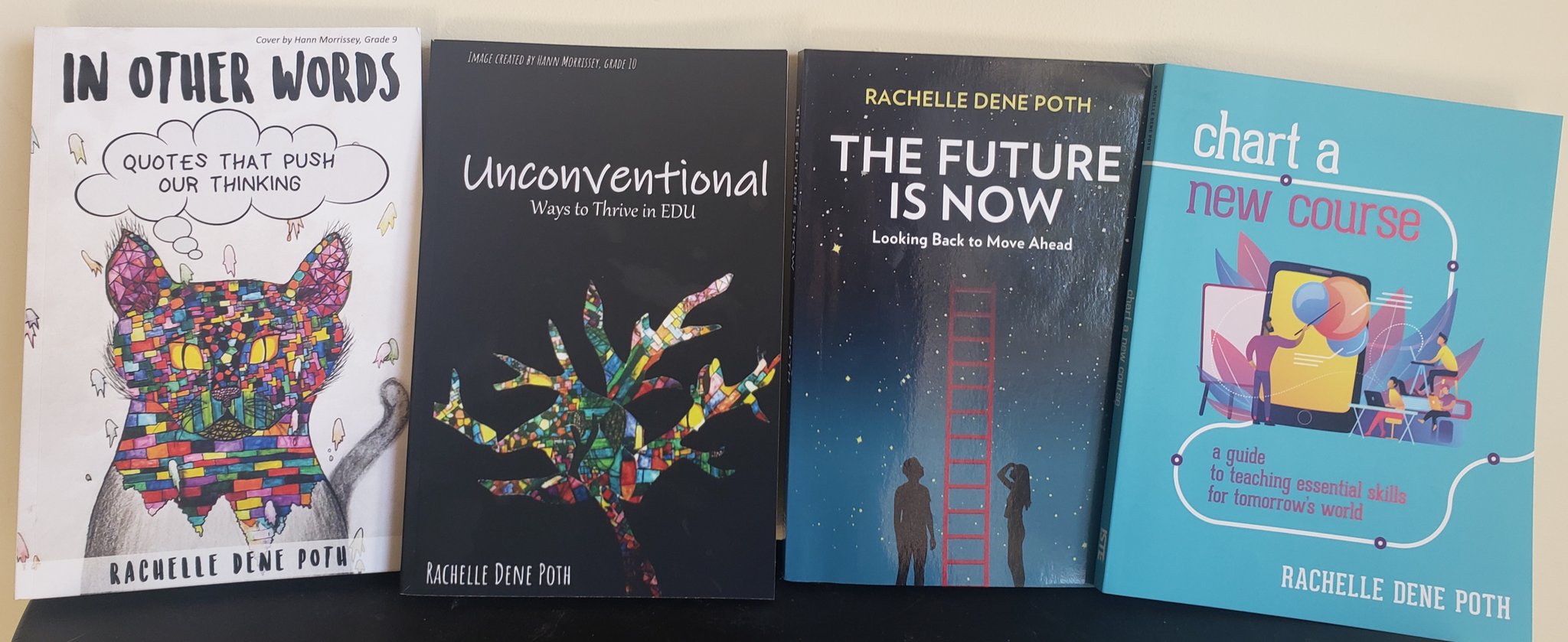
 

Looking for a new book to read? Many stories from educators, two student chapters, and a student-designed cover for In Other Words.

Find these available at bit.ly/Pothbooks  

Preparing for the Future: Career and College Ready

Previously posted on Getting Smart

Over the past couple of months we have had to make many adjustments to our personal and professional lives. During this unprecedented time, educators and families have been trying to find balance in their days, to work together to keep learning going, and perhaps more importantly, to provide the academic, emotional, and mental support that our students need.

For many educators, finding the right resources that can be used to teach and mentor remotely, and which will also engage students in learning activities, can be difficult. The challenge is not so much in finding tools, but rather in knowing whether our students can access them, determining which will benefit them the most, and making sure that we can provide the support that students and families need. At this time of the year in particular, guidance counselors and educators who work with mentoring programs are quite busy as they help seniors prepare to graduate from high school or other students as they transition to a new grade level or school. In many school districts across the United States, students are required to complete a job shadow, explore careers, and develop a digital portfolio that will become part of their application for college or work. Integral to these requirements are school guidance counselors.

After speaking with a guidance counselor from my school and following conversations in different learning communities and on social media, I’ve noticed that guidance counselors are seeking resources that can help them to provide this same support for students during remote learning. Even when we are in school with access to guidance counselors and resources, it can be difficult for students as they prepare to transition to their next grade or the next phase of their educational or work journey after graduation. Trying to plan their next steps, whether entering the workforce or pursuing a college education, has not been easy during this time. Students have questions about jobs, college applications, and skills needed for the future and without being in the same space, providing that information can be a challenge. However, there are many resources available to educators, students, and parents that can help now while we are experiencing school closures and that will be beneficial throughout the year in addition to the programs already in place.

Here are seven options for guidance counselors to support students during their transitions between grades, schools, and education and career. These options provide ways for students to explore careers, find job shadow opportunities, create digital portfolios, and even visit college campuses.

Career Readiness. In Pennsylvania, the Lincoln Intermediate Unit has a website that provides many links related to career awareness and readiness that will be helpful to elementary, middle and high school educators and students everywhere. It also offers resources for secondary transitions for special educators, direct links to the PA Department of Education, opportunities for virtual college and job visits, and many other relevant materials for educators that are helping students to determine their career pathways.

Couragion. Provides work-based learning experiences for students. Some options include career shadowing for students in grades 4 through 8 and micro badging for career exploration for middle and high school students. There are four curricular models to explore including technology, engineering, manufacturing, and business. There is also information provided for doing remote externships during the summer months and students can also build career portfolios.

Ecampus Tours. Educators and students can choose from more than 1,300 tours to explore college campuses in 360-degree virtual tours. The website also offers additional resources for college planning as well as materials for guidance counselors such as documents and other handouts for students and parents to plan for college.

MyPlan. Through the Career Exploration section of their site, there are videos, salary calculators, and other resources that enable students to explore different careers at their own pace. Students can learn about different industries, find out about the top 10 careers, and even ask questions in the community to learn more about specific careers and skills needed.

Nepris. This site offers educators the opportunity to connect students with professionals working in many different careers and industries. Through their Career Explorer program, educators can request a speaker to join in a virtual discussion with students, provide students with an authentic audience as they present project-based learning, or even arrange a panel discussion. There are live virtual chats and more than 9,000 recordings available for students to explore different careers on their own time. The virtual industry chats and video library are available to everyone during this time.

Smart Futures. This Pittsburgh-based company has created SmartFutures.org, an online career planning platform for students, whether kids or young adults. Using Smart Futures, students take surveys and complete activities to learn more about their skills and interests, and are able to explore careers and create their digital portfolio. E-Mentors are also available through Smart Futures.

Xello. This resource provides a variety of options for students to learn more about careers and build future-ready skills as they transition through each level of school. Using Xello, students take an assessment and then can explore hundreds of career and college options that match their results. As they work through the activities, reading biographies and engaging with the resources provided, a portfolio of their work and explorations is created. Xello’s software also assists students with gathering documents needed as they prepare college applications.

Regardless of whether in the physical or virtual space, we need to support students and provide them with opportunities to explore their interests and prepare for the future, whether for careers or college. Using any one of these resources, students have opportunities to build self-awareness of their skills and interests and can engage in different learning experiences that prepare them for the future.


**Interested in writing a guest blog for my site? Would love to share your ideas! Submit your post here.


Looking for a new book to read? Many stories from educators, two student chapters, and a student-designed cover for In Other Words.

Find these available at bit.ly/Pothbooks  

Distance Learning, the Good, the Bad, and the Ugly!

A focus on Learning… in a “Remote World”

Guest post by: Whittney Smith, Ed.D. (@whittneysmith_) is the Principal at Mineola High School. You can follow the work done by our amazing students and teachers by following us at @mineolahs on both Twitter and Instagram.

In high schools across New York State there is always talk of the Regents Exam. This exam has been the focus of teachers since 1878 when the first high school exams were given. On April 6, 2020, that changed… at least for the time being. 

Now what?  I think we now have the unique opportunity to focus on learning, not the test anymore.  While we rely solely on remote learning opportunities… our ability to leverage technology will certainly accelerate our ability to focus on student agency. Some cynics will say that without a Regents Exam, the students will not be motivated anymore, they’re going to “check out.” I don’t think so. Instead, I believe we need to seize this opportunity and engage our students.  Remember that first and foremost we teach students, then we teach content… and remember, children are naturally curious, want to make connections, and desire learning things that are relevant to them; things that are real. 

When we were thrust into this remote world as we walked out of our schools on March 13, 2020,  I sent an email to the faculty. I will never forget that email. Along with a remote learning planning guide, I sent teachers my phone numbers and those of my assistant principals’, so they could reach us at any time.  I wanted them to know that we cared about them as people first; we cared about their social and emotional well being just as we wanted them to care for our students and their families.

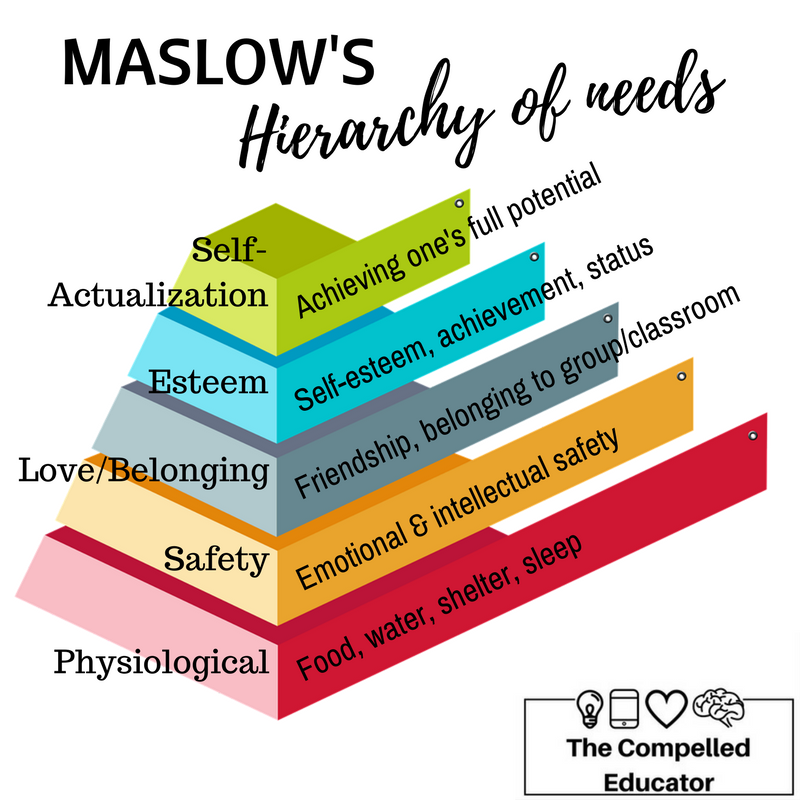
In the educational world we hear a lot about “Maslow before Blooms;” in other words, we need to take into account the hierarchy of human needs before the hierarchy of human learning. 

Next, I asked our educators to reflect on remote learning and consider the following while they focused on what remote learning would look like in their ‘new’ classrooms.

  • Emphasize Choice – allowing students to choose how they demonstrate their learning will increase completion and help them navigate misconceptions
  • Emphasize Learning and Not Grades – when students are not concerned about “the grade,” they are more likely to learn the material on their own, rather than “collaborating” with others (unless that is what you intend them to do). 
  • Direct All Student & Teacher Tech Related Issues to Bonnie and Katie (they are our Coordinators of Information Technology (CITs) and can do just about anything… and know who to reach out to when they can’t)).
  • Last but not least (for now) —> If you are having difficulty reaching a student (e.g. they are not responding) please reach out to our mental health team. They are counseling students and are ready to assist in any way possible.

Never did I think that I would be writing this post on April 30, 2020 (30 days into an extended school closure) telling you that the Regents exams have been canceled. 

Now is the time to tap into student interests and passions.

Now is the time to focus on strengths.

​Now is the time to give choice.

Now is the time to leverage creation tools. Whether it is a product to create or a problem to solve, allow students to determine how they demonstrate and share their learning. 

Now is the time to shift the paradigm  as we are  not going to take high stakes, multiple choice tests! Let’s do what we’ve always wanted to do… make learning fun!


Bloom’s Taxonomy graphic taken from: https://mylearningnetwork.com/blooming-as-a-learner/ 


**Interested in writing a guest blog for my site? Would love to share your ideas! Submit your post here.


Looking for a new book to read? Many stories from educators, two student chapters, and a student-designed cover for In Other Words.

Find these available at bit.ly/Pothbooks  


Guest post: Teachers have earned the benefit of the doubt

Be patient during the COVID-19 pandemic

As schools throughout the nation close for the remainder of the year, take a minute to consider what this will mean for thousands of teachers who are doing their best to educate our children. School leaders and local officials are scrambling to “flatten the curve” of the COVID-19 pandemic. This is our top priority, and as we retrofit our education system on the fly to meet the needs of millions of students, we ask for your patience and understanding.

Schools are not designed to adapt quickly

Be kind to teachers who are on the front lines navigating school closures in an education system that is, like so many institutions, incapable of meeting the demands placed upon it by the outbreak. At best, the expectations for most teachers right now are loosely defined by school leaders. Many teachers are trying to patch together inadequate distance learning programs without guidance. This is not the time for parents to use social media platforms to compare teachers or to publicly complain about a teacher who is slow to adapt. Our nation’s teachers have earned the benefit of the doubt, so please show some grace if you are irritated.
During normal times, school districts take several months, even years, to institute changes in curriculum and instructional methods. Expecting teachers to do this at a high level, with no time to prepare, during a national emergency is ridiculous. If you feel the need to share feedback with an educator, consider what would be helpful before you hit send. Negativity toward a teacher at this time will bruise deeply and could limit the creativity of teachers trying their best to meet student needs. A measured tone is imperative if you feel discouraged as a parent and wish to share your frustration. Trust me, teachers wish they could meet the needs of every student and family they serve.

More than the internet

Connecting and teaching students in a distance-learning environment is not akin to a teacher simply jumping online and presenting academic material to students. Conducting meaningful virtual instruction requires dedicated professional coaching for staff, and it also requires significant training and practice for students and families. Most teachers have never been expected to integrate remote learning into their curriculum. The instinctive knowledge teachers have spent their respective careers amassing has a vastly different application online, and most educators have never been trained to deliver robust instruction in that format. In addition, the inequity of student access to technology and broadband internet service is woven into the challenge of teaching students remotely.

Teachers are pros at building relationships

Teachers are well versed in building relationships with students so be grateful for the teachers who are trying to maintain their connection to students. This connection — virtual or in-person — is critical for academic and social-emotional growth. Our best educators specialize in making those human connections and they are experts at molding positive relationships, devoting their talent to create a culture of learning, and contributing to the school culture. Those indelible skills for expressing care and demonstrating a commanding presence may translate online for some teachers, but it is unfair to expect it to happen naturally.

Teachers are stuck waiting

Many of our teachers can’t share with you that they are at the whim of school leaders and state mandates that are not always communicated to them effectively. While teachers are on the front lines of most communication with parents and students, they are not always armed with the information parents seek. Your child’s teacher understands your concerns about assessments and grades, your child falling behind and your desire to have access to more resources. Teachers are trying to be flexible and they do not want to throw their school leaders under the bus by voicing their misgivings to you and fueling the anxiety parents are feeling.

Uncertainty and sadness

Educators lament the loss of the celebrations, getting that last high five, hug or final word of encouragement to students. Teachers have been working hard to get your child to the finish line, and in a career that has always included clear beginnings and ends each school year, this new reality is bewildering. Many educators are helping their own children cope with the loss of a traditional school year while they also cope with the same reality as a professional. Not being able to grieve the loss of the school year together is tough on the children and the adults who serve them. Teachers wonder if their current efforts are making much of an impact on students. In some cases, only a handful of students are still connected to school and that is disheartening. Teachers are used to receiving regular feedback from students and adjusting their teaching strategies accordingly.

Moving forward

The best thing you can do to help teachers is to unite with them and let them know you appreciate them. If you feel the need to share your concerns about school district policies and local programs, reach out to school leaders. Our educators are committed to serving all children and we know that we’re in this together. Teachers and school leaders throughout the country care deeply about the health, safety, and engagement of their students. Right now our teachers need your support.

**Interested in writing a guest blog for my site? Would love to share your ideas! Submit your post here.
 

Looking for a new book to read? Many stories from educators, two student chapters, and a student-designed cover for In Other Words.

Find these available at bit.ly/Pothbooks  

What we deny

Check out the Podcast too: “Just Conversations” with Melanie White and Amanda Potts. https://voiced.ca/project/just-conversations/

Only in our isolation and disconnectedness do we discover that everything and everyone is localized and connected. And, in this distancing, I am beginning to question what we deny.

Rebecca Solnit kept appearing in my daily consumption of media and I’m beginning to wonder if this is the work of a latent existential force drawing my attention to something I should have known or done long ago. I listened to her voice in an episode of On Being last week. She wrote, “When all the ordinary divides and patterns are shattered, people step up to become their brothers’ keepers…and that purposefulness and connectedness bring joy even amidst death, chaos, fear, and loss.” The unusual lilt of her voice and calm intellect still spin in my mind’s ear. And, this morning, I stopped scrolling my Twitter feed struck by this linguistic wisdom. She wrote,

“Inside the word ’emergency’ is ’emerge’; from an emergency new things come forth. The old certainties are crumbling fast, but danger and possibility are sisters.” #RebeccaSolnit

And then on Twitter, Gianpiero Petriglieri wrote that an “old therapist friend” told him why everyone was “so exhausted after video calls. It’s the plausible deniability of each other’s absence. Our minds tricked into the idea of being together when our bodies feel we’re not. Dissonance is exhausting. Our bodies process so much context…” I stopped to think about that wording, “plausible deniability”, and the more common legalistic use for one escaping criminal repercussions as a member of a corrupt organization or political power.

However, I couldn’t wrap my head around this experience of dissonance and the connotations of “plausible deniability” as something happening to us rather than something we choose to avoid like the truth or an injustice. According to Wikipedia“the expression was first used by the CIA” but the idea apparently has a longer history. I needed to understand the term, like Solnit explored “emergency”; it was an itch that pressed me, so I read further. “Plausible denial involves the creation of power structures and chains of command loose and informal enough to be denied if necessary”.

Then a thought struck me. What power structures are currently in place which I deny? What small almost imperceptible movements have made me complicit in this dance of distraction? Solnit reappeared during my longer moment of breakfast reading in The Guardian article entitled: “The impossible has already happened: what coronavirus can teach us about hope”. How marvelous and uplifting it is to read her vibrant words calling us to action and existence, to make the most of the worst.

While I cannot deny there is absence in my new-found isolation, I can also see that my thoughts attend a new experience. I am paying attention to moving about my house, to walking the dog, to gazing out the window with no real productivity pressure of this instant. And, yes, I am teaching remotely, but connecting, supporting personalized learning is my focus rather than a product on the line of academic factory life. This is where I cannot sense Petriglieri’s Tweet about “plausible deniability”. I am now working on processing the context of my daily life which I previously ignored in mind-numbing haste consumed by the blind goals of my own productivity or some socialized version of productivity.

My body is processing the context of my life in isolation and thinking about the actions needed for when we might connect again. I am trying not to deny my own physical interaction with and existence in the world.


**Interested in writing a guest blog for my site? Would love to share your ideas! Submit your post here.


Looking for a new book to read? Many stories from educators, two student chapters, and a student-designed cover for In Other Words.

Find these available at bit.ly/Pothbooks  

An In-Home Learning Strategy for Busy Quarantine Families

Guest post byAndrew Easton: teacher, edu-blogger, podcaster, and future author for Dave Burgess Consulting Inc. Follow him on Twitter @EastonA1, on Instagram @andrew.d.easton, or at andrewdeaston.com/


In our household there are two teachers and two primary-age students, and during our first week staying at home, we had a problem. As adults, we still have work responsibilities, and at ages 5 and 8, the kids need help navigating the five subjects of schoolwork they receive each day.

Our first thought was to set a schedule so that routines would be established. In that way, designated times would kick-start certain subjects and tasks. 

Fail. 

What we quickly realized was that sometimes the kids needed support with certain tasks, and if there happened to be a Zoom staff meeting or any other commitment that prevented us from supporting them in that immediate moment, the structure fell apart. The schedule needed more flexibility.

Then, we tried a checklist.

Fail.

Next, we tried using a checklist. I mean, who doesn’t love the feeling of crossing things off your to-do list?!? Well, the answer to that is my children. Even though a checklist does not have to be done in a specific order, don’t try telling that to them. The checklist was frustrating, and stopping a task to take a break routinely killed all their motivation to continue on with their work.


Finally, an answer.

Recognizing the shortcomings of our initial attempts, we felt optimistic about using a “To-Do, Doing, Done” board. The idea was that each day we would write down each item on their to-do list on a separate post-it note. Those post-its get placed in their “To-Do” column, and then as they start a task, the post-it moves to the “Doing” column. Once complete, it gets moved to “Done” and five completed tasks earns a sticker that is worth 30 minutes of free time.

Success.

Here’s what’s happened since we started. The kids now wake up each morning and run to their board to search through their list for the day. We intentionally scatter the post-its so that there is no implied order, and we like to put a fun, surprise activity on a post-it and hide it in the mix. 

Oh, and in case you are wondering, yes, chores also go on post-its.

The “Doing” column has also been a godsend. There are times throughout the day when our responsibilities as adults make us momentarily unavailable to lead them through a portion of their work. The kids now know that they can leave a task in the “Doing” column and start something else if an adult is busy.

The “Doing” column has also been great for motivation. When the kids choose to stop mid-activity, we ask them to reflect on how close they are to finishing and to move that post-it to the place between the start/finish lines in the “Doing” column that reflects just how close they are to completing that task. Last week, my daughter had stopped her writing earlier in the day, but she was bent on moving the post-it to done. Seeing just how close she was to finishing, she, unprompted, wrote for an additional 30 minutes later that night.


Overall, this board has made our household happier and more productive. It’s helped us to maintain a more positive learning dynamic during these stressful times, which is why I wanted to share our story. I hope this strategy can help you! 


So from our family to yours, please know that we are thinking about you all and are sending our best wishes your way.


**Interested in writing a guest blog for my site? Would love to share your ideas! Submit your post here.


Looking for a new book to read? Many stories from educators, two student chapters, and a student-designed cover for In Other Words.

Find these available at bit.ly/Pothbooks  

Teaching HardDoes Not Always Equate to Teaching Well

Opinions expressed are those of Guest Blogger

Guest Post by Kwame Sarfo-Mensah, Founder of Identity Talk Consulting, LLC. (www.identitytalk4educators.com

Math Educator & Teacher Development Specialist, @identityshaper


I have been in many situations throughout my teaching career where I spent countless hours planning, what I thought, was the greatest lesson ever!   I then delivered the lesson plan with the expectation that all of my students will be successful. Over the course of the unit, I provided classwork & homework assignments, conducted small group instruction for students in need of additional support, sacrificed my lunch periods to tutor struggling students, and pretty much did everything in my power to reach all of my scholars.  After weeks of teaching my heart out, I gave my students an end-of-unit test with the confidence that all my efforts would translate to passing test scores. To my dismay, the converse of that expectation happened and that left me totally dumbfounded and wondering where it all went wrong.  


For too many of us, we’re quick to place all the blame on our students for their failures and stand on the notion that we did everything we needed to do to fully prepare our students for success.  As I write this piece, I’m not questioning the effort and energy that I exerted into our lessons nor am I questioning my dedication and love for them. The paramount question I had to ask was whether I taught the lesson well enough for my students to demonstrate mastery of the academic standard.   Given my past failures, I surmised that my students had gaps in their understanding because I had gaps in my own understanding of the academic standard. That being said, I had to ask myself the following questions:


Did I unpack the language of the academic standard? It is one thing to identify the academic standard but it’s another thing to decipher its language and develop a complete understanding of what it actually means.  I visited the Common Core Standards website to identify the standard of focus and read it carefully to identify the verbs (i.e. what students need to do), as well as the nouns (i.e. what students need to know) within it.  Some standards require students to perform multiple skills so I needed to make sure to highlight each individual skill.        


Did I identify the prerequisites of the academic standard?  To determine the starting point for my lesson, I had to figure out what prior knowledge students should already have in order to master the standard.  As I’ve taught previous lessons, I realized that I didn’t give some students a fair shot at having success because I never addressed the gaps in their basic skills foundation.  By identifying the prerequisites of the standard, I was able to determine if I needed to reteach previous grade-level concepts before formally introducing the new standard to the students.


Did I closely monitor and assess my students’ progress throughout the unit? Throughout any lesson or unit we teach, we should be actively assessing our students’ understanding of the content.  The assessment of student progress towards academic standards should be daily and ongoing. Regardless of whether the assessment is formative or summative, we should be gathering data and analyzing what type of errors they are making in their thinking.  Are there specific concepts within the unit where students are demonstrating a level of mastery? When students are sharing their thinking verbally or through writing, are we solely focusing on their response or going the extra mile by asking them clarifying questions to investigate the thought process they underwent to arrive at their response?  The bottom line is this…….if we are proactively assessing how our students are progressing throughout the unit, then we should have an accurate gauge of how well they will perform when given a final assessment.


Did I make the tasks challenging enough and accessible to each and every student in my class?  With any new standard, teachers have to thoroughly assess the scope of it and determine the appropriate tasks or assignments that our students need to complete in order to build their knowledge of the standard.  Every student enters the lesson at a specific developmental level so using a uniform instructional method probably won’t yield the best results. Some students may be further along the learning curve than their peers so teachers need to differentiate their instructional approach and create tasks that will meet the diverse academic needs of their students. To assess the difficulty level of the task, I used Bloom’s Taxonomy as a reference point.  If I’m only giving my students “easy” tasks so they can feel good about themselves, I’m doing them a huge disservice.


Teaching is a hard enough job as it is.  With the overemphasis of standardized testing, we sometimes find ourselves in a position where we don’t always have the time allotted to thoroughly assess how well we are teaching.  However, our students cannot excel academically if we don’t develop the habit of asking the aforementioned questions and take the time to evaluate our performance as facilitators. If we are bold enough to point the finger at our students when they fail, then we must be equally bold enough to point it back at ourselves when we fall short.

**********************************


**Interested in writing a guest blog for my site? Would love to share your ideas! Submit your post here.
 

Looking for a new book to read? Many stories from educators, two student chapters, and a student-designed cover for In Other Words.

Find these available at bit.ly/Pothbooks  

Reflection

Guest Post by April McKnight (@rilmcknight)

Reflection is concerned with consciously looking at and thinking about our experiences, actions, feelings, and responses, and then interpreting or analyzing them in order to learn from them. That is a big statement and a hard topic for our students. So how are we as educators supposed to work towards helping our students reflect on their thinking / learning and that of others.

So first I ask, as teachers and educators do we spend time on self reflection. Do we have the time to look back at our day of learning and “reflect on the information we receive through observation, experience, and other forms of communication to solve problems, design products, understand events, and address issues.” Yes that quote is straight out of our core competencies for critical and reflective thinking.

Yes I know every teacher is doing their self reflection in some way whenever they can but ho do we help students learn this process and see the benefits of reflection.

As a high school STEM educator, I always had reflection as part of my labs. We use our three go to questions for every lab:

What worked the best?

What needs to be tweaked?

What could we do to make it better?

This became common place in my classes and extended to all our work. Students would reflect on their own learning and ask each other to assess their work based on these questions.

As the new BC curriculum came around, I started to look at the self reflection during our projects. We have always looked at the process as more important. Photo journals or design changed diagrams or written reports were used to show their journey. But now we wanted to add in more self reflection along the way. After classroom discussions, it was decided that we would do weekly self reflection on large projects as a journal, blog or vlog. Students used the 3 questions to show their progress. The learning became very evident and assessment of their learning process was easier too.

I feel we need to all use reflection as part of our classroom routines and it wont feel so daunting in the end. It will make our assessment for, of and as learning much easier.

**Interested in writing a guest blog for my site? Would love to share your ideas! Submit your post here.
 

Looking for a new book to read? Many stories from educators, two student chapters, and a student-designed cover for In Other Words.

Find these available at bit.ly/Pothbooks  

Providing Different Learning Tools

As educators, it is important that we find ways to provide more personalized learning experiences to meet the individual needs of our students. What this means is that beyond simply offering more choices in the types of assessments we offer students, we must do more by learning to understand the specific learning styles and interests of each of our students. We must differentiate our instruction and to do so requires that we develop a clear picture and gain a deeper understanding of the various learning styles of the students in our classrooms. When we do this, we can then design lessons that are focused on the specific student learning styles and offer more individualized choices for students. Whether that offers more options to work independently or in groups based on a specific topic, an area of interest or even based on the level of understanding of the content, we serve them best by having the right resources available for them.

Each of our students have specific needs and preferences for how they learn and we do the best for them when we help them to identify these preferences and then offer a variety of materials and resources for them to explore. It is not about always using a digital tool or shifting away from traditional methods, but rather being able to determine which of these options will work best for each of our students. It also means helping students to become more self-aware of their own interests. One change that has helped me to better identify these styles and guide students in my classroom is by using the station rotation model.

Through the use of stations, I am able to provide multiple activities that enable students to interact with the content in a variety of ways. There are tech and no-tech options, student and teacher-created materials, hands-on activities to choose from, and times where students decide on a focus for their group. By providing a variety of learning options for each student, giving them all the opportunity to explore, we empower students with more meaningful and personalized learning that will lead to more student engagement and content retention.

Learning Styles: The VARK Model

In 1987, Neil Fleming designed what has become known as the VARK model. Fleming developed this model as a way to help students learn more about their individual learning preferences. The VARK learning styles include: visual, auditory, read/write, and kinesthetic.

Personally, I have always been more of a visual and somewhat kinesthetic or “hands-on” learner. At varying points throughout my life, I can recall taking a test and being able to see specific notes that I had written in my notebook, but still being unable to respond to questions. I tended to create graphic organizers and had my system for making more visual connections with the content. Many of my students are visual learners and over the past two years, have often noticed that they have specific ways of processing the information in class as well as how they prepare and respond during assessments. We must be able to provide different options for our students where they can choose a format that will best suit their interests and needs in more authentic and personalized ways.

Visual Learners

Visual learners are more likely to use charts, icons, images and are able to more easily visualize information and as a result, can retain it longer. An estimate is that visual learners make up approximately 65% of the population, and remember 75% of what they read or see. Visuals learners prefer to do projects and presentations that involve creating visualizations of their learning. For visual learners, some good options include creating infographics, using Augmented and Virtual reality for creating immersive experiences, designing 3D objects, sketchnoting, or using digital tools such as Padlet or Wakelet to curate content in ways that promote better visualization of content. Visual learners would also benefit by creating a mindmap or making flashcards, which can also be done using a digital tool like Quizlet.

Auditory Learners

Auditory learners listen carefully and often focus on the tone or the rate of speech, and may also benefit more by having supplemental resources made available to them such as videos or audio recordings. Learners of this type can recall information such as song lyrics and conversations, and can often recreate a story more easily because of that auditory connection they have. There are many options to engage auditory learners more by selecting options that promote listening and speaking skills. Some ideas include using video response or podcasting tools to have students explain concepts or brainstorm ideas. Another option is by creating a more interactive presentation using a tool such as Voice Thread, students will connect with the sounds, dialogue, and tone used in a presentation such as this, where they can listen and respond.  Another idea is to use Flipgrid to post a question and have students also respond to classmates to further the discussion and promote higher-order thinking. Try using Synth to create a podcast for students to have the active listening component addressed, and invite students to listen and respond to the prompts by adding a thread to the podcast.

Read/Write Learners

Read/write learners prefer to have the text available to them in some written/tangible format. Whether students first take notes and then decide to rewrite their notes for additional practice, or read over their notes each day for review and class preparation, these learners benefit from sustained interactions with the text. The more they interact with written formats, the better equipped they are to understand the content. Beyond writing in pen or pencil, or creating a document, using some tools such as Kidblog, for writing a story and getting started with blogging is a good way to promote reading and writing opportunities. Another idea is to have students create a multimedia presentation with a tool like Buncee to tell a story, adding text and icons to make the content more meaningful. These options make the activities more authentic and aligned with the needs of learners of this type.

Kinesthetic Learners

Kinesthetic learners learn best through hands-on learning opportunities. Students spend a lot of time sitting in classrooms and perhaps more passively learning. We need to design ways for students to be more active in the classroom. Some choices would be through a STEAM curriculum, the use of makerspaces, place-based learning, game-based learning and creation, designing projects and having students engage in project-based learning (PBL).

Multimodal Learners

For some students, providing options that foster a multimodal learning style is most beneficial. A multi-modal learning style means that you benefit through multiple ways of processing the information which can be through images, sounds, movement, speech, audio, visuals and more.  When I have used stations in my classroom, providing the different options at each station was helpful for students who are multimodal learners, to be able to interact with the content in different ways. Some of the tools that I have used include NearpodKahootQuizlet, in addition to giving students options to create something based on their own choice, which lends itself to more hands-on learning. The use of infographics, hyperdocs, choice boards, and even digital breakouts can give students a variety of ways to engage with the content and provide activities that will meet each learning style.

All students benefit from multimodal learning options that support a Universal Design for Learning (UDL). Providing something for each student and offering a mix of learning tools will help students to master the content in more authentic and personalized ways.

Interested in learning more about your own learning style preferences? You can take the VARK questionnaire and find out what type of learner you are.

Interested in writing a guest blog for my site? Would love to share your ideas! Submit your post here.

 

Looking for a new book to read? Many stories from educators, two student chapters, and a student-designed cover for In Other Words.

Find these available at bit.ly/Pothbooks  


3  books.png


TeacherCast Educational Network | Developing Standards-Based Instructional Technology Integration

Technology Integration - Instructional Coaching - Productivity Secrets for Educators

Leadership Liner Notes: Sean Gaillard’s

Built on Connection. Tuned for Impact.

Stories by Thomas Oppong on Medium

Dr. Rachelle Dené Poth @Rdene915 Educator, Consultant & Keynote Speaker, Author, Attorney #THRIVEinEDU

Nova Vita Sağlıklı Yaşam Merkezi

Bedeninizi Dinleyin, Dengeyi Yeniden Öğrenin.

Hooked On Innovation

When Innovation slaps you in the face, we slap back.

Teach Better

Dr. Rachelle Dené Poth @Rdene915 Educator, Consultant & Keynote Speaker, Author, Attorney #THRIVEinEDU

BrianKulak.com

Dr. Rachelle Dené Poth @Rdene915 Educator, Consultant & Keynote Speaker, Author, Attorney #THRIVEinEDU

The Principal of Change

Stories of learning and leading

Mandy Froehlich

Dr. Rachelle Dené Poth @Rdene915 Educator, Consultant & Keynote Speaker, Author, Attorney #THRIVEinEDU

Katie Martin

Informed by research, refined by practice

#RocknTheBoat

Rocking today's classrooms, one teacher, student, and class at a time.

User Generated Education

Education as it should be - passion-based.

Learning as I go: Reflections & lessons learned

Dr. Rachelle Dené Poth @Rdene915 Educator, Consultant & Keynote Speaker, Author, Attorney #THRIVEinEDU

Serendipity in Education

Join me, Allyson Apsey, as I stumble upon the fortunes of learning, laughing, and celebrating alongside incredible people.