Keeping What Matters Most


Our son, Nick, sees an occupational therapist each week who does amazing work with him to help strengthen his core, quicken his response time to questions, practice his social interactions, and work on his fine motor skills. The best part is that she does all of that while he rides a horse around an arena. The horse provides sensory input and forces him to focus his core on maintaining balance, which allows his brain more freedom to work. As Nick rides, he plays Pictionary with a whiteboard, sprays water guns at targets, moves cones from side to side, identifies letters, and has conversations with the therapist and the other assistants as they walk next to the horse to make sure he stays safe while riding around. At the end of each session, he takes responsibility to prepare a bowl and feed the horse a snack to thank him.

His skills have grown tremendously since we started this therapy. We have missed going while we have been home, so we were so relieved that he was able to return last week. They had all kinds of new safety rules that we had to follow. His therapist met us in the parking lot; he had his temperature taken and had to thoroughly wash his hands as soon as we walked in. We all wore masks. We stayed distanced from one another as best as possible. They shifted the options for therapy so there were fewer clients in the facility at one time. We didn’t do some of the classroom-based exercises before he got on the horse, and he couldn’t prepare the bowl of snacks on his own. The most significant shift was that I was suddenly the volunteer walking alongside the horse. It helped to limit the number of people in the arena, but also allowed me a new opportunity to understand more about what he is working on in therapy and how he responds to the staff and the horse. I am not convinced that I am the best guide as it was much harder to hold the materials, keep an eye on his safety, and not get distracted by the beauty of the horse than I thought it would be, but we made it work.

I didn’t realize how much I needed to do something that felt “normal” to our routine until I walked through the doors of the arena. It was so comforting to do something that we used to do even though the process of doing it was different. Nick was excited to see the therapist, and I had the chance to help him share a little more about himself as we did the exercises and walked around the arena that she wouldn’t have otherwise known even though she has a great relationship with him.

As we start planning for school to look different in the fall, the first week of therapy had me feeling hopeful about what we can maintain when the process and school system may look really new for a while. A big question for me has been how to explain the shifts to staff, learners, and families. I read a great article by the Harvard Business Review that helped me to start thinking about communicating what’s to come.

The first point in the article is to acknowledge your own anxiety. I am nervous, very nervous about how we will make the process of school work in the fall while following the safety guidelines and still meet the needs of our families that need childcare. I am nervous about the gaps in learning or experience that may be happening for our learners. I’m nervous that they will miss out when we can’t give the reassuring hugs and high-fives we are used to. What I am not nervous about is our ability to maintain our relationships with our learners and grow them in new ways. We’ve bonded during this time at home, which has deepened many of our relationships with learners and families. Those get to continue and get to keep growing no matter how we provide schooling.

Nick’s relationship with his occupational therapist was not different. His ability to complete the tasks and work on his skills was not different. We just did it differently. He was super quiet in the arena, which honestly surprised me and helped me to learn more about him in that setting. He still talked the whole way home about his horse and the experience just as he usually does. I know I will be anxious as we drive there and as we walk in again this week, but I am hoping that goes away with time.

“Listen for the need underneath the question” is something I have practiced a lot recently. When a parent, staff member, or school leader gets frustrated, it sometimes takes asking many additional questions to get at the root of the concern or the reason behind the issue, which is almost always a genuine fear about something. To help build our skills in understanding one another and ourselves, we are working on summer professional development options for our staff that include having critical conversations about challenges, trauma training, mindfulness, and compassion resiliency. We all need to be able to see one another through an empathetic lens more than ever and give each other grace. Our stress as a collective society is high, and our composure tends to fail us when we are stressed. We need to prepare as best as possible for strategies to reduce stress in our schools, for and with our staff, as well as learn how to have more open communication about what is happening so we can acknowledge our fears and build hope whenever we can.

We have seen some absolutely inspiring efforts by our staff and learners that we continue to try and capture and share. It is hard to always stay focused on those positives, but they are also ways to find strength as we move into our next steps. I have seen teachers doing evening bake-offs with learners online, daily video announcements to celebrate birthdays and accomplishments, safely going to homes to drop off supplies or check-in, creating videos with shared books, songs, and poems, writing personal notes, sending “flat teachers” to each learner, and many, many more. We have worked to support our community and help our learners find their passions during this crazy time. I get to ask our leaders and staff about those moments to help them see all the positives and make sure we recognize the impact of those remarkable connections. The Harvard article said, “Asking, “What’s one of the worst things you’ve ever overcome or endured?” helps people tap into sources of hope and fortitude from their own stories.” Our stories of what our staff has done with learners and families during this time, as well as what our families have done on their own, are perfect sources of hope and fortitude to carry us forward through our next challenge.

As I start to find my way back to social events and daily activities, I think a lot about one of my favorite quotes from Maya Angelou, “I can be changed by what happens to me. But I refuse to be reduced by it.” I certainly feel changed by much of what has happened and what I know is coming. Some days it really gets to me, but it has not reduced my desire to do the work we get to do each day with learners and families as I know how much it matters no matter the setting or the format in which we do it.


**Interested in writing a guest blog for my site? Would love to share your ideas! Submit your post here.


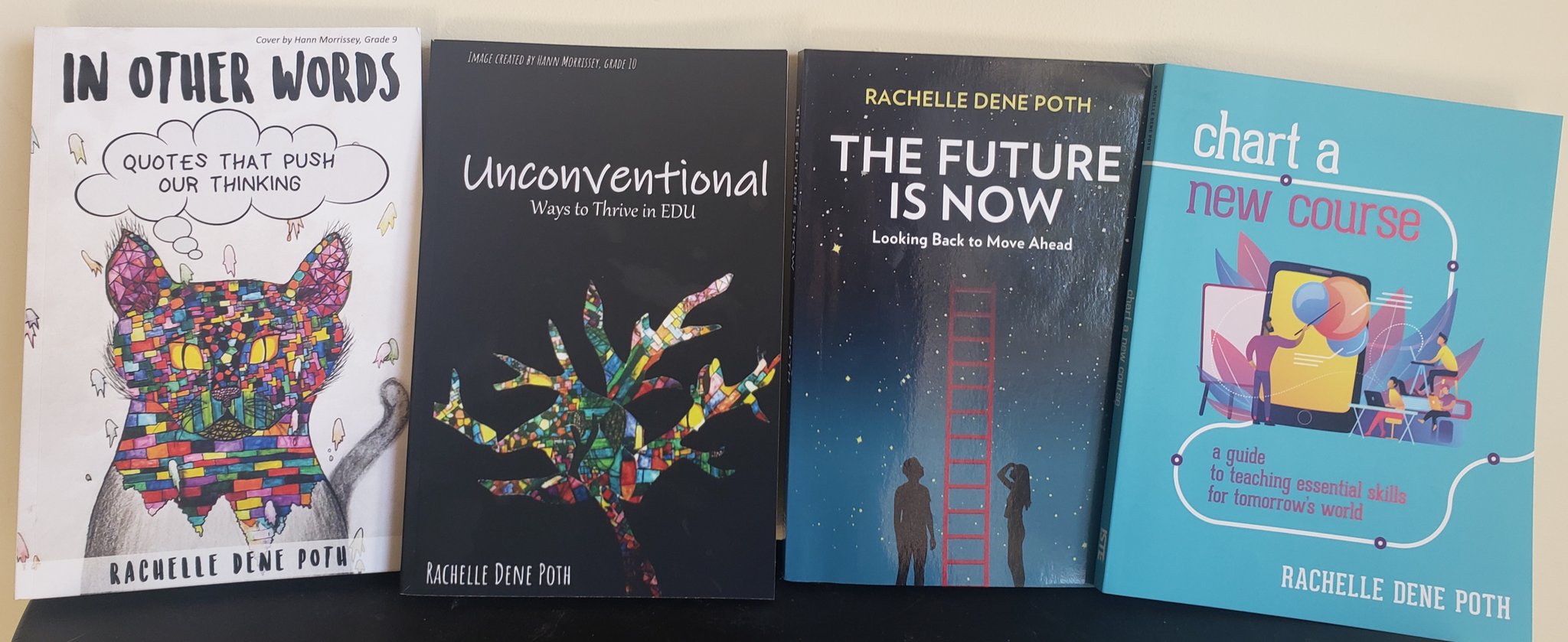
Looking for a new book to read? Many stories from educators, two student chapters, and a student-designed cover for In Other Words.

Find these available at bit.ly/Pothbooks  


Distance Learning, the Good, the Bad, and the Ugly!

COVID-19 & Education:

Guest post by Shelly Vohra: See the prior posts in the series.

The shift to “emergency online learning” in the last month or so has created some discussions and debates about what ‘school’ will look like once we do return. Depending on the structure and demographics of the school (e.g., K-5, middle school, high school etc), how will students and teachers return to ensure everyone is safe? Will there be a staggered schedule? In other words will we have students rotating through school for half days or full days to maintain physical distancing rules? Will each class be split in half and desks spaced out 2m/6ft with everyone wearing a mask and then sanitizing their space when the class/day is done? For example, in middle school, will we see half of the Grade 6s come into school in the morning and the other half in the afternoons 2- 3 times a week? Will grades 7s and 8s come in the other days and the rest of the time is being supplemented by virtual learning? And what are the implications for daycare, babysitting and parents work schedules depending on their work situation? Will teachers move from class to class instead of the students to minimize contact between individuals? If students are coming in for half days, what does that look like in terms of mathematics, language, social studies, science, and subjects like art, phys-ed, music, etc? There are so many factors to consider in terms of our kids returning to school and still ensuring their safety. Will we even return at all depending on what unfolds over the next few months? Many experts are talking about the fear of a second wave of COVID-19 cases if we ease restrictions too soon as well as the regular flu season later this year that will cause many to get sick. Or another scenario could be that we stagger students back into schools in September (or whenever your school year starts) to meet each other and build community and then in October, move to virtual learning. Again, there is so much to think about moving forward and the truth is we don’t really know what will happen because it all depends on what will happen over the next three months in terms of how the coronavirus is contained or how it might cause a second wave of infections. For now, it’s a wait and see situation.

The shift has also created discussion about more permanent changes to the future of education. I have seen teachers and various other stakeholders talk about some of the ‘permanent’ changes they would like to see as a result of this pandemic. While some of these ideas are good and can move education in a positive direction, some of the ideas need to be considered carefully due to several factors (e.g, developmental levels of students, equity, etc). Based on what I have heard and discussed with a variety of students, parents, and educators, here are five changes I would like to see:

1. Focus on Wellness & SEL: this pandemic has brought to light the importance of wellness and mental health. Many of our students are going through a range of emotions, which includes, fear, anxiety, and sadness. There are many reasons our kids are feeling this way and some of those reasons are: (a) they are missing their friends, (b) they are missing the regular routine of school, (c) their parents are front line workers, (d) they might have lost a loved one, (e) they are stuck in an abusive household, (f) they are bored, (g) they are stressed about school work and meeting deadlines set by teachers (which is another issue in itself!). According to CASEL (Collaborative for Academic, Social, and Emotional Learning), “Social and emotional learning (SEL) is the process through which children and adults understand and manage emotions, set and achieve positive goals, feel and show empathy for others, establish and maintain positive relationships, and make responsible decisions.” They identify five core competencies (self-awareness, self-management, social awareness, relationship skills, and responsible decision making). Research has demonstrated that when there is a focus on SEL, there are positive changes in behaviour (e.g., attendance, classroom behaviour, etc) and academic achievement (https://casel.org/what-is-sel/). This pandemic has demonstrated that we need to invest more resources and time in this area. Students need to learn how to manage emotions when challenges and difficulties arise, which is currently happening due to the impact of the coronavirus. They need to identify their emotions and have a range of strategies to deal with these feelings, which might help them build a positive relationship with themselves and others. This pandemic has also brought to light the importance of play. As I’ve mentioned in my other posts, many parents/guardians are talking about how they are spending more time with their kids engaged in a variety of activities (e.g., cooking, baking, sewing, talking, playing board games, gardening etc), which has helped their relationships with their children. Perhaps there is something to be learned here. Should the school day be shorter, placing an equal or more important focus on SEL and play? If many parents are going to continue to work from home due to the shift in thinking in terms of what work now looks like, should we be re-thinking what school looks like? Again, these are all questions that came up during my conversations with parents, friends, and educators that I’ve had the privilege of having over the last few weeks. Our kids these days, in my opinion, are over-scheduled. Between school/homework and all the extra-curricular activities, children these days are overloaded. It seems they just don’t have time to just be kids! I think we can all agree that we don’t want them to hate learning; we want them to be excited about learning and new ideas. We want them to be thoughtful, and kind and compassionate and curious. But to be happy, we can’t and shouldn’t overload them. Do we really want to take away their present for whatever the future may hold? I believe somewhere along the way, we forgot that we need to be educating the whole child. In the recent past, there has been way too much emphasis placed on exams, grades, and standardized test scores, that we have forgotten we need to teach to the heart. We need to be placing more emphasis on teaching habits of mind, relationships, ethics, and morals.  What about bringing in the community to support student learning? I truly believe we have lost the community aspect of educating our children. As the saying goes, “It truly takes a village”.  We need to get back to working with our community members and organizations in order to educate the whole child.
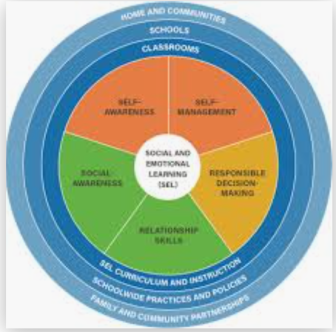
Screen Shot 2020-05-18 at 11.44.40 AM

(www.casel.org)

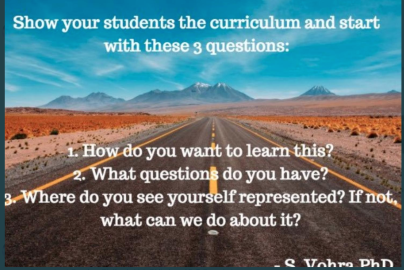
2. Focus on personalized learning:  this pandemic should also bring to light the need for personalized and individualized learning. Learning needs to be student-centered and not teacher-centered; in other words a focus on learning over teaching. Learning should be approached from an inquiry stance (big idea and driving questions) with a social justice & equity lens. This approach is linked to student wellness & SEL – students learning in a manner in which empathy and other habits of mind are developed as well as digital citizenship skills. We need to move away from traditional worksheets and teaching methods as well as busy work to more authentic learning. Information is everywhere; it’s pretty much at the end of your arm and we need to be asking questions of our students that require critical thinking, evaluating, judging, synthesizing, and constructing, just to name a few. If you can Google an answer to a question, it’s not a good question. This kind of learning means we need to move away from exams, which usually test knowledge & facts and not on understanding, thinking, and application to more ‘projects’ and assignments that are choice-based. It also means we move away from using textbooks (yes, I still see teachers using this as the sole source of information and there are reasons behind this, which I will talk about in another blog post), and teacher ‘lectures’ where students sit and take notes; in other words students are not passive recipients but they take control of their learning and become active members of their learning. This type of learning just might fit nicely with shorter and staggered school days, especially in middle and high schools. Students would come into school to participate and host seminars, focus groups, and discussion with their teachers and classmates on their learning tasks and learning journey; then they might spend some time in the LLC (Library Learning Commons) or go home to continue their learning and complete their work. They need to be provided with opportunities to access learning in a manner that suits them. This type of learning model not only lends itself to students focusing on deeper learning and less on tests and exams but it also builds time for students to focus on their passions and interests, more time for play, and their well-being. For this to be successful, we need to re-examine the curriculum so that it is more flexible and there is a focus on skills and not content. We would also need to focus on digital literacy skills – we have all heard the term “digital natives” but our students are not digital natives. Yes, they were “born with technology” and they might know how to use tech tools like social media for personal reasons but they still require a lot of support on how to use technology for learning purposes (one example is teachers conveying to me that most students don’t know basic online etiquette when talking to their teachers and peers online). They not only need to learn how to collaborate online but they need to learn to use tech responsibly and in ways which deepen and extend their learning. Of course, this blended model will require parameters in terms of teacher availability and students’ schedules. Teachers can not be expected to be available 24/7 and students learn and complete their work at different times. And as always, privacy and security issues need to be maintained in this type of environment (more to come on this). We also need to look at equity in terms of this type of model to work. As I’ve said before, “equity is an institutional commitment, it’s not a band-aid strategy we use when needed.”  How are we getting devices into the hands of every student? How are we ensuring they have strong internet/wi-fi connections? In order to close the achievement gap, we need to start by closing both the engagement gap and the opportunity gap.
Screen Shot 2020-02-10 at 9.20.59 PM

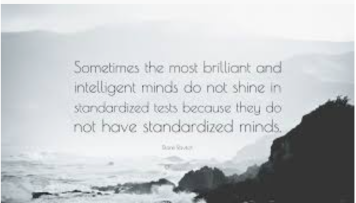
3.Assessment and Evaluation: related to personalized learning, we need to rethink how we assess and evaluate students. We need to move away from “unit tests” and exams, which only seem to test knowledge and not understanding of the material. These types of assessment do not for the most part, develop student skills in critical thinking and other higher order skills. We need to look at providing more descriptive feedback based on learning goals and success criteria (and know the difference between success criteria and task requirements) and moving away from assigning grades; we know research has indicated that when we provide a grade with descriptive feedback, students only focus on the grade and not the feedback the teacher provided and when teachers provide only descriptive feedback, learning is enhanced. For example, students are given descriptive feedback on a writing piece and given the opportunity to improve on their next draft and subsequent drafts based on just descriptive feedback. This type of assessment shifts the focus from achievement to learning. I know grades are a contentious issue in education because of the implications related to higher education but I honestly don’t remember the last time an employer asked me for my transcript during an interview. They want to see what skills I bring to the role and how I can contribute to the team as a whole to improve the organization’s mission and vision. If we are to give grades, then let’s sit side by side with the student and negotiate a grade based on all their work and effort throughout the learning experience (e.g. not just after two drafts of a writing piece). And in the age of technology, let’s ensure all students have an online portfolio and some sort of online presence in the form of a blog and/or website. And let’s please get rid of standardized testing; not only is it not necessary but it’s harmful and negatively impacts students well being and we all know it is not a true reflection of what a student knows and understands.
Screen Shot 2020-05-18 at 11.48.13 AM

4.Conferences: We also need to rethink educational conferences (or all conferences for that matter). Conferences have either been postponed or cancelled for the foreseeable future due to the pandemic. I know several conferences have opted for an online version of what should have been their face to face conference and I believe this is something we need to examine more closely. Costs to attend a conference has become astronomical. From registration fees to hotels and from flights to food, attending even one conference can take a significant bite out of anyone’s budget (a very small percentage of educators get their expenses covered by their district or school). And even when we get past the pandemic, flying may never be the same. So why not move towards more online conferences where educators can attend live sessions as well as pre-recorded sessions from the comfort of their home? If you must, charge a minimum fee to cover any costs based on the platform(s) you are using. And organizations can archive these sessions and have a repository available for everyone to access at any time.

Screen Shot 2020-05-18 at 11.51.25 AM

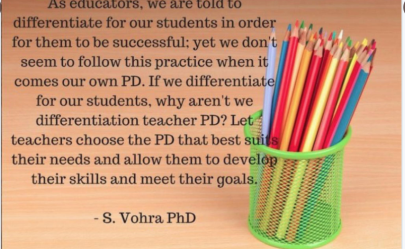
5.Teacher Professional Learning: last but certainly not least, let’s rethink teacher professional learning (PL). I’ve always believed that teacher PL needs to be  personalized, differentiated, and self paced. Teachers should be able to choose their own PL based on their goals, experiences, and background knowledge. This makes the learning more meaningful for teachers if they are allowed to pursue their own interests and passions related to education in the form of action research, collaborative inquiry cycles, etc. I believe the quote/image below says it all in terms of my beliefs for teacher PL. Let’s use an LMS (Learning Management System) like Brightspace to enhance teacher PL where teachers are learning from and with each other across districts – technology gives us the power and opportunity to learn with teachers from around the world so why not connect with teachers from different schools around the world to enhance and positively impact our practice? Why not use these PL opportunities to create learning experiences with these teachers for your students that incorporate social justice and equity mindsets (as mentioned in my bit about personalized learning? Let’s start putting PL back into the hands of educators.
Screen Shot 2020-02-10 at 9.21.22 PM

It will be interesting to see what education looks like when we do return and if any of these five points will be examined and explored further to not only enhance and improve education but also ensuring we keep students at the centre of it all.

I will be writing in more detail about each of these five points in upcoming blog posts but for the next few weeks, I am going to shift to writing about some other topics in education 🙂


**Interested in writing a guest blog for my site? Would love to share your ideas! Submit your post here.


Looking for a new book to read? Many stories from educators, two student chapters, and a student-designed cover for In Other Words.

Find these available at bit.ly/Pothbooks  


Using a Lens of “Gratitude”-

Guest post by Debbie Tannenbaum (@TannenbaumTech)

This past week was probably the best week I have had since schools closed for COVID-19 on March 13, 2020. I have felt more productive, more centered and most of all, more focused. As I reflected on the week, I identified lots of things that I did differently this week, but one really stood out.

During my morning walk with my dog Monday morning, I was listening to an episode of George Couros’ podcast, The Innovators’ Mindset. In this episode, number 18, he shared five ideas for improving mental and physical health. Idea #1 was to approach life with a lens of “gratitude,” but he shared gratitude using a new approach to me. He explained after reading an article by Tim Denning called the Most Important Way to Measure Your Day, he modified what Denning shared to identify three simple questions to ask yourself daily.

  1. Did I learn one new thing today?
  2. Did I help or inspire one person:
  3. Did I show gratitude to someone who had a positive impact on me?

Prior to this , I had been recording 3 things that I was grateful for each day in my journal. So I decided to experiment with this practice this week and from Monday on, I answered the three questions above. I have to admit that I was amazed by its impact. Suddenly, I looked at each day as an opportunity.

  • What was I going to learn?
  • Who was I going to help or inspire?
  • How would I show gratitude to people who had a positive impact on me?

It is shocking how when you specifically focus on or are more aware of something how it reveals itself more often. That’s what happened to me this past week and it was transformational.

What did I learn this week?

I began the week by learning about the idea of framing gratitude with these three questions. This led me to be more conscious of other things I learned. The biggest thing that I learned this past week was the awareness of how it felt when you needed to persevere through a hard task. As my Monday blog post shared, this helped me have not only more empathy for my colleagues as I asked them to try new things this week during trainings, but more patience. It made me more reflective as I worked with my colleagues and increased my sense of gratitude as many took risks and tried new things using technology.

I also learned this week how much I missed interacting with students. I had not seen any students since March 13th, but this week, I was invited in to model technology into three classrooms. Yes, I was happy to share new ways to use some of my favorite edtech tools, but seeing those faces I missed so much, it made me realize how important my interactions and relationships with students are.

Who did I help or inspire this week?

This past week, I provided four trainings and had eight hours of virtual office hours. I knew that I had been busy, but writing down who and how I helped people made me feel so grateful to have the opportunity to help and inspire some many people.

This past week, fifteen people attended one of my trainings. Nine of them learned about Pear Deck, while three learned about EdPuzzle and another three learned about Flipgrid. In addition, sixteen people came to my virtual office hours. But two people specifically shared feedback that warmed my heart.

  • “You are a life saver.” One of my colleagues shared as I helped her learn how to trim the end of her synchronous learning session.
  • The band teacher at my school shared at our CLT how she was using Flipgrid to have students share their instrumental practice in a moderated grid and then was able to give them individualized feedback!

How did I show gratitude to people who made a positive impact on me?

This question helped me to ensure that I shared appreciation for those who had a positive impact on me. As a result, I ended up sending emails and tweets that I might not have sent otherwise.

The first group of people I thanked for their positive impact on me were the teachers who invited me into their synchronous sessions to model edtech this week. I wanted them and their students to know how much it meant to me to connect with students again. I also wanted them to know how much I appreciated them giving me some of their valuable synchronous minutes.

I also thanked some people who had made a positive impact on me through their suggestions of healthier habits. Last Saturday at a WW meeting, a friend suggested taking more movement breaks. I ended up adding circles to my journal and filling them in as I took more breaks. This Saturday, I thanked her for inspiring to add this healthy habit to my day. In addition, last Saturday, during a #crazyPLN chat, Matthew Joseph discussed training as a way to be more positive. I used to train- last year, I trained for my second half marathon. But since then, I have stopped running. Until now- this week, I began and completed Couch to 5K Week 1. I am so glad that I did this.

Lastly, I want to let George Couros know the positive impact that his blog made on me this past week. That is one of the reasons I wrote this week’s blog post. Like George, I am a work in progress. His strategies, especially the first one, really helped me this week and I hope me sharing this will encourage others to listen to his podcast and be as inspired as I am. As I begin this new week, I plan to continue these practices. I can’t wait to see what else I discover as I view life more using a lens of “gratitude.”


**Interested in writing a guest blog for my site? Would love to share your ideas! Submit your post here.


Looking for a new book to read? Many stories from educators, two student chapters, and a student-designed cover for In Other Words.

Find these available at bit.ly/Pothbooks  


When Schools Resume

Guest Post by Kathryn Starke (@KathrynStarke)

Opinions expressed are those of  the guest contributor.


Schools and districts across America have been closed for over a month now, and many schools are closed through the end of the year. It is sad and shocking for all of us. Teachers and children can’t wait to be back in their classrooms. Unfortunately, it will not be anytime soon. Therefore, teachers and parents across the country are sharing their passion and purpose in the teaching and learning process in a variety of creative ways. I have seen car parades through neighborhoods, teddy bear hunts in windows, nature scavenger bingo boards, and daily food delivery to bus stops. I have seen educational companies and some authors provide free access to their learning tool and NFL athletes help families Tackle Reading at home. This is an unprecedented event in our history.

The health and safety of others becomes the primary concern. Curriculum should not be a priority. Copyright should not be a priority. Digital learning is not accessible to every home. Not every child has a parent at home who is able to work with them. Just like in the classroom, differentiation is key. Teachers should feel empowered to create their own lessons and share their ideas with their students. Elementary school parents do not care about grades or attendance at this time. They want educational ideas and support, and most importantly, they want their children to be happy, healthy, and safe. Therefore, educators should focus on the new school year. So, what will happen when schools finally resume? Will every child be passed on to the next grade? Will every teacher receive the reading support they will need to effectively support these vast gaps while maintaining their designated grade level literacy objectives?

According to the most recent report by the National association for Educational Progress, sixty- four percent of all fourth-grade students in America are unable to read proficiently. The number increases to seventy-eight percent of fourth-grade students in low-income areas. When schools finally open, which may not be until August or September, the focus on learning will be a priority and it is going to need to change. Children will return to schools without six months of formal reading instruction. Some of our children will be significantly behind. The teaching and learning process will have to adjust. One hour of reading instruction will not be enough. It is in times like this when innovation and creativity in school communities will make the greatest impact and should be encouraged.

Teachers will need to feel supported and empowered to make decisions to match the needs of their students. They will be tasked with having to conduct remediation, intervention, reteaching, and teaching. One solution may be to incorporate transitional grades in the fall. For example, a first-grade teacher may be reviewing kindergarten standards while introducing new first grade standards. Another idea would be to group children by reading and math abilities multiple times throughout the day. One to two hours of daily language arts instruction will not be enough in the fall. Literacy needs to be at the forefront of instruction through all content from pre-K to fifth grade. This means we need to incorporate the five pillars of reading instruction or the “science of reading” in every lesson including math, science, and social studies. Team teaching across grade levels is another option. We have to think outside of the box.

Kathryn Starke is a national urban literacy consultant, reading specialist, author of Amy’s Travels and Tackle Reading, and founder of Creative Minds Publications, LLC, an educational publishing company. She created the annual Tackle Reading initiative supported by the NFL and NFL Alumni.


**Interested in writing a guest blog for my site? Would love to share your ideas! Submit your post here.


Looking for a new book to read? Many stories from educators, two student chapters, and a student-designed cover for In Other Words.

Find these available at bit.ly/Pothbooks  


Words

Guest post by Dr. Kalum McKay (@DrKalumMcKay)

Opinions expressed are those of the guest contributor.

Words matter. 

Words aren’t just words, they are building blocks or a wrecking ball. Many things in life are made or destroyed by what we say. Sticks and stones may break my bones, but words will never hurt me. This is straight-up false! Words are powerful. Broken bones heal, I’m not sure emotional wounds ever do. This isn’t just a message for kids, although it is an important one for them as well. This is a message for us all. The words we use determine so much of the successes or failures in our lives. When rolling out a new initiative, the words you use to present the idea can go a long way to determining buy-in. The way you handle a “growth” opportunity with a teacher or student determines how the information is processed. If you correct in a positive manner, you promote growth, if you correct punitively, you promote resentment and have taken a sledgehammer to the relationship. Our words verbally, in written format, and digitally have the ability to change the world. They can aid in growth or demoralization.

In today’s digital, social media-driven culture, our words can reach farther than previous generations could have imagined. This can be amazing and powerful. It can also be dangerous and harmful. Before you send that email, tweet that tweet, write that Facebook post, we must determine the consequences of our words. In Spiderman, there is what is widely known as the “Peter Parker Principle” that states, “with great power comes great responsibility”. Our words have great power, this comes with great responsibility. This is verbally, digitally, and everything in between. All of our words have power. Everyone. From the CEO of a company all the way to the intern. From the Principal to the PreK student. Our words matter. The tone, the context, the content, all matter. It is important to be purposeful in our choice of words. How many times have you seen a “leader” come in and completely demoralize an entire organization? On the flip side, how many times have you seen one energize and uplift an organization? This includes teachers in their classrooms. The words and the tone they use shape the entire atmosphere of learning in their classroom. Is it going to be an environment of love, connection, and growth? Or is it going to be one of compliance, fear, and resentment?  It is our responsibility to use our words as building blocks, not as the proverbial wrecking ball.

The wisest thing we could learn to do is to watch our words. We can learn to speak when it’s helpful and needed and choose our words wisely. We must take seriously the impact of our words. The right words can mean the difference between misunderstanding and enlightenment. They can mean the difference between being hopeful and supportive or judgmental and condescending.

The words you use are a choice you make constantly, as always, Choose to be GREAT!


**Interested in writing a guest blog for my site? Would love to share your ideas! Submit your post here.


Looking for a new book to read? Many stories from educators, two student chapters, and a student-designed cover for In Other Words.

Find these available at bit.ly/Pothbooks  


Reaching out and Sciencing

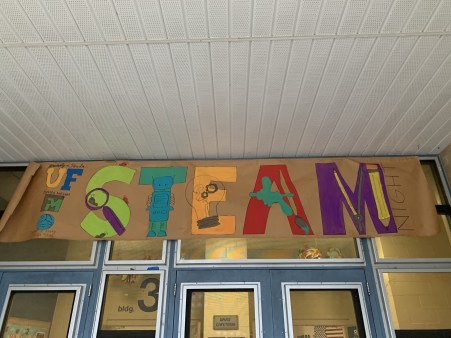
As I am getting ready for STEAM Night at Lawton Chiles Elementary School, I am faced with a familiar conundrum: what do I wear that will make me look professional and scientist-like and also fun and approachable? Which begs the question-what DOES a scientist look like?

I settle on a blue dress with zebras and look outside my window. Ah, Rainesville! As I sit in traffic, my friends/fellow scientists frantically text me about the traffic conditions. “Step 1 to doing outreach: Show up early.” I’m surprised when I am greeted by a full parking lot. Gosh, those kids must be ready to learn about science!

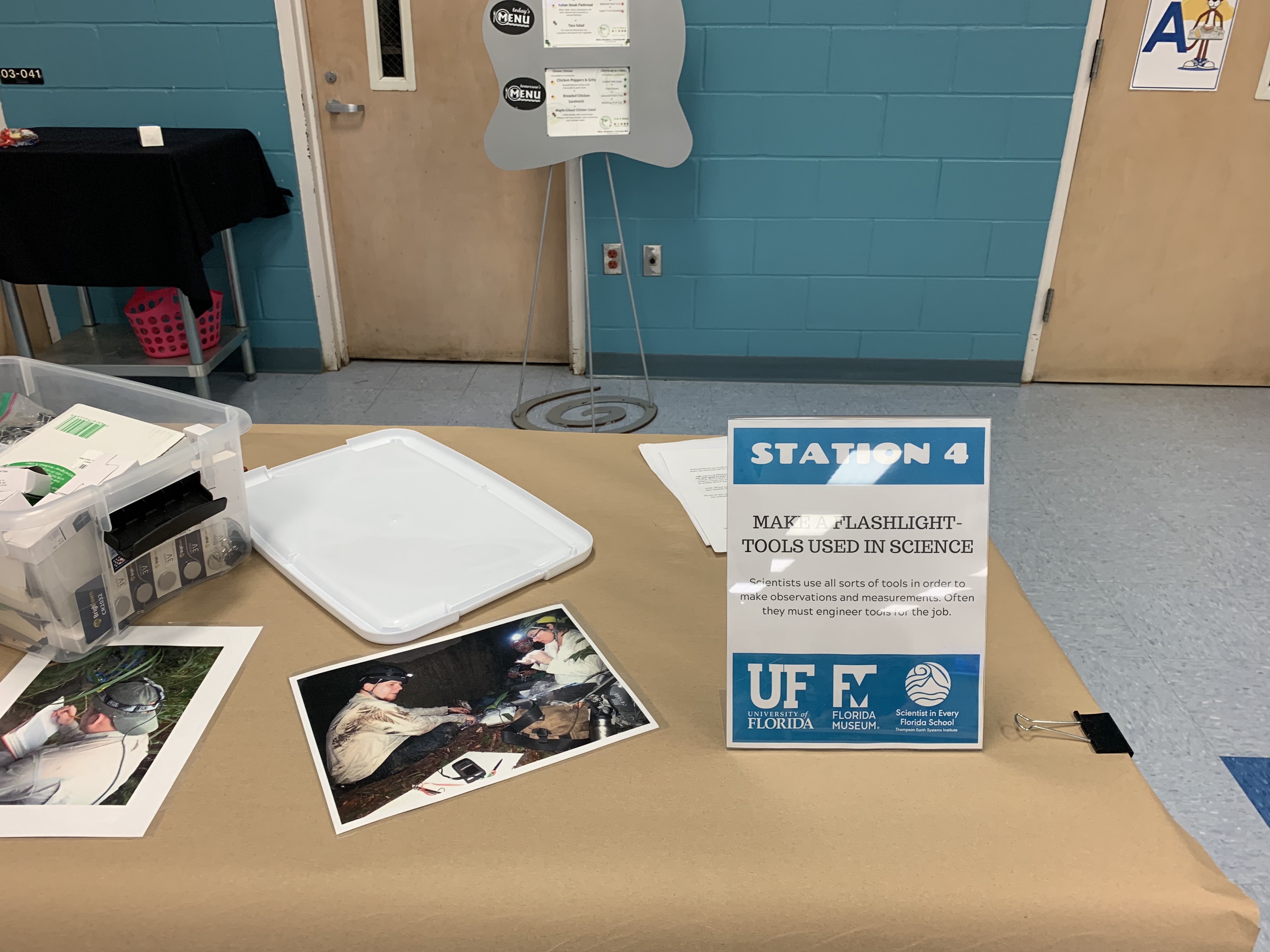
Alberto Lopez, the School Outreach Coordinator, has everything set up and introduces me to my volunteers who will help me out tonight. Turns out, I’m a bat biologist and will show people how to make flashlights using popsicle sticks, copper wire, batteries and bulbs. Because flashlights are important. Especially in the field. (Always carry three headlamps-one on your head, one around your neck and one in your pocket because you never know when the batteries will run out in a deep, dark cave but that’s a story for another day).

Station 4. Make a flashlight-Tools used in science.

As I arranged the brightly colored bulbs on my table, nothing could have prepared me for the number of people who showed up at Station 4. The kids could barely contain their excitement with popsicle sticks in hand, ready to make a flashlight. It’s a truly humbling experience when you try to interact with several little humans all at once, while trying to make each one enjoy their time at your station.

This brings me to “Step 2 for doing outreach: Learn how to improvise.” The school band seemed to match the tempo of the people showing up as they played a fast tune. Due to the sheer number of people that showed up (350+), Alberto helped us modify the flashlights so that we could make them a tad faster.

Towards the end of the evening, we headed up to the stage to have a panel discussion. Alberto introduced us to the audience who quietly lined up with their questions. Kids will ask you anything under the sun and they clearly keep up with current events. They ask hard hitting questions and it’s okay to not know all the answers. “Step 3: I don’t know all the answers.” It’s why I love doing science.

Alberto Lopez, Molly Selba, Aditi Jayarajan, Allison Bordini, Eve Rowland and Sarah McGrath-Blaser.

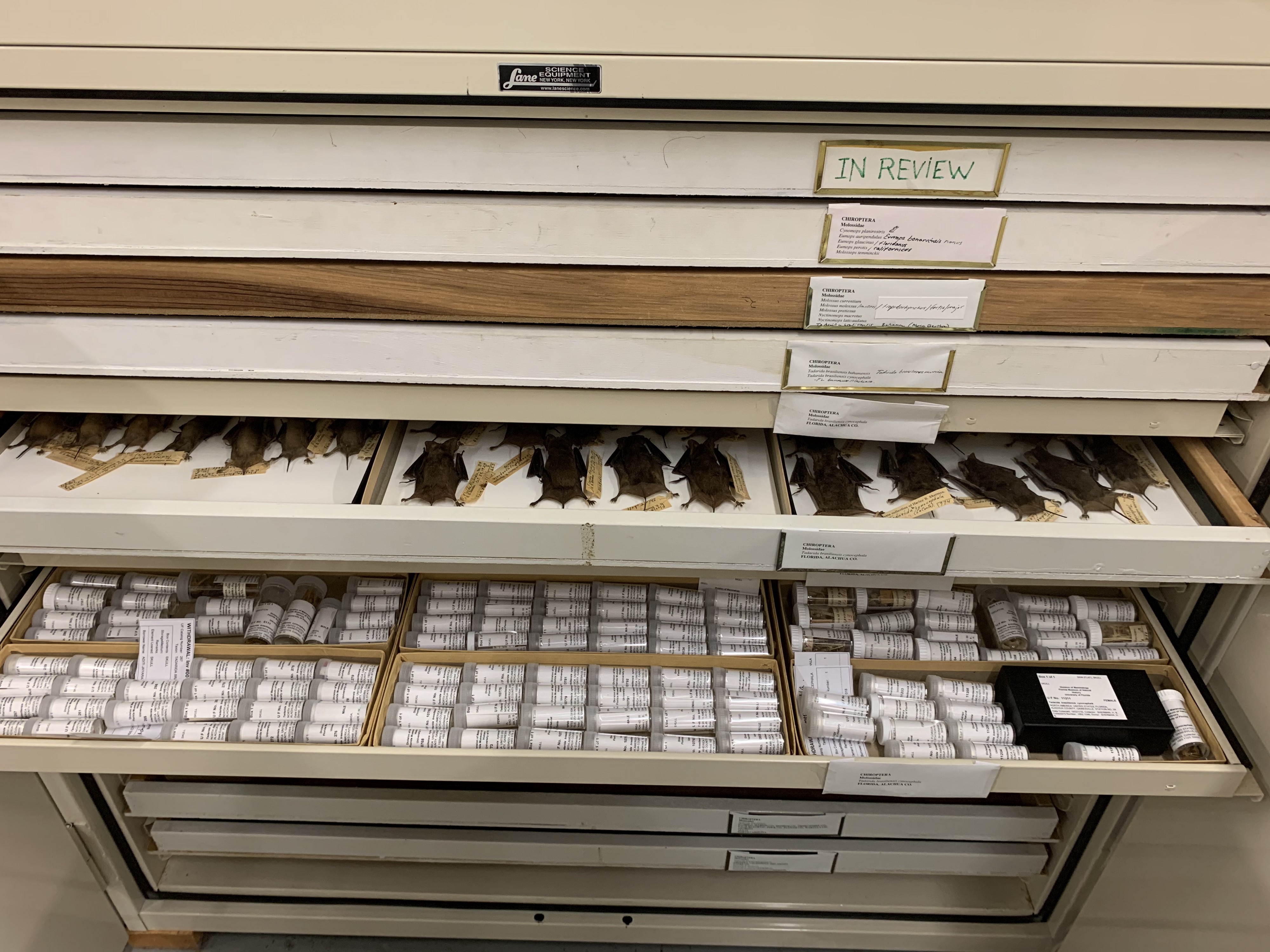
“Step 4: Love what you do.” My favorite question came from a little boy who asked why we got into science. I love that I get to work in the collections at the museum. I like the fact that each specimen holds a special story and that I get to share it with people.

Cabinets full of interesting specimens in the Mammalogy Division at the Florida Museum.

This brings me to “Step 5: Have fun.” I appreciate the fact that so many parents brought their kids to an after school program on a Tuesday night. You need that support to fall in love with science. I have so much fun doing outreach events, it is truly what keeps me going!

**Interested in writing a guest blog for my site? Would love to share your ideas! Submit your post here.


Looking for a new book to read? Many stories from educators, two student chapters, and a student-designed cover for In Other Words.

Find these available at bit.ly/Pothbooks  

When you feel like you’re not getting anywhere

Sometimes it’s difficult to figure out what the problem is or where to start when you feel like you’re not getting anywhere. What I mean is that as teachers, we may have days when we might feel like we’re just not connecting with the students. Sometimes when trying to create a lesson or some new experience for students, we are met with less enthusiasm than we had hoped for, and sometimes, it might even be nonexistent.

About two years ago, I really struggled with finding ways to engage my students in learning. I reached out to my PLN to ask for advice, I tried Twitter, pretty much anywhere that I could think of to gather ideas from other educators who might be experiencing the same thing. That’s probably the most important point if anything out of my thought process, is that had it not been for those connections and knowing where to look to find help that I greatly needed, I would have been working through it on my own in isolation, as I had been for many years of my teaching career.

It’s not easy to ask for help especially when as teachers, we feel like we are supposed to be the experts when it comes to students and learning and teaching. There may or may not be assumptions about our abilities to manage our classroom, deal with student behaviors, to be flexible in our instruction, and to balance so many different things every day. But without having a way of connecting with others, we would be stuck doing the same things we’ve always done. While in some cases that might be good if the experiences went well, often times it might not be that great. And that is how it was for me.

Last year is what I considered to be probably my best year in teaching and it came to be because of relationships I had formed over the years and also because I got away from doing some of the same traditional things I had always done and pushed the limits a little bit and tried some different things in my classroom. There were some things I just didn’t appreciate any more like standing in the front of the room and talking at my students. It was exhausting trying to think of ways to spend 42 minutes leading the class and keeping the students “busy.”

I had reached a breaking point early in September two years ago when I just decided to get rid of the rows in my classroom and see what would happen. The combination of these actions and everything in between is what I believe led me to have the best year yet. I felt connected with the students, I could see them learning and that they were more engaged. Students would come in throughout the day and say how much they liked class better than the prior-year. I just felt that there was a different vibe, I sensed a more of an excitement about being in the class and while at times it was uncomfortable worrying about if my class was too noisy or if students were off task on occasion, I really felt good about it

So I decided to keep the same kind of methods and habits in the new school year, making changes here and there, but I was not seeing the same results. I had different students than I had in the past and so it kind of led me to go back and rethink what I had been doing. What had worked so well last year was not working as well this year. I did not expect that because I was assuming that things would be the same as they were the year before. Thinking like this, the “way we’ve always done it” is what gave me some trouble in the first place. I taught the way I had been taught using methods that worked for me as a student and even as an adult, but these methods did not work for all of my students. So by doing that I was doing them a disservice. Flash forward to this school year, trying to use the same methods and strategies should not work because I had different students than the year before.

There have been days that I left school feeling frustrated and overwhelmed, a bit uneasy because like I said, last year I had a great year. And I had not experienced that type of struggle in several years. so trying to figure out what the problem was and how to work through it has been something I’ve been working ever since. I felt some moments of success and other times I thought I just couldn’t do it anymore. Sometimes I became so frustrated at the behaviors, whether it be lack of respect or lack of wanting to work or negative attitudes that instead of trying to better understand the students and focus on having conversations, I responded to their behaviors and the reactions. I lost my “cool,” I lost my composure, my eyes filled with tears of frustration and I didn’t like it. I even told them that it was something that would bother me the rest of the day and for days to come, because that was not like me but I had “had it.” I had been doing everything that I thought I could to help them and I was getting nothing or the bare minimum in return. I just wanted them to hear me and to understand that their behavior matters. Being respectful matters, and that it doesn’t matter how great your grades are or what you have in life if you are not a nice person. If you do not show respect and you don’t take time to listen to others and give them their attention when they ask for it or when they deserve it, that makes it very uncomfortable.

I thought it was just me, I had convinced myself that it was something that I was not doing. There was something wrong with me that I needed to fix within myself. But the more that I talked to people I was connected with locally, nationally and even around the world, I soon realized it was not just a problem that I was facing. Again, if I was still in isolation staying in my room and not connecting anywhere in my school building, I would feel exactly like I did. It’s just me, I’m the problem. Because I had those connections, I was able to recognize that it isn’t just me it’s a struggle other educators face and there are different ways that they deal with it that may or may not work for me.

I had lots of recommendations, great ideas, stories of how changes in different classrooms made a big difference for different friends of mine and for every suggestion they offered I felt terrible telling them that know it just would not work for me. While I may not have all the answers, I know my students well enough to be able to figure out what might and might not work for them. So while I did not come up with a magic solution to any of the challenges that I feel like I’m facing, which in the scheme of things in the rest of the world they’re not that big at all. But there are bumps in the road, a road which prior to this year had finally been mostly well paved with occasional potholes along the way.

But a new year, new challenges changes just to show why we can’t teach every year the same way that we were taught. You can’t do things the way you’ve always done them and as Don Wettrick’s dad said: “Don’t teach the same year 20 times.”

I guess I felt that because my methods worked so well last year, that I should just do the same thing again this year. I was wrong. New year, new beginnings, some changes, a bit of discomfort, challenges, through all of it. Yes, please. That’s what keeps us moving, what keeps us active and engaged and although sometimes you feel like you’re becoming disengaged from the profession when you sit back at the end of the day or in the middle of the day or whenever it is that you reflect, you must stay focused on your why. The why is your purpose, your passion for what you do and why you’ve gotten up early every morning and worked through weekends, holidays and even summer vacations. It is when you come full circle and realize that you’re there to make it work to find an answer and a solution because it might be that you are the problem

And sometimes you might be the problem creator, it’s never the same. It’s always changing, it’s uncomfortable but it’s how we grow. And if you don’t share your experiences with others then you are going to be limited to only growing in your own space. To put yourself out there, be vulnerable and ask for help when you need it, that is not a sign of weakness it’s a sign of tremendous strength. When you can identify that you have a need, a weakness, an area of struggle, you show that you are vulnerable and that is more than okay. Because as many times as I’ve said it, I will continue to say it twice as much:

I’m not an expert.

I don’t know everything.

I make tons of mistakes every single day.

I’m willing to try and I’m willing to grow.

I’m willing to get up no matter how many times I’m knocked down and go for it again.

I am a work in progress and I am learning as I go. 


**Interested in writing a guest blog for my site? Would love to share your ideas! Submit your post here.


Looking for a new book to read? Many stories from educators, two student chapters, and a student-designed cover for In Other Words.

Find these available at bit.ly/Pothbooks  


Keeping the Learning Going

Over the past couple of weeks, there have been a lot of conversations about what educators will do if schools need to experience school closures or move to a hybrid model in the upcoming school year. With so many uncertainties when it comes to the pandemic, it has definitely been a challenge to figure out how to provide the best learning experiences for our students and to keep them engaged and motivated during this time. I miss being in my classroom and the interactions with my students, greeting them at the door, working with them on activities and projects in that classroom” space” although the time we had never seemed to be enough!

Finding ways to extend the “space” of learning for our students has been a popular topic of discussion for many years, and something that I have worked on, so it is not entirely something new. However, with our current global situation, educators and schools are seeking to find the right resources that can be put into action right away and that will work for transitioning back into the classrooms too. I love that I can create a message to share with students, to check in and  for them to connect with each other.

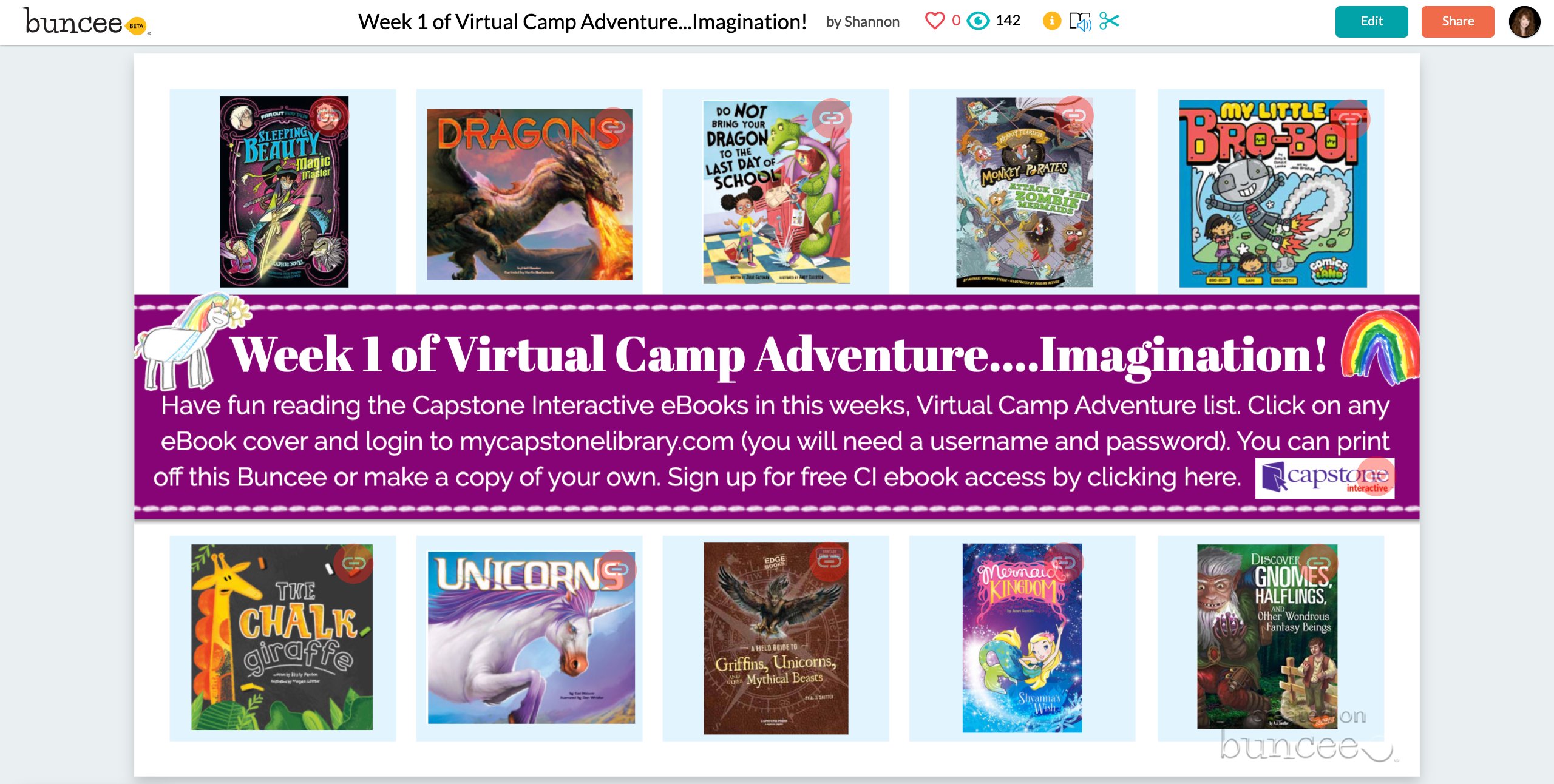
Screen Shot 2020-05-27 at 9.19.48 PM

We must look for ways to provide rich learning experiences through versatile tools that students can access and work on independently wherever they are and regardless of time. What I have suggested to many educators is finding one or two tools that enable them to do many of the same things they would do in the classroom and even more. With Buncee, we can work remotely and provide meaningful learning experiences that engage students in the digital space as well as our physical classroom spaces. As students create, they can work from school, at home, or anywhere, and be able to share their work with classmates and teachers, even globally.

Endless Possibilities with Buncee

One of the things that I love the most about Buncee is that it can be used in so many different ways, not only for instruction in our classrooms but also in life. I tell the story often that I have used Buncee personally to create cards for family and friends, personal business cards, design engaging graphics for Twitter chats and presentations for webinars, or to make quote graphics for my books. There are so many ways to use it and for me, it always comes down to the why, or the purpose for choosing a specific digital tool. What can I use it for? What are the benefits? How does it help students to learn, to be more engaged in learning and to build skills?

When I decide to use digital tools in my classroom, I want students to practice the content in a more authentic and engaging way, while also developing essential skills such as collaboration, critical thinking, problem-solving, and creativity that will benefit them in the future but that are necessary now too.

Having a specific platform or digital tool in place that all educators can use and making sure that all students will have access is very important. As teachers, we have so many choices for how we can use Buncee in our classrooms and we can share ideas for families to use it for activities too. It is a versatile tool that provides multiple ways for people to learn and to express themselves.We’ve tried a lot of different ways for using Buncee in the classroom, many of which have been a result of the creativity and out-of-the-box thinking of the students.

Unlock the Power of Creativity

It just takes logging into Buncee to unlock the power of creativity once you see a library of more than 31,000 graphics with new assets added every day that connect with what is happening in the world. Regardless of what you want to create, there are more than enough choices for what to add into your multimedia presentation. Students (and anyone) can quickly create a multimedia presentation full of animations, drawings, stickers, emojis, 3D objects, Buncee messages, 360 images, audio and video embedded and even student artwork!

Beyond the potential for creativity, collaboration, critical thinking, and communication, using Buncee, students can build skills in digital media literacy, technological proficiency, and digital citizenship. Students have the opportunity to use technology as a tool for solving real-world problems or making real-world connections.

Buncee is so invested in providing a lot of options and opportunities for students and educators to enjoy learning, creating and growing together. I have been proud to be a part of this growing educator community and have learned so much from the connections that I have made and from the relationships that have formed with the Buncee team and Buncee Ambassadors.

I looked for some examples and asked for some feedback from ambassadors and Buncee educators.

Buncee has been a wonderful asset during this time of remote teaching/learning.  I used Buncee every week to create my lesson plans.  I would make a copy and adjust my template to what I needed for that week. I also used Buncee to create flyers for our school-wide virtual spirit days.  
Buncee provided templates that I was able to use both for paper packets as well as digital templates for the students who were able to connect digitally (even if that number is small).
One big way that Buncee was a help was the sense of community and support that it provided during this time.”   Jessica Chandler 


Screen Shot 2020-05-28 at 12.33.43 PM

“It is such a special time for my students and for me as we look back.” Barbie Monty.

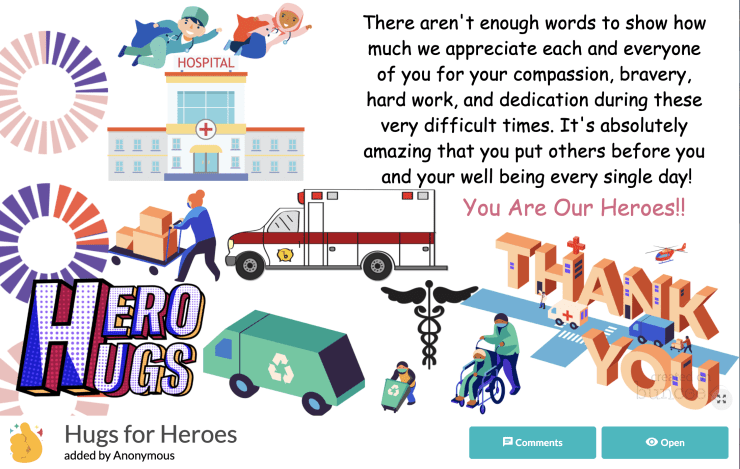
Barbie worked on the Hugs4Heroes initiative with Kristina Holzweiss and Amy Storer and there was also the #WithHeartWhileApart.

Check out this Buncee Board with more than 10,000 views!

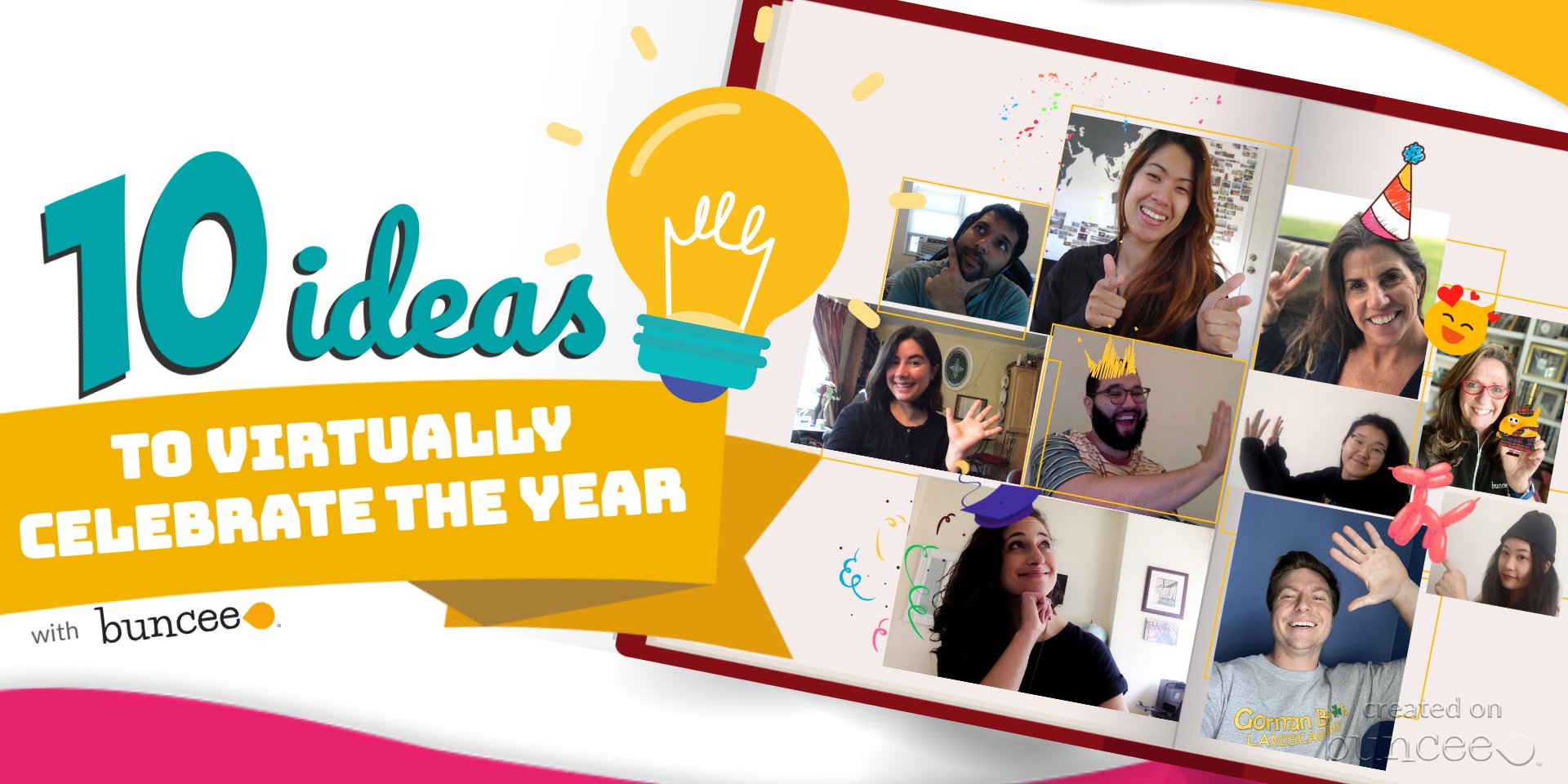
Check out Buncee’s posts on Ideas for the end of the year and Summer Fun!

10 activities for a productive summer

Here are some of the latest ideas that have been shared.

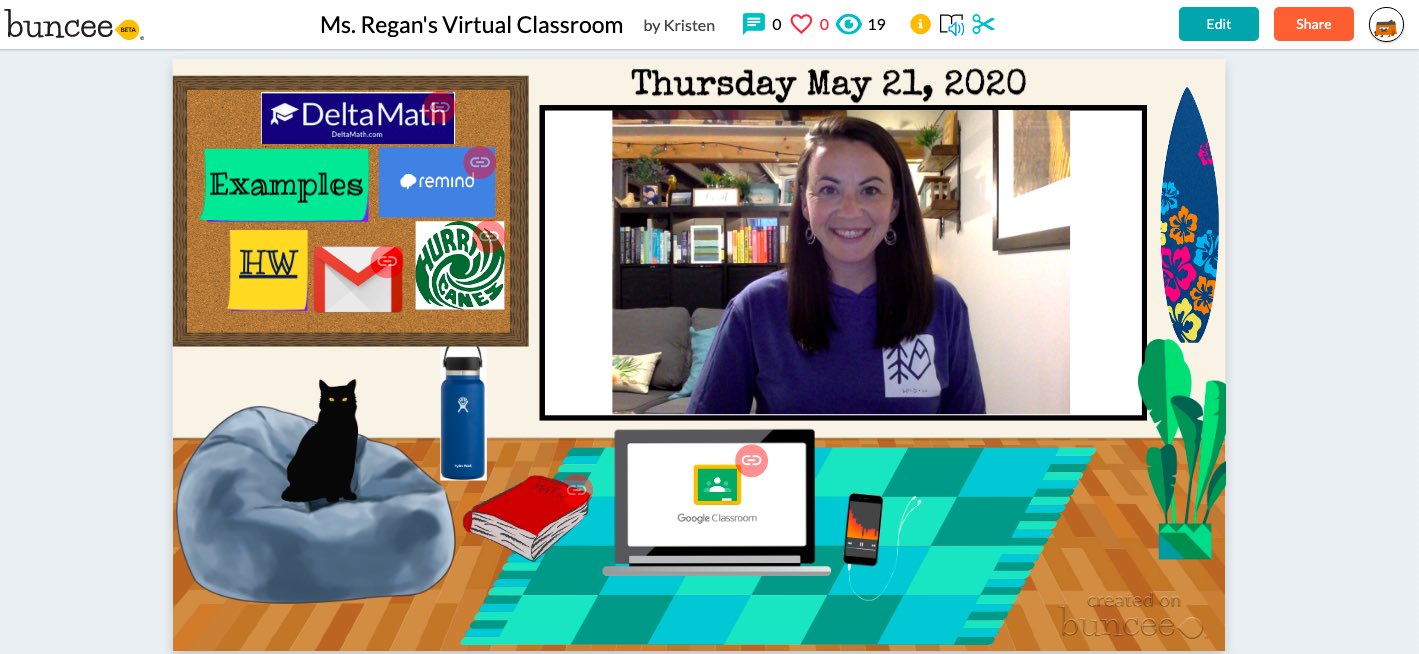
Explore virtual classrooms.The Merrills shared a template and I created several virtual classrooms for my students!

Check out Marie’s virtual classroom where she lost her Bunceemen!

Explore Summer fun for early learners

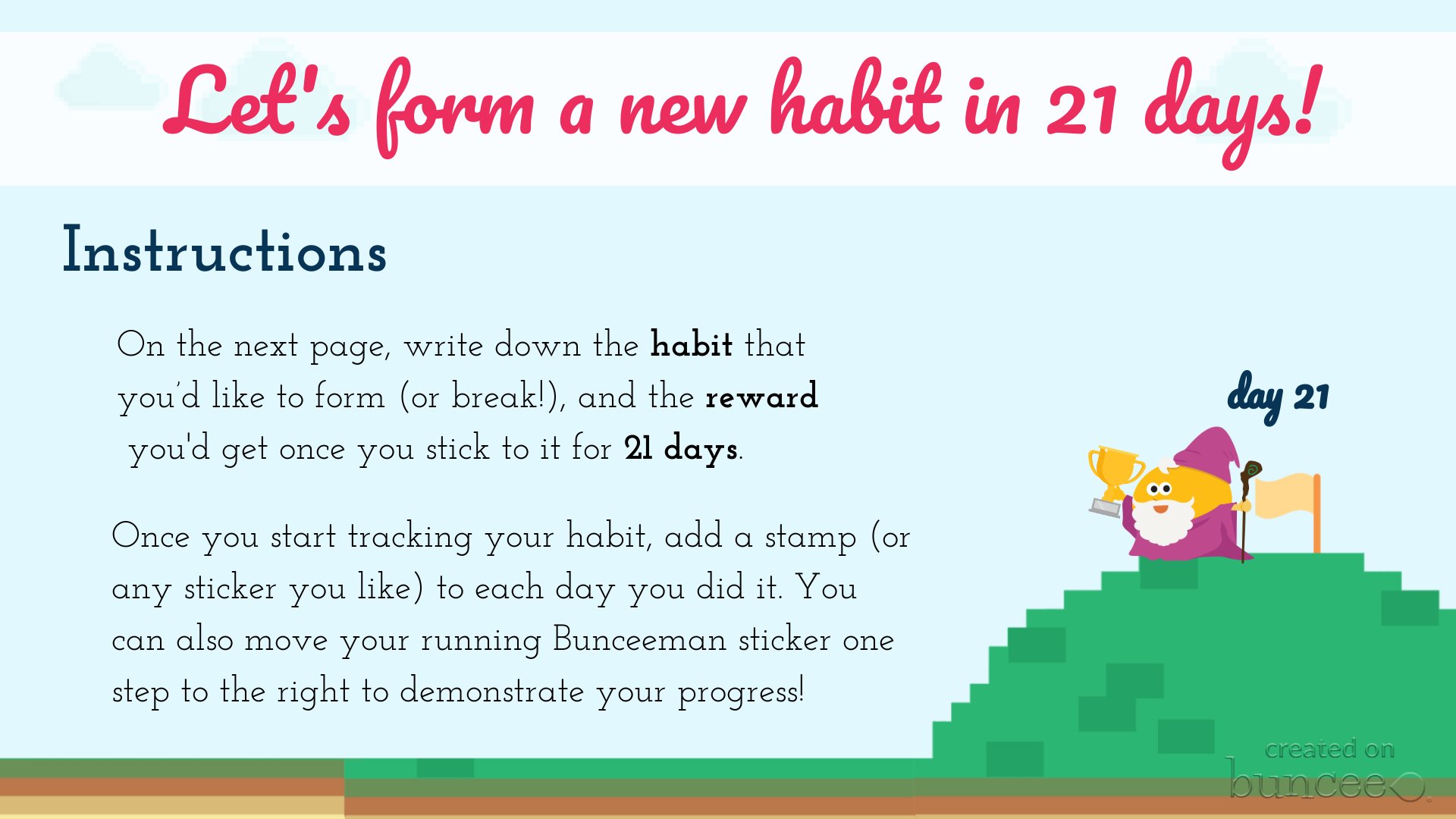
A new habit in 21 days activity

Image

My Spanish I virtual classroom

Art Classroom by Colette

Image

Image

Kristen Regan’s Classroom!

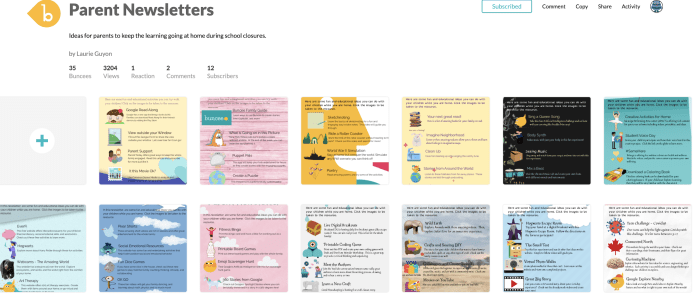
Check out Parent Newsletters from Laurie Guyon

Barbie Monty said, “My favorite is having my students create a Buncee end of the year reflection.

Bonnie Foster created a Covid-19 Survivor certificate

.

Ide Koulbanis is having students plan a trip! Bunceeman Adventure

Daily Reflective Thoughts by Don Sturm

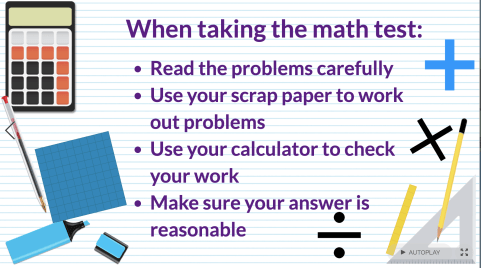
Test Prep and Motivation: Amy Nichols

Self-care suggestions

End of the year celebrations and certificates or make a Buncee Card! 

Image


Virtual Camps!

Image

To learn more, join in the daily live webinars with Buncee at 12 and 3pm eastern. I also have webinars on Tuesdays at 4pm!

Check out the Ideas Lab!

Image


Fun badges and learning opportunities!

Image

Finding Peace and Balance


Guest post by Karl O’Leary, @KarlOLeary4, High School Principal

The new normal has looked very different for all of us. From work, to family, to personal lifestyles, so much has changed to acclimate to what we need to do for our society. The old manner of taking time to have space, sit down dinners to review your children’s day at school, and the weekend at sporting events looks drastically different. But does it have to?

Peace and Balance

What does is mean? Peace has been connected to the long-haired hippie days of Woodstock and tie dye colored shirts. This is a misconception of perception. Finding Peace within yourself enables you to:

  • Look inwardly and reflect about how you live your life.
  • Be true to yourself.
  • Maintain a positive mental attitude (PMA).
  • Do good toward others.

This can be in mediation, or reflection, or journaling. Taking the time to look in the mirror to assess yourself and what you do can provide opportunities to reconnect with your passions. Start with the question: Am I being what I wish to be?

Balance is connected to daily routines and activities. Like any pie chart, listing what activities are done each day provides a visual to understand where time is spent. Finding Balance entails making the necessary goals for living life how you wish.

What is different now is everything! But there are opportunities with how change exists.

  • Find time to take the morning walk
  • Incorporate routine
  • Have fun with family in a different manner
  • Leave work for work hours
  • Be realistic with expectations

The new Balance does require for some phone calls outside the old hours, but there is also opportunity to not send information late to others. By flipping the conversation, would you wish to have your child’s teacher email you during dinner, or family time? That time can be used for reflection and relaxation. Balance the need to send assignments outside of school hours; the email will still be there in the morning!

The new normal of Peace and Balance are what we make it to be. There are so many great opportunities to connect, at a low or free cost, to try what we have always wanted to. Look inwardly to reassess our daily activities and press the reset for moving forward.


**Interested in writing a guest blog for my site? Would love to share your ideas! Submit your post here.


Looking for a new book to read? Many stories from educators, two student chapters, and a student-designed cover for In Other Words.

Find these available at bit.ly/Pothbooks  

TeacherCast Educational Network | Developing Standards-Based Instructional Technology Integration

Technology Integration - Instructional Coaching - Productivity Secrets for Educators

Leadership Liner Notes: Sean Gaillard

Built on Connection. Tuned for Impact.

Stories by Thomas Oppong on Medium

Dr. Rachelle Dené Poth @Rdene915 Educator, Consultant & Keynote Speaker, Author, Attorney #THRIVEinEDU

Hooked On Innovation

When Innovation slaps you in the face, we slap back.

Teach Better

Dr. Rachelle Dené Poth @Rdene915 Educator, Consultant & Keynote Speaker, Author, Attorney #THRIVEinEDU

BrianKulak.com

Dr. Rachelle Dené Poth @Rdene915 Educator, Consultant & Keynote Speaker, Author, Attorney #THRIVEinEDU

The Principal of Change

Stories of learning and leading

Mandy Froehlich

Dr. Rachelle Dené Poth @Rdene915 Educator, Consultant & Keynote Speaker, Author, Attorney #THRIVEinEDU

Katie Martin

Informed by research, refined by practice

#RocknTheBoat

Rocking today's classrooms, one teacher, student, and class at a time.

User Generated Education

Education as it should be - passion-based.

Learning as I go: Reflections & lessons learned

Dr. Rachelle Dené Poth @Rdene915 Educator, Consultant & Keynote Speaker, Author, Attorney #THRIVEinEDU

Serendipity in Education

Join me, Allyson Apsey, as I stumble upon the fortunes of learning, laughing, and celebrating alongside incredible people.