Chicago by Hedreich Nichols

Guest post

Listen to Smallbites via Hedreich Nichols, @Hedreich

This week is part two of the SmallBites Black History series. It could aptly called “Beyond the Struggle”. When I think of June and Pride celebrations, there is so much joy. Yes, there is talk of Stonewall and the fight for human rights, but there is a joy that we are missing in February. I believe that comes from the focus on our civil struggle and a lack of knowledge about the many achievements of people from the African diaspora in America.

Let Your Students Do the Sleuthing

I invite everyone to take time, this month especially, to celebrate all that Black Americans have accomplished in the face of insurmountable odds. Did you know that most enslaved people were freed with no education, no restitution and no path to transition from enslavement to freedman in a hostile environment? And yet, there have been notable achievements in every sector, achievements that are not widely known. Since this month is dedicated to Black History, allow your students to research Black business owners, scientists, writers, inventors, choreographers, educators, politicians, generals, etc. Discuss who they find and allow your students to take the lead. I’m hoping that will be acceptable even in today’s climate.  There is so much to celebrate and Black achievement in the US is so much deeper than Civil Rights and Soul food.

Who Wants to Join Me??

If you do find someone especially interesting to celebrate, I’d love to interview one or two Black History super sleuths this month for SmallBites. Message me at 5smallbites@bluewin.ch.

You can read more about Bronzeville in one of 3 of my social justice titles for Cherry Lake Publishing, From Black Wall Street to Allensworth

You can read more about the humanitarian crisis of emancipation from Professor Downs’ book, Sick From Freedom.Post navigation

Check out the podcast here.

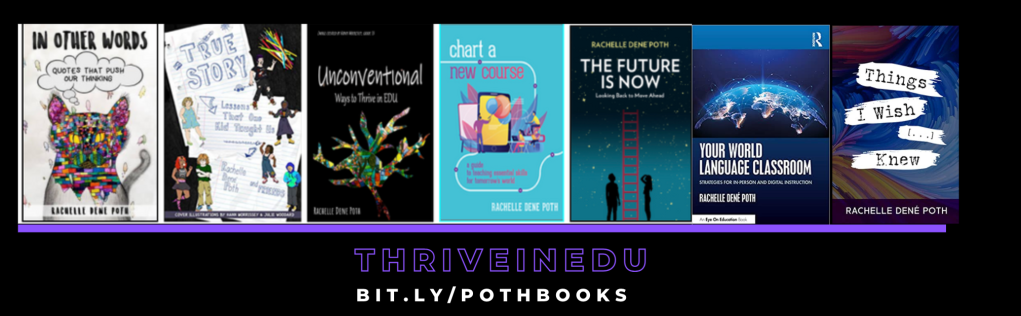
**Interested in writing a guest blog for my site? Would love to share your ideas! Submit your post here. Looking for a new book to read? Find these available at bit.ly/Pothbooks

************ Also check out my THRIVEinEDU Podcast Here!

Join my weekly show on Fridays at 6pm ET THRIVEinEDU on Facebook. Join the group here

Take A Knee

 BY BRIAN-KULAK

I beat Colin Kaepernick to the knee by a cool twenty-six years. 

Before the former 49ers quarterback literally took a knee during the national anthem to raise awareness about police brutality and social injustice, I had already begun the practice, albeit for a far less political purpose. 

As a waiter at a local Pizza Hut, I started the unorthodox practice of taking a knee when I took orders. Regardless of who was in front of me, I just thought it was easier, and more comfortable, to take a knee and write the orders on my pad while leaning against the table. For me, it was about ergonomics because standing and writing were awkward, and because I have terrible handwriting, I needed to lean on something to ensure I would be able to understand what I wrote minutes later. 

At one point, my boss called me over and asked why I took a knee. I explained, and he just looked at me and said, “But it looks weird. I’d rather you stand up.” 

Now, at 19, I wasn’t about to make a stink. He was my boss, and I needed the part-time job. Still, as I look back on it, what difference did it make? I would argue my customers appreciated me meeting them on their level instead of making them look up at me like some deranged, pizza-wielding, megalomaniac. 

A few years later, as I started my teaching career, I took a knee all the time. When I would stop by a student’s desk to offer feedback, redirect, or check in, I would take a knee. Now, in year twenty-four, I still find myself on bent knee, despite one of them being ravaged by arthritis and a torn meniscus, and I make sure to start on day one. 

Whenever I meet our new kindergarteners during summer meet-and-greets, I always take a knee when I offer my hand to introduce myself. The action has become as involuntary as a sneeze; the reaction from kids invariably features disarmed smiles and enthusiastic high-fives.

As conversations in education continue to focus on equity and access, we need to be mindful that our students first associate equity with their access to us. Providing a model of those two complex concepts ensures kids can see and feel each Immediately. 

But it’s much more powerful than that when you consider that children are forced to look up to grown ups as a matter of course, their little necks perpetually craned to get our attention. Taking a knee flips that script in such a way that balances power, something children experience rarely. 

Ultimately, we are all just grown-up versions of the children who once had to look up to people all day. Some of us still do. But no one should have to. 

Take a knee. 

**Interested in writing a guest blog for my site? Would love to share your ideas! Submit your post here. Looking for a new book to read? Find these available at bit.ly/Pothbooks

************ Also check out my THRIVEinEDU Podcast Here!

Join our weekly show on Fridays at 6pm ET THRIVEinEDU on Facebook. Join the group here.

Change Your Bat Angle

Guest post by Brian Kulak

K-5 Principal at Tatem Elementary School in NJ

@Bkulak11

Brian’s Book: Level Up Leadership: Advance Your EduGame

Read this blog long enough and you’ll realize how obsessed I am with baseball. Inevitably there will be posts devoted to baseball, anecdotes will center around baseball, and metaphors will be drawn from baseball.

Barguments often focus on which sport is the most difficult to play, the most demanding physically and mentally, the most failure heavy. As a lover of all sports, I can appreciate that an argument can be made for each of the four major sports: baseball, basketball, football, and hockey but, to me, there’s really only one answer.

Baseball.

Because of the physics (round ball, round bat), the variables (pitcher, weather), and the psychology (streaks, slumps), there is nothing more difficult than hitting a baseball consistently. A monster game at the plate can just as easily be followed by a soul-crushing slump of weeks, or months, the time in between at-bats seeming equal parts interminable and immediate as you perseverate on what went wrong.

As a 41-year-old weekend warrior, I only get a chance to play games on Sunday mornings. While my preparation for each game often dictates some midweek tee work or live batting practice, I’m still only playing once a week. Admittedly, I take baseball too seriously, but part of me doesn’t apologize for that because I don’t understand why folks would set out to do anything poorly, so I want to play as well as I can each week.

A few years ago I suffered through my worst season ever, and I’m including my high school playing days, during which I hit a paltry .179. During that summer, getting on base was such an anomaly that I could recall when I did reach base because it was only a handful of times. That ain’t good.

Deflated but undaunted, I continued to work that offseason because I was not going to return to my team the same player. At one point, I sent a video of myself taking swings off the tee to a friend of mine who is a hitting tactician. In seconds, he responded with a diagnosis and, ultimately, saved my swing.

“Dude, look at how far you’re wrapping the bat around your head. Change the bat angle to 1 o’clock before you load, and you’ll be quicker to the ball.”

Change. Your. Bat. Angle.

No amount of work on my own would have led me to that conclusion because, though I would have been working hard, I would have been working incorrectly. There was no way for me to self-diagnose my own flaw, so I had to ask for help.

Now, I “change my bat angle” all the time.

When I’m struggling with a certain colleague, I change my bat angle.

When I’m trying to convince my five-year-old that he can, in fact, put on his own socks, I change my bat angle.

When my early morning writing process stalls, I change my bat angle.

As you approach the upcoming school year, I challenge you to change your bat angle. Reflect intentionally on that which you have done the same way each year and change it.

  • Experiment with flexible seating and let the kids help you design the classroom’s layout
  • Revolutionize your “Back to School Night” by asking parents to leave their kids a video via Flipgrid
  • Reframe your instructional walkthroughs to focus on the kids, even a specific kid, in each room, and then write those kids a note of appreciation
  • Flip and hang old posters and allow kids to recreate them using their own words and images
  • Print, laminate, and hang Tweets or blog post excerpts about which you want your staff and students to think
  • Use a mobile desk so you’re in the hallways more and in your office less
  • Take time for yourself each day, even if it’s five minutes of nothing but sitting and breathing

Baseball is a game of failure, and in many ways, so is education. In each, the best players make adjustments all the time in order to best help their team. In each, those who refuse to make adjustments all the time don’t often have teams for long.

Change your bat angle.

**Interested in writing a guest blog for my site? Would love to share your ideas! Submit your post here. Looking for a new book to read? Find these available at bit.ly/Pothbooks

************ Also check out my THRIVEinEDU Podcast Here!

Join my weekly show on Mondays and Fridays at 6pm or 6:30 pm ET THRIVEinEDU on Facebook. Join the group here

Educators: 10 Ways to Make Time for Self-Improvement

Originally published on Getting Smart
As educators, we need to make more time for self-care. In order to bring our best selves to our classrooms and our schools, we must make time for our needs each day. Over the holiday breaks, making time to do some normal things like catching up with family and friends, and sleep in late, are good ways to recharge over the summer break.

When we have these breaks, it is easy to get into a new daily routine, finding time for all of the things that we wanted to do but couldn’t fit into our schedules throughout the year. It may take a few days to adjust, but I find that in a short amount of time, I am well into my winter break routine of catching up on some work and enjoying the extra time with family. The days are still filled but on a more relaxed schedule. Many take advantage of the extra time and lack of a set schedule to engage in personal and professional development. Whether it is a time to travel with family and friends or something more professional like attending conferences or taking a class, we all find ways to fill all of that extra time. We get used to a new routine, and likely feel pretty good about our improvement and feel some balance until August arrives and educators return to their classrooms, hopefully, recharged and excited for the new school year.

This has been a challenging year and educators can quickly become burnt out trying to prepare everything and keep up with the changes. We can struggle with finding balance and making time to keep up our personal and professional growth during the school year . So how can we still do ‘all the things’ and stay balanced and find enough time for ourselves?

Here are ten ways to add in more time for you and to be more productive each day:

  1. Connect. We are surrounded by so many people each day in the midst of thousands of interactions. But how many of those interactions are truly meaningful and give us the needed time to pause, lean in and really listen? Are we able to connect with family, friends, students, and Professional Learning Networks (PLN)? Find a way to connect every day. Make time for family first. Share a meal together, go for ice cream, take a walk, watch TV, or play a game. Family time is critical; remember to make time for your ‘school family,’ too. Whether it’s by greeting students at the door, spending time in the hallways or the teachers’ lounge, or using social media to connect through messaging, make time for those moments. Find at least one person to connect with each day. It helps to keep us grounded and gives us access to a constant support system.
  2. Have a routine. Sometimes it comes down to just having a little bit of consistency in each day. Maybe this means setting aside a specific time to read in the morning, listen to music, respond to emails, or simply reviewing your schedule for the day. Personally, I find that having these activities during the day is one way to keep myself in balance. Knowing what my day holds or starting each day with a certain task like reading a blog keeps me accountable for taking time for myself.
  3. Choose one. There are so many choices we have for activities that are worthwhile for our mental and physical well-being. Our days become quite full, and the worst thing we can do is overwhelm ourselves by trying to do everything. Some good advice I received from a friend is to simply choose one thing. Get outside and walk, meet up with family and friends, whether once a week or as often as your schedule allows. Try to pick one activity per day that will be good for your well being.
  4. Disconnect. We all stay connected by a variety of devices. Technology is amazing because it enables us to communicate, collaborate and access information whenever we need to. However, it disconnects us from personal connections, takes away a lot of our time, and can decrease our productivity. It’s beneficial for us to make time to truly disconnect. Whether you leave your device at home during a vacation or simply mute notifications for a period of time during the day, it’s important to take a break. Pause to reflect, and be fully present with family and friends. Personally, I struggle in this area but have been more intentional about taking a break from technology.
  5. Exercise and movement. Think about the students in our classrooms and the learning experiences we create for them. Do we have them stay seated in rows each day or are there opportunities to move and be active? Finding time for exercise and movement is important to our well-being. Go for a walk, have a dance party, or use an on-demand or online exercise program. Get up and moving with your students, and take learning outside whenever you can. Exercise has so many benefits that even setting aside 10 minutes a day is a great way to boost energy and mental wellness. Invite a friend or colleague to join you and hold each other accountable.
  6. Time to rest. Just like exercise, it’s also important to get enough rest. How many times do educators stay up late grading papers or writing lesson plans, and get up extra early to prepare for the day?  We can’t bring our best selves to our classroom if we are tired. Lack of sleep and quality rest will negatively impact our mental and physical health. Our students and colleagues will notice our lack of energy and possibly even mental clarity, so we need to ensure time for sleep to receive the positive benefits!
  7. Reflection. It is important that we model lifelong learning and the development of self-awareness and metacognition for our students. This involves setting aside a period of time where we reflect on our day, the progress we made, the challenges we faced, and even epic fails that we might have experienced.  Finding a way to capture these reflections whether in a blog or journal or using an audio recording to listen to later, are all great ways to track our progress. Then we can revisit our reflections and ask ourselves, “Am I a little bit better today than I was yesterday?”
  8. Learning. Education is changing every day. There are new topics, trends, and tools that make keeping up with everything tough. There are so many ways that we can learn today that don’t take up too much time, however. While traditional professional development training and in-person sessions are useful—especially for the opportunity to connect with other people—the reality is that carving out availability to do this on a regular basis is a challenge. Instead, find something that meets your schedule. Whether it’s listening to a podcast or participating in a Twitter chat once or twice a week, watching a webinar, reading a few blog posts, or joining a group on Voxer to discuss what’s on your mind and ask questions about education. There are many ways to learn on the go!
  9. Celebrate. Make time every day to celebrate something. Whether it’s a positive event in one of your classes, something one of your students did, recognizing a colleague, validating your own efforts or just a random celebration, focusing on the positives will impact your well-being in the long run. No matter how big or small, the steps toward success and achieving goals and even some mistakes should be embraced and even celebrated. Modeling a celebration of the learning process, especially from failures, sends a positive message and is a good model for students.
  10.  The power of no. It’s amazing how difficult it can be to say no. Educators are often asked or volunteer to assume additional responsibilities like sponsoring a club, joining a committee, chaperoning an event, or participating in other school events. There are so many things that comprise our role as educators and with our passion for teaching, it can be difficult to say no, especially when it comes to education and our students. But as hard as it is, sometimes it’s the best choice. Think about what is most important to you and the limited time that you have. I focus on why and how my participation or acceptance of whatever it is can benefit my students and the school community. Saying no is tough, but it is more than reasonable to say no sometimes. We have to do what is best for ourselves, so we can do what is best for our students.

These are just a few ways I’ve tried to maintain more balance and be more effective and productive in my work. We have to start each day with a focus on self-care, because that is how we can make sure that we are bringing our best selves into our classrooms, into our schools, and home to our families each day.

**Interested in writing a guest blog for my site? Would love to share your ideas! Submit your post here.

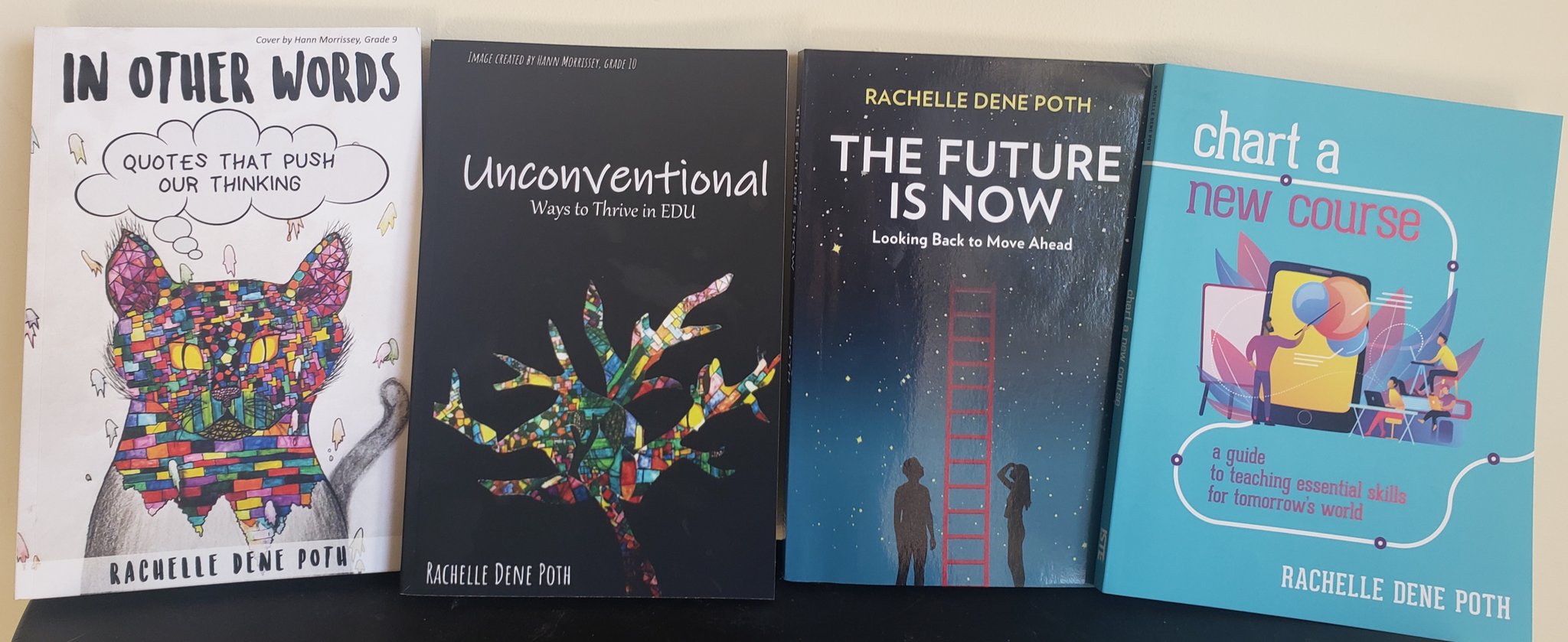
Looking for a new book to read? Many stories from educators, two student chapters, and a student-designed cover for In Other Words.

Find these available at bit.ly/Pothbooks  

Supporting Educators and Students

Guest post by Lee Ann Raikes, @mastereducator @MRS.RAIKES/MES

Teaching is difficult. Studies have shown that some teachers have taken on symptoms of PTSD because they become so engrossed in each of their students’ lives. If you are human, it is bound to happen. One of the reasons I chose to pursue this profession was to inspire and empower our future generations to be bold enough to follow their passions regardless of any obstacles that stand in the way. Easier said than done when most of our students come to us with some form of past trauma that can hinder their desire to learn and grow both as an individual and a student. The students who need us the most are the ones who never miss a day of school and the students who challenge us the most. While I still struggle some days in finding a way to maneuver through the behaviors my students may present, I have found ways to make my life, as well as my students’ lives, in and out of the classroom more bearable.

I am a huge proponent of whole child education and realizing the importance of building relationships with my students. I am also a very passionate and emotional human being. I made myself physically and mentally ill because I could not find a way to help the most challenging students understand their potential. They would fight me every step of the way. The harder I tried to support them, their behaviors would escalate. After many conversations and battles, it all became so clear. These students were so afraid that I would let them down and give up on them, as so many others have. An epiphany of sorts, but that didn’t make my job at hand any more comfortable. Sadly, there were days I wanted to give up. I knew I couldn’t go on this way, so I began researching what I could do to transform learning in the classroom and improve my mental state. I am known as a very energetic, happy, and positive individual. My students feel comfortable in my classroom and know they can come to be at any time, but I knew I needed to find strategies that would better prepare me for dealing with obstacles that would impede learning and growth over the school year.

Like it or not, I, as the adult in the room, set the tone. It all begins with a mindset. If I am saying to myself I am going to have an awful day, then I will. If I hold preconceived notions about my students, that is a disservice to them. I would sabotage my day the moment I woke up by putting thoughts in my head that possibly weren’t even going to occur. Not only was this unfair to myself, but my students as well. I would engage in negative self-talk, which led to having a terrible day. I would think during my first period about a student I wouldn’t see until 4th period and how awful he was going to be. When he would enter the classroom, and he was having a great day, I already had it in my mind he was going to misbehave, so I would react negatively instead of correctly praising him for engaging appropriately. How wrong is that? Trust me, students felt any vibes I was putting out there, whether positive or negative. If I wanted to continue to grow as an educator and connect with my struggling students, I had to change.

For about two years now, I have followed the strategies of a growth mindset, the power of positive self-talk, and writing daily affirmations. I have brought these strategies into my classroom as well. My 7th graders had no idea that challenges grow the brain. They didn’t realize that the more they said they hated math, the harder it would be for them. They felt they were labeled by grades or the services they received; therefore, they wouldn’t give their best efforts. By visualizing where they wanted to go, it made the process of achieving their goals more bearable. Now, we as a community of learners catch ourselves before letting negative words or thoughts come off our lips or enter our minds. Just by teaching the students about the brain and the power of a positive attitude and mindset, I have seen substantial growth in my students academically and as humans. Yes, I prepare my students for meeting academic goals, but more importantly, I want to prepare them for life. Life is hard, but understanding positive thinking’s benefits and power can make difficulties easier to handle.

Reflecting is a powerful tool. I knew I could do better and find ways to deal with the teaching profession’s emotional aspects. Ask yourself, are you sabotaging your day? Do you hinder your relationship with your students or colleagues based on preconceived notions? Do you limit yourself based on negative thinking or a bad attitude? It matters! I challenge you to wake up each morning and start the day with positive self-talk and carry that into the world. You will find a sense of inner peace, and the negativity you encounter won’t consume you. Research has shown that people who are positive thinkers add years to their lives. We are what we say we are. Who are you choosing to be?

3 Ways to Unleash the Most Creative Students Ever (Part I)

Guest post by @Chris_Chappotin

Assistant Superintendent of Curriculum and Instruction

————————-

I am certain to be way late to the party, but consider me asking for a friend:

What is the point of Minecraft?

Through a first-person view, the player mines resources to craft a whole new world. That’s it.

No score.

No clock.

No competitors.

No levels to beat. No game to win. No way to throw the game controller across the room while flossing as confetti explodes all around and ESPN Jock Jams push unhealthy decibel levels, because you have just become the ultimate Minecraft champion.

Instead, you mine and you craft. You mine, and you craft. You gather resources and apply those resources with no clear victory to be achieved.

Except, if you have ever watched kids mine and craft, you know that the experience unlocks creativities that you never knew were there. Swimming pools. Gardens. Dining rooms. Roller coasters. Towers. And more and more and more.

So much so, that it causes me to ask follow-up questions: Could it be that creativity was present all along? Could it be that Minecraft contains the code to release the creativity that kids naturally possess? In short, are kids wired with creativity? If so, what learner experiences can we mine and craft in order to unleash the most creative students ever?

Facilitate Intrigue

Facilitate intrigue to develop the most creative students ever. I believe that most students come to school each day saying, “Fascinate me. Captivate me. Show me why it is good for me to devote most of my day to this.” For educators, if this is the case, we should eagerly anticipate and embrace such opportunities every day. How? By intentionally designing learner experiences that tap into the natural curiosity tendencies of our students. Teachers that embrace this challenge…that respond with: “Just wait until you experience the learning planned for today. I’ll show you!” These are the teachers, classes, and experiences students run toward.

Therefore, how can we mine intrigue to craft irresistible learner experiences for students? First, ensure that students walk into an experience that is already occurring. Intrigue levels are typically high when we feel as if what we are about to participate in is already happening. This could be as extravagant as transforming a classroom into a hospital or restaurant or courtroom. It could also be as simple as playing music, appealing to the sense of smell, or having a design challenge ready for students as they enter the learning environment. I imagine students running into your learner experience in order to determine just what in the world the teacher is going to do today!

Second, launch learner experiences with questions that force students to take a side or argue a point. In other words, “Here’s the scenario. What side are you on and why? What are you going to do about this? What do you think about the way this person or people-group handled the situation?” By inviting students into a situation, intrigue develops as they forget they are participating in a class; but instead, take on the character roles of the people in the scenarios. Educators can deepen this reality by reorienting learners with questions such as: “Why do you think we are investigating this scenario? Why do you think I forced you to choose a side and defend your choice? How do you feel about the lesson so far, and where do you think we are headed?” Maybe, at this point, you offer students voice and choice as to where to proceed next. Regardless, they should be charged up with intrigue and buy-in while eagerly anticipating whatever is coming next.

Third, in order to facilitate intrigue in a learner experience, change the meeting location for class. If the class comes together in a location that is unusual, intrigue is a natural result. Why? Because you are going to get a myriad of questions that all begin with: “Why are we having class here?” Whether you are outside, in the hallway, in the cafeteria, in the gym, or in an online learning environment, if the location is atypical, intrigue will result. Intentionally leverage that to your advantage, and take students on a learning journey they will never forget. Consistent intrigue builds anticipation that becomes excitement, and excitement is fuel for learning.

**Interested in writing a guest blog for my site? Would love to share your ideas! Submit your post here.

Looking for a new book to read? Many stories from educators, two student chapters, and a student-designed cover for In Other Words.

Find these available at bit.ly/Pothbooks  

360 degree inclusive feedback for learning through storying

Guest post by Virna Rossi @VirnaRossi

Inclusive feedback for learning is like a flower. A flower is both fragile and resilient. To thrive it needs good conditions, such as good soil.

Who is the learner in the feedback process? It is the student. But it is also the teacher. Both students and teachers can thrive with inclusive feedback for learning.

The roots

The roots of the feedback flower are the inclusive principles and values that underpin inclusive feedback practices such as:

  • Accessible
  • Dialogic
  • Iterative
  • Respectful
  • Timely
  • Personalised
  • Developmental

The Petals

To be multidimensional, feedback should come from a variety of sources. In the flower analogy, these are the four petals which form the 360° wide-angle view.

Self

Inner feedback is very valuable to develop self-efficacy. We ‘talk to ourselves’ about our learning, during the learning experience as well as once it is completed. If we journal or blog – articulating our inner feedback – our ongoing inner narrative becomes more explicit and is more easily shareable.

Others

This is to enhance peer-learning. For students ‘others’ can be fellow students; for teachers, these can be colleagues and the students themselves.

Top-down

For students, this is feedback from teachers and other educators such as librarians. For teachers this is feedback from line-managers, principals or anyone ‘above’ them in their institution.

Research/literature

For the students, this the body of research of the discipline that they are studying: learning what the ‘experts’ in the field say – and discovering the present boundaries of the discipline – helps the students situate themselves within their field of study.

For teachers, engaging with current educational literature (generic or subject specific) provides indirect feedback on their own professional practice and expands their pedagogical horizon.

The Leaves

How, in practice, can we educators receive and give this type of inclusive feedback?

One very effective way in which the feedback flower can thrive, fed by inclusivity values, is through the use of journaling, storying and blogs (one of the leaves at the base of the flower). This applies to all disciplines.

Learning feedback activities such as these promote pausing and reflecting; they constitute a personal, safe space; they are context rich; they help learners re-focus, articulate and share their learning experience.

Journaling can effectively be integrated into the course. Teachers can plan a dedicated journaling time towards the end of every lesson: everyone is invited to blog or journal for about 15 minutes. Each student’s inner feedback written in the form of blog/journal can then be shared, discussed and used for ‘comparative’ learning. It can be used for formative and summative assessment submissions; it can also be part of an ongoing, life-long learning portfolio. And it constitutes very rich feedback for the teachers.

To build trust and truly model a learning mind-set, teachers should also journal at that same time: to articulate, record and share their inner feedback on the lesson, the cohort, their own learning, successes or missed opportunities in the learning that just took place. This enhances teachers’ feedback literacies.

The pandemic has accelerated and emphasised the need to review assessment and feedback processes. Teachers must design learning experiences that enable and enhance feedback literacies through inclusive, learner-driven processes. Feedback literacies are situated. The emphasis is now on engaging and learning from feedback – rather than simply about teachers giving ‘good’ feedback. For all these reasons, storying, journaling and blogging are powerful, effective ways to encourage 360° inclusive feedback for learning.

Find out more

Watch my 5 minute video below about the why/what/when/who/how of inclusive feedback: What best practice in feedback can I embed in e-learning?https://player.vimeo.com/video/408054242?dnt=1&app_id=122963

References

Baughan, P., (2020) On Your Marks: Learner-Focused Feedback Practices and Feedback Literacy. [ebook] AdvanceHE. Available at: click here [Accessed 17 September 2020]

Nicol, D. (2019). Reconceptualising feedback as an internal not an external process. Italian Journal of Educational research, 71-84. Available at: click here [Accessed 17 September 2020]

Winstone, N. and Careless, D. (2019) Designing effective feedback processes in Higher Education, London: Routledge

*********

**Interested in writing a guest blog for my site? Would love to share your ideas! Submit your post here.

Looking for a new book to read? Many stories from educators, two student chapters, and a student-designed cover for In Other Words.

Find these available at bit.ly/Pothbooks  

How to Find the Right Space to Create and Engage

Earlier this school year, I thought about how I could be more consistent in my classroom. When I say classroom, I mean all aspects of where I engage in my work and not simply my physical classroom space. Some areas that I wanted to focus on were the building of relationships, making better and more consistent connections with families, and designing a comfortable and welcoming classroom space for my students.

I think about each of these, I see them as “spaces” where we interact and exist together. I recognize that as educators, there are a lot of different spaces that we need to create and stay connected within. Being able to find the best ways to stay engaged in each of these spaces is important, especially with busy schedules and demands of the work that we do. Having the benefit of digital tools that can assist us also makes it easier to provide more for our students and their families, both in and out of our classroom space. So what are the spaces that educators need to create and engage in?

A Professional Learning Space

For educators, it is important that we really look at our professional learning space differently today than we may have in the past. For myself, having been an educator for many years, I did spend the first 15 years of my career mostly in isolation. While I engaged in opportunities for professional development within my school or attended a local conference periodically, those were the only types of professional learning spaces that existed for me—because I limited myself. What is worse, is that I also placed limits on my students by not putting myself out there to connect, to learn new ideas and methods to bring back to my classroom. Years ago, finding learning spaces and making time to engage in them was more time consuming with fewer choices available. Today, we have access to so many different and more accessible professional learning spaces. We can find something that meets our interests and our needs especially when it comes to time and place. What are some options?

ISTE offers Professional Learning Networks (PLNs) focused on specific topics related to technology and roles in education. It is a great space to become connected and to share ideas and connect classrooms.

LinkedIn is a social media platform for professional connections and professional learning. Educators are using LinkedIn to connect, gather resources and even help students develop their professional identities in this space.

Twitter offers many ways for educators to connect and learn via Twitter chats happening on a daily basis, and by following specific hashtags related to education. It is a great space to ask questions, to crowdsource ideas and to build a PLN.

Voxer is a walkie-talkie messaging app that promotes instant conversation with people from all around the world. Educators use Voxer for creating small groups for a PLC, having a space to share ideas and collaborate with educators from around the world, and even for participating in book studies and virtual learning events.

A Classroom Space, Both Physical and Virtual

The look of classrooms and learning today is so different from what it was when I was a student and quite different than even five years ago. We have the potential to learn from anywhere around the world and at a time that meets our needs. We truly have the capability to provide more for our students than we’ve ever been able to before. Through the use of digital tools and purposefully leveraging technology, we can provide the support our students need exactly when they need it. The world becomes our classroom when we include some of these tools and ideas in our practice.

The physical space can look quite different when we use station rotations in our classrooms, provide more flexible learning spaces for students to learn in, and also connect our students with learning that happens in our school community. We redefine the “space” of the classroom and can provide something to meet every student’s interests and needs. We can also explore different digital tools that help us create a more accessible connection with our students and provide ongoing support when they need it. Here are some of the tools that we have used to stay connected in our learning space.

Edmodo is a digital space for students and teachers to interact in a safe learning network. It provides access to resources, has helped us facilitate global collaboration and build digital citizenship skills.

Padlet allows us to create a wall of discussion and share audio, video, music, photos and text. It has helped us to connect with classrooms from around the world in real-time interactions.

Flipgrid is great for extending classroom discussions and providing students with a comfortable way to express their thoughts through video responses. Students build comfort that transfers into the physical classroom space by being able to connect with their peers in the digital space.

Kidblog provides many ways for students to build literacy and digital citizenship skills, as well as create their online presence. It promotes class discussion and collaboration and gives students a space to share their ideas and track their personal growth in the process.

A Space for Promoting Student and Family Engagement

Being able to connect with the families of our students is critically important. In order to provide the best for our students, we need to make sure that we are building and fostering true family engagement. To do so, we must rely on the traditional methods we have used such as exchanging emails, making phone calls home or holding meetings in the school, but now we have access to doing even more. Being able to bring families in to see and experience what learning looks like for their students, to share in the learning that happens in the classroom or to participate in a student’s in-class presentation is possible through digital spaces we set up. Events held at schools such as Open Houses, or STEAM showcase events, for example, are great for showing families the amazing things happening in our schools. However, not all families can participate due to time constraints which is why having digital tools available that enable us to share these events can make a difference.

Remind is helpful for messaging and sharing photos and files with families to include them in the school events.

ParentSquare facilitates better communication and collaboration and helps to build a solid connection between the home and the school community.

Buncee is a multimedia presentation tool that can be used to design a class newsletter with audio and video, or for students to share their work with families and include it in a Buncee presentation. Using a tool like this is helpful for families that cannot attend events such as Open House.

Seesaw is a platform that enables teachers to share what is happening in the classroom with parents. Teachers can record and directly share each child’s progress.

These are just some of the spaces that we need to consider as educators today. There are many options available for creating these spaces and the best part is that we can find something to meet the needs of our students, their families and ourselves.

**Interested in writing a guest blog for my site? Would love to share your ideas! Submit your post here.

Looking for a new book to read? Many stories from educators, two student chapters, and a student-designed cover for In Other Words.

Find these available at bit.ly/Pothbooks  

3  books.png

What if Students Designed Their Education?

Originally published on Getting Smart, updated

In education today, there have been a lot of discussions in regard to what skills students may need for the future. We hear conversations about “21st century skills” and how to best prepare students for life and work in the 21st century. Often these 21st-century references are followed by reminders that we are well into the 21st century.

According to Alan November, keynote speaker and international leader in educational technology, there are certain skills that students need and that teachers need to promote within the classroom. Students need to be taught “how” to learn and prepare for more than knowing the content, by developing skills that are transferable to multiple areas of life and work. During a keynote presentation, November stated: “I think we should begin to move more and more toward the skill side, because if we teach you to memorize and regurgitate content and your job is wiped out by technology, you’re not well prepared to reinvent yourself if you didn’t learn how to learn.”

November’s message reinforces the importance of students developing skills such as being able to communicate, collaborate, problem-solve, think critically, to name a few. These are some of the key skills that will enable students to be adaptable to whatever type of work they ultimately find or whatever the next steps are once they leave high school, whether enrolling in college, seeking employment, pursuing specialized training.

With changes in technology and in the capabilities when it comes to learning and the future of work, we don’t know skills will be needed years down the road. The best we can do is to provide students with access to the right tools to equip themselves with not only the content that we are teaching, but infuse the curriculum with choice through independent learning and exploration of interests that students have.

Changing the Look of Schools and Learning

We’ve heard about the “gig economy” and how students need to have the capability of working in different industries and with different types of work. In a gig economy, each job or work assignment is comparable to an individual “gig” or temporary employment.  We need for students to do more than simply consume content, we need for them to create and beyond just creating with the content we have given them, they need to come up with their own questions and problems to be solved. Students need to be the designers of their learning journeys.

So what can we do to help our students become part of Generation DIY?

Students need space to design their own learning path and to take charge of their education. There are instructional strategies that lend themselves to this “generation do-it-yourself” such as a genius hour, project-based learning, service-learning, experiential learning, and makerspaces, among others. As educators, what can we do to ensure that all students have an equal opportunity to explore and have access to whatever it is that they might need? How can we truly know what they will need in the future to enable us to help them? We can best prepare by giving and being open to options that diverge from the traditional look of schools and learning.

Schools around the country have started to offer more courses based on emerging trends and what the “predictions” are for future-ready skills. Some courses or components of courses available in schools, including my own, are entrepreneurship, web design, sports and entertainment management, and other courses with content and opportunities to help students develop the skills necessary to design their own learning journeys. Students need more real-world opportunities to engage in that connect them with their community and develop the skills to assess needs in the community and globally, and brainstorm ways to offer services that will be beneficial for others. It happens that educators often assume that students have certain skills, for example, they know how to use and leverage technology effectively because they have grown up in a technology-infused era. However, the reality is quite different. Students need time to learn to adapt and be flexible and move beyond the traditional format of school and move into more learning that does not necessarily have clear-cut specifications.

Options for Generation DIY

You might wonder what options exist for students in the Generation DIY. Here are a few ways for students to explore different choices after high school that would promote some of the skills they will need as they prepare for the uncertainty of the future of work and learning.

  1. Schools can consider creating more opportunities for students through Career and Technical Education (CTE) programs. Through these programs, students can explore careers and work on building skills that are transferable to diverse types of work. When students have access to  CTE programs, they get to look into emerging trends in the workforce, explore different careers and walk away with certifications that can increase their marketability in the workforce. For students who may be unsure of the next steps after graduation, CTE programs can offer them time to be curious by exploring possible career options, while developing their skills in high school.
  2. Place-based education gives students the opportunity to explore their communities, learn about the geography and immerse more in authentic learning by stepping out into the “real-world” for more meaningful ways to develop skills in math, social studies, science, language arts, and other content areas. There are six design principles in PBE, which are not required as part of the place-based education, however, when they are included, lead to more authentic and higher quality experiences. The Place Network is a collaborative of rural K-12 schools which provides a wealth of resources for learning more about PBE and becoming a PBE school.
  3. Service learning programs give students an opportunity to learn by exploring real-world issues, even investigating on a global scale and then taking action in their own community. Educators can implement methods such as project-based learning or inquiry-based learning to engage students more by addressing problems or challenges identified in their local environment. Involving students in service learning programs gives them the chance to build skills for the future and learn about their own interests in the process.
  4. The Generation DIY Campaign is aimed at giving students the chance to “chart” their own course through high school and college by exploring different careers and developing diverse skills that are transferable to multiple areas of work. The Generation DIY toolkit provides information and resources for educators and students to get started and also includes personal stories about the process and impact of Generation DIY.
  5. Artificial intelligence (AI) is a growing area in which students can design their own technologies to address issues they identify in the world. AI use is increasing and students can become the creators of AI that can possibly change the way students learn, by creating things like chatbots, or learn how to code and create a virtual assistant. There are many tools available for students to explore how AI is used in everyday life and design their own project based on  AI. These technologies help students to build skills in problem-solving, critical thinking, collaboration, and creativity, to name a few, which are essential skills for whatever the future holds for them.

In the end, it comes down to the different choices that we make available for students in schools today. While we certainly cannot predict the jobs that will exist in 10 years, when the current kindergarten students will be entering their high school years, the best way to prepare is by having options in place and connecting school and community.

**Interested in writing a guest blog for my site? Would love to share your ideas! Submit your post here.

Looking for a new book to read? Many stories from educators, two student chapters, and a student-designed cover for In Other Words.

Find these available at bit.ly/Pothbooks  

 Also check out my THRIVEinEDU Podcast Here!

Join my weekly show on Wednesdays at 4pm EST on Learningrevolution.com THRIVEinEDU  Join the group here

Why we should all go to the staffroom

Guest post by Alice Codner, @MsCodner

Let’s all go to the staffroom! ( oh wait … )

It was a year ago that I remember a visitor from another school walking into our staffroom and stopping short. “What’s happening?” he asked me, bewildered at the merry scene that greeted him, “Is there an event on or something?”

A past foray into supply teaching confirmed my suspicion that in many schools, except the occasional teacher flitting through to grab a cuppa on the flypast, the staffroom generally lies empty and unappreciated. Yet staffrooms have the potential to be a centre of professional development, the focal point for community cohesion and an effective resource for staff well-being. In these days of social distancing and contact tracing, when visits to the staffroom feel more uncertain or even precarious, it is important to remember just what they contribute to school life, and an opportunity to reflect on the value of their place in the school.

Those who imagine that teachers have a whole hour lunch break have clearly never worked in a school. After morning lessons have been eked out and the last child has finally left, there’s marking, going over the plan, setting up resources and a myriad of other jobs that should have been done by yesterday. An hour is not a long time.

Oh. And there’s eating.

Time in the staffroom so easily gets classed as an extravagant luxury. After all, what isn’t done during the day will have to be done after school. Nevertheless, over the years, I can honestly write that I have learnt more in the staffroom than on any course I have ever been on.

I should say at this point that I know I am incredibly lucky. Staff at my school are overwhelmingly kind, friendly and fun, and I do not find the friendship groups and teams cliquey. Not everyone gets on all of the time – that would be impossible in such a large group – but in general, we enjoy each other’s company and understand that we all have a lot to learn. I know that I do.

The staffroom is the first port of call when something hasn’t worked out as planned. In particular, staff members can give and receive bespoke advice on improving lessons and on effectively supporting the needs of particular children in each other’s classes.

Common phrases used in our staffroom include:

  • “Have you tried …?”
  • “x worked well with him in year 2 – you could try that”
  • “What do you think we could do for our [e.g. Vikings] topic?”
  • “Tell her she can come and show me her next piece of writing.”
  • “He can definitely do better than that. Have you spoken to mum? She’s very helpful.”
  • “That’s really good for him! You must be doing something right.”
  • “She never used to do that. What do you think might be causing it?”

The advantage of this system is that staff members can get immediate help from those who know the particular families and children that they work with without going to the leadership team, freeing up their time and getting a broad range of input as groups pool their ideas. It also means that many questions get answered before they become problems. More than simply being a luxurious space to relax, the staffroom can be a vital place of casual exchange of expertise and information that benefit the children, the staff and the leaders.

Of course, not all staffroom chat is work-related. Common topics in our school include cooking, weekend plans and Love Island – and believe me, it gets loud! Though superficially this could be judged a ‘waste of time’, in reality, these positive, relaxed conversations perform a range of important functions. Most obviously, they balance out the intensity of day-to-day teaching life and act as an emotional reset button, making it more possible to start afresh after lunch. Even if it is only for 15 minutes, making the deliberate choice to have a break tells your body that despite the pressure and speed of school life, you are not out of control, and stress levels can be kept in check.

Moreover, these light-hearted conversations form the basis of trust, preparing working relationships to be able to carry the weight of deeper or more difficult conversations when they need to happen. It is always easier to ask a favour from someone you already trust and it is always more enjoyable to do a favour for someone you already like. Schools are places of incredible interdependence. Investing in building positive relationships with other staff makes this interdependence a joy and not a burden.

Working in a school that has a ‘staffroom culture’ has not only been beneficial to my mental wellbeing, it has also played a significant role in my professional development. At a time when we might not all be able to be physically present in the staffroom itself, we might remember that ultimately, ‘the staffroom’ means each other. In a school, we are each other’s greatest resource, be that in a classroom, in the playground or anywhere else. Let’s use that. Just because it’s fun, doesn’t mean it’s a luxury.

Screenshot_20201030-181338

Alice Codner is a class teacher and outdoor learning leader at an inner-city school in NW London. As such, she has led a team to start a school farm including growing vegetables and keeping a range of animals, winning the ‘School Farm Leader 2019’ award from the School Farms Network as well as the ‘Best Garden for Wildlife’ award from the London Children’s Flower Society. She is passionate about school as a hub for community and is convinced that education is the most effective way of addressing social inequality.

@MsCodner   https://partwaythere.co.uk

**Interested in writing a guest blog for my site? Would love to share your ideas! Submit your post here.

Looking for a new book to read? Many stories from educators, two student chapters, and a student-designed cover for In Other Words.

Find these available at bit.ly/Pothbooks  

 Also check out my THRIVEinEDU Podcast Here!

Join my weekly show on Wednesdays at 4pm EST on Learningrevolution.com THRIVEinEDU  Join the group here

TeacherCast Educational Network | Developing Standards-Based Instructional Technology Integration

Technology Integration - Instructional Coaching - Productivity Secrets for Educators

Leadership Liner Notes: Sean Gaillard

Built on Connection. Tuned for Impact.

Stories by Thomas Oppong on Medium

Dr. Rachelle Dené Poth @Rdene915 Educator, Consultant & Keynote Speaker, Author, Attorney #THRIVEinEDU

Hooked On Innovation

When Innovation slaps you in the face, we slap back.

Teach Better

Dr. Rachelle Dené Poth @Rdene915 Educator, Consultant & Keynote Speaker, Author, Attorney #THRIVEinEDU

BrianKulak.com

Dr. Rachelle Dené Poth @Rdene915 Educator, Consultant & Keynote Speaker, Author, Attorney #THRIVEinEDU

The Principal of Change

Stories of learning and leading

Mandy Froehlich

Dr. Rachelle Dené Poth @Rdene915 Educator, Consultant & Keynote Speaker, Author, Attorney #THRIVEinEDU

Katie Martin

Informed by research, refined by practice

#RocknTheBoat

Rocking today's classrooms, one teacher, student, and class at a time.

User Generated Education

Education as it should be - passion-based.

Learning as I go: Reflections & lessons learned

Dr. Rachelle Dené Poth @Rdene915 Educator, Consultant & Keynote Speaker, Author, Attorney #THRIVEinEDU

Serendipity in Education

Join me, Allyson Apsey, as I stumble upon the fortunes of learning, laughing, and celebrating alongside incredible people.