Tonies: A Screen-Free Adventure into the World of Storytelling

In collaboration with Tonies. All opinions expressed are my own.

In our increasingly digital world, where technology has the potential to be used too often, it’s great to discover innovative tools that don’t require a screen. Educators and families alike are always looking for ways to nurture creativity and spark a love of learning without the need for extra screen time. Enter the Toniebox, a brilliant and innovative audio system that reimagines storytelling and learning for children. With its kid-friendly design, engaging content, and screen-free functionality, the Toniebox has become a favorite in homes and classrooms worldwide.

As an educator who has used Tonieboxes with students, I’ve experienced the impact of this simple yet powerful tool. From the first time you use it, it draws you in, and the excitement builds up for more stories and fun in learning.

What is the Toniebox?

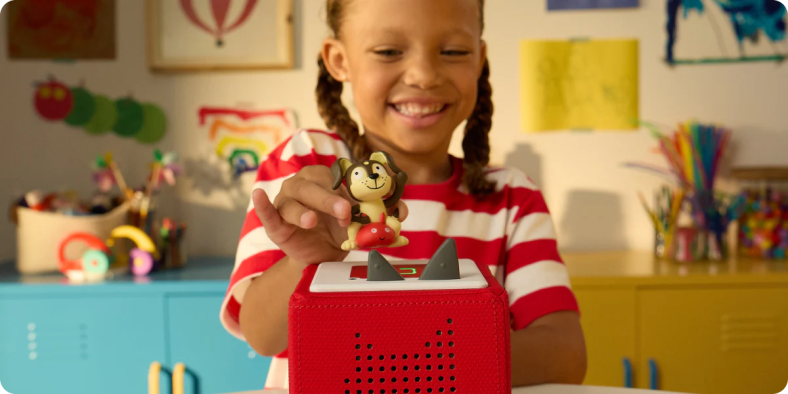
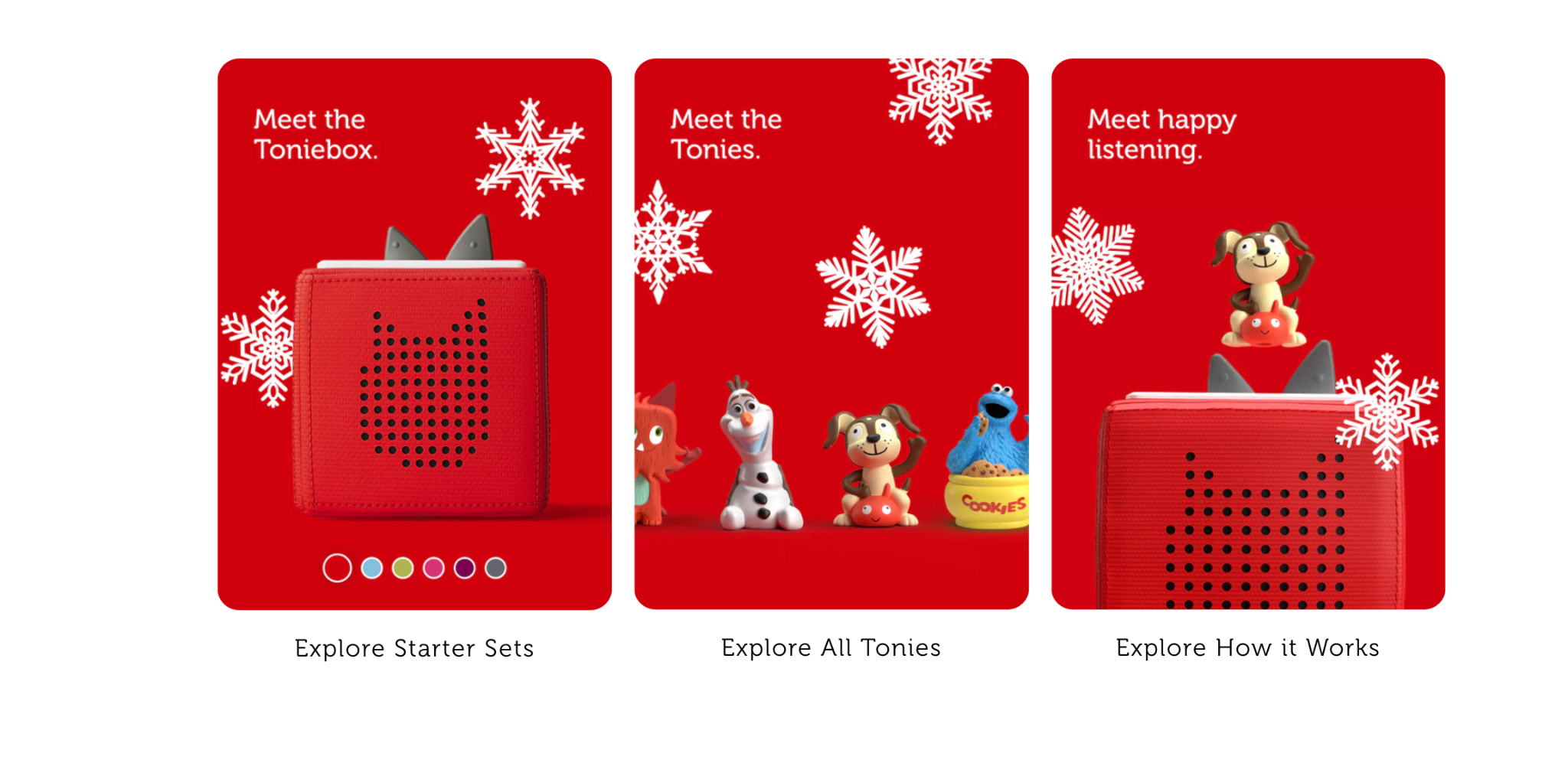
The Toniebox is a soft, cube-shaped audio player designed for children. I have a red and a light-blue one that I have used, and they are truly great for children. Unlike traditional speakers or audio tools that may be used in the classroom, the Toniebox is completely screen-free and user-friendly. It operates through the use of Tonies, which are adorable characters that come preloaded with content, such as songs, stories, or educational lessons. Children ages three and up can use the Toniebox without any problems because it requires them to simply place their Tonie on top of the Toniebox, and the content will play automatically.

The design of the Toniebox is perfect for young learners. It is soft to the touch, durable, and easy for children to operate. What I love about its design are its controls. The volume can be adjusted by pressing the “ears” on top of the box, and tracks can be skipped by tapping the sides of the Toniebox.
What are Tonies?

Tonies are adorable characters that come to life through the Toniebox. The Tonies are placed on a Toniebox to play stories, songs, and language learning activities. There are so many great characters, more than 200 to choose from, and more are being added.

The Magic of Screen-Free Play

The Toniebox stands out from other storytelling products because it is screen-free. By encouraging imaginative play, Tonies helps children develop essential skills such as:

  • Creativity: Children can create stories or adventures using their Tonies as inspiration. Give students a Tonie and ask them to write or tell a story about it. It is a great way to build many essential skills and for them to have fun, too!
  • Focus and Attention: The variety of narratives and how the Tonies create a more engaging audio experience helps children as they develop their ability to focus and concentrate. They become drawn into the stories, develop close listening skills, and get excited to share what they learn.
  • Language Development: To develop language skills, students need a variety of learning opportunities. With the Toniebox, they can listen to stories and songs that will help expand their vocabulary, language skills, and comfort in speaking.

Toniebox in the Classroom

For educators, the Toniebox will be a versatile and impactful addition to the classroom.

Artina Ellsworth, an early educator at Lakeside Primary in Prairieville, Louisiana, told me that she uses Tonies in her “pre-K classroom with the 3-year-olds during music and movement time, read-aloud time, and also in my literacy centers. It helps keep them focused and engaged during reading, helps me teach concepts of print, and also story comprehension for retelling stories. During center time, it also helps them follow the story without me having to sit and read the book with them. It builds their confidence in knowing that they can listen and pretend to read stories by themselves!”

There are so many great uses of the Toniebox! Here are some ideas for bringing a Toniebox into your teaching practice:

1. Listening Centers

The Toniebox can be used in a listening center where students can independently enjoy audiobooks or songs. This fosters self-guided learning and a comfortable way for students to practice their listening comprehension and auditory processing skills.

2. Mindfulness and Relaxation

The Toniebox is perfect for creating a calming environment. During transitions or after lunch, use Tonies that provide mindfulness exercises to help students refocus and relax.

3. Story Time

Use Tonies as a way to create engaging story time sessions for students. Students can create their own stories and even work together to build essential skills of collaboration and creativity!

4. Group Activities

Use Tonies to engage students in some discussions about the story. Ask questions and have students create alternate endings. There are so many possibilities!

Inclusion and Accessibility

The simplicity of the Toniebox makes it accessible to all learners, including those with special needs. Its tactile interface and audio format cater to diverse learning styles and abilities, ensuring every student can participate.

Here are some of the standout features that make the Toniebox a must-have for both classrooms and homes:

1. Durability

The Toniebox is built to withstand the wear and tear of young hands. Its soft padding and design ensure it can handle daily use.

2. Portability

With its rechargeable battery, the Toniebox can go anywhere. Whether it’s used in the classroom, on a field trip, or during a long car ride, it offers hours of uninterrupted learning and fun.

3. Content Variety

From fairy tales to educational lessons, the Tonies’ library ensures something that will meet every child’s interest and learning level. And new Tonies are being released, which helps to keep the learning experience engaging and fun!
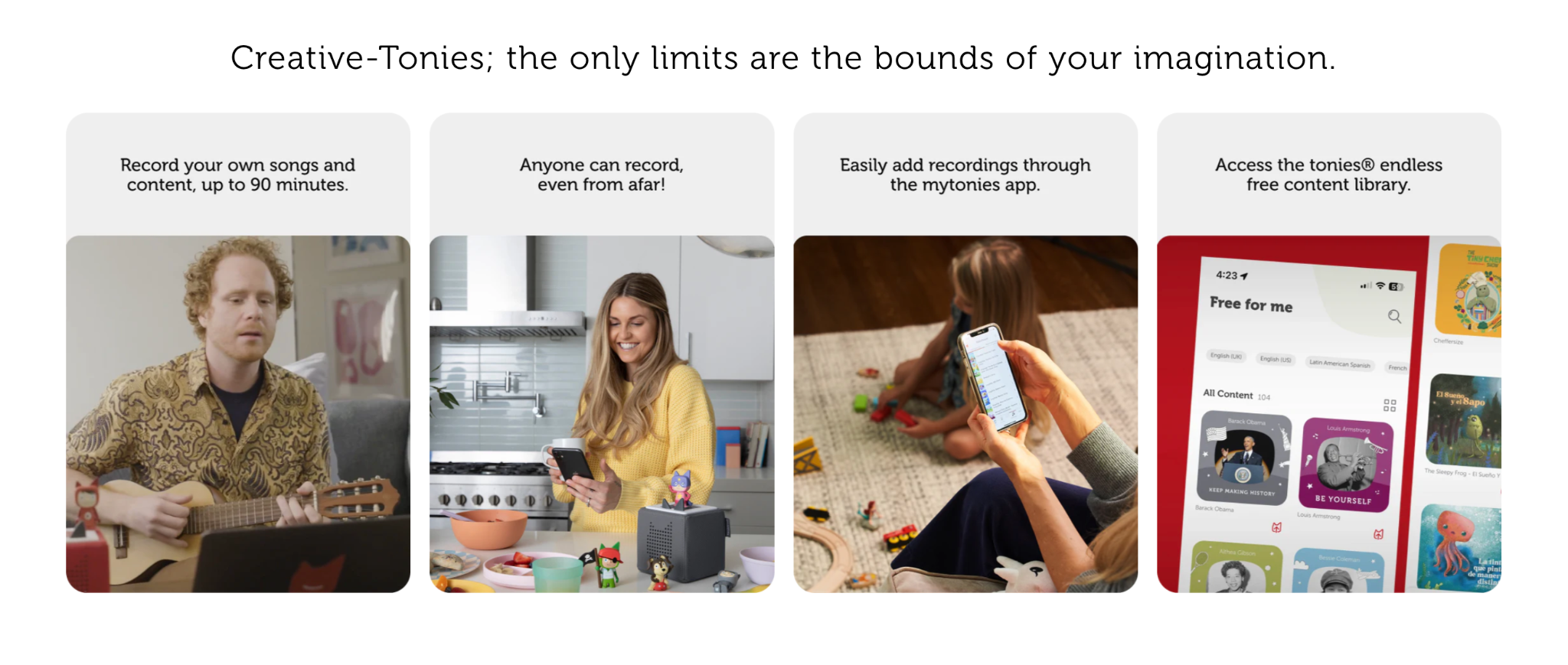
4. Customization

Creative Tonies provide even more opportunities for personalization. Parents can record bedtime stories, and teachers can create custom lessons or messages for their students.

5. Ease of Use

Its unique design means that even the youngest learners can operate the Toniebox independently, which promotes confidence and autonomy.

And now there are even audiobooks that offer more content for kids 6-9! Tonies offer a unique and engaging way to spark children’s imagination and foster a love of learning. By providing a screen-free experience, Tonies helps children develop essential skills while having fun. Whether you’re an educator or a parent, Tonies is a fantastic option to enhance children’s learning and development. Educators, get started today with Tonies through their educator discount!

About Rachelle

Dr. Rachelle Dené Poth is a Spanish and STEAM: What’s Next in Emerging Technology Teacher at Riverview High School in Oakmont, PA. Rachelle is also an attorney with a Juris Doctor degree from Duquesne University School of Law and a Master’s in Instructional Technology. Rachelle received her Doctorate in Instructional Technology, and her research focus was on AI and Professional Development. In addition to teaching, she is a full-time consultant and works with companies and organizations to provide PD, speaking, and consulting services. Contact Rachelle for your event!

Rachelle is an ISTE-certified educator and community leader who served as president of the ISTE Teacher Education Network. By EdTech Digest, she was named the EdTech Trendsetter of 2024, one of 30 K-12 IT Influencers to follow in 2021, and one of 150 Women Global EdTech Thought Leaders in 2022.

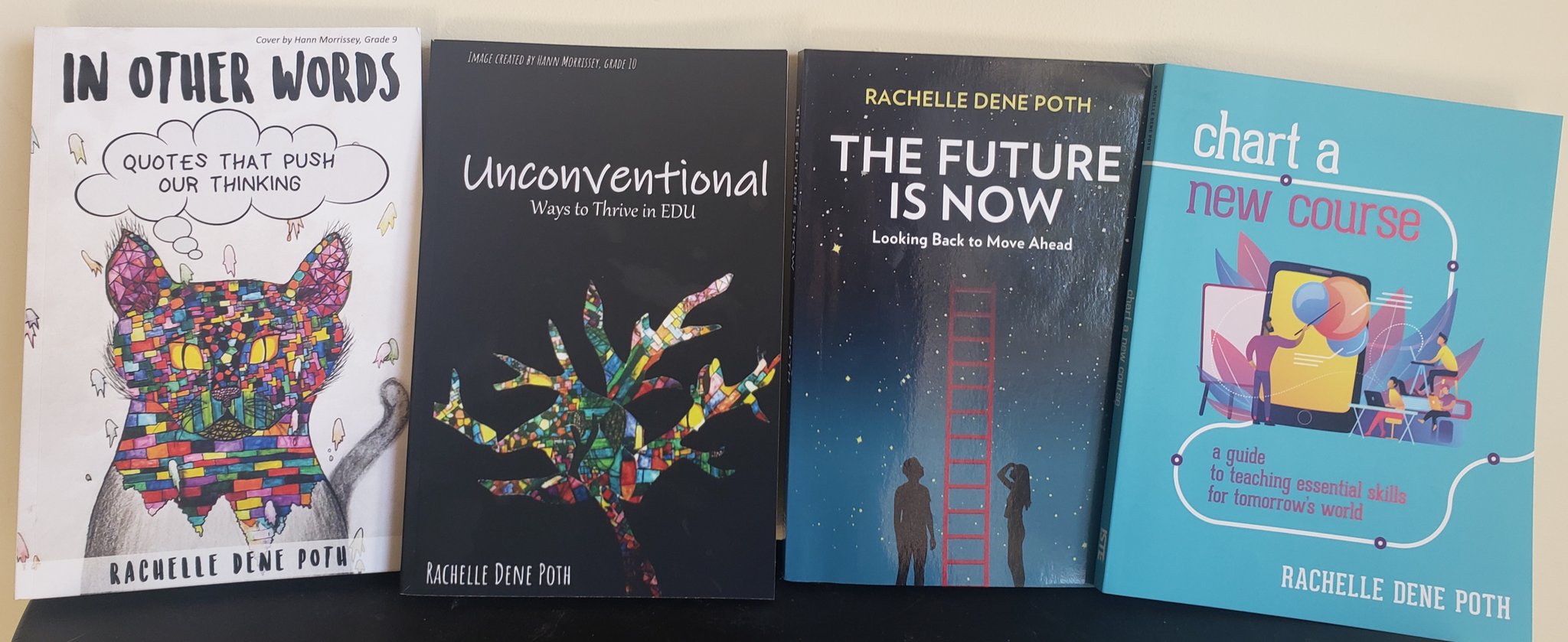
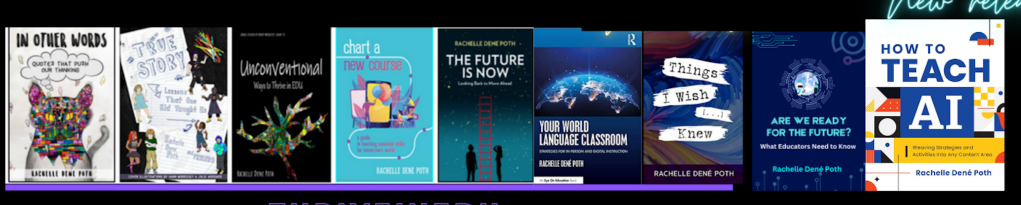
She is the author of nine books including ‘In Other Words: Quotes That Push Our Thinking,” “Unconventional Ways to Thrive in EDU,” “The Future is Now: Looking Back to Move Ahead,” “Chart A New Course: A Guide to Teaching Essential Skills for Tomorrow’s World, “True Story: Lessons That One Kid Taught Us,” “Things I Wish […] Knew” and her newest “How To Teach AI” is available from ISTE or on Amazon.

Contact Rachelle to schedule sessions about Artificial Intelligence, Coding, AR/VR, and more for your school or event! Submit the Contact Form.

Follow Rachelle on Twitter(X) and Instagram at @Rdene915

**Interested in writing a guest blog for my site? Would love to share your ideas! Submit your post here. Looking for a new book to read? Find these available at bit.ly/Pothbooks
************ Also check out my THRIVEinEDU Podcast Here!

Join my show on THRIVEinEDU on Facebook. Join the group here.

Dealing with Child Anxiety Stemming from Coronavirus Crisis

Guest post by Simon Choi, a mental health advocate and small business founder. He foundedStandout Bands which supports Beyond Blue and allows him to write for his mental health blog, Healthy Minds. Simon is particularly passionate about supporting those experiencing depression. Currently, Simon is supporting those struggling as a result of COVID-19 related mental health issues. He lives in Melbourne, Australia.

*Opinions expressed are those of the guest author.

Times of Uncertainty


The Global Coronavirus Pandemic has been ongoing for months now and there is a great deal of uncertainty among government and society. Adults are dealing with loss of work, changes to daily routines and possibly even sick relatives. However, the uncertainty is not only limited to adults.  

The Effects on Children

Children are not immune to the fears that this global pandemic has produced. Their lives have been greatly affected as well. Children are not only out of school, but they are not able to visit their friends and family as well. For example, fear of the health of the elderly means most grandparents are not advised to see grandkids in the present environment. Parents and educators can try to help and reduce some of this anxiety. In the following article, we will discuss seven ways that any educator or parent may be able to help those they care for and teach:

#1 Keep Their Usual Schedule

For a child, it can be difficult to experience many external changes. Since they have no control over being out of school and not seeing their friends and family, it is best to stabilize the things that can be stabilized. In order to give your children stability, do not change their sleep time, their school hours or other regular activities. Even if your child has to practice their sport in their own front yard or get violin lessons over Zoom, try to keep up with their previous schedule and activities as much as possible.  

#2 Don’t Let Kids Watch Too Much News

The news can be informative, but it can also be full of unwanted scenery and troublesome for younger viewers in particular. Since that is the case, you do not want to let your kids watch too much news.

#3 Talk to Kids Openly

Kids need to feel like they can openly express themselves with adults. You want to ask your kids questions about their feelings and give them age appropriate answers. Children are inquisitive by nature, so this process could require some patience, but it will help to dispel some of their fears.

#4 Watch Their Associates

If your children are spending a lot of time talking to virtual friends, make sure that you are aware of the other kids who they are talking to. Other children can have a big influence on your children’s feelings, so you want to monitor or at least be familiar with their friends.

#5 Play with Your Kids

Make sure that your kids are getting exercise. Each day, make it a practice to add an exercise routine to your kids daily work. Just like gym class at school, exercise should be a healthy part of their at home learning journey. Try to play sports with kids as well; this is especially true if your kids are involved in any extracurricular sports. That way, they can keep up with their skills and get out some extra energy as well.

#6 Talk to A Professional

If you think that your child is having an extra hard time dealing with the stress of COVID19 and you notice that the stress is interfering with his or her daily activities, you may have to contact a professional who can give your child a consultation over the phone and provide professional advice.

Make the Best of a Difficult Situation

It can be stressful to deal with an unknown situation, but this stress can also build resilience in a child. Even in a global pandemic, you can help your child to make the best of the opportunities that staying at home can present or as an educator if over teleconference. When a child is taught to deal with difficulties in a healthy manner, he or she will be well prepared for whatever life throws at them. With the right support from you children can build resilience as a result of this time.  


**Interested in writing a guest blog for my site? Would love to share your ideas! Submit your post here.

Looking for a new book to read? Many stories from educators, two student chapters, and a student-designed cover for In Other Words.

Find these available at bit.ly/Pothbooks  

My podcast

Listen here


Kindness and Equity in Our Science Classrooms

Guest Post by Kathy Renfrew (@krsciencelady), previously published on Middle Web

A while back I bought the novel Wonder. As with many good intentions, life got in the way and as the days turned into weeks the book sat lonely on my nightstand.

Finally, in August, with a new school year starting soon, it seemed an opportune time to finally jump into the text on my nightstand.

I dove in head first and was instantly smitten by the characters in this multi-award winning book and began to see the many ways to apply the learning in Wonder to my work in the classroom.

While reading I began to wonder how I might ‘choose kind’ if I had been a character in Auggie Pullman’s story. What would 9 or 11-year old Kathy have done? Would I have chosen to befriend Auggie?

start-joy-09-09-19

As our school focused on “choosing kind” to foster students’ social-emotional learning, I went in search of additional resources to use along side this brilliant text in my daily work. Resources like this one from the Teaching Channel shared tips that I would be able to enact instantly.

What do students think?

As posters of #choosekind appeared in the hallways of my school, I was curious to know what students across the country thought choosing kind might look like? Moreover, I was curious to learn how the idea of choosing kind transferred to the three-dimensional learning we teach in science classrooms.

Leveraging the power of our global professional learning network (PLN) through social media, I shared this question across my twitter PLN and a fourth grade teacher in Michigan, Jennifer Ladd, responded.

Click to enlarge

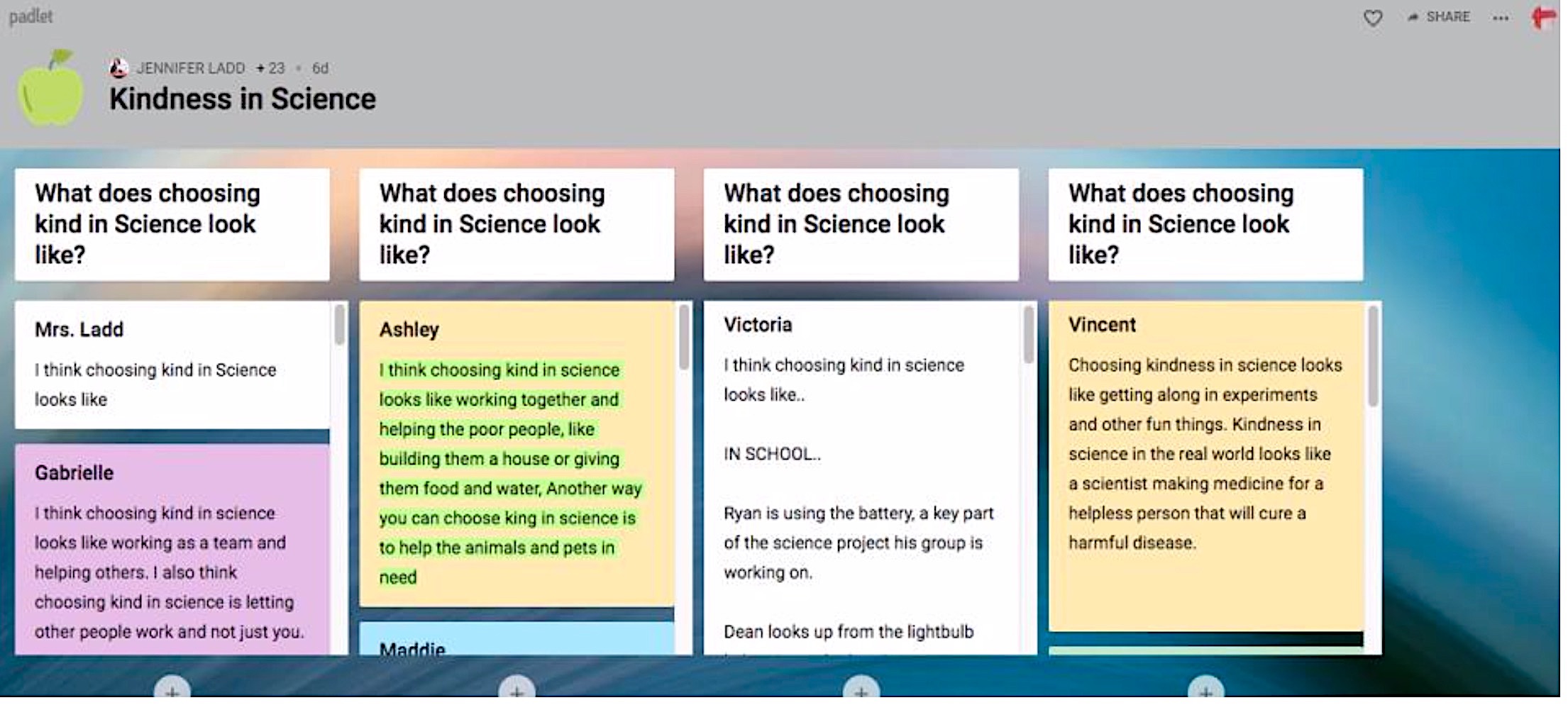
Ladd likes to use one of my favorite learning tools, Padlet, and asked her students to respond to some prompts. Their answers were both inspiring and thought provoking.

Students instantly identified attributes of the 4 C’s including collaboration and communication. For instance Ryan shared, “I think choosing kind in science looks like when someone has a question you don’t say ‘oh that question is not smart’ you try to work together and figure it out and include people.”

Students shared general and specific strategies for choosing kind in science classrooms from the ideas of teamwork and friendship to how to ensure all learners have access to tools for success.

Ashlyn wrote, “I think choosing kind in science looks like teamwork and friendship. Science always should look like what teamwork is. Teamwork and friendship is like people passing around the batteries and wires. Teamwork accomplishes big things.”

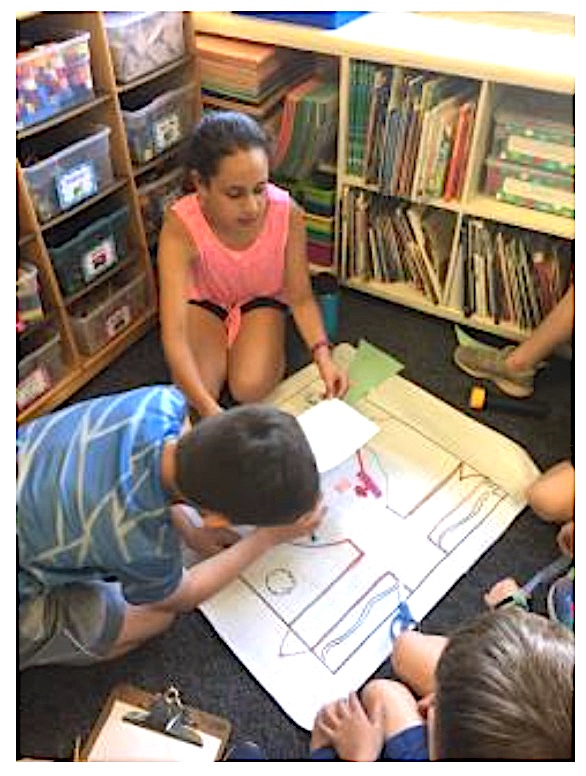
Inspired by these fourth grade learners, I began observing students in the classroom to see what they were talking about to their first reading buddies. The fourth grade and the first grade had partnered together to create a shade structure in the outdoor classroom.

In one observation I heard a student choose kind when she said to her group, “I will do the math, all the adding, and you work on the structure. Tim, will you please help Joe with the tape on the structure.”

After hearing from my PLN nationwide and visiting classrooms, I decided to reach out to friends to see how they foster kindness in their science classrooms.

Fellow squadster and teacher laureate Meg Richards shared how “choosing kind in my science classroom has students being open to new experiences and new ways of thought.”

“We spend time talking about how science is a place to wonder, where right answers can always get better if we are open to them,” Meg says.

“After all, in the wise words of Miss Frizzle (of Magic School Bus fame), ‘If you keep an open mind you never know who might walk in.’”

Moving with kindness to equity

#Choosingkind is a great start in acknowledging the small steps we can each take towards creating a more equitable and just world. But it is just the first step. How do we move beyond kindness to include equity where all learners have access to the tools they need to find success?

What are some tools we can implement right now that will help us create kind, safe, and equitable communities in science and across the school building?

One tool that may launch these conversations is called STEM Teaching Tool #54 from the Institute of Science + Math Education. This tool helps us better understand exactly what an equitable classroom is and provides some ideas of how to move forward.

For instance, resources such as the Story of a Name teach respect for each person’s choice of name which helps learners and educators honor their colleagues and students, resulting in greater respect and collaboration. Other options include The Shoe Game – Equity versus Equality (exploring the value of differentiation) and Pictures of Our Lives (sharing stories of our diverse experiences).

Students may also opt to use a Science Journal Quest to foster effective classroom talk together. Intentionally engaging with resources like the STEM Teaching Tool and others are small steps toward a much larger goal of equity and mindfulness in the classroom.

If we have the goal of building equitable learning communities, we are making a step in the right direction. In this way we are modeling for our students, our colleagues, and our community what it means to be kind and just, and maybe, just maybe, #choosingkindness will become a part of who we all are.

Edutopia has an article by Sarah Kesty about the use of the engineering design process to foster collaboration and kindness, called Social And Emotional Learning in Science Class. I found I was using this article to stimulate my thinking around this topic.

I also connected with a story from EdWeek which talked about some work a middle school was doing to really think about the whole child and find opportunities to integrate Social and Emotional Learning into what they were already teaching rather than have another siloed subject to teach. See: How One District Is Spreading Social-Emotional Learning Across All Its Schools.

Keeping SEL out front in science class

During this school year, I’m going to be thinking a lot about how we can keep social and emotional learning out front – something that’s always important for us to be thinking about. How can we make our children feel safe and yet very excited about learning? I think we need to remember that our children live in a world that can sometimes be very scary.

After writing and reflecting on this article, I see that the implementation and implications of the student-centered New Generation Science Standards offer us many avenues to help our students feel safe and enjoy learning again. I think the title of my next blog will be something like “How Phenomenon-Driven Instruction Can Make Our Classrooms More Equitable Places for Learning.” I believe by focusing on questions like this, we’ll find even more ways to incorporate social and emotional learning into our science classrooms.


**Interested in writing a guest blog for my site? Would love to share your ideas! Submit your post here.


Looking for a new book to read? Many stories from educators, two student chapters, and a student-designed cover for In Other Words.

Find these available at bit.ly/Pothbooks  


3  books.png

Building a Culture of Readers

Guest Post by Liz Janusz, Instructional Coach in SD113A in Lemont, IL. @mrs_janusz

I know the end of the school year is near, but I can’t seem to stop thinking about next year already! I have many goals for next school year: get into some coaching cycles with our amazing teachers, share more professional development books, but my number one goal for next year is to begin to build a culture of readers in our school.

Creating a reading culture in a school is essential if we want to encourage students to become engaged and motivated readers. Reading for fun should be celebrated and encouraged throughout the school day! Developing a strong culture of readers takes time and commitment from all involved, which is why I’ve already started planning for next year!

What do you need to begin to build a culture of readers?

  • Everyone should have a clear understanding of why building a culture of readers is so important. Reading for pleasure is the BEST way to develop and strengthen literacy skills and improve academic achievement.
  • A shared vision of what your school’s reading culture means in real words.
  • Full support of all staff in the building, including custodians, PE teachers, paraprofessionals, etc.
  • Books, books, and more books!

What are some things I can do to start building a culture of readers?

  • Encourage students to book talk the book they just finished reading to the rest of the class. Most of the time, they will be able to hook their peers on a book better that we could! Peer recommendations are one of the most powerful ways we can get more books into the hands of students!
  • Offer book clubs during the lunch periods. Pick a few books from an award list (Caudill, Newbery, Monarch, etc) and offer the chance for students to come in during their lunchtime to discuss the book that everyone is reading. Picking a book from an award list, will more than likely will leave them wanting to read the rest of on the list!
  • Set up an area in the school library where teachers can leave book recommendations for students.
  • As you are walking around the hallways, try simply carrying a book with you. I’m shocked at how many kids stop me in the hallway when I am carrying a book! They want to either tell me that they are reading it too or want me to tell them what they book is about.
  • Make your classroom library and sacred and inviting space. Don’t just throw random books in tubs and be done with it. Get your students involved and be thoughtful about how you arrange your library so it would be most accessible for your class.
  • Make books available all throughout the building! Put some shelves in the hallways and make displays based on what grade levels are teaching about or highlight a certain genre.

How can I get ALL staff members involved?

  • Over the summer have students and staff take pictures of themselves reading and post them with a school hashtag. When school begins in the fall create a slidedeck with all the all different pictures so we can celebrate all of the summer reading!
  • Create “What I’m Currently Reading” signs for EVERY SINGLE staff member in your building. These can hang outside their classroom, office, lunchroom, gym etc. Staff members can update these every time they read a new book. Students can see that all staff members value reading for fun and will hopefully get them excited about their own reading.
  • Set up a book swap! Have all teachers look through their classroom libraries and select books that they would put in the swap. Other teachers and students could then come look through the books and decide which “new” books they would like in their library. Everyone gets “new” books for their library, without spending money!
  • Make sure your school has a wide variety of books! For example, there are a lot of great math books out there. Buy some for your math teachers to have in the classroom that they can read aloud or reference while teaching.


**Interested in writing a guest blog for my site? I would love to share your ideas! Submit your post here.


Looking for a new book to read? Many stories from educators, two student chapters, and a student-designed cover for In Other Words.

Find these available at bit.ly/Pothbooks  


Books available

Three Trauma-informed practices to implement today

Guest Post by Jethro Jones

Twitter: @jethrojones http://twitter.com/jethrojones

Web site: http://transformativeprincipal.org

My name is Jethro Jones, and I am a principal in Alaska. I have helped three schools become trauma informed as a principal and many others through my podcast and Trauma course. I have worked long and hard to figure out some strategies that all school personnel can implement effectively. I’ve gone through a lot of trial and a lot of errors where I have really messed up and I’m going to share some of those secrets here.

Whether your school has created or attended a trauma-informed practices training or not, there are three things you can do to respond to situations in your school in a trauma-sensitive way. Implementing these strategies is simple enough that you can start implementing them today. They are powerful enough that you will see results almost immediately.

1. Ask Questions

Anytime you’ve got a kid who’s acting out or who’s struggling or whatever, instead of saying, “You need to be doing X,” ask the student questions.

This is really simple.

“How are you doing?”

“What are you working on?”

“Where are you heading?”

“What’s going on over here?”

“Can you help me understand…?”

Asking questions gives the student an opportunity to express him or herself in a way that allows them to deal with whatever’s going on.

The challenging part about asking questions is sometimes we as teachers turn questions into statements of condemnation!

For example, “Why are you running in the hall when you know you should be walking?” is more of a condemnation than a question.

We need to ask questions and figure out what is actually happening. Give them an opportunity to express themselves and deal with it. This is a hard thing for us. Because we have rules, we have expectations, we have policies and procedures.

And we as adults are very comfortable in those shoes.

And if we’re not comfortable, then it’s easier for us to say, Stop running. Stop doing that. Stop this. Stop that.

And that’s just not helpful to a child experiencing trauma. Because they’re not thinking–they’re only acting. We need to get them to slow down and think!

When you ask questions, you require the student to stop and think about what they are doing. Your voice doesn’t sound like a teacher in Charlie Brown when you ask a question.

Don’t turn questions into accusations, but make them clear, inquiring concern for the student.

You’ll get great results.

2. Don’t Take Things Personally

Every educator works hard and takes her job seriously and personally, and teachers put so much into their work.

And I don’t mean don’t take your work personally. What I mean is, don’t take the students actions towards you personally.

They’re most likely not a personal attack.

Yes, they will hurt. Yes, it will be uncomfortable. But you can’t take what they do, and think they’re acting out towards you to hurt you personally, that’s just not what is happening. Even when we feel like it is.

Kids desire to please the adults around them. Kids desire to make good choices.

The number of reasons that they have acting out is probably innumerable.

It’s rare when a student wakes up and says, boy, Mrs. Jones really is going above and beyond and helping me at school, I should totally do something that hurts her today. That’s not what kids do.

Sometimes, kids don’t know how to react to someone giving them positive attention, and they attempt to push them away. I once had a student who found out she was moving away from the school, and proceeded to destroy all the hard work her teachers had been putting in. When we talked to her, she was finally able to articulate that it was easier to leave with people mad at her so she didn’t feel like she was missing them as much, because you don’t miss people who are mad at you.

So there are two things you can do. Number one, ask, why is this kid doing this?

Number two, what can you do to deal with this behavior?

We as educators have to recognize that we can’t change anybody, every person has to make that choice for him or herself. We can certainly put things in place to help them make good choices, which we do all the time.

But we cannot change anybody. They need to change themselves.

We need to be sure that we are making choices that allow us to not take it personally like they’re attacking us, because even if they do attack us, it’s not personal. Kids are naturally kind, nice, wonderful, sweet, thoughtful little human beings. It’s when they’ve had these adverse childhood experiences, that they start acting differently.

And what our role is, is to help them to be successful even when they’ve had those experiences.

3 Know Your Role

The image above is a powerful way to make sure that people know their role is in a school that is trauma informed. Get a printable version here that you can use as a handout.

You’re not a counselor or a social worker. You’re an educator. You shouldn’t try, and NOBODY should expect you to be anything you’re not.

Could you be a therapist, counselor, or social worker if you tried? Yes. Do you have what it takes? Absolutely!

When a student doesn’t know how to read, what do we do? We teach them.

When a student doesn’t know how to write, what do we do? We teach them.

When a student doesn’t know how to drive or swim, or do whatever, what do we do? We teach them,

When a student doesn’t know how to behave, what do we do? Usually we punish them, what we should do is teach them.

And so our role as educators is to teach and help kids learn.

Now, there are so many different ways to do this!

Our purpose here is not to discuss all the many ways we can teach them, but to emphasize that it is our role to teach them, regardless of how they come to us.

Now, I want to share an experience that is really powerful. In her book, Allison Apsey shares a very similar experience. There are certain students that take up all your time! You are constantly spending time with those students, recognizing that it is worth the time and effort to intentionally and proactively spend time with those students that take up all your time,

if you’re going to be spending time with them anyway, why not work with them to get support in advance, why not work with them to build that relationship?

I call this Proactive Teaching. Some call it check and connect, or check in check out.

These students that are really struggling need additional support. You’ve got to have good Tier 1 behavior expectations and practices in place, but you and I both know there are kids for whom that doesn’t work, and they are the kids that reside in Tier 3! They need the extra help.

Instead of waiting for this student to be sent down to the office, we proactively go teach this student how to make good choices. Don’t think you can do this with 100 kids! It won’t work.

Find those two (or maybe three) students and get with them before they cause the trouble. Take the initiative and connect with them before they can get into trouble. Get with them before they get overwhelmed and can’t perform. Get with them before they wreak havoc in your class!

I had one student who would have a meltdown nearly every day because he was so worried about his mom and young sister. Instead of waiting for his behavior to cause him to be taken out of class, I met up with him before he had a chance for that, and talked about how things were going and what I could do to help him. Then, when his meltdown would inevitably come, we already had a connection that day.

Did this take a lot of time? Yes.

Was it worth it? Yes, it was, because it was so much better to do that in a positive, preventive proactive way than it was to deal with the issues and problems that he was going to have after the fact. Because when he had a bad day, he wanted to get it out in an aggressive way that hurt other kids, and that just wasn’t going to work in our school.

So instead of spending the 30 minutes trying to calm him down after a problem out on the playground, we spent 20 minutes before and during recess to give him that support.

It wasn’t my role to help him deal with his issues at home. I needed to be a trusted adult who was teaching him how to deal with things at school. Of course, a counselor was involved to help him deal with the challenges he faced at home.

To recap:

1. Ask questions.

2. Don’t take it personally

3. Know your role.

These three strategies will help you out immediately with whatever challenges you are facing in your school. If you need additional help or support along the way, please reach out to me by email or at my web site: jethrojones.com/trauma


**Interested in writing a guest blog for my site? I would love to share your ideas! Submit your post here.


Looking for a new book to read? Many stories from educators, two student chapters, and a student-designed cover for In Other Words.

Find these available at bit.ly/Pothbooks  


Books available