Prompting the Physics Mind: The Role of AI Tools and Prompt Engineering in Addressing Metacognitive Learning Resource Gaps Among Undergraduate Physics Students

Guest post by Patricio Bastida Nava, undergraduate researcher at the University of Massachusetts Amherst.

“Give me six hours to chop down a tree, and I will spend the first four sharpening the axe.”

— Abraham Lincoln

The first time I realized how badly AI could fail a student was during my first semester at UMass Amherst. I was studying for my second Physics 181 midterm. I just couldn’t understand projectile motion and struggled with kinematics. None of it was clicking. So I did what felt productive: I asked ChatGPT to build me an interactive visualization, a map of how the problems fit together, something I could study from. The artifact it produced was beautiful. I felt prepared. There I was looking at the exam when I knew instantly that understanding the concept and actually solving a problem were two entirely different things. The exam did not ask me to recall relationships. It asked me to set up equations, choose coordinate systems, and grind through algebra with variables. I had outsourced the thinking and memorized the output. I felt deeply frustrated. I just didn’t know what was wrong with me or how to fix it. The gap between what I thought I knew and what I could do had never been so big.

That failure changed how I used AI. I stopped asking it to explain and started asking it to coach: generate problems, demand my reasoning before giving feedback, and adapt difficulty to my mistakes. My learning improved. As usual, this experience led to a very important question — if I was going through this situation, what was happening to everyone else?

Weeks later, Dr. Torrey Trust ran an exercise in her AI and Education seminar that gave me part of the answer. She asked students — biology, computer science, engineering, economics — what tool they turned to when a concept was not clicking. Nearly every hand pointed in the same direction: ChatGPT. Not because anyone had tested it against alternatives. Not because it produced the best learning outcomes. Because it was fast, and speed feels like understanding. Researchers call this the learning illusion: the subjective sense that you have learned something when you have only been exposed to it. In education research, metacognition (the practice of thinking about how you are learning and whether it is actually working) is the primary defense against this illusion. But metacognition is effortful, and ChatGPT is effortless. That is the trap.

I am a first-year physics student, but I am also a researcher. I never attended a traditional school. I earned my high school diploma in Mexico by examination alone. Everything I know, I taught myself, and for much of that process, AI was one of the only resources I had. That experience gives me no patience for the argument that AI is simply a shortcut. For students like me, it was the classroom. But it also gave me no illusions about its dangers, because I have lived both sides: the version of AI that builds understanding and the version that quietly destroys it. This past March, I co-presented original research at the SITE International Conference in Philadelphia with Dr. Trust, evaluating how well large language models actually support learning when measured against established instructional theory. What we found should matter to every STEM educator. Faculty need to stop relying on blanket AI bans, update their syllabus policies, and start teaching students how to use AI for metacognitive reflection and cognitive collaboration — because whether faculty act or not, students are already using these tools every day.

The Learning Illusion

Akgun and Toker published a 2025 empirical study comparing students using ChatGPT against students using traditional textbooks. The AI group showed short-term gains on simpler tasks, but their long-term retention was significantly worse. The AI was doing the thinking. The student was watching. In learning science, this is called cognitive offloading, and in physics, it compounds every week. A student who does not genuinely work through Newton’s Second Law in week three will be lost when momentum, energy, and wave mechanics arrive later.

The struggle is not the enemy of learning in physics. The struggle frequently is the learning.

Hon’s 2026 systematic review of studies from 2018 to 2024 confirms that AI tools consistently increased engagement but also produced over-reliance and inconsistent outcomes, with the biggest gaps in disciplines that require deep conceptual reasoning. Physics is exactly that kind of discipline. Yet every day, physics students everywhere open ChatGPT, paste in a problem, and read the solution. It feels productive. It is not.

When AI Actually Works

The picture is not uniformly negative. AI can sometimes teach better than a traditional classroom, but only when it’s designed very carefully. In 2025, Harvard researchers ran an experiment and found that students learned more physics and learned it faster when they used a custom-built AI tutor instead of sitting in a typical active-learning class. What made it work wasn’t the AI itself so much as the guardrails built into it: students had to walk through their thinking before getting any help, mistakes became useful signals rather than dead ends, and the system adjusted based on where each student was actually getting tripped up. Even then, the researchers noted it could have been even better with tighter controls on how quickly answers were revealed. When I tested the model myself, I found it still occasionally provided solutions faster than a student could meaningfully process them.

Kotsis frames this through cognitive load theory: AI must scaffold inquiry rather than replace it. When a student pastes a problem and copies the answer, they eliminate all cognitive load. When they prompt an AI to coach them step by step and require them to show their work first, they engage exactly the cognitive processes physics instruction is designed to build. Younis found measurable improvements in conceptual mastery among undergraduate physics students when AI was integrated this way.

The AI is the same either way. The learning is completely different.

What the Data Actually Shows

At SITE 2026, Dr. Trust and I set out to answer a specific question: do the study and learning modes that major AI companies have built — features these companies developed, by their own account, in partnership with educators and learning scientists — actually deliver a sound learning experience? We tested four platforms: ChatGPT, Gemini, Claude, and Perplexity. Our framework was Gagné’s Nine Events of Instruction, a model from the 1960s that defines the foundational conditions for effective learning, from gaining the learner’s attention and stating objectives through eliciting performance, providing feedback, and supporting transfer to real-world application.

Across all four platforms, two of Gagné’s events were nearly absent: Gain Attention and Inform Objectives. In practice, this meant that no tool consistently explained what the student should know or be able to do after the lesson, and no tool took meaningful steps to engage the student’s curiosity before presenting the content. Without a stated learning objective, a student cannot track their own progress, cannot reflect on whether they actually understood something, and cannot connect the current concept to the next one. In a discipline as cumulative as physics, that is not a minor gap. It is a structural failure.

The findings went deeper than missing events. Learning guidance was the most consistent behavior across all four tools, but the other behaviors followed a repetitive, formulaic pattern rather than adapting as the interaction progressed. Feedback was constantly present but shallow — short and generic, lacking the depth needed to actually support learning. Every tool works with enthusiasm and encouragement regardless of the quality of the student’s responses, making it dangerously easy to fall into a learning illusion: you feel like you understand because the AI keeps telling you that you are doing great. ChatGPT in particular overwhelmed users with multiple questions simultaneously, creating a mismatch between what it asked the learner to do and what its own interface allowed. Of the four tools, Claude was the only one that consistently pushed students toward critical thinking — and, perhaps tellingly, it is often perceived as the most frustrating to use.

There is something else important to say. The presence of a pedagogical behavior in an AI interaction does not guarantee its quality. A tool can ask questions without asking useful questions. Our research required classifying each interaction against Gagné’s events regardless of quality, then reexamining the qualitative texture of those interactions to understand what the numbers alone could not capture. What the data showed, across hundreds of interactions, is that the most sophisticated AI study modes available right now cannot consistently meet what a first-year education textbook from 1965 would call basic instructional standards — and these are the tools students are relying on every night.

The Missing Skill: Metacognitive Prompting

If the tools themselves are not pedagogically reliable, then the burden falls on how students use them. This is where metacognitive prompting becomes essential — and where the gap in instruction is most glaring. Consider two students preparing for the same Physics 181 midterm on the work-energy theorem. The first opens ChatGPT and types: “Teach me about the work-energy theorem for my exam.” The AI produces a tidy summary. The student reads it, feels reassured, and moves on. Cognitive offloading is complete.

The second student writes a different kind of prompt. They instruct the AI to act as a physics professor who will first provide a short conceptual explanation, then present a symbolic problem using only variables — no numbers. The prompt explicitly requires the student to show their full step-by-step reasoning, including a free-body diagram and force decomposition, before the AI reveals any solution. It instructs the AI to analyze the student’s reasoning, identify specific misconceptions, explain why each mistake matters conceptually, and provide metacognitive strategies — reflection prompts like “Which assumption did I make unconsciously?” or checklists for common errors. Only after this exchange does the AI present a worked solution, and it follows up with a new problem adapted to the student’s demonstrated weaknesses.

The AI is identical in both cases. The learning is not. The first student consumed information. The second student built understanding. The difference is not intelligence or motivation. It is whether anyone ever taught the second student that prompting is a skill, that the quality of what you ask determines the quality of what you learn, and that the goal is not to get the answer but to find out where your reasoning breaks. Nobody is teaching this. Not in physics courses, not in orientation, not in any syllabus I have seen.

What Needs to Change

A professor during my first semester dismissed AI with an analogy: “Do you send your computer to do workouts for you?” The analogy is not wrong about personal responsibility. But it assumes students have a proper gym, a qualified trainer, and enough time to use both. Most of us do not. Office hours last an hour. Textbooks do not ask you how you are thinking. AI is available at two in the morning when the exam is tomorrow, and the concept still will not click. For many of us, it is the only resource available long enough to actually help. That does not make it safe. It makes it necessary — and necessity without guidance is how students get hurt.

Three concrete changes could begin to address this, and none of them cost money. First, update syllabus policies. The University of Texas at Austin has published sample AI guidelines that move past blanket bans toward transparent policies treating AI as a citable tool with clear attribution requirements. Any university can adopt and adapt the same framework. Second, name the risk. Tell students explicitly what cognitive offloading is and why speed is not learning. Chen documents practical strategies for avoiding AI-driven learning illusions that could be incorporated into any course’s first-week materials. Third — and this is the intervention that does not exist yet — teach students how to prompt. Not as a computer science skill, but as a metacognitive one. A single module in the first week of a physics course, showing the difference between a prompt that offloads thinking and a prompt that forces reflection, would do more for student learning than any AI ban ever has. Resources for this already exist. EdTech Books publishes open-access materials — many peer-reviewed, others designed by scholars and educators — addressing how to design AI-integrated assignments and teach prompting for critical thinking rather than answer retrieval. One example is AI-Ready Educators and Students: Using the AUGMENT Framework to Teach and Learn with Generative AI, which offers a free, classroom-ready framework for exactly this kind of teaching. These resources exist right now, and most faculty have not seen them.

I want to be honest about the limits of this argument. Prompting is a patch. It is a patch for what is, at its core, a real and serious wound: AI tools built for speed rather than learning, that consume millions of liters of water annually, that encode biases, and that will not on their own produce the physicists this world needs. But we do not have time to wait for better tools, and the wound is already open. We do not have those tools yet. I am not sure we will have them in five years. Students are using these tools today with no guidance on how to use them well.

The question has never been whether students will use AI. The question is whether anyone will teach them the difference between a prompt that replaces their thinking and a prompt that sharpens it. That is a teaching problem, and it has a teaching solution. The goal is not to ban these tools or to endorse them. The goal is to give students the knowledge, the research, and the critical awareness they need to make an informed decision about how they learn — and then the freedom to make it. Right now, students are making that decision every day. They are just making it in the dark. The least any university can do is turn on the lights.

About the author

Patricio Bastida Nava is a Mexican undergraduate student at the University of Massachusetts Amherst, where he is pursuing a double major in Physics and Astronomy/Astrophysics alongside interdisciplinary studies in artificial intelligence and STEM education. His work sits at the intersection of AI research, instructional design, and applied technology. He has co-authored research on how generative AI platforms support teaching and learning, and designs corporate AI training programs grounded in prompt engineering and educational theory. He is also a member of UMass’s iCons program in the AI & Future of Work track. Beyond his academic work, Patricio serves in student technical leadership and is passionate about the role of AI, physics, and pedagogy in shaping the future of work and learning.

About Rachelle

If Your Organization Is Beginning This Work

I help schools and other organizations (law firms, healthcare professionals, business owners) implement AI responsibly through policy guidance, professional learning, and classroom-ready strategies grounded in both instructional practice and legal insight.

My sessions focus on helping teams:

• understand what AI can and cannot do

• recognize responsible-use considerations

• build confidence using emerging tools

•align implementation with organizational priorities

If your school, district, or organization is beginning conversations or looking to dive in and learn more about AI policy, professional learning, or responsible implementation, I’d welcome the opportunity to support your next steps through leadership workshops, keynote sessions, or strategic planning partnerships.

Preparing people is what makes AI implementation successful. Contact me via bit.ly/thrivineduPD for my training and speaking services.

Article content

Dr. Rachelle Dené Poth is a Spanish and STEAM: What’s Next in Emerging Technology Teacher. Rachelle is also an attorney with a Juris Doctor degree from Duquesne University School of Law and a Master’s in Instructional Technology. Rachelle received her Doctorate in Instructional Technology, with a research focus on AI and Professional Development. In addition to teaching, she is a full-time consultant and works with companies and organizations to provide PD, speaking, and consulting services. Contact Rachelle for your event!
Rachelle is an ISTE-certified educator and community leader who served as president of the ISTE Teacher Education Network. By EdTech Digest, she was named the EdTech Trendsetter of 2024, one of 30 K-12 IT Influencers to follow in 2021, and one of 150 Women Global EdTech Thought Leaders in 2022.

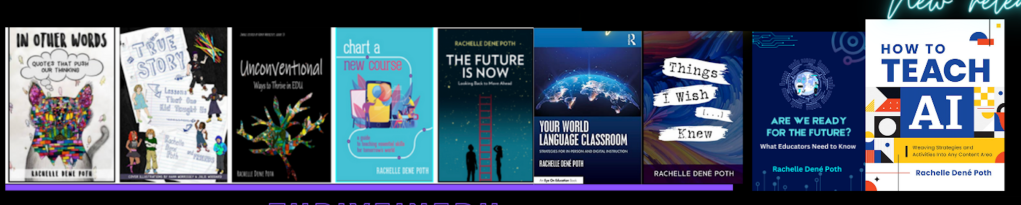
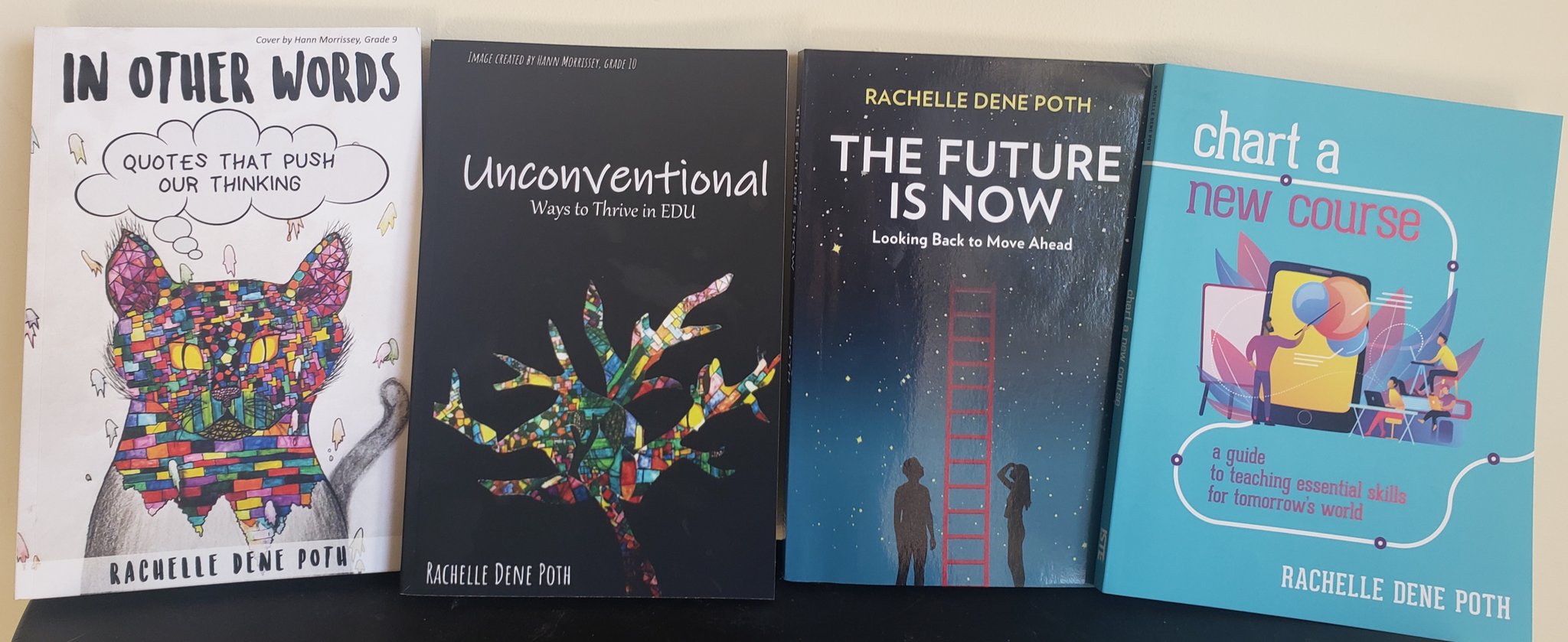
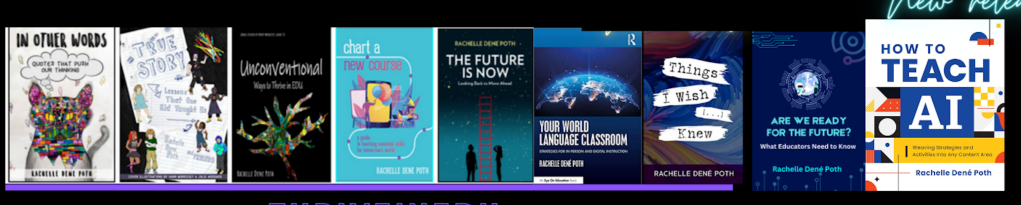
She is the author of ten books, including ‘What The Tech? An Educator’s Guide to AI, AR/VR, the Metaverse and More” and ‘How To Teach AI’. In addition, other books include, “In Other Words: Quotes That Push Our Thinking,” “Unconventional Ways to Thrive in EDU,” “The Future is Now: Looking Back to Move Ahead,” “Chart A New Course: A Guide to Teaching Essential Skills for Tomorrow’s World, “True Story: Lessons That One Kid Taught Us,” “Things I Wish […] Knew” and her newest “How To Teach AI” is available from ISTE or on Amazon.

Leading Forward in AI: (Part III)

Considerations for the conversations

In part II of the series, I shared my thoughts about what I’ve been learning from working with district leadership teams across the country, and the work is focused on AI, digital wellness, and innovation. In part II, I shared my thoughts on preparing educators in these areas and why it means preparing school leaders first. This work has provided me with meaningful opportunities to learn with and work alongside educators, students, and families, and I am noticing common conversations and concerns in the schools.

Screen time

Students talk about it. Families ask about it. Teachers notice it. Administrators are expected to respond to it. What do we do about the devices?

But what I have learned from working with schools is that the most important leadership question is not simply how much time students spend on screens. The more important question is: What are students doing while they are on those screens?

As technology continues to evolve in our schools and in the world, we need to move beyond conversations that focus only on limits and restrictions. We need to focus on purpose, guidance, and readiness.

Moving From Screen Time to Purposeful Use

Conversations about student technology use have primarily focused on recommended amounts and on setting limits. The American Pediatric Association had recommendations for some of the most common questions: How many hours per day? How often should devices be used? When should students disconnect?

Although the conversation has shifted away from specific time limits, those guiding questions still matter. But today’s learning environments require something more intentional and thoughtful, and should bring in different perspectives about what the common uses are. We need to better understand how students are using technology and whether that use supports learning, connection, creativity, and growth. From my conversations, I have learned that students are using devices to:

  • Interact with friends and family
  • collaborate with classmates
  • create original work
  • communicate with teachers
  • design presentations
  • explore complex ideas
  • interact with artificial intelligence tools

Continue reading via my newsletter on LinkedIn and subscribe. Also, subscribe to my newsletter for events, resources, and more.

If Your Organization Is Beginning This Work

I help schools and other organizations (law firms, healthcare professionals, business owners) implement AI responsibly through policy guidance, professional learning, and classroom-ready strategies grounded in both instructional practice and legal insight.

My sessions focus on helping teams:

• understand what AI can and cannot do

• recognize responsible-use considerations

• build confidence using emerging tools

•align implementation with organizational priorities

If your school, district, or organization is beginning conversations or looking to dive in and learn more about AI policy, professional learning, or responsible implementation, I’d welcome the opportunity to support your next steps through leadership workshops, keynote sessions, or strategic planning partnerships.

Preparing people is what makes AI implementation successful.

About Rachelle

Dr. Rachelle Dené Poth is a Spanish and STEAM: What’s Next in Emerging Technology Teacher. Rachelle is also an attorney with a Juris Doctor degree from Duquesne University School of Law and a Master’s in Instructional Technology. Rachelle received her Doctorate in Instructional Technology, with a research focus on AI and Professional Development. In addition to teaching, she is a full-time consultant and works with companies and organizations to provide PD, speaking, and consulting services. Contact Rachelle for your event!

Rachelle is an ISTE-certified educator and community leader who served as president of the ISTE Teacher Education Network. By EdTech Digest, she was named the EdTech Trendsetter of 2024, one of 30 K-12 IT Influencers to follow in 2021, and one of 150 Women Global EdTech Thought Leaders in 2022.

She is the author of ten books, including ‘What The Tech? An Educator’s Guide to AI, AR/VR, the Metaverse and More” and ‘How To Teach AI’. In addition, other books include, “In Other Words: Quotes That Push Our Thinking,” “Unconventional Ways to Thrive in EDU,” “The Future is Now: Looking Back to Move Ahead,” “Chart A New Course: A Guide to Teaching Essential Skills for Tomorrow’s World, “True Story: Lessons That One Kid Taught Us,” “Things I Wish […] Knew” and her newest “How To Teach AI” is available from ISTE or on Amazon.

Contact Rachelle to schedule sessions about Artificial Intelligence, AI and the Law, Coding, AR/VR, and more for your school or event! Submit the Contact Form.

Follow Rachelle on Bluesky, Instagram, and X at @Rdene915

Tool, Companion, or Supplemental Brain? What AI Will Be Depends on YOU!

Guest post by Robert W. Maloy and Torrey Trust

What are GenAI technologies, and what do we want them to become? Right now, GenAI is an educational chameleon, aggressively marketed as an indispensable learning companion, an academic partner, and a labor-saving tool; and at the same time, widely critiqued as a dangerous source of misinformation and biased responses, an environmental degrader, and a privacy invader. Since GenAI is all of these things and more, how do we use these tools appropriately and thoughtfully?

What GenAI is and what it will become depends on YOU – how you think about its roles, use it in your teaching and learning, and describe its functions to others.

Let’s look at two currently popular descriptions and uses of GenAI: 1) GenAI as a companion; 2) GenAI as a productivity-enhancing tool.

First, GenAI is widely described and used as a supportive “companion” or helpful “partner.” The Harvard Business Review (2025) reported that therapy/companionship was the number one way people were using GenAI in 2025. An alarming number of teens acknowledge that GenAI chatbots are their virtual companions, even though this technology can exploit youngsters’ emotional needs in ways that lead to self-harm and other risks (Common Sense Media report, Robb & Mann, 2025). One of the key problems here is that GenAI is NOT human, and it is not even intelligent (at least in the way humans perceive and describe intelligence).

The Key Takeaway: Using terms like “partner” or “companion” to describe GenAI technologies humanizes tools that are not designed to provide the support, guidance, and level of intelligence that actual humans can provide.

Second, GenAI technologies are widely presented as productivity-enhancing, time-saving, efficiency-increasing tools for people to use to improve their lives. “Use ChatGPT to make life easier,” declared a recent email advertisement, where all one had to do was “just tap a chat to start.” Personal and professional productivity is also one of the top ways people are using GenAI technologies – from writing emails and reports, to planning vacations and meals, to studying for exams; and it is certainly true that GenAI technologies can do all these things and so much more really fast. Yet, personal autonomy, creativity, and agency is lost when one uses GenAI technologies to automate activities they formerly did without it.

The key takeaway: Avoid talking about GenAI as automating work and think directly about how it can augment or supplement your activities as a teacher and a learner.

So If not a human-like companion or a productivity-enhancing automation tool, then how can we think about the role of GenAI in education? We believe that GenAI is best used when it augments teaching and learning, kind of like the way a caddie in golf enhances the golf experience. As such, we offer a metaphor of GenAI as a caddie; but again remind you that it is not an actual caddie and we are not trying to humanize this tool.

Professional golfers and their caddies on the LPGA, PGA, and more than 20 professional golf tours worldwide offer a metaphor for thinking about, describing, and using GenAI. Each pro golfer has a caddy who carries their clubs and walks alongside them when they play competitive tournaments. sharing ideas and information about the shots they are playing. For instance, until recently, LPGA player Brooke Henderson’s caddy was her older sister, Brittany; PGA player Xander Schauffele’s caddy is Austin Kaiser (his college golf teammate at San Diego State University).

Caddies have detailed information about the course and provide suggestions and feedback about what shots to hit with which clubs. They help keep track of the pace of play and how conditions of the course may be changing due to wind, weather, and time of day. However, it is the golfer who remains totally in charge of the outcomes of the game. Caddies do not hit the golf ball; golfers do not always do what the caddy suggests. It is the golfer who must make decisions, hit the shots, and deal with consequences, both positive and negative, in terms of performance and score. Caddies are there to augment the golf experience and outcome.

When it comes to teaching and learning, GenAI can be that source of information, ideas, or inspiration like a caddie; and it is the teacher who must determine what to do with that information. They have the expertise; they understand their classroom dynamics and contexts; they know their students, their topic, their grade level, and their community.

The key is for the teacher to resist the temptation to automate their work by turning it entirely over to a GenAI technology, because in this case GenAI is in control of the shots, rather than the teacher. It is as if professional golfers let their caddies choose the club and then hit the ball for them. This is even more problematic when it comes to using GenAI to automate tasks. In our metaphor, the caddie is a human who has expertise and has played golf before; however, GenAI is not a teacher, has never taught, and has no idea what teaching is. Turning over any tasks to a tool that does not have any expertise in education can become really problematic. Teachers must maintain agency and exert control, deciding when to accept, when to reject, and when to modify whatever ideas and information the GenAI provides.

So, returning to our original statement, what GenAI is and what it will become depends on YOU – how you think about its roles, use it in your teaching and learning, and describe its functions to others. What do YOU want GenAI to be?

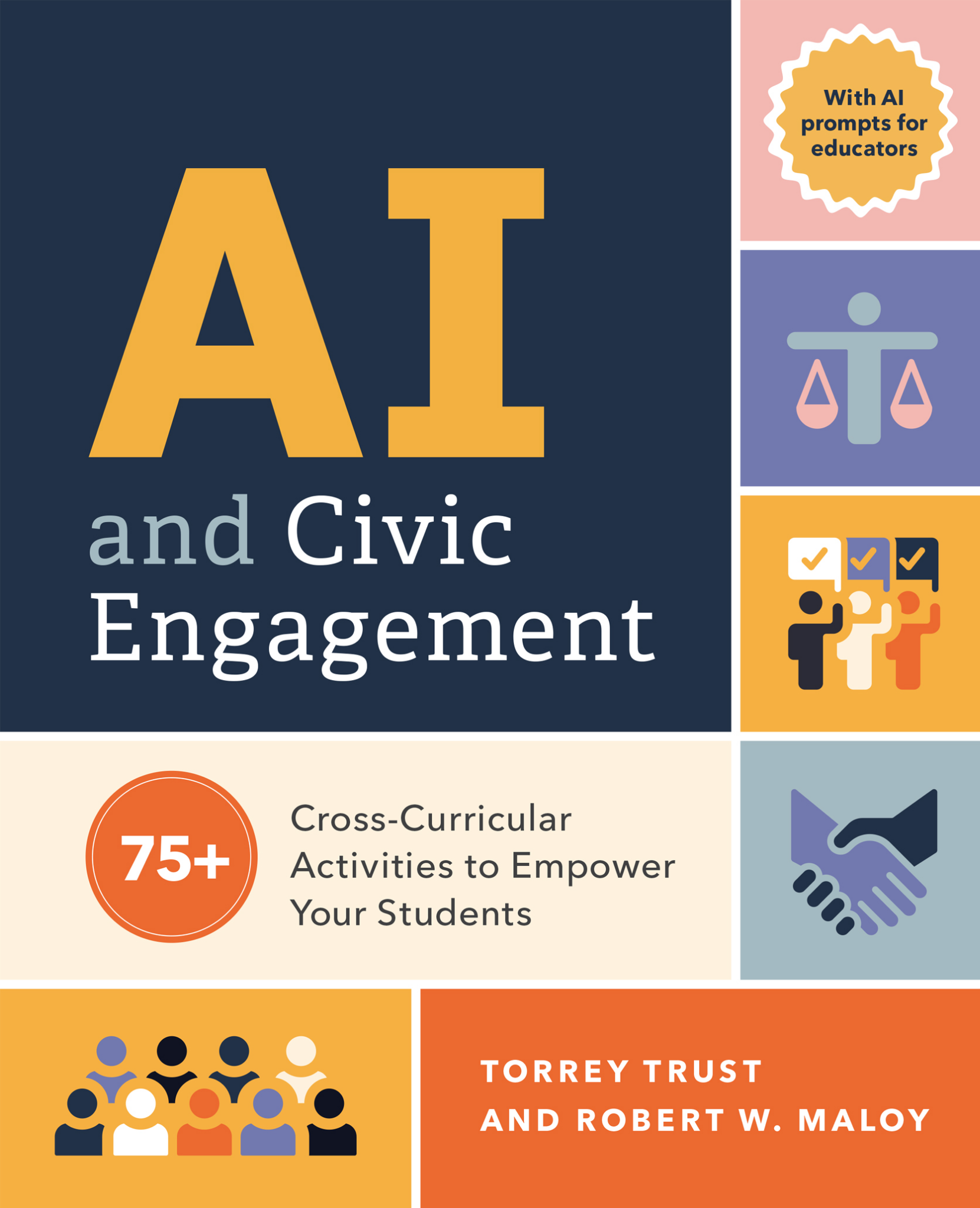
If you’re looking for ways to use GenAI to augment teaching and learning, check our the free online companion of our new book: GenAI and Civic Engagement: 75+ Cross-Curricular Activities to Empower Your Students published by ISTE (International Society for Technology in Education) or explore the bonus learning plans we’ve published on this blog: Learning Plans for Supporting Student Agency in the Age of AI & Learning Plans for Exploring Civic Issues with GenAI.

Nearly 50 years ago, at the outset of the computer revolution in schools, Seymour Papert asked: Will computers program the child, or will educators create the conditions where children program computers? For Papert then, as for us today in the age of GenAI, using technology remains a question of human control and user agency. GenAI can provide amazing resources, but it is essential that you retain your decision-making and personal creativity. Only then will the results be truly yours.

Torrey Trust, Ph.D., is a Professor of Learning Technology in the College of Education at the University of Massachusetts Amherst. Her work centers on empowering educators and students to critically explore emerging technologies and make thoughtful, informed choices about their role in teaching and learning. Dr. Trust has received the University of Massachusetts Amherst Distinguished Teaching Award (2023), the College of Education Outstanding Teaching Award (2020), and the International Society for Technology in Education Making IT Happen Award (2018), which “honors outstanding educators and leaders who demonstrate extraordinary commitment, leadership, courage, and persistence in improving digital learning opportunities for students.” More recently, Dr. Trust has been a leading voice in exploring GenAI technologies in education and has been featured by several media outlets in articles and podcasts, including Educational Leadership, U.S. News & World Report, WIRED, Tech & Learning, The HILL, and EducationWeek. www.torreytrust.com

Robert W. Maloy is a senior lecturer in the College of Education at the University of Massachusetts Amherst, where he coordinates the history teacher education program and co-directs the TEAMS Tutoring Project, a community engagement/service learning initiative through which university students provide academic tutoring to culturally and linguistically diverse students in public schools throughout the Connecticut River Valley region of western Massachusetts. His research focuses on technology and educational change, teacher education, democratic teaching, and student learning. He is co-author of AI and Civic Engagement: 75+ Cross-Curricular Activities to Empower Your Students, Transforming Learning with New Technologies (4th edition); Kids Have All the Write Stuff: Revised and Updated for a Digital Age; Wiki Works: Teaching Web Research and Digital Literacy in History and Humanities Classrooms; We, the Students and Teachers: Teaching Democratically in the History and Social Studies Classroom; Ways of Writing with Young Kids: Teaching Creativity and Conventions Unconventionally; Kids Have All the Write Stuff: Inspiring Your Child to Put Pencil to Paper; The Essential Career Guide to Becoming a Middle and High School Teacher; Schools for an Information Age; and Partnerships for Improving Schools.

About Rachelle

Dr. Rachelle Dené Poth is a Spanish and STEAM: What’s Next in Emerging Technology Teacher. Rachelle is also an attorney with a Juris Doctor degree from Duquesne University School of Law and a Master’s in Instructional Technology. Rachelle received her Doctorate in Instructional Technology, with a research focus on AI and Professional Development. In addition to teaching, she is a full-time consultant and works with companies and organizations to provide PD, speaking, and consulting services. Contact Rachelle for your event!
Rachelle is an ISTE-certified educator and community leader who served as president of the ISTE Teacher Education Network. By EdTech Digest, she was named the EdTech Trendsetter of 2024, one of 30 K-12 IT Influencers to follow in 2021, and one of 150 Women Global EdTech Thought Leaders in 2022.

She is the author of ten books, including ‘What The Tech? An Educator’s Guide to AI, AR/VR, the Metaverse and More” and ‘How To Teach AI’. In addition, other books include, “In Other Words: Quotes That Push Our Thinking,” “Unconventional Ways to Thrive in EDU,” “The Future is Now: Looking Back to Move Ahead,” “Chart A New Course: A Guide to Teaching Essential Skills for Tomorrow’s World, “True Story: Lessons That One Kid Taught Us,” “Things I Wish […] Knew” and her newest “How To Teach AI” is available from ISTE or on Amazon.

Contact Rachelle to schedule sessions about Artificial Intelligence, AI and the Law, Coding, AR/VR, and more for your school or event! Submit the Contact Form.

Follow Rachelle on Bluesky, Instagram, and X at @Rdene915

**Interested in writing a guest blog for my site? Would love to share your ideas! Submit your post here. Looking for a new book to read? Find these available at bit.ly/Pothbooks

************ Also, check out my THRIVEinEDU Podcast Here!

Join my show on THRIVEinEDU on Facebook. Join the group here.

Students, Teachers, and Chatbots:Learning Plans for Exploring Civic Issues with GenAI

Robert Maloy

Torrey Trust

Welcome to “Students, Teachers, and, Chatbots: Learning Plans for Exploring Civic Issues with GenAI!” In this monthly series, you will find classroom-ready learning plans to use as you explore different civic engagement issues and topics with students. Each learning plan is connected to one of the ISTE (International Society for Technology in Education) Standards for Students.

You can find more of these learning plans in our free online companion for our new book, AI and Civic Engagement: 75+ Cross-Curricular Activities to Empower Your Students. We hope you will find these plans engaging, and we welcome your ideas and suggestions.

AI-Enhanced Learning Plan: Democracy vs Algocracy

Imagine you have to vote in a school, local organization, community, state, or national election about a much debated and highly controversial issue. Someone proposes that instead of engaging in lengthy and potentially bitter debates, the group just let AI decide for them. What would be your response?

The question is no longer hypothetical. There are groups and government organizations in other countries that are turning over decisions about policies to AI chatbots. There is even a term for AI decision-making called “Algocracy” or government by algorithm.

Will chatbots make better decisions than elected political leaders or citizen voters? Many people now believe so. Across people in 35+ countries and speaking seven different languages, those surveyed were 30 percent more likely to see chatbots acting in their best interest and making better policy decisions on their behalf (Tech and Social Cohesion, 2025).

Letting chatbots make public policy decisions is known as “Algocracy” or “government by algorithm” (Thompson, 2022). The appeal of this idea is not hard to understand. People in country after country express distrust of politicians and political systems while also believing in the objectivity and efficiency of computer programs. Since chatbots are already proving they can make medical decisions at rates that can exceed those of human doctors, why wouldn’t chatbots do a better job of deciding where to spend money and allocate scarce resources?

Critics of algocracy are quick to point out that chatbots are not neutral tools. They function based on the datasets on which they have been trained, and that information has been shown to have alarmingly large amounts of misinformation and deep cultural, gender, racial, ability, and language biases (learn more).

Moreover, chatbots are “black boxes,” meaning users do not know how the systems actually make decisions. While how chatbots make decisions is invisible, the actions of elected representatives are matters of public record. Online and in print, you can research how your senator, representative, town or city council member, mayor, or other elected officials voted on the issues and you can write to them to express your views, for or against, their actions.

So what role, if any, should AI play in making decisions in democratic settings? Two former Google executives have proposed “rather than replace democracy with A.I., we must instead use A.I. to reinvigorate democracy, making it more responsive, more deliberative and more worthy of public trust” (Schmidt & Sorota, 2025, para. 3). This activity explores ways that AI can promote democracy and democratic decision-making while strengthening people’s participation in government and society.

Learning Goal

Students will build their civic knowledge by exploring the real world issue of Algocracy.

  • ACTIVITY 1: Using GenAI to Make Decisions for a Day (or an Hour)
    • Pick one day, one class, or one hour, and let GenAI make all the decisions for the class about what to do.
      • Example Prompt: “Respond yes or no and explain your reasoning for the following question from my 7th-grade students: Should we read Hamlet today or play Roblox?”
    • At the end of the day, class, or hour, invite students to reflect on their initial response to the student engagement question (“If a decision needs to be made, would you rather vote on it or have an AI chatbot decide?”) and whether they would change their response based on their experience asking GenAI to make decisions for them.
    • Then, have students research the concept of algocracy and current examples of AI decision-making by elected officials.
    • Finally, invite students to write a letter to their local town or state government in favor of, or in opposition to, this concept.
  • ACTIVITY 2: Critical Analysis of AI Decision-Making in Government
    • Invite students to research and then discuss the following questions:
      • How could the biases embedded in data shape political decision-making from AI systems?
      • How might AI-generated hallucinations affect governmental decision-making?
      • Who might benefit from AI decision making in government or an algocracy?
      • Who might be harmed from AI decision-making in government or an algocracy?
      • How might AI decision-making shift power dynamics within government? Who gains new forms of authority, and who loses it?
      • If an AI system makes an unjust or harmful decision, who should be held accountable (e.g., AI system developer? government officials?)
      • Who is more trustworthy? A politician or an AI system? Why?
    • Then, based on their research and discussion,

Reflection Questions

  • What role do you think AI systems will play in governmental decision-making 30 years from now? What about 100 years from now?
  • How might AI-driven governance shape or reshape democracy?
  • Would you vote for an AI candidate over a human candidate? Why or why not?
  • Could heavy reliance on AI governance discourage civic engagement or participation? Why or why not?

AI Literacy Questions

  • If you were to build an AI system to make decisions for the government, what data would you use to train the system? How would you reduce hallucinations? What safeguards would you put in place? What other ethical considerations would guide your design?
  • If GenAI systems can process far more information than humans, does that make it a better decision-maker? Why or why not?

ISTE Knowledge Constructor Criteria Addressed

  • 1.3.a Effective Research Strategies. Students use effective research strategies to find resources that support their learning needs, personal interests, and creative pursuits.
  • 1.3.b Evaluate Information. Students evaluate the accuracy, validity, bias, origin, and relevance of digital content.
  • 1.3.d Explore Real-World Issues. Students build knowledge by exploring real-world issues and gain experience in applying their learning in authentic settings.

References

Citizens.IS. (2025). Better Reykjavik. https://www.citizens.is/portfolio_page/better_reykjavik/

National Council of State Legislatures. (2022, January 4). Initiative and Referendum Overview and Resources. https://www.ncsl.org/elections-and-campaigns/initiative-and-referendum-overview-and-resources

Nwanevu, O. (2025). The right of the people: Democracy and the case for a new American founding. Penguin Random House.

Schmidt, E. & Sorota, A. (2025, November 16). This is no way to rule a country. The New York Times Sunday Opinion, p. 4).

Schofield, M. (2025, November 27). Ten ballot questions clear key hurdles. Greenfield Recorder, pp. A1, A10.

Tech and Social Cohesion. (2025, September 13). More people trust chatbots than elected leaders. https://techandsocialcohesion.substack.com/p/more-people-trust-chatbots-than-elected

Thompson, J. (2022, November 28). Algocracy would replace politicians with algorithms. Should we try it? Big Think. https://bigthink.com/thinking/algocracy-algorithm-government/

Resources

Apertus Isn’t (yet), the Win You Think It Is. Maxime Grenu. LinkedIn (September 2, 2025).

  • Assesses Switzerland’s efforts to build an ethical large language model for the public good, trained on only publicly available content.

Author Bios

Torrey Trust, Ph.D. is a Professor of Learning Technology in the College of Education at the University of Massachusetts, Amherst. Her work centers on empowering educators and students to critically explore emerging technologies and make thoughtful, informed choices about their role in teaching and learning. Dr. Trust has received the University of Massachusetts Amherst Distinguished Teaching Award (2023), the College of Education Outstanding Teaching Award (2020), and the International Society for Technology in Education Making IT Happen Award (2018), which “honors outstanding educators and leaders who demonstrate extraordinary commitment, leadership, courage, and persistence in improving digital learning opportunities for students.” More recently, Dr. Trust has been a leading voice in exploring GenAI technologies in education and has been featured by several media outlets in articles and podcasts, including Educational Leadership, U.S. News & World Report, WIRED, Tech & Learning, The HILL, and EducationWeek. http://www.torreytrust.com

Robert W. Maloy is a senior lecturer in the College of Education at the University of Massachusetts Amherst where he coordinates the history teacher education program and co-directs the TEAMS Tutoring Project, a community engagement/service learning initiative through which university students provide academic tutoring to culturally and linguistically diverse students in public schools throughout the Connecticut River Valley region of western Massachusetts. His research focuses on technology and educational change, teacher education, democratic teaching, and student learning. He is co-author of AI and Civic Engagement: 75+ Cross-Curricular Activities to Empower Your Students, Transforming Learning with New Technologies (4th edition); Kids Have All the Write Stuff: Revised and Updated for a Digital Age; Wiki Works: Teaching Web Research and Digital Literacy in History and Humanities Classrooms; We, the Students and Teachers: Teaching Democratically in the History and Social Studies Classroom; Ways of Writing with Young Kids: Teaching Creativity and Conventions Unconventionally; Kids Have All the Write Stuff: Inspiring Your Child to Put Pencil to Paper; The Essential Career Guide to Becoming a Middle and High School Teacher; Schools for an Information Age; andPartnerships for Improving Schools.

About Rachelle

Dr. Rachelle Dené Poth is a Spanish and STEAM: What’s Next in Emerging Technology Teacher. Rachelle is also an attorney with a Juris Doctor degree from Duquesne University School of Law and a Master’s in Instructional Technology. Rachelle received her Doctorate in Instructional Technology, with a research focus on AI and Professional Development. In addition to teaching, she is a full-time consultant and works with companies and organizations to provide PD, speaking, and consulting services. Contact Rachelle for your event!
Rachelle is an ISTE-certified educator and community leader who served as president of the ISTE Teacher Education Network. By EdTech Digest, she was named the EdTech Trendsetter of 2024, one of 30 K-12 IT Influencers to follow in 2021, and one of 150 Women Global EdTech Thought Leaders in 2022.

She is the author of ten books, including ‘What The Tech? An Educator’s Guide to AI, AR/VR, the Metaverse and More” and ‘How To Teach AI’. In addition, other books include, “In Other Words: Quotes That Push Our Thinking,” “Unconventional Ways to Thrive in EDU,” “The Future is Now: Looking Back to Move Ahead,” “Chart A New Course: A Guide to Teaching Essential Skills for Tomorrow’s World, “True Story: Lessons That One Kid Taught Us,” “Things I Wish […] Knew” and her newest “How To Teach AI” is available from ISTE or on Amazon.

Contact Rachelle to schedule sessions about Artificial Intelligence, AI and the Law, Coding, Cybersecurity, STEM, AR/VR, and more for your school or speaking event! Submit the Contact Form.

Follow Rachelle on Bluesky, Instagram, Threads, and X at @Rdene915

**Interested in writing a guest blog for my site? Would love to share your ideas! Submit your post here. Looking for a new book to read? Find these available at bit.ly/Pothbooks

************ Also, check out my THRIVEinEDU Podcast Here!

Join my show on THRIVEinEDU on Facebook. Join the group here.

Preparing for the Future: Career and College Ready

Previously posted on Getting Smart

Over the past couple of months we have had to make many adjustments to our personal and professional lives. During this unprecedented time, educators and families have been trying to find balance in their days, to work together to keep learning going, and perhaps more importantly, to provide the academic, emotional, and mental support that our students need.

For many educators, finding the right resources that can be used to teach and mentor remotely, and which will also engage students in learning activities, can be difficult. The challenge is not so much in finding tools, but rather in knowing whether our students can access them, determining which will benefit them the most, and making sure that we can provide the support that students and families need. At this time of the year in particular, guidance counselors and educators who work with mentoring programs are quite busy as they help seniors prepare to graduate from high school or other students as they transition to a new grade level or school. In many school districts across the United States, students are required to complete a job shadow, explore careers, and develop a digital portfolio that will become part of their application for college or work. Integral to these requirements are school guidance counselors.

After speaking with a guidance counselor from my school and following conversations in different learning communities and on social media, I’ve noticed that guidance counselors are seeking resources that can help them to provide this same support for students during remote learning. Even when we are in school with access to guidance counselors and resources, it can be difficult for students as they prepare to transition to their next grade or the next phase of their educational or work journey after graduation. Trying to plan their next steps, whether entering the workforce or pursuing a college education, has not been easy during this time. Students have questions about jobs, college applications, and skills needed for the future and without being in the same space, providing that information can be a challenge. However, there are many resources available to educators, students, and parents that can help now while we are experiencing school closures and that will be beneficial throughout the year in addition to the programs already in place.

Here are seven options for guidance counselors to support students during their transitions between grades, schools, and education and career. These options provide ways for students to explore careers, find job shadow opportunities, create digital portfolios, and even visit college campuses.

Career Readiness. In Pennsylvania, the Lincoln Intermediate Unit has a website that provides many links related to career awareness and readiness that will be helpful to elementary, middle and high school educators and students everywhere. It also offers resources for secondary transitions for special educators, direct links to the PA Department of Education, opportunities for virtual college and job visits, and many other relevant materials for educators that are helping students to determine their career pathways.

Couragion. Provides work-based learning experiences for students. Some options include career shadowing for students in grades 4 through 8 and micro badging for career exploration for middle and high school students. There are four curricular models to explore including technology, engineering, manufacturing, and business. There is also information provided for doing remote externships during the summer months and students can also build career portfolios.

Ecampus Tours. Educators and students can choose from more than 1,300 tours to explore college campuses in 360-degree virtual tours. The website also offers additional resources for college planning as well as materials for guidance counselors such as documents and other handouts for students and parents to plan for college.

MyPlan. Through the Career Exploration section of their site, there are videos, salary calculators, and other resources that enable students to explore different careers at their own pace. Students can learn about different industries, find out about the top 10 careers, and even ask questions in the community to learn more about specific careers and skills needed.

Nepris. This site offers educators the opportunity to connect students with professionals working in many different careers and industries. Through their Career Explorer program, educators can request a speaker to join in a virtual discussion with students, provide students with an authentic audience as they present project-based learning, or even arrange a panel discussion. There are live virtual chats and more than 9,000 recordings available for students to explore different careers on their own time. The virtual industry chats and video library are available to everyone during this time.

Smart Futures. This Pittsburgh-based company has created SmartFutures.org, an online career planning platform for students, whether kids or young adults. Using Smart Futures, students take surveys and complete activities to learn more about their skills and interests, and are able to explore careers and create their digital portfolio. E-Mentors are also available through Smart Futures.

Xello. This resource provides a variety of options for students to learn more about careers and build future-ready skills as they transition through each level of school. Using Xello, students take an assessment and then can explore hundreds of career and college options that match their results. As they work through the activities, reading biographies and engaging with the resources provided, a portfolio of their work and explorations is created. Xello’s software also assists students with gathering documents needed as they prepare college applications.

Regardless of whether in the physical or virtual space, we need to support students and provide them with opportunities to explore their interests and prepare for the future, whether for careers or college. Using any one of these resources, students have opportunities to build self-awareness of their skills and interests and can engage in different learning experiences that prepare them for the future.


**Interested in writing a guest blog for my site? Would love to share your ideas! Submit your post here.


Looking for a new book to read? Many stories from educators, two student chapters, and a student-designed cover for In Other Words.

Find these available at bit.ly/Pothbooks  

Unconscious Bias

Guest post by Sari Goldberg McKeown @sgteach_sari & Jessica Liakonis @MrsLiakonis

Opinions expressed are  those of the guest blogger. 


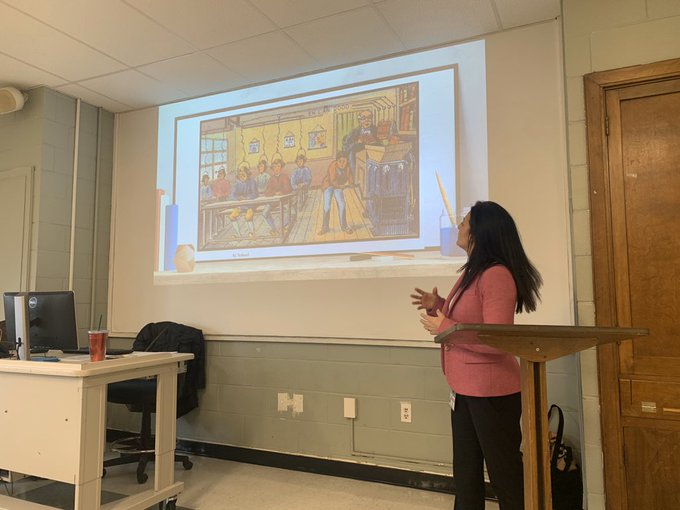
I embrace education as an opportunity to inspire and empower. As an educator, it is my goal to enhance student learning as a transformative experience. Teaching is a privileged position. It  demands humility as much as respect. It is crucial that as educators, we recognize the power inherent in our role and are self-reflective about our actions. It is critical that we are mindful of our position as a role model and the kind of learning we strive to promote among students. Our students are always watching. They are always learning from us. When the image below was recently posted by Adam Welcome, it forced me to stop in my tracks. This small image has a BIG impact.

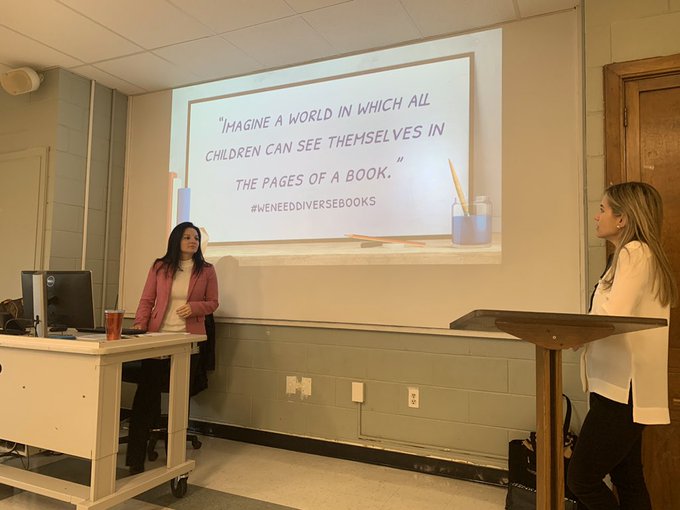
“We say we teach all children, but do we teach all stories?  Do we teach the whole truth, and nothing but the truth, or just the sanitized version that will not ruffle any feathers? I can choose to bring others into our classrooms so that their stories are told by them. I can choose to model what it means to question my own assumptions and correct my own wrongs.” As Jessica and I unpacked Pernille Ripp’s post “These Divided Times,” with our Voxer group #StrongTies, Pernille’s words swirled in my head. This conversation brought my own assumptions to the forefront. Do I support all stories? Do I create a space that encourages the whole truth? What do I model? -Sari


𝕊𝕒𝕣𝕚 𝔾𝕠𝕝𝕕𝕓𝕖𝕣𝕘 𝕄𝕔𝕂𝕖𝕠𝕨𝕟@sgteach_sari

How do you flatten the walls in your classroom? @pernilleripp @kemnitzer3 @JamiePandolf @AKennedy61 @MrsLiakonis @lopescommack @ChrisKauter @MrECuff

View image on Twitter

Who’s different? What’s fair? As a society, discussions about bias, discrimination, culture, and social justice tend to happen more in middle and high schools. Educators sometimes believe that younger children may not understand these complex topics, or maybe they just want to delay exposing them to injustices as long as possible. However, young children have such a passion for fairness. They want to do the right thing; they want to be fair. The best though is that they notice differences without apology or discomfort. Why does your hair feel different than mine? What is that in your lunchbox? How come you have two mommies?

As Sari mentioned, while we unpacked Pernille’s post, I thought to myself, bias can be unlearned or reversed if children are exposed to everyone’s differences in a positive way. The burning question, how do we do that?  -Jessica

Searching Inward

I quickly realized I had a lot to learn. I am so grateful for the time that Pernille spent with us that week digging deep into this meaningful work. As Pernille shares in this message (that I highly encourage you to listen to), this is messy, exhausting work that is so incredibly important. Before we can do the work with our students, we need to do the work with ourselves. I needed to search inward and identify my own personal bias. Bias. What does that mean? I used to believe that word had a very negative connotation. This learning journey has shifted my perspective.

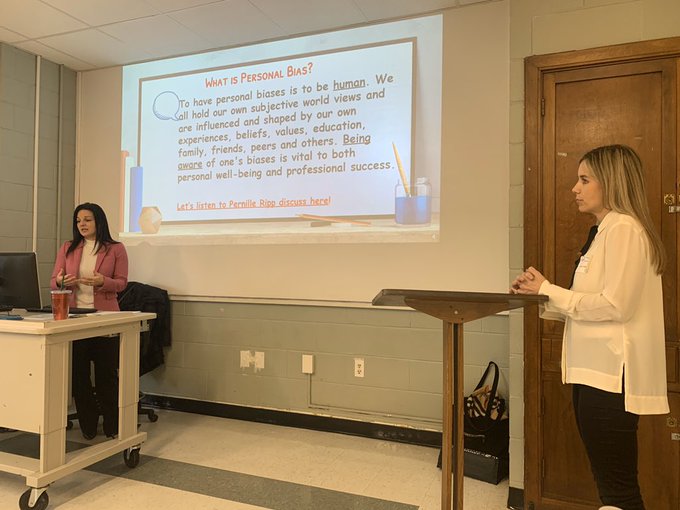
To have personal biases is to be human. We all hold our own subjective world views and are influenced and shaped by our own experiences, beliefs, values, education, family, friends, peers and others. Being aware of one’s biases is vital to both personal well-being and professional success.

Our lens is created through our experiences. These experiences create our bias. That does not make our lens wrong…it just makes it personal. Believing that our lens is the only lens or the correct lens, is wrong. – Sari

The Power of a Story

Yes, Sari! We must identify our own bias first, and it’s not always easy. Once we can understand and recognize this, we can begin to teach students how to acknowledge their own. The early years are the time to begin helping children form strong, positive self-images and grow up to respect and get along with people who are different from themselves. So, how can we start beating bias? With books!

Jessica Liakonis@MrsLiakonis

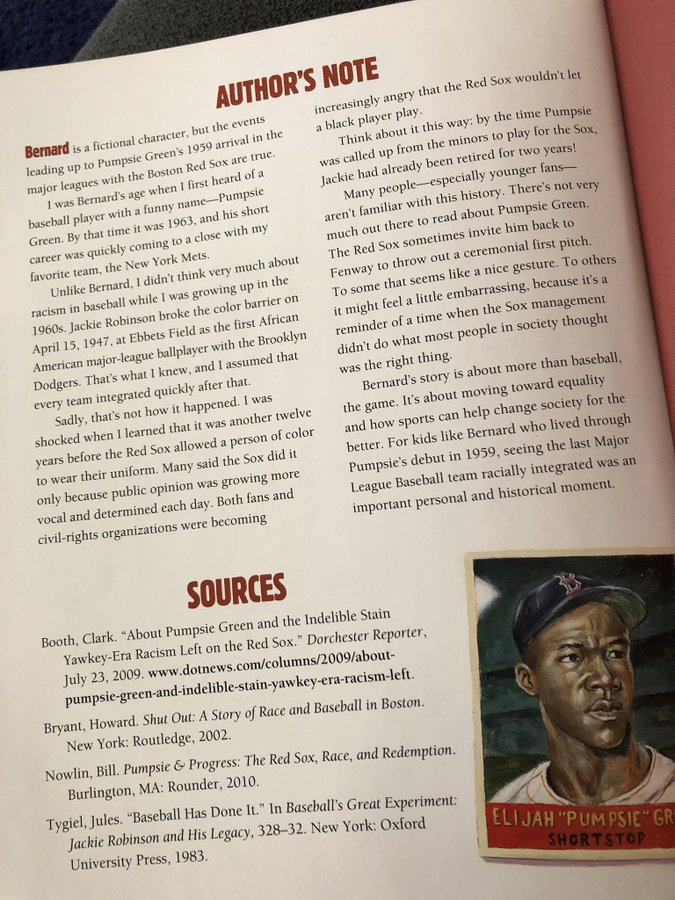
Day 46 Another great story by @bwittbooks & @LondonLLadd set in 1959 about Bernard’s wish for the Red Sox to finally integrate their baseball team! @JLVacchio @miss_anderer @WilletsRoadMS Ss loved learning from the back matter! @EastWillistonSD

View image on TwitterView image on Twitter

Jessica Liakonis@MrsLiakonis

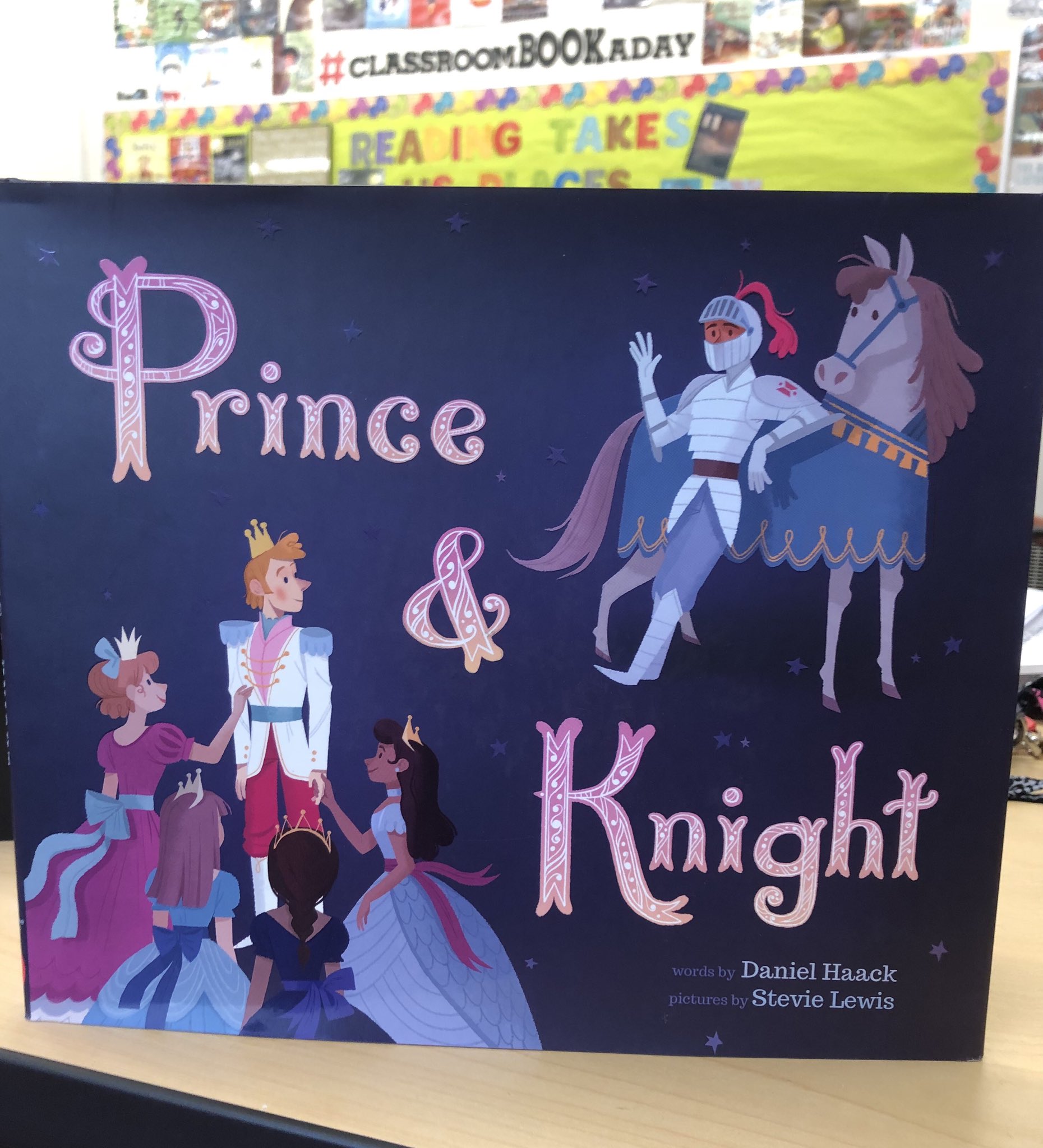
Day 160 An important topic told in a fairy tale. Student discussion was powerful. Thank you @DanielHaack @EastWillistonSD @WilletsRoadMS @kemnitzer3 @sgteach_sari @JamiePandolf @AKennedy61 @dmgately @pernilleripp

View image on Twitter

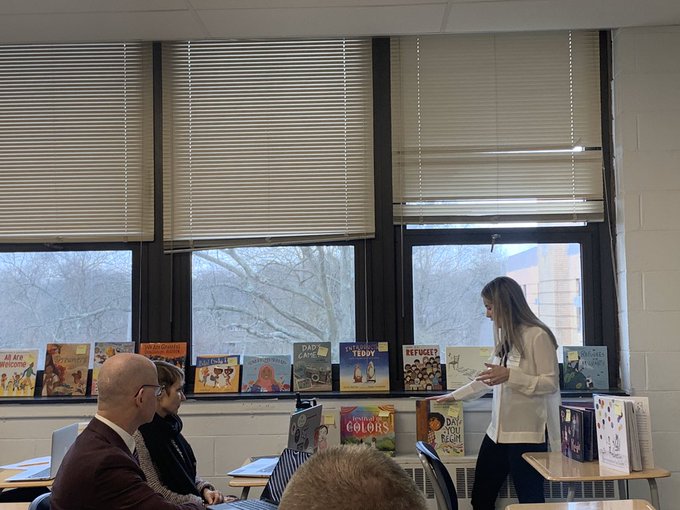
Children’s books continue to be an invaluable source of information and values. These books can begin extremely positive and powerful discussions in your classroom, if we allow them to. We must allow them to. The experience of listening to others read aloud or reading picture books with an anti bias message provides an opportunity for young children to see and identify with characters often different from themselves. They can also experience a wide range of social dilemmas and points of view. These stories teach students how to look at events from a variety of perspectives, in other words, feel what it is like to “be in another person’s shoes.” Jessica

Jessica Liakonis@MrsLiakonis

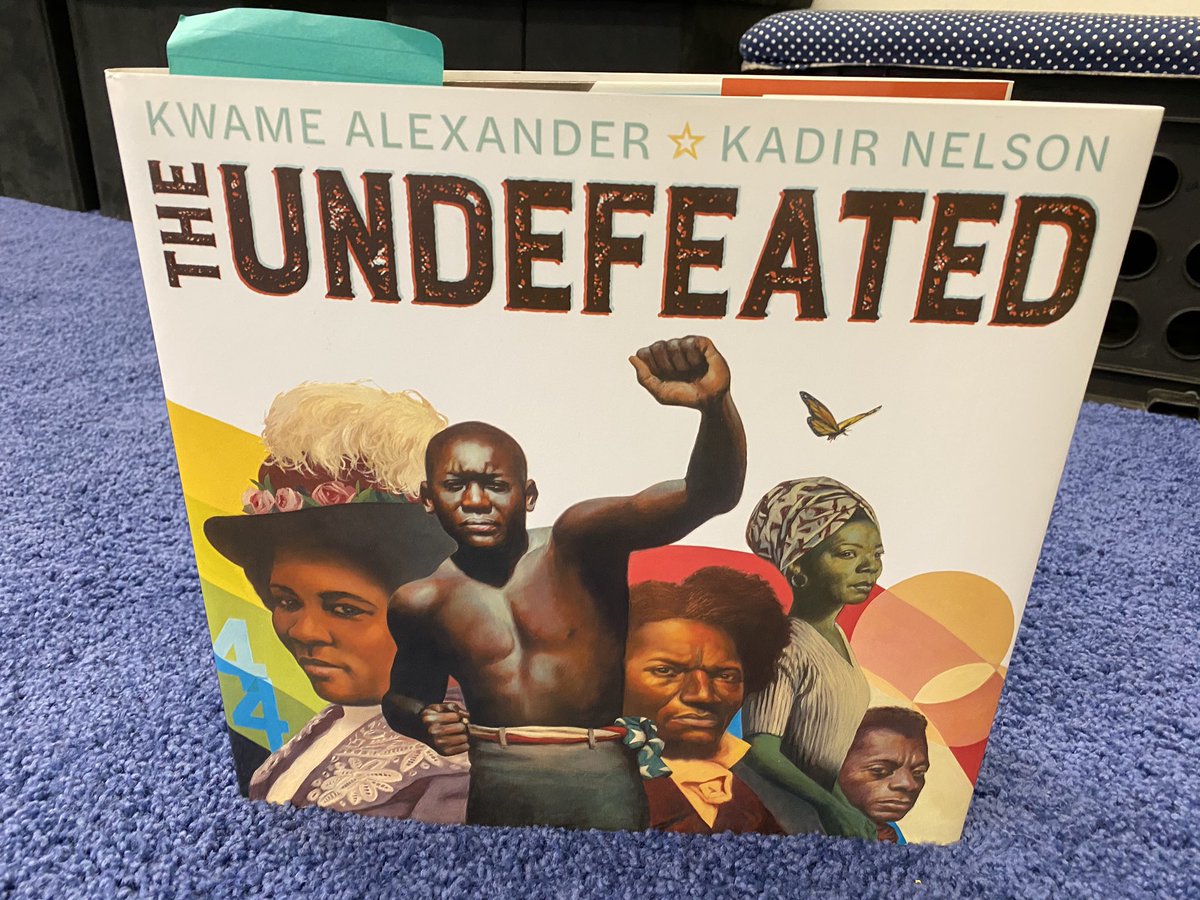
Day 70 The Undefeated by @kwamealexander is an ode to black Americans through history: the dreamers and the doers who have made a difference despite the many injustices endured and challenges faced. @JLVacchio @miss_anderer

View image on Twitter

Continuing the Conversation

Pernille ignited a flame within me. Jessica and I gravitated towards one another. We shared a strong desire to seek more answers. This marked the beginning of our journey. We continued to dig deep in an effort to understand our own personal bias. We explored books, podcasts, TED Talks, hashtags, blogs, and workshops that have stretched our thinking. Please click here to find the list of resources that have opened our eyes. This document also includes many of the incredible read alouds Jessica has utilized as a catalyst for these important conversations with students. (Please also reach out to us with recommendations to help support our journey!) We developed a workshop, Unconscious Bias. To date we have facilitated sessions at EdCampLI and The New York State Middle School Association Regional Conference. We designed this workshop not as experts, but as learners. Our intention is to create a space to continue the conversation and learn with others. – Sari

I read picture books to my students on a daily basis as part of #ClassroomBookADay. Recently, I decided to look back on some of the picture books I have read to my students and connect them with our current Civil Rights unit, as well as current events. Having the students explore the literature and discuss hard topics was just what we needed in order to reflect back on our biases. 

Through meaningful activities that promote critical thinking and problem solving, based on carefully selected books, our students can begin to build the empathy and confidence needed for becoming caring and knowledgeable people who stand up for themselves and others in the face of discriminatory behavior. Let’s continue to teach them the beauty of others.  -Jessica

Ed Kemnitzer@kemnitzer3

This presentation is just amazing! Great conversation on bias, putting all stories on bookshelves, and engaging all voices. Using gentle stories to talk about heavy topics. Shout outs to @pernilleripp and @dmammolito. Great work, @MrsLiakonis and @sgteach_sari.

View image on TwitterView image on TwitterView image on TwitterView image on Twitter

____________________ Thank you Sari for the Guest Post _____________________


**Interested in writing a guest blog for my site? Would love to share your ideas! Submit your post here.


Looking for a new book to read? Many stories from educators, two student chapters, and a student-designed cover for In Other Words.

Find these available at bit.ly/Pothbooks  


Guest post: Teachers have earned the benefit of the doubt

Be patient during the COVID-19 pandemic

As schools throughout the nation close for the remainder of the year, take a minute to consider what this will mean for thousands of teachers who are doing their best to educate our children. School leaders and local officials are scrambling to “flatten the curve” of the COVID-19 pandemic. This is our top priority, and as we retrofit our education system on the fly to meet the needs of millions of students, we ask for your patience and understanding.

Schools are not designed to adapt quickly

Be kind to teachers who are on the front lines navigating school closures in an education system that is, like so many institutions, incapable of meeting the demands placed upon it by the outbreak. At best, the expectations for most teachers right now are loosely defined by school leaders. Many teachers are trying to patch together inadequate distance learning programs without guidance. This is not the time for parents to use social media platforms to compare teachers or to publicly complain about a teacher who is slow to adapt. Our nation’s teachers have earned the benefit of the doubt, so please show some grace if you are irritated.
During normal times, school districts take several months, even years, to institute changes in curriculum and instructional methods. Expecting teachers to do this at a high level, with no time to prepare, during a national emergency is ridiculous. If you feel the need to share feedback with an educator, consider what would be helpful before you hit send. Negativity toward a teacher at this time will bruise deeply and could limit the creativity of teachers trying their best to meet student needs. A measured tone is imperative if you feel discouraged as a parent and wish to share your frustration. Trust me, teachers wish they could meet the needs of every student and family they serve.

More than the internet

Connecting and teaching students in a distance-learning environment is not akin to a teacher simply jumping online and presenting academic material to students. Conducting meaningful virtual instruction requires dedicated professional coaching for staff, and it also requires significant training and practice for students and families. Most teachers have never been expected to integrate remote learning into their curriculum. The instinctive knowledge teachers have spent their respective careers amassing has a vastly different application online, and most educators have never been trained to deliver robust instruction in that format. In addition, the inequity of student access to technology and broadband internet service is woven into the challenge of teaching students remotely.

Teachers are pros at building relationships

Teachers are well versed in building relationships with students so be grateful for the teachers who are trying to maintain their connection to students. This connection — virtual or in-person — is critical for academic and social-emotional growth. Our best educators specialize in making those human connections and they are experts at molding positive relationships, devoting their talent to create a culture of learning, and contributing to the school culture. Those indelible skills for expressing care and demonstrating a commanding presence may translate online for some teachers, but it is unfair to expect it to happen naturally.

Teachers are stuck waiting

Many of our teachers can’t share with you that they are at the whim of school leaders and state mandates that are not always communicated to them effectively. While teachers are on the front lines of most communication with parents and students, they are not always armed with the information parents seek. Your child’s teacher understands your concerns about assessments and grades, your child falling behind and your desire to have access to more resources. Teachers are trying to be flexible and they do not want to throw their school leaders under the bus by voicing their misgivings to you and fueling the anxiety parents are feeling.

Uncertainty and sadness

Educators lament the loss of the celebrations, getting that last high five, hug or final word of encouragement to students. Teachers have been working hard to get your child to the finish line, and in a career that has always included clear beginnings and ends each school year, this new reality is bewildering. Many educators are helping their own children cope with the loss of a traditional school year while they also cope with the same reality as a professional. Not being able to grieve the loss of the school year together is tough on the children and the adults who serve them. Teachers wonder if their current efforts are making much of an impact on students. In some cases, only a handful of students are still connected to school and that is disheartening. Teachers are used to receiving regular feedback from students and adjusting their teaching strategies accordingly.

Moving forward

The best thing you can do to help teachers is to unite with them and let them know you appreciate them. If you feel the need to share your concerns about school district policies and local programs, reach out to school leaders. Our educators are committed to serving all children and we know that we’re in this together. Teachers and school leaders throughout the country care deeply about the health, safety, and engagement of their students. Right now our teachers need your support.

**Interested in writing a guest blog for my site? Would love to share your ideas! Submit your post here.


Looking for a new book to read? Many stories from educators, two student chapters, and a student-designed cover for In Other Words.

Find these available at bit.ly/Pothbooks  

Learning as we go

Recently I had a colleague ask me for some ideas for dealing with challenges when it comes to classroom management, student behaviors and just keeping up with the responsibilities of teaching in general. I’m always happy to have time to talk with other educators, there is so much to learn by connecting. I think sometimes there is an assumption that because someone may have been teaching for 10 or more years, or worked in the same school district for a long period of time, that’s there is a higher level of knowledge and skill held by a teacher that fits into this description. While of course the more that you teach, it might seem like you would have a lot of ideas and answers to share with younger or new to the school teachers, but the longer you have taught also means, I think, that you have that much more to learn.

Having taught for about the last 25 years, I’ve had a lot of different experiences, some good, some bad, some in between and some just absolutely fantastic. I have been in the position where I needed to improve, and felt like no matter what I tried to do or could try to do, that I just would not succeed. That I would lose my job. I’ve also been at the opposite end where I felt like things were going well, I could feel more success and a change in how I had been teaching in the classroom and in my connections and relationships that I had built with the students and colleagues.


I think if you ask any educator, most can probably identify the best year they’ve had, and if they can’t, they just can’t yet. We always have room to grow and things take time. How do educators decide what makes it the best year? For some, is it a year without many challenges, the students are well-behaved, homework is complete, other clerical tasks and responsibilities held by the teacher are finished, observations went very well and teacher ratings are satisfactory or proficient or whatever the ranking may be? Maybe. But how do we truly define what would be the best year ever?

It takes time to build

I am fairly certain that last year was the best year I’ve had yet. I think because I changed a lot of things in my classroom, I stopped worrying so much about having every minute of every class accounted for and instead gave the students more possibilities to lead in the classroom and for me to have more opportunities to interact with them. Now it did not come without its challenges, some student behaviors that in some cases pushed me so far beyond frustration that I thought I reached my breaking point. I reacted in ways that I was not proud of, but I let the frustration get the best of me. I stopped seeing the student and only saw the behaviors. My “lens” had become clouded and it took some reflection and just not feeling very good about it for me to realize that I had to do something different.


The common feeling or response is when you feel like there is a lot to handle or come up with a plan for, can feel so isolating. you might feel lost or like others are judging you based on what you perceive to be your weak areas when it comes to instruction. And I’ve had a few people confide in me that they feel like they’re too different or too weird or they’re not normal enough to be teachers. Hearing those kinds of things breaks my heart because I don’t want to see teachers become disengaged or to lose their passion for doing the work that teachers do because of worrying about how others may or may not perceive them.

My response is always it’s good to be different, what does normal look like anyway? Does normal mean everybody gets and does the same thing? Does being normal mean you fit into some kind of mold, one that may or may not be who you truly are? I think the best that we can do for our students is to show them who we are because we want to know who they are.

We can’t hide behind some perceived idea or model of what a teacher should or should not look like. Nor should we compare ourselves to our colleagues or other teachers that we may have had in our own experience. When we do this we lose sight of something and I think it’s important for us to demonstrate and model for students. We need to worry about ourselves first and only compete with who we are today by judging it based on who we become tomorrow. Everyone has weaknesses, everybody struggles, everybody feels like they don’t belong at times, a friend once wrote about being in the land of misfits, I’m totally fine with that.


What can we do, regardless of what year we are in during our careers? New teachers have a lot to offer veteran teachers. There are better pre-service teacher programs and more information available to current students that are seeking to get into the profession, than what is available to us veteran teachers, who may not have access to or may not even know they exist. And for the new teachers, when you are assigned to have a mentor in your school, I really don’t think you should consider it to be that you are the learner and that you must follow and adhere to all of the advice of your mentor. You have to decide who you want to be, what is your purpose, your why, your spark, your passion for doing what you’re doing?


We can get lost and swept up in all of the activities that pull us every single day leaving us very little if anything at all to work with to build our own skills. As veteran teachers, we need to seek out mentors for ourselves as well, and that might mean connecting with a newer teacher to your building or a new teacher to the profession. How can we expect our students to interact and understand different perspectives, and to be accepted if we ourselves do not do the same thing and go beyond that?

It starts with us and it always starts with us to take that first step. We have to be okay with who we are and commit to doing whatever is best for our own personal and professional growth but being mindful of what that means and how it will impact those we lead and learn with.


So if at any time you feel down, lost or frustrated or like you’re becoming disengaged or that you don’t fit in, please send me a message. I’d love to talk to you and share some of my own experiences on my 25-year learning journey. Need to connect? Reach out to me on  Twitter @Rdene915!


Animated GIF-downsized_large (5)

Thank you Kristi Daws for creating these images!!

Time for new ideas


null

The end of the school year is the perfect time to try the tools or explore new ideas that perhaps you did not get to throughout the year. We can also use this as a time to prep for the next school year. By trying different tools and platforms during the last few weeks, we can then take the summer break to reflect on their impact on student learning. During the spring, I notice a drop in student engagement and an increase in the number of students missing classes due to testing, sporting events, or regular absences. Finding a way to keep students connected and engaged in the lesson is critical.

To resolve these challenges, I try to find something that will benefit students, resolve any disconnect or gaps in learning that might be happening and increase engagement. A new tool that caught my attention recently is NoteAffect. It is a platform focused on enhancing and understanding student engagement and empowering teachers with a powerful tool to better understand student learning.

Why NoteAffect?

NoteAffect provides a unique platform for personalizing the learning experience for students. Using NoteAffect, teachers can deliver lessons in a more interactive way that empowers students to be more involved in the lesson and have access to all of the course materials within one platform. Whether or not students are present in class, they can log in to their account at any time and either view the lesson they missed, or review a lesson in preparation for an exam or for continued review.

NoteAffect offers the right resources and methods to better engage students in learning and helps teachers to track student progress, better understand the questions that students might have and use it as a way to reflect on their own teaching practice. Worried about having devices that are compatible with? No worries as NoteAffect can be used on a PC, Mac, Chromebooks, Android, and iOS devices, so students can interact in class or on their own schedule.
null

Getting started with NoteAffect is easy!

Finding time is always a challenge with so much to do in our school days and prepping throughout the week. However, with NoteAffect, teachers can quickly set up an account, invite students to join classes and begin sharing a lecture. The dashboard is easy to navigate and it provides access to the materials that empower teachers to better understand student needs and learning trends.

Once you have created your courses in NoteAffect, it is easy to have students join in the course and participate in minutes.

To invite students, simply follow these steps:

  1. Go to your Dashboard and select “Instructor Tools” and then “Course Management.”
  2. Select the appropriate course from the menu on the left.
  3. Select “Participants” and then select “Add participant” from the top right corner.
  4. Enter the student’s email address and click “Add.”
  5. Students will receive an email with a  prompt to join the course.

Once students are participants in your course, they will be able to see any prior lectures and participate in the current lecture being delivered.

To start a lecture:

  1. Click “Start new lecture” and you will be prompted to open the Broadcaster.
  2. Once the Broadcaster window opens, use the drop-down menu to determine which application to display or if you have other files that you want to use for your lecture.
  3. Once you select the app, it starts to share your screen with your students and it will record the audio as well.
  4. When finished, simply End Lecture and it will be available to students.

Features of NoteAffect

  • Students can take notes, highlight important points, make annotations on the lecture notes and even submit an anonymous question during class. Classmates can see the questions and upvote a classmate’s question, making it more interactive.
  • It’s a great way to have everything accessible in one place as opposed to writing on pieces of paper or having to pull from different presentations. By using notes, students have access to everything within one platform, making it even easier for students to manage.
  • Teachers can deliver their lessons and add in or embed live polling, and further engage students in the lesson.
  • Using the analytics, teachers can see the level of participation and engagement with the material.
  • Analytics provide information including the views, notes taken, words per note and annotations made by students, providing a clearer picture of the level of understanding and engagement of students.

null

It will be easy to get started with NoteAffect in your classroom or to recommend to colleagues and administrators for use in their classrooms and schools. To learn more, check into NoteAffect here and get started with a demo today! Be sure to follow them on Twitter 


For my prior post on NoteAffect, click here


TeacherCast Educational Network | Developing Standards-Based Instructional Technology Integration

Technology Integration - Instructional Coaching - Productivity Secrets for Educators

Leadership Liner Notes: Sean Gaillard

Built on Connection. Tuned for Impact.

Stories by Thomas Oppong on Medium

Dr. Rachelle Dené Poth @Rdene915 Educator, Consultant & Keynote Speaker, Author, Attorney #THRIVEinEDU

Hooked On Innovation

When Innovation slaps you in the face, we slap back.

Teach Better

Dr. Rachelle Dené Poth @Rdene915 Educator, Consultant & Keynote Speaker, Author, Attorney #THRIVEinEDU

BrianKulak.com

Dr. Rachelle Dené Poth @Rdene915 Educator, Consultant & Keynote Speaker, Author, Attorney #THRIVEinEDU

The Principal of Change

Stories of learning and leading

Mandy Froehlich

Dr. Rachelle Dené Poth @Rdene915 Educator, Consultant & Keynote Speaker, Author, Attorney #THRIVEinEDU

Katie Martin

Informed by research, refined by practice

#RocknTheBoat

Rocking today's classrooms, one teacher, student, and class at a time.

User Generated Education

Education as it should be - passion-based.

Learning as I go: Reflections & lessons learned

Dr. Rachelle Dené Poth @Rdene915 Educator, Consultant & Keynote Speaker, Author, Attorney #THRIVEinEDU

Serendipity in Education

Join me, Allyson Apsey, as I stumble upon the fortunes of learning, laughing, and celebrating alongside incredible people.