Marty the Robot: Your Classroom’s AI Companion

Post in collaboration with Robotical. Opinions expressed are my own.

Artificial intelligence (AI) is no longer a futuristic concept. It has been around since the last century, but it has advanced rapidly in the past few years, especially with the launch of ChatGPT and generative tools. Whether or not we ever realized it, it has been and will continue to be a part of our everyday lives. Think about your daily activities using AI, from the voice assistants on our phones to the recommendation algorithms on our favorite streaming platforms like Netflix. As educators, it’s crucial to equip all students with the knowledge and skills to understand, interact with, and even create AI-powered technologies. But how?

Marty: Your AI-Powered Teaching Assistant

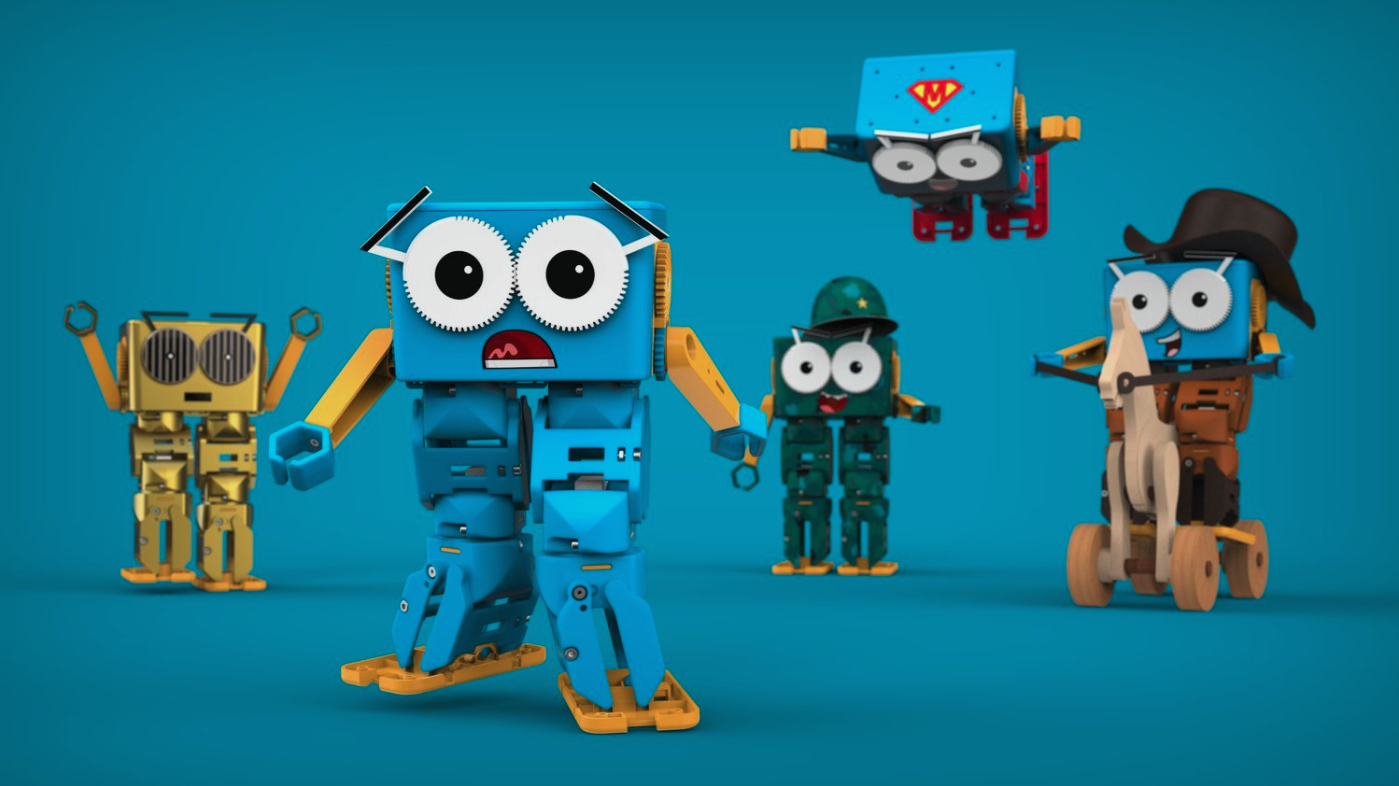
Marty the Robot is a fantastic tool for introducing AI concepts to students of all ages. Marty is a humanoid robot that is specific for education. It is a hands-on, engaging way to provide all students with the opportunity to learn about and explore machine learning, robotics, and computer science. In today’s digital age, artificial intelligence (AI) is all around us. For the younger generations, they have grown up using and relying on AI, and in likely most cases, without even noticing it.

As educators, there are many ways we leverage the power of AI to assist us with tasks, save time, promote productivity, and more. For example, voice assistants respond to our commands, streaming services curate personalized recommendations quickly, and educational apps adapt to individual learning styles, which create personalized learning journeys for students and help us provide the best opportunities for our students.

AI should be part of elementary school students’ learning experience. Whether they learn the basic concepts or have opportunities to work with an AI-powered tool, it is important to move our students beyond passive consumption and empower them to engage actively with these technologies. By understanding how AI works and how to create it, students can become not just users but innovators.

Marty the Robot: A Hands-On AI Companion

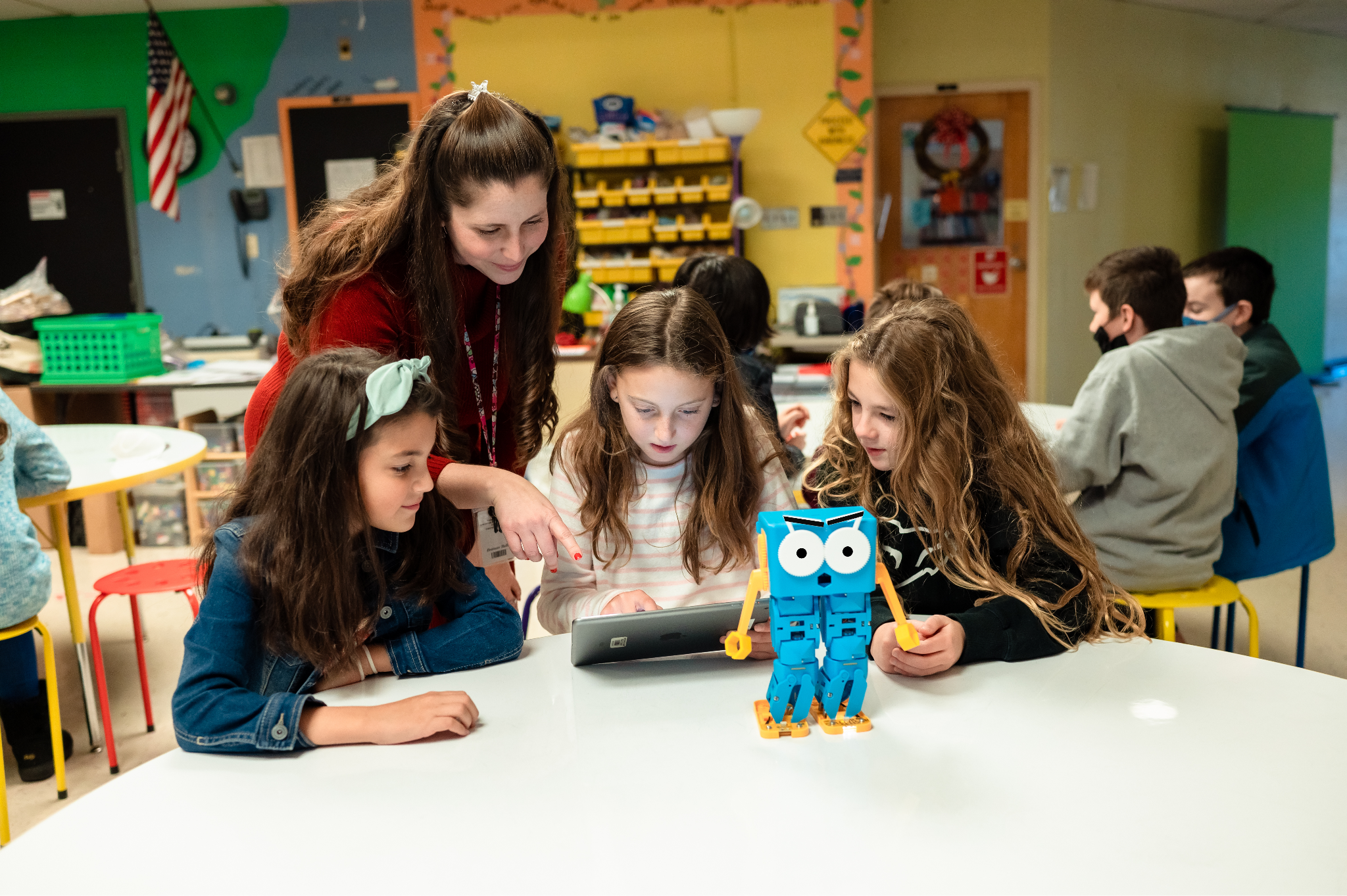
I was thrilled when I received Marty the Robot for my classroom. Marty is a mixture of hardware and software that brings AI concepts to life and engages all students. Marty offers a unique opportunity for students to explore the world of machine learning and robotics and have fun in the process!

Why Choose Marty?

Humanoid Design: Marty’s humanoid form fosters a strong emotional connection with students, making learning more enjoyable and memorable.

Versatile Programming: From screen-free coding to advanced Python programming, Marty supports a wide range of coding skills and learning styles. It meets students’ interests and specific needs.

Customizable AI: Students can teach Marty to recognize sounds, images, and other stimuli, allowing them to create personalized and interactive experiences. It gives them more opportunities to create and innovate.

Curriculum-Aligned Resources: Marty has an extensive library of educational resources, including lesson plans, activities, and tutorials, aligned with various national and regional curricula.

Durable: Marty is a reliable and long-lasting educational tool built to withstand classroom use and even some falls.

Real-World Applications of AI with Marty

Image Recognition: Teach Marty to identify objects, colors, and patterns, fostering visual perception and problem-solving skills.

Sound Recognition: Train Marty to respond to voice commands and sound cues, developing auditory processing and language skills.

Obstacle Avoidance: Implement AI algorithms to enable Marty to navigate obstacles autonomously, teaching students about spatial reasoning and decision-making.

Facial Recognition: Use advanced AI techniques to teach Marty to recognize faces, and students can evaluate its accuracy for detecting faces too..

STEM Learning and Beyond

Marty is more than just a robot; it’s a gateway to a world of STEM possibilities. By building and programming Marty, students develop critical thinking, problem-solving, and creativity skills.

Marty can be used to explore cross-curricular topics, such as language arts, social studies, and art. For instance, students can write stories about Marty’s adventures, create artwork inspired by his design, or study historical figures who have contributed to the field of robotics.

Empowering Future Innovators

By introducing students to AI and robotics through engaging tools like Marty, we are shifting them from consumers and creators and empowering them to become the next generation of innovators. As technology advances, it’s essential to equip all students with the knowledge and skills needed to thrive in our rapidly changing world.

Marty the Robot will engage students and spark creativity and curiosity for learning. By embracing AI and robotics education, we can hopefully inspire our students to become problem-solvers, inventors, and dreamers.

It has been so much fun to see students learning about AI and coding with Marty!

To learn more about Marty the Robot, head to https://robotical.io/. You can even request a trial of Marty, too!

About Rachelle

Dr. Rachelle Dené Poth is a Spanish and STEAM: What’s Next in Emerging Technology Teacher at Riverview High School in Oakmont, PA. Rachelle is also an attorney with a Juris Doctor degree from Duquesne University School of Law and a Master’s in Instructional Technology. Rachelle received her Doctorate in Instructional Technology, and her research focus was on AI and Professional Development. In addition to teaching, she is a full-time consultant and works with companies and organizations to provide PD, speaking, and consulting services. Contact Rachelle for your event!

Rachelle is an ISTE-certified educator and community leader who served as president of the ISTE Teacher Education Network. By EdTech Digest, she was named the EdTech Trendsetter of 2024, one of 30 K-12 IT Influencers to follow in 2021, and one of 150 Women Global EdTech Thought Leaders in 2022.

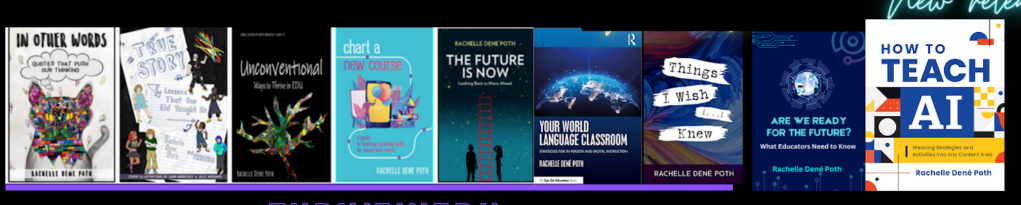
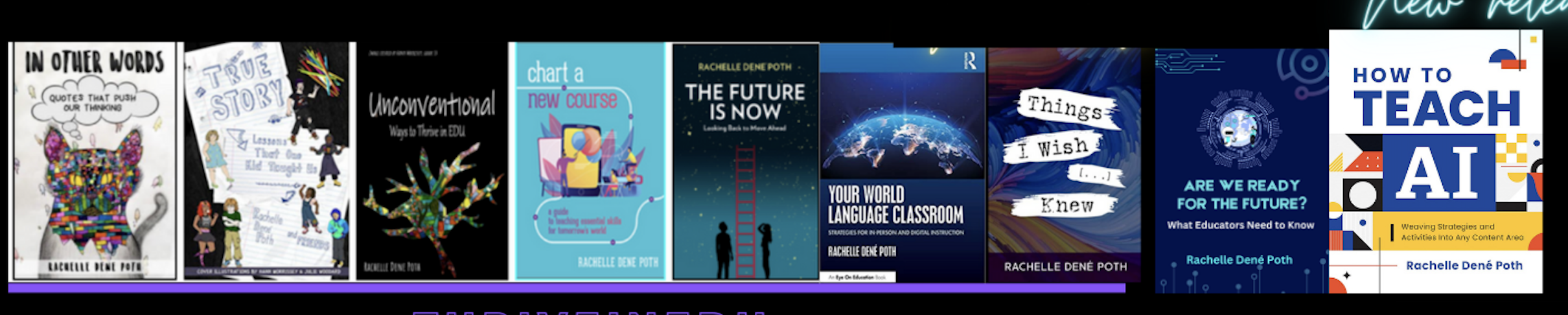
She is the author of nine books including ‘In Other Words: Quotes That Push Our Thinking,” “Unconventional Ways to Thrive in EDU,” “The Future is Now: Looking Back to Move Ahead,” “Chart A New Course: A Guide to Teaching Essential Skills for Tomorrow’s World, “True Story: Lessons That One Kid Taught Us,” “Things I Wish […] Knew” and her newest “How To Teach AI” is available from ISTE or on Amazon.

Contact Rachelle to schedule sessions about Artificial Intelligence, Coding, AR/VR, and more for your school or event! Submit the Contact Form.

Follow Rachelle on Twitter(X) and Instagram at @Rdene915

**Interested in writing a guest blog for my site? Would love to share your ideas! Submit your post here. Looking for a new book to read? Find these available at bit.ly/Pothbooks

************ Also check out my THRIVEinEDU Podcast Here!

Join my show on THRIVEinEDU on Facebook. Join the group here.
4 Student Engagement Boosters for the Fall!

Keeping students engagemed throughout the school year can be a challenge. Integrating hands-on learning activities such as STEM, project-based learning (PBL), outdoor activities, gamification, and more helps maintain student engagement and develop essential skills like creativity, problem-solving, and collaboration.

Now that most schools have been in session for a few months, educators like myself might be looking for new ideas to explore. Some may already be seeing a decrease in student engagement. While the start of a new school year brings great excitement, that can wear off as activities pick up, colder months set in, and the content becomes more complex. Keeping all students engaged in authentic and meaningful learning experiences becomes even more critical during this time and throughout the year. 

Along with engaging students more in learning, It’s important that we find ways to foster essential skills, such as creativity, collaboration, problem-solving, and critical thinking, while making lessons authentic and relevant. In my experience, I have advocated for bringing STEM to all classrooms. Other ideas besides STEM activities include involving students in more active and even outdoor learning, challenge, or project-based learning (PBL) opportunities and using some out-of-the-box ideas. Each of these methods is versatile, and when combined with tools like Defined resources, they help to boost student engagement, spark curiosity, and, best, students retain their content knowledge even more.

Essential Skills Development

As we see so many changes happening in education, especially with technology like AI and other digital tools, students need to develop essential skills that will prepare them for the in-demand careers of the future. According to the World Economic Forum Job Sills Outlook for 2027, these skills include creativity, critical thinking, problem-solving, and collaboration, and now, number three is AI and big data. STEM-related activities provide all students with an excellent way to build these skills. Whether done through coding lessons, hands-on projects, or exploring scientific concepts, STEM encourages students to think critically and solve real-world problems and hopefully spark an interest they may not have realized they had.

Continue reading the original article on Defined Learning.

About Rachelle

Dr. Rachelle Dené Poth is a Spanish and STEAM: What’s Next in Emerging Technology Teacher at Riverview High School in Oakmont, PA. Rachelle is also an attorney with a Juris Doctor degree from Duquesne University School of Law and a Master’s in Instructional Technology. Rachelle received her Doctorate in Instructional Technology, and her research focus was on AI and Professional Development. In addition to teaching, she is a full-time consultant and works with companies and organizations to provide PD, speaking, and consulting services. Contact Rachelle for your event!

Rachelle is an ISTE-certified educator and community leader who served as president of the ISTE Teacher Education Network. By EdTech Digest, she was named the EdTech Trendsetter of 2024, one of 30 K-12 IT Influencers to follow in 2021, and one of 150 Women Global EdTech Thought Leaders in 2022.

She is the author of nine books including ‘In Other Words: Quotes That Push Our Thinking,” “Unconventional Ways to Thrive in EDU,” “The Future is Now: Looking Back to Move Ahead,” “Chart A New Course: A Guide to Teaching Essential Skills for Tomorrow’s World, “True Story: Lessons That One Kid Taught Us,” “Things I Wish […] Knew” and her newest “How To Teach AI” is available from ISTE or on Amazon.

Contact Rachelle to schedule sessions about Artificial Intelligence, Coding, AR/VR, and more for your school or event! Submit the Contact Form.

Follow Rachelle on Twitter(X) and Instagram at @Rdene915

**Interested in writing a guest blog for my site? Would love to share your ideas! Submit your post here. Looking for a new book to read? Find these available at bit.ly/Pothbooks

************ Also check out my THRIVEinEDU Podcast Here!

Join my show on THRIVEinEDU on Facebook. Join the group here.
Empowering Educators with Almanack’s Teaching Tools

In collaboration with Almanack. All opinions are my own.

Education is moving fast. Educators have many responsibilities in their work, requiring flexibility and the ability to balance many things at once. Tasks such as lesson planning, creating assessments and grading, differentiating class materials, and finding ways to boost student engagement can be quite time-consuming. In addition to these tasks, educators want to find the best ways to provide all students with a meaningful, impactful learning experience.

All of these responsibilities demand many hours and can also lead to burnout. However, we are teaching during a time of rapidly evolving educational technology, particularly through AI-powered tools. With the increased use of artificial intelligence (AI) in the world and in education, especially over the past two years, it is important to find tools that leverage this power to enhance student learning and benefit educators.

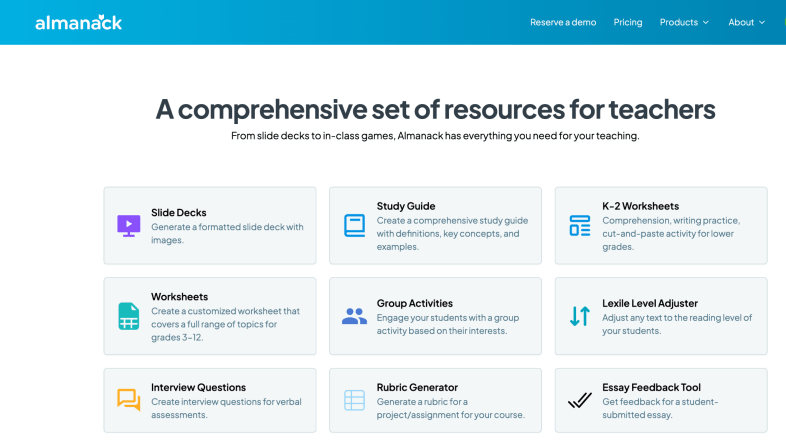
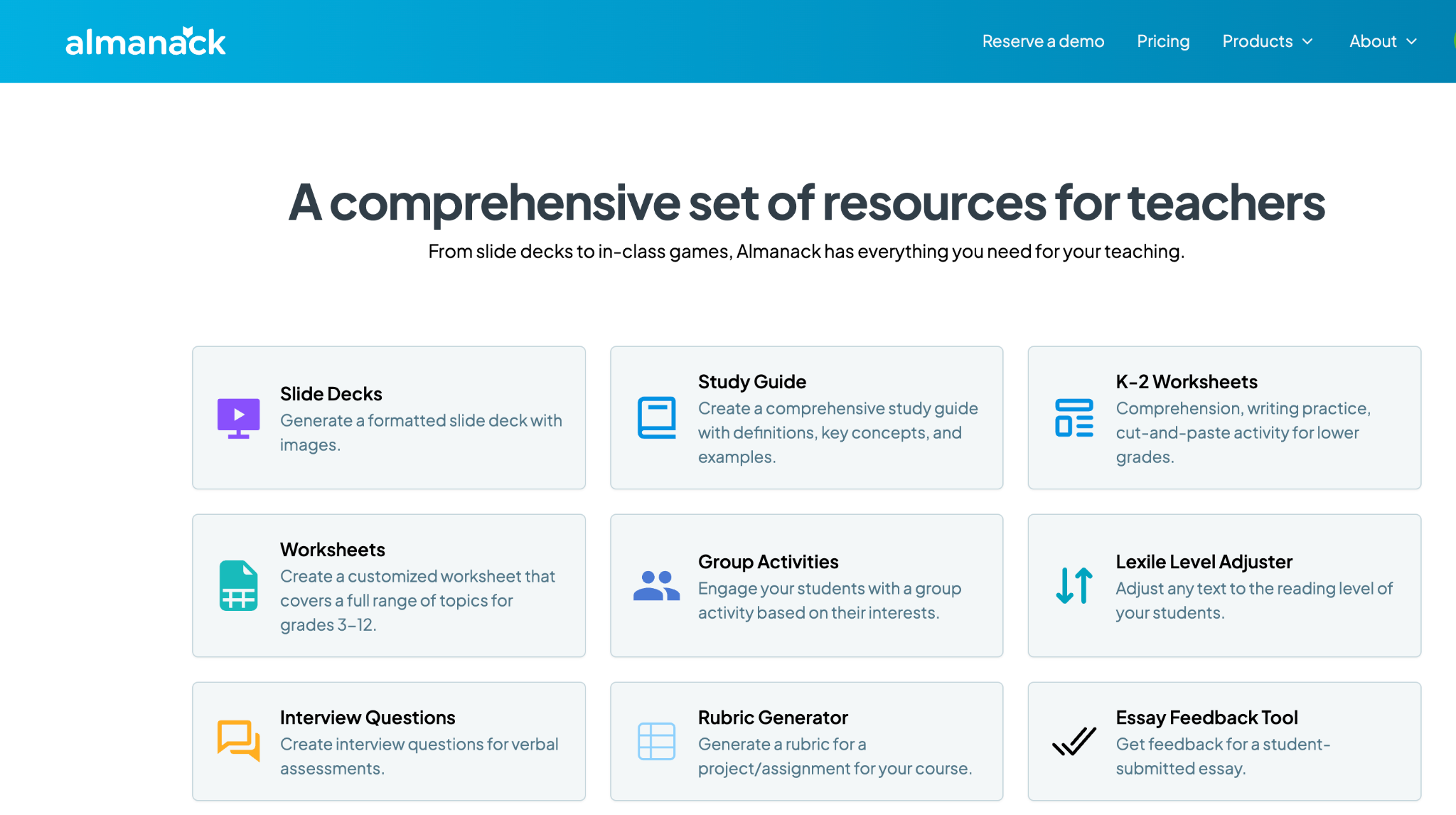
Almanack is a great option for educators searching through the tools available to find something that will help them streamline their workflow. Having one platform that offers a variety of commonly created resources and other materials makes sense. I often tell educators that they need a toolkit. I think that Almanack is an essential toolkit for educators. It offers many options for educators looking to create different resources for students and those who want to save time and become more efficient, which benefits students because educators have more time available for them.

Some of my favorite Almanack features

Almanack isn’t just an educational tool; it’s a robust and comprehensive platform that provides various resources to help educators design and implement effective learning experiences in the classroom. Here are a few examples of why I think Almanack stands out:

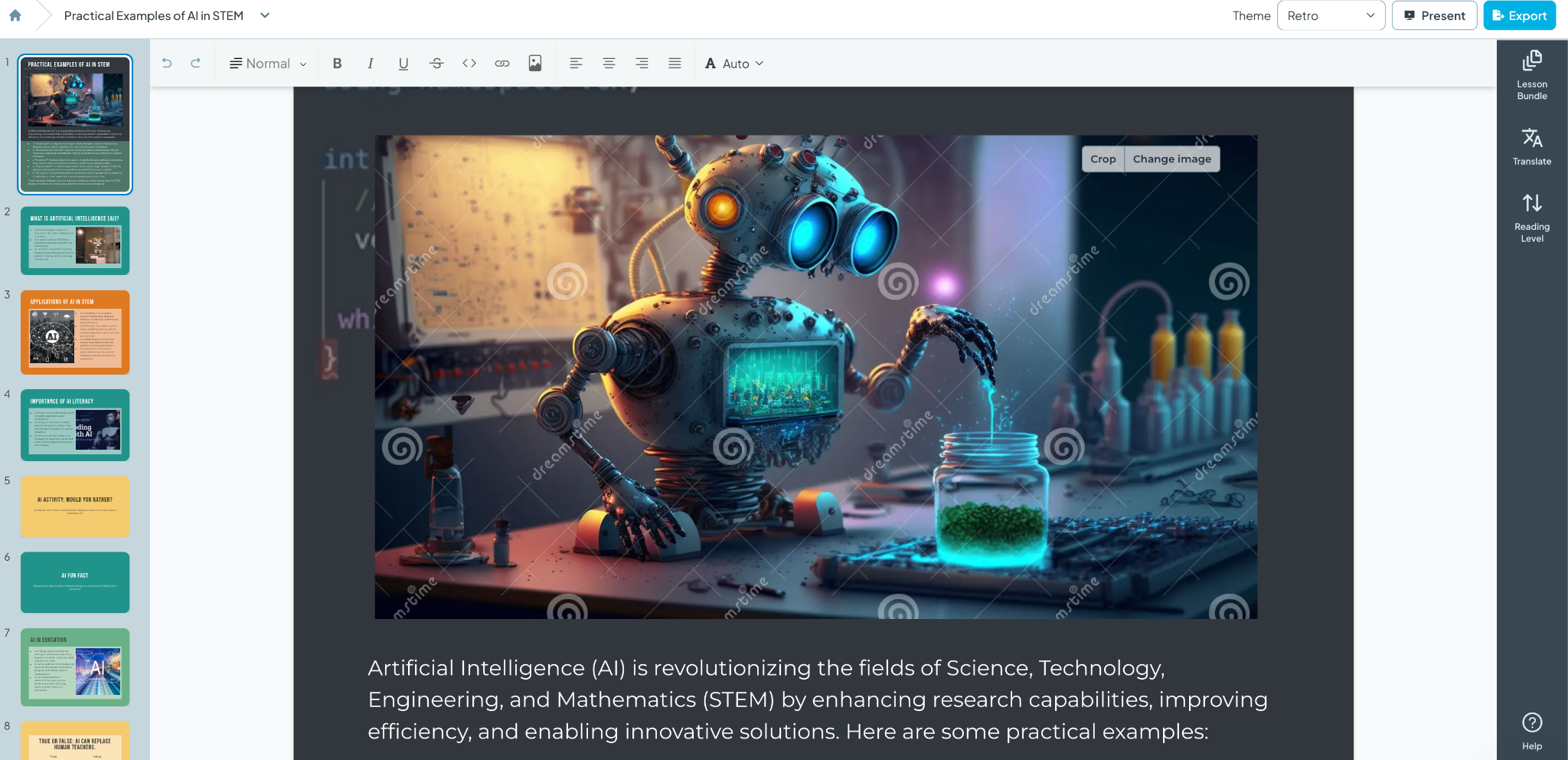
1. Slide Decks and Visual Aids: When I created my first slide deck using Almanack, I was amazed at how professional it looked. The layout, colors, images, and information it generated were all impressive. What would have taken me an hour or more took only a few minutes. Almanack enables educators to leverage AI to create visually appealing slide decks that are informative and more engaging for students. The decks can then be customized with your own images and specific content that aligns with the lesson. See below for an example created simply with a prompt! And it can be translated to different languages!

2. Customizable Worksheets: From K-2 literacy and numeracy activities to advanced topic sheets for grades 3-12, Almanack provides templates that can be customized to fit any subject area. I spend a lot of time creating worksheets for my students and want to provide different activities that best meet my students’ needs. Creating worksheets is easy with Almanack.

3. Interactive Classroom Games: Students love playing games, and when they can interact, the benefits are great. Building collaboration, communication, critical thinking, and problem-solving skills are essential for future success. Almanack offers a variety of options, including Battleship-style review games, Bingo, Forbidden Words, and Jeopardy. What once took a lot of time to create is now easier, and it adds fun to the learning experience, promotes retention, and encourages student participation.

4. Comprehensive Study Guides and Rubrics: Teachers can quickly create graphic organizers, detailed study guides, and rubrics to provide students with clear expectations and study aids to support their learning.

5. Multilingual Support: As a language educator, I always explore the languages available within the tools that I use. Almanack can translate text lesson plans and resources into multiple languages, ensuring no student is left behind due to language barriers. Select the Output language when creating your resource; the translation will be done for you.

Compliance and Security: A Core Priority

A common concern is data privacy and security. Almanack complies with COPPA and FERPA, which shows its commitment to safeguarding student information. It strictly regulates the collection and use of personal data to provide a secure environment for students and educators.

Standards Aligned

Almanack also has state standards pre-loaded on its platform. This helps teachers to save time when creating standards-based assessments. It also allows teachers to design and map their curriculum to ease the overhead of tracking compliance with school curriculum/state standards.

Innovations in Worksheet and Assessment Design

Recent updates to Almanack have introduced features like the ability to create differentiated worksheets. Teachers can design their learning materials to meet the specific needs of their students, ensuring that each student can engage with the content at a level that challenges them appropriately. You can also create answer keys directly within the worksheet editor, simplifying the assessment process and enabling teachers to provide timely and accurate feedback, which is essential for student growth.

Effective Teaching with Almanack’s Lesson Planning Tools

Educators may implement a variety of lesson planning methodologies, such as Understanding by Design (UbD) and the 5E instructional model, which are commonly used since they meet a range of teaching styles and are appropriate for all subject areas. Other great options include resources that help plan a project-based learning activity or a simulation, which help educators foster an engaging and informative classroom environment.

Ease of Use

When I first use a website or try a new digital tool, I focus on its ease of use and how user-friendly it is. Almanack is very user-friendly, making it easy for teachers to create lesson plans and classroom resources in minutes. They don’t need any prior experience in AI or knowledge of how to use complex software. It is a very intuitive platform, so educators don’t have to worry about losing time learning how to use it. They can dive right in.

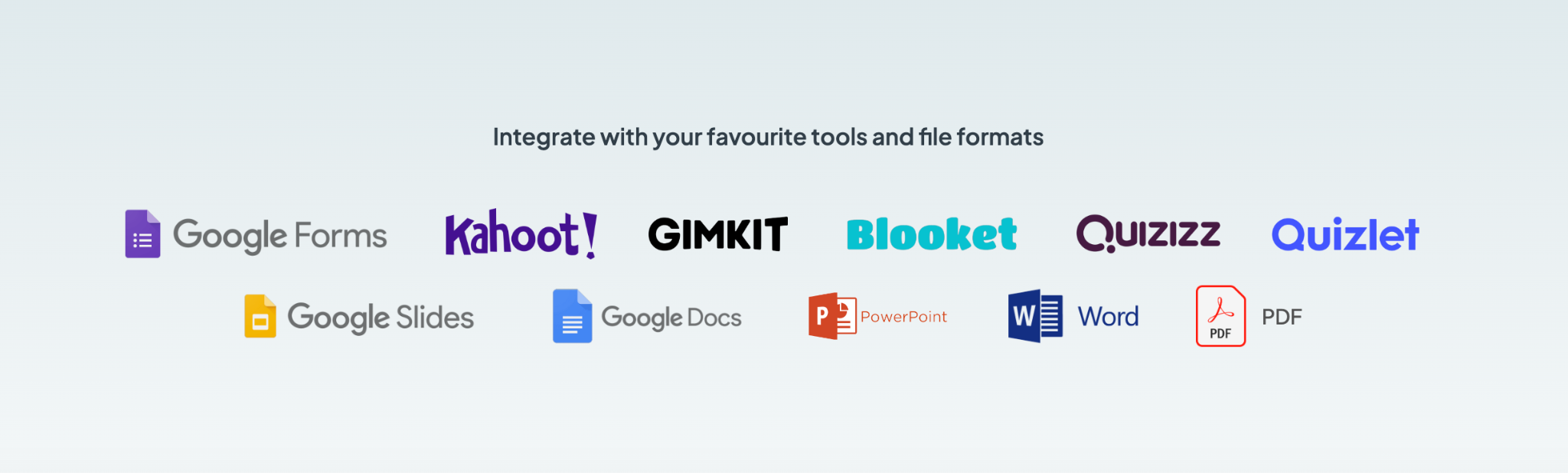
Almanack offers teachers a comprehensive set of tools. I always recommend exploring the different options and considering what would benefit you and your students right now. Something with gamification? Opportunities for students to collaborate? Or something to help you save time and design engaging lessons and presentations for your students. Explore Almanack’s tools and its integration with some other favorites! Whatever you need to create, getting started with Almanack will be easy!

About Rachelle

Dr. Rachelle Dené Poth is a Spanish and STEAM: What’s Next in Emerging Technology Teacher at Riverview High School in Oakmont, PA. Rachelle is also an attorney with a Juris Doctor degree from Duquesne University School of Law and a Master’s in Instructional Technology. Rachelle received her Doctorate in Instructional Technology, and her research focus was on AI and Professional Development. In addition to teaching, she is a full-time consultant and works with companies and organizations to provide PD, speaking, and consulting services. Contact Rachelle for your event!

Rachelle is an ISTE-certified educator and community leader who served as president of the ISTE Teacher Education Network. By EdTech Digest, she was named the EdTech Trendsetter of 2024, one of 30 K-12 IT Influencers to follow in 2021, and one of 150 Women Global EdTech Thought Leaders in 2022.

She is the author of nine books including ‘In Other Words: Quotes That Push Our Thinking,” “Unconventional Ways to Thrive in EDU,” “The Future is Now: Looking Back to Move Ahead,” “Chart A New Course: A Guide to Teaching Essential Skills for Tomorrow’s World, “True Story: Lessons That One Kid Taught Us,” “Things I Wish […] Knew” and her newest “How To Teach AI” is available from ISTE or on Amazon.

Contact Rachelle to schedule sessions about Artificial Intelligence, Coding, AR/VR, and more for your school or event! Submit the Contact Form.

Follow Rachelle on Twitter(X) and Instagram at @Rdene915

**Interested in writing a guest blog for my site? Would love to share your ideas! Submit your post here. Looking for a new book to read? Find these available at bit.ly/Pothbooks

************ Also check out my THRIVEinEDU Podcast Here!

Join my show on THRIVEinEDU on Facebook. Join the group here.

7 Ways AI is Set to Make Teachers’ Jobs Easier

Collaborative blog post.

Since the early 2000s, education has had to evolve with the rapid integration of technology into the classroom. From the general use of computers and laptops for schoolwork to the rise of smartphones and tablets in the classroom, teachers have had to be agile to keep up with these changing trends. Unfortunately, despite these advancements, many teachers struggle in their jobs, leading to a mass exodus in recent years. In August this year alone, Statista reported that 51,000 teachers and other educational staff quit their jobs in the United States. As the education sector is struggling to find teachers to replace them, artificial intelligence (AI) could be the next advancement that not only changes how students learn but also improves the teaching profession by making the job easier. In a guest post by Matthew Rhoads, Ed.D., he wrote that AI can improve teachers’ workflow by providing opportunities for them to optimize their workflow and instruction in the classroom. Below are 7 ways that AI will make teachers’ jobs easier.

Grading

One of the biggest reasons for teacher stress and burnout is the extra work they must do in addition to teaching. Grading is one of the most time-consuming tasks and is often done outside of regular school hours, eating into a teacher’s work-life balance. As discussed in A Look Back at AI in Education, AI grading tools can automate this process. AI can appraise student work instantaneously with very little human input needed, thereby increasing the time teachers can spend on other aspects of their job as well as increasing their free time. These tools also provide much faster feedback to the students, which in turn will help with engagement.

Roleplaying

One factor of AI that will provide a new dimension to how students learn about different subjects is Generative AI (GenAI). MongoDB details how GenAI is based on foundation models that can perform tasks like classification, sentence completion, the generation of images or voice, and synthetic (artificially generated) data. This means that teachers can use AI to educate students through roleplaying. Gabriel Rshaid, co-founder and director at The Learnerspace & The Global School, writes on LinkedIn that GenAI systems that can impersonate a famous, historical, or even current person as well as replicate historical situations. He argues that not only will it foster critical thinking, but it will also elevate the level of interest and engagement for students. Lack of engagement in lessons is regularly touted as a common issue in modern classrooms, leading to added stress for teachers.

Foreign Language Teaching

Language learning in the classroom can be very difficult for teachers due to the lack of one-on-one time with students. With AI, students can speak to a Language Learning Model such as ChatGPT or an AI interlocutor to create a dialogue that is exactly pitched at their level. In a previous post on AI Literacy, we asked a student about the benefits of using AI for language learning. She replied: “The chatbot was very helpful. Immersing yourself with technology that helps you learn Spanish or any other language can help a lot. You have real-time conversations, and the chatbot expands the conversation so you can learn even more about the language. It also helps you become more comfortable speaking!” As students engage with the AI on their own terms, foreign language teachers will have more time to address individual needs.

Plan Lessons

Like grading, a good amount of time outside teaching is spent planning lessons due to the amount of research and reinvention needed. AI can streamline and optimize this process by not only creating new plans from scratch very quickly but also analyzing past lesson plans to cater to the teacher’s own preferences and style of teaching. Curriculum standards also change very frequently, and AI can be used to ensure that the lessons are updated with the latest requirements. This decreases the time teachers spend on planning lessons and increases their ability to work with students.

Personalized Learning For Students

One of the major issues that makes a teacher’s job difficult is not being able to adapt their teaching methods for individual students. It is not possible for teachers to create personalized learning plans for each student in their classroom, which can lead to some students getting left behind and resulting in a lack of engagement. AI-powered adaptive learning platforms can analyze students’ strengths and weaknesses and provide personalized lessons and study paths. 

Improve Classroom Management

While AI will revolutionize how teachers can adapt their lessons to students to improve their learning outcomes, another important aspect of AI that will make a teacher’s job easier is classroom management. A Medium post notes how “one of the most pressing challenges for teachers has always been classroom management,” with discipline being one of the most difficult aspects of the job. When it comes to class management, AI can create a more harmonious classroom environment by being able to “detect when a student is distracted, struggling with a concept, or even feeling unwell.” This will allow teachers to immediately intervene and address the issues before they escalate and result in classroom disruption.

Reduce Burnout

As the above benefits show, AI can have a positive impact on many different facets of teaching to make the job easier. By improving each of the above aspects, AI will reduce overall burnout in teachers, which is having a massive impact on the industry. HMH’s 9th Annual Educator Confidence Report found that burnout is a critical issue, with 82% of educators citing that what they need most is a more balanced workload. Education and students are changing fast, with one teacher noting that “today’s student is different from students even five years ago.” AI will not only allow teachers to keep up, but it will also reduce their workload and give them more time to focus on their students. This will make their job easier and improve their work-life balance, which will hopefully stem the number of teachers leaving the profession.


About Rachelle

Dr. Rachelle Dené Poth is a Spanish and STEAM: What’s Next in Emerging Technology Teacher at Riverview High School in Oakmont, PA. Rachelle is also an attorney with a Juris Doctor degree from Duquesne University School of Law and a Master’s in Instructional Technology. Rachelle received her Doctorate in Instructional Technology, and her research focus was on AI and Professional Development. In addition to teaching, she is a full-time consultant and works with companies and organizations to provide PD, speaking, and consulting services. Contact Rachelle for your event!

Rachelle is an ISTE-certified educator and community leader who served as president of the ISTE Teacher Education Network. By EdTech Digest, she was named the EdTech Trendsetter of 2024, one of 30 K-12 IT Influencers to follow in 2021, and one of 150 Women Global EdTech Thought Leaders in 2022.

She is the author of nine books including ‘In Other Words: Quotes That Push Our Thinking,” “Unconventional Ways to Thrive in EDU,” “The Future is Now: Looking Back to Move Ahead,” “Chart A New Course: A Guide to Teaching Essential Skills for Tomorrow’s World, “True Story: Lessons That One Kid Taught Us,” “Things I Wish […] Knew” and her newest “How To Teach AI” is available from ISTE or on Amazon.

Contact Rachelle to schedule sessions about Artificial Intelligence, Coding, AR/VR, and more for your school or event! Submit the Contact Form.

Follow Rachelle on Twitter(X) and Instagram at @Rdene915

**Interested in writing a guest blog for my site? Would love to share your ideas! Submit your post here. Looking for a new book to read? Find these available at bit.ly/Pothbooks

************ Also check out my THRIVEinEDU Podcast Here!

Join my show on THRIVEinEDU on Facebook. Join the group here.
Collaborate with Walter, Your AI Teaching Assistant

In collaboration with Noodle Factory, all opinions are my own.

As an educator constantly seeking innovative methods to enhance learning and teaching, my exploration recently led me to an exciting platform: Noodle Factory. When I find a new tool, especially when it comes to AI, I love sharing my experiences so that other educators can get started.

It has been fun exploring its various options and, in particular, its standout features, such as Walter+, the AI teaching assistant designed for grades K through 12. Walter+ is designed to help educators enhance and transform the learning experiences they provide for students. Noodle Factory makes it easy to get started by providing guidance, being available for questions, and even doing a demo! For any educator wondering where to begin with AI in their classroom, I definitely recommend exploring Noodle Factory and seeing the impact on student learning. Giving students a chance to learn about and interact with AI is important.

Why AI in Education Matters

The integration of AI in education is reshaping how educators deliver the content and impacting how students engage with the material. With purposeful use and the right pedagogical practices, AI tools can assist educators in various ways. It can help to personalize learning, automate grading, and create engaging, interactive content while complementing traditional teaching methods. Noodle Factory provides tools that are not just innovative but also intuitive and effective for use in the classroom. Especially as educators seek more efficient ways to deliver instruction and provide feedback to students, knowing how to leverage the power of AI is key. Noodle Factory offers innovative tools that enhance both learning and teaching processes.

First Experiences with Noodle Factory

When I first started with Noodle Factory, I was quite surprised by how easy it was to generate personalized learning resources for students. By uploading some of my teaching materials onto the platform, I saw how Walter+ tailored these resources into personalized learning experiences. I was impressed with its AI-driven dialogue system, which engages students in meaningful conversations and helps enhance their overall comprehension and retention of the content.

Using AI-powered tools such as Walter+ to create personalized learning experiences has been a game changer. I uploaded my teaching materials and waited briefly while Walter transformed them into interactive, engaging learning modules specific to my students’ needs. Noodle Factory’s ability to generate context-aware conversation flows and also, its ability to provide multilingual support enables educators to effectively reach students coming from different language backgrounds.

My favorite Noodle Factory Features

There are great features in Noodle Factory that will significantly impact teaching and students’ learning:

AI-driven Personalized Learning: Walter+ adapts to each student’s learning pace, helping to promote a more inclusive and effective learning environment.

We know that in order to accommodate students’ diverse learning needs, we have to understand where they are in the learning process and provide authentic, meaningful, and timely feedback. When this is possible in real-time, teachers can adjust, and each student can receive tailored educational experiences, which we know is crucial for learning. It provides students with instant, constructive feedback, which is key to fostering their academic growth.

Automated Grading and Feedback: We know that grading can take a great deal of time, especially when providing specific feedback for students. With Noodle Factory, educators can save time and provide students with immediate, actionable feedback, helping them understand their strengths and areas for improvement. This, of course, means that teachers can spend more time working directly with students, too!

Engaging and Interactive Content Creation Tools: With the various options available, I am able to boost student engagement. Noodle Factory’s tools enable me to transform traditional lessons into more interactive sessions that spark students’ interest and foster deeper learning. Student engagement, which can be a challenge, is now an area that we can boost because of the tools available to us.

Results: Positive Impact on Teaching and Learning!

By using Noodle Factory, educators will see a boost in student engagement and learning performance. Noodle Factory helps with our productivity through its features, such as automated grading and real-time insights into students’ progress. Being able to grab a quick glimpse into where students are in the learning journey is so helpful for targeting our instruction as needed. Gathering feedback from students is also important as it helps us to know what works for them and how to enhance their learning experiences. It also assists with providing a personalized approach through an interactive learning environment.

The real-time performance tracking and flexible assessment modules help teachers tailor their teaching strategies in real time to best meet individual student needs. Give Noodle Factory a try today and see the impact it makes in your classroom, for students, and for your work as an educator!

Interested in experiencing this transformative tool? Great news! I’m offering an exclusive code for my readers to try the premium plan (Educator Plus) on Noodle Factory. Discover how Walter+ can enhance your teaching and provide your students with an unmatched educational experience. And be sure to let me know how it goes for you!

P.S. Check out my podcast episode, where I chat with the Co-Founders of Noodle Factory Yvonne and Jim! Listen here!

About the Author:

Dr. Rachelle Dené Poth is a Spanish and STEAM: What’s Next in Emerging Technology Teacher at Riverview High School in Oakmont, PA. Rachelle is also an attorney with a Juris Doctor degree from Duquesne University School of Law and a Master’s in Instructional Technology. Rachelle received her Doctorate in Instructional Technology, and her research focus was on AI and Professional Development. In addition to teaching, she is a full-time consultant and works with companies and organizations to provide PD, speaking, and consulting services. Contact Rachelle for your event!

Rachelle is an ISTE-certified educator and community leader who served as president of the ISTE Teacher Education Network. By EdTech Digest, she was named the EdTech Trendsetter of 2024, one of 30 K-12 IT Influencers to follow in 2021, and one of 150 Women Global EdTech Thought Leaders in 2022.

She is the author of nine books including ‘In Other Words: Quotes That Push Our Thinking,” “Unconventional Ways to Thrive in EDU,” “The Future is Now: Looking Back to Move Ahead,” “Chart A New Course: A Guide to Teaching Essential Skills for Tomorrow’s World, “True Story: Lessons That One Kid Taught Us,” “Things I Wish […] Knew” and her newest “How To Teach AI” is available from ISTE or on Amazon.

Contact Rachelle to schedule sessions about Artificial Intelligence, Coding, AR/VR, and more for your school or your event! Submit the Contact Form.

Follow Rachelle on Twitter(X) and Instagram at @Rdene915

**Interested in writing a guest blog for my site? Would love to share your ideas! Submit your post here. Looking for a new book to read? Find these available at bit.ly/Pothbooks

************ Also check out my THRIVEinEDU Podcast Here!

Join my show on THRIVEinEDU on Facebook. Join the group here.

Six Resources To Try in 2024

Image by Rawpixel.

This will be the first post where I will share some different tools or resources to explore!

Each year, I like to take time and think about the digital tools we use in our classroom, the benefits, and how I might find new ways to use them. When I look to use technology in my classroom, I always start with the “purpose”Why” behind it. What will it help me to do better as a teacher? How can it help students to learn in more personalized or authentic ways? And what skills will students build as a result that traditional non-technology methods might not afford?

There are tools that I continue to use each year because they have added new features or they have integrated with other tools that we are using in our classroom. Here are six tools to check out as we start 2024! And one that is highly recommended to dive into AI in your classroom!

  • CoSpaces EDU is a virtual reality platform that became a favorite for some of my 8th-grade students this year. Whether creating a space in 360, designing a game, an interactive story, or an experiment, students will enjoy creating in VR and developing coding skills too. Another benefit is the Merge Cube add-on, which enables students to hold the space they have created in their hands! Students can even collaborate by working in teams to create a space together. With MergeEDU, educators can use the cube as an interactive tool to further engage students in learning about the earth, dissecting a frog, exploring a volcano, and more.
  • Gimkit, a game-based learning tool, has continued to be a favorite with my students because of the potential for increased content retention through repetitive questions and because of the different ways it can be played in the classroom. It enables students to develop strategies and have fun while learning. There are multiple ways to look at the student data and provide authentic and timely feedback. And there are always new modes to play, which helps to boost student engagement and gives us some laughter, too! Check out Blastball!
  • ISTE’s AI and STEM Explorations Network has created four free hands-on AI projects for the classroom guides, which are available for download from ISTE and GM. For elementary, secondary, electives, computer science courses, and a new guide on ethics, these guides offer various topics relevant to all content areas. The guides are available in English, Spanish, and Arabic.
  • Nearpod is a multimedia, interactive presentation tool that enables teachers to create engaging lessons that can include virtual trips and 3D objects. It offers lessons on topics such as digital citizenship, social-emotional learning, career exploration, English learner lessons, and professional development resources for teachers. Educators can create lessons with many options, including quizzes, polls, drawings, matching pairs, audio, video, and content from PhET Simulations, Desmos, BBC, YouTube, and more. Nearpod lessons can be done live in class or student-paced, and there is also the option for use as sub plans.
  • Wakelet is a content curation tool and so much more. I use it to curate blogs, videos, and other resources I want to access quickly to be a powerful tool for student learning. With Wakelet, teachers can provide blended learning experiences, use it for station rotations, have students create a digital portfolio, share class projects, create a scavenger hunt, and many other possibilities. It even offers the ability to record a Flip short video within the Wakelet collection. Educators and students can collaborate in a Wakelet collection and so much more!

Think about some of the tasks that might be taking up a lot of your time, or consider some issues or challenges you might be having. A few years ago, I noticed a decrease in student engagement and looked for ways to open up more choices for students to share their learning. Any of these tools can be suitable for addressing those concerns.

My Advice? Start thinking about your own personal goals and start with one thing. Try it and see how it goes, ask students or colleagues for feedback, and then make adjustments as needed.

About Rachelle

Follow Rachelle on Twitter @Rdene915 and on Instagram @Rdene915. Rachelle has a podcast, ThriveinEDU available at https://anchor.fm/rdene915.

Looking for PD for your school or keynotes for your conference? I provide in-person and virtual training on the following topics. If you want to learn more about and explore AI and ChatGPT, contact me to schedule! Rdene915@gmail.com or use the Book Me form on my website. bit.ly/thriveineduPD

**Interested in writing a guest blog or submitting a sponsored post for my site? Would love to share your ideas! Submit your post here. Looking for a new book to read? Find these available at bit.ly/Pothbooks

Diving into STEM and Fun with Marty!

In collaboration with @RoboticalLtd, All opinions expressed are my own.

How can we create opportunities for students to dive into coding and STEM? With Marty the Robot, students will take the lead! Marty the Robot from Robotical is a versatile and engaging tool that can be used to enhance learning in any classroom! Marty is a humanoid robot that can dance, walk, and even wiggle his eyebrows!

What I love about Marty is that it is so easy to get started, even for beginners. Marty has a variety of sensors, including distance sensors, light sensors, and touch sensors, which can be programmed using Scratch or Python, two popular programming languages for beginners. With these options, children as young as seven years old can start learning to program and control the robot with ease. With the screen-free option, remote controller, and even MartyBlocks Jr (based on Scratch Jr), Marty can be used with children as young as four! The screen-free option is perfect for learning about the steps in the process and watching how Marty responds. Using the infrared sensors and color sensors on his feet, he can figure out which direction to move in and even dance and play music when he is placed on the color cards.

And Marty’s keeps on getting better! What’s new in 2023?

The Robotical team has been working tirelessly behind the scenes to bring you Marty’s new drag-and-drop sound blocks. This latest addition to the MartyBlocks coding environment (based on Scratch) allows students to expand their creativity, get even more technical, and will add extra personality to every robot.

Marty is customizable. The robot can be assembled and disassembled, allowing users to modify and upgrade its parts to suit their needs. Students can have fun decorating Marty and create a lot of fun ways for Marty to move around and interact! This means that as users’ programming skills and knowledge of robotics and engineering concepts improve, they can modify the robot to make it more complex and challenging.

Marty the Robot is now delivered with pre-installed LED eyes. Programmable in every color under the rainbow, these lights are the perfect addition to the robots and will add a pop of color and sparkle to every lesson. Not to mention, this new addition will also allow teachers to take advantage of Robotical’s disco eye lessons, expanding students’ knowledge of LEDs and lights, testing students to program different colors as reactions, and allowing students to explore different patterns and timing orders.

Marty is suitable for a wide range of age groups, from primary school children to adults. Children can use the robot to learn basic programming concepts, while older students and adults can use the robot to build more complex projects and explore advanced robotics and engineering concepts.

Building essential skills

There are many ways to use Marty to build STEM skills and SEL (Social-Emotional Learning) competencies. For SEL, students can use Marty to practice teamwork and collaboration skills. They can work in groups to build projects and share ideas for improving the robot’s performance. Additionally, students can use the robot to develop problem-solving skills, as they will need to debug code and troubleshoot any issues that arise during the robot’s operation. Students can use the robot to develop perseverance and resilience, as they work to overcome challenges and setbacks during the project-building process.

For STEM skills, students can use the robot to learn programming concepts, including loops, conditionals, and variables. They can also explore robotics concepts such as sensor technology, motor control, and movement algorithms. Additionally, students can use the robot to build projects, such as obstacle courses or mazes, which require them to think creatively and apply their knowledge of programming and robotics.

Here are some reminders for when using Marty the Robot in class:

Have fun! Marty is a fun and engaging robot! Marty can dance, walk, talk, and more.

Teach others. Marty can be used to teach others about coding, robotics, and STEM.

Make music. Marty can be used to make music. Marty has a built-in speaker and can play a variety of sounds.

Be creative. Design fun programs to get Marty up and moving, dancing and talking!

Ideas for Marty!

Build an obstacle course: Challenge students to build an obstacle course using cardboard boxes, ramps, and other materials. Then, program Marty to navigate through the course. Students will need to use their engineering and coding skills to ensure that Marty can safely navigate through the obstacles.

Build a robot team: In groups, students can build multiple Marty robots and program them to work together. They can experiment with different algorithms to control the movement and behavior of the robots. This activity develops teamwork, programming, and engineering skills.

Explore sensor technology: Marty the Robot comes with a variety of sensors, including distance sensors, light sensors, and touch sensors. Students can use these sensors to create programs that respond to changes in the robot’s environment. For example, they can program Marty to move away from objects or to stop when it detects a certain color. This activity encourages problem-solving and programming skills.

Have a dance party: Encourage students to create a fun and lively dance routine for Marty. Students can program the robot to dance along to their favorite songs. This activity encourages creativity, problem-solving, and programming skills.

Create a science experiment: Marty the Robot can be used to conduct a variety of science experiments, such as measuring the speed of sound or testing the effects of gravity. Students can program the robot to collect data and perform calculations, helping them to develop their scientific inquiry and data analysis skills.

Marty goes above and beyond to help deliver STEAM subjects (and more) in an accessible, interactive, and engaging way. Get started today! In the Knowledge Base, teachers can find support articles and lots of other information to help them get started. You can sign up for a free trial! Also check out my podcast episode with Hal Speed, Head of North America Robotical.

About the author

Rachelle Dené is a Spanish and STEAM: What’s Next in Emerging Technology Teacher at Riverview High School in Oakmont, PA. Rachelle is also an attorney with a Juris Doctor degree from Duquesne University School of Law and a Master’s in Instructional Technology. Rachelle is an ISTE Certified Educator and serves as the past president of the ISTE Teacher Education Network. She was recently named one of 30 K-12 IT Influencers to follow in 2021.

She is the author of seven books including ‘In Other Words: Quotes That Push Our Thinking, Unconventional Ways to Thrive in EDU, The Future is Now: Looking Back to Move Ahead, Chart A New Course: A Guide to Teaching Essential Skills for Tomorrow’s World, True Story: Lessons That One Kid Taught Us, Your World Language Classroom: Strategies for In-Person and Digital Instruction and her newest book Things I WIsh [….] Knew is now available.

Follow Rachelle on Twitter @Rdene915 and on Instagram @Rdene915. Rachelle has a podcast, ThriveinEDU available at https://anchor.fm/rdene915.

Looking for PD for your school? I provide in-person and virtual training on the following topics. If you want to learn more about and explore AI and ChatGPT, contact me to schedule! Rdene915@gmail.com 

**Interested in writing a guest blog or submitting a sponsored post for my site? Would love to share your ideas! Submit your post here. Looking for a new book to read? Find these available at bit.ly/Pothbooks

The Key to Reducing Burnout in K-12 Schools? Supporting Substitute Teachers

Guest post by Mike Teng, in collaboration with @SwingEDU

Teachers continue to experience high levels of burnout, at rates that are the highest of all industries. From lack of confidence to impacts on physical and mental health, we see signs of teachers at all stages of burnout in districts and schools across the country.

One acute challenge affecting teacher burnout is a limited pool of substitute teachers. With fewer people to relieve permanent teachers, K-12 leaders are left playing an increasingly challenging game of chess, moving students and staff around for continued coverage and learning.

The truth is that the same burnout teachers feel is hitting substitutes too. Being a substitute means living with unpredictability. They never know when an assignment will come, where it will be, or how long it will last. Then, when there is an opening they can fill, substitutes face more questions. Where do I park? Where can I keep my lunch? How long will it take me to get paid? Of course, many substitutes understand and accept the unknowns of their job. Quickly adapting to and learning in new environments is part of the package. But with the addition of stress from the COVID-19 pandemic, concerns about safety at school, and changes in students’ behaviors, among other factors, unpredictability is taking its toll.

The substitute shortage isn’t a new trend. Before the pandemic, districts struggled to find adequate coverage for absences. But according to a study from the Annenberg Institute, the problem has gotten worse. Today, 77 percent of districts have staffing problems because of unfilled substitute requests — up from about 20 percent pre-pandemic. Put those percentages in the context of nearly 600,000 substitute teachers covering 30 million teacher absences each year, and it’s easy to see the severity of the problem.

The challenge goes beyond the stress and anxiety of trying to find someone to fill a teacher’s spot for the day or week. Teachers remain one of the most important influences on student success, and unfilled absences can have a big impact on achievement. Schools may also be forced to have non-teaching staff to fill in, combine classrooms, or even group students in large spaces like the gym, cafeteria, or library with minimal supervision. In extreme cases, schools might have to close.

Better support for substitute teachers can help solve the problem. When substitutes are supported they are more likely to accept additional assignments, become quality placements, and stick with the profession over time offering more consistent relief to teachers. By adopting a few simple practices districts and schools can make their relationships with substitutes stronger.

Be welcoming

Substitute teachers are adept at stepping into new situations. Schools and districts often count on substitutes to be able to figure out information on their own, adapt on the fly, and keep their focus on providing students with quality instruction. But K-12 leaders can still meet substitutes halfway to create a more welcoming and supportive environment. A standard welcome packet can be something districts and schools make once and then use over and over with substitutes. Welcome packets could include information about parking, the teacher’s lounge, where to find lesson plans, contact information for key school staff, and timeframes for payments. Making digital PDF packets will make it easy to email the information as soon as a substitute accepts an assignment.

Provide peer connections

Most teachers and staff members in a building are friendly, but they’re also busy. If a substitute has a question during the day it can be hard to figure out who to ask. Assigning a peer to be a point of contact helps to eliminate the confusion. The point of contact’s role should not only be to answer questions but to make the substitute feel welcome. That could mean greeting the substitute when they arrive or checking in on them during the day. Creating peer connections for substitutes gives them a small dose of community support that can help them feel more confident during their assignment.

Show substitutes appreciation

It can be easy to see substitutes as only temporary staff members. But they are educators and important parts of students’ learning experiences. When we recognize substitute teachers and show them appreciation in ways we would for a permanent teacher it can build their confidence. One idea is to include a small note of appreciation in their welcome packet. Some leaders choose to follow up at the end of an assignment with a quick thank you email or give positive feedback during the day. For longer-term substitutes, including them in school-wide celebrations of educators and treating them the same as other staff members are effective steps.

Remove barriers to entry

Historically most substitutes were retired teachers or others in education who wanted to continue to give back. As fewer people choose the profession, we need different sources for substitutes. But the requirements to become a substitute teacher often create more barriers than doorways. We can make it easier for more people to become substitute teachers by building more pathways for people to enter the field. By finding better, more meaningful ways to assess instructional quality and classroom management skills, we can make substitute teaching more enticing to qualified people and simultaneously deepen the roster of available substitutes.

Caring for the well-being of substitute teachers is not only the right thing to do, but it also has a significant impact on the entire school community. When substitute teachers feel supported and valued, they are more likely to be reliable and committed, creating a more dependable pool of substitutes to draw on to fill absences. This, in turn, gives teachers the assurance that their class is in good hands and creates better retention of individual substitutes because they have confidence they’ll be welcome and supported at a school.

Mike Teng is the CEO and co-founder of Swing Education, a tech-enabled marketplace matching substitute teachers with schools in need. Before founding Swing, Mike was a software engineer in the private sector and then the tech director at a K-12 charter school network.

Learn more @SwingEDU

Blog of Rachelle Dené Poth

Looking for some PD for your school? I provide in-person and virtual training on the following topics. If you want to learn more about and explore AI and ChatGPT, contact me to schedule! Rdene915@gmail.com

**Interested in writing a guest blog or submitting a sponsored post for my site? Would love to share your ideas! Submit your post here. Looking for a new book to read? Find my books available at bit.ly/Pothbooks or via Amazon, Barnes and Noble, or EduMatch titles in bulk order.

18 Resources to Get Students Coding This Year

Each year during December, there’s a focus on coding and computational thinking. Computer Science Education Week is happening December 7th-13th this year and there are a lot of great ways to get involved. A few years ago I first learned about the Hour of Code, and immediately referred to the Code.org website to find activities for my eighth grade STEAM class. Just getting started, I didn’t know much about the resources available and thought this was the best way to provide some activities for my students to join in during the week. It was fun to sign up to participate in the events of the day and see from where around the world other classrooms were joining in from. But beyond that one day, and actually, that one hour, we didn’t really do much more in my class. I asked colleagues and members of my PLN about their activities for the Hour of Code and coding throughout the year, and many stated that they didn’t know how to implement more in their classrooms. It was then that I recognized the need to provide more ways for students to learn about coding and computational thinking, and that as educators, we must actively look for opportunities for our students. We need to push past an Hour of Code and do more in our classrooms.

Preparing Ourselves

For some educators, topics like coding and computational thinking can seem challenging to bring into the classroom and for them to know enough to feel confident in teaching students about these topics. I was one of those educators. My comfort level changed when I had to create a game using Hopscotch for a master’s course and I struggled a lot. It was uncomfortable to not be able to fully understand the coding process, but it pushed me to keep learning and to start using Hopscotch with my eighth graders. I learned a lot from my students and it was a great opportunity to put myself in their place as they learn something new. Realizing that it is okay to not know all of the answers is a valuable lesson.

Another hurdle was to learn more about computational thinking, a topic that I had avoided because of a fear of not understanding it enough and thinking it did not apply to my role as a Spanish teacher. It was an area that intimidated me because I believed it to be so complex.

However, I recently took a Computational Thinking (CT) course provided by ISTE U, which definitely stretched me professionally and provided a solid foundation full of resources for doing more with these topics in my classroom. We need to find ways to give our students and ourselves an opportunity to learn about topics like coding and computational thinking and how they apply in our daily lives and how it could possibly benefit us in the future.

Where to Begin

There are so many resources out there that sometimes knowing exactly where to start presents the challenge. It is easy to get started by referring to the Code.org site or checking out CS First from Google and resources for educators. There are some apps and websites to get started with coding and computational thinking. Some of these can be used specifically with elementary students in grade bands pre-reader through two, three through five, and six plus, and others that are specific to middle school or high school. Several of these options offer ways to search based on topic, level or type of activity. What I like the most is that they are fun ways for educators to get started with coding and CT, with the ability to decide how to apply them to our own work.

Start with Code.org or CS First from Google, and then explore these 18 resources to check out what specifically to use during the Hour of Code and Computer Science Week, or take the time and try each of these out over the course of a couple of weeks. Have your students explore and continue learning right along with your students.

18 Sites to Explore

Artist. Use this as a way to have students begin coding with blocks to complete tasks to build their coding skills.

Code.org. Explore this link to find a list of resources and different activities and to sign up to participate in the Hour of Code. There are more than 500 one hour tutorials that are available in more than 45 languages.

Code Combat is a game based computer program for older students who want to learn about Javascript or Python. In Code Combat, students type in their code and see their characters respond in real-time.

Code Monster is an easy way to get younger students to learn more about code. Two boxes on the screen show the code and what the code does, with explanations popping up to show students what happens with each command.

CoSpacesEDU Robot Rattle. Students learn to operate a robot and the activity includes a tutorial video. Using blocks and drag and drops, students can write the instructions for the robot and then if devices are available, the robot can be seen performing the tasks as written in the code in virtual reality (VR).

Hopscotch is for use with iPads and has specific activities available for the Hour of Code but offers many options for students to create their own games or to remix games that are available.

Turtle Art. Students use block coding like Scratch but through the use of one turtle and mathematics to do the programming.  Students can create their own work of art or remix someone else’s painting.

Science

Explore Mars with Scratch. Students in grades three through eight can create a Mars exploration game using Scratch. Through this lesson, students work through activities and build their math, computational thinking, and problem-solving skills. There is also the option for an extension activity for students in grades K-12 to do an independent project.

Multi-topics

Code-it studio is for use with grades two and up and offers students the chance to program art and designs.

CodeSpark. Students up to grade five can design and code a video game using the self-paced activity available through this site.

Code an Unusual Discovery. Using Scratch and CS First from Google, students can work through on their own and create a story using code.

Khan Academy Code. For grades six and up students can watch an interactive talk-through, work through challenges or decide to do their own project. Everything that students need for coding is available directly through the website. Students can also learn to code by making a website in HTML tags and CSS.

Kodable. Activities for students in grades two through five, offering Javascript for students in upper elementary grades. There are activities for social studies, science, ELA, math and more with levels from beginning to advanced. Students can even choose their own adventure.

Minecraft Hour of Code. A free Hour of Code lesson was developed by Microsoft’s AI for Earth team. In the lesson, students in grades two and up use code to prevent forest fires. There is also a free online course for educators to learn how to run an Hour of Code lesson in their school.

Robo-Restaurant Decorator. Students in grade two and up can program a robot to paint a restaurant and the algorithms must be done correctly

Star Wars. The first activity we tried was working through the activities provided using the Star Wars theme. Activities are available for students in grades two and up. Learn to code with Blocks and Javascript.

Tynker offers a lot of activities for students to participate and learn about coding, specially curated for the Hour of Code. Activities are grouped for students in the ranges of K-two, three-five and six plus. Options available include text coding, STEM activities, and the new UN+ which is focused on ecological issues such as life on land, responsible consumption and affordable and clean energy.

VidCode is an online platform that offers opportunities for teachers to explore computer science curriculum or individual lessons related to coding. For the Hour of Code, explore the Climate Science coding activity.

Another option is to have students learn about the Hour of Code, its origin and different terms related to coding and then use some of the game-based learning tools out there like Kahoot! To help students develop a better understanding of the basics of coding. Try one of these ideas out for some fun ways to get students involved with coding and use the game as a starting point for class discussion.

8 Virtual Reality Tools to Go Around the World

As a Spanish teacher, I am always interested in finding innovative ways to teach in my classroom and to create learning opportunities that do more than to engage students solely with the content material. Over the past few years, I have started to bring different tools for learning into my classroom, some of which pushed me outside of my comfort zone as a teacher. One area that has led to greater student engagement and has been well received by my students is the use of augmented and virtual reality.

For many teachers, the idea of using these types of tools in our classroom bring questions, such as how much time do I need to learn how to use them and what are the benefits? Fortunately, getting started with many of these tools is quite easy as there are resources available to use as tutorials. The tools offer ready-made lessons or examples to start with, and of course, our students learn so fast that we can quickly learn from them. I often say that we just need to know enough to make sure that we are aware of any issues with access, and of course, we have knowledge of the safety or security issues. We must also understand how we plan to use it, focusing on the why behind wanting to do so, but then we should leave it up to our students to take it beyond that point.

As for benefits, using tools for AR and VR helps educators create innovative learning spaces and transform “how” and “where” students are learning. With different AR/VR tools available, we give students the power to explore objects or places, control their learning and connect with the content in ways that textbooks and videos cannot provide. Students can now travel around the world, to another country, underwater or into outer space, using these tools and doing so right from their classroom.

8 Tools to Try

Here are eight different tools to explore that I think can be very beneficial for student learning and promote student engagement. Getting started with these will help educators implement some digital tools into the classroom without taking too much time to get started.

  1. Google Expeditions
    The app is free and can be downloaded from Google Play or the App Store. Google Expeditions offers more than 100 augmented reality and 800 virtual reality tours which students can use to explore careers, visit famous landmarks and locations. They can even use it to find out more about global initiatives. Through the roles of Guide and Explorer, teachers and students can engage with the content in a more immersive way that connects students more closely with the spaces they are viewing, which promotes curiosity. Another option is Tour Creator to create a tour specific to student interests or to have students create their own tour to share. Tours are easy to create and share and provide a more authentic way to connect students with places they are studying.
  2. Google Earth
    Google Earth enables teachers and students to explore places around the world and even zoom in for a closer look in 360 via Street View. For schools that have access to HTC Vive or Oculus Rift, Google Earth VR makes it possible to walk or even fly around the locations and explore more closely.
  3. Nearpod
    Nearpod offers a library full of lessons in VR and the ability to quickly create lessons that have 3D objects and VR field trips included. Tools like Nearpod help to engage students in a more active learning experience while also providing multiple ways for teachers to assess student learning. It is easier now to take students on trips around the world right from within the classroom at any time.
  4. 360 Cities
    360 Cities offers interactive panoramic photos and more than 2,400 videos to select from to use in the classroom.
  5. Unimersiv
    Through Unimersiv, educators can find VR experiences for students ranging from exploring space, human anatomy, or places like Stonehenge, Athens, the International Space Station and more. Unimersiv can be downloaded with lessons available for students. New lessons are added every few months.
  6. Sites in VR
    Sites in VR is an app available for download on Android and iOS devices. Locations can be searched based on type including nature, parks, museums, towers and more. Users can choose to explore through the device or with a headset.
  7. 360-Degree YouTube Videos
    YouTube offers 360-degree videos which can be a good way to hook students at the start of a lesson. There are so many choices available; one of the first ones that I watched was Lions 360. Videos that were filmed in 360 will provide a better experience.
  8. Curated X Kai
    Curated X Kai has featured VR field trips available for experiences such as hurricanes, looking at dinosaurs, the solar system, the human body and many others focused on locations or historical events or places. New field trips are added weekly.

Making the Choice

There are many benefits of using VR in the classroom. In my own experience, it provides students with space where they can take more ownership in learning and creates an opportunity for students to build global knowledge, and explore different ideas and perspectives. We can also use VR as a way to connect our students with classrooms and experts from around the world and build more than content and technology skills. We can also help students develop empathy as they learn about cultures and places different from their own.

There are a lot of options out there to choose from, it is about promoting student choice and helping students to do more than consume content, but to actively engage in learning and even become the creators.

**Interested in writing a guest blog for my site? Would love to share your ideas! Submit your post here.

Looking for a new book to read? Many stories from educators, two student chapters, and a student-designed cover for In Other Words.

Find these available at bit.ly/Pothbooks  

TeacherCast Educational Network | Developing Standards-Based Instructional Technology Integration

Technology Integration - Instructional Coaching - Productivity Secrets for Educators

Leadership Liner Notes: Sean Gaillard

Built on Connection. Tuned for Impact.

Stories by Thomas Oppong on Medium

Dr. Rachelle Dené Poth @Rdene915 Educator, Consultant & Keynote Speaker, Author, Attorney #THRIVEinEDU

Hooked On Innovation

When Innovation slaps you in the face, we slap back.

Teach Better

Dr. Rachelle Dené Poth @Rdene915 Educator, Consultant & Keynote Speaker, Author, Attorney #THRIVEinEDU

BrianKulak.com

Dr. Rachelle Dené Poth @Rdene915 Educator, Consultant & Keynote Speaker, Author, Attorney #THRIVEinEDU

The Principal of Change

Stories of learning and leading

Mandy Froehlich

Dr. Rachelle Dené Poth @Rdene915 Educator, Consultant & Keynote Speaker, Author, Attorney #THRIVEinEDU

Katie Martin

Informed by research, refined by practice

#RocknTheBoat

Rocking today's classrooms, one teacher, student, and class at a time.

User Generated Education

Education as it should be - passion-based.

Learning as I go: Reflections & lessons learned

Dr. Rachelle Dené Poth @Rdene915 Educator, Consultant & Keynote Speaker, Author, Attorney #THRIVEinEDU

Serendipity in Education

Join me, Allyson Apsey, as I stumble upon the fortunes of learning, laughing, and celebrating alongside incredible people.