AI isn’t coming—it’s already here. It has been embedded in the various educational platforms we use and the assessments we give. It’s likely involved in both the professional development we participate in and the writing and work that our students are doing.
As an educator, speaker, and advocate for technology integration, I’ve spent a lot of time researching, using, and teaching with AI so that I can prepare students and other educators. In my classroom, from using a variety of AI tools that help me save time so I can spend it working with students to integrating chatbots to support student learning, I see the value and impact of leveraging this technology. If we want our students to be ready for their future careers, we must start teaching them about AI. They need to move beyond being consumers of content and instead become creators and innovators.
Where Do We See AI?
For educators, many AI-powered platforms help us to target instruction, assess students, and find resources for our lessons.
Confidence building: Encouraging students to speak in class can be a challenge. At the end of 2023, I started to use SchoolAI with my students and created a “Sidekick” for them to have conversations in Spanish based on the content that I used for the prompt. They loved it—it not only helped them build language skills and confidence but also showed how AI can support their learning. MagicSchool AI is another great option, with a tutor function that helps students in areas where they need support. Both of these tools also have historical characters that students can chat with and other features to enhance learning. I love that I can monitor student responses, provide additional support, and adjust instruction as needed.
Using Eduaide, teachers can kick off a class debate with pros and cons and an outline to quickly get started, and they can also develop other collaborative and engaging activities for students.
For language learners, confidence matters. Snorkl enables students to practice speaking and receive real-time AI and teacher feedback. The AI gives real-time feedback on fluency and pronunciation, helping students grow as communicators and build confidence. Snorkl can be used with students starting in kindergarten, and it has a library full of ready-to-use activities. Throughout the times I have used Snorkl or one of the chatbots, the feedback provided has been tailored to each student’s responses and offered insights and examples to support their learning.
Continue reading the rest of this post on Edutopia.
About Rachelle
Dr. Rachelle Dené Poth is a Spanish and STEAM: What’s Next in Emerging Technology Teacher at Riverview High School in Oakmont, PA. Rachelle is also an attorney with a Juris Doctor degree from Duquesne University School of Law and a Master’s in Instructional Technology. Rachelle received her Doctorate in Instructional Technology, and her research focus was on AI and Professional Development. In addition to teaching, she is a full-time consultant and works with companies and organizations to provide PD, speaking, and consulting services. Contact Rachelle for your event!
Rachelle is an ISTE-certified educator and community leader who served as president of the ISTE Teacher Education Network. By EdTech Digest, she was named the EdTech Trendsetter of 2024, one of 30 K-12 IT Influencers to follow in 2021, and one of 150 Women Global EdTech Thought Leaders in 2022.
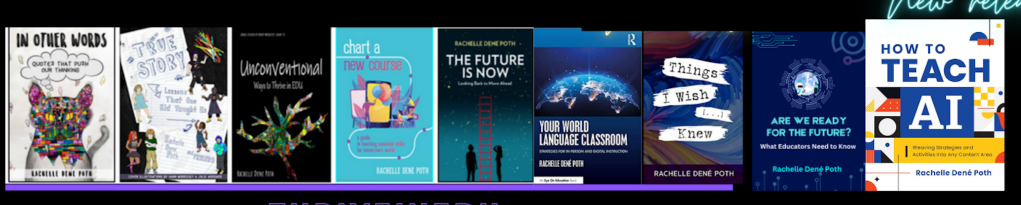
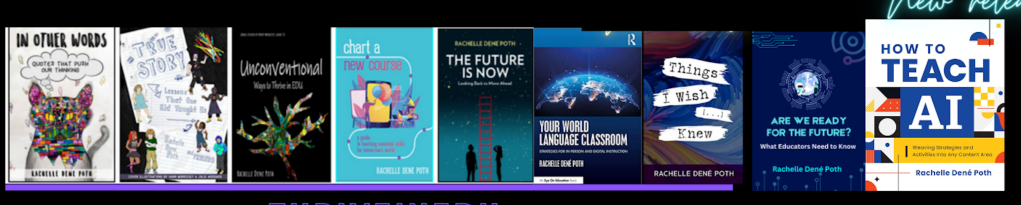
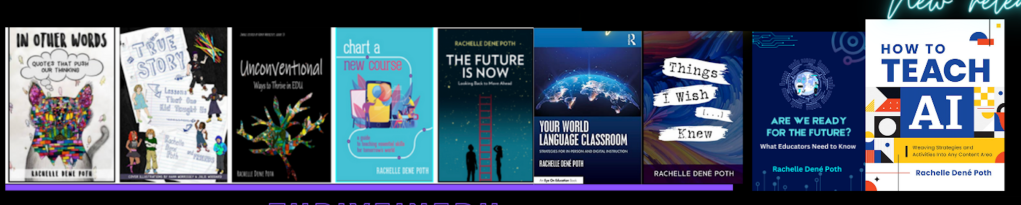
She is the author of ten books, including ‘What The Tech? An Educator’s Guide to AI, AR/VR, the Metaverse and More” and ‘How To Teach AI’. In addition, other books include, “In Other Words: Quotes That Push Our Thinking,” “Unconventional Ways to Thrive in EDU,” “The Future is Now: Looking Back to Move Ahead,” “Chart A New Course: A Guide to Teaching Essential Skills for Tomorrow’s World, “True Story: Lessons That One Kid Taught Us,” “Things I Wish […] Knew” and her newest “How To Teach AI” is available from ISTE or on Amazon.
Contact Rachelle to schedule sessions about Artificial Intelligence, AI and the Law, Coding, AR/VR, and more for your school or event! Submit the Contact Form.
Follow Rachelle on Bluesky, Instagram, and X at @Rdene915
**Interested in writing a guest blog for my site? Would love to share your ideas! Submit your post here. Looking for a new book to read? Find these available at bit.ly/Pothbooks
************ Also, check out my THRIVEinEDU PodcastHere!
Join my show on THRIVEinEDU on Facebook. Join the group here.

Principal Turnover is a Real Problem. Let’s Do Something About it
It seems that every day, there’s a new education survey, a new report, or some new finding, with its authors begging for our attention – a new or ongoing challenge that merits action.
If you’re in any way like me, most of those surveys earn not much more than a nod, a modest affirmation of the issue under scrutiny. Most of the time, we know already. And honestly, the issues rarely change. The investment and attention lines have been drawn in roughly the same places for some time.
But every once in a while, a new survey comes out that truly opens my eyes or refocuses my attention on critical issues in education.
As a preamble, the report repeated some sobering statistics about school administration retention, which we may have known but warrants repeating. For example, according to research from 2019, in the United States, “principal tenure averages four years.”
That was before the pandemic. I cannot imagine that it has improved.
If you’re reading this, I don’t need to explain why an average principal tenure of just four years is a serious problem and that is where the Arizona information comes back in.
In their survey of nearly 300 administrators and principals in K12 schools, the organizations wrote that while principals found their work meaningful, they also “noted high levels of job-related stress.” According to the survey, “High levels of stress and poor work-life balance are major factors pushing administrators to consider leaving.”
Administrators also told the survey makers that “Top stressors … included heavy workload, staffing shortages, the political climate in Arizona, and lack of resources/funding.” And that “Overall, administrators rated their work-life balance between poor and fair.”
None of that may be entirely surprising. But none of that is good, either.
We founded NetSupport nearly 36 years ago specifically to make educators’ jobs easier. By educators, we included and focused on IT professionals and school administrators, although we do have products used exclusively by teachers. Our products have been designed, installed, and updated across more than 22 million users worldwide because they reduce the burdens on education professionals in organizing and managing the technology in their schools. Over many years, countless school leaders have told us how our products and services make their jobs better and less stressful.
So, being reminded of the extremely limited tenure of principals in the U.S. and seeing the dismal results from Arizona was a bit of a shock. It was, however, not a surprise. I think we all know how stressful and draining education work is. But seeing this dramatic rate of turnover was a rude reminder that we all must do more to make the work of running a school less stressful, to move the needle on work-life balance to at least fair. If we cannot, we are – we will continue to be – experiencing unhealthy and unproductive high turnover among school leaders.
It’s well worth remembering that we can invest all the time, treasure, and technology we wish in classroom interventions and innovations. Yet, if the administrative layer in a given school is constantly in transition, overwhelmed, or otherwise ineffective, we are wasting those investments.
Likewise, we can create all the school policies we want at the federal, state, or district level, and it won’t matter one bit if the corps of school-level leadership is degraded by “high levels of job-related stress.”
The Arizona report offered several recommendations, such as implementing support programs that “Develop comprehensive wellness programs that address both personal and professional wellbeing” and to “advocate for policies that reduce administrative burdens and provide adequate funding for schools.”
That sounds great. And I understand that very few of us can do much about getting the state or other education overseers to create and fund wellness efforts. We also probably can’t do much on funding. But the part about reducing administrative burdens – we can do something about that.
AI and other technologies are getting too good, too fast to continue to leave such a vital part of our education leadership under these burdens, to allow them to roll these burdens and stresses and eventually into professional flight.
All of us in the education technology ecosystem have to be better, faster, and more intentional in making solutions that include principals. Even if new products are aimed, for example, at personalized learning or managing offsite activities, they should all consider how they will contribute to easing administrative burdens on principals. Any edtech product that does not is only doing half the job.
At the same time, those of us who have solutions that can help administrators need to move from raising our hands to energetically waving them about. The ongoing strain and its consequences are too important for professional modesty.
I realize that there are many issues with, and serious threats to, education. But this one – the stress burden we’re placing on principals – needs moving up a notch or two. So do the solutions that can help.
About Al Kingsley
Al Kingsley, the CEO of NetSupport, Inc., writes about school innovation and education technology. He serves in several capacities in local schools and has published four books about education, leadership, technology, and school governance.
Want to submit a guest blog or work with Rachelle?
Contact Rachelle to schedule sessions or keynotes about Artificial Intelligence, AI and the Law, Cybersecurity, Coding, AR/VR, and more for your school or event! Submit the Contact Form.
Follow Rachelle on BlueSky, Twitter(X) Instagram at @Rdene915
**Interested in writing a guest blog for my site? Would love to share your ideas! Submit your post here. Looking for a new book to read? Find these available at bit.ly/Pothbooks
************ Also check out my THRIVEinEDU PodcastHere!
Join my show on THRIVEinEDU on Facebook. Join the group here.
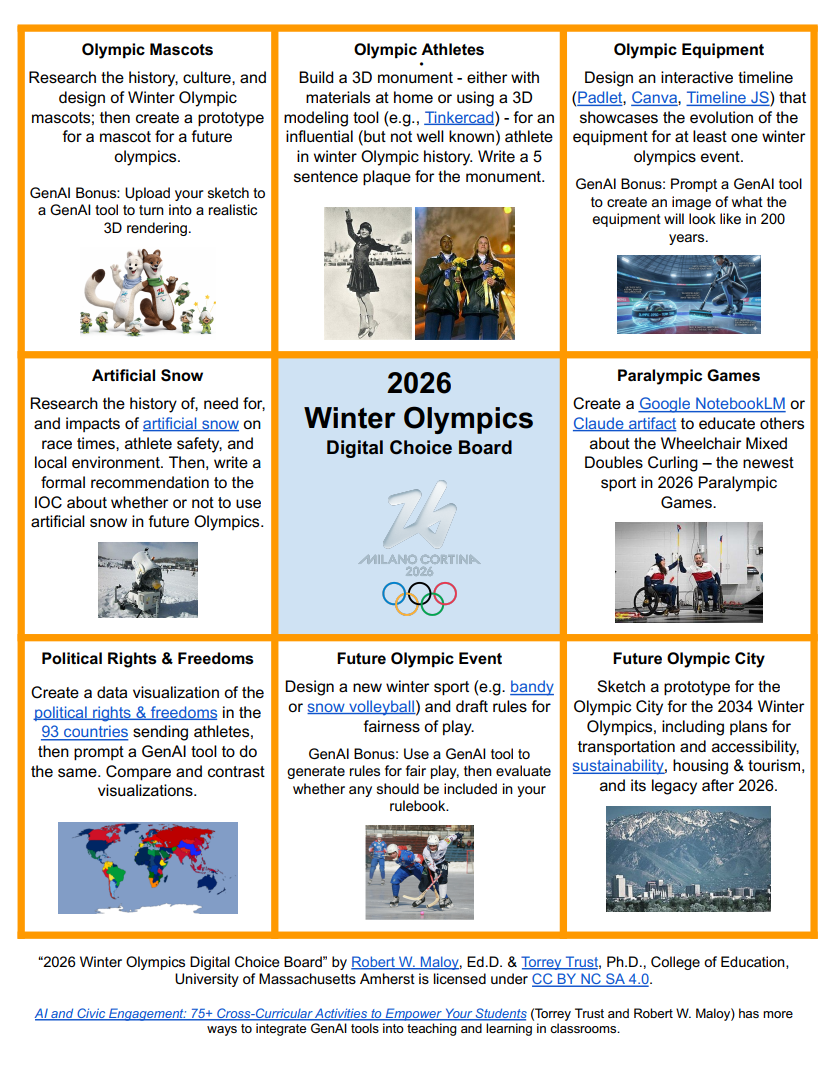
Keeping students engagemed throughout the school year can be a challenge. Integrating hands-on learning activities such as STEM, project-based learning (PBL), outdoor activities, gamification, and more helps maintain student engagement and develop essential skills like creativity, problem-solving, and collaboration.
Now that most schools have been in session for a few months, educators like myself might be looking for new ideas to explore. Some may already be seeing a decrease in student engagement. While the start of a new school year brings great excitement, that can wear off as activities pick up, colder months set in, and the content becomes more complex. Keeping all students engaged in authentic and meaningful learning experiences becomes even more critical during this time and throughout the year.
Along with engaging students more in learning, It’s important that we find ways to foster essential skills, such as creativity, collaboration, problem-solving, and critical thinking, while making lessons authentic and relevant. In my experience, I have advocated for bringing STEM to all classrooms. Other ideas besides STEM activities include involving students in more active and even outdoor learning, challenge, or project-based learning (PBL) opportunities and using some out-of-the-box ideas. Each of these methods is versatile, and when combined with tools like Defined resources, they help to boost student engagement, spark curiosity, and, best, students retain their content knowledge even more.
Essential Skills Development
As we see so many changes happening in education, especially with technology like AI and other digital tools, students need to develop essential skills that will prepare them for the in-demand careers of the future. According to the World Economic Forum Job Sills Outlook for 2027, these skills include creativity, critical thinking, problem-solving, and collaboration, and now, number three is AI and big data. STEM-related activities provide all students with an excellent way to build these skills. Whether done through coding lessons, hands-on projects, or exploring scientific concepts, STEM encourages students to think critically and solve real-world problems and hopefully spark an interest they may not have realized they had.
Dr. Rachelle Dené Poth is a Spanish and STEAM: What’s Next in Emerging Technology Teacher at Riverview High School in Oakmont, PA. Rachelle is also an attorney with a Juris Doctor degree from Duquesne University School of Law and a Master’s in Instructional Technology. Rachelle received her Doctorate in Instructional Technology, and her research focus was on AI and Professional Development. In addition to teaching, she is a full-time consultant and works with companies and organizations to provide PD, speaking, and consulting services. Contact Rachelle for your event!
Rachelle is an ISTE-certified educator and community leader who served as president of the ISTE Teacher Education Network. By EdTech Digest, she was named the EdTech Trendsetter of 2024, one of 30 K-12 IT Influencers to follow in 2021, and one of 150 Women Global EdTech Thought Leaders in 2022.
She is the author of nine books including ‘In Other Words: Quotes That Push Our Thinking,” “Unconventional Ways to Thrive in EDU,” “The Future is Now: Looking Back to Move Ahead,” “Chart A New Course: A Guide to Teaching Essential Skills for Tomorrow’s World, “True Story: Lessons That One Kid Taught Us,” “Things I Wish […] Knew” and her newest “How To Teach AI” is available from ISTE or on Amazon.
Contact Rachelle to schedule sessions about Artificial Intelligence, Coding, AR/VR, and more for your school or event! Submit the Contact Form.
Follow Rachelle on Twitter(X) and Instagram at @Rdene915
**Interested in writing a guest blog for my site? Would love to share your ideas! Submit your post here. Looking for a new book to read? Find these available at bit.ly/Pothbooks
************ Also check out my THRIVEinEDU PodcastHere!
Join my show on THRIVEinEDU on Facebook. Join the group here.
Guest post written By: Maurie Beasley, M.Ed. Counseling (Edited by Jim Beasley)
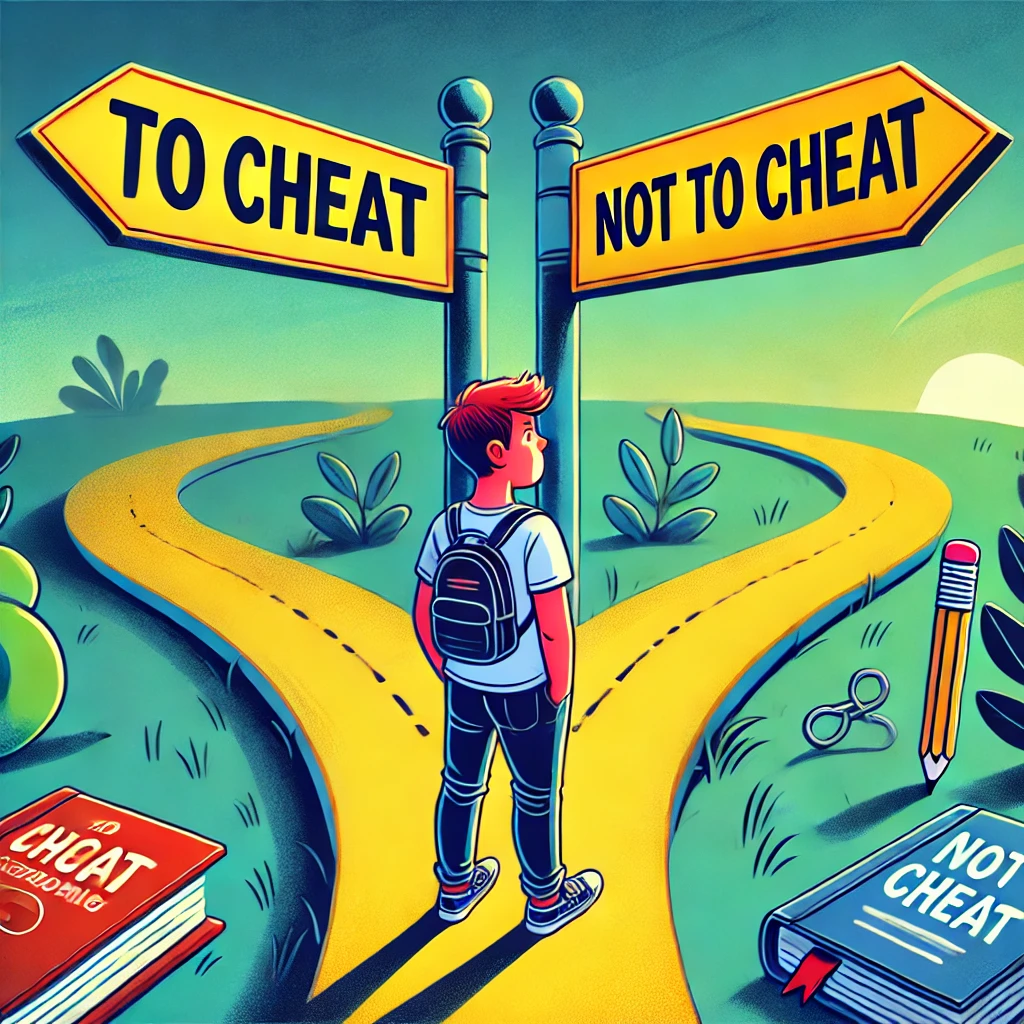
Cheating in school — it’s the topic that’s always been there, lurking in the shadows of every classroom and exam hall. For decades, we’ve known it happens, but we often look for the quickest explanation: students are lazy, technology makes it easier, end of story. But here’s the thing: cheating is not just a modern phenomenon, nor is it just about slacking off or taking advantage of new tools like AI. The real reasons why students cheat run much deeper, and if we’re serious about addressing the issue, we need to understand those reasons first.
Let’s be clear: cheating isn’t just some bad habit students picked up recently. It’s been around long before ChatGPT was on the mind of any engineer. And despite the attention AI has brought to the issue, the reasons students cheat are essentially the same as they’ve always been. So why does it persist, and what can we do about it? Let’s take a closer look at these reasons.
Pressure to Perform:
Students today are walking a tightrope, balancing academic expectations, extracurricular activities, and even part-time jobs. The pressure to perform is immense, and it’s no surprise that some students feel they can’t afford to fall.
Let me tell you about my daughter. She was the salutatorian of her high school class. She missed being valedictorian by a hair — a hair that could have been as little as a hundredth of a point. The only B she ever received was from a teacher who told her that grades don’t matter. Her response? “Great, then give me the one point I need to make an A in the class, or better yet, write me a letter explaining to the admissions board at UT Austin that grades don’t matter and being number 2 in my class is ok.” She knew that being valedictorian meant having your first year of college paid for in Texas. My daughter is honest, sometimes to a fault, but several times I was even tempted to tell her to “cheat” a little. That’s the kind of pressure students are under, and when the stakes are this high, cheating may seem like a way to stay on that tightrope, even if just barely.
Fear of Failure:
Beneath that pressure lies an even more pervasive issue: fear of failure. The fear of letting down parents, teachers, and even themselves can be overwhelming. When failure isn’t seen as an opportunity to learn but rather as a personal catastrophe, cheating becomes a tempting escape route. It’s not about cutting corners for the sake of it; it’s about avoiding the crushing weight of perceived inadequacy.
And this fear isn’t just hypothetical. As a counselor, I’ve seen it manifest in tragic ways. I’ve had to make Child Protective Service calls because parents have beaten their children for not performing well enough in school. When failure comes with such dire consequences, is it any wonder some students feel they have no choice but to cheat?
Contact Rachelle to schedule sessions about Artificial Intelligence, AI and the Law, Coding, Cybersecurity, STEM, and more for your school or event! Available for in-person or virtual training, keynotes, and coaching. Submit the Contact Form.
Follow Rachelle on Twitter(X) and Instagram at @Rdene915
**Interested in writing a guest blog for my site? Would love to share your ideas! Submit your post here. Looking for a new book to read? Find these available at bit.ly/Pothbooks
************ Also, check out my THRIVEinEDU PodcastHere!
Join my show on THRIVEinEDU on Facebook. Join the group here.

In collaboration with Noodle Factory, all opinions are my own.
As an educator constantly seeking innovative methods to enhance learning and teaching, my exploration recently led me to an exciting platform: Noodle Factory. When I find a new tool, especially when it comes to AI, I love sharing my experiences so that other educators can get started.
It has been fun exploring its various options and, in particular, its standout features, such as Walter+, the AI teaching assistant designed for grades K through 12. Walter+ is designed to help educators enhance and transform the learning experiences they provide for students. Noodle Factory makes it easy to get started by providing guidance, being available for questions, and even doing a demo! For any educator wondering where to begin with AI in their classroom, I definitely recommend exploring Noodle Factory and seeing the impact on student learning. Giving students a chance to learn about and interact with AI is important.
Why AI in Education Matters
The integration of AI in education is reshaping how educators deliver the content and impacting how students engage with the material. With purposeful use and the right pedagogical practices, AI tools can assist educators in various ways. It can help to personalize learning, automate grading, and create engaging, interactive content while complementing traditional teaching methods. Noodle Factory provides tools that are not just innovative but also intuitive and effective for use in the classroom. Especially as educators seek more efficient ways to deliver instruction and provide feedback to students, knowing how to leverage the power of AI is key. Noodle Factory offers innovative tools that enhance both learning and teaching processes.
First Experiences with Noodle Factory
When I first started with Noodle Factory, I was quite surprised by how easy it was to generate personalized learning resources for students. By uploading some of my teaching materials onto the platform, I saw how Walter+ tailored these resources into personalized learning experiences. I was impressed with its AI-driven dialogue system, which engages students in meaningful conversations and helps enhance their overall comprehension and retention of the content.
Using AI-powered tools such as Walter+ to create personalized learning experiences has been a game changer. I uploaded my teaching materials and waited briefly while Walter transformed them into interactive, engaging learning modules specific to my students’ needs. Noodle Factory’s ability to generate context-aware conversation flows and also, its ability to provide multilingual support enables educators to effectively reach students coming from different language backgrounds.
My favorite Noodle Factory Features
There are great features in Noodle Factory that will significantly impact teaching and students’ learning:
AI-driven Personalized Learning: Walter+ adapts to each student’s learning pace, helping to promote a more inclusive and effective learning environment.
We know that in order to accommodate students’ diverse learning needs, we have to understand where they are in the learning process and provide authentic, meaningful, and timely feedback. When this is possible in real-time, teachers can adjust, and each student can receive tailored educational experiences, which we know is crucial for learning. It provides students with instant, constructive feedback, which is key to fostering their academic growth.
Automated Grading and Feedback: We know that grading can take a great deal of time, especially when providing specific feedback for students. With Noodle Factory, educators can save time and provide students with immediate, actionable feedback, helping them understand their strengths and areas for improvement. This, of course, means that teachers can spend more time working directly with students, too!
Engaging and Interactive Content Creation Tools: With the various options available, I am able to boost student engagement. Noodle Factory’s tools enable me to transform traditional lessons into more interactive sessions that spark students’ interest and foster deeper learning. Student engagement, which can be a challenge, is now an area that we can boost because of the tools available to us.
Results: Positive Impact on Teaching and Learning!
By using Noodle Factory, educators will see a boost in student engagement and learning performance. Noodle Factory helps with our productivity through its features, such as automated grading and real-time insights into students’ progress. Being able to grab a quick glimpse into where students are in the learning journey is so helpful for targeting our instruction as needed. Gathering feedback from students is also important as it helps us to know what works for them and how to enhance their learning experiences. It also assists with providing a personalized approach through an interactive learning environment.
The real-time performance tracking and flexible assessment modules help teachers tailor their teaching strategies in real time to best meet individual student needs. Give Noodle Factory a try today and see the impact it makes in your classroom, for students, and for your work as an educator!
Interested in experiencing this transformative tool? Great news! I’m offering an exclusive code for my readers to try the premium plan (Educator Plus) on Noodle Factory. Discover how Walter+ can enhance your teaching and provide your students with an unmatched educational experience. And be sure to let me know how it goes for you!
P.S. Check out my podcast episode, where I chat with the Co-Founders of Noodle Factory Yvonne and Jim! Listen here!
About the Author:
Dr. Rachelle Dené Poth is a Spanish and STEAM: What’s Next in Emerging Technology Teacher at Riverview High School in Oakmont, PA. Rachelle is also an attorney with a Juris Doctor degree from Duquesne University School of Law and a Master’s in Instructional Technology. Rachelle received her Doctorate in Instructional Technology, and her research focus was on AI and Professional Development. In addition to teaching, she is a full-time consultant and works with companies and organizations to provide PD, speaking, and consulting services. Contact Rachelle for your event!
Rachelle is an ISTE-certified educator and community leader who served as president of the ISTE Teacher Education Network. By EdTech Digest, she was named the EdTech Trendsetter of 2024, one of 30 K-12 IT Influencers to follow in 2021, and one of 150 Women Global EdTech Thought Leaders in 2022.
She is the author of nine books including ‘In Other Words: Quotes That Push Our Thinking,” “Unconventional Ways to Thrive in EDU,” “The Future is Now: Looking Back to Move Ahead,” “Chart A New Course: A Guide to Teaching Essential Skills for Tomorrow’s World, “True Story: Lessons That One Kid Taught Us,” “Things I Wish […] Knew” and her newest “How To Teach AI” is available from ISTE or on Amazon.
Contact Rachelle to schedule sessions about Artificial Intelligence, Coding, AR/VR, and more for your school or your event! Submit the Contact Form.
Follow Rachelle on Twitter(X) and Instagram at @Rdene915
**Interested in writing a guest blog for my site? Would love to share your ideas! Submit your post here. Looking for a new book to read? Find these available at bit.ly/Pothbooks
************ Also check out my THRIVEinEDU PodcastHere!
Join my show on THRIVEinEDU on Facebook. Join the group here.
In collaboration with MatataStudio EDU, All opinions are my own
When it comes to STEAM courses (Science, Technology, Engineering, Arts, Mathematics), especially in the past year and a half, the integration of artificial intelligence (AI) and robotics has increased. AI can no longer be thought of as a passing fad or trend; instead, it is a necessity for students in all classrooms.
For many years, I didn’t think I could bring these opportunities to my students; however, I have realized that to best prepare all students, every educator needs to include activities that help students develop their skills in these growing areas.
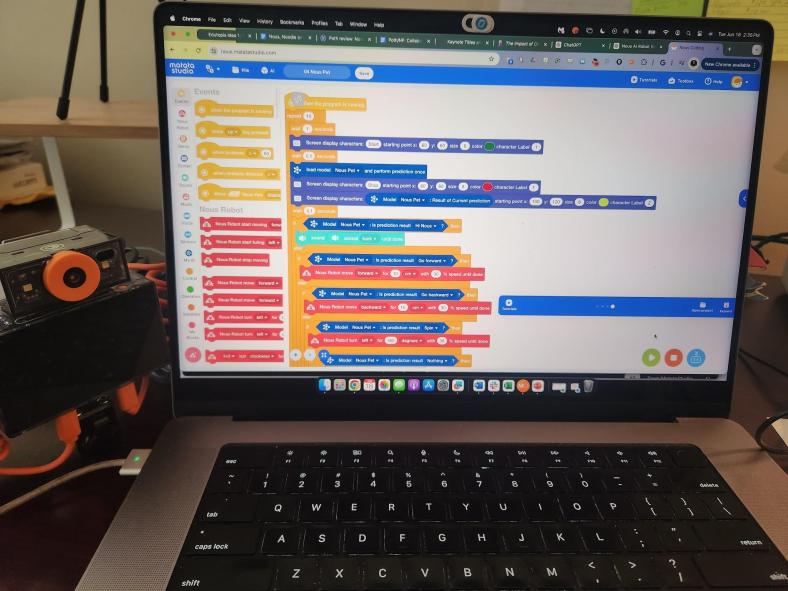
As a Spanish and STEAM teacher, I bring in a variety of learning experiences for all students to engage in innovative learning opportunities. Over the past three years, we have really enjoyed working with the robots and coding resources from MatataStudio, and we were thrilled to get the newest model, the Nous AI Set! My motivation for selecting this was the focus on AI, one of my key areas of interest for the past seven years! I also love seeing how students respond to the new tools we use, how they dive in and collaborate, and what they create! Remember, we just need to get them started and then see where the learning journey takes them and learn from their experiences, too!
With Matata, we started by testing the Tale-Bot Pro, VinciBot, and now Nous AI Set. What I value the most is that there are tools for all learners of all levels. Even though I teach an 8th-grade STEAM class, we still explore the different robots to understand the students’ learning experience. Now, we are excited about the Nous AI Set and the variety of ways you can build and learn from it!
What is Nous AI?
The Nous AI Set is a modular AI educational tool that will revolutionize how educators teach their students about coding and AI. As an 8th-grade STEAM educator, I had the opportunity to explore this innovative tool. It is always fun to dive in and see the benefits and then share our learning with other educators. It helps others know what to expect and how to get started, answers some common questions, and hopefully provides some ideas, too! We will look at its capabilities, its educational value, and how it can be a game-changer in the classroom.
Benefits and Features
The Nous AI Set will support comprehensive AI education for both primary and secondary schools. It offers a wide range of AI technologies and functionalities. This robot is designed to be suitable for students aged 12 and up. The focus areas for working with the Nous AI Set are for developing computational and design thinking skills and problem-solving skills. In addition to these 21st-century and in-demand skills, it will also help students develop their digital literacy skills, which are essential in today’s advancing digital world.
Key Features and Capabilities of the Nous AI Set
Modular Design and Compatibility
At first, I did not realize the different options for creating the robot. With the Nous AI Set, multiple options are available. It has a highly modular design that is compatible with various structures and electronic modules. Through different options, it helps to spark creativity and allows students to build and program a wide range of projects. Whether students design simple robots or dive into creating more complex AI-driven tasks, the possibilities are endless! And student engagement and motivation in learning increases!
Programming that meets your needs!
Something that I really appreciate about the Nous AI Set is its dual programming capability. Beginners can start with block-based programming (Blockly) to learn basic AI functions such as face detection and image classification. As they progress, students can transition to text-based programming (Python), exploring advanced AI concepts like machine learning, neural networks, and autonomous driving.
[We built it this way first]
Teach students about Machine Learning
MatataStudio’s Nous AI Set covers fundamental AI topics, including machine learning, computer vision, and speech recognition. It supports AI model training and data collection. When students learn through a more hands-on approach, they can connect with and understand complex AI concepts by engaging in practical application and meaningful and relevant learning. Working together, they develop these essential skills and have fun learning!
[Trying to figure out how to assemble it, letting students take the lead!]
The Right Resources!
MatataStudio provides extensive learning resources for all of its products. Educators know that they are supported through access to online tutorials, e-books, and even video-based courses. The resources are beneficial because not only do they support educators, but they also help guide students through the various functionalities of the robot, ensuring a comprehensive understanding of AI and programming.
Engaging in Design and Engineering Thinking
The Nous AI Set’s design encourages students to think, process information, solve problems, and think like engineers. Students can design and build their projects, test different solutions, and iterate on their designs. We want students to focus on the ongoing learning process rather than a finite product. This learning process promotes critical thinking and problem-solving skills, which are essential for future engineers, scientists, and other in-demand STEM-related fields.
What I love about the Nous AI Set is that there are so many choices available and tutorials to help you get started! See some examples below.
Improving Digital Literacy
Being digitally literate is crucial in today’s digital age. By using the Nous AI Set, students improve their digital literacy by engaging in programming and AI applications. They have opportunities to learn how to use technology creatively and responsibly, which will best prepare them for future digital challenges.
From passive to active learning!
The Nous AI Set offers a variety of interactive activities that make learning more engaging and fun. Students shift from being consumers of learning to becoming more active creators. Activities like MatataChat and MatataDraw allow students to explore basic computer vision and speech recognition. These activities lead to discussions between students and will spark curiosity about learning. The activities are not only educational but also highly engaging, keeping students motivated and interested.
[Working on a project and following the steps closely to see all of its capabilities.]
Real-World Applications
The Nous AI Set is not just a learning tool; it also provides students with insights into real-world AI applications. For instance, through activities involving image recognition, speech recognition, and autonomous driving, students can see how AI technologies are used in everyday life. This exposure helps them understand the relevance of what they are learning and inspires them to pursue careers in AI and technology.
Why should you explore Nous AI?
There are so many possibilities, and with the Nous AI Set, we will better prepare students for the future. As an educator who has seen the collaboration in building and the ideas that students generated, I recommend the Nous AI Set for any classroom looking to incorporate AI and robotics into their curriculum.
About the Author:
Dr. Rachelle Dené Poth is a Spanish and STEAM: What’s Next in Emerging Technology Teacher at Riverview High School in Oakmont, PA. Rachelle is also an attorney with a Juris Doctor degree from Duquesne University School of Law and a Master’s in Instructional Technology. Rachelle received her Doctorate in Instructional Technology, and her research focus was on AI and Professional Development. In addition to teaching, she is a full-time consultant and works with companies and organizations to provide PD, speaking, and consulting services. Contact Rachelle for your event!
Rachelle is an ISTE-certified educator and community leader who served as president of the ISTE Teacher Education Network. By EdTech Digest, she was named the EdTech Trendsetter of 2024, one of 30 K-12 IT Influencers to follow in 2021, and one of 150 Women Global EdTech Thought Leaders in 2022.
She is the author of nine books including ‘In Other Words: Quotes That Push Our Thinking,” “Unconventional Ways to Thrive in EDU,” “The Future is Now: Looking Back to Move Ahead,” “Chart A New Course: A Guide to Teaching Essential Skills for Tomorrow’s World, “True Story: Lessons That One Kid Taught Us,” “Things I Wish […] Knew” and her newest “How To Teach AI” is available from ISTE or on Amazon.
Contact Rachelle to schedule sessions about Artificial Intelligence, Coding, AR/VR, and more for your school or your event! Submit the Contact Form.
Follow Rachelle on Twitter(X) and Instagram at @Rdene915
**Interested in writing a guest blog for my site? Would love to share your ideas! Submit your post here. Looking for a new book to read? Find these available at bit.ly/Pothbooks
************ Also check out my THRIVEinEDU PodcastHere!
Join my show on THRIVEinEDU on Facebook. Join the group here.
Think of a problem you are currently experiencing. If you are like me, you have plenty of options to choose from. We are often stuck in a cycle of response when it comes to resolving challenges we regularly face resulting in the same problems cropping up again and again. In the book titled Upstream: the quest to solve problems before they happen, Chip and Dan Heath liken problem solving to a river – more solutions exist the farther upstream you are from the problem. What a great reminder that numerous solutions exist for every single challenge faced. However, if there are all of these solutions, how do I select the right one for my specific problem? Hence, the firefighting mindset!
Why firefighting?
The firefighting mindset is steeped in design thinking and comes from my work in the juvenile justice system. I have the privilege to work with educators and students in the juvenile justice system across the US. When traveling to secure schools, often located in detention centers and jails, I ask teachers how they are doing and typically get the same response, Oh you know, just putting out fires. This response led to the question, why are we always putting out the same fire or in other words, why are we always solving the same challenge? If we are stuck in a cycle of response, always putting out the same fire, then we are not actually solving the problem. If the Heath brothers are right and there are many solutions to each problem, how do we find them? We find them by changing our mindset toward the problems themselves. Firefighting becomes a metaphor for a way to see problems and challenges as opportunities for new ways of thinking and new solutions designed.
Putting Out Fires
Putting Out Fires as a mindset helps us to begin to understand problems at its core in order to truly end the problem with the most effective solution. Do you need a solution right now because you cannot take this problem for one more minute or this problem is harming students and must be stopped immediately? Or, do you have time to track data about the problem in order to effectively implement a solution? Not all problems are created equal and each deserves its own unique solution. We are often so busy that we try a one size fits all approach to problem solving. Instead, the firefighting mindset helps us to understand problems at their core and implement a solution designed specifically for the problem itself allowing us to truly end the cycle of response for that particular problem.
An example of the putting out fires mindset can be found in the use of metro turnstiles in Paris to create clean energy. Climate change is a rising issue across the globe. As each year brings more one-of-a-kind storms, wildfires, hurricanes, earthquakes, rising sea temperatures, and more, Paris began a groundbreaking project to harness green energy in an attempt to build a new energy source stopping the need for depleting the Earth of its natural resources. The solution is incredibly simple, “as commuters pass through the turnstiles, their movements spin the turbines, generating kinetic energy. Though each rotation produces a small amount of energy, the cumulative effect is significant due to the millions of daily commuters using the metro system” (TSUI, 2023). The use of turnstiles in Paris is the launching point of an innovative solution to creating clean energy. Imagine how much energy can be created from similar public transportation hotspots like airports, railway stations, office buildings, and more. “Initiatives that empower individuals to participate in the energy transition, even through daily activities, are vital in shaping a greener world” (TSUI, 2023).
This example embodies the firefighting mindset because the creators of this solution understood their specific problem, its root causes and symptoms, and designed a creative solution in a different area using a mundane action, going through the metro turnstiles, to create clean energy and help lessen the effects of climate change.
You can learn more about the firefighting approach to problem-solving by grabbing a copy of “Putting Out Fires: A Framework for Solving Problems in Your Classroom or School”. Releasing this summer, this book delves into the intricacies of the firefighting mindset, provides practical strategies for implementing creative solutions to problems you’re facing, and offers inspirational examples of problem solving at its finest just like the Paris metro turnstiles mentioned above. If this approach works for some of the most restrictive classrooms in the US, it can work for you too!
We all have challenges we face every single day. We can either allow the challenges to take over causing us to live in a consistent cycle of response. Or, you can take ownership of the problem, adjust your mentality, and design a unique solution to end the problem for good.
The fire alarm is ringing….let’s get started putting out those fires!
Kaylah Holland, Ed.D. Bio:
Dr. Kaylah Holland is passionate about empowering educators through professional development, one-on-one coaching, and innovative lesson design. She holds a Doctorate of Education in Instructional Design and Technology with extensive research in active learning environments. Driven by a passion for education, Dr. Holland consistently explores innovative methods to empower educators and champion student-centered classrooms. She is a Google Certified Innovator, Trainer, and Coach, a college professor, and an ISTE Community Leader. She was presented the “20 to Watch” award by ISTE in 2022 and was recognized by EdTech K-12 Magazine as a top 30 influencer in 2023. She was named a Featured Voice for ISTE in 2024. Dr. Holland is the author of Putting Out Fires: a Framework for Solving Problems in Your Classroom or School published in 2024. As the Director of Instructional Technology and Blended Learning for BreakFree Education, Kaylah empowers educators to foster innovative, sustainable, and active educational experiences inside juvenile justice facilities across the United States offering students held in confinement a path to success in school and life. She also works to empower educators across the globe as the founder of Go Teach Be Love, a nonprofit providing professional development to educators in developing countries, and the co-founder of Global Good Edu, a program recognizing the incredible impact educators are making around the world.
Contact Rachelle to schedule sessions about Artificial Intelligence, Coding, AR/VR, and more for your school or your event! Submit the Contact Form.
Follow Rachelle on Twitter(X) and Instagram at @Rdene915
**Interested in writing a guest blog for my site? Would love to share your ideas! Submit your post here. Looking for a new book to read? Find these available at bit.ly/Pothbooks
************ Also check out my THRIVEinEDU PodcastHere!
Join my show on THRIVEinEDU on Facebook. Join the group here
This is hard. I was very tempted to have that be my entire post as that is how so many people, including me, are feeling these days. I am always very solution focussed and generally very positive. That hasn’t changed, but I am trying to adjust how I approach solutions and celebrations. I am trying to listen to more, acknowledge that this is hard, recognize amazing work frequently, encourage everyone to take several deep breaths, and then offer as much support as I can to help. I have also been reaching out for help from my incredible support system. I need it. This is hard for everyone.
Our community has been asking questions about how we are supporting the mental health of our students right now. It’s a question we should be asking every day all year long whether we are in a pandemic or not, but this time has undoubtedly brought the concern to the forefront more than ever. As I compiled the list of what our team has done over the last several years to support learners’ mental health, it was staggering to see how much we have added and embedded across contexts. We have added licensed therapists to each school site that see learners through their insurance and help families who don’t have access to insurance apply for it. Some of those therapists also co-teach in classrooms and have office hours for staff so they can problem solve how to best help learners. We have classroom teachers all over our district embedding social-emotional learning lessons and Mindfulness into daily instruction. Our teachers spend a lot of time building relationships with our learners and offering them opportunities to build relationships with one another. We have a school counselor, social worker, and/or a school psychologist at each school to work with staff, learners, and families. We have Hope Squads at all our secondary schools so our learners have peer to peer support.
Our professional development has also included training over the last several years in understanding trauma, culturally responsive practices, restorative practices, empathy and design thinking to solve problems, Zones of Regulation, Universal Design for Learning, innovative classroom practices, and many more. The idea is that staff members (including teachers, administrators, secretaries, assistants, recreation staff, facilities, and food service) have a wide array of tools to use in our schools to understand and empower all learners. They often get to choose sessions that are important to them or suggest topics on which they would like professional development as we want all staff to feel empowered in their work. We have also tried to build a lot of support for our staff through coaching as they need to feel our support to make it all work.
Now, we are trying to make education work in the middle of a pandemic. Our learners are all virtual right now. We are anxious to see them back in school and were optimistic a few weeks ago that we could start bringing them back a few days a week until our health metrics took a turn for the worse. We meet regularly with our local health department to discuss safety and are furiously planning safety measures and logistics for the time when we bring our learners back into physical schools. In the meantime, our recreation department has opened camps for elementary students and students with special needs that families who need care and/or support with virtual instruction can access. The camps can be kept small and can spread out across large spaces while providing a needed resource for some of our families in the safest way possible.
Our teachers are more stressed than normal. Our families are more stressed than normal. Our learners are more stressed than normal. Our administrators and coaches are more stressed than normal. Everyone is feeling disconnected from one another. The unpredictability of the current situation is overwhelming for all of us. The length of time this has gone on with no foreseeable end in sight is making it even more challenging. We are also headed into the cold and flu season with the weather getting colder, which means fewer opportunities to be outside. We have all had to adapt and do it quickly. It can be done, but this is hard. It is okay to say that out loud and recognize it.
I am really proud of the work we have done to shift the learner experience over the last several years, which is serving us well in virtual instruction. It does not make this less stressful on our team, but many of them have been adapting and shifting for years so they have tools to do it. We have been very purposeful in finding ways to meet teachers and administrators where they are and encourage them to make small steps that add up to big ones. As a district leadership team, we have tried to share the message that we are here to support our schools in any way we can to empower our learners to be ready to live life on their own terms when they graduate from our system. We are now forced to make shifts at warp speed and shift more frequently than we would ever normally ask people to do. It means instead of just support to grow as professionals; we had to start thinking creatively about how to take some things off their plates.
Our teachers have the option to teach from home or school during virtual instruction as we trust them to know what is best for them. We have built more planning time into the day at each level and shifted our professional development days to be planning and self-directed time for teachers. Purposeful professional development with choice for teachers is still a key element of our strategic plan, but that needs to look different right now. Instead of planning required sessions for all staff to attend, we shifted to self-paced courses that teachers could choose from and complete at their own pace and time. They could also choose not to select one at this time if they didn’t feel it was something they could take on. We will circle back to those staff later and build professional development support for them when they are ready for it and as they need it throughout the year.
We have encouraged our administrators to give our teachers permission to engage learners differently and focus on their interests. Academic content is an essential part of our work, but we can spend more time connecting and embed content as we go. In a collaboration session during emergency remote teaching last spring, a staff member shared how a learner went to work with his dad each day and spent a huge portion of one day on Facetime with his teacher showing her his community and what he had learned about his dad’s job. Others in that same session shared similar stories apologizing that they weren’t doing anything “academic”. My response was that what they were doing was building a sense of belonging and an academic mindset, which IS essential to academics and life success. We worked all summer to be ready for virtual instruction that was more robust than what we were able to do in emergency remote teaching last spring, but that doesn’t mean it can’t still be focused on the whole child and embed time to connect as people. Teachers can find a balance synchronous time with some asynchronous time to meet the needs of learners. They can use choice boards, complete planned activities, write reflections, or work on long-term projects during the time they are asynchronous. They know their families and learners best, and we trust them to make the right decisions on finding balance.
We always want to hear feedback from our learners, staff, and community as it allows us to know what we are doing well and where we need to improve. We have sent out an employee engagement and parent satisfaction survey twice a year and learners complete a social-emotional learning survey so we can gauge how they are feeling about the development of their own skills in self-regulation, social awareness, classroom effort, growth mindset, and curiosity for the last several years. This year, we had the opportunity to offer different surveys that were much shorter for staff and families. While we still needed their feedback, we also needed a quick and easy survey for them to complete that gave us fast results so we can adjust resources and support. We added a wellness survey for our learners and do empathy interviews to ask them directly about how they are doing, if they are connected to adults and peers for support, and what they need to feel successful.
We have encouraged our principals to think about a shift in teacher evaluation as well. Our teacher evaluation process is intended to be one of self-reflection wherein the teacher sets a student learning objective for the year and a professional practice goal. The observations should be an opportunity to collect evidence towards those goals with time to check-in with the teacher to help them celebrate success and adjust the goals throughout the year. We have not always approached teacher evaluation that way but have been trying to move to a more reflective process over the last year. We get to take this unusual year to accelerate that process so observations can be done in short one-on-one meetings during which teachers can share the evidence they have collected about their own their own practice to share with us. We want to take the pressure off the formal nature of teacher observation but still get at the intent of the cycle of self-directed, continuous improvement in a way that also gives us more time to connect individually with each staff member. We have some schools trying this out in the next couple of weeks. I am anxious to hear how it goes and to find out if the change alleviates some stress for administrators and teachers.
Our teachers also had the opportunity to meet as grade levels and departments before school started to share ideas and create lists of resources they thought they would need to make this all work. We have ordered thousands of whiteboards, music kits, art kits, sensory tools, apps, and online subscriptions. We want our learners to have access to instructional materials in addition to technology and hotspots at home. We trade reading books and give out learning kits once a month in a drive-up system at most of our schools. We also added many supplies to schools as students won’t be able to share materials with one another as easily in classrooms once we are back. We’ve added some new and adaptive resources for teachers that all still align with our strategic plan but make the work more doable in a virtual or distance learning. Teachers continue to send us requests regularly as they plan engaging activities to do at home in the next few weeks. Sometimes the requests make me wonder what will come next, but mostly they make me excited that our learners are still having interactive, hands-on opportunities in our virtual world.
This is hard. Saying so doesn’t make it any easier, but it does create space for us to rely on each other to get through it. I want all our staff, learners, and families to know that we see them. We see the efforts they are putting in each hour of the day. We see that they sometimes need us to support them in new and different ways. We see that they may feel overwhelmed by the world right now and sometimes need some space to feel that. We see that we need to find even more ways to connect and listen to them. Mostly we see that they are all doing the best they can each day, despite everything that is thrown at them, to always keep what is best for children at the forefront. I love this quote by Todd Whitaker, “The best thing about being a teacher is that it matters. The hardest thing about being a teacher is that it matters every day.” Not only does teaching matter, but the people who do it each day matter too.
I am a proud mother, wife, and educator dedicated to creating experiences for all learners that are authentic and connect their time in school to what and who they want to be well beyond high school. I serve as the Director of Leadership and Learning for the West Allis- West Milwaukee School District in West Allis, WI. The thoughts I share here are my own and my reflections on our work. View all posts by Deidreroemer
*********************
**Interested in writing a guest blog for my site? Would love to share your ideas! Submit your post here.
Looking for a new book to read? Many stories from educators, two student chapters, and a student-designed cover for In Other Words.
As many teachers head back out to instruction with many fears and anxiety of the unknown to come this school year, I am happy to share that being on lockdown for many months, there was a silver lining in it for me. And that was being able to attend many online professional training programs for free, in places I would have to travel too to get to those conferences. Extremely fortunate to connect with many amazing and talented curriculum and instructional educators. At one of these online PDs I met @Sarahdateechur from Microsoft and Cue #GETA sessions on Steps to gamify your instructional approach to classes.
In this session, stark differences were drawn between the two instructional teaching tools. Whoa! Who knew that they were different? Gamifying as she stated has been around for many decades. We all remember the excitement when we got back a test and there was a “red star “on your paper. This meant you got 90% or higher. And if you got the “golden” star you aced the test with a perfect score of 100%. Today in education, this is not the best way to assess or motivate student learning outcomes, however this was a primitive way of introducing gamification into the class lesson. Badges for merit rings a bell?
Gamification takes your class lesson and uses themes to create excitement, engagement and innate motivation to get the lesson assignments completed while having educational fun. Students can work in teams by choosing a token player, mascot or game piece for their team identification, and then complete lesson stations/group activities. Along the way they collect a stamp for each completed activity. And all if all stamps on score card are filled in, congratulations you have earned your first badge. Challenges can be created to mimic standards from DOK levels of 1 to the highest level of rigor difficulty, an instructor wants to make the lesson. Differentiation is also evidenced by having groups from low level challenges to high level, still actively participating in the game and completing the lesson essential question or objective successfully.
The super talented @MeehanEDU author of EDrenaline Rush has designed many thematic and challenging gamified lessons that you too as a teacher can see and feel the excitement invested to want to complete this game and get that prize. Gamification can be built on current or “pop” themes. The game of Thrones, Harry Potter and use the Houses as game token or player. Teachers have used creative writing interwoven by way of mini stories, as they developed these gamified lessons. Stories that when included add more excitement as students read instructions to get to that prize.
Another great Gamification Master, as I like to refer to him is @MrMatera. A middle school social studies teacher who use his curriculum to create the gamification themes. Teachers can design themes based loosely on pop culture movies retro movies such as Indiana Jones, Star Wars, or more current ones such as Stranger Things or Game of Thrones. Most important element that makes gamification works, is having a challenge adding some element of danger/ depth defying or “must save the day” to complete a mission. Thus, class teams work together to defeat the “bad guys” to earn that badge of honor. Added bonus: classroom community and relationships are forged.
So the question becomes where does a teacher begin. How much will this cost me? I highly recommend starting on a Tuesday night visiting Twitter. The instructional coaches and mentors mentioned in this post, who are all great people to follow. Most have Tuesday or Wednesday chats based on how to start gamification in class. What practices have worked. Some teachers even share lessons that you can re-mix with credit to that teacher, so that you can practice or build into your curriculum instruction. Unfamiliar with what are popular movies? This is the best time to get to know your students. Have them share what are movies or tv shows are they watching now. Build from them and see how much more they connect and build a relationship with you, as you used movies that they shared with in class, in a lesson. Bonus points with students: if you know they struggle with a math concept like say fractions but used a movie theme they like…and designed fraction lesson based on that theme, chances are you have them engaged already to trying your lesson. A win-win for everyone.
I hope this post has inspired you to rethink and want to try incorporating gamification into your lesson plans. Start simple maybe with your syllabus or classroom expectations and then assess how it worked with your students. Do come back to the second part of this post, which is centered more on game-based instruction, creating games the old school style. Retro! Until then happy learning teacher friends!
**Interested in writing a guest blog for my site? Would love to share your ideas! Submit your post here.
Looking for a new book to read? Many stories from educators, two student chapters, and a student-designed cover for In Other Words.
Opinions expressed are those of the guest blogger.
The 2020-2021 school year has just kicked off in some areas, and it is already proving to be a year like no other. Heightened anxiety among students, teachers, and parents is a certainty this year, across all of the various educational methods administrators are using. Some students will be stuck in precarious, distracting, or harmful home environments, some will be forced to walk halls that could threaten the health of them and their families, and others face an uncertain fall in districts that have yet to finalize their back-to-school methods.
In total, all these changes mean that social and emotional learning will be front and center in the 2020 school year. I talked to Denver-area elementary school teacher Adin Becker about his learnings from spring 2020, his uncertainties in approaching the fall term, and his plans to prioritize SEL in the virtual learning environment. Here are the 5 main things to strive for in the fall semester:
Make sure students have opportunities to interact with each other
Schedule socially distanced visits when possible
Make your materials more inclusive than ever
Advocate for remote health services
Make space for trauma
Give your students opportunities to interact with each other
If you’re conducting some or all of your school through remote e-learning, it won’t be possible to replicate the social environment that your students would experience under normal class conditions. Students’ social interactions with each other are vital to their engagement in school work and their growth as individuals. Becker puts it this way:
The biggest difference this year is classroom community. Young students need social interaction to grow, and there is no question that the online learning environment is not the same as seeing your friends in-person. My school has already experienced the difficulties of limited engagement in e-learning from the last semester. I plan to introduce more in-class discussion between students, make use of online academic games, and show interest in my students’ wellbeing.
There’s no perfect way to transfer the social benefits of in-person school to the remote classroom, but there are lots of things you can do to make up for students’ loss of social engagement. Especially with younger students, their social experiences are as important as your lessons, so it’s vital to dedicate a similar amount of your time and attention to both. Something as simple as using Zoom breakout rooms for free discussion during remote class periods can help to make up for students’ lack of social interaction in school.
Schedule socially distanced visits when possible
Students’ social relationships with each other are indispensable to their SEL experience, but so is their relationship with their teacher. And the same way remote classrooms can’t replicate the social experience of in-person school, Zoom meetings with your students can’t provide quite the same student-teacher relationship. Here’s what Becker has to say:
Unfortunately, it’s simply not possible to provide the same access and inclusion to students through e-learning. Districts can do their best to provide all families with laptops and internet, but there’s only so much they can accomplish – there are nearly 100,000 students in my district, for example. To bolster student interest, I am hoping that I can organize a few socially-distanced home visits with each of my students so that they can get to know me and hopefully feel more comfortable with me online.
Luckily, it’s easier to stay safe while meeting with just one student at a time. If your school’s administration allows it, try to set up socially distanced home visits with your students at least once a semester. This allows students to feel individually heard and acknowledged, so they can feel even more comfortable and engaged in remote learning sessions.
Make your materials more inclusive than ever
Inclusivity and accessibility are crucial in the social & emotional learning of all students under “normal” conditions, and the remote environment of 2020’s classroom means you have to be more intentional than ever in serving all of your students equitably. Record your lesson videos at a pace that all of your students can follow, and add subtitles so every student can absorb the lesson the way they learn best. And if you’re trying to make your e-learning materials fun & distinctive, keep an eye on the readability of your resources for students with visual difficulties.
Unfortunately, even if you include helpful subtitles, visual aids, and voiceovers in your videos, kinesthetic learners won’t find the same tailored learning support that they could in the classroom. Becker explains:
In-class I like to use manipulatives to supplement student learning. Because I’m a general education teacher, I cover every subject including math. Online, I can’t provide extra physical materials to help students understand concepts like fractions. Instead, I will make use of online academic games, and interactive learning models that can engage young students outside the classroom. Because it will be exceedingly easy for students to tune out during online learning, class will need to be hyper-interactive.
Inclusivity extends to every corner of your teaching: use gender-appropriate or gender-neutral pronouns in your materials, and be wary of your students’ personal needs. When planning recorded lessons and producing e-learning videos, be efficient and make use of your students’ limited attention spans. In the classroom, you’re able to monitor your students’ engagement, but teaching remotely means that you can’t always keep an eye on their focus.
Advocate for remote health services
Another important aspect of the in-person school experience that’s missing in remote learning is the accessibility of health services for students. While in-person medical care can’t be provided to students using typical school resources, it’s especially important during the COVID-19 pandemic to provide adequate mental health resources for students of all ages.
You likely don’t have much direct control over your administrators’ use of health resources. But if you’re able, do what you can to advocate for mental health resources to be made available for your students. This might involve bringing several educators together in order to work for what you believe is best for your students, speaking with parents in order to focus the school’s entire community on students’ well-being, or doing your own research on accessible mental health resources online. This terrific list of accessible remote mental health resources is a great place to start.
Make space for trauma
It would be great for your remote teaching to be just as effective as in-person school, but most likely that’s not possible in 2020. And what’s more, it shouldn’t be your primary objective. Many students are experiencing an especially traumatic year, and their health and wellness has to be prioritized over the diligence of their schoolwork. Becker elaborates:
Many students are traumatized after losing family to COVID or getting sick themselves. For that reason, social-emotional learning will be front and center this semester to address trauma. Education through this catastrophe needs a dose of realism: pushing your students harder than usual will do more harm than good.
The main takeaway here is that educators need to be especially responsive to all their students this year and rethink the teacher/student relationship. More than ever before, the parent/teacher relationship may occupy a lot of your attention, as students’ whole lives become central to the success of their education.
**Interested in writing a guest blog for my site? Would love to share your ideas! Submit your post here.
Looking for a new book to read? Many stories from educators, two student chapters, and a student-designed cover for In Other Words.