The Importance of Reflection

As educators, it is important to reflect on our teaching practices and also model this for our students. Engaging students in reflecting on their learning will help them to become more self-aware, to set new goals, to make adjustments, and to prepare them for the future.

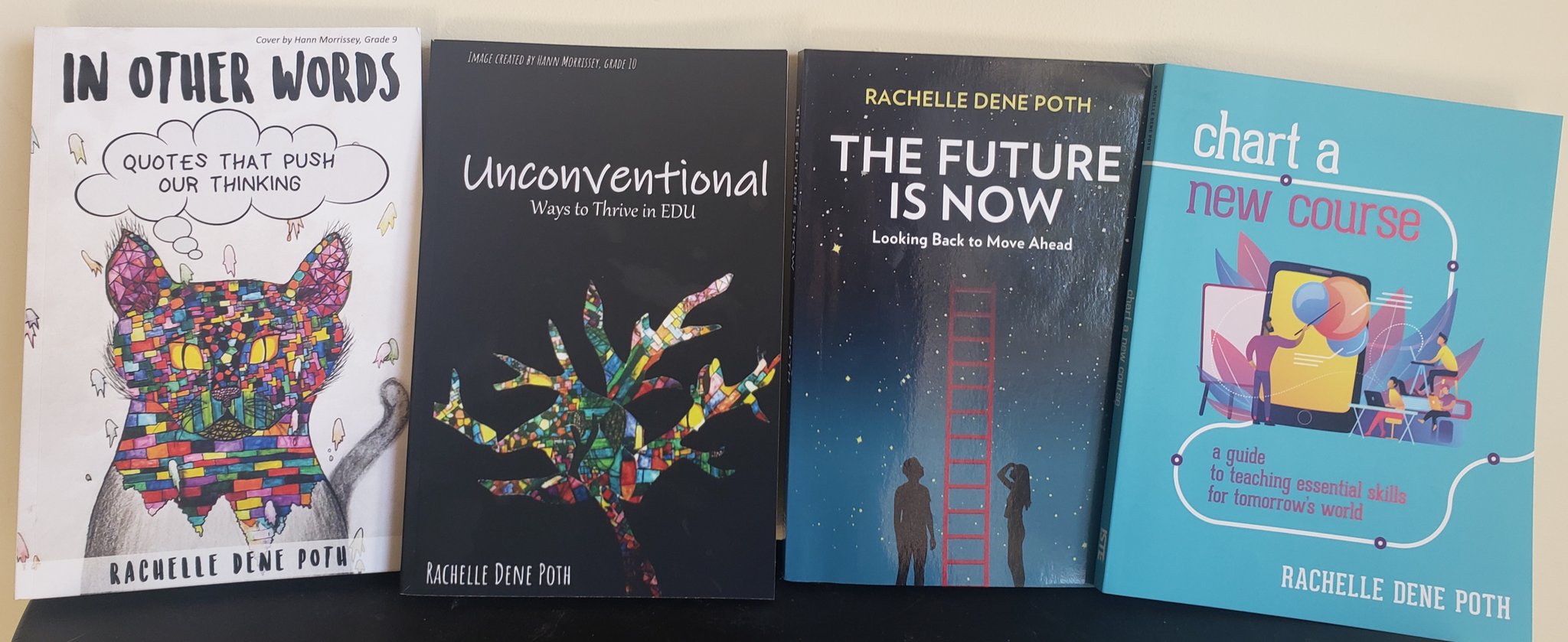
I am a huge fan of quotes, so much so that my first book, “In Other Words, Quotes That Push Our Thinking,” came to be after reading the notes I had taken from reading other books. Much of what I had written was quotes from the author or quotes from others that were included in their books. One of my favorites is from John Dewey. Dewey stated, “We do not learn from experience… we learn from reflecting on experience.” I think about this quote often and it reminds me of how important reflection is for our professional and personal growth.

When should we reflect and how often? With many daily demands in our work, setting aside a specific time can be a challenge. My recommendation is to find a point in your teaching day to take even 5 minutes to think about the lessons you’ve taught, the methods used, the students’ engagement in the lesson, and take some quick notes to refer back to later. Even in small periods of time on a daily basis, these reflections will help us to focus on how to continue to improve our skills. Reflection also helps with our well-being and gives us a moment to pause and recognize the value of our work while also taking time to breathe.

A Few Ideas

I have a lot of notes written from my reflections. I make a list of ideas, things to consider, and tools to explore, and keep it nearby so I can refer to it often and continue to think through everything. I’ve noticed that it has helped me to be more consistent when reflecting on my teaching practice.

1. Set a time for reflection: Consistency is essential. Choose a specific time each day, or a few times during the week or weekend, to reflect. Driving into school, I think about my goals for the day, and driving home, I think about how the day went. Find a time that works best for you and hold it as a non-negotiable for your day.

2. Journaling or Blogging: I’ve had students write in journals over the years after I’ve provided a prompt for the day. Reading their responses also helps me to reflect on my practice at times, depending on the prompts that I have provided. Blogging started for me as a way to not only share ideas, but also to reflect on the methods and tools that I was using. It can be done on paper, in a journal, or using Google Docs or a blogging site.

3. Podcasts: I started podcasting in my classroom on a Monday during my lunch. I decided to talk about what I had done in class, different digital tools, new methods, or whatever random idea that I had on my mind. Every Monday, for two years, I sat down during my lunch break and recorded an episode for my ThriveinEDU podcast. I had a consistent habit and then shifted to recording whenever I had something on my mind, which could have been while at home or while taking a walk. Most episodes over the five seasons have been of me having a conversation with myself. But, there are a lot now where I have guests from all roles in education and also guests from some different companies or areas of work. It has been a great experience and I enjoy learning from everyone and also having new ideas to consider. And even if you don’t actually publish the podcast or your recording, it is a great way to reflect by listening to your thoughts

4. Learning communities: Being part of a learning community whether an organization like ISTE+ASCD, a state organization, Microsoft or Google communities, or ambassador programs, are great ways to learn and lead to reflection. Connecting in these spaces or through social media networks, especially more frequently used now is Slack, make it easier to connect with educators from around the world.

These are just a few ways to build reflection into your practice and also ways to connect and impact other educators too. Reflection is powerful for improvement and staying engaged in our work. Keep making a difference.

About Rachelle

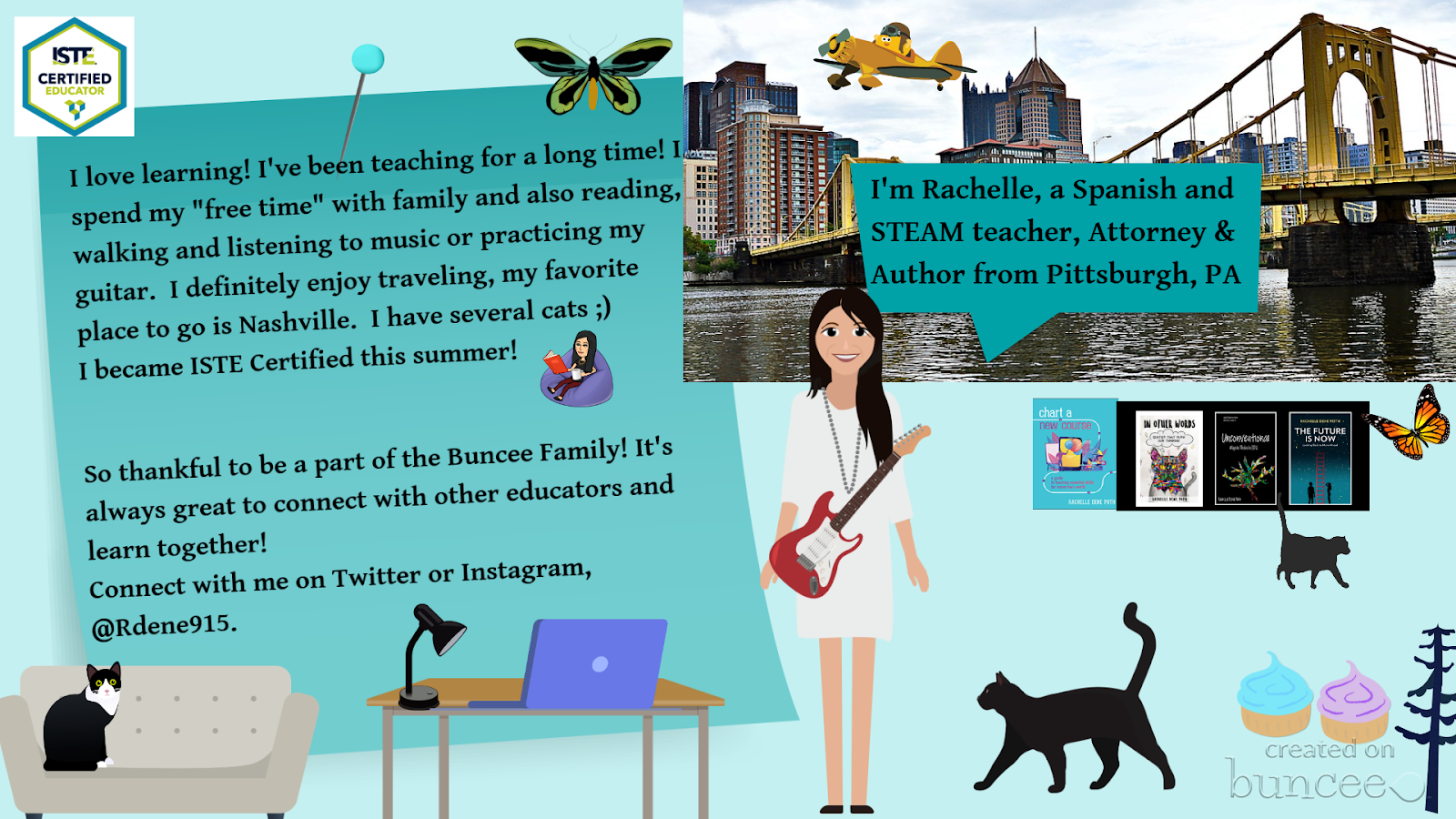
Dr. Rachelle Dené Poth is a Spanish and STEAM: What’s Next in Emerging Technology Teacher at Riverview High School in Oakmont, PA. Rachelle is also an attorney with a Juris Doctor degree from Duquesne University School of Law and a Master’s in Instructional Technology. Rachelle received her Doctorate in Instructional Technology, and her research focus was on AI and Professional Development. In addition to teaching, she is a full-time consultant and works with companies and organizations to provide PD, speaking, and consulting services. Contact Rachelle for your event!

Rachelle is an ISTE-certified educator and community leader who served as president of the ISTE Teacher Education Network. By EdTech Digest, she was named the EdTech Trendsetter of 2024, one of 30 K-12 IT Influencers to follow in 2021, and one of 150 Women Global EdTech Thought Leaders in 2022.

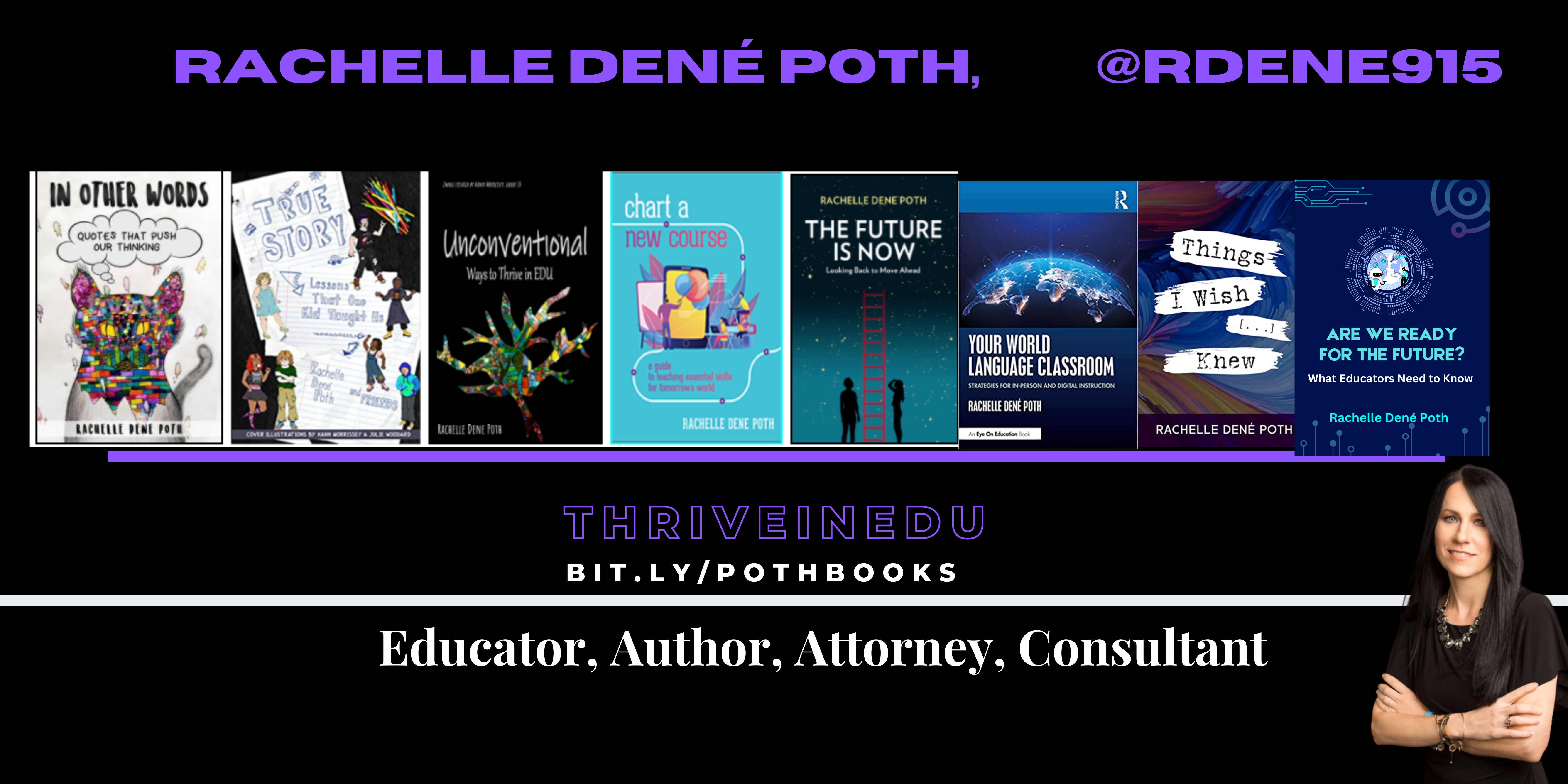
She is the author of ten books, including ‘What The Tech? An Educator’s Guide to AI, AR/VR, the Metaverse and More” and ‘How To Teach AI’. In addition, other books include, “In Other Words: Quotes That Push Our Thinking,” “Unconventional Ways to Thrive in EDU,” “The Future is Now: Looking Back to Move Ahead,” “Chart A New Course: A Guide to Teaching Essential Skills for Tomorrow’s World, “True Story: Lessons That One Kid Taught Us,” “Things I Wish […] Knew” and her newest “How To Teach AI” is available from ISTE or on Amazon.

Contact Rachelle to schedule sessions about Artificial Intelligence, Coding, AR/VR, and more for your school or event! Submit the Contact Form.

Follow Rachelle on Bluesky, Instagram, and X at @Rdene915

**Interested in writing a guest blog for my site? Would love to share your ideas! Submit your post here. Looking for a new book to read? Find these available at bit.ly/Pothbooks

************ Also, check out my THRIVEinEDU Podcast Here!

Join my show on THRIVEinEDU on Facebook. Join the group here.

More Ideas to Try in 2024: Reflection

Part II: Getting students to think about their learning journey

Throughout the year, engaging students in ongoing reflection on what they are learning is essential. One of the five core competencies of social-emotional learning (SEL) is for students to develop self-awareness. It’s also vital for them to build self-management skills to work through challenges that can come with learning, reflect on their growth, and set new goals.

Whether students engage in discussions with classmates or use digital tools to share ideas in a comfortable virtual space, there are many options. We need to get our students to share what they are thinking and take time to reflect on their learning. We also need to model this reflective practice for them. This is essential for academic, personal, and future professional growth. To best prepare students for the future, ongoing reflection is vital.

With an opportunity to reflect, students are able to better understand their thought processes and interests. It helps them to identify areas where they can improve and recognize areas that they are strong in. Creating opportunities for students to share their learning with classmates and with us promotes collaboration, fostering a stronger sense of community in our classrooms. Together, we can create a supportive learning community.

Through the five competencies of SEL, we can help students focus on developing skills of social awareness and building relationships. Students will better understand their own thought processes and deepen their understanding of the content they are learning. However, getting students to share their thoughts and reflect on their learning can be challenging. Here are five ideas for encouraging students to reflect on their learning and share their thoughts.

1.Think-Pair-Share is an activity that doesn’t require much time at all to use and can be very effective. It encourages students to share their ideas, learning experiences, and thoughts with one another. The teacher can provide a short prompt or topic for discussion and then give students time to think individually before pairing up with a partner. Those one-on-one conversations can help students become more comfortable expressing themselves in class. After a certain period of time, each pair can share their thoughts with the class. This strategy will work well without digital tools; however, there are some options to explore.

2. Peer-pairing: To randomly place students in pairs, use a random name generator so students build relationships with their classmates. It is fun to have the names on the big wheel and place students into groups. I have used this also as a way to select the order of presentations. It helps to reduce a bit of the stress with wondering when you have to present and makes it a fun experience.

3. Class sharing: To help students build confidence, use a tool such as Padlet or Flip to have students post ideas on a collaborative board or create audio or video responses. Whatever way we have students “share,” it encourages them to engage in conversation and more active listening. Students learn about different perspectives on a given topic, which promotes the development of social awareness skills.

4. Snorkl is a new AI-powered tool that I found, and I really love the possibilities. Teachers assign an activity and it enables students to record their screen and speak about the work they have done. For example, how they solved a math problem, writing and reading in the language they are learning, describe an image, and so much more. It can be set to provide AI feedback with or without teacher approval. It was fun to try for the first time in my class. Look for more information in an upcoming post.

With the tools that offer audio or video options, it is a more authentic way to learn about the student. Teachers see and hear their students’ thought processes and can then offer more personalized and meaningful feedback to each student.

One extra is for teacher and student reflection. Learning about students’ thoughts about our methods, their comfort in the classroom, and more is important. Last year, I started exploring LessonLoop, which provides anonymous surveys that teachers can issue to students. It provides a rating with explanations based on student engagement, SEL, and comfort in the learning space and provides additional insights. Teachers can then take the information and use it to reflect on their practice and involve students by showing their input is valued through the use of these surveys. LessonLoop also has educators who will prepare some tips for teachers to try!

Whatever method or tools we choose to bring into our classrooms, the goal is still the same: Prepare students for the future with skills that enable them to be flexible and adapt to the changing look of education and work. Reflective practice is a key component of this future preparation!

Author

About the Author:

Rachelle Dené is a Spanish and STEAM: What’s Next in Emerging Technology Teacher at Riverview High School in Oakmont, PA. Rachelle is also an attorney with a Juris Doctor degree from Duquesne University School of Law and a Master’s in Instructional Technology. Rachelle is an ISTE-certified educator and community leader and served as president of the ISTE Teacher Education Network. She was named one of 30 12 IT Influencers to follow in 2021 and one of 150 Women Global EdTech Thought Leaders in 2022.

She is the author of eight books including ‘In Other Words: Quotes That Push Our Thinking,” “Unconventional Ways to Thrive in EDU,” “The Future is Now: Looking Back to Move Ahead,” “Chart A New Course: A Guide to Teaching Essential Skills for Tomorrow’s World, “True Story: Lessons That One Kid Taught Us,” and her newest book “Things I Wish […] Knew” is now available at bit.ly/thingsiwishedu.

Contact Rachelle to schedule sessions about Artificial Intelligence, Coding, AR/VR, and more for your school or your event! Submit the Contact Form.

Follow Rachelle on Twitter(X) and Instagram at @Rdene915

**Interested in writing a guest blog for my site? Would love to share your ideas! Submit your post here. Looking for a new book to read? Find these available at bit.ly/Pothbooks

************ Also check out my THRIVEinEDU Podcast Here!

Join my show on THRIVEinEDU on Facebook. Join the group here

How to Boost Student Engagement

During the fall, educators may notice a decrease in student engagement and also, that students are not retaining the content as well. With a few ideas to explore that get students more involved, we can hopefully also spark interest and excitement for learning to help students value the process of learning itself.

I always say that the beginning of the school year and throughout the fall are great times to try something new. To best provide for all students, opportunities that empower them to set their pace for learning, to choose areas of interest or the “how” to show learning, and to collaborate with classmates, make a difference. They will invest more in learning and become more curious.

So what are some ways that educators can do this? By choosing versatile methods that are not specific to the content area whether through choice boards or class playlists, STEM-related learning opportunities, or diving into PBL, we can help students in many ways. With these options, we can build content knowledge while also developing SEL skills to prepare students for the future and boost engagement in learning.

Boosting Engagement and Curiosity

When we create learning experiences that will more meaningfully engage students with the content, while also aiming to move them from being simply consumers to creators, it increases their interest and amplifies student achievement.

When students have the opportunity to provide input into the lesson brainstorm ideas and plan with us will also boost engagement and build a learning community in our classrooms.

As educators, it is important to continue to reflect on our practice and make time to learn about student interests so that we can better provide for them. With a variety of ways for students to show what they have learned, we will foster student agency, boost engagement, and increase student motivation in learning. Here are some ideas to explore:

  • Choice boards are a great way to include a variety of options for students to explore and practice the content in a meaningful and authentic way. It also helps teachers to differentiate instruction by providing students with multiple ways to process information and build their knowledge. A choice board can be created on paper or digitally.
  • Creativity tools: Buncee is a great option for multimedia presentations and interactive lessons. Another benefit is it offers Immersive Reader which promotes language accessibility for students and there are so many options to choose from for creating a visually engaging presentation! Another choice is Book Creator is a multimedia creativity tool to create books that can include audio, video, text, and images, and more. It also has features such as captions, translation in 120+ languages, and improved screen readers. Students can also collaborate on a book with a partner or as part of a class. Genially is a versatile option that can be used to create presentations or even make a class website, choice boards, newsletters, escape rooms, storybooks, and more.
  • Game-based learning: Students enjoy playing a variety of games whether traditional games, ones they make up, or participating in the many digital options available. These are great for teachers to gather feedback and be able to provide additional support for students. Some of our favorites include Blooket, Gimkit, Kahoot!, Quizizz, and Quizlet Live!
  • Interactive lessons: Formative has been a great option in my classroom for many years. It has a variety of options for students to complete quick activities or assessments or do a self-paced lesson. It helps teachers to track student progress, better understand the questions that students might have, and use it as a way to reflect on their own teaching practice.
  • Fun activities: Skribbl.io is a fun drawing game that I used in my Spanish classes and added my own list of vocabulary words. Students then have a code to join the game and then try to guess the word as it is drawn. Gimkit has a similar feature. Another favorite is Bingo Baker where you can generate bingo cards and print unique cards or have students use their devices. Bingo is always a fun way to review vocabulary and content!
  • Student input: Learning from students about their interests and gathering feedback is important. I have used LessonLoop, which enables educators to share anonymous student engagement surveys to gather feedback from students. The students’ responses help educators guide their next steps and better plan for instruction by valuing the input of every student.
  • STEM activities and problem-solving: Engaging students in STEM activities doesn’t need to only happen in a STEM-specific course or grade level. My students used Hummingbird robots from Birdbrain Technologies to create design challenges. CoSpacesEDU is an augmented and virtual reality platform that can be used with any grade level or content area. There are some easy-to-try STEM challenges that help students to build many essential skills. I recommend trying the Cup Tower Challenge, and the Straw Challenge. I recently learned about ImaginGO which is an instructional software that spurs creative and imaginative thinking. It engages students to invest and incorporate their own innovative ideas to solve complex problems and gets students up and moving more!

As teachers wrap up the content material or look for ways to review, perhaps for final exams in some courses or simply to take a break and try something different, these ideas have worked well to boost engagement in my classroom. And because these tools are not specific to one area of focus or grade level, hopefully, they provide new ideas for the end of the year that will lead to more meaningful and engaging learning experiences for all students!

Another key part of these types of activities or leveraging these tools is that they also help students to develop social-emotional learning (SEL) skills and promote more active learning. Students will enjoy and become excited about the learning process.

Continue exploring ways to create unique, authentic, and meaningful opportunities for students. Start class with a fun hook, try a new method, do something completely unconventional from what you might normally do or just ask students for their ideas. By cultivating a learning environment where students feel valued, it will have a positive impact on student learning and foster the development of many essential skills.

Taking risks with new methods is a great model to set for students and will better equip students with the essential skills that they will need moving forward.

About the Author

Rachelle Dené Poth is a Spanish and STEAM Educator at Riverview High School in Oakmont, PA. She is also an Attorney, Edtech Consultant, Speaker, and the Author of eight books about education and edtech. Rachelle is available to provide PD on Artificial Intelligence, Augmented and Virtual Reality, Coding, SEL and STEM. 

Contact Rachelle to schedule sessions for your school about Artificial Intelligence, Coding, AR/VR, and more!

Follow her on Twitter and Instagram at @Rdene915

**Interested in writing a guest blog for my site? Would love to share your ideas! Submit your post here. Looking for a new book to read? Find these available at bit.ly/Pothbooks

************ Also check out my THRIVEinEDU Podcast Here!

Join my show on THRIVEinEDU on Facebook. Join the group here

Creating Culturally Responsive Environments

Guest post by Eva Cwynar

I want you to think about the last time you watched a movie where the main character looked like you, lived in a community like yours, or came from a similar background/culture. How often do you come across stories or texts where one or more of these characteristics are present? For some, the answers to these questions are that it happens all the time. For others, the answer may be rarely, if ever. Now imagine that you are a student in a school where the history that you learn is not the history of the culture that your family comes from, the scientists and mathematicians that you learn about don’t look like you or come from similar backgrounds, the literature that you read, music you hear in band, or sports that you play in PE don’t reflect your experiences or heritage. How do you think this would make you feel? This is a reality for many students that walk our halls and form our school community and this is why culturally responsive teaching is so important!

Culturally responsive teaching validates and affirms the culture of students in our schools/classrooms and incorporates that culture in meaningful ways in both the learning and the environment. It’s not enough to simply make mention of a race or culture or to change the names in a word problem so that they’re “ethnically diverse”, CRT is about leveraging and growing students’ existing funds of knowledge by connecting to diverse personal experiences. The following examples are simple ways to develop culturally responsive environments in your classroom:

  1. Connect learning to background knowledge – Take the time to learn more about your students’ homes, community, and interests. Parent & family surveys are a perfect way to learn about your students and their backgrounds. Think about providing the survey in multiple languages and in multiple formats so that it is accessible in multiple formats. Once you have this information, USE IT! Don’t just file it away in their student folder…incorporate these gems into the learning environment.
    • Create a library of non-fiction texts that focus on student interests and make them available in different languages that represent the home languages of your students.
    • Create a “Netflix” playlist full of documentaries showcasing diverse people, cultures, and countries, historical events from around the world, nature shows that highlight plants, animals, and natural phenomenon in different continents.
    • Bring the community into the classroom – connect social studies concepts to neighborhood events and/or landmarks, explore science concepts taking place in their backyards or local parks, engage in learning walks to identify geometric shapes in architecture.
    • Play music during transition periods that reflects students’ heritage or favorite genres.
  2. Encourage cognitive routines that foster critical conversations- Ask students to think critically about the relationships and connections between concepts or phenomenon.
    • Have your students engage in word play that’s both cognitively demanding yet fun. Taboo and Scrabble are great ways to build vocabulary about concepts students are learning while simultaneously repositioning the student as a leader in the learning by developing student agency. You may choose to have students do this by sharing the vocabulary terms in different languages, by having them define the term used in their own words, or by connecting the terms to something that they have experienced in their life.
    • Engage students in literature analysis by comparing the central idea of traditional texts in ELA and Social Studies to popular music and poetry (there is a library of songs as well as other resources that can support this type of learning at Get Free Hip Hop Civics Ed).
    • Provide texts that share diverse viewpoints and experiences to spur discussion about socially relevant topics that effect our community. These texts should provide avenues for students to think critically about current and past events in a classroom environment that provides a safe forum to share sensitive and thought-provoking concepts.

A critically important aspect of culturally responsive teaching is that these experiences, methods, and strategies do not become a single activity that you check off a to-do list once a trimester…these practices should become routine and be practiced over and over again throughout the school year and across the campus. A culturally responsive environment acknowledges that everyone brings something to the learning table and that everyone’s voice and experiences are incredibly valuable.

***********************

**Interested in writing a guest blog for my site? Would love to share your ideas! Submit your post here.

Looking for a new book to read? Many stories from educators, two student chapters, and a student-designed cover for In Other Words.

Find these available at bit.ly/Pothbooks  

JabuMind for Teacher Self-Care

Guest post by Erin Swanson, M.Ed,  JabuMind

Teachers are in crisis, suffering from compassion fatigue and burnout at an alarming rate. Tasked with adapting to the pandemic, protecting their students from school shootings, teaching to high-stakes state tests, juggling crushing workloads, working overtime for little pay, responding to their students’ trauma, and more—teachers need our help.

The JabuMind self-care app for teachers is here to help. JabuMind was designed by a group of teachers, coaches, artists, school principals, and mental health clinicians. We share a common goal of creating a safer, stronger, and more supportive classroom experience for both teachers and students. Our mission is to support teachers in their own social and emotional growth so that they, in turn, can help their students and school communities.

Why Teachers Need Self-Care

Teachers are overworked and overwhelmed. No doubt about it, teaching is one of the most stressful professions. An analysis by the National Foundation for Educational Research revealed that “one in five teachers (20 percent) feel tense about their job most or all of the time, compared to 13 percent of similar professionals.” In addition, The American Federation of Teachers found that “78% of teachers reported feeling physically and emotionally exhausted at the end of the day.”

Let’s not forget the additional weight placed on teachers during the pandemic. A March 2020 survey from Yale and the Collaborative for Academic, Social, and Emotional Learning (CASEL) showed that teachers’ top emotions regarding teaching during COVID included fearful, worried, overwhelmed, and sad.

One of teachers’ main stressors is compassion fatigue. Compassion fatigue is the experience of emotional and physical fatigue due to the chronic use of empathy. It is often used interchangeably with the terms secondary trauma and vicarious trauma.

As teachers, we care deeply for our students. When our students face trauma, we feel the weight of heartbreak, fear, uncertainty, and responsibility as their caretakers. Distraught over how to support a traumatized child, we might start experiencing the symptoms of compassion fatigue—anxiety, difficulty sleeping, exhaustion, hypervigilance, decreased motivation, trouble separating work from personal life, increased cynicism, or a sense of hopelessness.

Suffering from compassion fatigue is among the top reasons teachers leave the profession. No longer able to handle the pressure and heartbreak, they experience burnout. “Burnout is a state of emotional, physical, and mental exhaustion caused by excessive and prolonged stress. The negative effects of burnout spill over into every area of life—including your home, work, and social life. Burnout can also cause long-term changes to your body that make you vulnerable to illnesses like colds and flu.”

The Solution? Mindfulness

Fortunately, there is an antidote to the struggles teachers face. Research shows that teachers who participated in a mindfulness course had reductions in burnout and increases in self-compassion. Additional research proved that teachers who followed a mindfulness program developed resilience to stress and nonreactivity by practicing mindful awareness.

Even more, a study on mindfulness intervention and workplace productivity showed that mindfulness produced “increases in team and organizational climate and personal performance.” Meditation, in particular, activates the part of the brain associated with more adaptive responses to stressful and negative events.

JabuMind Brings Teachers Mindfulness and Self-Care

The JabuMind self-care app for teachers uses the iRest® method to support teacher self-care. Co-Founder of JabuMind, Jill Apperson Manly, explains why JabuMind chose the iRest® method of meditation for its app in this interview. We explain the 10 tools of iRest® and their connection to teacher wellness here.

Research shows that iRest® promotes better sleep, decreases stress, alleviates symptoms of PTSD, and enhances quality of life for school counselors.

The JabuMind app offers guided meditations, daily sleep and mood check ins, and professional development designed to meet teachers’ stressors. All premium app content is free through the pandemic to support teachers during this difficult time.

Jabu2Learn more about how the JabuMind app can support your self-care in these articles:
You might also enjoy our other resources to support teachers, such as:

Teachers—you, more than anyone, deserve self-care. In a career that asks you to be selfless, be the one to prove that self-care leads to better care for everyone.

**Interested in writing a guest blog for my site? Would love to share your ideas! Submit your post here.

Looking for a new book to read? Many stories from educators, two student chapters, and a student-designed cover for In Other Words.

Find these available at bit.ly/Pothbooks  

4 Ways To Rebuild Our Students’ Emotional Health

Guest post by Monica Gupta Mehta @emotionalMUSE

Across the country, millions of teachers are preparing for what will be the hardest year of teaching in modern history. Educators are dealing with stress, anxiety and fear from unrealistic public expectations and rapidly changing plans. While we work diligently to perfect our Zoom skills and transform curriculum into distance learning content, the nagging thought on almost every teacher’s mind is an entirely different one; a looming problem of epidemic proportions. Our country is entering one of the biggest mental health crises we have faced in decades.

Once we tackle the logistics of where our children will physically be as the school doors “open,” our gears will have to quickly shift to where they are at emotionally, and how to best support them.

Like many teachers, some of my favorite work hours are spent learning from my PLC on social media. These days, our conversations center on how to include more social emotional learning (SEL), including diversity and inclusivity curriculum. However, with so much going on in the intersection of education, politics and public health, teachers are finding themselves with a Herculean labor to perform. Teachers are busy either preparing their classrooms for in-person learning to comply with ever-changing guidelines (often without adequate funds); or transforming their entire curriculum into a virtual learning format…or both. This leaves little time for SEL efforts, which often fall to the back burner despite our best intentions.

Many teachers know the benefits of investing time on social and emotional learning. CASEL, the Collaborative for Academic, Social and Emotional Learning, has collected decades of research showing the impact of SEL education. Focusing on social emotional learning leads to better academic outcomes, such as better test performance and higher graduation rates, as well as reducing behavioral issues and improving mental health. So how do we create a safe, nurturing, relationship-based environment for students when we have so little time to invest in it? One answer is to use “SEL Hacks” from the MUSE Framework for Social Emotional Learning.

SEL Hacks are stand-alone curricular components that can be easily incorporated into the classroom with minimal effort. Start by choosing just a few of these to add on for the start of this school year. As each component becomes ingrained in your curriculum, visit the MUSE website to find new ideas and learning units. SEL Skill Set #1: Modeling Behaviors

Developmental psychologist Lev Vygotsky calls this concept ‘apprenticeship.’ The incredible learning that happens through apprenticeship starts very young, in the home, and continues with teacher scaffolding throughout the school years. We model emotional health for students by prioritizing our physiological and psychological well-being. We ALL must ‘Maslow’ before we can effectively ‘Bloom.’

Start by spending the first week of school sending this message loud and clear. Introduce your students to virtual tools they can use to learn and practice SEL skills, and dedicate at least 30 minutes per day to the explicit teaching and practice of social emotional learning. For example, here is a feelings board that was created using padlet. Tell students to identify which emotion(s) they are feeling each morning, and make sure you include your own name as well.

Having a feelings board shows students they are not alone in feeling such turbulent emotions. It also increases student awareness of their own resiliency as they notice their moods shift back to the positive, which can help increase optimism. Lastly, this gives you the opportunity to quietly note which students seem to be struggling more frequently. You could follow up one-on-one with these students by having private chats, phone calls home, or using apps like Seesaw that allow you to communicate with your students individually. Another great ‘first week of school’ activity is to discuss a set of classroom rules or community standards. The emphasis you place on this discussion will help you set up a safe learning environment for the school year.

Allow students plenty of opportunities to feel heard each day. Keep your lectures to a minimum and allow for group games, break out rooms, and one-on-ones. One way to accomplish this is to record your lessons for students to watch asynchronously, so that more of your synchronous learning time is spent connecting with one another and practicing their learning. Motivation theory says that allowing students to use their voice, and additionally allowing them to make choices in their learning, increases engagement.

One model example of student choice is Genius Hour, inspired by Google’s policy of allowing employees to spend 20% of their time on side passion projects. During Genius Hour, students are allowed to pursue their own educational learning objectives. SEL Skill Set #2: Understanding Emotions The Feelings Board, shown above, is one way to help students to label their emotions, which is one of the first steps in building self awareness skills. You can also add mindful moments into your students’ days. Mindful moments allow your students to check in with their emotions and their body throughout the day, an important step towards building emotional regulation skills.

Another useful time in the day for a quick check-in is just before class ends. Exit slips can be used as a simple tool for seeing how students are feeling about class, or just in general. Exit slips can also be a useful formative assessment tool for teachers, allowing insight into whether or not each student is understanding the concepts being taught.

The most important part of helping students understand themselves and their emotions is to give them plenty of opportunities to speak up and connect. “Be willing to have personal, empathetic, authentic conversation,” says fellow educator Traci Browder. SEL Skill Set #3: Social Skills

While it may seem as though socialization and the teaching of social skills has necessarily hit the pause button, there are still ways to teach these crucial life skills. If your district is doing distance learning, one practical way to start off the school year is to have a conversation about virtual classroom etiquette. Here is an infographic you are welcome to use:

Teach children to show respectfulness and kindness to their peers, even via video conference. This means using non-disruptive signals, being on time and prepared as they would be to a normal class session, and respecting each others’ privacy. If you are teaching in-person, these masks that allow students to see your facial expressions will help greatly with creating connection. Practice greetings by the door, if possible, though without the hugs and fist bumps. Make mornings fun and relationship building — for example, you could ask students to do a little dance move that you mimic as they come through the door.

If you are teaching virtually, smile and greet each student every morning by name. Ask attendance questions to get students sharing and connecting right from the start of class. Having morning meetings is just as important now, if not more important than ever. Visit Responsive Classrooms for inspiration for morning meetings.

Not all of your time on video calls needs to be academic learning. Spend some time allowing students to share, getting involved in random discussions, telling jokes, and discussing feelings — just like you would in a regular classroom environment. Create break out rooms and pair students with random “recess buddies” — you could allow them to play digital games together, or interview one another. Another idea for building relationships is to create virtual ‘dialogue journals.’ You could create a journal to write back and forth with each student, and also create journals for students to dialogue with their peers, taking turns in rotation. You can include a combination of SEL topics as well as academic check-ins in your journaling prompts.

Teach students how to treat each other kindly by encouraging appreciation.

You can build student communication and conflict resolution skills by teaching “I Statements.” I statements are scripted conversations that follow this format:

I feel… because… I need…

While this format often feels stuffy and unnatural at first, with practice you may find students attempting to use a more relaxed version on their own. For example, “I feel overwhelmed by the constant changes in expectations for teachers, and I need the administration to pick one course and stick with it for at least one solid month.” SEL Skill Set #4: Emotional Regulation

Emotional regulation has been a struggle for many people lately, not only for children. Mental and emotional health issues are rapidly rising, and often result in behavioral issues. One of the most important skills you can give your students is the ability to manage their responses to their emotions.

The MUSE website has a virtual curriculum called ‘Piloting Your Plane,’ geared at early elementary age students. This curriculum uses the analogy that our bodies are like planes and we are the pilots. Our responsibility is to fly our plane smoothly without crashing. In order to do so, children learn to check their control centers throughout the day, including their emotional thermometer and hunger/thirst gauges. The curriculum comes with plenty of ready-to-use activities that could be easily integrated into virtual or in-person classrooms, creating a wonderfully playful and highly effective common language.

Teaching ‘growth mindset’ can also help students with emotional regulation. The concept of growth mindset helps students to normalize mistakes, treating them as part of the learning process rather than as a sign that they are incapable of learning.

Having calm down kits and either in-person or virtual calm down centers is very helpful for students who need to take breaks in order to remain regulated. Storyline offers a wonderful online library of books read aloud by celebrities, with beautiful animated graphics to go with them. Set up your own virtual calm down center, and teach students how to use it when they are in need of a break.

While we will continue to see the effects of this pandemic on our children for years to come, incorporating the MUSE framework into your classroom will help you begin to rebuild your students’ emotional health.

For more tips on how to help your students (and yourself) during this chaotic time, please follow me. I am working fast to upload hundreds of units of SEL curriculum for all ages to my new site, EmotionalMUSE, and will send out updates as new units become available.

****************

**Interested in writing a guest blog for my site? Would love to share your ideas! Submit your post here.

Looking for a new book to read? Many stories from educators, two student chapters, and a student-designed cover for In Other Words.

Find these available at bit.ly/Pothbooks  

************ Also check out my THRIVEinEDU Podcast Here!

Join my weekly show on Wednesdays at 4pm EST on Learningrevolution.com THRIVEinEDU  Join the group here

Buncee for engaging learning opportunities!

We are a few weeks into the new school year and for many educators, it has been an interesting start to the year. Whether in physical classroom spaces or in a hybrid or distance learning environment, our focus at the start of the year is on building relationships and engaging students in learning. The challenge this year for many is  creating the right spaces to build those relationships when we are not together in our physical classrooms.  Buncee provides so many possibilities for doing just this.

Introductions

I can create with Buncee and engage my students in opportunities to not only create and engage more in learning, but provide a way that they can feel connected to each other if we cannot be together in the same physical space.  A great place to start is exploring the Ideas Lab. There are great templates available to choose from that work well for the beginning of the year and a back to school theme, or for some ice breakers to build relationships that are so important. 

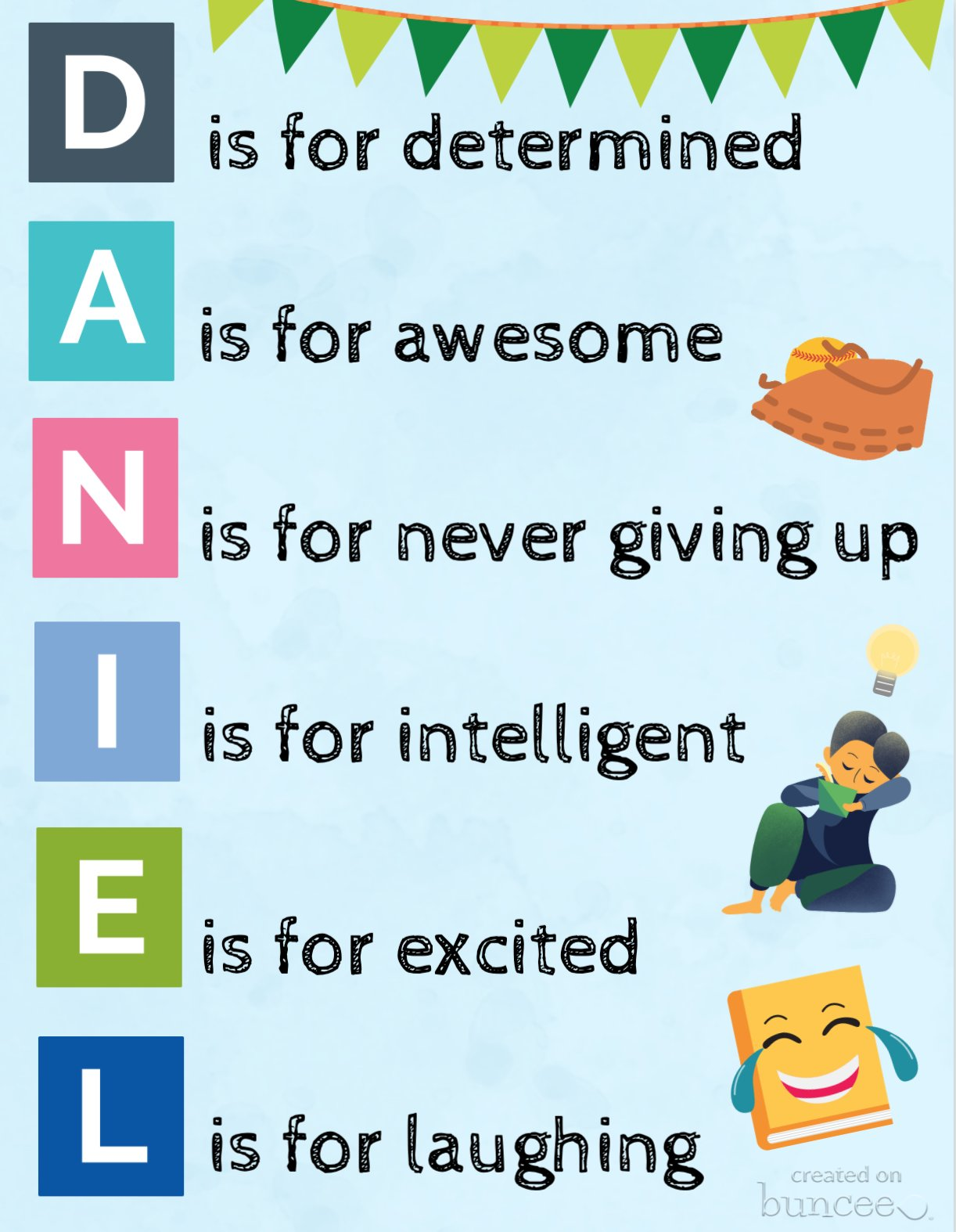
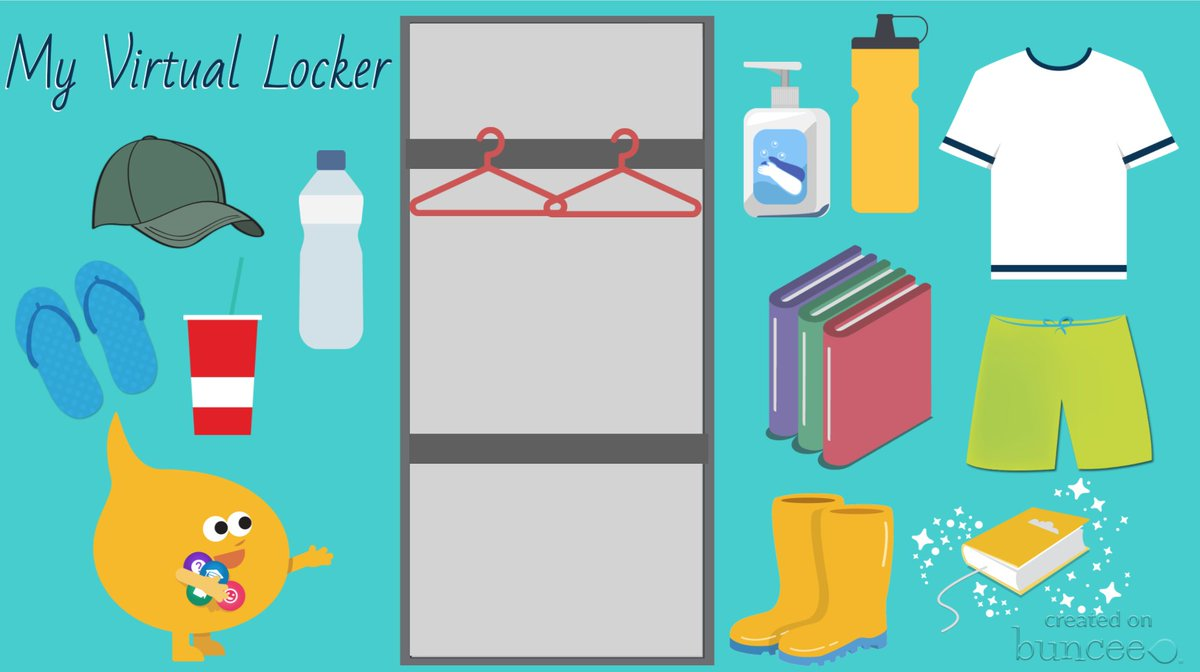
Check out some of these recent additions to Buncee templates for having students express themselves by creating an acrostic poem or a virtual locker.  These are great options to have students create a Buncee to introduce themselves to their teacher and to their classmates!

(this one was shared by Buncee)

(drag and drop items into your virtual locker)

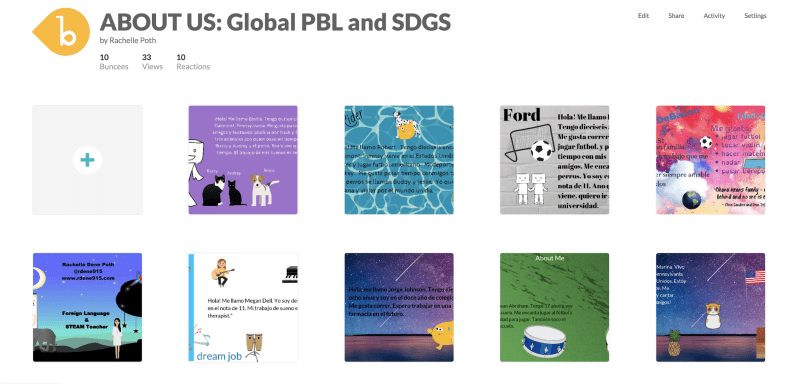
Using Microsoft Teams or Google Classroom, it makes it really easy to share these with students. For global collaboration, create a Buncee board to post all of the amazing student creations. With project-based learning, my students have been able to connect with students in Argentina and Spain and share a little bit about their experiences as students and what life is like here in the United States.  With all the options available for creating within Buncee, it’s fun for students to be able to create something that represents who they are and even to have the option to include audio or video to really get to know each other.  Being able to collaborate like this is quite valuable regardless of where learning is happening but definitely beneficial as many schools are working with hybrid and distance learning. It helps students to feel more connected to their classmates and their teachers and also to be able to connect on a global scale which is important for all students. 

Teach a Lesson

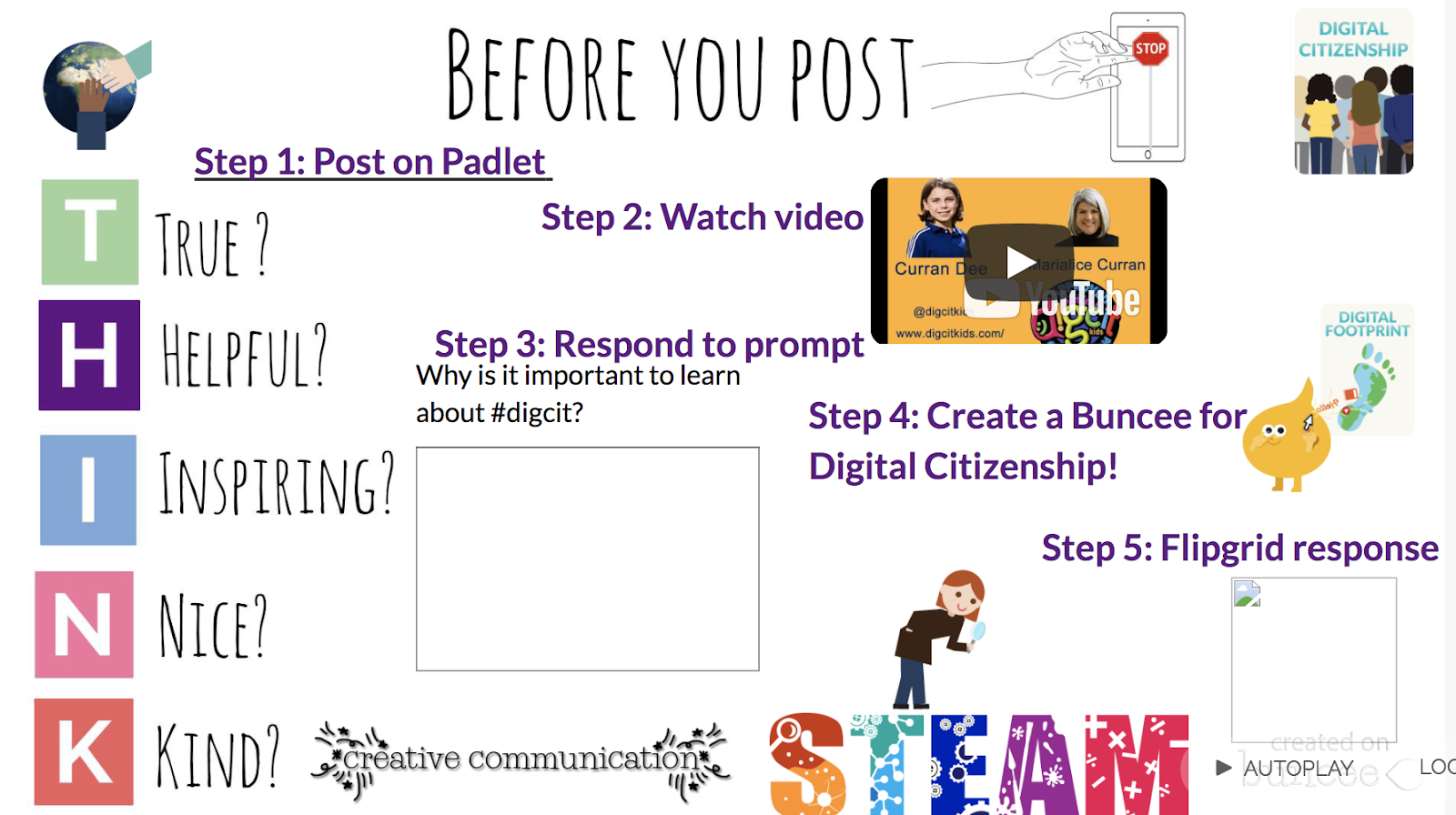
One of my favorite ways to use Buncee is to create lessons to share with my students. One of the first ones that I did was to teach about digital citizenship and it was easy to create something using all of the different options available within the media library and to give students an opportunity then create their own buncee to share what they had learned. 

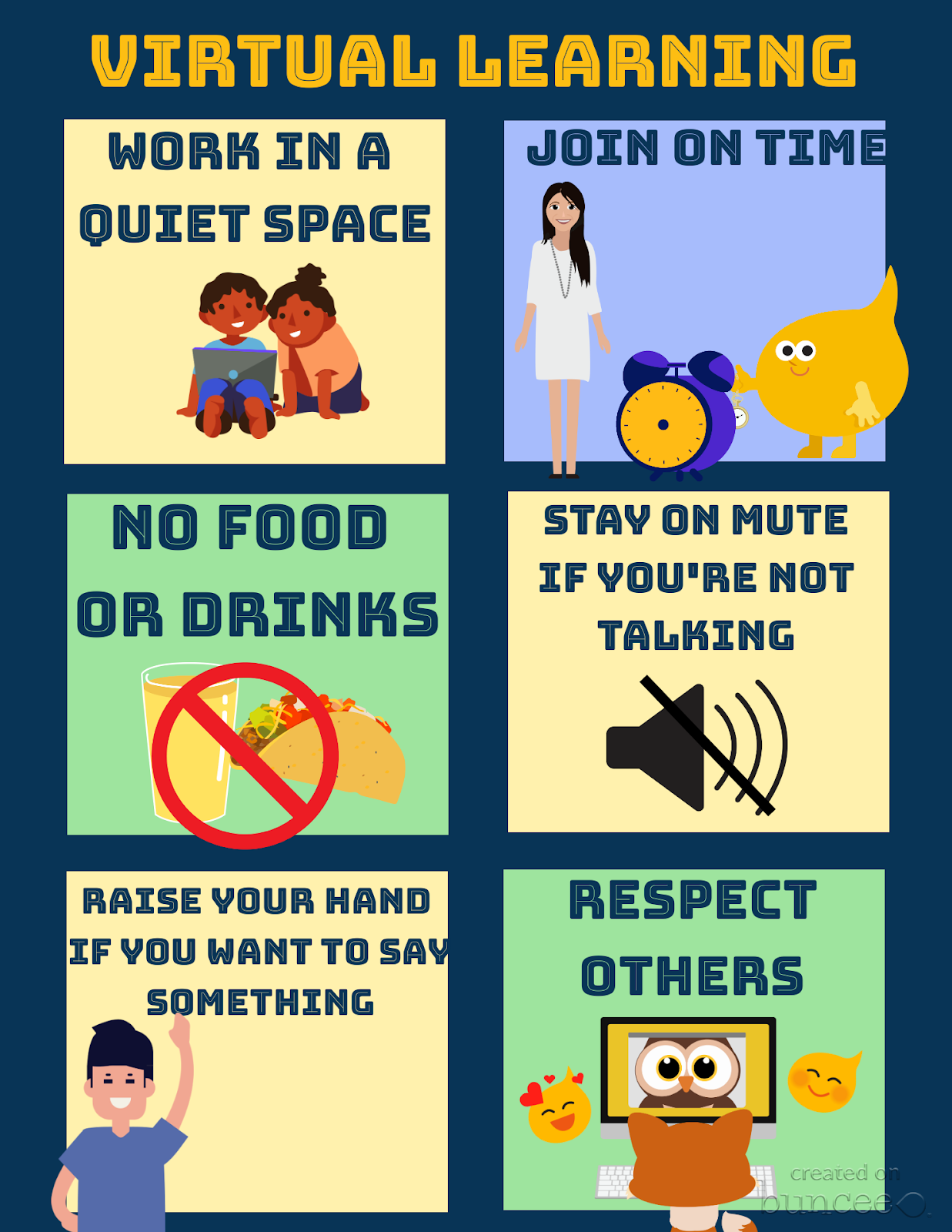
Set up class expectations for virtual learning

Explore the templates and create something like this fast and make it your own by selecting from the more than 35,000 choices available in the media library! 

Ready-made templates and new topics

Something else that I’ve always loved about using Buncee is that it integrates with other tools that we use in my classroom. With this new partnership with Flipgrid,  there are even more ways to use these tools together to provide more opportunities for students to build essential skills. You can find pre-made Buncee templates available in the discovery library focused on topics like social emotional learning, goal-setting and schedulers and organizers.  Check out all of the choices today!

One of the things I love the most about using Buncee is that there is always support available. Whether you connect with the Buncee team through the different social media platforms, or make connections with educators from around the world through Twitter or Facebook, there are so many ways to learn and grow as educators. And even more importantly,  to bring new opportunities to our students. If you need some quick resources on different topics, check out all of the many options available at their Buncee help desk.

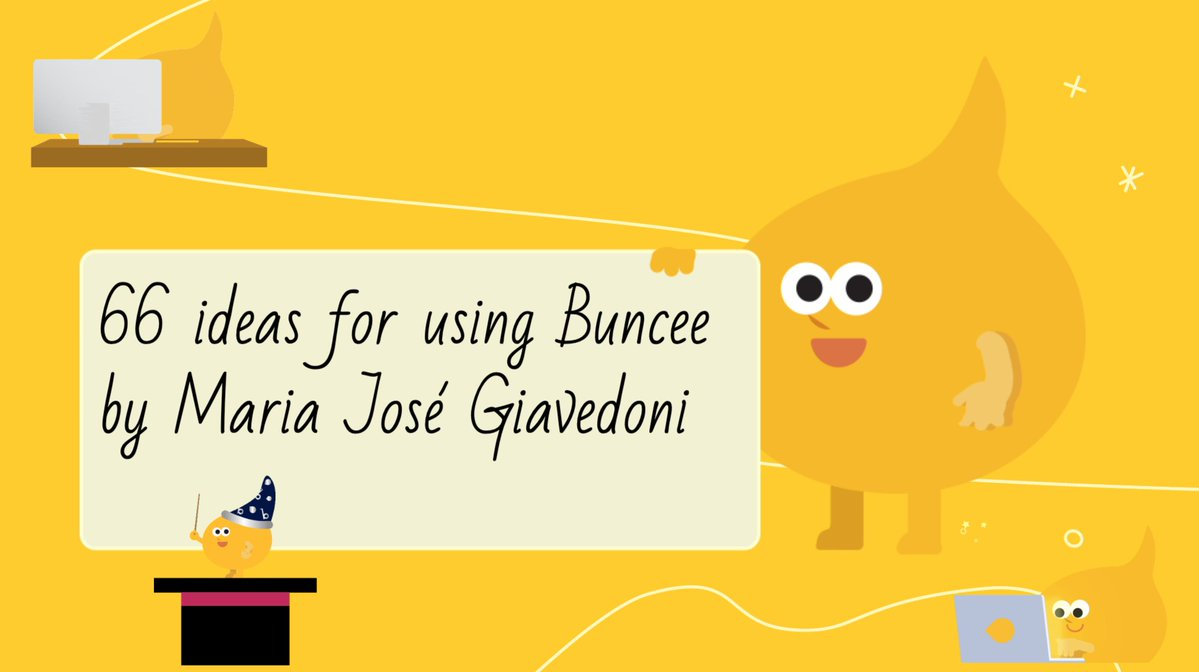
Looking for more ideas?  See what the Buncee Ambassadors are up to! Explore the 66 ideas for using Buncee from Maria Jose Giavedoni.  Did you catch the Creative Beginnings event at the beginning of August? Three days of sessions and so many topics and ideas.  Catch the recordings here.

Coming up:

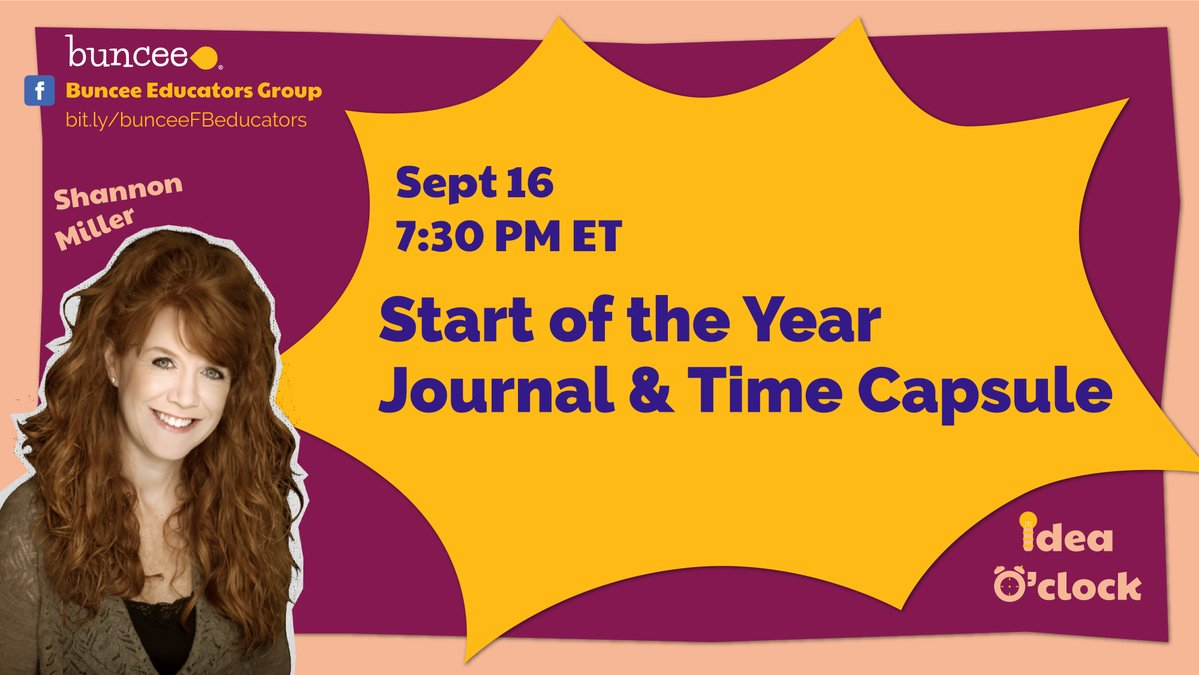
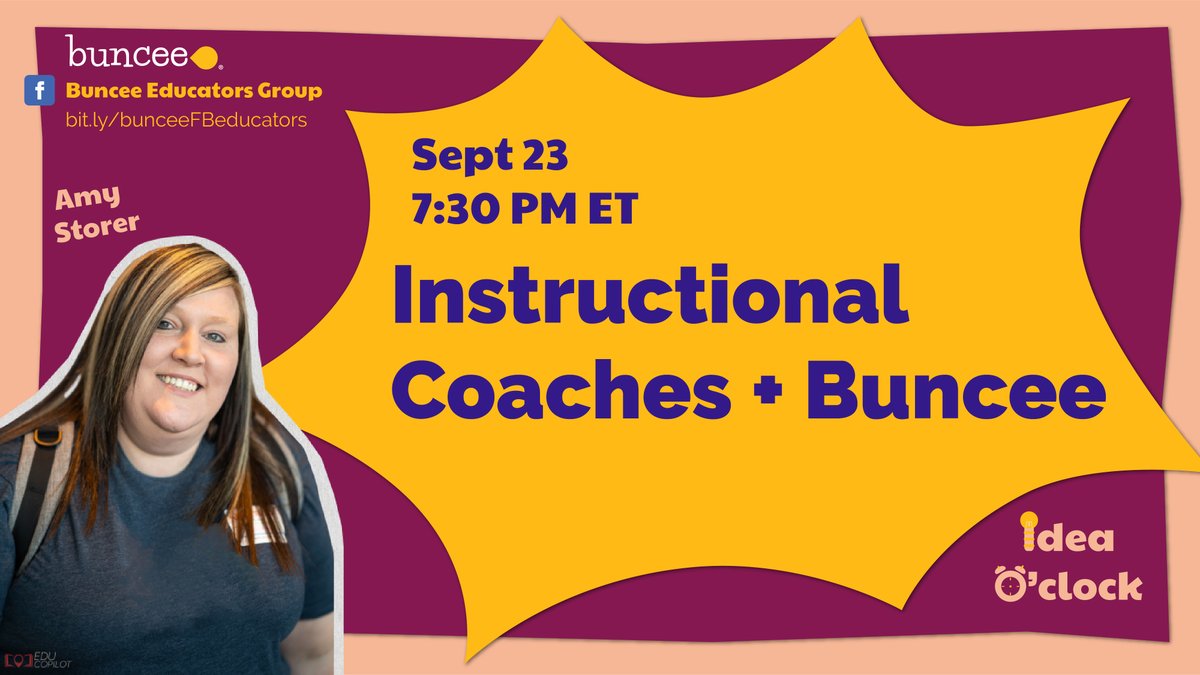
Don’t miss out on the new idea o’clock with Buncee starting September 16th happening live on Facebook at 7:30 p.m. Eastern.  First up was Shannon Miller and Amy Storer is on the 23rd! Be sure to tune in to learn new ideas from Buncee educators!

Image

Find more in the Back to School Resources Kit

Check out the videos available here.

**Interested in writing a guest blog for my site? Would love to share your ideas! Submit your post here.

Looking for a new book to read? Many stories from educators, two student chapters, and a student-designed cover for In Other Words.

Find these available at bit.ly/Pothbooks  

 Also check out my THRIVEinEDU Podcast Here!

Join my weekly show on Wednesdays at 4pm EST on Learningrevolution.com THRIVEinEDU  Join the group here

Guest Post: SEL

This post was written by the Eduporium team, Andy Larmand and Laura Kennedy.  Opinions/products mentioned are from Eduporium. This is not sponsored content.

As many teachers know, the upcoming school year is going to be challenging from an academic, mental, and emotional standpoint. Thankfully, there is a reliable form of pedagogy that can benefit both teachers and students as they return to school whether it’s in person, through remote learning, or as part of a hybrid model. For school leaders who see creating new relationships with students and making them feel comfortable after their worlds were flipped upside down in the spring as a top priority, social-emotional learning is going to be crucial.

Screen Shot 2020-08-19 at 10.59.33 AM

While a teacher, I was introduced to social and emotional learning, which is more commonly known as SEL. This pedagogy is one that I found to be extremely important while educating diverse sets of students – even in the pre-pandemic days. In the classroom, students learn different intellectual skills, but much of that learning is affected by their social and emotional characteristics.

As leaders plan a safe return to school, many of them have already considered the mental states their students and teachers might be in and the fact that some of them may have been through trauma while in isolation. In order for them to return to the regular academic experiences they had before schools closed, their mental states will first need to be addressed.

SEL helps students focus on acquiring and effectively applying the knowledge, attitudes, and skills necessary to understand and manage emotions, set and achieve positive goals, feel and show empathy, establish and maintain positive relationships, and make responsible decisions. As unfortunate as it is, many students may need to start developing these characteristics from at or near the beginning when they return to school.

To that end, the five main categories of social and emotional learning are:

  1.   Self-Awareness
  2.   Self-Management
  3.   Social Awareness
  4.   Relationship Skills
  5.   Responsible Decision Making

Realist educators know it will be tough for students to simply slide back into their classroom routines. There is a unique complexity to every student and just being in the same classroom does not mean they’re all in the same place emotionally. It may even be one of the first times some of them have been outside their home. It’s impossible for teachers to generalize them since each student is going to come back to school having gone through something different.

To help my students grow and learn, I truly needed to understand them and I feel this is going to be huge once the year begins. Setting aside some time blocks in the first couple weeks can be instrumental in understanding each student’s state of mind and how both SEL and academic instruction should be presented to them. The actions we see on the surface are not always indicative of the whole story.

Was one student not participating in remote learning because he or she had no desire to do so, or was it because of an accessibility issue we didn’t know about? Was another saying they couldn’t do something because they didn’t feel like it or because they lacked a clear understanding without in-person guidance? Many students likely had different distance learning experiences and teachers can, upon returning to school, make SEL a focus to ensure nobody feels like they’re behind.

So, how can teachers leverage the potential of SEL in instruction and these five areas while getting back to teaching core subjects? Maker education is a technological and creative learning revolution that utilizes SEL and helps students strengthen skills like responsibility, decision making, teamwork, creative thinking, problem solving, and relationship building as they use their heads, hearts, and hands to learn.

Combining MakerEd and SEL can prompt a shift in classroom atmosphere and enable students to reconnect with the learning they knew before schools closed since it emphasizes active learning rather than passive consumption. Students are free to be creative, collaborate, and learn from both mistakes and successes. They’re also able to discover how the emotions they’re feeling – good or bad – can be expressed creatively through MakerEd projects and experiences.

MakerEd experiences help students improve their cognition, engagement, and emotional connections to projects at the same time. In the eyes of the Eduporium team, there are three main components to social and emotional learning (the 3 H’s): Head, heart, and hands and, if educators can connect the actions of all of these body parts upon returning to school, they’ll be able to create more meaningful experiences for students.

In order to learn, students’ heads need to be engaged in the content and their brains need to be picking up on key concepts. They also benefit from having their hands involved, which is often done through the incorporation of maker tools. When their hands are working like their heads are, the relationship between the two body parts is established and engagement and creativity spike through doing and inventing.

When their hearts are involved too – when students truly care about what it is they’re building, making, or discovering and an authentic connection is built – they’ll be able to realize the importance in the values they’re learning and rebuild relationships with peers at the same time, ultimately completing the connection between their heads, hands, and hearts as they return to the classroom, creating hands-on experiences they’ve missed for the last few months.

To learn more about how the Eduporium team can help teachers incorporate SEL, MakerEd, and STEM in the classroom, visit their website.


**Interested in writing a guest blog for my site? Would love to share your ideas! Submit your post here.


Looking for a new book to read? Many stories from educators, two student chapters, and a student-designed cover for In Other Words.

Find these available at bit.ly/Pothbooks  


5 Ways to Prioritize Social & Emotional Learning for the 2020 School Year

Guest post by Peter Davis, @kapwingapp 

Opinions expressed are those of the guest blogger.


The 2020-2021 school year has just kicked off in some areas, and it is already proving to be a year like no other. Heightened anxiety among students, teachers, and parents is a certainty this year, across all of the various educational methods administrators are using. Some students will be stuck in precarious, distracting, or harmful home environments, some will be forced to walk halls that could threaten the health of them and their families, and others face an uncertain fall in districts that have yet to finalize their back-to-school methods.

In total, all these changes mean that social and emotional learning will be front and center in the 2020 school year. I talked to Denver-area elementary school teacher Adin Becker about his learnings from spring 2020, his uncertainties in approaching the fall term, and his plans to prioritize SEL in the virtual learning environment. Here are the 5 main things to strive for in the fall semester:

  1. Make sure students have opportunities to interact with each other
  2. Schedule socially distanced visits when possible
  3. Make your materials more inclusive than ever
  4. Advocate for remote health services
  5. Make space for trauma
  1. Give your students opportunities to interact with each other

If you’re conducting some or all of your school through remote e-learning, it won’t be possible to replicate the social environment that your students would experience under normal class conditions. Students’ social interactions with each other are vital to their engagement in school work and their growth as individuals. Becker puts it this way:

The biggest difference this year is classroom community. Young students need social interaction to grow, and there is no question that the online learning environment is not the same as seeing your friends in-person. My school has already experienced the difficulties of limited engagement in e-learning from the last semester. I plan to introduce more in-class discussion between students, make use of online academic games, and show interest in my students’ wellbeing.

There’s no perfect way to transfer the social benefits of in-person school to the remote classroom, but there are lots of things you can do to make up for students’ loss of social engagement. Especially with younger students, their social experiences are as important as your lessons, so it’s vital to dedicate a similar amount of your time and attention to both. Something as simple as using Zoom breakout rooms for free discussion during remote class periods can help to make up for students’ lack of social interaction in school.

  1. Schedule socially distanced visits when possible

Students’ social relationships with each other are indispensable to their SEL experience, but so is their relationship with their teacher. And the same way remote classrooms can’t replicate the social experience of in-person school, Zoom meetings with your students can’t provide quite the same student-teacher relationship. Here’s what Becker has to say:

Unfortunately, it’s simply not possible to provide the same access and inclusion to students through e-learning. Districts can do their best to provide all families with laptops and internet, but there’s only so much they can accomplish – there are nearly 100,000 students in my district, for example. To bolster student interest, I am hoping that I can organize a few socially-distanced home visits with each of my students so that they can get to know me and hopefully feel more comfortable with me online.

Luckily, it’s easier to stay safe while meeting with just one student at a time. If your school’s administration allows it, try to set up socially distanced home visits with your students at least once a semester. This allows students to feel individually heard and acknowledged, so they can feel even more comfortable and engaged in remote learning sessions.

  1. Make your materials more inclusive than ever

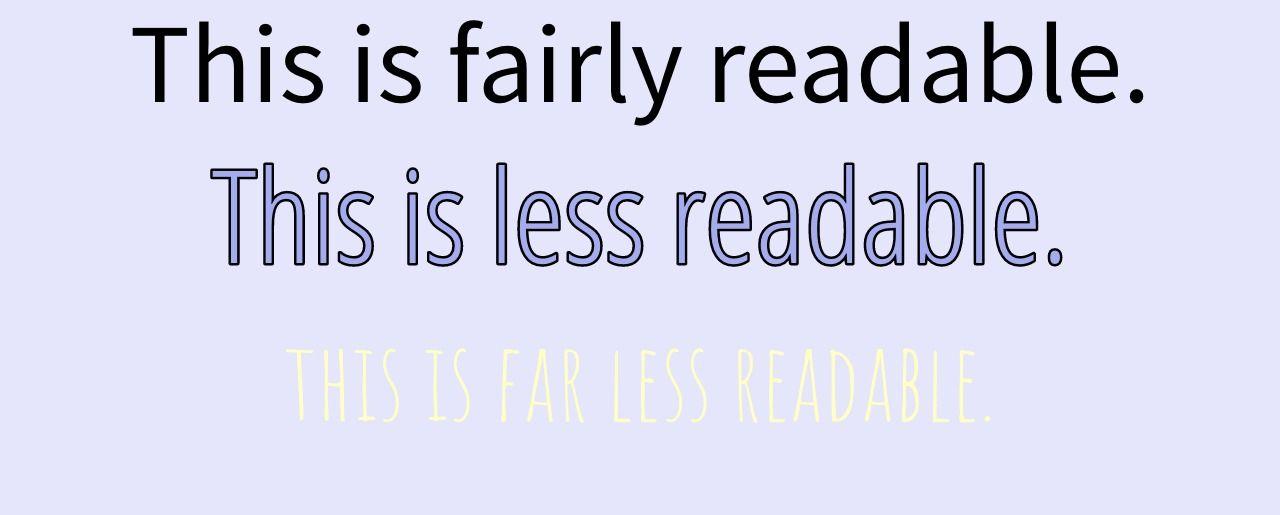
Inclusivity and accessibility are crucial in the social & emotional learning of all students under “normal” conditions, and the remote environment of 2020’s classroom means you have to be more intentional than ever in serving all of your students equitably. Record your lesson videos at a pace that all of your students can follow, and add subtitles so every student can absorb the lesson the way they learn best. And if you’re trying to make your e-learning materials fun & distinctive, keep an eye on the readability of your resources for students with visual difficulties.

Unfortunately, even if you include helpful subtitles, visual aids, and voiceovers in your videos, kinesthetic learners won’t find the same tailored learning support that they could in the classroom. Becker explains:

In-class I like to use manipulatives to supplement student learning. Because I’m a general education teacher, I cover every subject including math. Online, I can’t provide extra physical materials to help students understand concepts like fractions. Instead, I will make use of online academic games, and interactive learning models that can engage young students outside the classroom. Because it will be exceedingly easy for students to tune out during online learning, class will need to be hyper-interactive.

Inclusivity extends to every corner of your teaching: use gender-appropriate or gender-neutral pronouns in your materials, and be wary of your students’ personal needs. When planning recorded lessons and producing e-learning videos, be efficient and make use of your students’ limited attention spans. In the classroom, you’re able to monitor your students’ engagement, but teaching remotely means that you can’t always keep an eye on their focus.

  1. Advocate for remote health services

Another important aspect of the in-person school experience that’s missing in remote learning is the accessibility of health services for students. While in-person medical care can’t be provided to students using typical school resources, it’s especially important during the COVID-19 pandemic to provide adequate mental health resources for students of all ages.

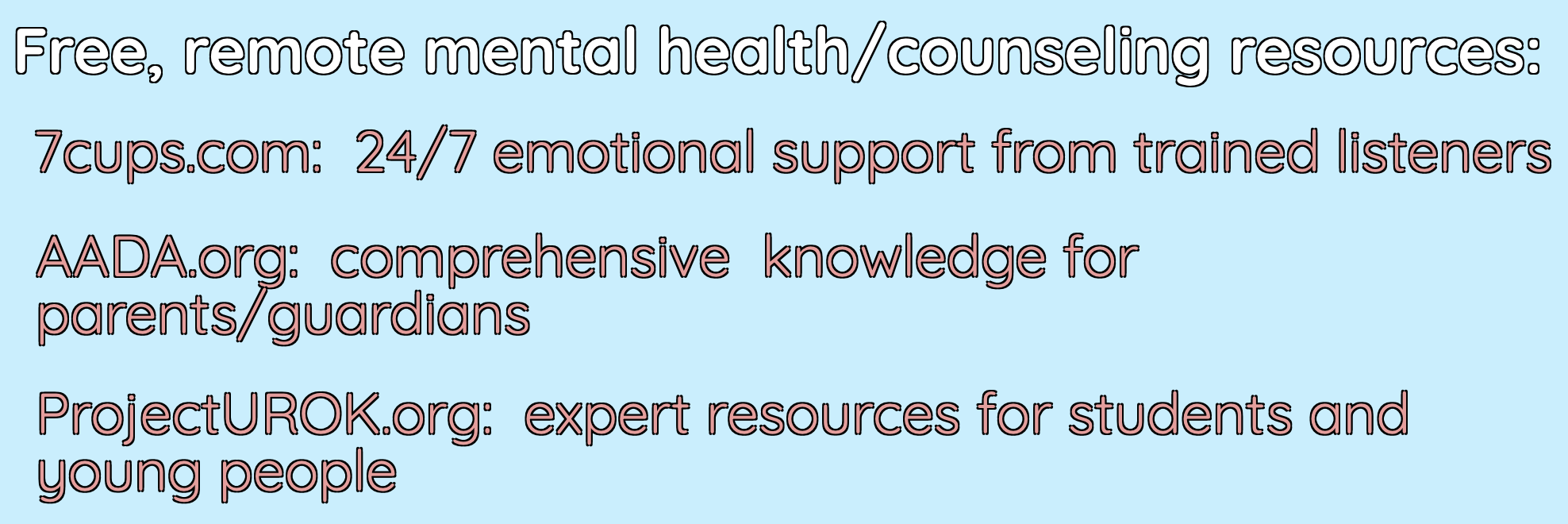
You likely don’t have much direct control over your administrators’ use of health resources. But if you’re able, do what you can to advocate for mental health resources to be made available for your students. This might involve bringing several educators together in order to work for what you believe is best for your students, speaking with parents in order to focus the school’s entire community on students’ well-being, or doing your own research on accessible mental health resources online. This terrific list of accessible remote mental health resources is a great place to start.

  1. Make space for trauma

It would be great for your remote teaching to be just as effective as in-person school, but most likely that’s not possible in 2020. And what’s more, it shouldn’t be your primary objective. Many students are experiencing an especially traumatic year, and their health and wellness has to be prioritized over the diligence of their schoolwork. Becker elaborates:

Many students are traumatized after losing family to COVID or getting sick themselves. For that reason, social-emotional learning will be front and center this semester to address trauma. Education through this catastrophe needs a dose of realism: pushing your students harder than usual will do more harm than good.

The main takeaway here is that educators need to be especially responsive to all their students this year and rethink the teacher/student relationship. More than ever before, the parent/teacher relationship may occupy a lot of your attention, as students’ whole lives become central to the success of their education.


**Interested in writing a guest blog for my site? Would love to share your ideas! Submit your post here.


Looking for a new book to read? Many stories from educators, two student chapters, and a student-designed cover for In Other Words.

Find these available at bit.ly/Pothbooks  

Exploring the World From Our Classroom

As we prepare our students for their future once they leave our classrooms, I believe that one of the most important skills that they need to develop is that of collaboration. We cannot be certain of the type of work that they will do nor the type of jobs that will exist, but being able to collaborate and to provide and receive support will be beneficial to any line of work. However, we need to go beyond the collaboration that occurs whether in person in the classroom, working in small groups or collaborating virtually through the use of digital tools. We have so many possibilities for extending their collaboration to a global scale and to best prepare for the future, this is what we must do in our classrooms. The benefit of setting up virtual collaborative learning experiences for students is that it shows the powerful capability of technology. Through different digital tools and organizations available, we can now offer faster and more reliable access to resources than we ever had before. But probably more important than this, it fosters a greater understanding of life in the real world and promotes cultural awareness for our students.

As a Spanish teacher, for years I have wanted to create global connections for my students but only until the past few years did I become more intentional about finding ways to do so. Drawing upon my experiences as a student and during the first years of my teaching career, finding opportunities or knowing where to look were areas that I struggled with. However, after doing some research and becoming more connected, there are a lot of digital tools and resources available for making these global collaborations happen and which do not take much time at all to get started.

In my practice, to connect globally, I use project-based learning is the first way that I connected my students with other classrooms and that has made a positive impact on their learning as well as on their personal growth. It simply took connecting with teachers using Edmodo as our platform and then building the different tools in to open up those conversations and create that space for students to collaborate within. Tools like Flipgrid, Synth, Padlet or Wakelet can be used for students to post messages whether written or audio or video and to work together to better understand a concept or potentially work together to solve a problem.

Resources for global collaboration and learning

Scavenger hunts: I’m sure most of us have participated in a scavenger hunt. A few years ago I found the platform Goose Chase which made it a lot easier and quicker to create a scavenger hunt for use in my classroom. What I realized is that by using digital tools like Goose Chase for example, is that those who can participate are not limited to students in the same class nor students in the same school community. Find a partner teacher to collaborate with and design a scavenger hunt that can be a way to exchange information about each respective culture, post images of the school, the town or what life is like beyond your own school community. The results would be amazing when students in both classrooms learn about another culture, become curious for learning, collaborate and problem-solve together while being in a completely different geographical location. This idea had not occurred to me until I participated in a scavenger hunt for a conference in California, from my home in Pittsburgh, and I actually won a prize. And if not Goose Chase, I can use things like Fliphunt or even Wakelet as a good friend of mine Laura Steinbrink had created. There are many tools to get started with this, but the idea is that we push beyond our own classrooms and involve other students so that we can learn and grow together.

There is no shortage of tools for use in our classrooms, whether digital or traditional format. What makes any one of them stand out is the purpose and knowing the why behind our decision to use them in our practice. When it comes to preparing our students for the future, the best that we can do is open as many doors as possible for them to look out into the world, explore, and find something that is interesting and leads them down a road of discovery. In addition to digital tools for promoting global collaboration, there are some organizations that have invested in building global awareness and digital citizenship.

Here are a few resources to start with:

Belouga: An educational platform that provides resources for educators and students to connect with classrooms around the world and engage in more authentic learning. Belouga focuses on promoting intercultural communication and offers resources such as projects for students to participate in to develop a greater global understanding. Belouga offers a deep dive series as well as a new feature that focuses on Mission 2030 and the Sustainable Development Goals.

Empatico: A free platform for use with their students ages six through 11. Educators can connect their classroom with a partner classroom and design activities to engage students in more meaningful learning as they develop greater global awareness. Through the connections made within the platform, students can build their vital 21st-century skills and take a more active role in learning.

Teach SDGs:  The “Sustainable Development Goals” are something that we have been learning more about as we’ve done project-based learning in my classroom. Exploring the website and learning more about the needs and challenges around the world has made an impact on my students as well as myself for learning. Going to the Teach SDGs site, students can learn about the 17 goals set forth by the United Nations. Together we can look at global issues, learn how places around the world are solving these problems, and use this to set up connections with classrooms globally. Again it just takes finding the right tool to communicate through. It could be with Microsoft Skype, to set up a call to talk with someone who teaches in one of those places or to connect with an expert I can talk about a specific topic, but that opens up the potential to connect our students’ work together.

Write the World: Students ages 13 through 18 can write and share their work with writers from over 120 countries around the world. Through the global platform, students have opportunities to build their writing skills and become more comfortable expressing themselves. Write the World is a good way to get feedback from students, educators, and authors and to work to build a writing portfolio. With access to writing from around the world and the ability to share their work on a global scale, students and build cultural awareness and become more connected as they design their learning journey.

Global Book!: Or how about Michael Drezek, an educator from New York who came up with the idea to create a global book! Using Buncee, he started the story by sharing it with classrooms around the world and having students add to the book. In the first year, the book traveled over 23,208 miles! This is the second year that Michael is doing this project and the focus is on the global sustainability goals. Imagine having your students come up with part of a global story and in the end to see how they’ve connected with students from around the world without leaving your classroom or possibly even their seat.

As educators, we must continue to push ourselves to learn more about resources available as well as the different ways we can become more connected. There are many online events to build our skills, including virtual learning summits, webinars, and Twitter chats our own professional development. It is through these formats that we can reach out to connect ourselves and serve as a model for our students about the importance of and the power in global collaboration. Check out some of the resources that were available for global collaboration week, there are a lot of ideas and links to excellent resources.

TeacherCast Educational Network

Technology Integration - Instructional Coaching - Productivity Secrets for Educators

Leadership Liner Notes: Sean Gaillard

Built on Connection. Tuned for Impact.

Stories by Thomas Oppong on Medium

Dr. Rachelle Dené Poth @Rdene915 Educator, Consultant & Keynote Speaker, Author, Attorney #THRIVEinEDU

Hooked On Innovation

When Innovation slaps you in the face, we slap back.

Teach Better

Dr. Rachelle Dené Poth @Rdene915 Educator, Consultant & Keynote Speaker, Author, Attorney #THRIVEinEDU

BrianKulak.com

Dr. Rachelle Dené Poth @Rdene915 Educator, Consultant & Keynote Speaker, Author, Attorney #THRIVEinEDU

The Principal of Change

Stories of learning and leading

Mandy Froehlich

Dr. Rachelle Dené Poth @Rdene915 Educator, Consultant & Keynote Speaker, Author, Attorney #THRIVEinEDU

Katie Martin

Informed by research, refined by practice

#RocknTheBoat

Rocking today's classrooms, one teacher, student, and class at a time.

User Generated Education

Education as it should be - passion-based.

Learning as I go: Reflections & lessons learned

Dr. Rachelle Dené Poth @Rdene915 Educator, Consultant & Keynote Speaker, Author, Attorney #THRIVEinEDU

Serendipity in Education

Join me, Allyson Apsey, as I stumble upon the fortunes of learning, laughing, and celebrating alongside incredible people.