
Buncee + BETT = What a week!

20200131_182015

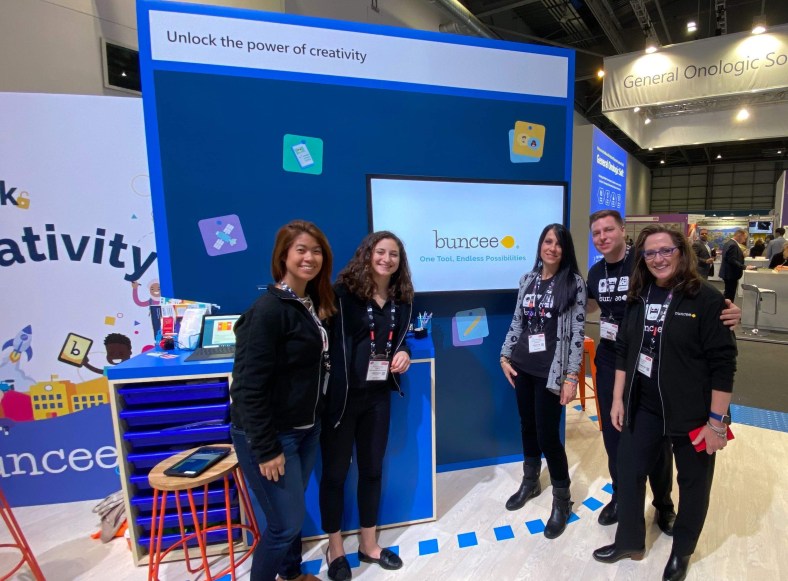
What an amazing week it was spending time with Buncee at BETT, the biggest edtech conference in the world held in London. I am so thankful to be a part of the Buncee family and to have had the opportunity to travel to London and share in this experience with Marie Arturi, Francesca Arturi, Eda Gimenez, and Bryan Gorman. It truly was an honor to be there. I love having an opportunity to share Buncee with educators from around  the world and to be able to talk about the impact it has made for students in my classroom and for me as an educator.


BETT was unlike any other conference that I have attended. It was definitely a unique experience to be in a space with around 34,000 people,  many educators who traveled from around the world to learn about trends in education, emerging technologies, best practices and to exchange perspectives with one another. There were so many exhibits and learning sessions happening, but for me, my favorite part of conferences are the connections that are made and the learning from the conversations that happen with those connections. 


Promoting Awareness

For me, being able to spend time learning about what the educational system is like in so many different countries and to better understand the challenges that are faced by educators around the world was eye opening. During my time at the conference, we had so many groups of educators come to the Buncee booth, eager to learn more about how to amplify student choice in learning, promote creativity, nurture a love of learning and support all students. We had conversations with educators from countries like Nigeria, India, the Netherlands, Pakistan, Belgium, France, Saudi Arabia, Portugal, and many others, almost all of whom had never heard of Buncee before coming by the booth and being drawn in by the “Unlock the Power of Creativity” and the beautiful booth display and many Buncee examples showing on the monitor. Educators and students were curious about what Buncee was and how it could be used.

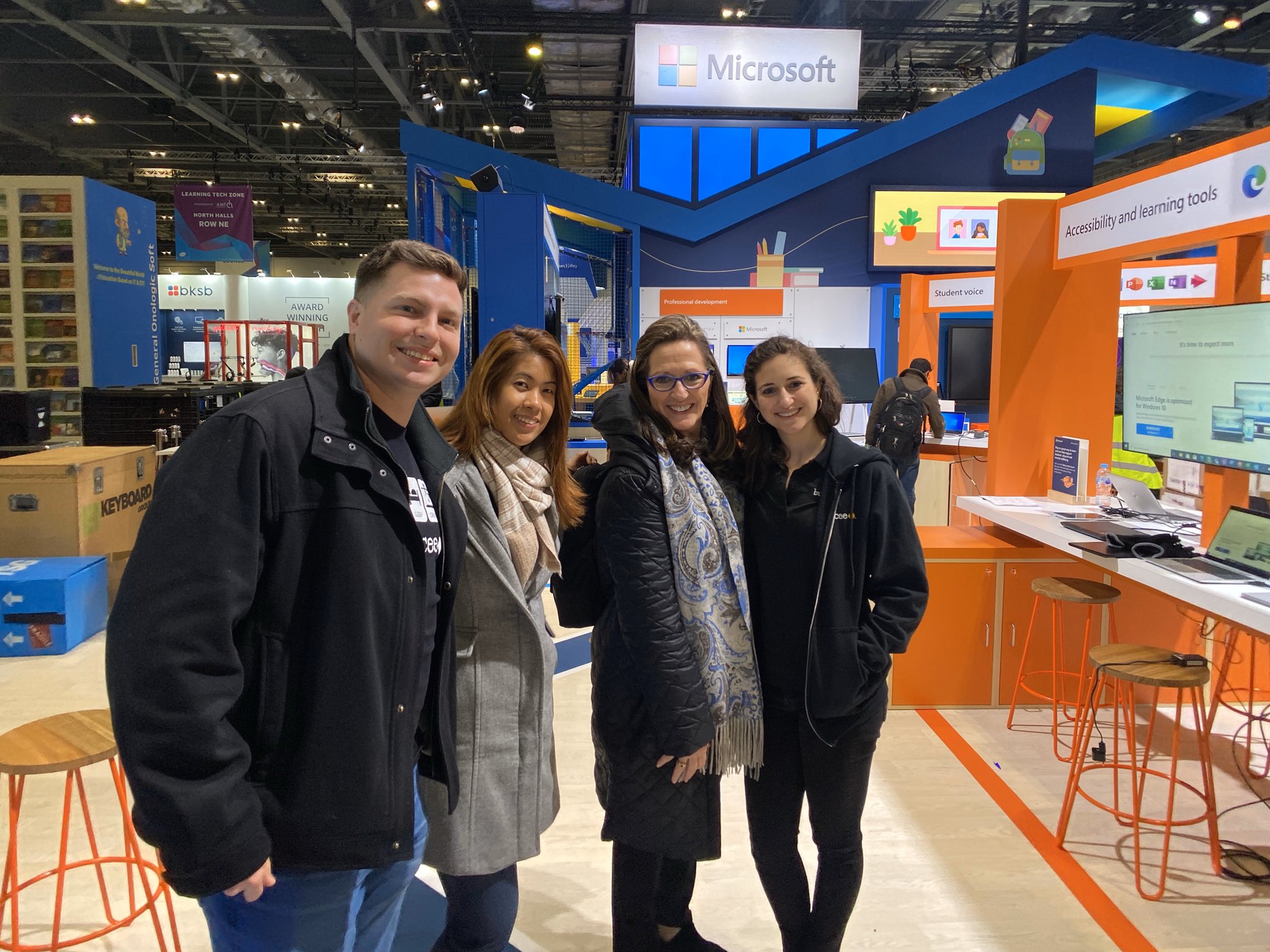
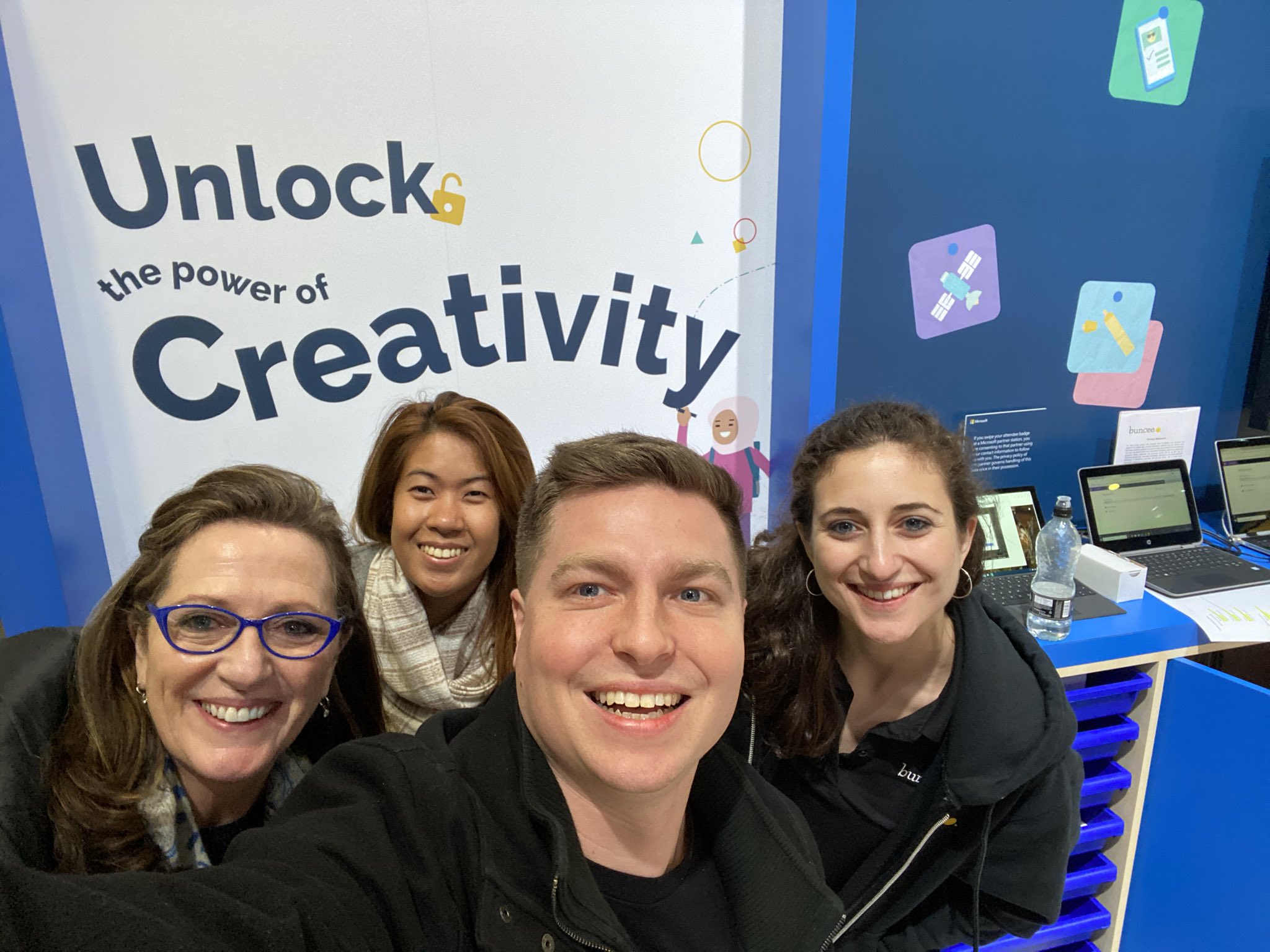
ImageMarie, Eda, Bryan and Francesca

The booth set up was beautiful and everybody who passed by stopped as soon as they saw it and wanted to capture a picture of Unlock the power of creativity. It might have been the most photographed area of the conference if I were to guess, because there were so many pictures taken during those four days!


null

Francesca had a whole team come together to learn about the power of Buncee

Working Together

There was so much activity in the Microsoft Education space, which highlighted themes focused on personalized learning, student voice and choice, accessibility and learning tools, unlocking the power of creativity, and collaboration, for a few. Educators moved throughout the Microsoft and partner spaces to learn about each of these topics and find out how to provide more for students using the tools available. It was interesting to see the collaboration of colleagues and teams from the same district or even government organizations showing up to learn about what Buncee has to offer students and educators.

Sharing the Power of Buncee

Every time that I have the opportunity to introduce someone to Buncee, I love seeing their response as they observe all of the possibilities for creation that are available. During presentations, I always ask attendees about their familiarity with Buncee, whether they have heard of it or used it before, and I’m always very excited when a lot of hands  go up to say that it is new to them. Being able to share and show all of the options and ways that it can be used at any level, with any content, is always a good experience for everyone. And I always learn more from those attending because of the specific needs they have for their classroom or the ideas that they are looking for.

null

Francesca and Bryan

Powerful learning

Something that I find to be so beneficial in conferences like BETT whether from presenting in the booth, doing demos, or even through poster sessions, is that you get to have those one-on-one conversations to find out exactly what educators are looking for and hoping to learn. You can really connect and work together to explore the tools and strategies out there and personalize it to exactly what each educator needs for their students and themselves. 

When you can make that direct contact and work with closely with them, they walk away with new ideas that they can put into practice right away, and with the reassurance that is sometimes necessary when it comes to technology, that it can be easy to get started, especially with tools like Buncee.

Sharing a love of learning and love of Buncee

nullI was honored to present a session with with Eda Gimenez, about using creativity to nurture a love of learning and the power of immersive reader for accessibility for all learners. We worked on the presentation for a while and I was excited and nervous of course, to present. But what always makes a difference is talking about something  that you are passionate about and believe in and also making a connection with the attendance.

null

Ready for our presentation

What made this session special is that those in attendance had not experienced the wonder of creating with Buncee and were there to learn about it for the first time. Being able to share all of the potential it has for empowering our students with choices and creating opportunities for all students. I admire Eda and the work that she does, the message she shares about the power of Buncee and Immersive Reader for language  learners and for nurturing “a sense of participation, inclusivity, fun and creativity.”  

Image

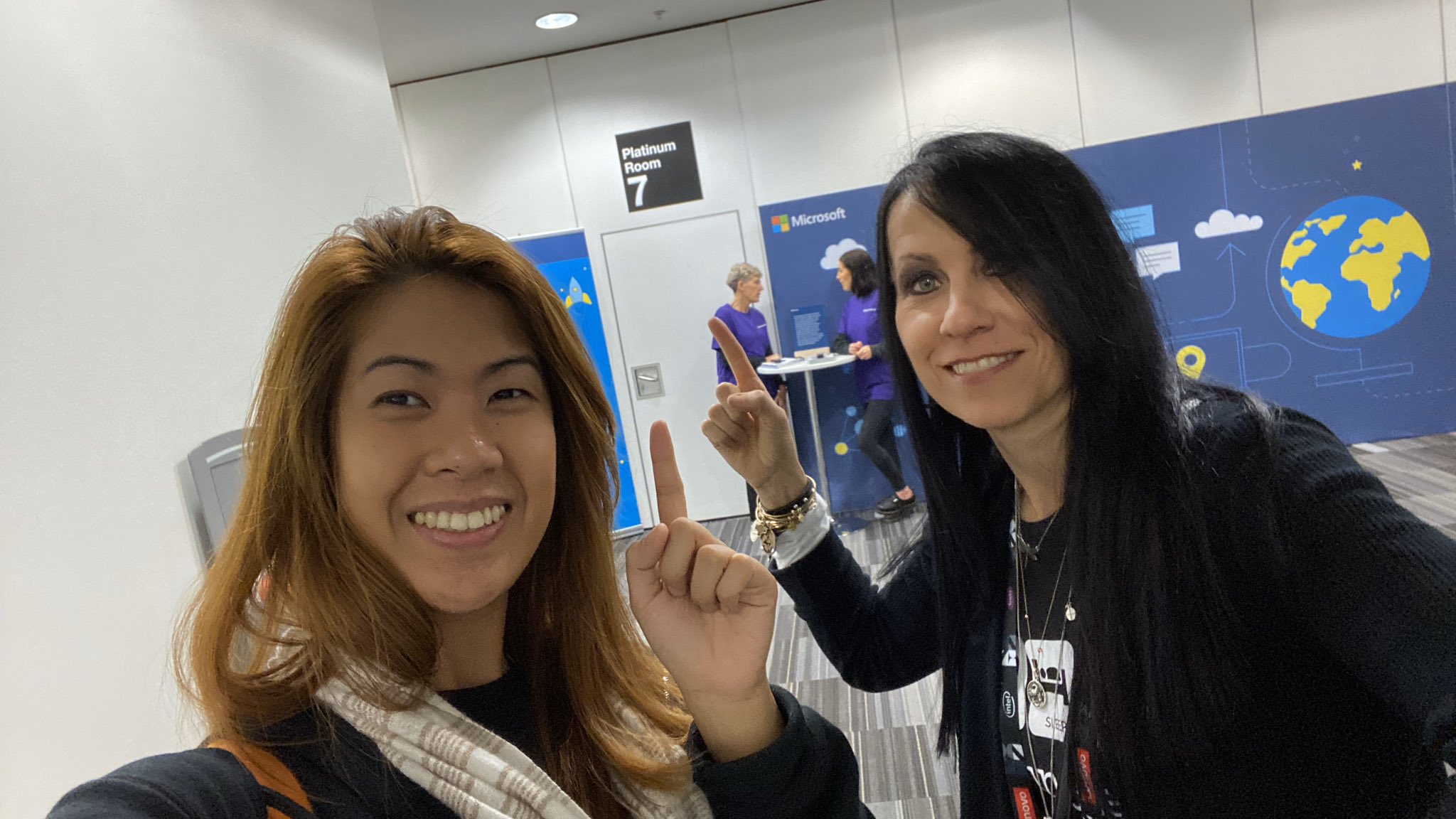
We checked out our presentation room early.

An added bonus is that we were also able to try out the live captioning during our presentation. For attendees in our session, they could join with a code and then select their language of choice for captions during the presentation. Being able to communicate your message, tell a story, share learning between students and families is vital for educators and for student learning. With the power of technology, through tools like Buncee and Immersive Reader, we can make sure that families are involved and information is accessible for every student and their families. 

Image may contain: 1 person, coffee cup and text

Eda shared Christine Schlitt’s story during our presentation

There are some common questions when it comes to using technology: 


What are the ways you can use it? 

How much time does it take to get started? 

Is there a big learning curve? 

How does it benefit students?

I always anticipate these questions and appreciate the pushback that comes sometimes because that’s how we know we are truly looking at the tools and methods we want to bring into our classroom with the right lens. I enjoyed seeing attendees from our session head to the booth to learn more!  It was fun interacting with everyone, seeing their reactions to the Buncees on the screen, and many wondering how to unlock the power Several times there were requests to make sure that somebody would be available to explain Buncee, to do a demo, to answer questions later when they brought back the rest of their team.

Image may contain: 4 people, including Eda Charmaine Gimenez, people smiling, text

Image from Buncee

Highlights

One of my biggest takeaways from experiences like this is that regardless of if we are a teacher in the classroom or the one doing the presentation, we learn so much more from those who are participating in our session or the learners in our classroom. Without a doubt, I walked away with so many new ideas for my students and a greater understanding of how different educational systems are and the challenge that educators have when it comes to a lack of resources. 

It is definitely a joint effort where they want to have everybody involved and learning together with a theme of global collaboration, it surely was that. We made new connections, shared and learning experiences together and continue to learn and grow together.

null

We got to meet Maria in person!

Meeting Buncee Ambassadors

Something else that made it wonderful experience was being able to connect with Buncee ambassadors from around the world. Meeting Maria in person for the first time was exciting and she even brought gifts for us from Argentina. She is a beautiful person and I’m so thankful to be connected with her! 


20200122_212639

Thank you Maria for the thoughtful gift from Argentina!

I am so thankful to be part of the Buncee team and Buncee family, who truly does join together to do what’s best for all students, and build a nurturing learning community fueled by a love of learning.

Image

Thank you Buncee for making a difference.

The Power of Listening

Guest post by Charles Williams, @_cwconsultingOpinions expressed are those of the author.

Anthony* stormed into the office, marched past the front desk without acknowledging the startled office manager, and into my office where he dropped into a chair heaving deep breaths with a hint of moisture in his eyes. Calmly, I stopped working on whatever mind-numbing report I was completing and turned to him.

“Hey Anthony.What’s going on?” I asked as I took a tissue from my desk and handed it to him.

Wiping his face, he responded, “They never listen. They always get to talk but they never want to listen.”

I didn’t need to ask. I already knew to whom he was referring and it was something that I knew needed to be addressed. But how? How do we get teachers to actually listen to our students?

Recently I was introduced to the concept of Talking Circles through the book “Circle Forward: Building a Restorative School Community” by Carolyn Boyes-Watson and Kay Pranis. I was sharing my frustrations with a colleague and he immediately reached for the book. As I listened to his similar experiences I thumbed through the pages noting that it offered strategies for both students and staff both in the classroom and during meetings. Two days later, I had my own copy.

This past August we held our first Courageous Conversation as a staff during our back-to-school orientation week.

The first question asked was what led us to the field of education. We were surprised to find that many of us did not start in this field and thus brought an entirely different world of expertise that we could now tap into. We had chefs, engineers, and even artists. It was enlightening.

The second question asked was why we have remained in education. The stories varied but they all had the same central theme – we’re invested in our students. From those ah-ha moments to grieving with families through loss to providing for a family in need to celebrating a student’s graduation, we knew that our students had potential and that we were committed to helping them find it. It was emotional.

The final question asked about privilege. Some teachers reflected on how they struggled growing up, needing to figure out how to reach their goals with substantially less than some of their peers. Others talked about their appreciation for the ability to have access to resources and materials without worry. Some noted that they had forgotten what it was like to struggle now that they were financially secure. It was powerful.

There were several reasons that I wanted my staff to engage in these Courageous Conversations.

First, I wanted my staff to understand the power of listening. A central tenet of Talking Circles is that only one person at a time is allowed to speak. Furthermore, the other speakers are encouraged to share their own thoughts and are not expected to respond to someone else’s comments. Participants are, essentially, forced to listen to others.

Second, I wanted my staff to separate themselves from their titles. Talking Circles remove any form of hierarchy. During these conversations, no participant is more important than the other. The information being shared by all is equally valuable and should be treated and respected as such.

Third, and the biggest driving force, I wanted my staff to connect this experience with our students. I wanted them to see how they learned something new about a colleague and how that information may shape their interactions moving forward. I wanted them to readjust their perceptions from seeing our students as at-risk to budding successes. I wanted them to remember that our students come to school on a daily basis dealing with so much more than academic tasks.

My teachers were hooked and asked that this become a regular part of our staff meetings. It has.

More importantly, this practice has become common place in the school. It may be implemented differently from class to class – some start the week to get a pulse of the students’ after a weekend while some end to help students bring the week to a close while some use it when the vibe in the classroom isn’t quite right – and that is okay.

This simple yet powerful practice has had profound impacts on the school’s culture and climate. During the first two months of school, our referrals have dropped nearly 70%. Our attendance rating has soared to 97%. I now see teachers and students mutually engaged in honest conversations when issues arise to develop solutions.

And Anthony? Well, he still visits my office regularly. Only now its to check in on me and to take a peppermint.

Charles Williams is a professional educator with nearly 15 years of experience. Williams currently serves as a K-8 Principal in Chicago, IL. He is also a member of Great Expectations Mentoring and Men of Color in Education. Williams has presented at numerous conferences including the Statewide ESSA Conference, the Annual INCS Conference, and the CPS Leadership Institute. He has also started his own educational consulting firm, CW Consulting.

**Interested in writing a guest blog for my site? Would love to share your ideas! Submit your post here.


Looking for a new book to read? Many stories from educators, two student chapters, and a student-designed cover for In Other Words.

Find these available at bit.ly/Pothbooks  


3  books.png

Kindness and Equity in Our Science Classrooms

Guest Post by Kathy Renfrew (@krsciencelady), previously published on Middle Web

A while back I bought the novel Wonder. As with many good intentions, life got in the way and as the days turned into weeks the book sat lonely on my nightstand.

Finally, in August, with a new school year starting soon, it seemed an opportune time to finally jump into the text on my nightstand.

I dove in head first and was instantly smitten by the characters in this multi-award winning book and began to see the many ways to apply the learning in Wonder to my work in the classroom.

While reading I began to wonder how I might ‘choose kind’ if I had been a character in Auggie Pullman’s story. What would 9 or 11-year old Kathy have done? Would I have chosen to befriend Auggie?

start-joy-09-09-19

As our school focused on “choosing kind” to foster students’ social-emotional learning, I went in search of additional resources to use along side this brilliant text in my daily work. Resources like this one from the Teaching Channel shared tips that I would be able to enact instantly.

What do students think?

As posters of #choosekind appeared in the hallways of my school, I was curious to know what students across the country thought choosing kind might look like? Moreover, I was curious to learn how the idea of choosing kind transferred to the three-dimensional learning we teach in science classrooms.

Leveraging the power of our global professional learning network (PLN) through social media, I shared this question across my twitter PLN and a fourth grade teacher in Michigan, Jennifer Ladd, responded.

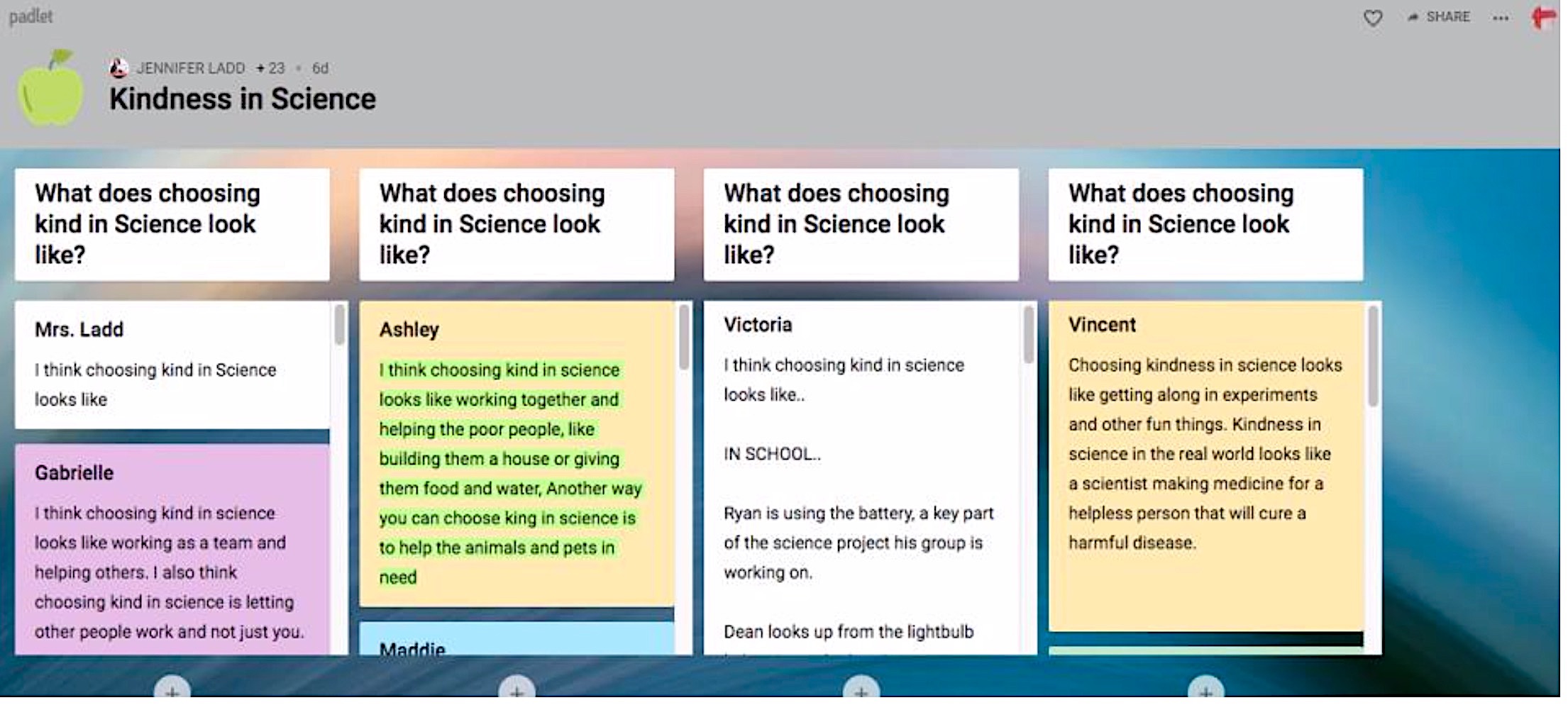
Click to enlarge

Ladd likes to use one of my favorite learning tools, Padlet, and asked her students to respond to some prompts. Their answers were both inspiring and thought provoking.

Students instantly identified attributes of the 4 C’s including collaboration and communication. For instance Ryan shared, “I think choosing kind in science looks like when someone has a question you don’t say ‘oh that question is not smart’ you try to work together and figure it out and include people.”

Students shared general and specific strategies for choosing kind in science classrooms from the ideas of teamwork and friendship to how to ensure all learners have access to tools for success.

Ashlyn wrote, “I think choosing kind in science looks like teamwork and friendship. Science always should look like what teamwork is. Teamwork and friendship is like people passing around the batteries and wires. Teamwork accomplishes big things.”

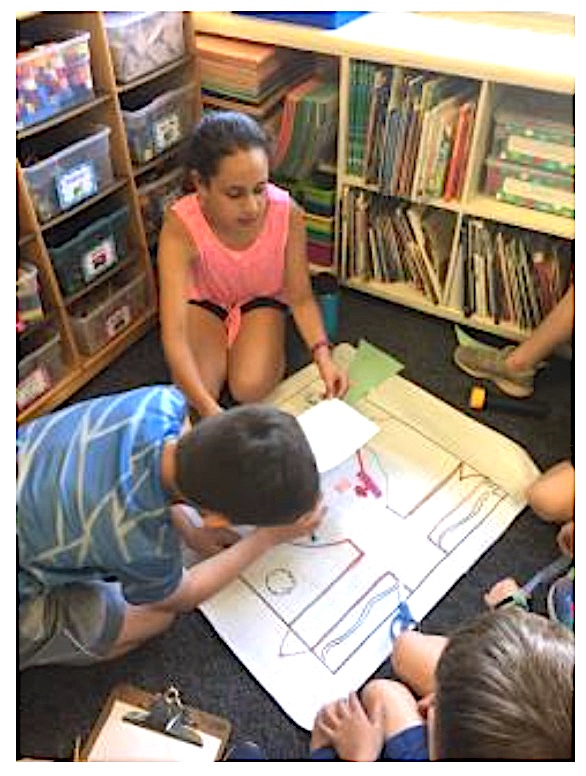
Inspired by these fourth grade learners, I began observing students in the classroom to see what they were talking about to their first reading buddies. The fourth grade and the first grade had partnered together to create a shade structure in the outdoor classroom.

In one observation I heard a student choose kind when she said to her group, “I will do the math, all the adding, and you work on the structure. Tim, will you please help Joe with the tape on the structure.”

After hearing from my PLN nationwide and visiting classrooms, I decided to reach out to friends to see how they foster kindness in their science classrooms.

Fellow squadster and teacher laureate Meg Richards shared how “choosing kind in my science classroom has students being open to new experiences and new ways of thought.”

“We spend time talking about how science is a place to wonder, where right answers can always get better if we are open to them,” Meg says.

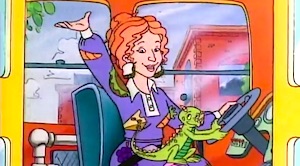
“After all, in the wise words of Miss Frizzle (of Magic School Bus fame), ‘If you keep an open mind you never know who might walk in.’”

Moving with kindness to equity

#Choosingkind is a great start in acknowledging the small steps we can each take towards creating a more equitable and just world. But it is just the first step. How do we move beyond kindness to include equity where all learners have access to the tools they need to find success?

What are some tools we can implement right now that will help us create kind, safe, and equitable communities in science and across the school building?

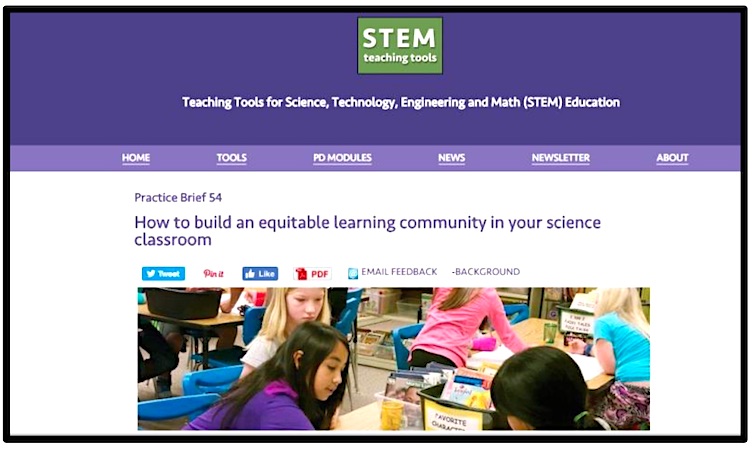
One tool that may launch these conversations is called STEM Teaching Tool #54 from the Institute of Science + Math Education. This tool helps us better understand exactly what an equitable classroom is and provides some ideas of how to move forward.

For instance, resources such as the Story of a Name teach respect for each person’s choice of name which helps learners and educators honor their colleagues and students, resulting in greater respect and collaboration. Other options include The Shoe Game – Equity versus Equality (exploring the value of differentiation) and Pictures of Our Lives (sharing stories of our diverse experiences).

Students may also opt to use a Science Journal Quest to foster effective classroom talk together. Intentionally engaging with resources like the STEM Teaching Tool and others are small steps toward a much larger goal of equity and mindfulness in the classroom.

If we have the goal of building equitable learning communities, we are making a step in the right direction. In this way we are modeling for our students, our colleagues, and our community what it means to be kind and just, and maybe, just maybe, #choosingkindness will become a part of who we all are.

Edutopia has an article by Sarah Kesty about the use of the engineering design process to foster collaboration and kindness, called Social And Emotional Learning in Science Class. I found I was using this article to stimulate my thinking around this topic.

I also connected with a story from EdWeek which talked about some work a middle school was doing to really think about the whole child and find opportunities to integrate Social and Emotional Learning into what they were already teaching rather than have another siloed subject to teach. See: How One District Is Spreading Social-Emotional Learning Across All Its Schools.

Keeping SEL out front in science class

During this school year, I’m going to be thinking a lot about how we can keep social and emotional learning out front – something that’s always important for us to be thinking about. How can we make our children feel safe and yet very excited about learning? I think we need to remember that our children live in a world that can sometimes be very scary.

After writing and reflecting on this article, I see that the implementation and implications of the student-centered New Generation Science Standards offer us many avenues to help our students feel safe and enjoy learning again. I think the title of my next blog will be something like “How Phenomenon-Driven Instruction Can Make Our Classrooms More Equitable Places for Learning.” I believe by focusing on questions like this, we’ll find even more ways to incorporate social and emotional learning into our science classrooms.


**Interested in writing a guest blog for my site? Would love to share your ideas! Submit your post here.


Looking for a new book to read? Many stories from educators, two student chapters, and a student-designed cover for In Other Words.

Find these available at bit.ly/Pothbooks  

 

3  books.png

THOSE KIDS: A Connection Makes A Difference, but Does it Make THE Difference?

Guest post by 

Opinions expressed are those of the author.

I recently followed a chat that started from the claim that all a student needs to be is liked. That all they need is a connection or relationship or positive interaction with an adult. Initially I thought of course I agree, but after some time of that idea rattling around in my head I changed my mind. I don’t think I agree. I would still agree that connections can and do make a huge difference. I just don’t think they make THE difference.

20190517_123745702418090265244780.jpgI work in alternative education. I work with really challenging kids. THOSE KIDS. The ones who didn’t make it in other schools. The ones who know incarceration and the system. The ones who know trauma and abuse and pain and abandonment. The ones who know failure. These kids don’t like me when they enter my classroom. They don’t like anyone. They don’t care if I like them. They are quite used to no one liking them. They don’t care about grades and learning and futures. They don’t plan. They don’t have goals. They don’t dream. They don’t have hope.

So I have to connect with them and I have to do it fast. I have found that I relate to these kids. I get them. Maybe it’s my own quirkiness or off-beat sense of humor or stubborn streak or willingness to do about anything to make that connection – smile, laugh, sing, dance, tell jokes, laugh at bad jokes, pat backs, give hugs, and just never stop trying. They push me away, but I come back. Again. And again. And again. Until finally they push back a little less, and if I’m lucky, they stop pushing back at all. That is connection and it is the absolute first step. No question. It will be the foundation for everything that comes next.

Next. That is the thing that I think has gotten lost. It’s not the connection that’s the most important thing. It’s the next. Jump into any education chat or conversation and you will hear the word connection and relationships, but it’s becoming this idea that if I make a connection with my student then that is all they need. If I care enough or like them enough or love them enough or if we talk enough or have enough in common then that will make a difference to my students. And it will. It will make A difference, but I don’t think it’s enough to make THE difference.

We need the next. They need the next. Think about the process of building a house. When carpenters build a house they build the foundation first. It is what supports everything. But once they have a foundation, they keep going. They build the walls and 20191218_180417-16324819778329009069.jpgthe roof and they put in duct work and plumbing and electrical. It’s finished off with paint and flooring and appliances and décor. There are so many steps that come after the foundation. There are so many steps to building a completed house. If they stopped after the foundation, then they don’t have a house. They just have a piece of concrete.

We, as educators, we need to build the house for our students. Let’s build a foundation. Let’s work hard and quickly to make connections and build relationships, but then let’s not stop there. Let’s do something with that foundation. Let’s give them walls and a roof – a framework to support them. We can teach social skills and coping skills. How to enter a classroom and take turns and ask for help. How to approach tasks independently and with their peers. How to adjust to different procedures and expectations. How to make mistakes. How to celebrate successes. How to work through problems. How to find an answer. How to ask for help. How to be a successful student but also a successful member of society. Let’s give them all the systems inside that house – let’s bring that house to life. We can teach them academics. We can fill in the gaps while giving opportunities for new growth. It may look different than how other students learn and they may need to express what they know differently, but they will learn. They will learn mistakes aren’t failures. They will learn to try again. They will experience success. Knowledge is a powerful thing. So is confidence. Let’s decorate their house. Personalize it. Make it belong to each individual student. Let them be creative. Think outside the box. Celebrate individuality. Find their own unique strengths and weaknesses. Let’s make that house their own.

20191218_1806315978855054264078087.jpgLet’s do something with the connections we work so hard to make. Let’s use those foundations we’ve built. Let’s push our students out of their comfort zone. Let’s move past easy and complacent and good enough. Let’s set high expectations. Let’s push them to struggle and even fail. But then let’s teach them to persevere and to adapt and to overcome. It will be hard for them and us. We will all get tired and experience frustrations, but it’s what they need. And they will be okay because we will there. We will support them and guide them and believe in them and teach them. We use that connection that we created in the beginning to be our foundation to support everything we do next.


**Interested in writing a guest blog for my site? Would love to share your ideas! Submit your post here.


Looking for a new book to read? Many stories from educators, two student chapters, and a student-designed cover for In Other Words.

Find these available at bit.ly/Pothbooks  


3  books.png

Connecting the Cool

Guest  Post by Kim Murphree, Educational Technology Trainer, Mansfield, Texas @murphree_kim

With the increase in accessible, affordable and abundant Augmented and Virtual Reality apps and programs, education can now provide these types of learning experiences for students. We see it with the popularity of the Merge Cube and Merge Goggles, and with free programs like Google Expeditions and Tour Creator. Teachers, and more importantly their students, have the opportunity to participate in these types of learning experiences with little monetary investment and not a super high level of technical knowledge.

And that’s what augmented and virtual reality provides in education- an experience. Learning through AR/VR raises a learning activity from a passive task to an immersive experience- connecting the user to the content in a way that has not been reasonably possible in the classroom before. Implementing Augmented or Virtual Reality raises your level of engagement through a multi-sensory experience. The experience itself is as close as you can get to having “special effects” in the classroom- and here is where teachers can take advantage of this magic. Teachers don’t have to work quite so hard for the “wow”. Countless PD sessions and books expound on how to “hook” students in or ways to increase engagement with the content- with AR/VR the cool is already there. Kids are already hooked and engaged. This leaves the content connection. Teachers can now concentrate on what they are the experts in- the content. However, It is important to connect the cool with the content in order to ensure that integrating AR/VR is meaningful and purposeful.

Below are some tips for “connecting the cool”:

  • Extend and Enhance your Curriculum– make sure your AR/VR integration doesn’t turn into a “movie day” situation. It should not be used as a filler but as a value-added addition.
  • Ensure Active Learning– Augmented and Virtual reality in the classroom has an inherent physicality to it, make sure you adapt your room and lesson to guarantee student interaction with the materials and with each other
  • Significance– As the content area expert, and with the built-in wow factor, use your lesson planning time to bring the content purpose to the forefront. The AR/VR experience should solidify the significance of the content you are covering.
  • Reflective Summary– AR/VR activities, while special, still require follow-up and feedback. Build opportunities for reflection in your lesson, just like you would for any good learning activity.

Augmented and Virtual Reality bring learning to a personal level and engages learning styles and modalities in such an easy way. This type of technology has far-reaching and limitless potential for use and has come so far that students and teachers are now able to move from simply being consumers of this type of technology to the creators. There are so many applications and programs that can bring your content to life- engagement and interaction are built into these applications. Students who are using a Merge Cube to look at the Solar System can immediately see its “cool”, therefore teachers can concentrate on the content and curriculum connection. Immersive technologies create genuine and unique learning opportunities that meet the needs of diverse learners of today.


**Interested in writing a guest blog for my site? Would love to share your ideas! Submit your post here.


Looking for a new book to read? Many stories from educators, two student chapters, and a student-designed cover for In Other Words.

Find these available at bit.ly/Pothbooks  


Books available

The Impact

The Impact
Guest Post by Megan Reinke, Student at Iowa State University, @MissMeganR

Last spring I took CI 245. It’s a class focusing on classroom management and lesson plans. That isn’t why I loved it though.

 I loved it because my teacher was one of the most supportive, knowledgeable, caring, fun teachers. People say, “You don’t get that in teachers at big universities,” but oh no, I definitely did. She is such a role model to me as I continue into the field of education. She didn’t just share her successes and high points of teaching, but she also shared her lowest points and failures. I loved this about her because it taught me that it is okay to mess up. Teaching and life is hard. We are all going to make mistakes.

 In her final thoughts on the last day, she had our class calculate the number of students we would touch the lives of throughout our teaching careers.

 There were 24 students in our class, and if we each thought for roughly 42 years, and had 20 students in our class then…

 (24 times 42 times 20)

 20,160.

 20,160 students. Wow.

 She started crying. I started crying. My class started crying. She went on to express how much she loved us, is proud of us, is excited for us, and going to miss this class.

 Point is, we all get the chance to make a big impact. HUGE in fact. I don’t mean this in regarding to the size of group or number of lives we get to impact. That number could have came out to be way smaller and it still would give me a reason to be purposeful in the ways I am impacting lives. Whether you get the chance to impact 20,000 lives or 2 lives, you get the opportunity to leave a HUGE impact on someone in this world. GET EXCITED FOR THIS! What are you doing now to prepare for this? How are you treating people everyday?

 Be that positive light, that positive influence, that supportive role model. Just how my teacher did to me.

Its 2019, and now I actually have a calculator (app) everywhere I go. Why do I need to learn math again?

Guest Post by Dan Haiem, @danclasscalcco1 

“But teacher, why do I need to learn this math stuff if I can just use my calculator app?”

Every teacher has heard this at some point. Most students have asked this at some point. Up until around 2007, teachers had a great answer that kinda-sorta worked, which went something like “You’re not going to always have a calculator everywhere you go, are you?”

The opposite of that, of course, became a reality when the iPhone became the most common tool found in any student’s pocket, and gave them access to powerful calculators like Desmos, Geogebra and our very own ClassCalc.

Here’s my opinion though – the old answer was never a good answer, and the ubiquity of iPhones has given us a golden opportunity to re-evaluate a very valid question. What’s the point of learning math if we have calculators that do math for us?

In the words of NYC’s (possibly) most high-energy math teacher, José Vilson, “Math shouldn’t be limited to a disconnected set of rules and jargon that doesn’t seem to mean much of anything.” If math really was about the rules and jargon, then a calculator could truly replace the need for learning it. Fortunately (for humans), it’s not.

For the sake of simplicity, and because this is my first blog post ever, here’s a short roadmap of this post’s approach to this topic:

  1. First, we’ll discuss how math helps students build tools and skills, and define the difference between the two:
    1. Tools: Spreadsheets, running an analysis, doing taxes.
    2. Skills: Good communication, emotional intelligence, problem-solving.
  2. Next, we’ll discuss how math has shifted from serving us as a tool, to helping us sharpen our skills – most important of which is problem-solving.
  3. Finally, we’ll take a look at an example of how a specific math problem helps us build a specific problem-solving skill called mental-triage, and how we might help students make that connection as well.

Onwards.

Math serves two primary purposes in education: it gives students the tools to play with numbers, and it serves as practice to sharpen certain mental skills that are important in life. To define the two:

  • Tools: Concrete things a person “knows.” Examples include: spreadsheets, coding, writing blog posts (a tool I clearly lack), social media advertisements, taxes, etc.

  • Skills: More abstract, broad abilities that are not particularly associated with executing a specific task – the kinds you always see in leadership charts. Examples include: Hard working, communicative, optimistic, honesty with self, problem-solving, etc.

*Credits to Business Simulations

In this sense, math falls into an interesting crossroads as both 1) part of the abstract skillset a person has, (ie: “problem-solving”) and 2) a tool that can be put to work (ie: part of your “toolkit” – like running a statistical analysis on two data sets).

It’s important to keep in mind though that:

Math will play a fundamentally different role for different students, and we need to bring that understanding into the classroom.

An engineer will likely benefit from math as both 1) an exercise in problem-solving (skill) and 2) a tool to accomplish certain tasks.

An artist might use the abstract side of problem-solving (skill) but – and this is especially applicable today, with all the calculators in our pockets – they probably will not have much use for math as a tool

Here’s a screenshot I grabbed off the might internet that summarizes the point (albeit, aggressively):

*drops mic*

I believe it’s important and ok to tell our students that not all of them will be using math as a tool. At this point, most people don’t need math to do taxes (here’s a calculator for that), split a tab (here’s a calculator for that) or accomplish any of the other tasks that might have required math as a “tool” before calculators were built.

To recap:

  • Math confers two types of skills: Abstract problem solving (skill) and an actual tool in your toolkit (tool)
  • Everyone can (probably) benefit from the problem-solving (skill) aspect. While some people (engineers, some scientists) benefit from having math in their toolkit (tool), most can get by with their super powerful pocket calculator.
  • So, for students not interested in pursuing a career that would require a math toolkit, we must focus on the abstract problem-solving (skill) aspect of math.

As brilliantly stated by Baltimore Ravens lineman and MIT mathematician John Urschel, we need “students to see that math extends far past the confines of the classroom and into everyday life.” What’s more “everyday life” in the 21st century than problem-solving?

Now the questions shifts to: How do we show students the relationship between learning math and developing this abstract ability to “problem-solve”?

I have two thoughts on this:

  1. One thing to consider is that skills and tools are actually mutually conducive. Google is a tool you learn to use. Being able to learn stuff on your own is a very important skill in today’s workforce. Knowing how to use the Google tool will help you build the learn-stuff-on-you-own skill. I think the same applies to math.

Although students may never use calculus directly, the mental exercises they go through in solving calculus problems might help improve the mental muscles required for peripherally related skills.

  1. We need to find good examples to demonstrate the above. I mean good examples. Not the “Well, don’t you want to know how to do this without your calculator?” type of answer and not the “Being able to do your taxes is very important” type of answer and not the “here’s an example of Timmy calculating the volume of the Earth by standing on a ladder and looking at the horizon (although that’s super cool)” type of example. These examples all focus on the tool aspect of math, which we know won’t be as relevant to all students. We need to focus on the skill aspect of mathematics.

So now the challenge becomes being able to demonstrate to students a link between learning math and learning how to problem-solve. A good approach might be to 1) Have your students break down what sub-skills are required to succeed in math 2) Have your students break down what sub-skills are required to problem-solve 3) Discuss the cross-overs.

One of my favorite examples is mental triage: the abstract skill of quickly finding the most efficient path through a challenge given a limited toolkit.

Here’s an example of a math problem that helps sharpen the sub-skill of mental triage:

  1. Math itself is a limited toolkit. You learn how to move numbers around. How to draw graphs etc. Each time you learn one of these new tools, you’re essentially learning a new way to play with numbers. When we approach a math problem, we subconsciously run an analysis that goes something like this: What do I want to make these numbers do? What tools do I have to move these numbers around? What tools am I not allowed to use? What is the most efficient tool path to an answer?
  2. As an example, let’s take the following problem, a favorite of the SAT:

  1. Here’s how my brain runs through my math toolkit.
    1. I gotta solve for x.
    2. Problem: x is in the exponent.
    3. Do I have any tools to get rid of an exponent?
    4. I can raise both sides to ^(1/4x) which would lead to:
      1. No good. Back to step c.
    5. How else can I get rid of the exponent? Logarithms, let’s try that:
      1. which simplifies to:
    6. Great, we got rid of x in the exponent. Onwards! Divide both sides by 4log(2):
    7. Plug into by handy dandy ClassCalc Calculator to get:
      1. x=1

There we have it: mental triage in math.

Finally, we’ll bring it full circle with a real-world example of mental-triage as a sub-skill of problem solving.

Teaching my high school students how to pick a college

It was the last day of my physics class last year, and my students were just about done with school. They had already taken the AP test and were ready for summer. Instead of squeezing in another physics lesson, I decided to tackle a more pressing concern of theirs – choosing a university.

In retrospect, my method for picking a university was suboptimal – I just asked my good friends where they were going and what they thought a good college was, and ended up at UCLA. Lucky for me, I met good people there and had an awesome experience, but many others who take the same approach are not. I wanted to teach my students how to be proactive and problem-solving-oriented in making life choices.

Rather than start with “I want to go to college” I wanted to help each one of them hear their inner voice, and begin a dialogue with it. Start for the bottom. Here was my approach:

Student: *Says something*

Me:

And this is what the conversation ended up sounding like:

  • Student: What college should I go to?
  • Me: Why do you want to go to college?
  • Student: I need to get an edu-
  • Me: Yes, but why do you need an education? What’s your goal?
  • Student: I want to make money. Goal number 1: Make money!
  • Me: Honest, but fair. What else? A lot of jobs will make you money.
  • Student: I want to become a doctor.
  • Me: Do you for sure 100% want to become a doctor? Have you had real exposure to medicine? Or is it alluring to you for other reasons?
  • Student: I’m not sure. I want to figure out what I want to become. Goal number 2: Explore career options!
  • Me: Ok, what else?
  • Student: I want to make good friends and party. Goal number 3: Have fun
  • And so on..

By the end, we put together a list of priorities for each student. I could see their perspective change drastically. Rather than listen to a parent’s friend’s suggestion, they were determined to go online and research.

Now, I am not necessarily saying that a better mathematician is going to be better at selecting a college, but certainly, the tools we learn in math can inform our decision-making process for the important choices we must all make in life, especially if we are aware that there is a problem-solving oriented approach to making these decisions. Our jobs, as teachers, is to help students form that awareness.

A good method for cultivating that awareness is with Miyagi Moment every so often. What’s a Miyagi Moment moment, you ask?

It’s a metaphor for when a teacher (or sensei) helps a student develop a crucial skill by practicing adjacently related skills that at first do not seem connected.

In the first gif below, we see the legendary Mr. Miyagi teaching Daniel San how to…wax a car. Not really relevant to fighting karate.

In a later scene, Daniel san gets angry, accusing Mr. Miyagi of wasting his time with chores, when he should be learning super cool action moves to take down the big bully Johnny. Right then and there, Mr. Miyagi throws a couple of HYAH punches and BAM. Daniel san blocks them – all the while shocked in disbelief that he had developed the skills to do so. That moment of disbelief in the newly developed skill is the Miyagi Moment!

In math, students will often be practicing skills that seem almost irrelevant to them in life. It is up to us teachers to remind our students every so often that that is not the case. The best way to show them that is with a Miyagi Moment. It is time away from teaching the next chapter or lesson, but it is time well-spent.

I think blogger and math teacher John Trout McCrann put it beautifully in writing “Deep understanding about the process of solving an equation helps everyone understand how to create systems to solve problems at work, in their families, in our world. The kinds of problem-solving strategies you might use to tackle a big project, develop a more efficient engine, or address an issue that’s arisen between you and your partner. Deep understandings about shapes help everyone understand how to reason spatially, a skill that you may one day apply as a designer or as you lay out the furniture in your first house or apartment.”

About Me (Daniel Haiem):

  • I love math and education.
  • I’m an ex-physics teacher
  • I founded and lead a company called ClassCalc – the lockdown calculator app that lets teachers lock students out of all outside distractions such as instagram, calls and texts, keeping students focused in class, and preventing cheating on tests. Our goal is 100% access to calculators for students across the planet by 2025.

**Interested in writing a guest blog for my site? Would love to share your ideas! Submit your post here.


Looking for a new book to read? Many stories from educators, two student chapters, and a student-designed cover for In Other Words.

Find these available at bit.ly/Pothbooks  

 

Books available

Building a Culture of Readers

Guest Post by Liz Janusz, Instructional Coach in SD113A in Lemont, IL. @mrs_janusz

I know the end of the school year is near, but I can’t seem to stop thinking about next year already! I have many goals for next school year: get into some coaching cycles with our amazing teachers, share more professional development books, but my number one goal for next year is to begin to build a culture of readers in our school.

Creating a reading culture in a school is essential if we want to encourage students to become engaged and motivated readers. Reading for fun should be celebrated and encouraged throughout the school day! Developing a strong culture of readers takes time and commitment from all involved, which is why I’ve already started planning for next year!

What do you need to begin to build a culture of readers?

  • Everyone should have a clear understanding of why building a culture of readers is so important. Reading for pleasure is the BEST way to develop and strengthen literacy skills and improve academic achievement.
  • A shared vision of what your school’s reading culture means in real words.
  • Full support of all staff in the building, including custodians, PE teachers, paraprofessionals, etc.
  • Books, books, and more books!

What are some things I can do to start building a culture of readers?

  • Encourage students to book talk the book they just finished reading to the rest of the class. Most of the time, they will be able to hook their peers on a book better that we could! Peer recommendations are one of the most powerful ways we can get more books into the hands of students!
  • Offer book clubs during the lunch periods. Pick a few books from an award list (Caudill, Newbery, Monarch, etc) and offer the chance for students to come in during their lunchtime to discuss the book that everyone is reading. Picking a book from an award list, will more than likely will leave them wanting to read the rest of on the list!
  • Set up an area in the school library where teachers can leave book recommendations for students.
  • As you are walking around the hallways, try simply carrying a book with you. I’m shocked at how many kids stop me in the hallway when I am carrying a book! They want to either tell me that they are reading it too or want me to tell them what they book is about.
  • Make your classroom library and sacred and inviting space. Don’t just throw random books in tubs and be done with it. Get your students involved and be thoughtful about how you arrange your library so it would be most accessible for your class.
  • Make books available all throughout the building! Put some shelves in the hallways and make displays based on what grade levels are teaching about or highlight a certain genre.

How can I get ALL staff members involved?

  • Over the summer have students and staff take pictures of themselves reading and post them with a school hashtag. When school begins in the fall create a slidedeck with all the all different pictures so we can celebrate all of the summer reading!
  • Create “What I’m Currently Reading” signs for EVERY SINGLE staff member in your building. These can hang outside their classroom, office, lunchroom, gym etc. Staff members can update these every time they read a new book. Students can see that all staff members value reading for fun and will hopefully get them excited about their own reading.
  • Set up a book swap! Have all teachers look through their classroom libraries and select books that they would put in the swap. Other teachers and students could then come look through the books and decide which “new” books they would like in their library. Everyone gets “new” books for their library, without spending money!
  • Make sure your school has a wide variety of books! For example, there are a lot of great math books out there. Buy some for your math teachers to have in the classroom that they can read aloud or reference while teaching.


**Interested in writing a guest blog for my site? I would love to share your ideas! Submit your post here.


Looking for a new book to read? Many stories from educators, two student chapters, and a student-designed cover for In Other Words.

Find these available at bit.ly/Pothbooks  


Books available

Buncee: Getting to know our students

One of the things that I love the most about Buncee is that it can be used in so many different ways, not only for instruction in our classrooms but also in life. I have used Buncee to create cards for family and friends, personal business cards, graphics for Twitter chats and webinars, quote graphics for my books, invitations, and more. When I decide to use digital tools in my classroom, I want students to practice the content in a more authentic and engaging way, while developing skills such as collaboration, critical thinking, problem-solving, and creativity that can be transferred to their future. In using digital tools like Buncee, my hope is that they will also use them in other classes, for personal use, and will share them with family too.

Each year, I continue to explore new ideas to have students create with the content, rather than doing the exact same project or using traditional worksheets or other assessment methods. For years, I assigned students to complete very rigid projects in the same format and left little up to student choice. Now, after seeing the benefits of being more flexible with my instructional methods, I’d rather open it up more to student choice and see what students come up with.

Finding time to explore new resources can be a challenge because our lives as educators becomes quite busy and we may find ourselves lacking in time to really explore a variety of options for use in our classroom. This is another one of the reasons that I choose Buncee and appreciate the team’s investment in offering more than just one way for students to create. It truly has become a go to multi-purpose platform that can do so much, that I feel pretty comfortable in saying that the possibilities really are endless when it comes to creation with Buncee.

Learning about students and pushing them to explore

At the start of each school year, I focus my efforts on student relationships, learning about my students and also providing opportunities for them to learn about one another. In the past I have done this by using activities in our classroom such as ice breakers or having students work together on different review games and other in class collaborations like that. But this year I decided to do something a little bit differently to not only engage students in learning about the Spanish language and culture but to engage more in learning about one another. I came up with a project focused on using the “About Me” template in Buncee. I wanted students to share who they were and create one slide to show this using words, animations, stickers, and other add-ins. My hope was that by looking at each student’s slide, we would understand one another better and relate to each other based on similarities and differences.

I also thought this would be a good opportunity for them to choose and learn a little about a place where Spanish is spoken and create an “About_(country)_____” to share that information with the rest of the class. But I also realize that there are many students who are visual learners like me and I wanted to encourage students to be able to quickly look at and process information and represent it in a different way. Rather than simply restating the same content, push them to apply it at a higher level or find a different way to demonstrate an understanding of a concept.

I also wanted students to choose a Spanish speaking country and I placed a limit on the number of actual words they could use because I wanted them to represent what they had learned about the place that had chosen using the Buncee features. The topics they had to include were: languages spoken, school subjects, foods, activities, and other information like that that they could display using Buncee.

How did it go?

It was a fun activity and I learned so much about them and they learned about each other and what life is like in countries where Spanish is spoken. We shared them on a Buncee board which made it easy to access and created a colorful display of students and their creativity. Students shared their slides and gave a brief description in Spanish about themselves and made connections with their classmates. We had good conversations exchanging our likes, dislikes, and learning about our backgrounds. For the second slide, students

were able to get a quick glimpse of different Spanish-speaking countries and begin to understand the culture of some of the places they would be studying. It was fun that they could only include 3D objects, animations, stickers or emojis, to represent the information for each country. So for visual learners, being able to choose the right object to use to share this information made the learning stick a little bit more. Students who enjoy creating but not drawing really enjoyed the activity.

One other feature that I thought was important to share with students was the new Immersive Reader and how it works. We enjoyed looking at all of the capabilities with it and using Buncee for learning!


**Interested in writing a guest blog for my site? I would love to share your ideas! Submit your post here.


Looking for a new book to read? Many stories from educators, two student chapters, and a student-designed cover for In Other Words.

Find these available at bit.ly/Pothbooks  
 

Books available

Three Trauma-informed practices to implement today

Guest Post by Jethro Jones

Twitter: @jethrojones http://twitter.com/jethrojones

Web site: http://transformativeprincipal.org

My name is Jethro Jones, and I am a principal in Alaska. I have helped three schools become trauma informed as a principal and many others through my podcast and Trauma course. I have worked long and hard to figure out some strategies that all school personnel can implement effectively. I’ve gone through a lot of trial and a lot of errors where I have really messed up and I’m going to share some of those secrets here.

Whether your school has created or attended a trauma-informed practices training or not, there are three things you can do to respond to situations in your school in a trauma-sensitive way. Implementing these strategies is simple enough that you can start implementing them today. They are powerful enough that you will see results almost immediately.

1. Ask Questions

Anytime you’ve got a kid who’s acting out or who’s struggling or whatever, instead of saying, “You need to be doing X,” ask the student questions.

This is really simple.

“How are you doing?”

“What are you working on?”

“Where are you heading?”

“What’s going on over here?”

“Can you help me understand…?”

Asking questions gives the student an opportunity to express him or herself in a way that allows them to deal with whatever’s going on.

The challenging part about asking questions is sometimes we as teachers turn questions into statements of condemnation!

For example, “Why are you running in the hall when you know you should be walking?” is more of a condemnation than a question.

We need to ask questions and figure out what is actually happening. Give them an opportunity to express themselves and deal with it. This is a hard thing for us. Because we have rules, we have expectations, we have policies and procedures.

And we as adults are very comfortable in those shoes.

And if we’re not comfortable, then it’s easier for us to say, Stop running. Stop doing that. Stop this. Stop that.

And that’s just not helpful to a child experiencing trauma. Because they’re not thinking–they’re only acting. We need to get them to slow down and think!

When you ask questions, you require the student to stop and think about what they are doing. Your voice doesn’t sound like a teacher in Charlie Brown when you ask a question.

Don’t turn questions into accusations, but make them clear, inquiring concern for the student.

You’ll get great results.

2. Don’t Take Things Personally

Every educator works hard and takes her job seriously and personally, and teachers put so much into their work.

And I don’t mean don’t take your work personally. What I mean is, don’t take the students actions towards you personally.

They’re most likely not a personal attack.

Yes, they will hurt. Yes, it will be uncomfortable. But you can’t take what they do, and think they’re acting out towards you to hurt you personally, that’s just not what is happening. Even when we feel like it is.

Kids desire to please the adults around them. Kids desire to make good choices.

The number of reasons that they have acting out is probably innumerable.

It’s rare when a student wakes up and says, boy, Mrs. Jones really is going above and beyond and helping me at school, I should totally do something that hurts her today. That’s not what kids do.

Sometimes, kids don’t know how to react to someone giving them positive attention, and they attempt to push them away. I once had a student who found out she was moving away from the school, and proceeded to destroy all the hard work her teachers had been putting in. When we talked to her, she was finally able to articulate that it was easier to leave with people mad at her so she didn’t feel like she was missing them as much, because you don’t miss people who are mad at you.

So there are two things you can do. Number one, ask, why is this kid doing this?

Number two, what can you do to deal with this behavior?

We as educators have to recognize that we can’t change anybody, every person has to make that choice for him or herself. We can certainly put things in place to help them make good choices, which we do all the time.

But we cannot change anybody. They need to change themselves.

We need to be sure that we are making choices that allow us to not take it personally like they’re attacking us, because even if they do attack us, it’s not personal. Kids are naturally kind, nice, wonderful, sweet, thoughtful little human beings. It’s when they’ve had these adverse childhood experiences, that they start acting differently.

And what our role is, is to help them to be successful even when they’ve had those experiences.

3 Know Your Role

The image above is a powerful way to make sure that people know their role is in a school that is trauma informed. Get a printable version here that you can use as a handout.

You’re not a counselor or a social worker. You’re an educator. You shouldn’t try, and NOBODY should expect you to be anything you’re not.

Could you be a therapist, counselor, or social worker if you tried? Yes. Do you have what it takes? Absolutely!

When a student doesn’t know how to read, what do we do? We teach them.

When a student doesn’t know how to write, what do we do? We teach them.

When a student doesn’t know how to drive or swim, or do whatever, what do we do? We teach them,

When a student doesn’t know how to behave, what do we do? Usually we punish them, what we should do is teach them.

And so our role as educators is to teach and help kids learn.

Now, there are so many different ways to do this!

Our purpose here is not to discuss all the many ways we can teach them, but to emphasize that it is our role to teach them, regardless of how they come to us.

Now, I want to share an experience that is really powerful. In her book, Allison Apsey shares a very similar experience. There are certain students that take up all your time! You are constantly spending time with those students, recognizing that it is worth the time and effort to intentionally and proactively spend time with those students that take up all your time,

if you’re going to be spending time with them anyway, why not work with them to get support in advance, why not work with them to build that relationship?

I call this Proactive Teaching. Some call it check and connect, or check in check out.

These students that are really struggling need additional support. You’ve got to have good Tier 1 behavior expectations and practices in place, but you and I both know there are kids for whom that doesn’t work, and they are the kids that reside in Tier 3! They need the extra help.

Instead of waiting for this student to be sent down to the office, we proactively go teach this student how to make good choices. Don’t think you can do this with 100 kids! It won’t work.

Find those two (or maybe three) students and get with them before they cause the trouble. Take the initiative and connect with them before they can get into trouble. Get with them before they get overwhelmed and can’t perform. Get with them before they wreak havoc in your class!

I had one student who would have a meltdown nearly every day because he was so worried about his mom and young sister. Instead of waiting for his behavior to cause him to be taken out of class, I met up with him before he had a chance for that, and talked about how things were going and what I could do to help him. Then, when his meltdown would inevitably come, we already had a connection that day.

Did this take a lot of time? Yes.

Was it worth it? Yes, it was, because it was so much better to do that in a positive, preventive proactive way than it was to deal with the issues and problems that he was going to have after the fact. Because when he had a bad day, he wanted to get it out in an aggressive way that hurt other kids, and that just wasn’t going to work in our school.

So instead of spending the 30 minutes trying to calm him down after a problem out on the playground, we spent 20 minutes before and during recess to give him that support.

It wasn’t my role to help him deal with his issues at home. I needed to be a trusted adult who was teaching him how to deal with things at school. Of course, a counselor was involved to help him deal with the challenges he faced at home.

To recap:

1. Ask questions.

2. Don’t take it personally

3. Know your role.

These three strategies will help you out immediately with whatever challenges you are facing in your school. If you need additional help or support along the way, please reach out to me by email or at my web site: jethrojones.com/trauma


**Interested in writing a guest blog for my site? I would love to share your ideas! Submit your post here.


Looking for a new book to read? Many stories from educators, two student chapters, and a student-designed cover for In Other Words.

Find these available at bit.ly/Pothbooks  
 

Books available

TeacherCast Educational Network | Developing Standards-Based Instructional Technology Integration

Technology Integration - Instructional Coaching - Productivity Secrets for Educators

Leadership Liner Notes: Sean Gaillard

Built on Connection. Tuned for Impact.

Stories by Thomas Oppong on Medium

Dr. Rachelle Dené Poth @Rdene915 Educator, Consultant & Keynote Speaker, Author, Attorney #THRIVEinEDU

Hooked On Innovation

When Innovation slaps you in the face, we slap back.

Teach Better

Dr. Rachelle Dené Poth @Rdene915 Educator, Consultant & Keynote Speaker, Author, Attorney #THRIVEinEDU

BrianKulak.com

Dr. Rachelle Dené Poth @Rdene915 Educator, Consultant & Keynote Speaker, Author, Attorney #THRIVEinEDU

The Principal of Change

Stories of learning and leading

Mandy Froehlich

Dr. Rachelle Dené Poth @Rdene915 Educator, Consultant & Keynote Speaker, Author, Attorney #THRIVEinEDU

Katie Martin

Informed by research, refined by practice

#RocknTheBoat

Rocking today's classrooms, one teacher, student, and class at a time.

User Generated Education

Education as it should be - passion-based.

Learning as I go: Reflections & lessons learned

Dr. Rachelle Dené Poth @Rdene915 Educator, Consultant & Keynote Speaker, Author, Attorney #THRIVEinEDU

Serendipity in Education

Join me, Allyson Apsey, as I stumble upon the fortunes of learning, laughing, and celebrating alongside incredible people.