
This post is sponsored by Abre, all opinions are my own.
Abre provides a set of solutions for schools looking to manage and consolidate the different software apps and websites used for student attendance, assessments, communication, student data and much more. Abre offers a robust platform that enables you to choose specific solution areas to get started and then add to it over time, continuing to build additional features of Abre into your school.
Communication
With Abre, you can facilitate faster and better communication within the district, schools, and between home and school. Abre offers a consistent and reliable way to streamline the numerous communications happening within the school and school district. Having a consolidated and reliable platform helps to foster and build home-to-school relationships, promote better communication, and student success.

Learning Management Solution
Abre provides one space where teachers can access the resources necessary for classroom instruction and teaching responsibilities. Included within the Learning Management solution are a group of web apps such as Class. A teacher uses Class to communicate and manage all classroom activity, do grading, post homework and generally manage instruction. The Assessment App allows for easy creation, delivery, and analysis of formative and summative assessments. Schools can organize the curriculum, including pacing guides, for all their classes with the Curriculum App. For tracking progress through a lesson, the Learn App delivers on that. To make sure students are staying on task with their devices, the Focus App ensures that the browser is only being used for teacher-defined websites and documents.
Data Management & Integrations
Abre is all about consolidating data to help administrators, teachers, and students improve. Abre integrates with a large and growing number of other software providers. They even integrate with products that provide competitive solutions to theirs. The Students App is the centerpiece of this solution and provides a clear view of student progress and makes it easy to find all relevant student data in one place. It also saves paper! Rather than students and parents having to fill out and exchange multiple papers, they access forms right from Abre. Some options such as an Acceptable Use Policy (AUP), medical forms, and athletic forms, which are easily accessible within the Abre platform. Individual student plans are also accessible in the Student app. Again, this provides a single place for staff and parents to easily find all their student’s information.
Administrators can access all student data and track growth over time, look at state and local assessments to analyze trends in academic performance. Parents can access student data which includes academic performance, behavior, forms completed, attendance, and state assessments. Access to this vital data is made simple with one platform!

Teacher Professional Learning Solution
For districts looking for better professional development options for teachers, through Abre, teachers can create their own staff and individualized professional development plan for use over an extended time. Abre offers a more flexible solution making it easier for administrators and teachers to create, deliver, and track professional development activities. Abre can integrate schools’ digital courseware and customized courses for delivering staff development.
For completing courses online or in face-to-face environments, districts can offer teachers opportunities to earn badges, micro-credentials, and engage in gamified professional development. This is great for building professional portfolios, as teachers can use these activities to receive CEU credits or hours awarded based on state requirements for continued professional development.
School Management Solution
Similar to Learning Management, Abre provides great functionality for staff to manage day-to-day school requirements. The Behavior App helps with the workflow, easy documentation and tracking student data when either positive or negative behavior needs to be documented. The workflow features are especially helpful for office referrals where other administrators are needing to get involved and having transparency for parents is important. Abre Behavior takes on a significant portion of this manual work.

- Easy to understand graphs and plots for tracking student progress.
- Teachers can see details in terms of specific consequences as a result of any behaviors and referrals. The bar graph represents conferences, detentions, in-school and out-of-school suspensions.
- The behavior app links directly to the student information so everything is readily accessible which leads to a better understanding of each student and their needs.
Beyond behavior, the School Management Solution allows admins and teachers to easily create and manage individual student and teacher plans. Rather than students and parents having to fill out and exchange multiple papers with the school, they access forms right from Abre. Some options such as an Acceptable Use Policy (AUP), medical forms, and athletic forms, are easily accessible within the platform. Whether teachers need to create an IEP, a gifted education plan, behavior or Response to Intervention (RTI) plan, teachers can build exactly what they need and have it live in Abre. And Abre provides a clear view of student progress and makes it easy to find all relevant student data in one place.
Likewise, administrators can work with teachers to create professional development plans using the same solution. It makes sense to have one platform that provides all of these options. For teachers, students, parents and administrators, having access to student data and other information is vital for promoting and tracking student growth. This solution really saves a lot of paper.
Connected Community Solution
Abre sees connecting schools with the communities they serve as critical to student growth. The Connected Community solution facilitates the exchange of important information, data and communications between students and administrators and members of their community. Abre allows a school’s learning partners to register in the Abre platform, roster the students in their programs back to the school, and enable the safe exchange of student attendance and other data. This is critical for schools to evaluate all of the influences that are growing their students. And for learning partners, it is how they can better understand whether their programs are meeting the needs of the students.
As an example, looking toward the future of learning and work, it’s important that we provide options for our students to engage in real-world learning experiences. One outstanding feature coming from the Partners App is where districts can add local businesses into the platform and facilitate connections between students and members of the community. The goal is to manage, track and capture quality attendance data when students take advantage of opportunities for place-based learning, experiential learning, CTE, and service-based learning.

Abre also lets students and staff create digital portfolios based on the work they’ve done. These portfolios are a powerful way of demonstrating, beyond the test scores, what they have learned and the skills they have acquired. Schools can then choose to allow these portfolios to be shared with others such as businesses, other schools, or organizations.
Privacy
Abre is FERPA compliant. The student information is only released with parental permission.
Using Abre is quite simple and I find that it is easy to navigate, which makes it a great choice for all users, whether they are beginners or advanced when it comes to implementing technology. By using a robust tool like Abre, educators and parents have immediate access to a lot of data. Abre is a multi-purpose platform with capabilities to facilitate communication, collaboration, and much more. It provides benefits for teachers for tracking PD, administrators looking to provide a comprehensive and consolidated platform to meet the needs of their schools and students, parents looking to stay connected with student learning and be informed of important information regarding their child’s education.


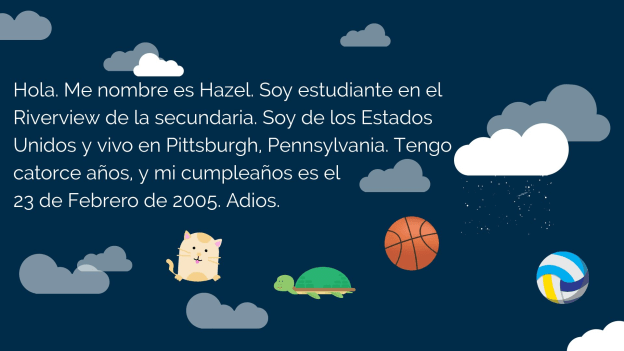
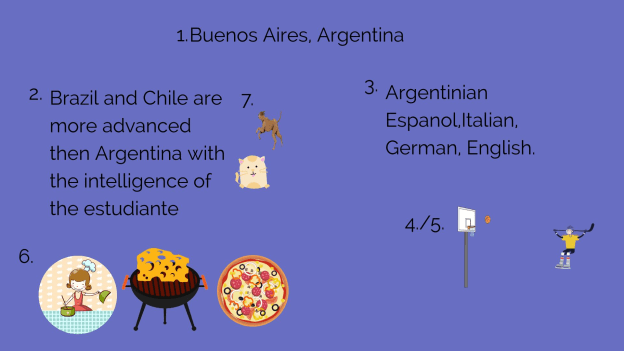
 I also thought this would be a good opportunity for them to choose and learn a little about a place where Spanish is spoken and create an “About_(country)_____” to share that information with the rest of the class. But I also realize that there are many students who are visual learners like me and I wanted to encourage students to be able to quickly look at and process information and represent it in a different way. Rather than simply restating the same content, push them to apply it at a higher level or find a different way to demonstrate an understanding of a concept.






 Libraries might seem dated, but they are in fact one of the best-kept secrets. We got library cards for our kids as soon as they could write their names. Today, cards can be used to check out everything from audiobooks to new release movies. Apps like Hoopla and Overdrive are amazing. With a library card, these two sites offer thousands of books, movies, and music. Giving kids the opportunity to borrow a stack of books without any cost is ideal for many families. Taking advantage of MEL, the state’s interlibrary loan program, allows people to request books from all over the state of Michigan and have them sent right to your local library. Showing someone how to use the library unlocks a world of possibility. Anything can be learned by using the public library. And, using the library saves a lot of money. Surrounding kids with books is one of the best things you can do to get them reading. The library makes reading an inexpensive activity. I am not alone when it comes to using the library. Several
  A few years ago one of my boys really got into hockey. We found all of the Matt Christopher books about hockey in the library, and he eagerly read each one cover to cover. Last summer my daughter was obsessed with learning about swimming. We raided the library for any nonfiction book we could find on the topic. During the winter it was graphic novels, and today she loves to dive into anything related to fairy tales. Even though I have a pretty good idea about what each of my kids likes to read, I had experiences where I selected a book or two I thought might be perfect, only to have them not show an interest in what I picked out. I do not take it personally, since there is no cost associated with it, and know that as a reader I don’t read every book I take home from the library.
 When I first started teaching, I would ask the parents of my really motivated readers who seemed to always be reading, “Tell me how you did it? What do you think has made the difference in getting your child excited about reading?” Almost every time I was given the same answer, “I suppose he just sees me reading all the time, and it just seemed like the thing to do. My nose is always in a book”.
 Exposure to good literature and authors is one of the best gifts we can give our readers. I absolutely love sharing some of my favorites with kids. Just as we could taste cheese, wine, sauces, desserts, or other menu items, book tastings are a great way to try new things. I typically put a book in front of each place setting. Each child will get a chart to list the title he or she tasted along with the author, genre, and the likelihood that he or she might read the book. The tasting is timed to keep it moving. And so after a total of several, ninety-second tastings, kids are able to walk away with several new titles that could be considerations for future reading. This activity can be adapted to any size (I have had great success with it in the classroom).
 There are times that I find my kids book hopping, and not finishing titles. I have also seen my kids plateau as readers. It is fun when we all work together and focus on completing a challenge that encourages reading and celebrating the success of others. It works well for us to keep a running list of books read on the refrigerator. We set a goal for a number of books to be read and immediately start brainstorming how to we will celebrate our success. It is nice to focus on working together and cheering each other on.


