Learn to Help Students Correct Science Misconceptions by Producing Instructional Videos

Guest post By Reggie Grant, Twitter @media4literacy

This project was presented at the FSU-Teach STEM Teaching Mini-Conference at Florida State University on June 28, 2023.

“While we teach, we learn.”

These words are attributed to the Roman philosopher Seneca and are the inspiration for a classroom project that I recently developed with my former colleague Brian McClain. “In what scientists have dubbed ‘the protégé effect,’ student teachers score higher on tests than pupils who are learning only for their own sake,” according to a 2011 Time article.

As a longtime high school science teacher, Brian has encountered various common science misconceptions that students hold, some of which are directly or indirectly related to photosynthesis. In an article published in the 2015 issue of the European of Teacher Education, researchers say misconceptions like these must be confronted and corrected to prevent them from stunting students’ future understanding.

“Misconceptions operate to distort new learning. …learners’ existing misconceptions will hinder future-related learning,” the article says. “Before new concepts can be understood, misconceptions must be dispelled.”

Brian and I designed this media project to help students use research and credible evidence to correct some of these common science misconceptions. The project guides students in the production of a short instructional video presentation that sets the record straight about a chosen misconception.

This “Set it Straight!” video project is similar to another project I developed a decade ago when I was teaching high schoolers. In that project, students taught others the correct use of a commonly misused set of words. Examples include there / their / they’re, affect / effect, and farther / further.

The process of creating a media product to teach others develops critical thinking, problem solving and creativity – three of the top five skills necessary for today’s workplace, according to the Future of Jobs Report 2020 produced by the World Economic Forum.

Using media this way in the classroom is endorsed by the Science Education Resource Center at Carleton University. SERC recommends teachers use media technology to engage students in more meaningful and deeper learning experiences. It should be used for more than delivering PowerPoint presentations and showing videos.

“Media can also be student-generated,” the SERC website said. “This approach asks the student to step into the role of the teacher and create content that will engage learners and help them to master concepts.”

“Involving students in creating media encourages collaboration, accountability, creativity, and mastery of ideas and concepts,” the SERC website said. “Importantly, one does not need a large budget, fancy studio, or advanced degree to create original media that is informative, entertaining and educational.”

The Project

The “Set it Straight!” video project is guided by a series of prompts.

For example: “What is the common misconception you researched?”

“Why do you think this is a common misconception?”

“Identify and list two or three important facts necessary to correct this misconception.”

The questions require students to restate the questions and answer them clearly and briefly. Limiting the number of sentences students can use in their answers is important. Short answers require students to really understand the concept. Clarity and brevity are the keys to effective media production.

After feedback has been provided and final revisions have been made, the questions/prompts are removed and the answers/responses become the script.

Students record themselves reading the script.

Accompanying visuals (photos/charts/graphics) are created and/or identified and downloaded.

Then, the visuals and narration are edited together for the video, which will be no longer than about three minutes.

The steps above are detailed in this document with accompanying links.

“Nutrients in the soil are the primary source of the mass increase in plants during their lives.” This misconception is corrected in this example video that we produced.

Conclusion

Making sense of a complex concept by creating media products is empowering for students. It is an effective way to actively involve students in their own education by teaching others.

And by teaching, they learn.

If you have any suggestions for this project, please send them to mediaforliteracy@gmail.com

Reggie Grant teaches journalism and mass communications at Tallahassee Community College. For 11 years, he taught media production — introduction to mass communication, photography, video production, and graphic design — at Lincoln High School in Tallahassee, Florida. He blogs at https://mediaforliteracy.wordpress.com and can be found on Twitter @media4literacy.

Looking for some PD for your school? I provide in-person and virtual training on the following topics. If you want to learn more about and explore AI and ChatGPT, contact me to schedule! Rdene915@gmail.com

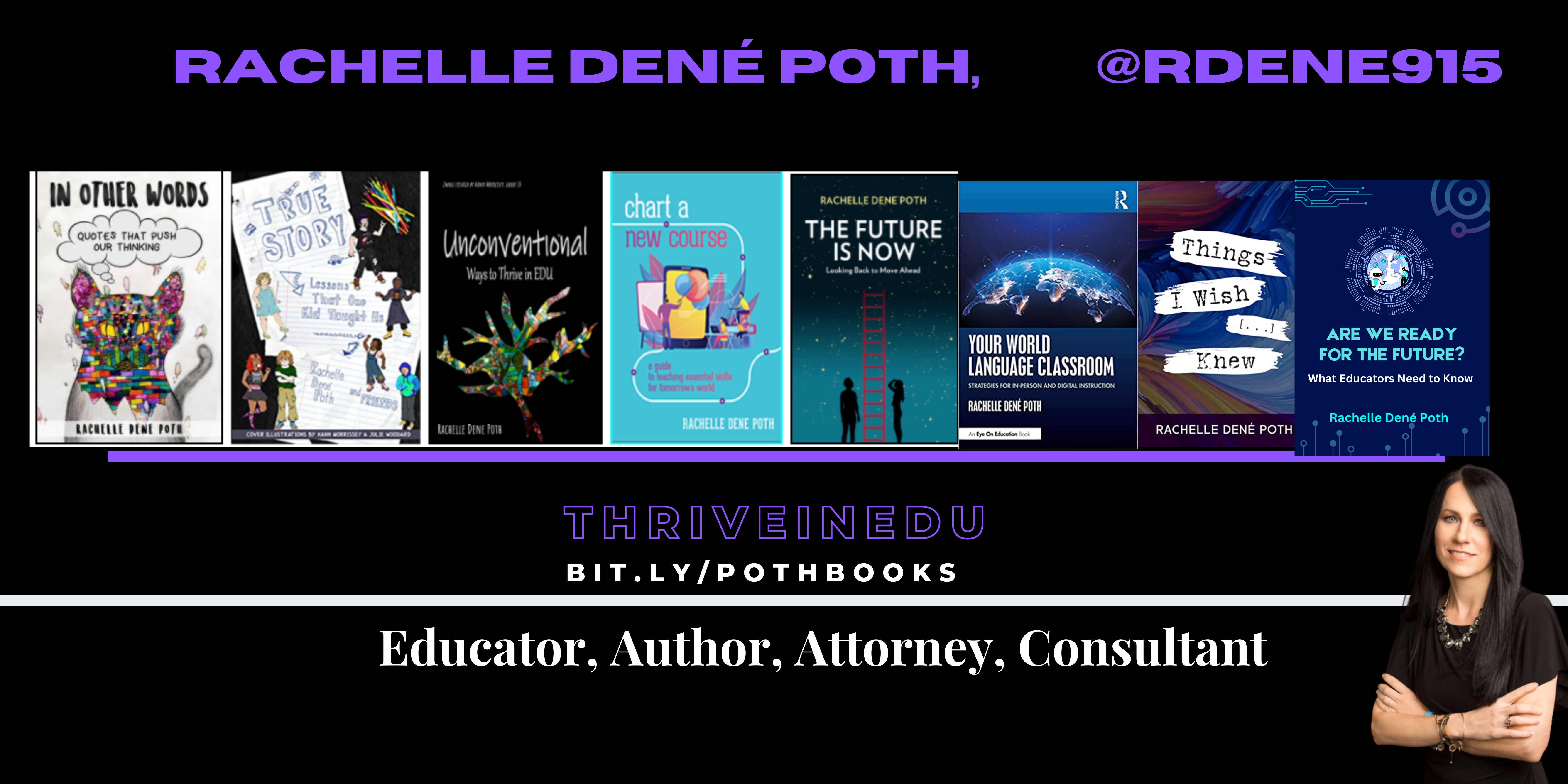
**Interested in writing a guest blog or submitting a sponsored post for my site? Would love to share your ideas! Submit your post here. Looking for a new book to read? Find these available at bit.ly/Pothbooks

Advice from an elementary teacher about summer learning

Guest post by Ashley Cooley @ashleyecooley

Next year will mark my twenty-fifth year to be an elementary teacher. Parents ask me a lot of questions about how to keep their child learning during the summer. The best thing is to of course enjoy summertime and get in all the family time that school schedules get in the way of. Here are some ideas that I recommend and used with my own children.

  • Check out recommendations from your local librarian. 
  • Review math facts (addition, subtraction, and multiplication) with flashcards or play “war” with a deck of cards or dominos.
  • Visit museums, children’s theatres and check out ideas from DFW Child… My favorite in the DFW area are the Dallas Museum of Art, The Modern, and the Dallas Children’s Theatre  
  • Review math and science workbooks that were sent home! If your child had an educational platform like Seesaw, review the assignments.
  • Have your child write letters to grandparents. They will write back! Letter writing is a lost art that children need to bring back.
  • Go to a baseball game and let your child keep a record of runs, outs, hits, steals, etc. Then make a bar graph at home to show the info.
  • Cook together! Cooking with your child is a valuable life skill that teaches children about nutrition and food safety while building math, science, and literacy skills.
  • Going on a road trip? Take these math wrap-ups with you and challenge your child to go faster
  • Take your kids to the grocery store and have them keep a running total of what’s going in the cart.
  • Keep a gratitude journal. It will keep your child writing and focused on the positive things in their lives. View the journals that were sent home (along with more workbooks, folders, and supplies). Children’s writing is so innocent and sweet, you will love reading what they wrote.
  • Visit your local library and encourage them to start a series. My first graders LOVED the “Humphrey” series.

Find inspiration from this list and make it work for you. Learning over the summer doesn’t have to be complicated or require long hours of planning. Have fun with it and give your child ownership in their learning. Wishing you a very happy summer full of learning.

My first-grade class helping me celebrate earning teacher of the year!

**Interested in writing a guest blog or submitting a sponsored post for my site? Would love to share your ideas! Submit your post here. Looking for a new book to read? Find these available at bit.ly/Pothbooks

About Rachelle

Looking for some PD for your school? I provide in-person and virtual training on the following topics. If you want to learn more about and explore AI and ChatGPT, contact me to schedule! Rdene915@gmail.com

How to Build Your Team

Guest post from Henry Turner @turnerhj

Coalition Building is perhaps the most important step that you should be thinking about right now in building your DEI team. In Change the Narrative: Fostering an Antiracist Culture in Your School and the companion course Kathy Lopes and I discuss coalition building as an important part of strategic thinking.

As we planned our next “Change the Narrative” videos, I asked Kathy what topics she thought were the most important to cover. Without a pause, Kathy responded, “Coalition Building!”

So check out this video and build your team!

Why this Matters

Build a stronger coalition. Energize and develop the advocates of DEI initiatives. Resistance will form among some community members in dealing with any DEI initiative. In response to this resistance, we need to build up the voices of advocates for the work.

Build a broader coalition. Who are the groups that may not immediately jump on board with DEI work but may support some of the initiatives or changes you are advocating for? Find natural partners in this work.

**Interested in writing a guest blog for my site? Would love to share your ideas! Submit your post here. Looking for a new book to read? Find these available at bit.ly/Pothbooks

************ Also check out my THRIVEinEDU Podcast Here!

Join my weekly show on Fridays at 6pm ET THRIVEinEDU on Facebook. Join the group here

How students access core SEL competencies at school

In Collaboration with @x2VOL 

What is Social Emotional Learning

Social emotional learning (SEL) is the process in which people develop interrelational skills that include self-awareness, social and relationship skills, responsibility, empathy, and more. Social-emotional learning has become an important piece of high school education, as educators see improved student outcomes because of an emphasis on SEL. More and more schools and districts are adopting SEL programs or tracking social-emotional development during a student’s high school career in order to prepare a student for future success whether that is in a university or the workforce. 

What Constitutes SEL

According to CASEL’S SEL framework, there are 5 elements that constitute social-emotional learning. 

  1. Self-awareness
  2. Self-management
  3. Social awareness
  4. Relationship skills
  5. Responsible decision-making.

Why is this important?

Social-emotional development is a vital part of a student’s upbringing. This kind of development impacts how a student shows up in the world, how they interact with their peers, how they approach school and jobs, and how they develop meaningful relationships. Social-emotional development is crucial in positive student outcomes because they are learning valuable life skills and concepts. Additionally, universities seek students who possess a broadened perspective on the world and developed self-awareness. 

How do students develop social-emotional learning? 

There are a number of ways students grow in these areas and they don’t come from just one thing! Many of these competencies are developed through school-related activities and programs. Five days out of the week and 7-8 hours a day, students are in school. They spend additional time with their classmates in after-school programs, sports, extracurriculars, etc. Tracking and encouraging social-emotional learning has become a priority for educators as they know so much of this comes from school or school-related activities. 

There are three overarching ways students engage in social-emotional development through school:

  1. Community service requirements, programs or clubs. 

When they become active members of their communities through service, students are able to see outside of their small world bubble, and understand needs and different ways of life. Through service projects, students work with their peers, local or even national organizations, service activity coordinators, and individuals they are directly serving. This exposes them to needs and circumstances outside their normal bubble widening their world view. They are also learning valuable skills such as teamwork, communication, collaboration, and respect. 

Many schools have a service requirement for graduation. Others highly encourage student involvement in the community and award it at graduation, while others have clubs and programs where students can engage in community service. 

  1. Work-based learning and internship programs 

In part-time jobs, apprenticeships, internships, etc. students learn valuable workplace skills but they also learn the soft skills of problem-solving, relationship-building, empathy, understanding, cooperation, and collaboration. These school-based programs connect students with a job or internship and then have regular check-ins and assessments to evaluate a student’s development. It goes beyond a student just showing up for a shift, they are learning valuable skills they can take into the workforce in the future. 

  1. Service learning classes, humanities, or religion classes

Some schools have dedicated service learning classes or incorporate service and service learning in a humanities course. Private schools often incorporate service and service learning in their religion classes as it ties back to their faith and the mission of the school to encourage spiritual formation in students. 

Service learning connects service to what students are learning in the classroom – this gives students context for their work and provides deeper connections beyond checking service hours off a list. They can see and understand the impact of their work and reflect on their experiences in a meaningful way. 

Measuring and encouraging development

These school-based programs ensure students are given the opportunity to experience growth on a deeper level. Success and development come when educators can see a student’s progress month after month, year after year. Tracking their experiences, reflections, and areas of growth is an important step in advancing social-emotional learning. 

x2VOL becomes an extension of schools’ student programs to ensure students can track their progress and educators have insight into student development. With x2VOL, students and administrators track and manage these experiences and reflections all online, in one easy-to-use platform. Click below to watch our 1-minute demo of how x2VOL works.

How x2VOL Works

**Interested in writing a guest blog for my site? Would love to share your ideas! Submit your post here. Looking for a new book to read? Find these available at bit.ly/Pothbooks

************ Also check out my THRIVEinEDU Podcast Here!

Join my weekly show on Fridays at 6pm ET THRIVEinEDU on Facebook. Join the group here

Response to Intervention (RTI): An Introduction

Guest post by Dr. Shelly Vohra in collaboration with @ClassComposer

Response to Intervention (RTI) is a strategy geared towards students who face learning challenges. Students struggle for a variety of reasons and it’s important to understand why these students are struggling and the best way to create a learning path so that they are successful and feel good about themselves. The premise behind “interventions” is to ensure that students receive the supports they need so that the gaps in learning are not exacerbated. It is important to note, however, that “gaps” should not be seen as deficits; rather gaps are areas of growth for students and each student has their own areas of growth based on a wide range of assessments. I, personally, have an issue with the term “gaps” but that is a topic of discussion for another time. It is also important to know that RTI is not a program; it is an approach that identifies student needs based on collecting data from various sources and in a variety of ways and then identifies and applies relevant instructional strategies to develop those skills in students.

Gathering and accessing data

When it comes to data, there are many sources available for educators to learn about the needs of individual students. Being able to gather all of this information, sort through it, share it with other teachers, and develop a plan can take time. Not having a streamlined space for this makes it challenging. With Class Composer, educators have everything they need to be able to monitor student progress. The information is readily accessible to anyone, at any time. It enables all teachers to access the information they need about each individual student when they need it.

With Class Composer, it is easy to track and record student growth toward individualized goals and share this information within your PLC to best provide for all students. Simplify how you manage all the assessment data collected!

Supporting teachers to support students

As it is, one of the most important parts of the RTI process is to build a team to effectively support students who are struggling. The team should include classroom teachers, administrators, teachers who support special education students and those students who are learning English, the school psychologist, speech-language therapist, and parents. Teachers provide targeted teaching and then use formative assessment practices to determine if the intervention strategies are working.

With Class Composer, it makes it easier for teachers to have access to all this information in one space. It enables teachers to create a supportive learning community for students. These teacher-student connections lead to the development of the essential relationships that need to exist for all students to be successful. The simplified space creates a better way for teams to collaborate and access the information they need when they need it.

If they are not working, the team must decide how they will adapt and modify their instructional practices to ensure that students are indeed learning and growing. A significant aspect to keep in mind is that formative assessments inform us of what we must do to ensure student success, not what the student needs to do. In other words, how are we adjusting our practice to best support students? Assessment informs instruction; it is our responsibility to continuously revise what we are doing so that students meet the learning goals related to curriculum standards and expectations.

Even though there is no one correct way to implement RTI, it is a three-tiered approach and you can think of it as a pyramid in which each tier increases in the intensity of support. They are:

(1) whole class

(2) small group, and

(3) intensive interventions.

Some school boards call this a multi-tiered system of supports or MTSS. Although there are many benefits to this approach, I also see several problems and issues arising from the basic foundation upon which RTI and MTSS were built.

I will be discussing these issues in future blog posts as well as digging deeper into this system of support and how to best implement this framework so that all students succeed, grow, and have positive self-worth.

About the Author

Dr. Shelly Vohra is an educator, coach, and consultant. Dr. Vohra teaches undergraduate and graduate level courses in Technology and Mathematics as well as working with students who are learning English. She holds an M.Ed in Adult Education & Distant Learning and a Ph.D. in Educational Technology. Dr. Vohra has over 20 years of experience in education (K-12) teaching various subject areas. Dr. Vohra has written several courses related to Indigenous Education, Multilingual Learners, and Mathematics.

Most recently, she was on a writing team that revised the Science Curriculum (K-8) for Ontario. She has presented at various conferences in Canada and the U.S.A. Dr. Vohra’s work includes designing learning experiences for students through an integrated curriculum lens that combines inquiry with equity. Her research interests include social media in education and blended learning, Dr. Vohra is currently writing a book on her journey. You can find her blog at https://techdiva29.wordpress.com/. Her website will also be launching in late Fall. You can also follow her on Twitter @raspberryberet3 and on Instagram @elevate_ed_21.

**Interested in writing a guest blog for my site? Would love to share your ideas! Submit your post here. Looking for a new book to read? Find these available at bit.ly/Pothbooks
************ Also check out my THRIVEinEDU Podcast Here!

Join my weekly show on Fridays at 6pm ET THRIVEinEDU on Facebook. Join the group here
Close Your Eyes

Guest post by Brian Kulak @bkulak11

It’s a short list, but the older I get, the longer it becomes. 

Jeff Buckley’s “Last Goodbye.”

Pearl Jam’s “Release.”

James’s “Out To Get You.”

Regardless of where I am (except in the car; I’m not a lunatic) or what’s happening in my life, there are certain songs that make me close my eyes. A reaction both genuinely involuntary and intimately purposeful. A strange, dichotomous shutting off of one sense in favor of another, telling our eyes to sit this one out while our ears do the heavy lifting. 

And then there’s the goosebumps. The sensation, dubbed frisson, is triggered by a dopamine flood measuring 4-5 seconds associated with seeing, hearing, or experiencing something that triggers an emotional response. Interestingly, the brain elicits the same reaction to fear. 

I like to think about it as moment recognition. My conscious decision to dim everything else in an effort to brighten the experience of a deeply personal, infinitely resonant moment in my life. But in order for it to take hold, to really matter, I have to remember that moment, often at a random, unrelated or loosely connected time. 

So I do. 

And it works. 

Now, while I don’t walk around my school, eyes shut, meditating on moment recognition, the practice itself has made its way into my leadership. Instead of song lyrics, however, it’s small moments with kids, staff, and community. 

When a kindergartener found out he would be repeating this year, he said, “it’s okay. I love kindergarten, and Mr. Kulak is my best friend.” 

When I responded to a Twitter question about leadership catchphrases, a teacher chimed in that I often say, “I trust you” and don’t even realize it. Now, I do. 

During the promotion, a Tatem OG, whose final child was leaving, approached me sheepishly and asked for a hug. I told her to bring it in, and she cried while we hugged. 

Education, unlike any other profession, is a mosaic of these experiences. Without the predictability or isolation of other fields, we have daily opportunities to create and store these brief moments of zen. And the best part? They will always include other people.

So do it. Find small moments for which you close your eyes, literally or figuratively, and store them up. There will come a time, and it might be soon, when you want to close your eyes because of frustration or fatigue, and when you do, behind your eyelids and just within reach will be these moments of frisson. 

Close your eyes. 

**Interested in writing a guest blog for my site? Would love to share your ideas! Submit your post here. Looking for a new book to read? Find these available at bit.ly/Pothbooks

************ Also check out my THRIVEinEDU Podcast Here!

Join our weekly show on Fridays at 6pm ET THRIVEinEDU on Facebook. Join the group here
Creating a Learner-Centered Classroom

Guest blog by Kellie Bahri @Kbahri5

As a teacher in elementary school, I’m passionate about making the classroom a fun and engaging place where students can take charge of their own learning. The Learner-Centered approach puts students in the driver’s seat and encourages them to be more involved in their own education. This type of classroom is designed to fit each student’s needs, interests, and abilities.

Student-centered learning empowers students to take control of their own education by allowing them to explore topics, generate questions, and find answers on their own. This type of learning helps students develop critical thinking skills and encourages them to take an active role in their education. When students are given the freedom to direct their own learning, they are more likely to be engaged, motivated, and develop a deeper understanding of the material.

It has been demonstrated through research that a Learner-Centered Classroom can significantly enhance the motivation, engagement, and success of students. By adopting a student-focused approach, educators are able to facilitate the development of important skills such as critical thinking, problem-solving, and self-reflection in their students. With this student-centered approach, students will become more confident and empowered learners.

The implementation of seven key strategies can help the transformation of a conventional classroom into a student-driven learning environment, in which students are equipped with the skills necessary to take a lead role in their education.

Student-led discussions

I encourage my students to lead discussions in class by sharing their ideas and perspectives. I use strategies such as Think-Pair-Share or Socratic Seminar discussions to facilitate student-led conversations. During these types of discussions, students are given the opportunity to share their thoughts and engage in active listening with their peers. This type of student-led discussion promotes critical thinking and helps students develop strong communication skills.

Collaborative learning

 I encourage my students to work together in small groups or pairs on projects, assignments, or activities. Collaborative learning helps students develop important skills such as communication, teamwork, and problem-solving. I use techniques such as Jigsaw or Group Concept Mapping to encourage my students to collaborate and share ideas and I use online collaboration tools such as Google Classroom or Schoology to allow my students to work together on projects from anywhere. This type of learning not only promotes social and emotional growth but also helps students understand and retain information better through shared exploration and discussion.

Choice-based learning

 I believe in offering my students a range of learning options, allowing them to choose activities that interest them and align with their learning styles and passions. Choice-based learning is a student-centered approach that empowers students to take the lead in their learning. I use centers, stations, or choice boards to provide my students with a variety of options and let them choose what they want to work on. This type of learning creates a more engaging and personalized learning experience for each student and enhances student’s’ organizational skills. 

Inquiry-based learning

 Inquiry-based learning is a student-driven approach where students are encouraged to ask questions and engage in their own investigation to increase their critical thinking and problem-solving skills. I use prompts such as “I wonder…” or “How can we find out…” to support inquiry-based learning, and provide opportunities for students to engage in hands-on activities, simulations, and experiments to support their investigations. And to make the process even more meaningful, I encourage students to keep a student inquiry journal where they can jot down all their curious questions about the world around them. This journal not only helps them keep track of their progress, but it also gives them a sense of ownership over their own learning journey.

Project-based learning

Project-based learning, a hands-on method of education where students engage in real-world projects that showcase their knowledge and skills, can lead to a deeper understanding of the material and increased engagement in the learning process. By working on challenging projects that require critical thinking, problem-solving, and application of knowledge, students can see the relevance of their education and make connections to the world around them. This approach aligns with the Sustainable Development Goals (SDGs) as it promotes active, meaningful learning and the development of skills that are essential for success in the 21st century. Examples of project-based learning activities may include creating a podcast, designing a website, or constructing a model of a historical landmark.

Self-reflection

I encourage my students to reflect on their own learning process and to think about how they can improve. This type of self-reflection helps students to understand their strengths and weaknesses and to set goals for themselves. By regularly reflecting on their own learning, students can better understand how they learn and how they can become more effective learners.I use online journaling tools such as Flip, SeeSaw, or Kidblog for students to document and reflect on their learning experiences.

In-class projects

I assign in-class projects that allow my students to apply the concepts and skills they have learned in class in a hands-on and engaging way. These projects can involve independent or group work and can be used to reinforce the material covered in class. For example, a student might create a poster or model to demonstrate their understanding of a particular subject. In-class projects give students the opportunity to be creative and to showcase their learning in a tangible way. This type of project also helps students to develop important skills such as research, collaboration, and presentation skills.

Imagine being in a classroom where the focus is on you and your learning journey. It’s all about empowering students to make the most of their education, and helping them understand the importance of what they’re learning. That’s what makes a Learner-Centered Classroom so special. A learning space for students to actively participate and be engaged is key to inspiring students and sparking a lifelong love for learning.

Kellie Bahri is an experienced instructional specialist, teacher, and children’s book author. With over a decade of experience in education, she has successfully implemented innovative instructional strategies resulting in improved student performance and engagement. As Elementary Teacher of the Year for 2020-2022, her dedication to education and creative teaching methods are highly regarded. Kellie also uses her writing talent to inspire a love of learning in young readers through her children’s book. Her goal is to make a positive impact on children’s lives and help them reach their full potential.

About the Author

Kellie Bahri is an experienced instructional specialist, teacher, and children’s book author. With over a decade of experience in education, she has successfully implemented innovative instructional strategies resulting in improved student performance and engagement. As Elementary Teacher of the Year for 2020-2022, her dedication to education and creative teaching methods are highly regarded. Kellie also uses her writing talent to inspire a love of learning in young readers through her children’s book. Her goal is to make a positive impact on children’s lives and help them reach their full potential.

**Interested in writing a guest blog for my site? Would love to share your ideas! Submit your post here. Looking for a new book to read? Find these available at bit.ly/Pothbooks

************ Also check out my THRIVEinEDU Podcast Here!

Join my weekly show on Fridays at 6pm ET THRIVEinEDU on Facebook. Join the group here

Take A Knee

 BY BRIAN-KULAK

I beat Colin Kaepernick to the knee by a cool twenty-six years. 

Before the former 49ers quarterback literally took a knee during the national anthem to raise awareness about police brutality and social injustice, I had already begun the practice, albeit for a far less political purpose. 

As a waiter at a local Pizza Hut, I started the unorthodox practice of taking a knee when I took orders. Regardless of who was in front of me, I just thought it was easier, and more comfortable, to take a knee and write the orders on my pad while leaning against the table. For me, it was about ergonomics because standing and writing were awkward, and because I have terrible handwriting, I needed to lean on something to ensure I would be able to understand what I wrote minutes later. 

At one point, my boss called me over and asked why I took a knee. I explained, and he just looked at me and said, “But it looks weird. I’d rather you stand up.” 

Now, at 19, I wasn’t about to make a stink. He was my boss, and I needed the part-time job. Still, as I look back on it, what difference did it make? I would argue my customers appreciated me meeting them on their level instead of making them look up at me like some deranged, pizza-wielding, megalomaniac. 

A few years later, as I started my teaching career, I took a knee all the time. When I would stop by a student’s desk to offer feedback, redirect, or check in, I would take a knee. Now, in year twenty-four, I still find myself on bent knee, despite one of them being ravaged by arthritis and a torn meniscus, and I make sure to start on day one. 

Whenever I meet our new kindergarteners during summer meet-and-greets, I always take a knee when I offer my hand to introduce myself. The action has become as involuntary as a sneeze; the reaction from kids invariably features disarmed smiles and enthusiastic high-fives.

As conversations in education continue to focus on equity and access, we need to be mindful that our students first associate equity with their access to us. Providing a model of those two complex concepts ensures kids can see and feel each Immediately. 

But it’s much more powerful than that when you consider that children are forced to look up to grown ups as a matter of course, their little necks perpetually craned to get our attention. Taking a knee flips that script in such a way that balances power, something children experience rarely. 

Ultimately, we are all just grown-up versions of the children who once had to look up to people all day. Some of us still do. But no one should have to. 

Take a knee. 

**Interested in writing a guest blog for my site? Would love to share your ideas! Submit your post here. Looking for a new book to read? Find these available at bit.ly/Pothbooks

************ Also check out my THRIVEinEDU Podcast Here!

Join our weekly show on Fridays at 6pm ET THRIVEinEDU on Facebook. Join the group here.

Educators: 10 Ways to Make Time for Self-Improvement

Originally published on Getting Smart
As educators, we need to make more time for self-care. In order to bring our best selves to our classrooms and our schools, we must make time for our needs each day. Over the holiday breaks, making time to do some normal things like catching up with family and friends, and sleep in late, are good ways to recharge over the summer break.

When we have these breaks, it is easy to get into a new daily routine, finding time for all of the things that we wanted to do but couldn’t fit into our schedules throughout the year. It may take a few days to adjust, but I find that in a short amount of time, I am well into my winter break routine of catching up on some work and enjoying the extra time with family. The days are still filled but on a more relaxed schedule. Many take advantage of the extra time and lack of a set schedule to engage in personal and professional development. Whether it is a time to travel with family and friends or something more professional like attending conferences or taking a class, we all find ways to fill all of that extra time. We get used to a new routine, and likely feel pretty good about our improvement and feel some balance until August arrives and educators return to their classrooms, hopefully, recharged and excited for the new school year.

This has been a challenging year and educators can quickly become burnt out trying to prepare everything and keep up with the changes. We can struggle with finding balance and making time to keep up our personal and professional growth during the school year . So how can we still do ‘all the things’ and stay balanced and find enough time for ourselves?

Here are ten ways to add in more time for you and to be more productive each day:

  1. Connect. We are surrounded by so many people each day in the midst of thousands of interactions. But how many of those interactions are truly meaningful and give us the needed time to pause, lean in and really listen? Are we able to connect with family, friends, students, and Professional Learning Networks (PLN)? Find a way to connect every day. Make time for family first. Share a meal together, go for ice cream, take a walk, watch TV, or play a game. Family time is critical; remember to make time for your ‘school family,’ too. Whether it’s by greeting students at the door, spending time in the hallways or the teachers’ lounge, or using social media to connect through messaging, make time for those moments. Find at least one person to connect with each day. It helps to keep us grounded and gives us access to a constant support system.
  2. Have a routine. Sometimes it comes down to just having a little bit of consistency in each day. Maybe this means setting aside a specific time to read in the morning, listen to music, respond to emails, or simply reviewing your schedule for the day. Personally, I find that having these activities during the day is one way to keep myself in balance. Knowing what my day holds or starting each day with a certain task like reading a blog keeps me accountable for taking time for myself.
  3. Choose one. There are so many choices we have for activities that are worthwhile for our mental and physical well-being. Our days become quite full, and the worst thing we can do is overwhelm ourselves by trying to do everything. Some good advice I received from a friend is to simply choose one thing. Get outside and walk, meet up with family and friends, whether once a week or as often as your schedule allows. Try to pick one activity per day that will be good for your well being.
  4. Disconnect. We all stay connected by a variety of devices. Technology is amazing because it enables us to communicate, collaborate and access information whenever we need to. However, it disconnects us from personal connections, takes away a lot of our time, and can decrease our productivity. It’s beneficial for us to make time to truly disconnect. Whether you leave your device at home during a vacation or simply mute notifications for a period of time during the day, it’s important to take a break. Pause to reflect, and be fully present with family and friends. Personally, I struggle in this area but have been more intentional about taking a break from technology.
  5. Exercise and movement. Think about the students in our classrooms and the learning experiences we create for them. Do we have them stay seated in rows each day or are there opportunities to move and be active? Finding time for exercise and movement is important to our well-being. Go for a walk, have a dance party, or use an on-demand or online exercise program. Get up and moving with your students, and take learning outside whenever you can. Exercise has so many benefits that even setting aside 10 minutes a day is a great way to boost energy and mental wellness. Invite a friend or colleague to join you and hold each other accountable.
  6. Time to rest. Just like exercise, it’s also important to get enough rest. How many times do educators stay up late grading papers or writing lesson plans, and get up extra early to prepare for the day?  We can’t bring our best selves to our classroom if we are tired. Lack of sleep and quality rest will negatively impact our mental and physical health. Our students and colleagues will notice our lack of energy and possibly even mental clarity, so we need to ensure time for sleep to receive the positive benefits!
  7. Reflection. It is important that we model lifelong learning and the development of self-awareness and metacognition for our students. This involves setting aside a period of time where we reflect on our day, the progress we made, the challenges we faced, and even epic fails that we might have experienced.  Finding a way to capture these reflections whether in a blog or journal or using an audio recording to listen to later, are all great ways to track our progress. Then we can revisit our reflections and ask ourselves, “Am I a little bit better today than I was yesterday?”
  8. Learning. Education is changing every day. There are new topics, trends, and tools that make keeping up with everything tough. There are so many ways that we can learn today that don’t take up too much time, however. While traditional professional development training and in-person sessions are useful—especially for the opportunity to connect with other people—the reality is that carving out availability to do this on a regular basis is a challenge. Instead, find something that meets your schedule. Whether it’s listening to a podcast or participating in a Twitter chat once or twice a week, watching a webinar, reading a few blog posts, or joining a group on Voxer to discuss what’s on your mind and ask questions about education. There are many ways to learn on the go!
  9. Celebrate. Make time every day to celebrate something. Whether it’s a positive event in one of your classes, something one of your students did, recognizing a colleague, validating your own efforts or just a random celebration, focusing on the positives will impact your well-being in the long run. No matter how big or small, the steps toward success and achieving goals and even some mistakes should be embraced and even celebrated. Modeling a celebration of the learning process, especially from failures, sends a positive message and is a good model for students.
  10.  The power of no. It’s amazing how difficult it can be to say no. Educators are often asked or volunteer to assume additional responsibilities like sponsoring a club, joining a committee, chaperoning an event, or participating in other school events. There are so many things that comprise our role as educators and with our passion for teaching, it can be difficult to say no, especially when it comes to education and our students. But as hard as it is, sometimes it’s the best choice. Think about what is most important to you and the limited time that you have. I focus on why and how my participation or acceptance of whatever it is can benefit my students and the school community. Saying no is tough, but it is more than reasonable to say no sometimes. We have to do what is best for ourselves, so we can do what is best for our students.

These are just a few ways I’ve tried to maintain more balance and be more effective and productive in my work. We have to start each day with a focus on self-care, because that is how we can make sure that we are bringing our best selves into our classrooms, into our schools, and home to our families each day.

**Interested in writing a guest blog for my site? Would love to share your ideas! Submit your post here.

Looking for a new book to read? Many stories from educators, two student chapters, and a student-designed cover for In Other Words.

Find these available at bit.ly/Pothbooks  

Supporting Educators and Students

Guest post by Lee Ann Raikes, @mastereducator @MRS.RAIKES/MES

Teaching is difficult. Studies have shown that some teachers have taken on symptoms of PTSD because they become so engrossed in each of their students’ lives. If you are human, it is bound to happen. One of the reasons I chose to pursue this profession was to inspire and empower our future generations to be bold enough to follow their passions regardless of any obstacles that stand in the way. Easier said than done when most of our students come to us with some form of past trauma that can hinder their desire to learn and grow both as an individual and a student. The students who need us the most are the ones who never miss a day of school and the students who challenge us the most. While I still struggle some days in finding a way to maneuver through the behaviors my students may present, I have found ways to make my life, as well as my students’ lives, in and out of the classroom more bearable.

I am a huge proponent of whole child education and realizing the importance of building relationships with my students. I am also a very passionate and emotional human being. I made myself physically and mentally ill because I could not find a way to help the most challenging students understand their potential. They would fight me every step of the way. The harder I tried to support them, their behaviors would escalate. After many conversations and battles, it all became so clear. These students were so afraid that I would let them down and give up on them, as so many others have. An epiphany of sorts, but that didn’t make my job at hand any more comfortable. Sadly, there were days I wanted to give up. I knew I couldn’t go on this way, so I began researching what I could do to transform learning in the classroom and improve my mental state. I am known as a very energetic, happy, and positive individual. My students feel comfortable in my classroom and know they can come to be at any time, but I knew I needed to find strategies that would better prepare me for dealing with obstacles that would impede learning and growth over the school year.

Like it or not, I, as the adult in the room, set the tone. It all begins with a mindset. If I am saying to myself I am going to have an awful day, then I will. If I hold preconceived notions about my students, that is a disservice to them. I would sabotage my day the moment I woke up by putting thoughts in my head that possibly weren’t even going to occur. Not only was this unfair to myself, but my students as well. I would engage in negative self-talk, which led to having a terrible day. I would think during my first period about a student I wouldn’t see until 4th period and how awful he was going to be. When he would enter the classroom, and he was having a great day, I already had it in my mind he was going to misbehave, so I would react negatively instead of correctly praising him for engaging appropriately. How wrong is that? Trust me, students felt any vibes I was putting out there, whether positive or negative. If I wanted to continue to grow as an educator and connect with my struggling students, I had to change.

For about two years now, I have followed the strategies of a growth mindset, the power of positive self-talk, and writing daily affirmations. I have brought these strategies into my classroom as well. My 7th graders had no idea that challenges grow the brain. They didn’t realize that the more they said they hated math, the harder it would be for them. They felt they were labeled by grades or the services they received; therefore, they wouldn’t give their best efforts. By visualizing where they wanted to go, it made the process of achieving their goals more bearable. Now, we as a community of learners catch ourselves before letting negative words or thoughts come off our lips or enter our minds. Just by teaching the students about the brain and the power of a positive attitude and mindset, I have seen substantial growth in my students academically and as humans. Yes, I prepare my students for meeting academic goals, but more importantly, I want to prepare them for life. Life is hard, but understanding positive thinking’s benefits and power can make difficulties easier to handle.

Reflecting is a powerful tool. I knew I could do better and find ways to deal with the teaching profession’s emotional aspects. Ask yourself, are you sabotaging your day? Do you hinder your relationship with your students or colleagues based on preconceived notions? Do you limit yourself based on negative thinking or a bad attitude? It matters! I challenge you to wake up each morning and start the day with positive self-talk and carry that into the world. You will find a sense of inner peace, and the negativity you encounter won’t consume you. Research has shown that people who are positive thinkers add years to their lives. We are what we say we are. Who are you choosing to be?

TeacherCast Educational Network | Developing Standards-Based Instructional Technology Integration

Technology Integration - Instructional Coaching - Productivity Secrets for Educators

Leadership Liner Notes: Sean Gaillard

Built on Connection. Tuned for Impact.

Stories by Thomas Oppong on Medium

Dr. Rachelle Dené Poth @Rdene915 Educator, Consultant & Keynote Speaker, Author, Attorney #THRIVEinEDU

Hooked On Innovation

When Innovation slaps you in the face, we slap back.

Teach Better

Dr. Rachelle Dené Poth @Rdene915 Educator, Consultant & Keynote Speaker, Author, Attorney #THRIVEinEDU

BrianKulak.com

Dr. Rachelle Dené Poth @Rdene915 Educator, Consultant & Keynote Speaker, Author, Attorney #THRIVEinEDU

The Principal of Change

Stories of learning and leading

Mandy Froehlich

Dr. Rachelle Dené Poth @Rdene915 Educator, Consultant & Keynote Speaker, Author, Attorney #THRIVEinEDU

Katie Martin

Informed by research, refined by practice

#RocknTheBoat

Rocking today's classrooms, one teacher, student, and class at a time.

User Generated Education

Education as it should be - passion-based.

Learning as I go: Reflections & lessons learned

Dr. Rachelle Dené Poth @Rdene915 Educator, Consultant & Keynote Speaker, Author, Attorney #THRIVEinEDU

Serendipity in Education

Join me, Allyson Apsey, as I stumble upon the fortunes of learning, laughing, and celebrating alongside incredible people.