Augmented reality

Guest post by Alfonso Mendoza, @myedtechlife

Augmented Reality is changing the way we learn. Augment Learning with Augmented Reality offers a glimpse into how augmented reality will enhance K-12 education in public schools, as well as some of the challenges that need to be overcome for AR’s educational potential to be fully realized.

Augmented Reality can be very effective in helping teachers enhance their in-person and virtual classroom experiences. With augmented reality, students can “walk” through a virtual environment or visit a museum in a different country with a headset or a mobile device. This could mean virtual posters on a real wall, or it might mean overlaying an interactive digital map of Europe onto physical maps that are hanging up in class. AR allows students to be more engaged in their learning. AR provides a different way of thinking and this helps develop creative ways of solving problems.

Augmented Reality creativity tools can now be accessed on mobile devices such as tablets and cell phones and headsets. These tools allow students to create artwork, animation, and interactive media that can be shared with others. AR technology enables the student’s work to come alive in a virtual environment such as an animated movie, museum exhibit, or television commercial. AR also offers accessibility for individuals with disabilities such as blindness or low vision, and deafness. 

Teachers do not need to fear AR technologies, but we do need to make sure that we provide professional development to have them play, be creative, but also make the technology relevant to their subject matter. As educators, we must be aware of the technology that is being used today so that we can prepare our students for the jobs of tomorrow. 

There has been a ton of buzz about Augmented Reality and how it is changing the way we teach our children. If you have used AR in your classroom or know someone who has, let me know what you’ve experienced with this technology so far. In my experience as an educator, I find that when students are more engaged they learn better than if they were just sitting at their desks listening to a lecture. What do you think? Let me know by leaving a comment below!

**Interested in writing a guest blog for my site? Would love to share your ideas! Submit your post here.

Looking for a new book to read?

Find these available at bit.ly/Pothbooks

** Also check out my THRIVEinEDU Podcast Here!

Join my weekly show on Mondays and Fridays at 5pm EST THRIVEinEDU on Facebook. Join the group here

Tract: Student -driven learning

Over the past school year, educators sought new ideas and digital tools to bring to the classroom to help with transitions between virtual, hybrid, and ​in-person learning. Rather than focus on specific digital tools, I thought of methods that would not be impacted by shifts in our learning environment. Bringing in authentic opportunities for students to design their own learning paths, to engage more in learning while developing essential SEL skills that will best prepare them for the future, is important.

One of my favorite methods to use has been project-based learning (PBL). PBL is a great option for giving students a chance to explore an area of interest, to solve a problem, or stretch themselves and learn about something impacting their community or the world. Authentic PBL focuses on student-centered learning and empowers students to develop their skills in many areas including critical thinking, problem solving, creativity, time management, and leadership skills to name a few. To help with PBL, I recently found Tract, a peer-to-peer program for students ages 8 and up in which the teachers, or creators are students.

Providing something for each student that meets their interest can be a challenge, but with Tract, all students can find something they can do independently for their unique interests and skill level.

What is Tract?

Tract is a web-based program, co-founded by educator and parent Esther Wojcicki and Ari Memar, a former student of Esther’s, who vet all of the Tract courses and content to make sure that it is safe for students and focused specifically on kids. I had a chance to speak with Ari and learn more about Tract and the many benefits for students. What I love about Tract is the variety of topics available for students to explore, how authentic and meaningful the learning is, and how students build essential SEL skills. With Tract, educators can support SEL and self-efficacy through student-directed, project-based learning through the enrichment clubs and on-demand classes available. Students can work through the classes at their own pace. Classes provide students with an opportunity to explore many different areas which include topics like art, gaming, learning to code, applying artificial intelligence and machine learning, becoming an entrepreneur, and many more.

The classes are led by middle school, high school or college students who create and share their passions for what they are learning and help inspire other students. Because of the way that it is set up, students build their confidence as they learn from peers and embrace new challenges that are inspired by students as creators from around the world.

Students can choose from the different challenges and as they complete them they are awarded coins, an experience based currency that can be traded in to use for gifts of recognition of other learners on Tract or real-world donations directly impacting the United Nations Sustainable Development Goals (SDGs), for example planting a tree, protecting the coastline, and donating a meal for a family.

Getting started

Tract is for use both at home and in classrooms around the world and the content is best for students in third through the eighth grade. All videos are reviewed and hosted on their private Vimeo server. Tract is providing its service free for the first 1,000 teachers using my code, RACHELLE, to request access at teach.tract.app. Once your account is ready, you can set up your students using a simple educator code..

What makes Tract different

Tract is unlike any other platform that I have seen. It is a peer-to-peer learning platform that provides students with many different ways to learn about topics of interest, to explore their passions, and to build essential skills for not just in the future but for now. For students interested in creating content on YouTube or TikTok, Tract channels that motivation. It also promotes the development of social emotional learning (SEL) skills as students become self-aware as they design their own project and track growth, build social awareness as they learn from peers from around the world, develop self-management through setting goals and managing any stress that may arise during independent learning. Students build relationships as they interact with one another and focus on responsible decision-making as they decide their next steps in learning.

Using Tract takes what can become a more passive learning experience and provides enrichment. It helps students to become more active learners, shifting from consumers to creators in and out of the classroom. They become hooked into what they are learning while also being challenged to think about and connect with the topic and process this information to design their own learning. For example, creating a video game sparks interests in coding, hands-on creating helps students to more deeply experience learning in meaningful and purposeful ways.

Scaffolded lessons and experiences build engagement and help students to see learning more as a process rather than an end product.

Finding content

The library is full of on-demand learning paths available that range from topics like the arts, business, health, history and social sciences, math, physical education, politics, science, and world languages for a few examples.

Here are a few of my favorites.

  • Because I love music, the “I just want to rock and roll” created by Cody Williams
  • “How to Create a Learning Path on Tract” by Ryan Chester (Harvard class of 2020)
  • The TikTok algorithm explained, created by a high school student
  • “Give a speech like President Obama”
  • “Health and Leverage AI to Support Mental Health” created by a student who has a non-profit “The Hope Sisters
  • “Virtual Reality Fly Across the Globe Without Leaving Your Couch”.

Rachelle Dene is a Spanish and STEAM: What’s nExT in Emerging Technology Teacher at Riverview High School in Oakmont, PA. Rachelle is also an attorney with a Juris Doctor degree from Duquesne University School of Law and a Master’s in Instructional Technology. Rachelle is an ISTE Certified Educator and serves as the past president of the ISTE Teacher Education Network. She was recently named one of 30 K-12 IT Influencers to follow in 2021.

She is the author of five books including ‘In Other Words: Quotes That Push Our Thinking,” “Unconventional Ways to Thrive in EDU” “The Future is Now: Looking Back to Move Ahead,” “Chart A New Course: A Guide to Teaching Essential Skills for Tomorrow’s World and her newest book “True Story: Lessons That One Kid Taught Us” is now available. All books available on Amazon and Barnes and Noble, or directly from Rachelle.

Follow Rachelle on Twitter @Rdene915 and on Instagram @Rdene915. Rachelle has a podcast, ThriveinEDU available at https://anchor.fm/rdene915

**Interested in writing a guest blog for my site? Would love to share your ideas! Submit your post here. Looking for a new book to read? Find these available at bit.ly/Pothbooks

************ Also check out my THRIVEinEDU Podcast Here!

Join my weekly show on Mondays and Fridays at 5pm EST THRIVEinEDU on Facebook. Join the group here

Building interest in computer science

Previously posted on Getting Smart, has been updated.

There have been discussions focused on the need for a computer science curriculum in schools. During recent Twitter chats and in webinars and panel discussions, educators have shared concerns about bridging the K through 12 computer science gaps. There is a growing need for students to develop skills in coding and in STEM-related fields however there are either real or perceived barriers to providing these opportunities for students. Possibilities include lack of resources, inadequate staffing, perhaps not enough room in student schedules, or a perceived lack of knowledge by educators when it comes to bringing computer science into their classes. For some, it can also be a lack of confidence in knowing where to begin or a hesitancy to not start if we don’t feel confident enough, which was the case for me.

Fortunately, there are many options available for educators to bring CS into their classrooms. The benefits include promoting student agency and self-paced learning, the development of essential SEL skills, and promoting student curiosity and innovation in learning. What I believe is important is that all teachers create opportunities for students to learn about computer science, how to code, and apply coding skills to all grade levels and content areas. 

Last year I referred to the World Economic Forum, for the job outlook for 2022. The report shared the importance for students to develop skills such as collaboration, communication, critical thinking, creativity, and problem-solving. The need for STEM skills will continue to increase as we see new and emerging technologies develop. A prior projection was that 3.5 million STEM jobs will need to be filled by 2025. 

In addition to STEM skills, students specifically need exposure to computer science. I recently took one of the newer Microsoft Educator courses on computer science and it also shared some interesting statistics. It stated there will be 49 million more digital jobs created by 2025 in fields including AI, cybersecurity and data analytics, which will require students to have computer science skills.  Families are also in support of bringing more computer science into our schools, as a Gallup poll from September 2020, reported that 69% of parents and guardians in the United States expect schools to integrate computer science into the curriculum.  

As educators, we need to have resources available that enable us to build our own skills but also provide students with personalized learning opportunities to explore computer science and find something that meets their specific interests and needs. The goal is to better inform students and hopefully spark curiosity for learning and lead our students to become creators and innovators.  

Here are six resources to explore that will give students a chance to see how computer science impacts our world and build their skills in a variety of focus areas. 

  1. Amazon Future Engineers An interesting opportunity for students to learn how computer science, engineering, algorithms, and machine learning are used in Amazon’s fulfillment centers. There are options to take a tour focusing on computer science or to interact with an Amazon tour guide or sign up for a one-hour learning experience. There are many resources including slides and activities aligned to the computer science standard available in the Teacher Toolkit. This provides a real-world learning opportunity for students. Teachers can register for tours that will continue through July 1st. This is a good option for in-person or remote learning.
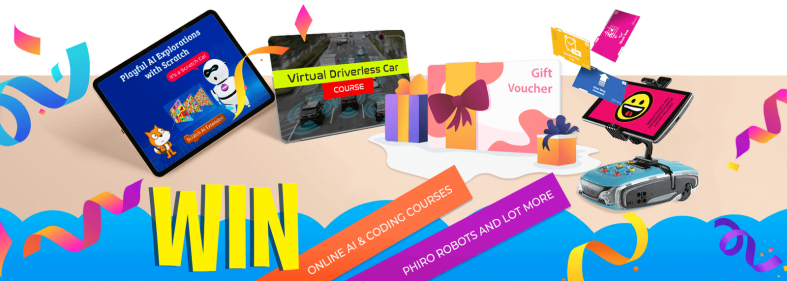
  2. AI World School Offers a variety of courses and resources for learning about STEM and coding. In addition to three flagship AI courses, there are several micro-courses available divided into the three age groups and with topics including creating with Scratch, building an Android or iOS app, and more advanced options such as JavaScript and Python coding for older students. 
  3. CoderZ. A cloud-based STEM learning opportunity, where students can code 3D robots. There are different courses available through CoderZ including CoderZ Adventure for ages 6 through 10, Robotics 101, a self-paced program for ages 11 through 14, Summer Robotics 1 or 2 for ages 11 to 14, and Python gym for students ages 15 and older. It has 3D simulations of robots, students can write and test their own code, and teachers have access to self-paced curriculum and teacher guides. Students receive immediate results of their work which is great for in-person or remote learning. CoderZ integrates with Clever, ClassLink, and Google Classroom.
  4.  Grasshopper. For teachers or adult learners looking to build their own skills, Grasshopper is a coding app for beginners. The name is in recognition of Grace Hopper, a pioneer in computer science. The Grasshopper curriculum is divided into topics including fundamentals, array methods, animations, web page design, and more. There are many types of coding activities and lessons available through Grasshopper that are available for free on Android and iOS as well as for desktop use. 
  5. Kubo coding is a good program for starting with elementary students specifically in grades K through 5. Students can build their coding skills through a tag tile programming language which is a puzzle-like coding concept. Kubo Play is a new simulation tool that works well for blended learning experience by giving students hands-on coding activities and 300 tasks that cover ISTE standards for coding.
  6. Mblock. Easy to get started with coding by choosing to code with blocks or code with Python. They have featured coding products and additional resources such as online coding training for Scratch, robotics programming, and Python. There are also sample projects where students can view the code and then start creating their own projects. 

These are just a few of the resources to explore that will be helpful for learning regardless of whether in-person or virtual.  The end of the school year is always a good opportunity to try some new ideas and that will help to keep students engaged, and hopefully develop an interest in computer science. These can even be fun options to explore with family and build skills together. Check out the Family code night!

Author

Rachelle Dené Poth is a Foreign Language and STEAM Educator at Riverview High School in Oakmont, PA. She is also an Attorney, Edtech Consultant and Speaker. Rachelle is the author of seven books about education and edtech and a blogger. Follow her on Twitter and Instagram at @Rdene915

**Interested in writing a guest blog for my site? Would love to share your ideas! Submit your post here. Looking for a new book to read? Find these available at bit.ly/Pothbooks

************ Also check out my THRIVEinEDU Podcast Here!

Join my weekly show on Mondays and Fridays at 6pm or 6:30 pm ET THRIVEinEDU on Facebook. Join the group here

True Collaboration

Guest post by Stephanie Rothstein @StephRothEDU

The term is thrown around casually and I find myself biting my tongue. 

Oh yeah, my students collaborate

I love collaborating with you. 

But, are we really collaborating and what does it mean to be a true collaborator?

Here is what I often see called collaboration:

Students on a shared slide deck, a shared Jamboard, a shared document but they each have their own section they are responsible for. They are in a group doing work that I call Alone Together work. This is perfectly fine and is wonderful to be “sitting at a table” virtually or in person, but 

Alone Together is not Collaboration.

It is being together and that is important and perhaps in being together you can learn if you have misstepped, you can have people of which to ask questions, but again, this is not collaboration, it is clarification. 

To really collaborate a few things must happen to set a team up for success:

1. VALUE ALL All group members must be a valued part of the team and process. That means we cannot move forward without everyone.

2. BUILD ON STRENGTHS This means it cannot be one person doing everything or doing the things that are considered “of value” (and that in itself is problematic). Instead, approach asking what do I bring to this team, what do you bring to this team? What are areas of growth that I hope to learn from you or from this project? 

3. TEAM GOALS As a group what do you want to accomplish? What do you want to be most proud of at the end of the project?

4. NORMS Groups then decide on the norms for the team. I usually give them this list and let them use these and create their own. I like to have everyone rank their top 5 and then talk through their most important and why. What are their team’s top 5. 

  • persist
  • communicate clearly and precisely
  • manage impulsivity
  • gather data through all senses
  • listen with understanding
  • and empathy
  • create
  • imagine and innovate
  • think flexibly
  • respond with wonderment and awe
  • think about your thinking
  • take responsible risks
  • strive for accuracy
  • find humor
  • question and pose problems
  • think independently
  • apply past knowledge
  • to new situations
  • remain open to continuous
  • learning

5. PROJECT STEPS Develop project steps together. Make a SCRUM board and make sure that no step has one person doing a task alone, instead have project teams. This ensures partnership and actual work towards a collaborative environments. It will be important that these teams learn how to actually work together. 

6. GROW IDEAS When developing your idea, it should feel like a socratic seminar, each question or comment should build on the statement before. You can use the ‘Yes And’ technique to really propel ideas forward. Think of your ideas like a plant. In a real collaborative environment someone brings the seed, another the sun, another the soil, another the water.Teams need to learn how to work together and talk to one another. This is the hardest part. It involves real listening. 

7. KNOW WHEN TO LEAD AND WHEN NOT TO Teams often will need a lead but it should not be that one person is always leading. This is not a collaborative environment. Instead, every team should lead the section that is their strength including guiding those conversations. 

Next Steps

CHECKING IN AND GRADING FOR COLLABORATION Need a collaboration rubric? Check out the Proficient and Advanced Sections of this New Tech Network Collaboration Rubric to help you understand the skills associated with collaboration. It is a grading category in my pathway and a true area of focus for my students. Help students to use these rubrics to self evaluate and provide feedback to teammates. Make time to pause and help students understand ways to be better collaborators and improve during a project. 

If it isn’t clear by now, true collaboration takes time and intention. 

In the end, we are better for it but it involves the desire to want to be better and learn from other people. It is not about hearing yourself talk. 

**Interested in writing a guest blog for my site? Would love to share your ideas! Submit your post here.

Looking for a new book to read?

Find these available at bit.ly/Pothbooks

************ Also check out my THRIVEinEDU Podcast Here!

Join my weekly show on Mondays and Fridays at 5pm EST THRIVEinEDU on Facebook.  Join the group here

Adult SEL and Why it Matters

In Collaboration with Peekapak

Social-emotional learning (SEL) is an area that we need to intentionally focus on in our classrooms. As we reflect on the challenges experienced this past year, we must closely focus on our own well-being and make sure we can provide the right support for our students. For many educators, SEL has become a new addition to planning for each day. We need to be intentional in facilitating opportunities for our students to build their SEL skills each day and to do so, we need access to the right resources and support.

In our classrooms, it is crucial that we model SEL skills for our students. For example, the importance of building and maintaining positive relationships, developing self-awareness and social awareness are essential for everyone. And as we have experienced this year, being able to manage stress, making decisions and focusing on self-care practices are vital for us as educators and in our daily lives. Educators need access to the right professional development to know how to bring SEL curriculum into every classroom. With Peekapak, schools have access to structured and easy to use curriculum for students and SEL workshop resources for educators.

Research shows that teacher well-being has a substantial effect on school climate. If educators are experiencing burnout and elevated levels of stress and do not have the right strategies to push through, it will negatively impact students. To prevent this, we need to establish routines, work with colleagues and with students, and build trust with each other.

Building Our SEL competencies

To learn more about SEL, there are many resources and professional learning opportunities available. Peekapak offers the SEL Summit which has been providing informative webinars each month full of valuable ideas and resources for getting started. These webinars have been a great opportunity to not only learn about how to build holistic and school-wide strategies, but also ways that educators can practice SEL skills and feel more confident to bring it to life in our classrooms. During these live sessions, it is also a great opportunity to ask questions and connect with other educators.

During the most recent June 15th “SEL Starts with Adults” SEL Summit, the panelists discussed the latest research and shared some best practices and tips for supporting educator SEL. You can access the recording here to learn how the panelists have been supporting SEL in their schools and what their plans are for the coming school year.

Here are a few of my favorite tips from the event, given the importance of starting the year with a focus on SEL. There was a “Turn off the Noise” suggestion from Dr. Salvatore, encouraging us to limit distractions and give yourself mind breaks when possible. Additionally, I found Dr. Grant’s “Caller #10” activity to be an intriguing way to not only show appreciation for staff, but to get the students excited for their teachers to call and possibly win a well-deserved prize. Some other strategies included icebreakers during meetings, creating activities during PD days, trying out “half smiles,” and providing opportunities for staff collaboration. This emphasis on self-care and mental health is essential for teacher wellbeing, and more schools need to provide such resources for educators that promote SEL, and in doing so, help design meaningful experiences for students.

You can access the June 15th recording here to learn in greater detail the different ways the panelists have been supporting SEL in their schools and what their plans are for the coming school year. I think that if we all recognize and work toward improving SEL for all of us it is going to benefit us as educators and we can nurture all students through the upcoming recovery in the years ahead.

Sign up for your free trial with Peekpak today!

____________________________________________________________________

____

_____

What’s Possible

Guest post by Deidre Roemer Deidreroemer

I work for a fantastic Superintendent, Dr. Marty Lexmond, who has done some incredible things for our district. One of the most important ones was to help us develop a strategic plan through which we established a shared vision for our whole district with specific strategies to achieve it. It was important to clearly define what we hold in common at eighteen school sites, what is a school-based decision, and what is a classroom level decision. He has shifted us to a collaborative leadership model where jobs at our district office became to help schools stay true to our vision while supporting staff through professional development and opportunities to give and receive feedback. A focus on embedding the Deeper Learning competencies: Content Mastery, Collaboration, Communication, Problem Solving, Self-Directed Learning, and Academic Mindset in every classroom is what we have decided to hold in common across all schools. It is work that comes out of the Hewlett Foundation that we have adapted to fit us. The ultimate goal is to ensure our learners drive instruction through authentic opportunities to practice their skills as many times as needed to demonstrate mastery and be ready to live life on their own terms after graduation. 

We meet as a leadership team (principals, assistant principals, deans of students, instructional coaches, and district office staff) once a month to professionally grow and make sure we are implementing our strategic plan effectively. Several years ago, in our first year of our plan, we worked on various topics each month. Everyone would leave these sessions energized to do the work, but just like when you go to a professional development session without the time to process and plan, not much carried over into our schools. In the following year, we aligned each meeting to the same topic every month to be more consistent and have opportunities to practice. We would again have great meetings where everyone was committed to implementing our vision, but it still did not always carry over into schools once the meeting had ended and leaders got back into the daily routine of running a busy school.  

When we really thought about why that was happening, it became clear that we needed our district-level support and coaching to be far more specific to the work that was being done at each school site and how it connects to our larger vision with much more time for reflection and feedback. We needed to spend time with the team from each school to strengthen our relationships with them and build the support they needed to move forward. Our individual players had many strengths in their roles, but we needed to find better ways to create connections as a team between schools and our district office staff. We needed to find the levers of what was working well at each school and make specific plans for professional development and coaching for growth areas. We had a lot of great work going on in every school, but we were not using our coaches and our teachers to help our bright spots grow as often as we should. We were missing the boat on spending the time learning each school well enough to help them identify their own strengths and take small steps to shift opportunities for growth into strengths.  

Our strategic plan is designed around assisting students to find their own pathway and ensuring all students have equitable access to opportunities to make, build, and create as a way to authentically master content in a way that meets their needs. We were pushing towards that vision with learners but were not always doing that with staff. Each school did not need to approach the work in the same exact way. We needed to support each school with the specific professional development required to help the staff in that school realize the school’s vision. The school’s vision is still aligned with our district strategic plan, but it needs to be specific to the staff, learners, and families at that school site and developed by the staff in that school. The overall goal is the same, but the pathway and support to get there for each school are different. It is personalized to the needs of that school and the feedback we get from learners, staff, and families.  

Once we identified the problem, we needed to find a possible solution. As a team, we decided to schedule a meeting with each entire administrative school team and our whole Leadership and Learning team individually for about three and a half hours. It was quite a feat to fit them all in during the first part of that first summer, but we got there in the end. We started each meeting by writing out our vision for where that whole school could be in three to five years. We found commonalities between members of our district team and the school’s administrative team, which allowed us to understand better what we were trying to do and be sure we were all on the same page. It was evident that our teams were connected to our strategic plan as elements of it came through from every school, but that each school had its own focus as well. We then wrote out the strengths of what that school was doing well, the opportunities or bright spots that we want to make sure become a consistent part of our practice through coaching, and the weaknesses that need professional development to achieve the vision. These were rich discussions that helped leaders to reflect on where they are, where they are trying to go, and what they need to get there from our district team. We could see when a school was moving too fast or when the school team was not all on the same page, which makes it really hard on teachers.  

As we always need to make sure our evidence informs our work, we looked at the evidence we had collected over the last year from an equity lens and answered some questions. For example, is our discipline data disproportionate for students of different races or identifications? How are our students with special needs doing on more traditional measures compared to students without disabilities? We do a Social Emotional Learning survey twice a year that we can disaggregate by grade level, gender, ethnicity, and disability status. Most importantly, our evidence review is what our learners told us in the survey about how they feel about school. Can they self-regulate? Do they feel curious? Have they developed a growth mindset? Do they have a trusted adult at school? Do they have a trusted adult outside of school?  

We end the long meeting by setting some short-term goals and a support plan for the school from our district team. What are the one-year markers that would best enable us to get to the five-year vision? What support does the administrative team need to best help teachers, learners, and families? These questions turned into a redesign of our school improvement plans to align with a continuous improvement cycle with concrete action steps to meet the one-year markers with purposeful professional development for teachers and leaders. The plans are intended to be discussed regularly with the staff at each site and adjusted after reflection many times throughout the year. In addition, we now use our monthly leadership meetings to review parts of the plan in small groups with other schools to share progress and get feedback from peers.  

The visioning meetings gave us a sense and a plan for continuing to grow each school’s practice as individuals while joining them through a shared district vision at the same time. It pushed us all to embrace change and take risks knowing that there would be support as we established trust and strengthened our relationships. We have seen some amazing bright spots over the last few years with instructional practice across our district that is learner-driven. We will continue to look for ways to grow that to scale, so we have wall-to-wall, bell-to-bell, empowering Deeper Learning classrooms and schools at every school site.  

We just started our third year of doing these meetings. It has been amazing to listen to the reflections of each school team and how they have grown over the last three years. They are open about what is going well and where we can improve. The time we have invested has been well worth learning about each school site on a deeper level and hearing how we can help. We don’t do that enough in education- take time to listen, take time to process, take time to celebrate, take time to iterate ideas, and brainstorm together. Whether the big ideas we create at that moment are the right ones or not doesn’t matter. We know we’ll try, collect evidence of success, and iterate along the way to achieve our goals.    

Marty says something that resonates with me every time I hear it, “School should not be about what’s wrong; it’s about what’s possible.” These meetings have become about what’s possible for each school. We cast forward to what we can do and how we can make it happen for every learner every day. We have had a couple of these meetings so far this year. It has been incredible to see that despite everything that has been thrown at us this year, it’s still about what’s possible for our learners at every turn.  

**Interested in writing a guest blog for my site? Would love to share your ideas! Submit your post here.

Looking for a new book to read?

Find these available at bit.ly/Pothbooks

************ Also check out my THRIVEinEDU Podcast Here!

Join my weekly show on Mondays and Fridays at 5pm EST THRIVEinEDU on Facebook.  Join the group here

Supporting SEL with Buncee

By: Rachelle Dené Poth

Buncee and SEL

It has become increasingly important for educators to focus on the mental health and wellness of our students. We also need to find balance and focus on our own self-care so that we can model this for the students in our classrooms. To do so, we need to have access to the best resources and tools to help students build social emotional learning (SEL) skills in our classrooms. For educators who may be looking for an overview of SEL and where to begin, I recommend starting with CASEL, the Collaborative for Academic, Social and Emotional Learning.

Another great resource is a course available through the Microsoft Educator Center called “Creative Expression and Social-Emotional Learning with Buncee” co-created by Francesca Arturi and Laura Steinbrink. It is a one hour course that I highly recommend for educators. While working through this course, you will better understand SEL, the five competencies and how Buncee helps students to build their skills in these areas. The five SEL competencies are: self-awareness, social awareness, self-management, responsible decision-making, and relationship skills.

Why is it important that we focus on SEL?

Research shows that by regularly addressing the five competencies of SEL in our classrooms, we will positively impact and see an increase in student academic performance. It is essential that we have ideas and tools that can help us to create learning experiences for students to develop each of the five SEL competencies. Buncee has created a toolkit with template activities for grades K-6 and 7-12 to help educators feel confident with bringing SEL into the classroom!

How can we use Buncee to address SEL?

Self-awareness: As students work independently on a Buncee, they become aware of their skills and their interests as they create. Using Buncee for PBL for example, enables students to design their own learning path, learn to self-assess and continue to evolve as learners. Explore some of the Buncees here

.

Self-management: We can provide Buncees that help students to set goals, or share how they are feeling, do an emotions check-in, for a few examples. When students set goals for themselves or work through an assignment, they learn to deal with any stress or emotions they may feel during the learning process. Using some of the templates, we can help students chart their emotions and be better able to process and manage emotions and stress.

Social awareness: In my classroom, my students create Buncees to share with students in Spanish-speaking countries, which helped all students to develop a greater awareness of any similarities or differences between them. Sharing Buncees on a board enables students to learn about one another and is highly beneficial for developing empathy.

Relationship skills. When we create an “About Me” Buncee, or use some of the icebreaker activities, or as teachers, introduce ourselves to our students and share on a Buncee board, it helps us to build relationships and collaborate. Sharing on the Buncee Board enables us to learn about one another regardless of whether we are in-person, hybrid or virtual. Developing relationship building skills is essential for future workplace success and to help students work as part of a team.

Decision making: Creating with Buncee empowers students with choices in learning. As they create to share what they have learned, they develop critical thinking and problem-solving skills.

Buncee helps educators create a more inclusive classroom and learning experience for students. Buncee continues to provide the resources that will promote students’ academic, emotional and social development.

Finding ways to bring SEL into our classrooms is not something extra added on to what we are doing. With Buncee, we can weave in activities that promote student engagement in learning while developing the essential SEL skills to prepare them for the future.Competency in SEL positively impacts the future success of students whether in college or in the workplace.

About the author

Rachelle Dene is a Spanish and STEAM: What’s nExT in Emerging Technology Teacher at Riverview High School in Oakmont, PA. Rachelle is also an attorney with a Juris Doctor degree from Duquesne University School of Law and a Master’s in Instructional Technology. Rachelle is an ISTE Certified Educator and serves as the past president of the ISTE Teacher Education Network. She was recently named one of 30 K-12 IT Influencers to follow in 2021.

She is the author of five books including ‘In Other Words: Quotes That Push Our Thinking,” “Unconventional Ways to Thrive in EDU” “The Future is Now: Looking Back to Move Ahead,” “Chart A New Course: A Guide to Teaching Essential Skills for Tomorrow’s World and her newest book “True Story: Lessons That One Kid Taught Us” is now available. All books available on Amazon and Barnes and Noble, or directly from Rachelle.

Follow Rachelle on Twitter @Rdene915 and on Instagram @Rdene915. Rachelle has a podcast, ThriveinEDU available at https://anchor.fm/rdene915

**Interested in writing a guest blog for my site? Would love to share your ideas! Submit your post here. Looking for a new book to read? Find these available at bit.ly/Pothbooks

************ Also check out my THRIVEinEDU Podcast Here!Join my weekly show on Mondays and Fridays at 6pm ET THRIVEinEDU on Facebook. Join the group here

4 Ways to Reflect on and Evaluate Educational Content

Guest post by Douglas Konopelko, Education Strategist CDW-G , @dkonopelko

Knowing how to assess educational content is a foundational skill, especially because the technical aspects often change in our fast-paced world.

As an educational technology leader, I was often asked to evaluate educational content to help principals, teachers and other educators fill out district software request forms or decide on purchases. This involved talking to them about compliance, data privacy, interoperability, standards alignment, and, of course, costs.

While these factors are certainly important to making smart district-wide decisions around ed tech adoption, integration and use, I realized that they mostly hit on the logistics — the what and how aspects of educational content. By simply focusing on these factors, educators and administrators fail to address the basics: the purpose of a specific product, the expected outcomes from using it, and the educational experience they’re trying to create for their students.

Educators should be intentional about what content or product they introduce in their classrooms. Before they suggest or implement a new tool, they should ensure that it aligns with their instructional practices and consider how it might play out in a real classroom scenario with their actual students, staff, or lesson plans.

To better assist teachers and administrators going through this process, I came up with a strategy for evaluating educational content. Assessing Content in Education Systems, or ACES, is a great jumping-off point for discussing content and the role it plays in the curriculum. It helps educators look at content as if it were on a spectrum — not a diametrically opposed world of good and evil, but one that is flexible and focused on the student experience.

ACES is based on four key spectrums: active or anchored, creation or consumption, educational or entertainment, and social or solo. I’ve outlined them as questions below for educators to reflect on and use to drive conversations around a specific piece of content.

1. DOES THE CONTENT REQUIRE A STUDENT TO BE ACTIVE OR ANCHORED?

This question is all about the physical aspect of the experience you’re trying to build. As you’re planning your lesson and thinking about learning objectives, consider whether it would make the most sense to have a motion-packed or stationery activity. Which one would enhance the learning experience for your students? Which would best help them grasp the concepts you’re teaching?

2. DOES THE CONTENT PROMOTE CREATION OR CONSUMPTION?

Think about the different ways a tool might encourage students to create something from scratch or passively absorb knowledge. There are plenty of educational tools that are flexible enough for students to do both. For instance, Nearpod is a great online tool that enables teachers to present information to students in an engaging way. However, Nearpod can also be used to foster creativity; some educators have had students produce and present their own Nearpod lessons, allowing for a completely different learning experience.

It’s also important to remember that even though helping students become active creators is a crucial goal, especially with creativity being a 21st-century skill, consuming content is still necessary. Being a smart consumer of information is critical to developing a deep understanding of a specific subject and taking that understanding to the next level: innovation.

3. DOES THE CONTENT FOCUS ON EDUCATION OR ENTERTAINMENT?

This question will get you thinking about the primary purpose behind the content or product you’re evaluating. However, the answers aren’t always so clear. As educators continue to look for ways to motivate students and keep them engaged, the line between education and entertainment gets blurrier. Today, there’s content that’s clearly based around education with entertainment as an add-on and vice versa. Take educational apps that gamify learning, such as Kahoot, which can really bring learning to life. Again, there is no right or wrong when it comes to this spectrum; it all depends on what kind of experience you’re trying to create for your students.

4. DOES THE CONTENT REQUIRE SOCIAL INTERACTION OR IS IT COMPLETED SOLO?

Last but not least, ask yourself whether there’s an aspect of the content or product you’re evaluating that will require students to work by themselves or with others. Some classes or lessons may benefit more from one tactic than the other. It’s also important to think about learning objectives here; for example, if the goal is to get students to gain independence in problem-solving and practice self-reflection, basing an activity on a Zoom breakout room may not be the way to go. Introducing the use of a digital notebook may be the better option.

Knowing how to evaluate educational content is a foundational skill, especially because the technical side changes often in our fast-paced world. Before getting down into the nitty-gritty of data sharing or platform access, it’s crucial for educators to prioritize and reflect on the learning experience they want their students to have — from what kind of interactions they want their students to have to how they should feel when using that content or product in the classroom.

Doug is a passionate educator, designer, writer, speaker, and leader. He currently serves as an Education Strategist for a Fortune 500 Technology Solutions company. Doug focuses on acting as a connecting point between people, ideas, and solutions. On his education journey, he has served in both urban and suburban school districts as a teacher, high school administrator, school district instructional tech leader, and state education organization leader. You can follow his work on his blog at http://designededu.com or on his web series and podcast, Focus on K-12: EdTech and the Education Experience, at http://youtube.com/focusonk12 and all popular podcast platforms.

**Interested in writing a guest blog for my site? Would love to share your ideas! Submit your post here.

Looking for a new book to read?

Find these available at bit.ly/Pothbooks

************ Also check out my THRIVEinEDU Podcast Here!

Join my weekly show on Mondays and Fridays at 5pm EST THRIVEinEDU on Facebook.  Join the group here

Reflecting on what we learned

Guest post by Jessica Belanger @MrsJBelanger

Politicians, teachers, psychologists, and parents alike are discussing the learning loss occurring during this lost year. Simply put “learning loss” into Google and you can see over 1.12 billion results. The belief that this is a year of lost learning is not only incorrect, but it is harmful to the morale of school staff and parents as well as to the success of students. People who, often drastically, adjusted their lives to meet the needs of students are being told that their efforts are not enough. Students whose routine was completely disrupted are told, you didn’t learn enough.

Yes, students missed school due to required or optional temporary and long-term learning at home. Yes, students learned in a variety of, often less than ideal, environments. But no, this is not a lost year because students ARE learning – they are just learning things they can’t find in a book.

The unpredictability of learning during COVID-19 has taught students how to be adaptable, flexible, and resilient outside of the isolated, heavily structured environment of schools. With parents who are balancing work and home life, many students have been forced to take responsibility for their learning. Students have learned how to independently join meetings, do their work, seek help from teachers, and manage their time and schedule. Instead of teachers trying so hard to foster executive functioning skills in students, students are developing these skills themselves in a truer to life environment. A friend of mine had a discussion with her grade 6 class who had to transition to emergency at-home learning. She told them that they are now responsible for their learning as she can’t go to their house and make them learn and their parents can’t do the work for them. Her class changed from a class who needed to be externally motivated to work to a class that stepped up to the challenge by cracking open their agendas and joining drop-in help times. When Terence Tong, a middle school teacher, started online learning in Spring 2020, teachers “had to force students off screen to make sure students take the necessary breaks – get some water, go to the bathroom, stretch, and give their eyes a rest.” When students returned this year, “learners began advocating for themselves and taking breaks when necessary, communicating via chat message that they were going to walk around, give their eyes a break, and come back in five minutes.” Students are resilient, they learned new skills and adapted to an ever-evolving learning situation.  

Let’s not forget what skill students developed the most: technology. I taught grade 1 online in 2020. My class of six- and seven-year-olds were able to join our Google Meets with complete independence. From turning on their tablet/iPad to going to Google Meet to putting in the password (my last name) to muting and unmuting, camera on and off, screen sharing, and changing backgrounds. Never before have I had Grade 1 students even be able to spell my name, let alone type it!

It is important to acknowledge that some students struggled with this learning model. Not all students had equitable access to the resources needed for successful online learning. At minimum, online learning requires access to technology and a solid internet connection. Students do their best learning in a safe environment conducive to learning, which was not the at-home learning environment for all students. Depending on the age, parental help will make a huge difference to online learning success. Those who lacked these required resources as dictated by technology and Maslow’s hierarchy, struggled during online learning.

Students were able to learn numerous skills during this “lost year” while living through history. Right now, students are in the middle of one of the world’s most widespread pandemics in recent history. For the first time in history, excepting the World Wars, sports, schools, movies, celebrity events, and more were cancelled. Restaurants, theaters, hairdressers, and schools were closed. Living in history provides nearly limitless potential for project-based, interdisciplinary learning. Students can research the origins and spread of the pandemic; learn about the role of governments during the pandemic; compare to prior pandemics; inequalities that have become more evident during COVID; problem solve what we could have done differently at the beginning, what we could be doing now, and how we can prevent the next pandemic; and debate policies and ideas to problem solve the pandemic. Students are living through a historical event that will be recorded in thousands of textbooks and discussed in thousands of classes across disciplines around the world.

Instead of focusing on what students didn’t learn during their unconventional learning journey and capitalize on those newly developed, non-quantifiable skills. This wasn’t a lost year or a year of learning loss, it was a year of gaining different learning. 

ROUGH DRAFT:

Hi there, this is my first time writing a pitch like this, I am hoping this is what you were looking for – I am always open to feedback and constructive criticism!

My name is Jessica Belanger, I am a Grade 1 teacher from Alberta, Canada. I use genuine relationships to create capable, educated, and empathetic students. Collaboration is the foundation of the teaching profession and we have the technology to connect to others throughout the world. I am passionate about career long learning and love how easy it is to access information that can better your teaching practice.

PITCH:

Politicians, teachers, psychologists, and parents alike are discussing the learning loss occurring during this lost year. That belief is not only incorrect, but it is harmful to the morale of teachers and the success of students. Yes, students missed school due to required or optional temporary and long-term learning at home. Yes, students learned in a variety of, often less than ideal, environments. But no, this is not a lost year because students ARE learning – they just aren’t learning thigs they can find in a book.

The unpredictability of learning during COVID-19 has taught students how to be adaptable, flexible, and resilient outside of the isolated environment of the school. With parents who are balancing work and home life, many students have been forced to take responsibility for their learning by independently joining meetings, doing their work, and managing their time. Students have been challenged to further develop their executive functioning skills. While some students struggled with this learning model due to lack of tech, support, or other reasons, there were many students who developed crucial life skills.

Students were able to learn numerous skills during this “lost year” while living through history. Right now, students are in the middle of one of the world’s most widespread pandemics in recent history. Sports, schools, movies, celebrity events, and more were cancelled, some for the only the first time in history, or second time if you count World War II. Restaurants, theaters, hairdressers, and schools were closed. Living in history provides nearly limitless potential for project-based, interdisciplinary learning. Students can problem solve how we could have done better at the beginning of COVID, what we could be doing now, and how we can stop the next pandemic.

This wasn’t a lost year or a year of learning loss, it was a year of gaining different learning

Rethinking Our Language and Mentality Around Career Growth and Transition

(image courtesy of ESPN.com)

Guest Post by Dr. Jerod Phillips, Assistant Principal, Magnolia, DE

Twitter: @japhillips0722

To say that this has been a school year like no other is an understatement. Now, we are in the season of the school year where educators, regardless of the role, are deciding their next move(s) for next year. Those moves could be any of the following:

  • Retirement
  • Switching grade levels or switching grade bands (elementary, middle, or high school)
  • Transitioning to a new school or district

The intention of this post is to offer encouragement to those educators that are in the midst of any of the above career and life-changing decisions.

I encourage you to make decisions based on your goals, or desired contributions to the field of education, and passions. It’s imperative that you don’t let external influences in the form of fixed mindset, or negative advice. Many educators have found themselves in situations that have not fulfilled them due to listening to advice that was rooted in a form of one of these statements:

  • “Don’t take that job. That could be a career killer.”
  • “You should leave that place. That’s a tough population. That’s a dead end job.”

I boldly declare that we need to get the “career killer” and “dead end job” language and mentality out of our psyche. I must preface the rest of this post by saying that one must first understand their calling, along with passion, to be able to put the above statements in relation to your own situation in its proper context.

Anyone that knows me knows that I love sports, and many stories in sports about perseverance can be sources of inspiration for our profession. As these thoughts all came rushing to me at the same time, I immediately began to think about the Baylor Bears basketball team that won the NCAA national championship on April 5th of this year. Their coach, Scott Drew, has a remarkable story. From following college hoops the way I do, in addition to this year’s coverage on sports outlets in reference to Coach Drew’s journey, I’m going to summarize his path to a national championship.

Coach Scott Drew, 32 years of age at the time, knew within himself that he could be a winner at Baylor. When he took over the men’s basketball program in 2003, the program was not a desired job. The program had been handed down sanctions from the NCAA under the previous coach as a result of scandal and the events surrounding the tragic death of one of its basketball players. Those first several years of his coaching tenure at Baylor were challenging. The sanctions made recruiting difficult, and he had to utilize walk-ons. In those first 3 years, he compiled a record of 21-53. That would be enough to either make a coach want to look for another job, or the Athletic Director to consider firing the coach. Coach Drew kept that positive mindset of knowing that he could be successful. Not only did Coach Drew tough it out with Baylor, those players toughed it out with him. Fast forward to 2021, Coach Drew is now 50 years of age, and he is a national champion. According to media reports on ESPN, Fox Sports, and other sports outlets, after this year’s Elite Eight, Coach Drew sent personal letters to all of his former players, including those walk-ons from the early years of his tenure at Baylor. In those letters Coach Drew included 2 things, a “Family Legacy” Baylor t-shirt and a piece of the net from the game that clinched the Big 12 Championship. 

How does this relate to our field of education? It relates to thein the area of perseverance in making a difference. I’m sure there were people advising Coach Drew not to take the Baylor job. I’m sure he, like many of us, had people tell him, “Don’t take that job. That could be a career killer.” Or after that third year and the 21-53 record, he probably heard, “You should leave that place. That’s a dead end job.” Coach Drew stayed the course, and in doing so, he changed the trajectory of the program. In education, we can help change the trajectory of a child’s entire family. If your heart, prayer life, or whatever you do to seek meaning and purpose is guiding you to a specific purpose in a role or position, you can’t be sidetracked by someone that hinges on the role being a dead-end job or career killer. Now, there is sound advice and expertise to take into consideration, but there is also purpose to take into consideration as well. 

Let’s paint a very real and vivid picture. You may be that 25 year old teacher that has purses in that currently low academic performing school. You may be the catalyst for changing the life of a student. Imagine you at 25 being the first teacher to help a young man or woman taste academic success by believing in them. Fast forward 15 years when you are 40 years old. That students and you cross paths again after losing contact due to moves or just life. You find out from the student that you were the catalyst for them continuing to do good into high school after leaving you in 8th grade. You find out that the student was able to receive a full scholarship to college, sparing them from debt, considering that they were already coming from a low-income household.

The student proceeds to tell you that they were able to get a graduate degree and in the process encouraged their parents to go back to school. Both their parents got their GED, attended community college afterwards, and then ultimately obtained their Bachelor’s degree from a local college. The former student is now doing great in their chosen profession as well as their parents finally were able to buy a home that they all convene at during the holidays. You, no matter your role (i.e. teacher, paraprofessional, custodian, nutrition staff employee, and administrator), are the catalyst in helping change the course and mindset of a whole family.

Let us all continue to grow on this journey and rethink our language and mentality around career growth and transition. 

**Interested in writing a guest blog for my site? Would love to share your ideas! Submit your post here.

Looking for a new book to read?

Find these available at bit.ly/Pothbooks

************ Also check out my THRIVEinEDU Podcast Here!

Join my weekly show on Mondays and Fridays at 5pm EST THRIVEinEDU on Facebook.  Join the group here