Become A Citizen Scientist – A Global Movement 

Guest post by Denise Wright, @DeniseCWright

Currently the world is facing many challenges such as the need for accelerating medicine, safeguarding water sources, and protecting the environment. Everyday people, from children through adults, can help conquer these challenges by volunteering to be citizen scientists. Globally, this April, we are celebrating Citizen Science Month. There are many different types of citizen projects that may peak your curiosity and can be done from an app on your mobile device or directly on your home computer. Where can you find these citizen science projects so you may participate ?

SciStarter contains over 3,00 projects that can be searched by scientific topic, age level, and location. This is a great way for educators to have their students from kindergarten to twelfth grade participate and integrate real world scientific research into their course curriculum across all learning disciplines. A unique project that can be found on SciStarter is Globe At Night. This citizen science project is trying to eliminate light pollution from our night skies. Light pollution impacts us from viewing stellar objects in the night sky, can impact animals, our personal health, and energy consumption. Volunteers in the project can easily submit local light pollution observations from their computer or smartphone.

Zooniverse contains over 70 online citizen science projects that cover topics such as medicine, the arts, history, language, space, social sciences, and nature. Volunteers sign up on the site and assist lead project scientists with their research. The site has tutorials for each project so participants can easily understand how to conduct the research. Online forum discussion threads are used so volunteers and researchers can discuss their findings. The Citizen Science Project, the Milky Way Project on Zooniverse was analyzing data from the Spitzer Space Telescope and WISE Satellite Observatory. From this project volunteers discovered “yellow balls” which were actually new star forming regions that were never noted before.

NASA has a variety of citizen science projects that cover topics such as the environment, wildlife, exoplanets, snow observations and more. One of the unique projects that I have used with students is the NASA Globe Observer. Participating in this research involves downloading an app that tracks global mosquito populations, clouds, land cover, trees, and global eclipses. This app can be easily downloaded on a smartphone or ipad. The NASA Globe Observer App containers tutorials to assist with your observations. Once complete these observations can be submitted to NASA. Mosquitos are studied due to the concern of spreading disease globally; populations are usually tracked due to changes in rainfall. This research is important since NASA satellites cannot track mosquitoes from space. Clouds play a role in transferring energy, observations can be easily made from space, but getting citizen scientists to help from the ground plays a vital role in research. Landcover and Trees provide information about the earth’s biomass, potential for landslides, floods, and wildfires.

So, since it is April , and we are celebrating Citizen Science Month , I encourage everyone to get your family members involved ! The benefits from these projects are many such as increasing curiosity , new discoveries and research studies, improving scientific literacy, increasing public education, and influencing local research and policy. When your family members become citizen scientists you are helping our world on a global scale. There is no better time to become a citizen science than right now.

Embracing Innovation and Risk-Taking

In collaboration with @Pikmykid

“There is no innovation and creativity without failure. Period.” Brené Brown

It’s the time of the year when we recognize the work being done in education. We have days set aside to thank our administrators and administrative staff, paraprofessionals, and a Teacher Appreciation Week. Being an educator today involves a lot, and the past couple of years have not been easy for anyone. Trying to navigate through challenges, embrace new ideas, and explore different avenues than maybe what we as educators have been comfortable with, can be a bit scary. We may know change is needed but feel inadequately prepared or perhaps fear we may receive some pushback for investing ourselves in bringing about change in our classrooms and schools. Perhaps because some educators may be comfortable right where they are and as a result, are not so willing to embrace innovation and risk-taking. However, as educators, to do our best for students, we must do whatever it takes to help them to develop the skills they will need to be successful in the future. To do this means taking risks and innovating.

Regardless of our profession, we are learning every day. For some, this meant embracing innovation, when just the word “innovate” alone can feel overwhelming, or unclear. For others, they may continue using the same methods and tools to stay in their comfort zone. But as educators, we must be willing to take more risks, especially when we have had the chance to try new ideas, explore new tools and think about the impact that we can make when we do. The world is changing and the world of education and how we provide for our students in our schools needs to change right along with it, or faster. We have to stay ahead of what is happening in the world which means, we have to dive in, take risks and be innovative in our practice. Doing so empowers us to bring about some needed and maybe even long-overdue changes in our own practice and in our schools. It also empowers students to be willing to take risks on their own too.

Sometimes change is hard

We have difficult decisions to make in our work and we must always be willing to step in and do what is right, not what is easy. Even if it means we try and fail, that is okay. When this happens, we appreciate the process. When we do this together, we appreciate one another. There is learning and growing in failure. Risking, failing, reflecting, and trying again is an excellent model to set for students. It may be uncomfortable but it is necessary.

A friend once said that innovation comes from that place of struggle between where we are and where we could be. Being innovative just means doing something new or different than what is normally done. It only takes one step. One idea, one change, one different or new approach. And we can do this together.

Making changes like this can feel uncomfortable, shifting from our common practices can feel and look chaotic at times. Whether teachers may be either apprehensive or simply have their minds made up that they don’t need to make any changes to what they are doing. Things have worked just fine, so why do anything differently? But if we don’t try, we risk missing out on opportunities that will positively impact our students and ourselves. Although we may feel comfort in doing things the way they’ve always been done, staying stagnant in our growth comes at a cost.

Innovation is the way to the future

We are lifelong learners and as we think about Teacher Appreciation Week, reflect on the teachers that made an impact on you. Whether as a student or in your current role, who are the teachers that tried things that were different, or inspired you to take some chances now in your own teaching practice? Who do you lean on for ideas and support? Be sure to appreciate what they do and thank them. Use this as inspiration to push yourself to provide more for our students to continue to learn and grow together. We must take some risks with new or different ideas, and keep reflecting on the work that we do. Progress will be made, because focusing on how we can positively impact and benefit our students is at the heart of everything we do. Even if we don’t believe that our idea will work well, or particularly favor the use of technology or a new teaching strategy, we must keep our minds open to the learning part of it. Being mindful that while it might be something that does not necessarily benefit us, it isn’t about us. It can be of tremendous benefit for our students or our colleagues in the future and we are in the business of doing what is best for others.

Always remember “the future of the world is in our classrooms today,” and we can’t prepare by only sharing what we know and limiting it to our own skills. We must innovate in our practice, try new things, reach out to other teachers, and learn from one another. It just takes a spark, an idea, a curiosity to begin. What problem can we solve? What can we do better? Lean into your network, your mentors, and the teachers that guided and inspired you along the way to try something different, and think about the impact it has made. How can we innovate?

It starts with an idea or a challenge

We at Pikmykid are definitely all about innovation. We dedicate ourselves to helping teachers and schools have the technology to solve the everyday problems of getting students safely to and from school and securing a safe experience all throughout the day.

One of the most chaotic parts of the day for parents, teachers, and school administration is student dismissal. Traditional dismissal methods, including loud-speaker announcements, sticky notes, phone calls, and emails, not only overwhelm staff but also leave room for error.

Pat Bhava, CEO, and founder of Pikmykid, developed the idea after picking his daughter up from school one day. Bhava took a chance with innovation. While he thought this would be an easy task, he soon realized just how hectic the car line actually is when staff placed someone else’s son in the back seat of his car.

After conducting research, Pikmykid found that on average, schools that use the platform have 4,572 students who are car riders with 35 percent carpooling each month. Another 4,200 are walkers and schools have approximately 2,300 schedule changes per month. Frequent dismissal changes are a challenge for staff to monitor, causing staff to spend extra time each day ensuring students are accounted for rather than in the classroom – teaching.

The result of many schools struggling with dismissal processes is long car lines, frustrated parents and communication gaps, which ultimately causes staff to lose time in their day on outdated processes and chaotic dismissals.

Learning Impact Outcome

According to a third-party study conducted on Pikmykid, teachers can save an average of 15 minutes per day using the Pikmykid platform. This time saved each day can then be reinvested into the classroom rather than being spent managing dismissals through outdated resources. This extra time allotted to learning creates a tangible difference in increasing the learning impact outcome using existing resources without adding expenses elsewhere. More time for teachers to focus on students and make a bigger impact on learning.

Implementation of the Pikmykid platform within schools improves the process of learning by allowing students to have more time in the classroom dedicated to their education. Over the past few years, students have switched from virtual to hybrid to in-person learning, and this perpetual switch can be highly disruptive to students’ learning performance. Fortunately, Pikmykid opens the lines of communication between staff and parents, providing a clear and consistent way to communicate changes to parents as soon as they occur.

Providing students, teachers, parents, and administrators with peace of mind knowing each kid is accounted for, as well as allowing the ability to mitigate any potential stressors or dangers in the classroom, directly impacts student performance and therefore allows for overall institutional success. Clear communication is crucial for improving the learning process for students, especially in recent years.

Solution

Pikmykid streamlines dismissal, increases safety, and allows teachers, parents and students to focus on what really matters – learning. The platform accomplishes this by connecting schools, teachers, and parents with real-time tools to make dismissals safer and more efficient. These tools include a school dashboard, a student dispatcher application, a free mobile phone app for parents and guardians, and year-round customer support. Pikmykid saves staff 2,316 minutes per month on school dismissals, allowing for more meaningful time with students in the classroom.

During dismissal, when parents enter the geofence surrounding the school, the platform lets them instantly announce their arrival on the app, and staff in the classroom can see the student’s parent has arrived.

The platform allows for seamless integration into already existing school systems and provides parents and teachers with direct lines of communication. Pikmykid requires no additional hardware or an extensive setup and requires very little training to understand and is fully customizable to meet the unique needs of every school district. Schools can sign up and have the platform fully up and running within only five days. Even with potential staff changes at a moment’s notice, substitute teachers only require minimal training to understand how to navigate the platform. Pikmykid takes data privacy very seriously and is not only compliant with all mandated state and federal regulations but is also a voluntary signatory of a more stringent ‘Student Privacy Pledge.’

Pikmykid is used in all 50 states as well as several countries, and there are over two million active users per day of the Pikmykid platform, providing better communication between staff and parents. Pikmykid empowers schools to simplify dismissal, engage parents and keep students safe so that everyone has peace of mind and can focus on what really matters – learning. And it all started with an innovative idea and a risk taken.

Raising student achievement with interactive apps

Raising student achievement with interactive apps

Guest post by Robert Knilands, Twitter: @unitcirclerummy

For teachers who are looking to integrate technical components into their lessons, a new set of apps provides that opportunity. The 4OAK math apps allow students to develop their skills inside and outside the classroom. Teachers don’t need to create game boards or quizzes; they can simply blend the apps into their units. They can be used for formative and summative assessment, as the teacher chooses.

The apps include:

Unit Circle Rummy for trigonometry, pre-calculus, and calculus. Students match a set of degrees, radians, and coordinates, and then place the set in the correct place on the unit circle.

Angle Connections for geometry. Students identify a pair of angles in a category and then place them in the correct locations along parallel lines and a transversal.

Trinomial Scales for algebra. Students factor a trinomial. Feedback, both visual and in word form, is provided if the student answers incorrectly.

Math game page

Teachers can use the apps as a SmartBoard presentation, and they can have the students practice with them in a 1:1 setting. These formats also allow for small-group work if the teacher chooses.

Students who have used the apps have shown above-average growth on standardized assessments.

To obtain the apps, teachers can request a block of licenses at the website www.unitcirclerummy.com.

At the site, a demonstration is available on the landing page. Once teachers have obtained their licenses, they can assign them to students. The only information that is collected is a student’s name and e-mail address so the student can create an account and set up a password (which is encrypted). No other student information is gathered.

Conferences and demonstrations can be scheduled by sending an e-mail to unitcirclerummy@gmail.com.

transversal

What are the benefits of integrating the apps with a lesson?

The primary benefit is the teacher can still present the lesson in a preferred format. For example, if a teacher wants to use 30-60-90 or 45-45-90 triangles to introduce the radian values on the unit circle, that option is still available. The Unit Circle Rummy app can then be used to build thinking and memory skills. Teachers also can choose whether to have timed “races” among students or groups of students.

English Language Learners

The apps are excellent for use with English Language Learners, as they are highly visual and pattern-based. Feedback is structured in a format that can be interpreted quickly.

Extended use of license keys

A license key stays with a student throughout school. So a student who starts out with Trinomial Scales could theoretically use the 4OAK apps all the way through to pre-calculus or calculus when Unit Circle Rummy would be the most beneficial.

In addition, license-key holders receive all updates to the apps, as well as access to new apps that are developed.

Security

The apps are located on a secure Web site, so no information is downloaded or uploaded. Students provide basic information to set up an account and a password that is encrypted. No additional information is requested from students.

Contact information: E-mail: unitcirclerummy@gmail.com

Twitter: @unitcirclerummy

URL: www.unitcirclerummy.com

Discovering STEM through Discovery Ed: Girls4Tech

Finding the right resources to implement a STEM curriculum can be challenging. Many require specific equipment, access to certain websites, or come with a high cost which limits the opportunities necessary to prepare our students for the future. Why does STEM matter?

Because according to the World Economic Forum, technology will greatly impact education and the world of work over the next 10 years, as approximately 1 billion jobs will be transformed by technology. We will see tremendous growth in fields such as artificial intelligence, cybersecurity and data analytics, all of which require STEM skills. With an estimated 3.5 million jobs available by 2025 that require STEM skills, educators must provide opportunities for all students to engage in the right types of learning. While we recognize the need and importance for STEM, we need a solution to the barriers that may exist.

Finding a solution

Discovery Education has partnered with Mastercard to launch a new phase of Girls4Tech, an award-winning initiative with the goal of introducing five million girls to the excitement of STEM and STEM careers by 2025.

Why is there an increased focus on girls? In 2019, Mastercard commissioned a study to better understand gender and generational differences surrounding perceptions and attitudes of STEM-based topics and programs. The study explored some of the challenges and motivations cited by students related to pursuing college majors and careers. The results showed that women are in need of more opportunities, encouragement and mentors in STEM fields. Girls4Tech, Mastercard’s signature STEM curriculum, addresses this need by providing middle and high school girls with access to STEM resources and career exploration tools.

What Makes Girls4Tech Different?

In partnership with Discovery Education, Girls4Tech offers a robust array of no-cost, standards-aligned, and on-demand digital resources that help students understand how technology can be used to solve problems that they care about and have an interest in. Girls4Tech places an emphasis on Artificial Intelligence (AI) and cybersecurity, the two of the fastest-growing STEM fields impacting the world of work and education. Additional topics include AI for Social Good, Cryptology, and Fraud Detection, which provide activities and plans for students in grades 5 through 9 and 6 through 8.

Learning from real stories

Educators can confidently get started with the authentic, real-world resources available through Girls4Tech. Students start by exploring their career profiles. Each profile includes activities that help students learn more about the careers of female cybersecurity professionals. Students will see that fighting hackers and keeping sensitive information safe has a global impact.

Each of the career profiles includes a video interview and a student evaluation for students to compare their own interests to the required skills for the job. These career profiles spark curiosity and will inspire young girls to dream big about the impact they can make in the world.

Powerful Learning

Girls4Tech will impact girls on a global scale. With its expansion to Canada, it will help to fill the need for Francophone STEM content that will spark student interest for topics like AI and cybersecurity. Being able to hear directly from women working in these innovative fields and growing fields encourages exploration of career options and creates a more authentic and meaningful learning experience. These experiences will positively impact young women in their pursuit of essential STEM skills for their future.

Resources that are ready-to-use

Educators can support students by using the educator guides and accessing all of the resources on the Girls4Tech site. With the newest phase of the Discovery Ed and Mastercard partnership, there are digital lesson bundles that focus on the foundations and evolution of technology and binary code.

Beyond the career profiles and video series, Discovery Education will also host virtual and in-person events focused on the importance of creating opportunities for young women in STEM education, and ensuring that educators have the best resources for integrating STEM into the classroom.

Preparing our future leaders in STEM

We will best prepare our students by providing access to innovative resources that empower them to explore career options based on their specific interests and needs. We may not know exactly what types of jobs will exist, however, what we do know is that students will need a variety of skill sets to be prepared for whatever changes the future brings. Students will develop these skills through STEM experiences.

When we give students opportunities to engage in more student-driven, independent, hands-on learning, it attaches more meaning and authenticity to the work that they’re doing. It also gives students a chance to engage in something innovative and unique and helps them to build the types of skills that they will need.

With Girls4Tech, we can better inform students and spark curiosity for learning which leads our students to become the creators and innovators of the future.

In Collaboration with DiscoveryEd

About the Author

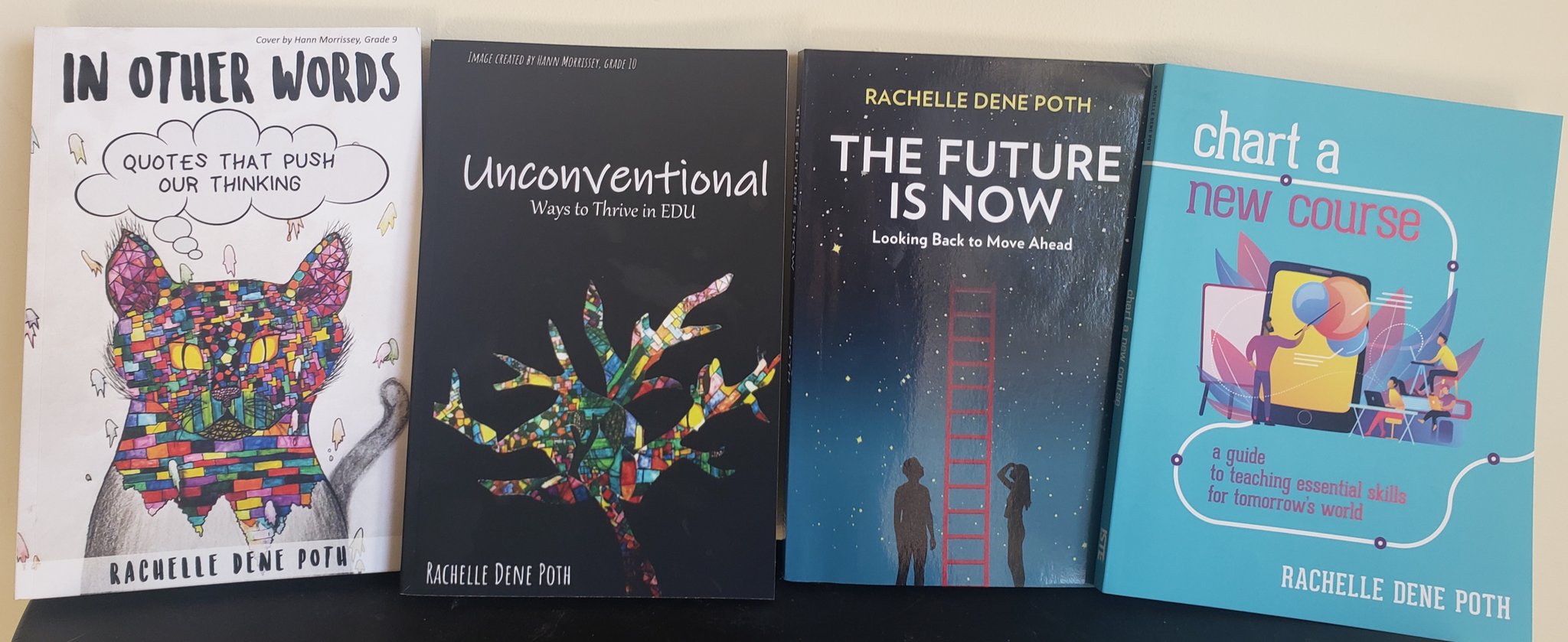
Rachelle Dené Poth is a Foreign Language and STEAM Educator at Riverview High School in Oakmont, PA. She is also an Attorney, Edtech Consultant and Speaker and the Author of seven books about education and edtech. Follow her on Twitter and Instagram at @Rdene915

**Interested in writing a guest blog for my site? Would love to share your ideas! Submit your post here. Looking for a new book to read? Find these available at bit.ly/Pothbooks

************ Also check out my THRIVEinEDU Podcast Here!

Join my weekly show on Mondays and Fridays at 6pm or 6:30 pm ET THRIVEinEDU on Facebook. Join the group here

Guest post by Kris Jenkins

“Education in a shambles” Guest post by Kris Jenkins, @Prek33

Opinions expressed are those of the guest contributor

You really have to not be paying attention very hard if you are unable to see the looming crisis in the education world. Pre-pandemic, there were very loud rumblings over concerns about funding, class size, topics of learning in the upper grades, and even book-banning. Teachers were struggling then, with the enormous weight of standardizing testing, class size, antiquated buildings, and heaps and heaps of initiatives piled upon other initiatives added to their proverbial plates.

Approximately two years ago, Covid came in and kicked educators in their fannies! I remember it well. On Friday, we had an all-staff meeting, telling us how things would look different on Monday. We had to just get through that next week and then we’d be on Spring Break. That Monday never came. Buildings were closed down in Kansas that weekend. And the teachers and their students cried! If I had known that would have been the last time I saw those sweet kiddos, I would have laughed at little more and hugged them a little tighter.

This led to educators across the world changing the manner in which they were teaching. It brought to light the gross inadequacies of virtual teaching. Did the teachers give up? NO! That’s who we are! It’s built into most of our DNA. While most teachers were dealing with their own mental health issues from this worldwide plague, they STILL went above and beyond to try and reach their students, innovating their methods of instruction on the fly. The world was in crisis. And teachers….just kept on teaching. It’s what we do!

Two years, and lots of adaptations, later we are back in our classrooms. Here’s the thing, though. Teachers are not the same as they were, pre-pandemic. Children are not the same as those that we taught, pre-pandemic. The way we clean up in our classrooms is not the same as it was, pre-pandemic, the families of our students are not the same as they were, pre-pandemic. Nothing is the same! All of us have suffered mental health crises due to this pandemic.

Guess what didn’t change. The number of students in a classroom, but teachers were still supposed to “socially distance” them. Standardized testing didn’t change. It was developmentally inappropriate and had severe class and ethnic deficiencies. The mental health of our students and teachers is at the forefront of this crisis. School leaders are preaching self-care, while teachers and students still have the same expectations, that were already in question, pre-pandemic.

What did change? The socialization of our children and their families. Our students, now, have very different social experiences than their friends before them, Those play-dates, going out to eat, shopping, everything that involved social interactions was gone. Our kids don’t know how to act in social settings because they never had a chance to practice acceptable behaviors in public. Yet teachers are expected to teach a given set of standards, with little or no regard for the social/emotional stages of our kids!

Our campus is currently doing a book study over Maslow Before Bloom. I love this book! In the very introduction of this book, Dr. Bryan Pearlman says, “If a student is hungry, exhausted, scared, traumatized, disconnected, lonely, or feeling like a failure, it will be difficult for that student to achieve at their highest capacity. BOOM! This is ALL of our students! Let me share this graphic with you all:

Take a really close look at this. This is the last time our students had a “normal” school year. If this doesn’t stop you in your tracks, I don’t know what will. Personally, this breaks my heart, especially for our students. Humans, by nature, are social creatures and the pandemic took all of that away. And the teachers? They kept on teaching, doing their best to provide a routine and learning for these children. It’s what we do!

Let’s look at those teachers for a moment. They were already teaching the “assembly line” curriculum from the big box curriculum companies. They already had to teach to learning standards that were not developmentally appropriate for their students. They were already teaching in buildings that had serious structural deficiencies.

Enter Covid. Teachers were tasked with finding a way to deliver instruction to children who couldn’t leave their homes! Read that again: Couldn’t leave their homes. How did teachers, then, meet the needs of these students, when everyone was home-bound. With not much direction at all, the teachers devised a plan (Not the administration, teachers).

This is what happened in my case, anyway.

  • Monday: Video chat (Individually)
  • Tuesday-Read aloud
  • Wednesday- a scavenger hunt. Post your pictures to our class Facebook page
  • Thursday-another read-aloud
  • Friday-Zoom Sing-Alongs (which were hilarious, by the way) My students were so excited to see their friends and talk to them!

And teach them we did. We also went to their homes. While the student stood in the doorway. We stood on their porches and read them a story. We had families that would ask for an extra check-in, and we’d do it. Was there a directive for us about this method of teaching? No. Teachers found a way to make it happen because we love our kids!

Teachers put the needs of their students above everything else. I, for one, was really afraid I would bring the virus home, which would be problematic because my husband is a heart patient. I’m not the only teacher who felt this way. Thousands of us put our own health and safety, and that of our families, on the line each and every day we walked through the doors of our buildings. Did anything change? Nope. Our students still have the same expectations as they did, pre-pandemic. We’re still expected to teach the same standards, in the same order as we did, pre-pandemic. Well, guess what?? We aren’t the same and our kids are definitely not the same. Our kids have lost the ability to socialize. It was taken from then by Covid. This ridiculousness needs to stop! We need to give our kids the tools that they need to help them navigate their social/emotional healing from living through this. We need to appreciate our teachers for putting their very lives, and the lives of their families, on the line each and every day. We need to Maslow the living daylights out of these students before we can teach them to Bloom!

Teachers are leavening the profession in droves. Why? Lack of support from building and district administration, classroom behaviors, developmentally inappropriate educational expectations, larger class sizes, building social workers being spread thin, covering for other teachers who are out of our buildings, standardized testing (Our kids are not “standard kids.” Why should we be assessing them with standardized testing?) If there is not a drastic shift away from traditional instruction to trauma-informed practices, I’m not sure how long our current education system can hold on.

There has been a massive wave of teachers leaving this noble profession. In our case, at my location, we have not been fully staffed all school year. Kansas even went so far as to take away the 60 hours of college coursework required to be a Guest Teacher (substitute teacher) in our buildings. Now, all you need to do to be a Guest Teacher is to pass the background check and have a high school diploma, and still, we are not fully staffed. And let’s not even go into how this makes someone with years of experience and a degree(s) feel. (The mentality of “well, it looks like lawmakers think anyone can teach” is running rampant! This is not a way to help your veteran teachers feel valued.

A culture of care is necessary. If we could do this, schools would become a healthier place for all stakeholders. Students would thrive emotionally, academically, and socially. Staff needs to be supported, connected, and able to self-regulate. The entire system would improve.

This can’t go on. It can’t continue. Something has to change, but it’s going to need to be something, not just on a local level, but on a nationwide level. Our students and their families deserve better. Let’s face it. Without those students and their families, none of us would even be teaching. Teaching isn’t just a job. It’s a calling, and those of us still doing this noble work should be seen and heard. Not “feel” like they’re seen and heard. Really be seen and heard. There’s a huge difference!

*Interested in writing a guest blog for my site? Would love to share your ideas! Submit your post here. Looking for a new book to read? Find these available at bit.ly/Pothbooks

************ Also check out my THRIVEinEDU Podcast Here!

Join my weekly show on Mondays and Fridays at 6pm or 6:30 pm ET THRIVEinEDU on Facebook. Join the group here

Parent Communication App: Consolidating Your District’s Communication Silos

In collaboration with Bloomz

Throughout the past twenty years, educators have relied on a variety of tools to communicate with families. In addition to tools used by educators, each school has a variety of ways to communicate. They can use robocalls & mass notification systems in school districts, send emails, distribute blogs, post on a school website, implement branded apps for one-way information & calendaring, and leverage various social channels. In addition to school-wide communication, teachers also rely on classroom communication apps in addition to using behavior management & tracking tools. There are a lot of tools available to educators today.

Parent Communication App

However, what has happened, especially during the past two years, is that many educators and families found themselves overwhelmed by so many tools being used to facilitate communication and instruction. Reflecting on this experience, we need to consider what we have learned as a result. Are we using too many apps? How can we all benefit from implementing a modern, centralized communication system?

By having one platform, we can help families who experienced frustration due to having many places to navigate, websites and apps to be aware of, and calendars to manage in order to support their children’s academic life. Having a unified space helps with this frustration and it is a better way to support social-emotional learning (SEL) for students and families.

Beyond communicating with students, their families, and the school community, we also need to consider the benefits of having a centralized space for other school activities and staff. For example, for students involved in sports teams, extracurricular clubs & organizations, or for younger students, families may need to arrange before/after school care. We also need to provide access to relevant school board information, PTO events, summer programs, and support services provided by the school. There is so much information and deciding how to effectively and consistently distribute it all is important. Finding the right platform that facilitates all of this and more is essential for today’s schools and the families who rely on them.

How do we choose the best platform for our students, teachers, and families?

With so many options available, we need to consider the features of the platform and what makes the most sense for schools and families. We need to focus on supporting the whole child and keeping families informed about what is happening in the classroom which will provide them with access to more information in real-time. However, it needs to be unified, streamlined, and centralized in one space. And a key to this is unified communication. What does that mean?

It’s not having just one feature that is a standout rather it is having a variety of options within that one space. It replaces the need for so many apps and tools and makes it easier for teachers and families to stay connected. Families have access to information regarding student behaviors and absences and administrators are able to provide information to families in real-time. It is about the consolidation of the information which goes beyond using other communication tools like Remind or Seesaw because Bloomz solves more than one problem. Bloomz is a parent communication app that can be used for communication, it boosts family engagement in learning, and provides teachers with many more options for truly connecting home to school and involving families in the student learning experience.

Providing the best choice for families and students

When used with schools, Bloomz facilitates school-wide communication. Schools and families can communicate in ways that meet their preferences because it is focused on individual parent needs. It provides a choice for how they get their information (SMS text, email, and voice) in an easy-to-navigate platform that is fully available on any device. When thinking about accessibility, Bloomz offers robust and automatic language translation which helps to make sure that all families are receiving the message in the language that meets their specific needs.

Bloomz offers translation in more than 100 languages.

What does Bloomz offer in its Centralized Communication System?

What makes it the right choice is that it supports all the different types of communication that need to happen in schools. It offers 1:1 communication, group and classroom communication, and school and district communication. Beyond using it for the classroom space, other school groups can use the platform to communicate information about clubs and sports team events, PTO events, groups of staff members, and even bus routes. Bloomz is also the perfect choice for childcare communication.

Schools and teachers can send urgent messages as needed and have the capability to override user notification rules when information is critical. Being able to share information in a timely manner and knowing that the messages are being received and read is critical and Bloomz makes this all possible. It also has the capability of sharing messages on social media networks and websites.

Beyond communication, Bloomz has behavior management rewarding, flagging & tracking behaviors (both positive & negative) with support for administrative referrals and administrative-level/behavior team data & analytic reporting. Rather than needing to use a separate app or an entire system, Bloomz provides everything in one space.

Why Bloomz makes it easier to stay connected

Bloomz makes it easier to provide and have access to the essential information shared between school and home. It is a single access point for all types of communication that needs to happen between all stakeholders in our school community. Parents that may have children in different grade levels and buildings across the district will be confident and supported knowing that they will have access to information in a simplified and streamlined way.

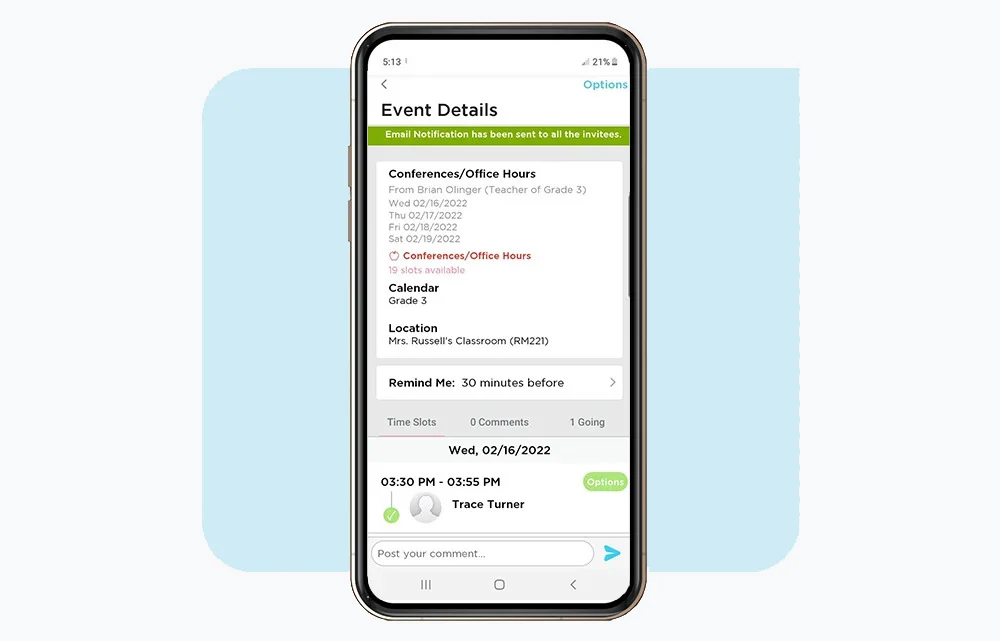
When it comes to school, we know there are many activities that students are involved in, academic and athletic events happening, and arrangements that might need to be scheduled on a calendar. Bloomz offers coordination tools for calendaring & synchronization, forced reminders, volunteer signups, and conference/office hour/tutor scheduling. Having all of this within one unified space makes it easier for families to stay in the know and to feel more connected to and supported by the school and school community.

For schools, it is cost-effective because there are so many tools available within Bloomz that it eliminates the need to purchase many tools that have overlapping functionality. It promotes equitable access for all school community members and helps to increase participation in school events. Because schools can track whether the message has been received and read by each recipient, they can take action to make sure that everyone has the information they need.

Alerts through Bloomz

Rather than having mass notifications coming in from a variety of different apps and spaces, it is a modern way to have conversations and engage in a dialogue that enables schools to create a true community between home and school.

The entire school community benefits by having a consistent and efficient program in place that meets the needs and preferences of each of its members. Check out Bloomz today to build your home-to-school community by visiting http://www.bloomz.com.

Spring Ideas for SEL

As we prepare our students for the future and look for ways to provide more support as we work through what has been a challenging year, we need to make sure that we are focusing on the mental health and wellness of our students. To do so, we must be intentional about creating opportunities for students to build their social-emotional learning (SEL) skills in our classrooms. For anyone looking to learn more about SEL, I recommend starting with CASEL, which is where I found some very helpful information a few years ago when I thought that I wasn’t providing opportunities for the development of SEL in my classes. After reflecting on some of the activities I had been creating and the tools that I was using, I realized that I had been creating opportunities for students to build their self-awareness, social awareness, and develop relationships, I just needed to do more and be intentional about the types of choices that I was making for my classroom. I also took the new course “Creative Expression and Social-Emotional Learning” with Buncee. Through the Microsoft Educator Center, there is a one-hour course on using Buncee for SEL co-created by Francesca Arturi and Laura Steinbrink, that I highly recommend for educators.

Regardless of whether we are in-person, fully remote, or hybrid, there are ways to do this that don’t require a lot of time to get started. The benefit of having so many different technology tools available is that we can leverage them to create spaces where our students can feel more connected to us and to each other. We can help them to build academic skills as well as essential SEL skills. There are multiple ways to promote communication and collaboration while fostering a sense of community for students and for ourselves.

Spring presents a great time to explore new ideas or try some new tools, especially as we look to boost student engagement with the content and keep up the momentum through the end of what has not been an easy or typical school year. Creating a variety of activities where students can interact with one another, engage in some purposeful learning, and have fun in the process while building essential SEL skills, will be highly beneficial.

Here are seven ideas that can help with creating opportunities for students to collaborate, become self and socially aware, and stay engaged in learning. During the past few months of using some of these tools, I’ve noticed that students are engaging more with the content, they feel connected to one another even if not in the same physical or virtual classroom space and they are able to track their growth in the language.

  • Blooket has been a new favorite this year. It has brought a lot of fun into our classroom, as there are multiple modes to play whether as a live game or for homework. Students stay engaged because of the different modes to choose from. Gold Quest is their favorite because they can swap gold, and at varying points of the game, their items are reduced by a percentage. While students get a bit annoyed at this sometimes, it serves to keep them all in the game because they don’t have any idea who will end up being on the leaderboard. It promotes conversation between them and it’s fun for them to learn together.
  • Classkick. A versatile digital tool for teachers to create lessons, assessments, or for doing a quick check-in with students. Each slide in the lesson can include images, text, and an uploaded document for students to interact with. Using the tools, students can respond in audio, text, video, or share links. Classkick enables teachers to see student work and provide individual feedback in real-time. Students can also ask peers for help anonymously.
  • Google Jamboard. Using breakout rooms through Google Meet or Microsoft Teams with Google Jamboard offers a quick way to promote collaboration and conversations. With a Jamboard, students can work together in a collaborative space while communicating in a breakout room. Leveraging these together helps to create a greater sense of community especially if students are split between home and the classroom.
  • Kahoot! A game-based learning tool that provides many new possibilities for either teaching students about SEL or using the question options to check in with students. Whether students collaborate on teams and build teamwork skills or use the games to track their own growth and set new goals, Kahoot! offers many options for use with any grade level or content area.
  • Pear Deck. An interactive presentation tool that takes your Google Slides or Powerpoint online and enables you to add in activities to further engage students in the lesson. To launch PearDeck, you open your slides and choose the Pear Deck add-on, to begin adding activities to each slide. Students can respond in text, draw on the slide, select from a list, and more depending on their account. Lessons can be instructor-led or student-paced. For SEL, Pear Deck is a good way to check in with students and the student-paced lessons, it promotes self-awareness and self-management as students track their learning.
  • Spaces A digital portfolio platform where teachers can better understand students and their interests which helps with building those vital teacher-student relationships. A key part of digital portfolios is that they help students to develop social-emotional learning (SEL) skills. As students build their self-awareness and self-management skills by reflecting on their growth through the work that they’ve done and setting new goals for their continued learning journey. Students also develop greater social awareness through their interactions and working collaboratively with others.

Spaces can have audio, text, video and more!

Finding ways to bring SEL into the classroom does not have to be something extra added on to what we are doing. With these options, we can weave in activities that engage students in learning the content while developing these essential SEL skills.

**Interested in writing a guest blog for my site? Would love to share your ideas! Submit your post here. Looking for a new book to read? Find these available at bit.ly/Pothbooks

************ Also check out my THRIVEinEDU Podcast Here!

Join my weekly show on Mondays and Fridays at 6pm or 6:30 pm ET THRIVEinEDU on Facebook. Join the group here


We’re Using Engineering Tools to Teach With

Post Written In Collaboration with Ness, Blackbird Code

It has never been more important than it is now to focus on creating more opportunities for all students to explore STEM topics. However, there are gaps in the types and levels of the curriculum being offered in our schools. It has been reported that there will be 3.5 million jobs available by 2025 that require STEM skills of which coding makes up a large part of that need. While we recognize that there is a growing need for students to develop skills in coding and in STEM-related fields, there may be barriers, whether real or perceived, to providing these learning opportunities.

We need to provide students with opportunities to explore their interests in coding. We need options that lead to more authentic experiences that develop essential skills for the future. There is a level of comfort needed when bringing in STEM, whether familiarity with some resources for getting started or willingness to dive in and learn right along with and from the students. Regardless of comfort level, we all need to promote the development of STEM-related skills in our classrooms.

A solution

About a year ago, I came across Blackbird and started to use it in my classroom. It has been a great way to help educators bring coding to students because it provides the support they need and opportunities for more authentic and personalized learning, integrated with subjects they are already teaching.

Blackbird helps educators to bring more engaging, student-driven, hands-on learning experiences to the classroom – including coding in a way that is accessible to both students and teachers, and develops data processing skills for the future.

Many educators may think that coding is not something that can be done in their classroom. Often schools lean on the skills of specialized computer science teachers, taking it as given that they are the only people who can share this knowledge, and that it’s so difficult to learn that only a few students are going to succeed. But education is changing, and those assumptions are increasingly out of date.

How Blackbird makes a difference

Blackbird makes it easy for all educators to bring coding to the platform because of its design and the many supports and resources that it offers. Blackbird uses an educational version of JavaScript. Programming languages, like JavaScript, Python, C++, and so forth, are engineering tools, and on their own, they’re terribly unfriendly, especially for those just getting started in the classroom. This may sound like a technical distinction, but the difference is important, so let’s take a closer look.

First of all, programming is a process of:

  • writing code,
  • testing it to find the mistakes, and
  • correcting (or “debugging”) these errors.

The most important feature of an educational coding system is how it teaches debugging. With a regular coding language, when you run a program with a bug, the most common result is that you get a blank screen, or sometimes an unintelligible error message. This result is fine for engineers, who are used to it, but for beginners, it’s very discouraging! Imagine students or teachers getting started with coding, who are just building their confidence, what this unhelpful response can do to their interest. It would lead students or teachers to disengage from coding and potentially miss out on areas of personal interest that could impact their future.

Images from Pexels

Blackbird is different, however. With an educational language, when you run a program with a bug, it opens up an educational debugger – a friendly tool to help you correct your mistakes. The process of learning is supposed to involve the making of mistakes, but we need to have support in place to help students to work through challenges and build their skills.

The structure and scaffolded support of the platform enables students and teachers to build skills at their own pace. Blackbird allows for differentiation and enrichment through the workshops and built-in supports that are available. For students who may be hesitant to start with coding, it supports them as they build their skills at their pace and in a way that is supportive to their needs. When working on their own, whether in the classroom or at home, the system takes them through the process of fixing errors with the debugger. Learning to code can take place anywhere.

There are other supports in place for them, such as “Show Me” which provides a correct line of code when the student needs it (students get a star when they don’t use Show Me). This promotes more personalized learning, as students can work at their own pace, completing challenges and quizzes, earning stars, and doing capstone projects that allow them to use the skills they’ve learned in a more creative way.

Blackbird Code

**Interested in writing a guest blog for my site? Would love to share your ideas! Submit your post here. Looking for a new book to read? Find these available at bit.ly/Pothbooks
************ Also check out my THRIVEinEDU Podcast Here!

Join my weekly show on Mondays and Fridays at 6pm or 6:30 pm ET THRIVEinEDU on Facebook. Join the group here

7 Digital tools for student engagement across all grade levels

As we head into the spring, we may notice a decrease in student engagement. For some students, there have been midterm exams, extended school breaks, or we find ourselves in the middle of standardized testing season. Over the years, I have noticed that student engagement tends to decrease in my classes around this time and I  reach out to my personal learning network (PLN) for ideas or tools to boost engagement. 

Especially during our experiences over the past two years with hybrid and virtual learning environments, we have worked through transitioning learning spaces, and it was challenging to engage students in learning. When we create learning experiences that meaningfully engage students with the content while also aiming to move them from being simply consumers to creators, we also amplify student achievement. By offering more choices in terms of digital tools for student engagement, we can better meet specific student interests and needs. 

When we can take risks by either trying something new or using digital tools for game-based and collaborative learning, we will see students engage more with the content. Students should also be part of the process of deciding on different tools to try. Additionally, it is important that we ask for their feedback so we can continue to provide the best learning opportunities for them. 

Digital tools for student engagement no matter the grade level

To engage students, we need tools that work well regardless of where learning is taking place — a hybrid, virtual or in-person. For this to happen, teachers can opt for a mix of game-based learning tools, conducting a quick assessment or social and emotional learning (SE)L check-in, or asking students to create and share what they have learned in a way that meets their interests. 

Here are seven tools to check out, each of which offers something unique and is versatile for different content areas and grade levels: 

  1. Buncee is a multimedia presentation tool that fuels creativity. It has been a favorite for five years in my classroom. Creating lessons through Buncee enables us to include a lot of content and a variety of media formats all within one space. Within one Buncee, you can add animations, 3D objects, audio and video, links, and more. There are sample lessons and other templates ready to use in their library. My older students use it for teaching a lesson or to present their project-based learning (PBL) findings. It has definitely boosted student engagement through the power of choice.  Now with Capstone’s Pebble Go, students can bring their stories to life by creating their own Buncee to represent learning! Read more: Spring into creativity with these 5 digital tools!
  2.  Classkick, teachers can quickly create assessments, check-ins, or design an entire lesson. Documents, images, text can be added to each slide in the lesson for students to interact with. Classkick has several options for students to use for their responses including audio, text, video or sharing a link. Teachers can see student work in real-time and provide individual feedback to students. Another nice feature is that students can anonymously ask classmates for help if needed.
  3. Figment ARStorytelling or creating a quick check-in with students is fun with Figment AR, one of my favorite augmented reality apps over the past few years. More than just AR, it also has portals that transform the experience into virtual reality. We have used it in class to create a quick story that includes animated characters, portals, and special effects. Read more: 6 Digital storytelling tools for hybrid learning environments
  4. Formative allows teachers to deliver lessons in a more interactive way, that empowers students to respond to different types of questions, draw, record audio or watch embedded videos.  Lessons can be done live in class or they can be self-paced. Teachers have real-time data and can provide timely and personalized feedback to students. During virtual learning, Formative was a game-changer for creating asynchronous lessons as well as for assessments that would provide data immediately and in a space where feedback can be given.
  5.  Genially is a versatile and interactive platform that can be used to create so many different projects and things you would want for your classroom. Some favorites are to use it for creating a class website, choice boards, flyers, designing interactive images, newsletters, presentations, storybooks and more. Presentations can have sound, hyperlinks, social media buttons and so much more. 
  6.   Gimkit is one of many game-based learning tools available and it has been a favorite of my students each year. There are more personalized learning experiences because of the repetitive questions which promote increased content retention.  My students also like Gimkit Draw, where they have three options and then select one to draw and have their classmates guess the word as the drawing appears on each device. Gimkit also launched a new mode of play called Fishtopia which offers another engaging way to not only practice the content but build strategy, have fun while learning, and try out something new in class. There are several modes to play and teachers can access detailed reports with individual student progress and a general overview, to better prepare for the next steps in the lesson. Read more: How to set up a classroom gamification level system
  7. Spaces can be used to boost class discussion in the “feed,” for creating activities for the class, or by creating spaces for students. We have been exploring new ideas in our Spanish classes and students are really enjoying it. In a group space, students have collaborated to create a fashion show and either write or narrate a description and add an image to their post. Individual spaces are perfect for daily writing prompts, feedback, and understanding students and their interests which helps with building those vital teacher-student relationships. A key part of these activities is that they also help students develop social-emotional learning (SEL) skills and promote more active learning which they enjoy.

Boosting student engagement

For anyone deciding where to begin, you can’t go wrong with any of these. They have multiple benefits and possibilities for using them in your classroom.  Students can create, collaborate and interact with one another and do so in any learning space. Bringing in new technologies and learning opportunities will better equip students with the essential skills that they will need moving forward. 

**Interested in writing a guest blog for my site? Would love to share your ideas! Submit your post here. Looking for a new book to read? Find these available at bit.ly/Pothbooks

************ Also check out my THRIVEinEDU Podcast Here!

Join my weekly show on Mondays and Fridays at 6pm or 6:30 pm ET THRIVEinEDU on Facebook. Join the group here

Celebrating Librarians

April is School Library Month and it brings an opportunity to highlight the work done and the impact made by librarians and media specialists. It is also a time when we can help students to build their media literacy skills. First sponsored in 1958 by the American Library Association (ALA), it originally got its start after the creation of the National Book Committee, a non-profit organization in 1954. After some concerns were raised about the amount of reading and research being done by students, they kicked off the First National Library Week in 1958 which had a theme of “Wake Up and Read.” There are several days that highlight the work of the librarians.
National Library Workers Day

National Library Outreach Day

Take Action for Libraries Day.

“Connect With Your Library” is the theme for National Library Week which will be held from April 3-9. The purpose is to highlight libraries and how important it is for people to continue to build their literacy skills especially when it comes to changing technologies and access to more information than ever before. The American Library Association (ALA) wants to promote the idea that “libraries are places to get connected to technology by using broadband, computers, and other resources. Libraries also offer opportunities to connect with media, programs, ideas, and classes—in addition to books.”

Another recognition is World Book Day which is celebrated on April 23rd this year. The United Nations Educational, Scientific, and Cultural Organization (UNESCO) proposed the creation of World Book Day as a way to celebrate reading and the joy that comes from reading. More than 100 countries celebrate this every year; after first being established on April 23rd, 1995.

In our schools: Recognizing the importance of libraries for learning

It is important to take time to recognize all that our libraries provide in our communities and our schools and the difference that librarians make a difference in libraries every day. As a child and even in high school, I always enjoyed going to the library to do research, to look through all of the books, to explore old newspapers. Whether at school or at our public library, we all relied on the help of the librarian for many things. Whether to find books, to learn how to use some of the machines to access older periodicals, to correctly prepare a bibliography or to read to use, they provided so much for students and teachers.

The work done by librarians and media specialists is essential and in schools, these educators take on many different roles. They lead book chats, they help students to develop research skills, they promote digital citizenship especially when it comes to accessing and evaluating the information that they receive.

Celebrating Librarians and Libraries with Capstone and PebbleGo

In recognition of these important events, there are many different activities that students can engage in depending on grade level and content area. For students that need to do research, making a connection with their school librarian and learning about all the resources that are available to them. In upper grades, perhaps exploring and making a case for having librarians available at all schools because of their impact on student learning and being available to help students to build skills in this highly digital world full of information. Via Capstone, “School librarians achieve better educational outcomes. In fact, 34 statewide studies confirm links between strong school libraries and student achievement.”
Capstone posted a great quote by author Neil Gaiman which said, “Google can bring you back, you know, a hundred thousand answers. A librarian can bring you back the right one.” But more importantly, librarians teach students how to discover and discern credible information for themselves.

Looking at the resources available through Capstone, librarians can make recommendations for books for students to read and help to guide them as they create a representation of what they have read. Leveraging Capstone and PebbleGo Create, students and educators can join in this month-long recognition of books and reading and boost creativity!

PebbleGo Create is a great way to share learning and bring it to life. There are so many templates and backgrounds that represent a library and a media center, that students can really find something to create that is authentic and meaningful and would be a wonderful way to recognize the work done by librarians in our school.

Seven Ideas to Join in the Celebration!!

Here are some ideas for having students join in the celebration of librarians and libraries. Using Buncee, students can record audio or videos to share how librarians have made an impact on their learning process and then post them on a Buncee Board or send their creations directly to their librarian!

  • Interview a librarian: a great way to learn about all of the impactful work that librarians do in our schools
  • Design a library: Create a new library space and add your favorite books to the shelves
  • World Book Day: Students can share what they learned in their book, design a new book cover, or write a book review. Choose from the amazing titles in the Capstone Library which promotes student choice and voice in learning and gives them a way to highlight their creativity.
  • Publish a library newsletter: Create a newsletter to inform classmates and the school community about resources available in the library and also to highlight the librarian!
  • Curate a group of books: Interview your librarian to get book recommendations and then create a virtual bookshelf!
  • Launch a campaign for librarians: Create a flyer about why we need libraries and librarians. Include some quotes from students or teachers about the impact librarians have.
  • Lessons from the Library: Create a reflection on what you’ve learned during your time in the library and how the librarian has helped you during the year.

Want to get started with some fun designs? Check out the “School Library Month” and “Library Week” Buncee templates here, If you want to find more, simply go to the search and look for relevant words such as “books,” “reading,” “library” or choose from some of the awesome ideas in the Ideas Lab!

Head to Capstone and check out these blogs: Reading is for everyone and school librarians curate book collections that both reflect their communities and expose students to ideas and experiences beyond their own neighborhoods.

Capstone loves librarians! Learn more about their resources here!

Meet the Author

Rachelle Dené Poth is an ed-tech consultant, presenter, attorney, author, and teacher. Rachelle teaches Spanish and STEAM: What’s nExT in Emerging Technology at Riverview Junior-Senior High School in Oakmont, PA. Rachelle has a Juris Doctor degree from Duquesne University School of Law and a Master’s in Instructional Technology. She is a Consultant and Speaker, and owner of ThriveinEDU LLC Consulting. She is an ISTE Certified Educator and currently serves as the past -president of the ISTE Teacher Education Network and on the Leadership team of the Mobile Learning Network. At ISTE19, she received the Making IT Happen Award and a Presidential Gold Award for volunteer service to education. She is also a Buncee Ambassador, Nearpod PioNear, and Microsoft Innovative Educator Expert.

Rachelle is the author of seven books and is a blogger for Getting Smart, Defined Learning, and NEO LMS. Follow Rachelle on Twitter @Rdene915 and Instagram @Rdene915. Rachelle has a podcast, ThriveinEDU https://anchor.fm/rdene915.

**Interested in writing a guest blog for my site? Would love to share your ideas! Submit your post here. Looking for a new book to read? Find these available at bit.ly/Pothbooks

************ Also check out my THRIVEinEDU Podcast Here!

Join my weekly show on Mondays and Fridays at 6pm or 6:30 pm ET THRIVEinEDU on Facebook. Join the group here