Game based learning

Guest post post by Brigid Duncan, Educator, Creator, & Blogger

Shaking up learning by bringing retro games to class lessons!
A picture containing holding

Description automatically generated

If you have been teaching for a couple years now, you would be asked by many students to play Kahoot! Or just mention the word Kahoot! and kids await eagerly to hear the elevator music playing in the background as they enter the game code to join your game. So, our students love to play games. Who doesn’t? There is an old Finnish saying that goes like this:

“Those things you learn with JOY

You will not forget easily!”

So why use game-based learning? Many reasons come to mind, however the most significant one is that students work harder when they are given a choice, autonomy, and they are in an audience being observed by their peers. In other words, they like a challenge and want to win. So, knowing this and building games into your instruction accomplishes that and so much more. Many of our students are Gen Z’s, and research has proven that this generation loves challenges, they love independence and relish having a voice in their learning outcomes. Theory behind game- based learning is that we are taking the motivational aspects of a game and applying it our lessons for assessment, while kids are having fun. 

As we move into the start of this ever-pivoting school year, our instruction has to keep up with modifications as our classroom changes, whether we are online,  face to face instruction or hybrid. The problem teachers face with this type of instruction, lies in with our assessments and the integrity of them. Are my students truly understanding the essential questions as outlined at the start of the lesson? Are they using Professor Google (my favorite word for searching google for answers) to my assessments? Should I even have assessments and just go strictly to project based assessments. Well I am here to say you can have online assessments using game-based learning. 

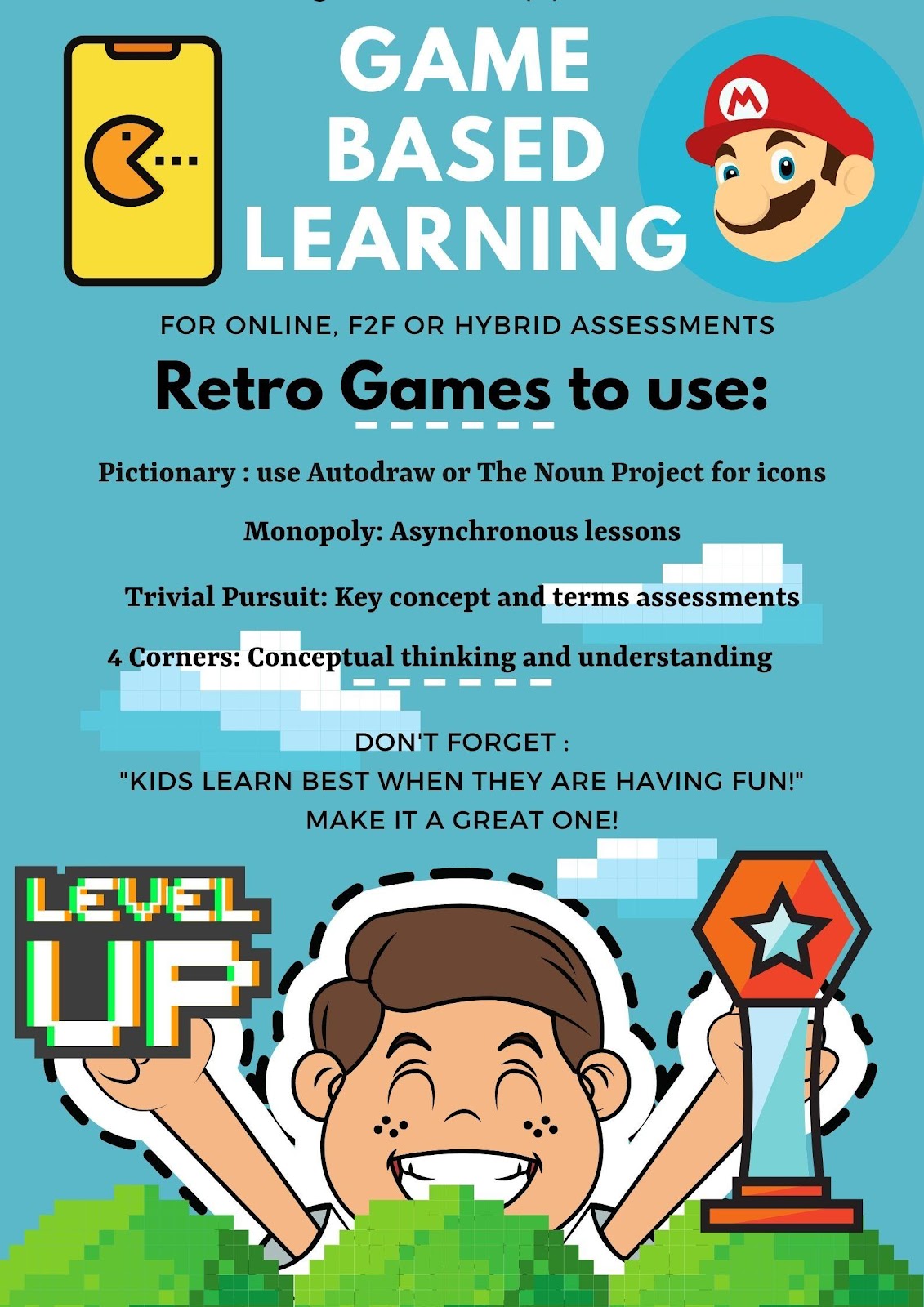
Who wouldn’t want to play an old-fashioned Trivial Pursuit board game? A favorite for many and can be used to assess for key terms or conceptual thinking on a unit lesson. Have them play in teams, assign points and give them badges that they can proudly display. Have a “Battle Royale” with review or test bank questions. Want to take it a step back in our time capsule, do you remember Four Corners a game still played in and out the classroom. Well you can simulate the same idea but on a board game and in, an online classroom. Let’s say you are teaching themes in a novel read that the class just wrapped up. You can ask students to identify themes on opposite side of the four corners. Example, revenge in one corner and opposite side “compassion” You can give them a blank card with 4 squares and play Pictionary, another retro board game. You can pose the same questions but this time you say to your students use icons to represent the themes and place in opposing squares. Sites like The Noun Project or AutoDraw are all free. And of course, I couldn’t write a blog post on game-based learning and not mention Monopoly. I have seen many teachers get creative by incorporating unit lessons using a Monopoly style board, guiding students through asynchronous lessons from START to FINISH. 

I hope this post on game based learning will encourage you to Level Up, on your lesson plans and incorporate games in your classroom learning assessments. Many teachers will be starting a new year with students you have never met in person. I have read many of your comments on social media asking how to build classroom community when we have never met and will continue online. Then this is one of the best solutions available now, to ease your concerns. By having games included in your lesson plans, you will begin building online classroom student relationships. Have fun this school year and remember that Old Finnish saying when developing and designing your lesson plans: “Kids remember best when they are having fun!” 

Brigid Duncan, Educator, Creator, & Blogger

Brigid Duncan is an AP Econ/Business instructor teaching high school in Hollywood, Florida. Originally from the Caribbean, she pursued a career in advertising and Marketing before transitioning to teaching. She is Mom to three wonderful and energetic teenagers and enjoys being creative, especially in graphic design. Favorite quote: “You see things; and you say, ‘Why?’ But I dream things that never were; and I say, ‘Why not’?” – George Bernard Shaw.

Follow her educational journey at @MsBDuncan

**Interested in writing a guest blog for my site? Would love to share your ideas! Submit your post here.

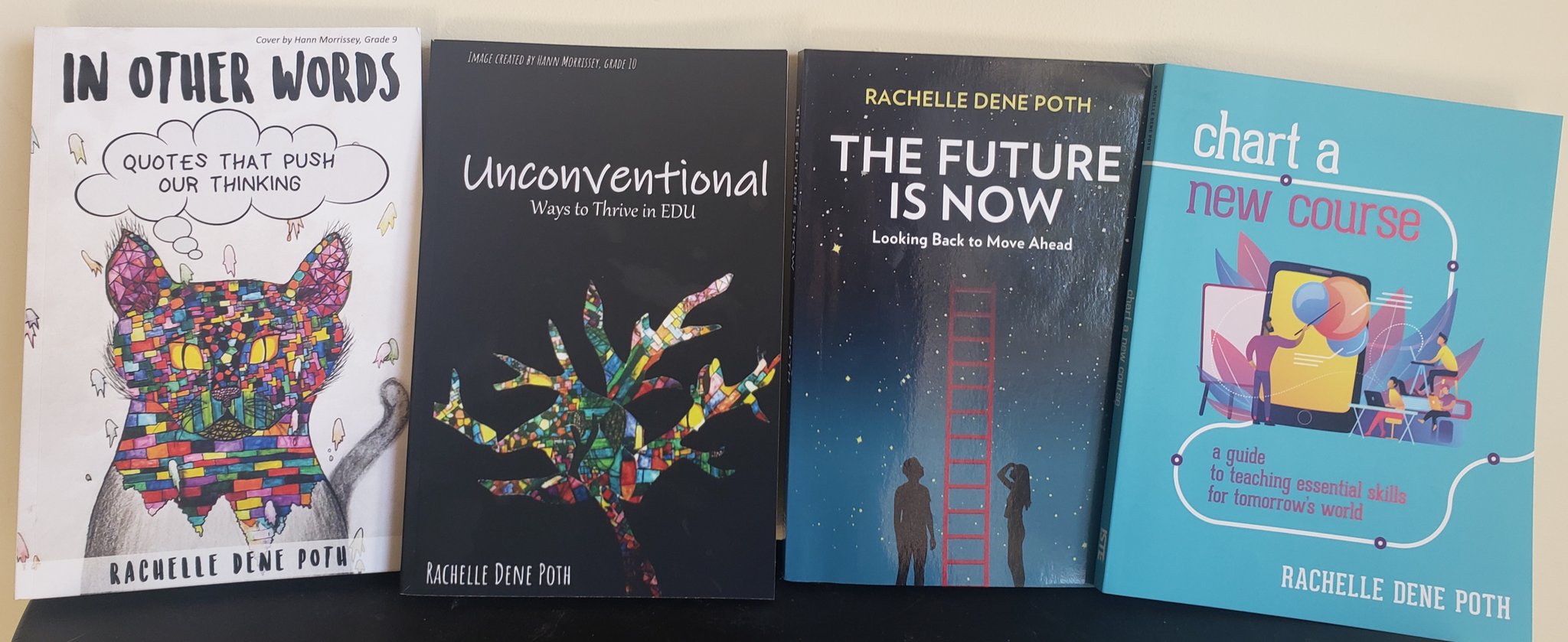
Looking for a new book to read? Many stories from educators, two student chapters, and a student-designed cover for In Other Words.

Find these available at bit.ly/Pothbooks  
************ Also check out my THRIVEinEDU Podcast Here!

Join my weekly show on Wednesdays at 4pm EST on Learningrevolution.com THRIVEinEDU  Join the group here

Game based learning versus Gamification.

Guest post by Brigid Duncan @MsBDuncan

There is a difference? So, what is it?

A close up of a dinosaur

Description automatically generated

As many teachers head back out to instruction with many fears and anxiety of the unknown to come this school year, I am happy to share that being on lockdown for many months, there was a silver lining in it for me.  And that was being able to attend many online professional training programs for free, in places I would have to travel too to get to those conferences. Extremely fortunate to connect with many amazing and talented curriculum and instructional educators. At one of these online PDs I met @Sarahdateechur from Microsoft and Cue #GETA sessions on Steps to gamify your instructional approach to classes. 

In this session, stark differences were drawn between the two instructional teaching tools. Whoa! Who knew that they were different? Gamifying as she stated has been around for many decades. We all remember the excitement when we got back a test and there was a “red star “on your paper. This meant you got 90% or higher. And if you got the “golden” star you aced the test with a perfect score of 100%. Today in education, this is not the best way to assess or motivate student learning outcomes, however this was a primitive way of introducing gamification into the class lesson. Badges for merit rings a bell? 

Gamification takes your class lesson and uses themes to create excitement, engagement and innate motivation to get the lesson assignments completed while having educational fun. Students can work in teams by choosing a token player, mascot or game piece for their team identification, and then complete lesson stations/group activities. Along the way they collect a stamp for each completed activity. And all if all stamps on score card are filled in, congratulations you have earned your first badge.  Challenges can be created to mimic standards from DOK levels of 1 to the highest level of rigor difficulty, an instructor wants to make the lesson. Differentiation is also evidenced by having groups from low level challenges to high level, still actively participating in the game and completing the lesson essential question or objective successfully. 

The super talented @MeehanEDU author of EDrenaline Rush has designed many thematic and challenging gamified lessons that you too as a teacher can see and feel the excitement invested to want to complete this game and get that prize. Gamification can be built on current or “pop” themes. The game of Thrones, Harry Potter and use the Houses as game token or player. Teachers have used creative writing interwoven by way of mini stories, as they developed these gamified lessons. Stories that when included add more excitement as students read instructions to get to that prize. 

Another great Gamification Master, as I like to refer to him is @MrMatera. A middle school social studies teacher who use his curriculum to create the gamification themes. Teachers can design themes based loosely on pop culture movies retro movies such as Indiana Jones, Star Wars, or more current ones such as Stranger Things or Game of Thrones. Most important element that makes gamification works, is having a challenge adding some element of danger/ depth defying or “must save the day” to complete a mission.  Thus, class teams work together to defeat the “bad guys” to earn that badge of honor.  Added bonus: classroom community and relationships are forged. 

So the question becomes where does a teacher begin. How much will this cost me? I highly recommend starting on a Tuesday night visiting Twitter. The instructional coaches and mentors mentioned in this post, who are all great people to follow. Most have Tuesday or Wednesday chats based on how to start gamification in class. What practices have worked. Some teachers even share lessons that you can re-mix with credit to that teacher, so that you can practice or build into your curriculum instruction. Unfamiliar with what are popular movies?  This is the best time to get to know your students. Have them share what are movies or tv shows are they watching now. Build from them and see how much more they connect and build a relationship with you, as you used movies that they shared with in class, in a lesson. Bonus points with students: if you know they struggle with a math concept like say fractions but used a movie theme they like…and designed fraction lesson based on that theme, chances are you have them engaged already to trying your lesson. A win-win for everyone. 

I hope this post has inspired you to rethink and want to try incorporating gamification into your lesson plans.  Start simple maybe with your syllabus or classroom expectations and then assess how it worked with your students.  Do come back to the second part of this post, which is centered more on game-based instruction, creating games the old school style. Retro!   Until then happy learning teacher friends!

**Interested in writing a guest blog for my site? Would love to share your ideas! Submit your post here.

Looking for a new book to read? Many stories from educators, two student chapters, and a student-designed cover for In Other Words.

Find these available at bit.ly/Pothbooks  

************ Also check out my THRIVEinEDU Podcast Here!

Join my weekly show on Wednesdays at 4pm EST on Learningrevolution.com THRIVEinEDU  Join the group here

Guest Post: Culturally Responsive Teaching

Guest post by Chris Orlando @Dr_ChrisOrlando

When COVID-19 struck in the spring, it forced an unprecedented portion of our country’s schools to suspend brick-and-mortar instruction. Teachers were thrown into distance teaching—referred to by many as “crisis teaching”— with little preparation. It was like trying to build a plane while flying it.

The crisis has exposed societal inequities impacting our students’ daily lives including food deficits, inadequate health care—including mental health care, issues with housing stability, and insufficient access to the internet.

This fall, to ensure that I’m meeting the needs of my marginalized students even as I shift to a new learning environment, I plan on creating a culturally responsive digital classroom, one that can provide a space where students feel welcomed and valued. Culturally responsive instruction centers on building the learning capacity of all students. According to Zaretta Hammond, author of Culturally Responsive Teaching and the Brain, “There is a focus on leveraging the affective and the cognitive scaffolding that students bring with them.”

Here are three ways in which I plan to implement culturally responsive teaching this year:

Building Relationships

The single greatest investment teachers can make is to build relationships with their students. Relationships boost motivation, create safe spaces for learning, build new pathways for learning, and improve student behavior. The question, of course, is how can I build relationships with students who I might never see in person?

First, I plan to master the soft start to class in order to ease students into our learning environment each day. Though often thought of as an elementary school strategy, my middle schoolers respond well to soft starts. It allows time for students to transition and to re-engage their mental muscles with a short game, puzzle, brainteaser, reading, or interesting “Would You Rather” question. Be cognizant that typical icebreakers like, “What I did this summer” may leave children with nothing positive to share and create a social hierarchy of who had the most impressive summer break. Instead, pose questions like, “Imagine your best day ever. What would happen?” or “If you could change one thing about the world, what would it be?” Taking even ten minutes to check-in with students at the beginning of class each day is vital because high-trust, low-stress environments can help marginalized students effectively process and retain learned information. Additionally, I plan to do the following to build relationships and increase connectedness virtually:

  • Learn my students’ names promptly and use them as much as possible. As a teacher who often mispronounces my students’ names, I’ll assign students to create a short video in which they pronounce their name so that I can reference it.
  • Ask for student feedback regularly through an ungraded video or Google Form known as “Friday Feedback”
  • Host informal office hours that will encourage one-on-one communication
  • Collect and share virtual notes of gratitude and appreciation

Be a Personal Trainer of Students’ Cognitive Development

As a teacher who is preparing for Round 2 of distance teaching this fall, much of the success or failure of this upcoming school year will depend on my students’ ability to work independently. In order to foster this independence, I will be providing students who are dependent learners with cognitive routines and tools that will help them organize their thinking and process content. Consistently using a regular set of prompts in all assignments helps students internalize cognitive routines so that they can use them when I’m not around. After all, isn’t the goal of education to help students become lifelong learners who can marshal their critical thinking skills long after they’ve left the classroom? Internalizing cognitive routines will help expand the learning capacity of students who have been historically marginalized and work to dismantle dominant narratives about students of color.

Make It a Game, Make It Social, Make It a Story

Each day students walk into our classrooms (or this year, log in to our classrooms) armed with their own learning tools, but too often teachers fail to use them to maximize student learning. Students’ culture can inform us whether they learn best on their own or by collaborating with others. In a distance learning context, students are often given packets and assigned independent projects, which serve independent learners, but are a detriment to communal learners. For example, diverse students who come from oral traditions, might benefit from activities that require social interaction, physical manipulation of content, or narrative. In other words: make it a game, make it social, or make it a story. Utilizing breakout features in Zoom and apps like Jamboard, Flipgrid, and Socrative can help engage communal learners. However, it’s important to remember that culturally responsive teaching isn’t simply a set of strategies. It’s consistently mirroring students’ cultural learning styles and tools.

My job is to be responsive to students’ individual and collective lived experiences, and in particular this year, their experiences with the COVID-19 pandemic. That will require me to integrate my students’ cultural learning tools into my pedagogy and be a warm demander of their cognitive development. But above all, this year will be about relationships. Creating a learning partnership that encourages my students to take ownership of their learning has always been important, but this year it will be paramount to address gaps in learning outcomes between diverse students and their white counterparts. Through robust reflection of my own pedagogy and the adoption of culturally responsive teaching practices, I plan to make learning exciting and joyful for my students so that they’ll be motivated to take ownership of their own learning. Students will be seen. They’ll be heard. They’ll be loved. And we’ll make it through this school year together.

Gonzalez, J. (2017, September 10). Culturally Responsive Teaching: 4 Misconceptions. Cult of Pedagogy. https://www.cultofpedagogy.com/culturally-responsive-misconceptions/

**Interested in writing a guest blog for my site? Would love to share your ideas! Submit your post here.

Looking for a new book to read? Many stories from educators, two student chapters, and a student-designed cover for In Other Words.

Find these available at bit.ly/Pothbooks  

Guest Post: SEL

This post was written by the Eduporium team, Andy Larmand and Laura Kennedy.  Opinions/products mentioned are from Eduporium. This is not sponsored content.

As many teachers know, the upcoming school year is going to be challenging from an academic, mental, and emotional standpoint. Thankfully, there is a reliable form of pedagogy that can benefit both teachers and students as they return to school whether it’s in person, through remote learning, or as part of a hybrid model. For school leaders who see creating new relationships with students and making them feel comfortable after their worlds were flipped upside down in the spring as a top priority, social-emotional learning is going to be crucial.

Screen Shot 2020-08-19 at 10.59.33 AM

While a teacher, I was introduced to social and emotional learning, which is more commonly known as SEL. This pedagogy is one that I found to be extremely important while educating diverse sets of students – even in the pre-pandemic days. In the classroom, students learn different intellectual skills, but much of that learning is affected by their social and emotional characteristics.

As leaders plan a safe return to school, many of them have already considered the mental states their students and teachers might be in and the fact that some of them may have been through trauma while in isolation. In order for them to return to the regular academic experiences they had before schools closed, their mental states will first need to be addressed.

SEL helps students focus on acquiring and effectively applying the knowledge, attitudes, and skills necessary to understand and manage emotions, set and achieve positive goals, feel and show empathy, establish and maintain positive relationships, and make responsible decisions. As unfortunate as it is, many students may need to start developing these characteristics from at or near the beginning when they return to school.

To that end, the five main categories of social and emotional learning are:

  1.   Self-Awareness
  2.   Self-Management
  3.   Social Awareness
  4.   Relationship Skills
  5.   Responsible Decision Making

Realist educators know it will be tough for students to simply slide back into their classroom routines. There is a unique complexity to every student and just being in the same classroom does not mean they’re all in the same place emotionally. It may even be one of the first times some of them have been outside their home. It’s impossible for teachers to generalize them since each student is going to come back to school having gone through something different.

To help my students grow and learn, I truly needed to understand them and I feel this is going to be huge once the year begins. Setting aside some time blocks in the first couple weeks can be instrumental in understanding each student’s state of mind and how both SEL and academic instruction should be presented to them. The actions we see on the surface are not always indicative of the whole story.

Was one student not participating in remote learning because he or she had no desire to do so, or was it because of an accessibility issue we didn’t know about? Was another saying they couldn’t do something because they didn’t feel like it or because they lacked a clear understanding without in-person guidance? Many students likely had different distance learning experiences and teachers can, upon returning to school, make SEL a focus to ensure nobody feels like they’re behind.

So, how can teachers leverage the potential of SEL in instruction and these five areas while getting back to teaching core subjects? Maker education is a technological and creative learning revolution that utilizes SEL and helps students strengthen skills like responsibility, decision making, teamwork, creative thinking, problem solving, and relationship building as they use their heads, hearts, and hands to learn.

Combining MakerEd and SEL can prompt a shift in classroom atmosphere and enable students to reconnect with the learning they knew before schools closed since it emphasizes active learning rather than passive consumption. Students are free to be creative, collaborate, and learn from both mistakes and successes. They’re also able to discover how the emotions they’re feeling – good or bad – can be expressed creatively through MakerEd projects and experiences.

MakerEd experiences help students improve their cognition, engagement, and emotional connections to projects at the same time. In the eyes of the Eduporium team, there are three main components to social and emotional learning (the 3 H’s): Head, heart, and hands and, if educators can connect the actions of all of these body parts upon returning to school, they’ll be able to create more meaningful experiences for students.

In order to learn, students’ heads need to be engaged in the content and their brains need to be picking up on key concepts. They also benefit from having their hands involved, which is often done through the incorporation of maker tools. When their hands are working like their heads are, the relationship between the two body parts is established and engagement and creativity spike through doing and inventing.

When their hearts are involved too – when students truly care about what it is they’re building, making, or discovering and an authentic connection is built – they’ll be able to realize the importance in the values they’re learning and rebuild relationships with peers at the same time, ultimately completing the connection between their heads, hands, and hearts as they return to the classroom, creating hands-on experiences they’ve missed for the last few months.

To learn more about how the Eduporium team can help teachers incorporate SEL, MakerEd, and STEM in the classroom, visit their website.


**Interested in writing a guest blog for my site? Would love to share your ideas! Submit your post here.


Looking for a new book to read? Many stories from educators, two student chapters, and a student-designed cover for In Other Words.

Find these available at bit.ly/Pothbooks  


Versatile Tools for Blended Learning

Posted originally on DefinedSTEM: Ideas for some AR/VR for Blended Learning

Years ago when I started to use more technology in the classroom, I thought that by having students watch videos at home, rather than in class, I would be “flipping” the classroom. Fortunately, I learned quickly that I was not, and made some changes to implement blended learning instead. As part of my ongoing reflection, I continue to think about the many changes that I have made and the tools that have helped me to create a more authentic and engaging learning experience for my students. There are so many tools available, and we always want to first consider the “why” behind using them and also think about the purpose and how versatile the tools can be. Learning opportunities for students are everywhere and the best part of having so many choices is that it promotes student agency. Students can find something that meets their interests and needs, and that offer more meaningful ways to engage with the content. Choices will lead to purposeful learning experiences for students.

Sometimes it is fun and beneficial to try unconventional tools or methods, to immerse students more in learning and do things differently than what they have become accustomed to. Making a change to thttps://www.definedstem.com/blog/versatile-tools-for-blended-learning/he traditional style and structure of the classroom can feel uncomfortable at first, but giving students more control in designing their learning is worth it. The flexibility of these tools enables learning to happen anywhere and at any time, based on the student’s or school schedule, which help to foster a blended learning environment. Here are a few ideas to immerse students in learning.

Augmented/Virtual Reality

One of the biggest areas of growth in education has been the use of Augmented and Virtual Reality in the classroom. In  my own classroom we have used a variety of tools and students have enjoyed the time exploring new tools and definitely different ways to learn. The idea of teaching by using tools for AR or VR can  seem challenging, but it really can be quite simple to add it into the course and there are tons of resources available. I recommend exploring the resources shared by Jaime Donally on all things related to Augmented and Virtual Reality in education.

These tools can offer more powerful ways to immerse students in learning, to “travel” and “explore” places and things more closely. Students can create, problem solve, become more curious and experience something unique through the use of these tools, which enable learning to happen beyond the classroom walls and involve students in more collaborative experiences.

Tools to try:

  1. 3DBear: A newer platform that enables students to add objects into their space and then narrate a story in augmented reality. Teachers are able to create a class account and can choose from the lessons available for grades 1-6 and up, in content areas including ELA, Math, Social Studies, Science, and also STEAM-related topics. Each lesson includes links to reading materials, timelines, and also worksheets. Teachers can sign up for a free trial.
  2. CoSpaces:  A tool for creating “spaces” where students can tell a story, create a game to represent their learning in a more authentic and meaningful way. Students can work together on projects and design a more immersive story together. Working together helps students to develop their  digital citizenship skills as well as promote social emotional learning skills. An engaging way to reinforce content by having students design spaces they can then “walk” through in virtual reality.
  3. Metaverse: An augmented reality tool that teachers can use to create assessments with or have students design an interactive “experience” full of choices in characters, GIFS, 360 images, themed objects and more. There are “experiences” available and it is easy to get started by  watching the tutorial videos from Metaverse. Students can create their own experiences and share them with classmates and teachers can create more engaging review activities for students.
  4. Shapes 3D Geometry:  An app that gives students and teachers a more interactive way to explore core concepts of geometry and that can help students discover 2D and 3D shapes in an augmented reality experience. Using a Merge cube, students can examine 3D shapes by holding the solids in their hands, manipulating them and being able to more closely understand the core concepts of geometry.

Learning beyond  the classroom: Virtual Field Trips

It is important for students to experience learning and explore the world, beyond the limits of the classroom time and space. While we can’t easily take students to  faraway places,there are different tools that make these “trips” possible. The right tools bring in a world of learning for our students, enabling them to closely look at a location rather than by simply watching videos or looking at pictures in a book. We can even connect students with  other classrooms and experts around the world by using one of these options in our classes. Many of these tools are easy to get started with and some even have lessons available, which makes the lack of time factor, not an issue.

Tools to Try:

  1. Google Expeditions: By using Google Expeditions, teachers can “guide” students in faraway lands or have them closely view an object in Augmented reality. All that is required is the App, and then students need to be on the same wifi as teachers in order to “explore” in the classroom. Teachers can choose from more than 100 objects in augmented reality and 800 virtual tours to travel around the world. Each tour includes a script with guiding questions and enrichment activities, all easily accessible by downloading them to a device.
  2. Skype: Years ago, connecting with other classrooms took a lot of time to plan, working with different schedules and access to the right technology. Now through tools like Skype, students andteachers can connect with anyone in the world. By joining the Microsoft community, teachers can connect with other classrooms and create connections for students to communicate by using Skype or for more fun and pushing the critical thinking, collaboration and problem-solving skills, try using Mystery Skype.

Tools for anywhere learning

With blended learning, students have the online component as well as the traditional in-class instruction. One type of blended learning involves the use of stations. By using some of these tools, especially if access to devices is an issue, students can participate in station rotations and learn in multiple ways. The best part is that these tools are accessible when convenient for students as well.

  1. Nearpod: A favorite because it is such a versatile tool that offers a lot of options for how to have students interact with the content, and even go on virtual reality tours and explore 3D shapes. Some of the activities you can include are polls, open-ended responses, matching pairs, for a few and also including content such as BBC videos, PhET simulations and more recently, a Desmos graphing calculator. A tool to enhance instruction whether in or out of the classroom, and one which students can use to create their own lessons to share.
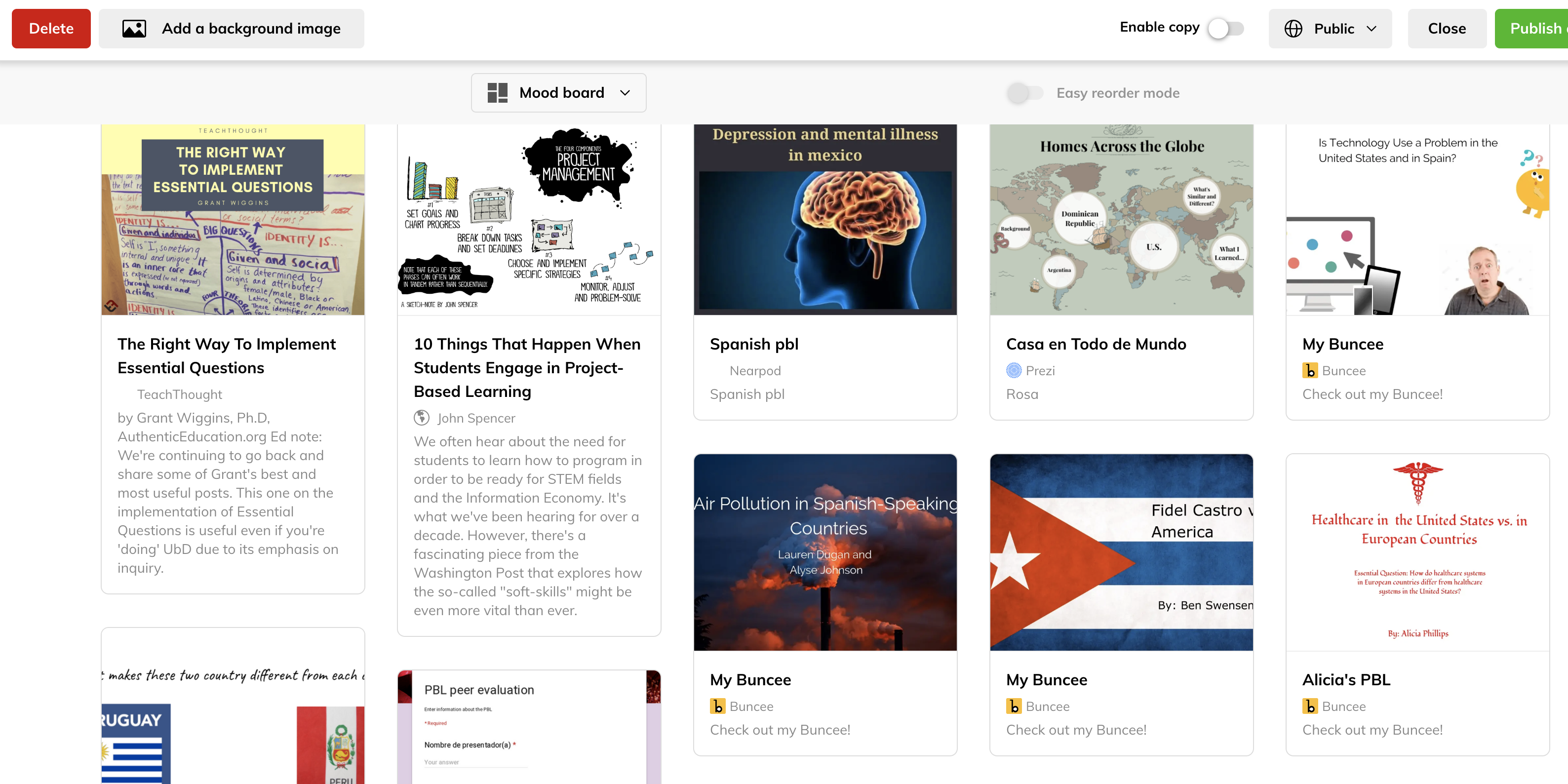
  2. Buncee: Students can create multimedia presentations that include a variety of items such as animations, emojis, 360 images, and web content including videos that can be embedded into the presentation. Teachers can create a lesson using Buncee by adding videos, audio, including hyperlinks and sharing one link with students, that leads to multiple other activities.
  3. Quizizz: A game based learning tool that can be used for instruction, both in and out of class, or for students to create their own games as more authentic practice. Quizizz has thousands of games available in the library and recently added a student log-in that enables students to track their progress and gives them access to prior games played so they can always go back and review. Having this available to students makes it more personalized because students can get extra practice whenever they need it.
  4. Kahoot!: Challenges with Kahoot have become quite popular. Teachers can “challenge” students to participate in a game as a way to practice the content or review for an assessment. Students can even challenge each other by sharing games and codes, which makes it good for peer collaboration and building the social emotional learning skills.
  5. Synth: A podcasting  tool that can be used to have students respond to questions, participate in a conversation by responding to a prompt or a “thread.” A thread is a string of responses in a conversation. Creating with Synth is easy and simply by recording a prompt that can also include a video, teachers can promote communication and student discussion beyond the school day. Teachers can then listen to all student responses as a podcast.

Finding new tools to explore is  always fun, especially when we have students create with them and share their work with classmates. We learn more about their interests and needs and they have a more personalized experience.

These tools have made  an impact on my students this year and I have seen a lot of benefits by offering students a variety of tools to choose from. Creating a more interactive classroom experience and expanding the where, when and how students learn, leads to more of a blended learning  approach. It is important to show students that learning can happen anywhere and give them the tools to make that possible.


**Interested in writing a guest blog for my site? Would love to share your ideas! Submit your post here.


Looking for a new book to read? Many stories from educators, two student chapters, and a student-designed cover for In Other Words.

Find these available at bit.ly/Pothbooks  

Creating the right space with Wakelet

Creating the right space with Wakelet!

You need to check out the Wakelet Launch Party!  Wow, talk about an awesome launch!  Great work from the Wakelet team and a very exciting launch.  Launch party!

For anyone that has been using Wakelet, you already know how many amazing possibilities there are for using Wakelet! For creating a space to connect with educators, students, families and more, Wakelet offers many choices for exchanging ideas and providing content and more. Earlier this summer, Wakelet announced the capability to collaborate in real-time, enabling educators and students to work together and provide feedback right away.

WakeletPBL

In my classroom, Wakelet has been a way for my students to share their project-based learning (PBL) products, to gather resources for our classes and to even use as a digital portfolio. For me, Wakelet has been a space to gather collections of resources for topics of interest, for curating ideas from book studies, for sharing archives of a Twitter Chat and much more. Now, the Wakelet team has added even more to help educators promote student engagement, by providing a collaborative space for students to work together and foster collaboration regardless of where learning is taking place. Check out the new Spaces!

What are Spaces?

Spaces is the newest feature from Wakelet that enables you to create a “space” for adding collections, organizing your current collections and inviting others to join and collaborate. Spaces can be a private or a public area. Spaces adds a whole new level of organization and collaboration to your Wakelet experience.”

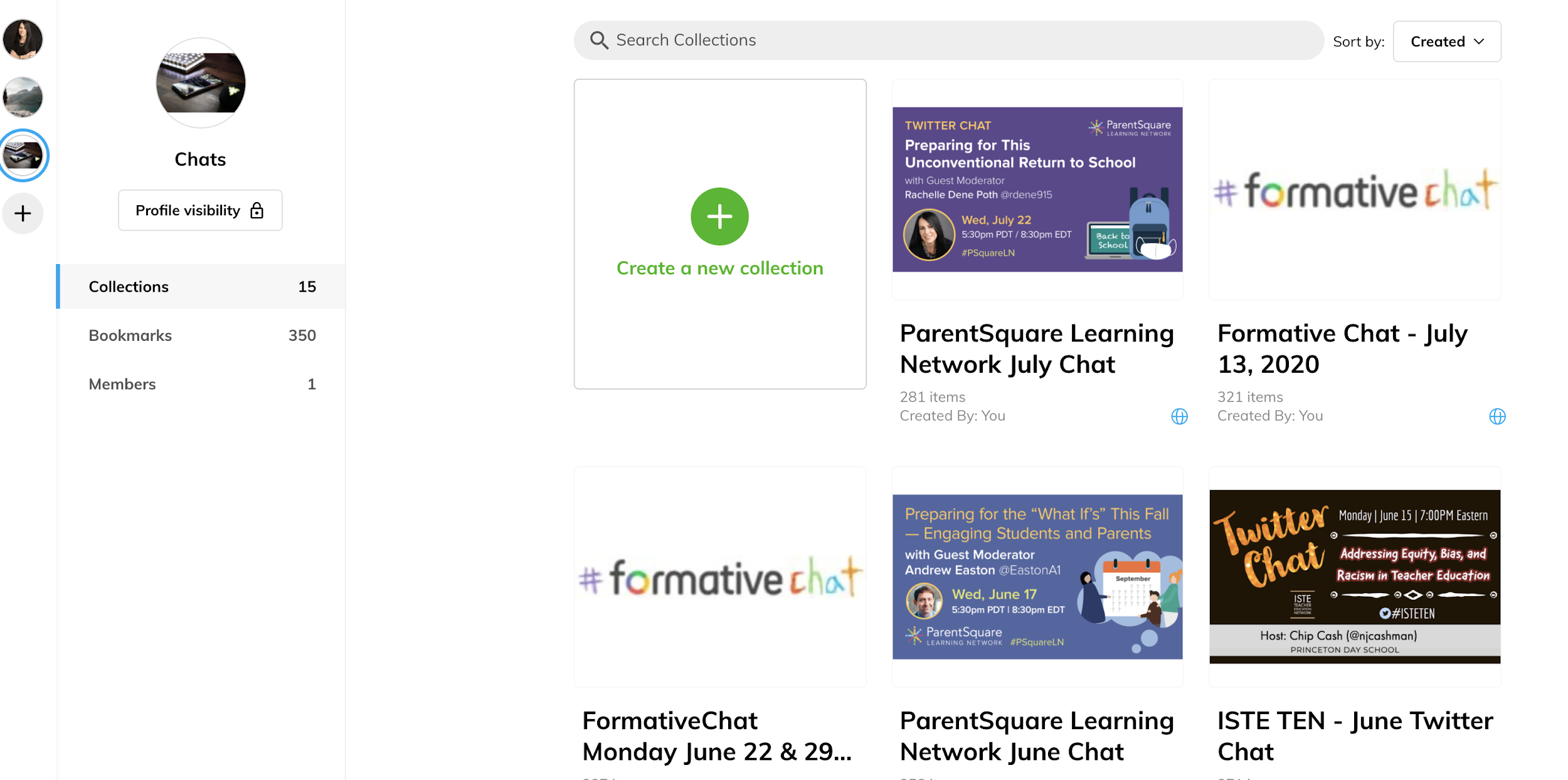
Simply click the plus button on the new bar in the left of your home area to create a new Space. It is easy to start creating collections on any topic. My first “space” was to place all of my Twitter Chat collections which makes it great for organization and to be able to share with others. Create a space and invite your students, other educators, and anyone else to contribute and add collections of their own.

What I love about this new feature is that I can now organize my current collections into Spaces which makes it so much easier to find what I am looking for. It enables me to create powerful learning environments for my students and for all of us to be able to collaborate like never before!  I have needed this capability for a while because I have a lot of collections!

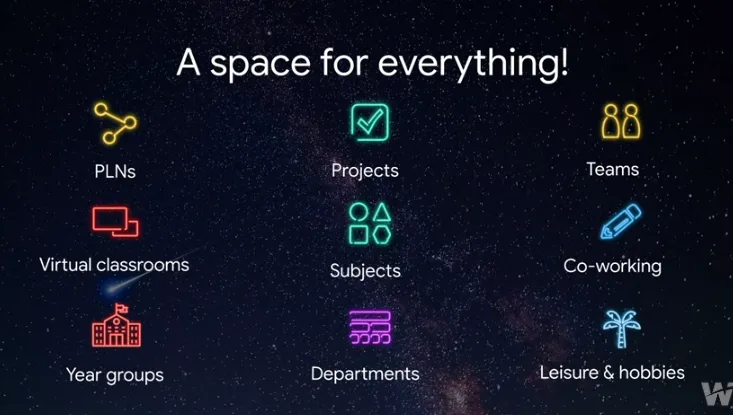
As an educator, you can create a Space for each class or subject you teach, a project, a PLN community, your own professional learning, or just to organize your collections however you want!

Getting Started with Spaces

Definitely easy to create a space!

Click the + button on the new bar in the left of your home area to create a new Space. Want to add an image and name for your space? Just click the + button, choose an image from the gallery or upload your own, add a name to your space and then click “create.” You now have a Space where you or your students can collaborate, share resources, build a library full of content, organize a research project, or for you to organize your collections.(this is amazing!)

Want to share Podcasts? Blogs? Books? You name it, Spaces is the place to do this!

There is no limit to the number of collections that you can create in your Spaces. Collections can also be moved between spaces. What? How awesome is that!

I always say, the 3 dots are your friend. Click on the dots while you hover over one of the collections and select “move” and then decide which Space you want to move that collection to. Talk about fast organization!

Ready for more awesomeness?

It’s not just a space for you, it can be a space to collaborate! Invite colleagues, PLN, global connections and students to share their own collections in that space! Simply click the “members” button and you can invite others to join by sharing a code, a link or through email. Once they receive the invite, they click the link and are now joined with you in that space. Now everyone can add their own items to the collections in that space, how cool is that? Or create new collections of their own!

Sharing and learning together!
Just like collections, spaces can be for your own work, or you can make them available to the public. Looking for ideas for global collaboration? Why not have your students work together on gathering resources, brainstorming ideas, or whatever they need! Decide on the visibility of the space, private or public, and remember that you can change your Space back to private at any time.

Ideas for Spaces

1. Curate resources for your classes

2.  Create spaces for students to use as a digital portfolio.

3. Invite colleagues to share their resources on a common topic!

4. Project-based learning: Great way for students to share resources

5. Station rotations?  It could work! Create a space and add collections for each of the activities. Try it and let me know how it goes!

There are so many more ways to use Spaces. What are your ideas?

Create your first Space now and share the ways that you plan to use this awesome new feature from Wakelet! I cannot wait to see what my students think!

**Interested in writing a guest blog for my site? Would love to share your ideas! Submit your post here.

Looking for a new book to read? Many stories from educators, two student chapters, and a student-designed cover for In Other Words.

Find these available at bit.ly/Pothbooks  

5 Ways to Prioritize Social & Emotional Learning for the 2020 School Year

Guest post by Peter Davis, @kapwingapp 

Opinions expressed are those of the guest blogger.


The 2020-2021 school year has just kicked off in some areas, and it is already proving to be a year like no other. Heightened anxiety among students, teachers, and parents is a certainty this year, across all of the various educational methods administrators are using. Some students will be stuck in precarious, distracting, or harmful home environments, some will be forced to walk halls that could threaten the health of them and their families, and others face an uncertain fall in districts that have yet to finalize their back-to-school methods.

In total, all these changes mean that social and emotional learning will be front and center in the 2020 school year. I talked to Denver-area elementary school teacher Adin Becker about his learnings from spring 2020, his uncertainties in approaching the fall term, and his plans to prioritize SEL in the virtual learning environment. Here are the 5 main things to strive for in the fall semester:

  1. Make sure students have opportunities to interact with each other
  2. Schedule socially distanced visits when possible
  3. Make your materials more inclusive than ever
  4. Advocate for remote health services
  5. Make space for trauma
  1. Give your students opportunities to interact with each other

If you’re conducting some or all of your school through remote e-learning, it won’t be possible to replicate the social environment that your students would experience under normal class conditions. Students’ social interactions with each other are vital to their engagement in school work and their growth as individuals. Becker puts it this way:

The biggest difference this year is classroom community. Young students need social interaction to grow, and there is no question that the online learning environment is not the same as seeing your friends in-person. My school has already experienced the difficulties of limited engagement in e-learning from the last semester. I plan to introduce more in-class discussion between students, make use of online academic games, and show interest in my students’ wellbeing.

There’s no perfect way to transfer the social benefits of in-person school to the remote classroom, but there are lots of things you can do to make up for students’ loss of social engagement. Especially with younger students, their social experiences are as important as your lessons, so it’s vital to dedicate a similar amount of your time and attention to both. Something as simple as using Zoom breakout rooms for free discussion during remote class periods can help to make up for students’ lack of social interaction in school.

  1. Schedule socially distanced visits when possible

Students’ social relationships with each other are indispensable to their SEL experience, but so is their relationship with their teacher. And the same way remote classrooms can’t replicate the social experience of in-person school, Zoom meetings with your students can’t provide quite the same student-teacher relationship. Here’s what Becker has to say:

Unfortunately, it’s simply not possible to provide the same access and inclusion to students through e-learning. Districts can do their best to provide all families with laptops and internet, but there’s only so much they can accomplish – there are nearly 100,000 students in my district, for example. To bolster student interest, I am hoping that I can organize a few socially-distanced home visits with each of my students so that they can get to know me and hopefully feel more comfortable with me online.

Luckily, it’s easier to stay safe while meeting with just one student at a time. If your school’s administration allows it, try to set up socially distanced home visits with your students at least once a semester. This allows students to feel individually heard and acknowledged, so they can feel even more comfortable and engaged in remote learning sessions.

  1. Make your materials more inclusive than ever

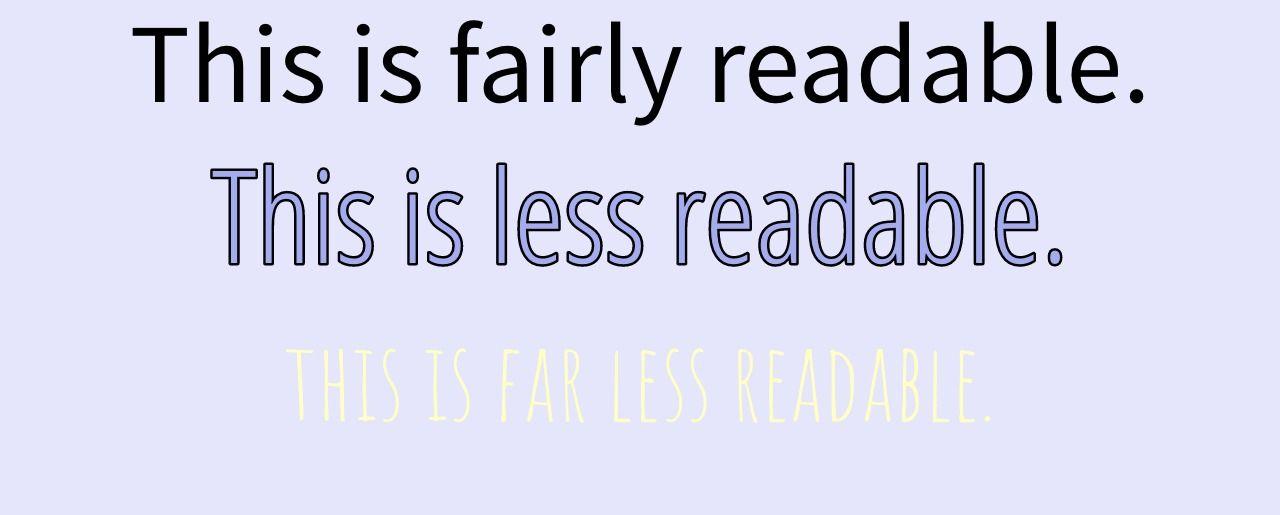
Inclusivity and accessibility are crucial in the social & emotional learning of all students under “normal” conditions, and the remote environment of 2020’s classroom means you have to be more intentional than ever in serving all of your students equitably. Record your lesson videos at a pace that all of your students can follow, and add subtitles so every student can absorb the lesson the way they learn best. And if you’re trying to make your e-learning materials fun & distinctive, keep an eye on the readability of your resources for students with visual difficulties.

Unfortunately, even if you include helpful subtitles, visual aids, and voiceovers in your videos, kinesthetic learners won’t find the same tailored learning support that they could in the classroom. Becker explains:

In-class I like to use manipulatives to supplement student learning. Because I’m a general education teacher, I cover every subject including math. Online, I can’t provide extra physical materials to help students understand concepts like fractions. Instead, I will make use of online academic games, and interactive learning models that can engage young students outside the classroom. Because it will be exceedingly easy for students to tune out during online learning, class will need to be hyper-interactive.

Inclusivity extends to every corner of your teaching: use gender-appropriate or gender-neutral pronouns in your materials, and be wary of your students’ personal needs. When planning recorded lessons and producing e-learning videos, be efficient and make use of your students’ limited attention spans. In the classroom, you’re able to monitor your students’ engagement, but teaching remotely means that you can’t always keep an eye on their focus.

  1. Advocate for remote health services

Another important aspect of the in-person school experience that’s missing in remote learning is the accessibility of health services for students. While in-person medical care can’t be provided to students using typical school resources, it’s especially important during the COVID-19 pandemic to provide adequate mental health resources for students of all ages.

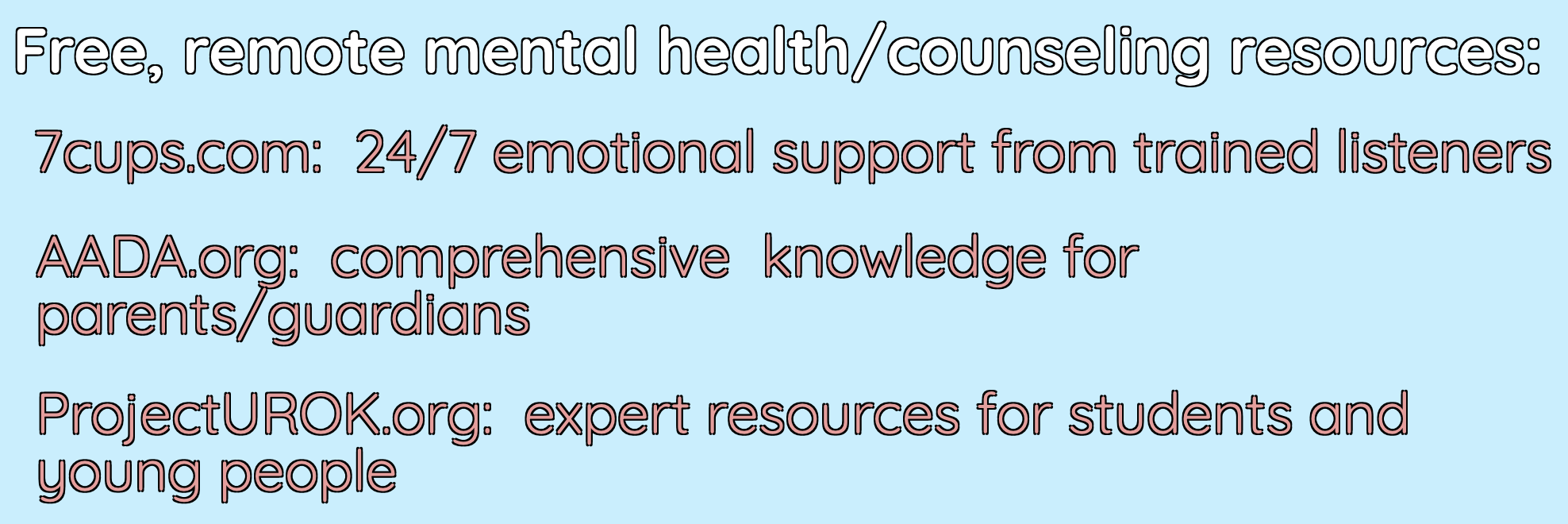
You likely don’t have much direct control over your administrators’ use of health resources. But if you’re able, do what you can to advocate for mental health resources to be made available for your students. This might involve bringing several educators together in order to work for what you believe is best for your students, speaking with parents in order to focus the school’s entire community on students’ well-being, or doing your own research on accessible mental health resources online. This terrific list of accessible remote mental health resources is a great place to start.

  1. Make space for trauma

It would be great for your remote teaching to be just as effective as in-person school, but most likely that’s not possible in 2020. And what’s more, it shouldn’t be your primary objective. Many students are experiencing an especially traumatic year, and their health and wellness has to be prioritized over the diligence of their schoolwork. Becker elaborates:

Many students are traumatized after losing family to COVID or getting sick themselves. For that reason, social-emotional learning will be front and center this semester to address trauma. Education through this catastrophe needs a dose of realism: pushing your students harder than usual will do more harm than good.

The main takeaway here is that educators need to be especially responsive to all their students this year and rethink the teacher/student relationship. More than ever before, the parent/teacher relationship may occupy a lot of your attention, as students’ whole lives become central to the success of their education.


**Interested in writing a guest blog for my site? Would love to share your ideas! Submit your post here.


Looking for a new book to read? Many stories from educators, two student chapters, and a student-designed cover for In Other Words.

Find these available at bit.ly/Pothbooks  

If it ain’t broke, then break it


Guest post by Cory Radisch, Follow Cory on Twitter @cradisch_wc

Wait, that’s not how the saying goes! However, even though data still demonstrates consistent opportunity and achievement gaps in schools, there are many who think things are not broken. It doesn’t matter that the data tells a different story. In many places, if adults are satisfied and comfortable, many believe the system “ain’t broke”! My longtime mentor, Marc Natanagara, used the title of this blogpost with former staff, not only to inspire them to challenge the status quo, but also to let them know it’s perfectly acceptable to break the system! It was appropriate long ago and it’s even more appropriate today. If we are going to truly transform education, then we just may need to break it. 

  • We need to break the system that marginalizes students!
  • We need to break the system that perpetuates learning and opportunity gaps!
  • We need to break the system that disproportionately disciplines students of color!
  • We need to break the system that disproportionately has fewer students of color in AP and advanced classes!
  • We need to break the system where your zip code usually determines what level of education you receive!
  • We need to break the system that fails to recruit and retain teachers of color!   
  • We need to break the system that teaches a unilateral perspective of history!


Breaking the system is not blowing up the system. Breaking the system is about addressing and interrupting implicit and explicit bias in our policies, curricula, and procedures. It will undoubtedly cause discomfort. Then again, when has breaking something not created discomfort? We can either be comfortable or we can grow, but we can’t do both!  I would love to know what you will break in order to ensure equity in your district, school, or classroom.

This post is dedicated to my longtime mentor and friend, educator Marc Natanagara, who recently retired after 33 years of breaking things that weren’t broken!


**Interested in writing a guest blog for my site? Would love to share your ideas! Submit your post here.


Looking for a new book to read? Many stories from educators, two student chapters, and a student-designed cover for In Other Words.

Find these available at bit.ly/Pothbooks  

Your Story Matters, Here’s Mine

LEAN ON ME, WHEN YOU’RE NOT STRONG

From the time I became very aware of what my parents did for a living, I firmly decided that I did not want to follow in their educational footsteps. They worked too hard for too little compensation for all the time and effort they spent on their work, students, and school. They were outstanding educators (my dad retired as an elementary principal, and my mom retired as a psychological examiner for an educational cooperative). In college, as I considered my major area of study and degree options, Dad pointed out that careers define where we live. At the time, I wanted to write for a magazine, so I was considering a Bachelor of Arts in English. However, Dad suggested that if I completed a Bachelor of Science in Education with an English major, then magazine companies would still view it as an English degree, but I would have the flexibility to become a teacher as well, allowing me to live anywhere.

AND I’LL BE YOUR FRIEND

I took over my first classroom a few years later in October, becoming the third Spanish teacher that year for McDonald County High School after working for Missouri State University for 3 years. I nearly hyperventilated the night before my first day as I pondered all of the responsibility I had just agreed to shoulder, but the next morning, as I stood in front of my first class of thirty high school students, I realized that I was finally home. Education was where I belonged.

I’LL HELP YOU CARRY ON

Thoughts of my greatest accomplishments in education over the years always have me looking outward, not inward for impact. Have I made a difference in anyone’s life? Many have made a difference in mine. Am I transmitting inspiration and motivation? Many have inspired and motivated me. Have I equipped students to be able to walk through any door they want in life to fulfill their dreams? Am I walking through my own doors? These questions are why I am never satisfied with my own knowledge and skill. I must know better so that I can do better. Toward that end, I relentlessly pursue professional development, typically completing 150 or more hours each year (and I’m blessed to have a passion be what I do for a living, though I also get time away from PD, so don’t judge your own learning based on mine. Nothing normal here.) As I learn, I share what I know with other educators everywhere. Since the summer of 2016 (I had Twitter before that, but I had no idea what to do with it), I have become a connected educator on social media and have discovered my voice, my audience, and shifted my focus to being a conduit of empowerment for all learners, adults and students alike.

FOR IT WON’T BE LONG

I tell my students that while in my classroom, they will learn to be comfortable with being uncomfortable. Together we will push ourselves to take risks and go beyond the boundaries of what we think we can do (Thanks, Dave & George!). In my classes and professional development sessions, we leverage technology to flatten the walls of our classroom so that the world awaits. I have connected my students with experts and companies (Thanks, Buncee!) from all over the world during global DigCit Summit 2019 (Thanks, Marialice!). We connect with students from as close as Jackson, Missouri (Thanks Lance!) and as far away as Argentina (Thanks, Rachelle!) to learn other cultures, spread kindness (Thanks, Heather!), practice digital citizenship, and to develop authentic audiences for our work (Thanks, JessicaJamie, and Heather!). My passion for technology helps me guide students in a world where they no longer have to wait “grow up” to make an impact (thanks for reminding me, Kevin!).

‘TIL I’M GONNA NEED

Besides leveraging technology to empower students, I also cultivate their voice. Communication is another big skill that employers look for when hiring. Google, at the time this post was written, ranks it second in their top 7 desired employee skills, so I want my students to be able to articulate ideas then see them come to fruition. Students guide my teaching by giving me after action reports when I try a new activity or lesson. They give me as much feedback as I give them. Students have input on what activities we do, how we do them, and in choice of tool for completing the activities. Their voice matters (Thanks for reminding me, Rick & RebeccaLet Them Speak: How Student Voice Can Transform Your School).

SOMEBODY TO LEAN ON

But I don’t stop there. While I flatten the classroom walls for my students, I also do that for myself. An educator in North Carolina, my friend Holly King, pointed out that one of my talents is in connecting the dots, whether that be in combining learning sciences with supported research based teaching strategies, social emotional skills with academics, using tools in new and unique ways to help students learn, or just in the realm of ideas and theories, I make connections. By doing so, I connect people. Whether it is high school students or adults, I connect people, which connects ideas, and that elevates us all and empowers us with a platform, with a sounding board, with a brainstorming opportunity to be better, to elevate the field for us all. (Speechless, Holly.) This is what a lot of us in education do, whether we realize it or not. It’s why left our own islands and continue to grow our professional learning network. Teaching is a life changing business (Right, Dave?), and not just for students. It changes us all.

HEADING TITLES ARE PARTIAL LYRICS FROM BILL WITHERS’ SONG, LEAN ON ME, © UNIVERSAL MUSIC PUBLISHING GROUP

******************************************

**Interested in writing a guest blog for my site? Would love to share your ideas! Submit your post here.


Looking for a new book to read? Many stories from educators, two student chapters, and a student-designed cover for In Other Words.

Find these available at bit.ly/Pothbooks  

CONUNDRUM SCHOOLING: PART DEUX

Guest blog post by Jillian DuBois  @JillDuBois22

When COVID chose to collide with our lives in March, teachers and educational leaders defied time and space by achieving more than we could ever dream of doing in our profession.

FOR our STUDENTS.

We gave up Spring Break. We sacrificed family time. We had sleepless nights. We KNEW what needed to be done, followed through, and gave it our all.

Some described it as distance learning. Homeschooling. Virtual school. These types of schooling require months, even years of preparation before taking on that challenge.

In the simplest of terms – it was far more than that. It was what I called CONUNDRUM schooling (conundrum – An unstable time or period, usually marked by intense difficulty or danger. Thank you to wordhippo.com for the explanatory definition.). Traumatic schooling that was disruptive, stressful, and anxiety-inducing, leaving little time for research + planning. Teachers sent up an SOS.

We grieved over what was lost. In just one critical moment, we somehow surrendered our community, fellowship, daily routines, and a predictable schedule that gave us satisfaction + security in our profession.

But we persevered. It was muddled, unpredictable, and often frustrating. We came out of it still breathing and somehow able to exhale, knowing that during our physical time away from our students we had gained meaningful pedagogy in our learning strategies and skills.

Thankfully, the #edtech platforms we chose provided excellent facilitation and reinforcement for the majority of our instruction and learning. In turn, that opened up a new path as to how to process + present our instruction differently and more efficiently. Teachers met via teleconferencing and innovatively collaborated together. We shared lesson plans, ideas, and exceeded what we assumed we could do – like superheroes.

So as I begin to conceptualize the next few weeks in preparation for the new school year…I am drawing a BIG, FAT…blank, that leads to…

CONUNDRUM SCHOOLING: PART DEUX.

The current space available in my head is not prepared for academics + curriculum planning AT ALL. I don’t even have the words to properly and politically respond to friends and family who ask how I feel about returning.

BLANK. NADA. NOTHING. (and if you know me at all, I don’t blank on anything, that’s NOT what teachers do. We are masters at improvisation.)

Moment of truth? I believe I’m a darn good teacher. The last semester drained every ounce of imagination + creative skill that I estimated I had. I’m slowly rebounding. What I DO know is that I WILL be brave + undaunted. I will NOT let fear worm its way into my tenacious spirit. I refuse to give in and give up.

WILL consider + celebrate the progression that I made as a teacher last year.

I have cultivated new ways of being FLEXIBLE + RESILIENT. I was able to give up control and allow my students unique opportunities to drive their own learning. They participated in the decision-making process by expressing their choices when given the chance. There was extended time for inquiry + building out their curiosities with enthusiasm.

They had questions that I did not have the answers for…and that was truly amazing. There was project-based learning alternatives that sparked many in-depth conversations, ‘a-HA’ moments, and periods of self-reflection. JUST this alone was worth the efforts. We honored the process of learning + accountability as a class…together.

There MAY not have been any stellar discoveries of new content during this time of conundrum schooling, BUT there was incredible facilitation of educational experiences that they will never forget. Neither will I.

What will I carry into this new year? These things I just mentioned. I will join tens of thousands of other teachers who will be using their newly-gained expertise to keep some semblance of normalcy + security for our students.

Unlearn the conundrum. Relearn confidence with conviction.

I will teach them honesty, kindness, empathy, justice, and inclusivity. THAT is where I will begin. I know I will get to the planning + academics, don’t you worry. But FIRST things FIRST. I love them already.

We need time to heal together.

We will get there. There’s still a steep learning curve ahead with no signs of caution. Education will now be in stark contrast to what was before comfortable + traditional. As we launch with students, we will crawl along slowly. Next, steadily we will learn to walk together as weeks go by. Possibly, we may even start to run again. GRACE + PATIENCE will be generously granted each day as we encounter new circumstances and ways of life.

We are in it for the beautiful mess that it is. It will be SUCH a monumentally great year if we allow ourselves to take one day at a time, appreciate our vision + mission, and lean into our passion for our students.

Oh, and don’t forget the #impartEDjoy.

Best wishes for an amazing conundrum of a journey.

Jillian


**Interested in writing a guest blog for my site? Would love to share your ideas! Submit your post here.


Looking for a new book to read? Many stories from educators, two student chapters, and a student-designed cover for In Other Words.

Here are my books available. Find them at bit.ly/Pothbooks