The Future of AI Education: Leveraging the Power of Nous AI

In collaboration with MatataStudio EDU, All opinions are my own

As educators, we seek innovative ways to prepare our students for the future. Whether we choose different teaching methods or leverage the technology available to us, we have to make sure they are prepared to succeed in today’s rapidly evolving technological landscape. According to recent studies, the global AI job market is expected to grow exponentially in the coming decades. However, a significant skills gap threatens to limit opportunities for many individuals.

Educators must ensure that all students have opportunities that will equip them with the necessary skills. By incorporating tools like the Nous AI Set, educators can help bridge this gap, ensuring their students are not only employable but also leaders in the workforce. Introducing them to AI concepts early on is essential, and with the MatataStudio EDU and their great robot kits like the Nous AI Set, we can help students build these essential skills.

For educators seeking to prepare students for a world increasingly driven by AI and STEM, the MatataStudio Nous AI Set is a game-changer. Its modular design, real-world applications, and extensive resources make it an invaluable addition to any classroom. My students are excited to explore the possibilities of becoming innovators and problem-solvers.

Experience in STEM or AI is not necessary because the Nous AI Set provides everything educators need to create a dynamic, engaging, and impactful learning environment.

Real-World Applications in the Classroom

You may be wondering how to use Nous AI in the classroom. Because the MatataStudio Nous AI Set is such a versatile, modular AI educational robot, it is easier for educators to bring AI-focused learning experiences to elementary and secondary schools. The Nous AI offers students an opportunity to independently or collaboratively explore AI technologies and bring abstract AI concepts to life through practical, hands-on activities. Here are some ways it can be used in the classroom:

  • Autonomous Navigation
    Programming the robot to follow paths or avoid obstacles teaches students about the principles of autonomous driving.
  • AI-Generated Content
    Exploring AI-generated music, art, or text (AIGC) enables students to understand the creative potential of AI technologies.
  • Image and Object Recognition
    Students can train the robot to recognize and categorize different objects, introducing them to machine learning and neural networks.
  • MatataChat: Engage students with AI-powered chatbots that can respond to queries and provide information.
  • Neural Networks: Introduce the concept of artificial neural networks, inspired by the human brain, and the role networks have in carrying out complex tasks like image and speech recognition.
  • Speech Recognition Projects
    By programming the robot to understand and respond to voice commands, students gain insights into natural language processing and its real-world uses, such as virtual assistants. Engage students with activities that teach them how machines can process and understand spoken language.

Students can choose one of these areas to focus on and build something of interest or something for fun. Great examples include an Automatic Door, a Smart Fan, a Car, or the Gimbal set that teaches students about advanced face and color tracking.

What Makes the Nous AI Set Special?

The Nous AI Set is a versatile, modular AI educational robot tailored to the needs of primary and secondary school students. What sets it apart is its ability to make complex AI concepts accessible, engaging, and practical for learners of all skill levels.

Key Features

  • Advanced AI Functions Students can explore state-of-the-art AI technologies, including:
    • Machine learning
    • Neural networks
    • Machine vision
    • Speech recognition
    • Autonomous driving capabilities
    • AI-generated content (AIGC)
    • Interactive MatataChat functions
  • Hands-On Learning Opportunities The Nous AI Set emphasizes experiential learning. Students can collect data, train AI models, and deploy them using graphical and Python programming interfaces.
  • Durable, Flexible Design Built with a sturdy metal structure, the robot is compatible with building block systems. Its structure fosters creativity and adaptability, which allows students to design and reimagine their projects.

Why all educators need to bring AI and STEM into the classroom

AI is rapidly transforming industries, from healthcare to finance and transportation. STEM skills are increasingly in demand, especially as we move toward the future and look at the Job Skills Outlook. By introducing these concepts early on, we can:

  • Cultivate Future Innovators: Inspire the next generation of AI researchers, engineers, and entrepreneurs.
  • Develop Critical Thinking Skills: Encourage students to analyze complex problems and develop creative solutions.
  • Foster Problem-Solving Abilities: Equip students with the tools to tackle challenges and find innovative solutions.
  • Enhance Computational Thinking: Develop logical reasoning and algorithmic thinking skills.
  • Prepare for the Future Workforce: Ensure students are ready for the jobs of tomorrow, which will increasingly rely on AI and automation.

Resources to Support Educators

One of the standout aspects of MatataStudio is the extensive support available for educators. Their curriculum guides, aligned with ISTE and CSTA standards and the 5 Big Ideas for AI, provide step-by-step instructions for integrating Nous AI into various learning environments. Building the robot is easy to do with their step-by-step instructions. Additionally, tutorials and professional development workshops ensure that educators are confident in teaching these advanced topics.

These resources save valuable time and effort. Everything you need—from lesson plans to assessments—is ready to go, allowing you to focus on fostering creativity and exploration in your students.

About the Author:

Dr. Rachelle Dené Poth is a Spanish and STEAM: What’s Next in Emerging Technology Teacher at Riverview High School in Oakmont, PA. Rachelle is also an attorney with a Juris Doctor degree from Duquesne University School of Law and a Master’s in Instructional Technology. Rachelle received her Doctorate in Instructional Technology, and her research focus was on AI and Professional Development. In addition to teaching, she is a full-time consultant and works with companies and organizations to provide PD, speaking, and consulting services. Contact Rachelle for your event!

Rachelle is an ISTE-certified educator and community leader and served as president of the ISTE Teacher Education Network. She was named the EdTech Trendsetter of 2024 by EdTech Digest, one of 30 K-12 IT Influencers to follow in 2021, and one of 150 Women Global EdTech Thought Leaders in 2022.

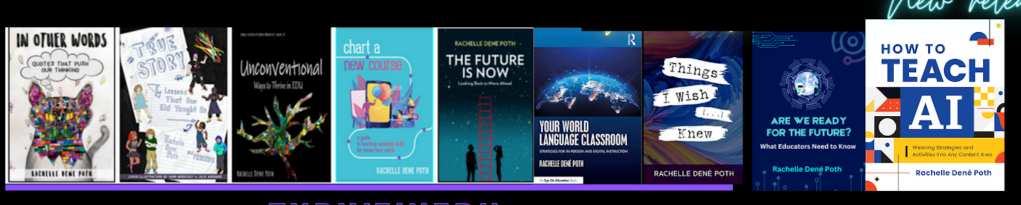
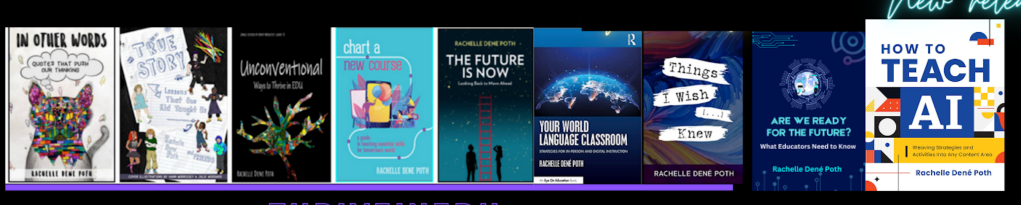
She is the author of nine books including, ‘In Other Words: Quotes That Push Our Thinking,” “Unconventional Ways to Thrive in EDU,” “The Future is Now: Looking Back to Move Ahead,” “Chart A New Course: A Guide to Teaching Essential Skills for Tomorrow’s World, “True Story: Lessons That One Kid Taught Us,” “Things I Wish […] Knew” and her newest “How To Teach AI” is available from ISTE or on Amazon.

Contact Rachelle to schedule sessions about Artificial Intelligence, Coding, AR/VR, and more for your school or your event! Submit the Contact Form.

Follow Rachelle on Twitter(X) and Instagram at @Rdene915

**Interested in writing a guest blog for my site? Would love to share your ideas! Submit your post here. Looking for a new book to read? Find these available at bit.ly/Pothbooks

AI in Education, Part 2: Challenges, Opportunities, and Responsibilities

In Part 1 of this series, I shared some of the ways AI is transforming education—personalized learning, automation of routine tasks, and improved accessibility. But like any powerful tool, AI also comes with challenges that we need to think through carefully if we want it to truly support students and educators.

Thinking through it carefully doesn’t mean that we should ban the use of AI or greatly limit it. It means being intentional about how we use it, asking the right questions, and making sure that technology enhances learning rather than replacing it, and understanding how to make sure that we are using tools that are safe for students and educators.

Here are some challenges (and opportunities) that AI in education brings, as well as ideas for how we can navigate them wisely.


1. The Balance Between AI and Human Instruction

AI-powered learning platforms are helping teachers provide personalized instruction in ways that weren’t possible before. While we have always been able to personalize instruction in our classrooms, these tools can save time, enable faster feedback, and provide greater insights into student learning in less time. Adaptive learning tools can indicate gaps in understanding, adjust content based on individual student progress, and provide instant feedback.

All of these possibilities are beneficial. But these possibilities raise an important question: Where does AI fit into the teacher-student relationship?

Why It Matters:

AI can help educators, or anyone, to be more efficient, but teaching isn’t just about delivering content. It’s about essentially human qualities such as mentorship, creativity, and human connection—things AI can’t replicate. If we rely too much on AI-driven instruction, we risk creating a learning environment and experiences that are transactional rather than transformational in our schools.

Some solutions:

  • Use AI to complement, not replace, teacher-led instruction. AI is capable of handling routine tasks and providing insights, but teachers bring authentic connections, relevant context, and inspiration that technology can’t.
  • Prioritize collaborative learning, project-based learning experiences, and hands-on activities to balance AI-driven efficiency with human creativity.
  • Encourage students to engage in critical thinking and discussion— essential skills that go beyond what AI is able to offer.

2. AI-Generated Content: Helpful or a Shortcut?

There are so many questions surrounding AI-generated content. Should we use it? Can we create with AI and sell it, or are we violating copyright? We know there are endless things we can create, from lesson plans to assessments, project ideas, audio and video creations, and more. AI has become a “go-to” tool for educators and learners alike. But is that always a good thing?

Why It Matters:

AI can generate fast, but speed doesn’t always mean quality or accuracy. Sometimes, AI outputs are generic, lack depth, or contain inaccuracies. As educators, we need to work with it, evaluate our prompts and the output, and find ways to guide students to appropriate use of the tools available. If students rely too much on AI for writing or problem-solving, they will miss out on the critical thinking and creativity that come with the process.

Some solutions:

  • Guide students on how to engage with AI critically. It’s not about completely banning AI tools but helping students learn when and how to use them responsibly.
  • Encourage students to edit, refine, and build on AI-generated content rather than accepting it at face value. Think of AI as a brainstorming tool, not a finished product.
  • Use AI for efficiency, not as a replacement for thought. Generating a study guide is great. Letting AI do all the work is not so great.

3. Data Privacy and Student Security

AI-powered tools are collecting a lot of student data—performance analytics, typing patterns, and even behavioral insights in some cases. While this data can help improve learning experiences, it raises important questions surrounding privacy, security, and consent.

Why It Matters:

AI is making education more personalized, but we make sure that this enhanced personalization doesn’t come at the cost of student privacy. Some questions that schools and educators should consider on a regular basis are:

  • What data is being collected, and how is it stored?
  • Who has access to it?
  • Is it being used to help students learn or for other purposes?

Some solutions:

  • Choose AI tools that prioritize transparency and security. Ask companies tough questions about their data policies. Review the policies frequently to make sure that the companies are staying up-to-date as AI evolves.
  • Teach students about digital literacy and privacy so they understand how their data is being used and can advocate for themselves.
  • Dedicate time to developing clear school policies on AI and data use. If we don’t ask these questions now, we might not like the answers later.

4. Making Sure Every Student Benefits

AI has great potential for providing personalized support to students who need it most. However, if only well-funded schools have access to the best AI-powered tools, it could widen educational gaps.

Why It Matters:

  • Not all students have equal access to technology. We learned this in 2020 as schools had to shift to virtual learning. If AI-driven learning becomes the norm, students in under-resourced schools could fall behind and risk being unprepared for the evolving world of work involving AI.
  • Bias in AI models can unintentionally disadvantage certain student groups if the training data isn’t diverse enough.

Some solutions:

  • Advocate for equitable access to AI tools in schools, ensuring that every student—not just those in tech-rich districts—benefits from AI-driven learning.
  • Be mindful of bias in AI-driven assessments and grading tools. If AI is making decisions that impact students, we need to question how those decisions are being made.

5. The Need for Clear AI Guidelines in Schools

One of the biggest challenges right now is that there’s no universal roadmap for AI in education. Schools are adopting AI tools at different rates, and students are at different levels of understanding about their risks and benefits. Some schools do not have policies in place or have not even started the discussion. I have learned this over the past six months when working with schools across the country in my AI and the Law training sessions and speaking events.

Why It Matters:

  • Without clear guidelines, educators are left to figure things out on their own, which can lead to inconsistent policies and even ethical dilemmas.
  • Schools need AI policies that address data privacy, academic integrity, and responsible AI use.

Some solutions:

  • It takes a team. Work together to develop best practices for AI in the classroom. AI in our schools isn’t just a tech issue—it’s a teaching issue.
  • Push for state and district-level guidelines so that AI use in education is consistent and transparent.
  • Keep the conversation going—AI is evolving fast, and education needs to keep up. We need to be proactive rather than reactive.

As we continue integrating AI into our schools, I believe the key is approaching it with curiosity, caution, and a commitment to making it work for all learners. I would not consider the challenges that I have shared to be giant roadblocks but rather opportunities for us to be proactive and strategic about the use of AI in the classroom.

By staying informed, advocating for responsible AI use, and keeping students and educators at the center of the conversation, we can ensure that AI enhances education rather than disrupting it. In Part 3 of this series, I plan to look at what’s next for the future of learning. What skills will students need in an AI-driven world, and how do we prepare for what’s coming?

Thanks for reading! Stay tuned for Part 3. If you’re looking for PD training for your school or a speaker for your event, contact me via bit.ly/thriveineduPD.

About Rachelle

Dr. Rachelle Dené Poth is a Spanish and STEAM: What’s Next in Emerging Technology Teacher at Riverview High School in Oakmont, PA. Rachelle is also an attorney with a Juris Doctor degree from Duquesne University School of Law and a Master’s in Instructional Technology. Rachelle received her Doctorate in Instructional Technology, and her research focus was on AI and Professional Development. In addition to teaching, she is a full-time consultant and works with companies and organizations to provide PD, speaking, and consulting services. Contact Rachelle for your event!

Rachelle is an ISTE-certified educator and community leader who served as president of the ISTE Teacher Education Network. By EdTech Digest, she was named the EdTech Trendsetter of 2024, one of 30 K-12 IT Influencers to follow in 2021, and one of 150 Women Global EdTech Thought Leaders in 2022.

She is the author of nine books including, ‘In Other Words: Quotes That Push Our Thinking,” “Unconventional Ways to Thrive in EDU,” “The Future is Now: Looking Back to Move Ahead,” “Chart A New Course: A Guide to Teaching Essential Skills for Tomorrow’s World, “True Story: Lessons That One Kid Taught Us,” “Things I Wish […] Knew” and her newest “How To Teach AI” is available from ISTE or on Amazon.

Contact Rachelle to schedule sessions about Artificial Intelligence, Coding, AR/VR, and more for your school or event! Submit the Contact Form.

Follow Rachelle on Bluesky, Instagram, and X at @Rdene915

**Interested in writing a guest blog for my site? Would love to share your ideas! Submit your post here. Looking for a new book to read? Find these available at bit.ly/Pothbooks

************ Also, check out my THRIVEinEDU Podcast Here!

Join my show on THRIVEinEDU on Facebook. Join the group here.

AI in Education: Innovation, Ethics, and the Need for Digital Literacy

I have been researching artificial intelligence for almost 8 years. I enjoy teaching my students about it and working with educators to help them get started with it in their classrooms. Over the past two and a half years, many concerns have been expressed about the impact of AI in education, whether or not it is just a fad, and whether or not it belongs in education. 

As someone who has spent years teaching, researching, and presenting sessions or in class about AI’s role in education, I’ve seen its potential to transform learning. I’ve also seen the risks and negative impacts when schools rush to adopt AI tools without considering ethical implications, data privacy, or long-term effects.

AI is all around us in our work as educators, whether we realize it or not. AI automates tasks, helps to personalize learning, and even serves as a co-teacher or teaching assistant in some classrooms. But if we don’t take the necessary precautions when deciding how we use AI, it could also have negative effects. Without careful consideration, we could widen inequities and compromise student privacy, leaving schools unprepared for the legal and ethical challenges that come with it.

Where AI is Thriving in Education

There are attention-grabbing headlines daily, and I receive at least ten emails related to AI and its benefits. Educators can access AI tutors, save time with AI-generated lesson plans, and have AI assistance in grading. These AI tools can be highly beneficial for overworked teachers or underfunded schools. Talks about teacher burnout and schools looking for resources and grants are ongoing focus points of conversations surrounding AI.

Let’s consider the benefits of AI-powered personalized learning platforms, for example. They can analyze student performance and adapt the content in real-time, offering remediation or enrichment based on each student’s needs. Feedback needs to be authentic, meaningful, and timely. Providing immediate feedback is invaluable, especially when teaching large group sizes, where personalized instruction can be a bit more challenging because of time constraints. 

Then there’s AI-assisted grading. Tools like CoGrader and other AI essay graders are helping teachers provide feedback more efficiently. Instead of spending hours marking papers, educators can use AI to highlight patterns in student writing, suggest improvements, and free up time for deeper instruction and evaluation of student work. 

AI has a role in accessibility. Speech-to-text software, real-time language translation, and adaptive technologies powered by machine learning are breaking down barriers for students with disabilities and English language learners.

AI provides many benefits to educators and students, but it’s also raising some serious concerns that we must address.

The Data Privacy Problem 

Most AI tools require data to function. They need student performance metrics, behavioral analytics, and keystroke tracking. What happens to that data? Who owns it? Who protects it? We need to know the answers to these and more questions. 

Another area that I focus on is cybersecurity. I have spoken with educators from schools adopting AI without fully understanding its implications. FERPA and COPPA exist to protect student data, but many AI tools may not follow these perfectly.  Some may collect and store more data than necessary, and schools may not have the time or the team to carefully evaluate whether a tool is in compliance with COPPA and FERPA.

Take AI-powered proctoring software, for instance. These systems monitor students through webcams, track eye movements, and flag “suspicious” behavior. However, false positives are common, and the amount of biometric data collected raises ethical concerns.

Even seemingly harmless AI chatbots designed to answer student questions collect interactions that could be stored indefinitely. Without strong policies, we risk turning education into a massive, unregulated data experiment.

So, Where Do We Go From Here?

Educators must regularly lead the AI conversation. One of my biggest concerns is that educators are left out of it. School leaders and edtech companies might be making decisions about AI adoption in their schools without input from the teachers who will use these tools.

We also need to teach students how to engage critically with AI. Just as we teach digital citizenship, we should teach AI literacy—how to evaluate AI-generated content, spot misinformation, and understand the limits of machine learning.

If we want AI to work for education, not against it, educators must be trained not just on how to use AI but on its implications. 

AI isn’t going away. If anything, its role in education will only expand. The question isn’t whether we should use AI in schools—it’s how we use it responsibly.

Stay tuned for the continued conversation in part two of this AI series. 

About Rachelle

Dr. Rachelle Dené Poth is a Spanish and STEAM: What’s Next in Emerging Technology Teacher at Riverview High School in Oakmont, PA. Rachelle is also an attorney with a Juris Doctor degree from Duquesne University School of Law and a Master’s in Instructional Technology. Rachelle received her Doctorate in Instructional Technology, and her research focus was on AI and Professional Development. In addition to teaching, she is a full-time consultant and works with companies and organizations to provide PD, speaking, and consulting services. Contact Rachelle for your event!

Rachelle is an ISTE-certified educator and community leader who served as president of the ISTE Teacher Education Network. By EdTech Digest, she was named the EdTech Trendsetter of 2024, one of 30 K-12 IT Influencers to follow in 2021, and one of 150 Women Global EdTech Thought Leaders in 2022.

She is the author of nine books including ‘In Other Words: Quotes That Push Our Thinking,” “Unconventional Ways to Thrive in EDU,” “The Future is Now: Looking Back to Move Ahead,” “Chart A New Course: A Guide to Teaching Essential Skills for Tomorrow’s World, “True Story: Lessons That One Kid Taught Us,” “Things I Wish […] Knew” and her newest “How To Teach AI” is available from ISTE or on Amazon.

Contact Rachelle to schedule sessions about Artificial Intelligence, Coding, AR/VR, and more for your school or event! Submit the Contact Form.

Follow Rachelle on Twitter(X) and Instagram at @Rdene915

**Interested in writing a guest blog for my site? Would love to share your ideas! Submit your post here. Looking for a new book to read? Find these available at bit.ly/Pothbooks

************ Also check out my THRIVEinEDU Podcast Here!

Join my show on THRIVEinEDU on Facebook. Join the group here.

6 Ways to Unplug From Classroom Technology

I recently spoke with several tech coaches who had audited digital tools in their buildings—they found more than 400 tools being used in their schools! I know a lot about technology, yet I still struggle to strike the right balance of technology in the classroom. Avoiding overreliance on technology in our highly digital world can be challenging. One solution is to “unplug.”

Integrating into your classroom unplugged activities that do not require technology can offer many benefits, including helping students develop a variety of skill sets. Although each of these ideas can also be implemented with technology, there are ways to use these without the tech and that help amplify the learning experience for students. Having an unplugged classroom does not always require a lot of planning or materials. When I notice a decrease in student engagement in my classroom, I shift to trying new methods and mixing up the activities to promote student choice and more active learning. 

Ways to Unplug

1. Genius hour. Students select a topic of interest and have time to develop a presentation. They may refer to resources such as books, videos, or internet research, but their presentation must be done without the use of technology. Students can create a visual display, such as a poster, a replica, or a demo of their topic, and then deliver a presentation to their classmates.

2. Place-based learning. Opportunities to explore the community while connecting content to the real world make learning experiences more valuable and meaningful for students. One year, my students did an outdoor project about childhood, and they visited a local park and playground for research.

Students in a history class could visit local historical sites to better understand the content they are learning. Science classes such as biology or ecology can have students explore local areas, learn about the ecosystem, and participate in projects to clean up the community or learn about and present solutions to environmental concerns. Place-based learning boosts student engagement, fosters student agency, and helps students develop a greater understanding of their impact on the community and even the world.

Continue reading this post on Edutopia.

About Rachelle

Dr. Rachelle Dené Poth is a Spanish and STEAM: What’s Next in Emerging Technology Teacher at Riverview High School in Oakmont, PA. Rachelle is also an attorney with a Juris Doctor degree from Duquesne University School of Law and a Master’s in Instructional Technology. Rachelle received her Doctorate in Instructional Technology, and her research focus was on AI and Professional Development. In addition to teaching, she is a full-time consultant and works with companies and organizations to provide PD, speaking, and consulting services. Contact Rachelle for your event!

Rachelle is an ISTE-certified educator and community leader who served as president of the ISTE Teacher Education Network. By EdTech Digest, she was named the EdTech Trendsetter of 2024, one of 30 K-12 IT Influencers to follow in 2021, and one of 150 Women Global EdTech Thought Leaders in 2022.

She is the author of nine books including ‘In Other Words: Quotes That Push Our Thinking,” “Unconventional Ways to Thrive in EDU,” “The Future is Now: Looking Back to Move Ahead,” “Chart A New Course: A Guide to Teaching Essential Skills for Tomorrow’s World, “True Story: Lessons That One Kid Taught Us,” “Things I Wish […] Knew” and her newest “How To Teach AI” is available from ISTE or on Amazon.

Contact Rachelle to schedule sessions about Artificial Intelligence, Coding, AR/VR, and more for your school or event! Submit the Contact Form.

Follow Rachelle on Twitter(X) and Instagram at @Rdene915

**Interested in writing a guest blog for my site? Would love to share your ideas! Submit your post here. Looking for a new book to read? Find these available at bit.ly/Pothbooks

************ Also check out my THRIVEinEDU Podcast Here!

Join my show on THRIVEinEDU on Facebook. Join the group here.

Boosting Classroom Discussions in the New Year with Kialo Edu!

In collaboration with Kialo Edu. All opinions are my own.

Over the past ten to fifteen years, we have seen an increase in the use of technology and how it can transform the way we teach and learn when used purposefully. I am always looking for new tools to explore and to further engage students in learning.

I look for options that help boost student confidence and comfort in our class discussions and provide ways for students to learn how to engage in respectful conversations where they may disagree.

With this in mind, Kialo Edu has emerged as a game-changer. As we prepare our students for their future, we want to promote critical thinking, collaboration, and respectful discourse between students in our classrooms. As an educator who has used Kialo Edu in my classroom, I recognize that this platform is more than just a tool — it is an innovative approach to engaging students in thoughtful discussions and impactful for fostering these essential skills for the future.

What Is Kialo Edu?

You may be wondering what Kialo Edu is. It is a robust web-based platform designed to facilitate structured, interactive discussions between students while also providing insight into how students are learning and processing the information. I spent a few hours on a weekend testing out its features and was really impressed. One of my favorite features is the “discussion tree,” which is a way to visually map arguments as interconnected branches. Students can look at this, see how their ideas develop, and better understand the logical structure of the conversation. It is very easy to navigate, and I love how it encourages students to consider all the different perspectives their classmates have raised.

To begin, you need a thesis — a central statement or question — that students then support or challenge with pro and con arguments. Each argument, whether a pro or a con, can then have its own set of pros and cons. In this way, discussions can branch into progressively more detailed sub-arguments, creating an organized structure that can make even the most complex discussions manageable and transparent.

Kialo Edu provides an intuitive and visual format for discussions, enriched with features like impact meters for rating arguments, referencing sources in claims, and linking arguments across branches of the discussion. Whether you’re exploring global or societal issues, debating scientific ethics, or dissecting a novel’s character motivations, Kialo Edu makes discussions engaging and meaningful. And it is free to use!

How Kialo Works in Practice

Getting started with Kialo Edu is easy: It begins with simply creating a discussion. After setting a thesis, teachers can add a brief text for instructions or context, set specific tasks for students to complete in the discussion, and even incorporate an image to set the tone. Once ready, students are invited to join and begin contributing arguments, rating their impact, and responding to others. As the discussion unfolds, educators can easily monitor new claims as well as students’ progress toward their tasks. For educators, the virtual classroom management capability of Kialo Edu enables teachers to track student progress at any time. Taking on the student role, I appreciate how Kialo shows my progress as I contribute new arguments, offer supporting arguments, or put forth alternative viewpoints to others’ claims.

One feature that I really appreciate is the Grading and Feedback tool, which allows educators to filter out individual students’ contributions. This makes it easier to keep track of participation, evaluate the quality of arguments, and provide more targeted feedback to students. There are also comments that remain separate from the main discussion, which allows for side conversations about phrasing, content, or sources without cluttering the primary argument tree.

Bringing Discussions to Life in the Classroom

Fostering Critical Thinking

I’ve used Kialo Edu in my classroom to have students examine their own reasoning behind both academic and real-world topics. For example, when discussing the merits of sustainability practices, each group had to find credible sources and evidence to support their claims. The impact meters helped students recognize the most influential arguments, which then helped them refine their reasoning and presentation.

Building Civil Discourse

Kialo Edu’s perspective-switching feature is a powerful tool for fostering empathy and understanding. After students have voted on the strength of arguments in the discussion, they can then view the discussion tree through the lens of a participant who voted differently. In doing so, students can view and consider opposing arguments as more than just obstacles to their own. This feature is particularly impactful during a debate on a topic such as freedom of speech, where students can deepen their understanding of a complex issue by exploring multiple viewpoints.

Enhancing Collaboration

Sometimes, it makes sense to assign mixed-ability groups to explore different topics. Using Kialo’s Small Group Mode, teachers can hand-pick groups that will encourage diverse viewpoints. Each group then receives its own private copy of a discussion, allowing students to build arguments collaboratively without external distractions. This approach has been valuable when discussing topics where students must learn how to navigate nuanced perspectives.

Why Kialo Edu Works for Educators

Kialo Edu is such a robust platform, and here are a few reasons why I believe that Kialo Edu is a stand-out and a must-try for all educators:

  • Ease of Assessment

Using the Grading and Feedback feature, I can look at a specific student’s work all in one place, evaluate the depth of their arguments in context, and provide targeted feedback.

Kialo Edu aligns with key pedagogical goals, including critical thinking, respectful communication, and information literacy. Its flexibility allows me to adapt it for various subjects and levels, from analyzing historical events in relevant content areas to debating ethical dilemmas in literature.

One of the joys of using Kialo Edu is its versatility. There are many great ways to bring Kialo into every classroom, especially to boost creativity!

Here are a few ways I’ve integrated it into my classroom:

Literary Analysis

Students read “To Kill a Mockingbird” in English and Spanish. Regardless of which language, students can debate whether Atticus Finch’s defense strategy was the best course of action. The discussion tree helps them organize arguments about character motivations and societal norms of the time.

STEM Debates

In my 8th grade STEAM course, during a unit on robotics, students can debate the ethical implications of using AI in healthcare-related fields. Students used the comment section to share research links and refine their arguments, which helped them to present a well-rounded view of the topic.

Decision-Making Activities

For a short discussion, students can use Kialo to choose a class field trip location or engage in a debate on a topic. By weighing the pros and cons of various options, they get to practice their decision-making skills in a fun and engaging way. These are essential skills that will prepare them for the future.

Essay Preparation

Kialo is also a fantastic tool for prewriting activities. Students can use it to map out their arguments for persuasive essays, ensuring their ideas are well-organized and supported by evidence.

As an educator, student safety is a high priority for me. Kialo Edu is focused on aligning to strict privacy standards like GDPR, COPPA, and FERPA, which provides more confidence and security when using it with my students.

Kialo Edu’s commitment to remaining free for educational use ensures accessibility for all schools, regardless of budget constraints.

Tips for getting started with Kialo Edu

If you are wondering how to get started, it is simple! Here are some tips to ensure a smooth and successful implementation:

  • Start small

Begin with a simple topic to familiarize students with the platform. Over time, introduce more complex discussions as students become comfortable.

Set guidelines for respectful discourse, evidence use, and participation. With clear expectations, it will help to set the tone for productive and meaningful discussions.

Encourage students to use the comment feature to refine arguments and share sources. This fosters a deeper understanding of how claims are supported or refuted.

Design rubrics that assess not just the content of arguments but also collaboration, critical thinking, and responsiveness.

The impact of Kialo Edu

Kialo Edu can completely transform the way students approach discussions. They will become more thoughtful, articulate, and respectful in expressing their ideas. Beyond academics, these essential skills will prepare them to navigate a world that demands critical thinking, adaptability, and flexibility.

Kialo Edu is more than just a teaching tool for educators — it’s a pathway to more engaging and meaningful classroom interactions. Whether debating global issues, analyzing literature, or deciding on a field trip, Kialo Edu brings structure, clarity, and engagement to every discussion.

In a world where thoughtful dialogue is more important than ever, Kialo Edu empowers students and teachers alike to explore, analyze, and connect in ways that truly make a difference. I love finding ways to boost classroom discussion, and Kialo Edu is a must-try for all educators.

As educators, we aim to prepare students for tests and life and be adaptable. Kialo Edu provides students with the tools to think critically, argue respectfully, and collaborate effectively — invaluable skills in any field. With its intuitive design, robust features, and commitment to privacy and accessibility, Kialo Edu is a powerful resource to help make the world more thoughtful, one discussion at a time.

About the Author

Dr. Rachelle Dené Poth is a Spanish and STEAM: What’s Next in Emerging Technology Teacher at Riverview High School in Oakmont, PA. Rachelle is also an attorney with a Juris Doctor degree from Duquesne University School of Law and a Master’s in Instructional Technology. Rachelle received her Doctorate in Instructional Technology, and her research focus was on AI and Professional Development. In addition to teaching, she is a full-time consultant and works with companies and organizations to provide PD, speaking, and consulting services. Contact Rachelle for your event!

Rachelle is an ISTE-certified educator and community leader who served as president of the ISTE Teacher Education Network. By EdTech Digest, she was named the EdTech Trendsetter of 2024, one of 30 K-12 IT Influencers to follow in 2021, and one of 150 Women Global EdTech Thought Leaders in 2022.

She is the author of nine books including ‘In Other Words: Quotes That Push Our Thinking,” “Unconventional Ways to Thrive in EDU,” “The Future is Now: Looking Back to Move Ahead,” “Chart A New Course: A Guide to Teaching Essential Skills for Tomorrow’s World, “True Story: Lessons That One Kid Taught Us,” “Things I Wish […] Knew” and her newest “How To Teach AI” is available from ISTE or on Amazon.

Contact Rachelle to schedule sessions about Artificial Intelligence, Coding, AR/VR, and more for your school or event! Submit the Contact Form.

Follow Rachelle on Twitter(X) and Instagram at @Rdene915

**Interested in writing a guest blog for my site? Would love to share your ideas! Submit your post here. Looking for a new book to read? Find these available at bit.ly/Pothbooks

************ Also check out my THRIVEinEDU Podcast Here!

Join my show on THRIVEinEDU on Facebook. Join the group here.
Marty the Robot: Your Classroom’s AI Companion

Post in collaboration with Robotical. Opinions expressed are my own.

Artificial intelligence (AI) is no longer a futuristic concept. It has been around since the last century, but it has advanced rapidly in the past few years, especially with the launch of ChatGPT and generative tools. Whether or not we ever realized it, it has been and will continue to be a part of our everyday lives. Think about your daily activities using AI, from the voice assistants on our phones to the recommendation algorithms on our favorite streaming platforms like Netflix. As educators, it’s crucial to equip all students with the knowledge and skills to understand, interact with, and even create AI-powered technologies. But how?

Marty: Your AI-Powered Teaching Assistant

Marty the Robot is a fantastic tool for introducing AI concepts to students of all ages. Marty is a humanoid robot that is specific for education. It is a hands-on, engaging way to provide all students with the opportunity to learn about and explore machine learning, robotics, and computer science. In today’s digital age, artificial intelligence (AI) is all around us. For the younger generations, they have grown up using and relying on AI, and in likely most cases, without even noticing it.

As educators, there are many ways we leverage the power of AI to assist us with tasks, save time, promote productivity, and more. For example, voice assistants respond to our commands, streaming services curate personalized recommendations quickly, and educational apps adapt to individual learning styles, which create personalized learning journeys for students and help us provide the best opportunities for our students.

AI should be part of elementary school students’ learning experience. Whether they learn the basic concepts or have opportunities to work with an AI-powered tool, it is important to move our students beyond passive consumption and empower them to engage actively with these technologies. By understanding how AI works and how to create it, students can become not just users but innovators.

Marty the Robot: A Hands-On AI Companion

I was thrilled when I received Marty the Robot for my classroom. Marty is a mixture of hardware and software that brings AI concepts to life and engages all students. Marty offers a unique opportunity for students to explore the world of machine learning and robotics and have fun in the process!

Why Choose Marty?

Humanoid Design: Marty’s humanoid form fosters a strong emotional connection with students, making learning more enjoyable and memorable.

Versatile Programming: From screen-free coding to advanced Python programming, Marty supports a wide range of coding skills and learning styles. It meets students’ interests and specific needs.

Customizable AI: Students can teach Marty to recognize sounds, images, and other stimuli, allowing them to create personalized and interactive experiences. It gives them more opportunities to create and innovate.

Curriculum-Aligned Resources: Marty has an extensive library of educational resources, including lesson plans, activities, and tutorials, aligned with various national and regional curricula.

Durable: Marty is a reliable and long-lasting educational tool built to withstand classroom use and even some falls.

Real-World Applications of AI with Marty

Image Recognition: Teach Marty to identify objects, colors, and patterns, fostering visual perception and problem-solving skills.

Sound Recognition: Train Marty to respond to voice commands and sound cues, developing auditory processing and language skills.

Obstacle Avoidance: Implement AI algorithms to enable Marty to navigate obstacles autonomously, teaching students about spatial reasoning and decision-making.

Facial Recognition: Use advanced AI techniques to teach Marty to recognize faces, and students can evaluate its accuracy for detecting faces too..

STEM Learning and Beyond

Marty is more than just a robot; it’s a gateway to a world of STEM possibilities. By building and programming Marty, students develop critical thinking, problem-solving, and creativity skills.

Marty can be used to explore cross-curricular topics, such as language arts, social studies, and art. For instance, students can write stories about Marty’s adventures, create artwork inspired by his design, or study historical figures who have contributed to the field of robotics.

Empowering Future Innovators

By introducing students to AI and robotics through engaging tools like Marty, we are shifting them from consumers and creators and empowering them to become the next generation of innovators. As technology advances, it’s essential to equip all students with the knowledge and skills needed to thrive in our rapidly changing world.

Marty the Robot will engage students and spark creativity and curiosity for learning. By embracing AI and robotics education, we can hopefully inspire our students to become problem-solvers, inventors, and dreamers.

It has been so much fun to see students learning about AI and coding with Marty!

To learn more about Marty the Robot, head to https://robotical.io/. You can even request a trial of Marty, too!

About Rachelle

Dr. Rachelle Dené Poth is a Spanish and STEAM: What’s Next in Emerging Technology Teacher at Riverview High School in Oakmont, PA. Rachelle is also an attorney with a Juris Doctor degree from Duquesne University School of Law and a Master’s in Instructional Technology. Rachelle received her Doctorate in Instructional Technology, and her research focus was on AI and Professional Development. In addition to teaching, she is a full-time consultant and works with companies and organizations to provide PD, speaking, and consulting services. Contact Rachelle for your event!

Rachelle is an ISTE-certified educator and community leader who served as president of the ISTE Teacher Education Network. By EdTech Digest, she was named the EdTech Trendsetter of 2024, one of 30 K-12 IT Influencers to follow in 2021, and one of 150 Women Global EdTech Thought Leaders in 2022.

She is the author of nine books including ‘In Other Words: Quotes That Push Our Thinking,” “Unconventional Ways to Thrive in EDU,” “The Future is Now: Looking Back to Move Ahead,” “Chart A New Course: A Guide to Teaching Essential Skills for Tomorrow’s World, “True Story: Lessons That One Kid Taught Us,” “Things I Wish […] Knew” and her newest “How To Teach AI” is available from ISTE or on Amazon.

Contact Rachelle to schedule sessions about Artificial Intelligence, Coding, AR/VR, and more for your school or event! Submit the Contact Form.

Follow Rachelle on Twitter(X) and Instagram at @Rdene915

**Interested in writing a guest blog for my site? Would love to share your ideas! Submit your post here. Looking for a new book to read? Find these available at bit.ly/Pothbooks

************ Also check out my THRIVEinEDU Podcast Here!

Join my show on THRIVEinEDU on Facebook. Join the group here.
Teaching Students Cyber Safety Basics

As educators, we must teach students how to stay safe online, especially with the rise of emerging technologies such as artificial intelligence (AI) and generative AI. With the capabilities of technology expanding so rapidly, teaching students about cybersecurity and cyber safety is more important than ever—these are topics that need to be discussed and explored at all grade levels. 

Distinguishing between cybersecurity and cyber safety

Cybersecurity is the practice of protecting electronic devices, networks, and sensitive information from unauthorized access. It means proactively taking measures to ensure that confidentiality is protected and thoroughly checking out the resources that we use. Our access to devices and endless types of technology has transformed how we learn and work. However, it has also led to an increase in dangers that can impact our safety and well-being. We need to help students understand how to utilize the technology with a careful focus on how to stay safe online and protect personal information. Cyber safety awareness is critical for everyone. 

Cyber safety refers to the practice of responsibly using technology and resources available through the internet. It is especially important to use care when accessing and sharing information online to avoid the risks and potential harm that can result, such as cyberbullying, hacking, phishing, identity theft, or exposure to inappropriate content and other online threats. Because of these risks, we must be intentional about helping students understand how to protect their safety and privacy online. 

Continue reading this post on Edutopia.

About Rachelle

Dr. Rachelle Dené Poth is a Spanish and STEAM: What’s Next in Emerging Technology Teacher at Riverview High School in Oakmont, PA. Rachelle is also an attorney with a Juris Doctor degree from Duquesne University School of Law and a Master’s in Instructional Technology. Rachelle received her Doctorate in Instructional Technology, and her research focus was on AI and Professional Development. In addition to teaching, she is a full-time consultant and works with companies and organizations to provide PD, speaking, and consulting services. Contact Rachelle for your event!

Rachelle is an ISTE-certified educator and community leader who served as president of the ISTE Teacher Education Network. By EdTech Digest, she was named the EdTech Trendsetter of 2024, one of 30 K-12 IT Influencers to follow in 2021, and one of 150 Women Global EdTech Thought Leaders in 2022.

She is the author of nine books including ‘In Other Words: Quotes That Push Our Thinking,” “Unconventional Ways to Thrive in EDU,” “The Future is Now: Looking Back to Move Ahead,” “Chart A New Course: A Guide to Teaching Essential Skills for Tomorrow’s World, “True Story: Lessons That One Kid Taught Us,” “Things I Wish […] Knew” and her newest “How To Teach AI” is available from ISTE or on Amazon.

Contact Rachelle to schedule sessions about Artificial Intelligence, Coding, AR/VR, and more for your school or event! Submit the Contact Form.

Follow Rachelle on Twitter(X) and Instagram at @Rdene915

**Interested in writing a guest blog for my site? Would love to share your ideas! Submit your post here. Looking for a new book to read? Find these available at bit.ly/Pothbooks

************ Also check out my THRIVEinEDU Podcast Here!

Join my show on THRIVEinEDU on Facebook. Join the group here.
Tonies: A Screen-Free Adventure into the World of Storytelling

In collaboration with Tonies. All opinions expressed are my own.

In our increasingly digital world, where technology has the potential to be used too often, it’s great to discover innovative tools that don’t require a screen. Educators and families alike are always looking for ways to nurture creativity and spark a love of learning without the need for extra screen time. Enter the Toniebox, a brilliant and innovative audio system that reimagines storytelling and learning for children. With its kid-friendly design, engaging content, and screen-free functionality, the Toniebox has become a favorite in homes and classrooms worldwide.

As an educator who has used Tonieboxes with students, I’ve experienced the impact of this simple yet powerful tool. From the first time you use it, it draws you in, and the excitement builds up for more stories and fun in learning.

What is the Toniebox?

The Toniebox is a soft, cube-shaped audio player designed for children. I have a red and a light-blue one that I have used, and they are truly great for children. Unlike traditional speakers or audio tools that may be used in the classroom, the Toniebox is completely screen-free and user-friendly. It operates through the use of Tonies, which are adorable characters that come preloaded with content, such as songs, stories, or educational lessons. Children ages three and up can use the Toniebox without any problems because it requires them to simply place their Tonie on top of the Toniebox, and the content will play automatically.

The design of the Toniebox is perfect for young learners. It is soft to the touch, durable, and easy for children to operate. What I love about its design are its controls. The volume can be adjusted by pressing the “ears” on top of the box, and tracks can be skipped by tapping the sides of the Toniebox.

What are Tonies?

Tonies are adorable characters that come to life through the Toniebox. The Tonies are placed on a Toniebox to play stories, songs, and language learning activities. There are so many great characters, more than 200 to choose from, and more are being added.

The Magic of Screen-Free Play

The Toniebox stands out from other storytelling products because it is screen-free. By encouraging imaginative play, Tonies helps children develop essential skills such as:

  • Creativity: Children can create stories or adventures using their Tonies as inspiration. Give students a Tonie and ask them to write or tell a story about it. It is a great way to build many essential skills and for them to have fun, too!
  • Focus and Attention: The variety of narratives and how the Tonies create a more engaging audio experience helps children as they develop their ability to focus and concentrate. They become drawn into the stories, develop close listening skills, and get excited to share what they learn.
  • Language Development: To develop language skills, students need a variety of learning opportunities. With the Toniebox, they can listen to stories and songs that will help expand their vocabulary, language skills, and comfort in speaking.

Toniebox in the Classroom

For educators, the Toniebox will be a versatile and impactful addition to the classroom.

Artina Ellsworth, an early educator at Lakeside Primary in Prairieville, Louisiana, told me that she uses Tonies in her “pre-K classroom with the 3-year-olds during music and movement time, read-aloud time, and also in my literacy centers. It helps keep them focused and engaged during reading, helps me teach concepts of print, and also story comprehension for retelling stories. During center time, it also helps them follow the story without me having to sit and read the book with them. It builds their confidence in knowing that they can listen and pretend to read stories by themselves!”

There are so many great uses of the Toniebox! Here are some ideas for bringing a Toniebox into your teaching practice:

1. Listening Centers

The Toniebox can be used in a listening center where students can independently enjoy audiobooks or songs. This fosters self-guided learning and a comfortable way for students to practice their listening comprehension and auditory processing skills.

2. Mindfulness and Relaxation

The Toniebox is perfect for creating a calming environment. During transitions or after lunch, use Tonies that provide mindfulness exercises to help students refocus and relax.

3. Story Time

Use Tonies as a way to create engaging story time sessions for students. Students can create their own stories and even work together to build essential skills of collaboration and creativity!

4. Group Activities

Use Tonies to engage students in some discussions about the story. Ask questions and have students create alternate endings. There are so many possibilities!

Inclusion and Accessibility

The simplicity of the Toniebox makes it accessible to all learners, including those with special needs. Its tactile interface and audio format cater to diverse learning styles and abilities, ensuring every student can participate.

Here are some of the standout features that make the Toniebox a must-have for both classrooms and homes:

1. Durability

The Toniebox is built to withstand the wear and tear of young hands. Its soft padding and design ensure it can handle daily use.

2. Portability

With its rechargeable battery, the Toniebox can go anywhere. Whether it’s used in the classroom, on a field trip, or during a long car ride, it offers hours of uninterrupted learning and fun.

3. Content Variety

From fairy tales to educational lessons, the Tonies’ library ensures something that will meet every child’s interest and learning level. And new Tonies are being released, which helps to keep the learning experience engaging and fun!

4. Customization

Creative Tonies provide even more opportunities for personalization. Parents can record bedtime stories, and teachers can create custom lessons or messages for their students.

5. Ease of Use

Its unique design means that even the youngest learners can operate the Toniebox independently, which promotes confidence and autonomy.

And now there are even audiobooks that offer more content for kids 6-9! Tonies offer a unique and engaging way to spark children’s imagination and foster a love of learning. By providing a screen-free experience, Tonies helps children develop essential skills while having fun. Whether you’re an educator or a parent, Tonies is a fantastic option to enhance children’s learning and development. Educators, get started today with Tonies through their educator discount!

About Rachelle

Dr. Rachelle Dené Poth is a Spanish and STEAM: What’s Next in Emerging Technology Teacher at Riverview High School in Oakmont, PA. Rachelle is also an attorney with a Juris Doctor degree from Duquesne University School of Law and a Master’s in Instructional Technology. Rachelle received her Doctorate in Instructional Technology, and her research focus was on AI and Professional Development. In addition to teaching, she is a full-time consultant and works with companies and organizations to provide PD, speaking, and consulting services. Contact Rachelle for your event!

Rachelle is an ISTE-certified educator and community leader who served as president of the ISTE Teacher Education Network. By EdTech Digest, she was named the EdTech Trendsetter of 2024, one of 30 K-12 IT Influencers to follow in 2021, and one of 150 Women Global EdTech Thought Leaders in 2022.

She is the author of nine books including ‘In Other Words: Quotes That Push Our Thinking,” “Unconventional Ways to Thrive in EDU,” “The Future is Now: Looking Back to Move Ahead,” “Chart A New Course: A Guide to Teaching Essential Skills for Tomorrow’s World, “True Story: Lessons That One Kid Taught Us,” “Things I Wish […] Knew” and her newest “How To Teach AI” is available from ISTE or on Amazon.

Contact Rachelle to schedule sessions about Artificial Intelligence, Coding, AR/VR, and more for your school or event! Submit the Contact Form.

Follow Rachelle on Twitter(X) and Instagram at @Rdene915

**Interested in writing a guest blog for my site? Would love to share your ideas! Submit your post here. Looking for a new book to read? Find these available at bit.ly/Pothbooks

************ Also check out my THRIVEinEDU Podcast Here!

Join my show on THRIVEinEDU on Facebook. Join the group here.
Empowering Educators with Almanack’s Teaching Tools

In collaboration with Almanack. All opinions are my own.

Education is moving fast. Educators have many responsibilities in their work, requiring flexibility and the ability to balance many things at once. Tasks such as lesson planning, creating assessments and grading, differentiating class materials, and finding ways to boost student engagement can be quite time-consuming. In addition to these tasks, educators want to find the best ways to provide all students with a meaningful, impactful learning experience.

All of these responsibilities demand many hours and can also lead to burnout. However, we are teaching during a time of rapidly evolving educational technology, particularly through AI-powered tools. With the increased use of artificial intelligence (AI) in the world and in education, especially over the past two years, it is important to find tools that leverage this power to enhance student learning and benefit educators.

Almanack is a great option for educators searching through the tools available to find something that will help them streamline their workflow. Having one platform that offers a variety of commonly created resources and other materials makes sense. I often tell educators that they need a toolkit. I think that Almanack is an essential toolkit for educators. It offers many options for educators looking to create different resources for students and those who want to save time and become more efficient, which benefits students because educators have more time available for them.

Some of my favorite Almanack features

Almanack isn’t just an educational tool; it’s a robust and comprehensive platform that provides various resources to help educators design and implement effective learning experiences in the classroom. Here are a few examples of why I think Almanack stands out:

1. Slide Decks and Visual Aids: When I created my first slide deck using Almanack, I was amazed at how professional it looked. The layout, colors, images, and information it generated were all impressive. What would have taken me an hour or more took only a few minutes. Almanack enables educators to leverage AI to create visually appealing slide decks that are informative and more engaging for students. The decks can then be customized with your own images and specific content that aligns with the lesson. See below for an example created simply with a prompt! And it can be translated to different languages!

2. Customizable Worksheets: From K-2 literacy and numeracy activities to advanced topic sheets for grades 3-12, Almanack provides templates that can be customized to fit any subject area. I spend a lot of time creating worksheets for my students and want to provide different activities that best meet my students’ needs. Creating worksheets is easy with Almanack.

3. Interactive Classroom Games: Students love playing games, and when they can interact, the benefits are great. Building collaboration, communication, critical thinking, and problem-solving skills are essential for future success. Almanack offers a variety of options, including Battleship-style review games, Bingo, Forbidden Words, and Jeopardy. What once took a lot of time to create is now easier, and it adds fun to the learning experience, promotes retention, and encourages student participation.

4. Comprehensive Study Guides and Rubrics: Teachers can quickly create graphic organizers, detailed study guides, and rubrics to provide students with clear expectations and study aids to support their learning.

5. Multilingual Support: As a language educator, I always explore the languages available within the tools that I use. Almanack can translate text lesson plans and resources into multiple languages, ensuring no student is left behind due to language barriers. Select the Output language when creating your resource; the translation will be done for you.

Compliance and Security: A Core Priority

A common concern is data privacy and security. Almanack complies with COPPA and FERPA, which shows its commitment to safeguarding student information. It strictly regulates the collection and use of personal data to provide a secure environment for students and educators.

Standards Aligned

Almanack also has state standards pre-loaded on its platform. This helps teachers to save time when creating standards-based assessments. It also allows teachers to design and map their curriculum to ease the overhead of tracking compliance with school curriculum/state standards.

Innovations in Worksheet and Assessment Design

Recent updates to Almanack have introduced features like the ability to create differentiated worksheets. Teachers can design their learning materials to meet the specific needs of their students, ensuring that each student can engage with the content at a level that challenges them appropriately. You can also create answer keys directly within the worksheet editor, simplifying the assessment process and enabling teachers to provide timely and accurate feedback, which is essential for student growth.

Effective Teaching with Almanack’s Lesson Planning Tools

Educators may implement a variety of lesson planning methodologies, such as Understanding by Design (UbD) and the 5E instructional model, which are commonly used since they meet a range of teaching styles and are appropriate for all subject areas. Other great options include resources that help plan a project-based learning activity or a simulation, which help educators foster an engaging and informative classroom environment.

Ease of Use

When I first use a website or try a new digital tool, I focus on its ease of use and how user-friendly it is. Almanack is very user-friendly, making it easy for teachers to create lesson plans and classroom resources in minutes. They don’t need any prior experience in AI or knowledge of how to use complex software. It is a very intuitive platform, so educators don’t have to worry about losing time learning how to use it. They can dive right in.

Almanack offers teachers a comprehensive set of tools. I always recommend exploring the different options and considering what would benefit you and your students right now. Something with gamification? Opportunities for students to collaborate? Or something to help you save time and design engaging lessons and presentations for your students. Explore Almanack’s tools and its integration with some other favorites! Whatever you need to create, getting started with Almanack will be easy!

About Rachelle

Dr. Rachelle Dené Poth is a Spanish and STEAM: What’s Next in Emerging Technology Teacher at Riverview High School in Oakmont, PA. Rachelle is also an attorney with a Juris Doctor degree from Duquesne University School of Law and a Master’s in Instructional Technology. Rachelle received her Doctorate in Instructional Technology, and her research focus was on AI and Professional Development. In addition to teaching, she is a full-time consultant and works with companies and organizations to provide PD, speaking, and consulting services. Contact Rachelle for your event!

Rachelle is an ISTE-certified educator and community leader who served as president of the ISTE Teacher Education Network. By EdTech Digest, she was named the EdTech Trendsetter of 2024, one of 30 K-12 IT Influencers to follow in 2021, and one of 150 Women Global EdTech Thought Leaders in 2022.

She is the author of nine books including ‘In Other Words: Quotes That Push Our Thinking,” “Unconventional Ways to Thrive in EDU,” “The Future is Now: Looking Back to Move Ahead,” “Chart A New Course: A Guide to Teaching Essential Skills for Tomorrow’s World, “True Story: Lessons That One Kid Taught Us,” “Things I Wish […] Knew” and her newest “How To Teach AI” is available from ISTE or on Amazon.

Contact Rachelle to schedule sessions about Artificial Intelligence, Coding, AR/VR, and more for your school or event! Submit the Contact Form.

Follow Rachelle on Twitter(X) and Instagram at @Rdene915

**Interested in writing a guest blog for my site? Would love to share your ideas! Submit your post here. Looking for a new book to read? Find these available at bit.ly/Pothbooks

************ Also check out my THRIVEinEDU Podcast Here!

Join my show on THRIVEinEDU on Facebook. Join the group here.
7 Ways AI is Set to Make Teachers’ Jobs Easier

Collaborative blog post.

Since the early 2000s, education has had to evolve with the rapid integration of technology into the classroom. From the general use of computers and laptops for schoolwork to the rise of smartphones and tablets in the classroom, teachers have had to be agile to keep up with these changing trends. Unfortunately, despite these advancements, many teachers struggle in their jobs, leading to a mass exodus in recent years. In August this year alone, Statista reported that 51,000 teachers and other educational staff quit their jobs in the United States. As the education sector is struggling to find teachers to replace them, artificial intelligence (AI) could be the next advancement that not only changes how students learn but also improves the teaching profession by making the job easier. In a guest post by Matthew Rhoads, Ed.D., he wrote that AI can improve teachers’ workflow by providing opportunities for them to optimize their workflow and instruction in the classroom. Below are 7 ways that AI will make teachers’ jobs easier.

Grading

One of the biggest reasons for teacher stress and burnout is the extra work they must do in addition to teaching. Grading is one of the most time-consuming tasks and is often done outside of regular school hours, eating into a teacher’s work-life balance. As discussed in A Look Back at AI in Education, AI grading tools can automate this process. AI can appraise student work instantaneously with very little human input needed, thereby increasing the time teachers can spend on other aspects of their job as well as increasing their free time. These tools also provide much faster feedback to the students, which in turn will help with engagement.

Roleplaying

One factor of AI that will provide a new dimension to how students learn about different subjects is Generative AI (GenAI). MongoDB details how GenAI is based on foundation models that can perform tasks like classification, sentence completion, the generation of images or voice, and synthetic (artificially generated) data. This means that teachers can use AI to educate students through roleplaying. Gabriel Rshaid, co-founder and director at The Learnerspace & The Global School, writes on LinkedIn that GenAI systems that can impersonate a famous, historical, or even current person as well as replicate historical situations. He argues that not only will it foster critical thinking, but it will also elevate the level of interest and engagement for students. Lack of engagement in lessons is regularly touted as a common issue in modern classrooms, leading to added stress for teachers.

Foreign Language Teaching

Language learning in the classroom can be very difficult for teachers due to the lack of one-on-one time with students. With AI, students can speak to a Language Learning Model such as ChatGPT or an AI interlocutor to create a dialogue that is exactly pitched at their level. In a previous post on AI Literacy, we asked a student about the benefits of using AI for language learning. She replied: “The chatbot was very helpful. Immersing yourself with technology that helps you learn Spanish or any other language can help a lot. You have real-time conversations, and the chatbot expands the conversation so you can learn even more about the language. It also helps you become more comfortable speaking!” As students engage with the AI on their own terms, foreign language teachers will have more time to address individual needs.

Plan Lessons

Like grading, a good amount of time outside teaching is spent planning lessons due to the amount of research and reinvention needed. AI can streamline and optimize this process by not only creating new plans from scratch very quickly but also analyzing past lesson plans to cater to the teacher’s own preferences and style of teaching. Curriculum standards also change very frequently, and AI can be used to ensure that the lessons are updated with the latest requirements. This decreases the time teachers spend on planning lessons and increases their ability to work with students.

Personalized Learning For Students

One of the major issues that makes a teacher’s job difficult is not being able to adapt their teaching methods for individual students. It is not possible for teachers to create personalized learning plans for each student in their classroom, which can lead to some students getting left behind and resulting in a lack of engagement. AI-powered adaptive learning platforms can analyze students’ strengths and weaknesses and provide personalized lessons and study paths. 

Improve Classroom Management

While AI will revolutionize how teachers can adapt their lessons to students to improve their learning outcomes, another important aspect of AI that will make a teacher’s job easier is classroom management. A Medium post notes how “one of the most pressing challenges for teachers has always been classroom management,” with discipline being one of the most difficult aspects of the job. When it comes to class management, AI can create a more harmonious classroom environment by being able to “detect when a student is distracted, struggling with a concept, or even feeling unwell.” This will allow teachers to immediately intervene and address the issues before they escalate and result in classroom disruption.

Reduce Burnout

As the above benefits show, AI can have a positive impact on many different facets of teaching to make the job easier. By improving each of the above aspects, AI will reduce overall burnout in teachers, which is having a massive impact on the industry. HMH’s 9th Annual Educator Confidence Report found that burnout is a critical issue, with 82% of educators citing that what they need most is a more balanced workload. Education and students are changing fast, with one teacher noting that “today’s student is different from students even five years ago.” AI will not only allow teachers to keep up, but it will also reduce their workload and give them more time to focus on their students. This will make their job easier and improve their work-life balance, which will hopefully stem the number of teachers leaving the profession.


About Rachelle

Dr. Rachelle Dené Poth is a Spanish and STEAM: What’s Next in Emerging Technology Teacher at Riverview High School in Oakmont, PA. Rachelle is also an attorney with a Juris Doctor degree from Duquesne University School of Law and a Master’s in Instructional Technology. Rachelle received her Doctorate in Instructional Technology, and her research focus was on AI and Professional Development. In addition to teaching, she is a full-time consultant and works with companies and organizations to provide PD, speaking, and consulting services. Contact Rachelle for your event!

Rachelle is an ISTE-certified educator and community leader who served as president of the ISTE Teacher Education Network. By EdTech Digest, she was named the EdTech Trendsetter of 2024, one of 30 K-12 IT Influencers to follow in 2021, and one of 150 Women Global EdTech Thought Leaders in 2022.

She is the author of nine books including ‘In Other Words: Quotes That Push Our Thinking,” “Unconventional Ways to Thrive in EDU,” “The Future is Now: Looking Back to Move Ahead,” “Chart A New Course: A Guide to Teaching Essential Skills for Tomorrow’s World, “True Story: Lessons That One Kid Taught Us,” “Things I Wish […] Knew” and her newest “How To Teach AI” is available from ISTE or on Amazon.

Contact Rachelle to schedule sessions about Artificial Intelligence, Coding, AR/VR, and more for your school or event! Submit the Contact Form.

Follow Rachelle on Twitter(X) and Instagram at @Rdene915

**Interested in writing a guest blog for my site? Would love to share your ideas! Submit your post here. Looking for a new book to read? Find these available at bit.ly/Pothbooks

************ Also check out my THRIVEinEDU Podcast Here!

Join my show on THRIVEinEDU on Facebook. Join the group here.