Throughout this series, I’ve shared what I’ve learned from working alongside district leadership teams across the country as they navigate artificial intelligence, digital wellness, and purposeful technology use.
We’ve explored:
why curiosity is replacing fear
why educator readiness is the foundation
why leadership and systems matter
But there is another critical question schools must answer:
How do we know if it’s working? Because implementation is not the goal. Impact is.
The Problem With Measuring the Wrong Things
Screen time and effective use of technology are hot topics in conversations happening in schools across the country. In many districts, success with technology has typically been measured by:
number of devices available, so all students can participate in learning
tool adoption rates
platform usage
logins and activity
These metrics are easy to track. But they don’t tell the full story. I’ve said it many times in various ways, but a classroom full of students using devices does not automatically mean that impactful, meaningful learning is happening. Nor does it show true student engagement just by the use of devices.
More technology use does not automatically lead to deeper learning.
More screen time does not equal greater engagement or better outcomes
So we have to really think about what we are measuring. If we continue measuring what is easy, we risk missing what matters most. And we might miss providing the best learning experiences for students.
What Should We Be Measuring Instead?
Across the districts I work with, the leadership teams are beginning to shift their focus.
The districts making the most progress are beginning to ask different kinds of questions:
Are students thinking more deeply?
Are students asking better questions?
Are students able to evaluate information more critically?
Do students understand when and how to use AI responsibly?
Are students being guided in how to use technology and why they are using it?
Do educators feel confident in their instructional decisions?
Are they supported as technology changes?
These are harder to measure, but they are far more meaningful and provide greater insight that schools can act upon.
Indicators Schools Are Moving in the Right Direction
There are some clear indicators I have seen and read about that show schools are moving in the right direction.
1. Student Thinking Is Visible
Students are not simply submitting AI-generated responses. They are explaining their thinking, reflecting on their process, questioning outputs, and making revisions. They are being guided and understand how to use AI as support, not a replacement.
2. Educators Are Making Intentional Decisions
Teachers are not asking whether they can use a certain tool or platform. Instead, they are questioning when they should and what the impact will be. This shift shows greater confidence in the purposeful use of technology and in intentional lesson design. Quality over quantity.
Continue reading the rest and subscribe to my newsletter on LinkedIn.
I help schools and other organizations (law firms, healthcare professionals, business owners, psychologists) implement AI responsibly through policy guidance, professional learning, and classroom-ready strategies grounded in both instructional practice and legal insight.
My sessions focus on helping teams:
• understand what AI can and cannot do
• recognize responsible-use considerations
• build confidence using emerging tools
•align implementation with organizational priorities
If your school, district, or organization is beginning conversations or looking to dive in and learn more about AI policy, professional learning, or responsible implementation, I’d welcome the opportunity to support your next steps through leadership workshops, keynote sessions, or strategic planning partnerships.
Preparing people is what makes AI implementation successful.
Contact me to work with you or speak at your event.bit.ly/thriveineduPDSee testimonials about my work via my website.
In my last article, I shared what I’ve been learning from working with district leadership teams across the country as they navigate questions about artificial intelligence, digital wellness, and purposeful technology use. That work has provided me with insightful information and meaningful opportunities to learn from educators, students, and families.
Throughout these conversations, one message continues to stand out:
We cannot begin, and we cannot stay focused only on the tools and the tech.
We must move forward.
The Shift Schools Must Make Now
In Part II, I emphasized that educator readiness is the foundation of successful AI implementation. Schools that prioritize supporting educators are the ones seeing the most progress. And it starts with leadership and consistency. But readiness alone is not enough.
What I have learned from working with school Task Forces across the country is that they have had many conversations around AI, screen time, and tech use. They have explored the possibilities and understand the urgency with these topics, but they also have a similar question.
What do we do now? And this is where I believe that leadership matters most.
Moving From Conversations to Systems
Across the districts I continue to work with, I see a clear difference between schools that are talking about AI and schools that are leading with AI. I also see a difference between AI in education and AI Education. I recently met with a State Representative in Pennsylvania, and we had this conversation as well. The difference I’ve noticed and that we discussed is not just access to tools. It is about the presence of a system. Schools making meaningful progress are not relying on isolated efforts when they find time. Instead, they are building structures with a lens on consistency, clarity, and sustainability.
The system they are developing is focused on having:
clear expectations for the responsible use of all technology
consistent messaging across classrooms and grade levels
ongoing professional learning opportunities with follow-up support
shared language for students, staff, and families
opportunities for student voice and feedback
When these are part of the conversation, AI implementation becomes less about individual decisions, which leads to inconsistency, and becomes more about a goal for collaborative and collective progress.
Consistency Builds Confidence
One of the most common challenges I have been hearing from both educators and students is inconsistency. I’ve met with student groups, interviewed educators, spoken with parents, and heard similar comments from educators and parents across the country.
In one classroom, the use of technology, and specifically AI, is encouraged. In another, it is restricted. In one classroom or school, the expectations are clear and known to all. In another, they are undefined or inconsistent.
Continue reading on LinkedIn and subscribe to my newsletter there as well.
If your school, district, or organization is beginning conversations or looking to dive in and learn more about AI policy, professional learning, or responsible implementation, I’d welcome the opportunity to support your next steps through leadership workshops, keynote sessions, or strategic planning partnerships.
Preparing people is what makes AI implementation successful.
Contact me to work with you or speak at your event.bit.ly/thriveineduPDSee testimonials about my work via my website.
About Rachelle
Dr. Rachelle Dené Poth is a Spanish and STEAM: What’s Next in Emerging Technology Teacher. Rachelle is also an attorney with a Juris Doctor degree from Duquesne University School of Law and a Master’s in Instructional Technology. Rachelle received her Doctorate in Instructional Technology, with a research focus on AI and Professional Development. In addition to teaching, she is a full-time consultant and works with companies and organizations to provide PD, speaking, and consulting services. Contact Rachelle for your event!
Rachelle is an ISTE-certified educator and community leader who served as president of the ISTE Teacher Education Network. By EdTech Digest, she was named the EdTech Trendsetter of 2024, one of 30 K-12 IT Influencers to follow in 2021, and one of 150 Women Global EdTech Thought Leaders in 2022.
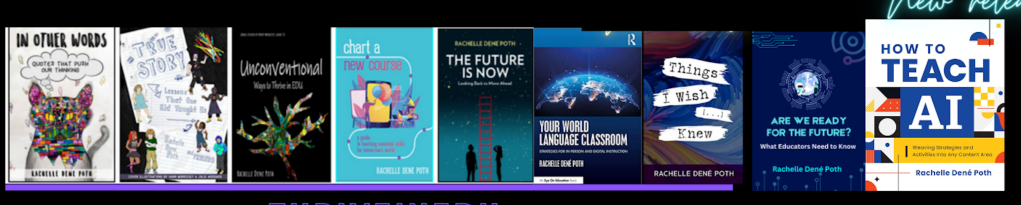
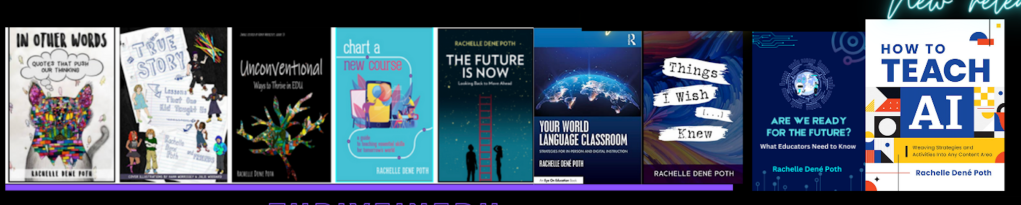
She is the author of ten books, including ‘What The Tech? An Educator’s Guide to AI, AR/VR, the Metaverse and More” and ‘How To Teach AI’. In addition, other books include, “In Other Words: Quotes That Push Our Thinking,” “Unconventional Ways to Thrive in EDU,” “The Future is Now: Looking Back to Move Ahead,” “Chart A New Course: A Guide to Teaching Essential Skills for Tomorrow’s World, “True Story: Lessons That One Kid Taught Us,” “Things I Wish […] Knew” and her newest “How To Teach AI” is available from ISTE or on Amazon.
Preparing Educators for an AI Future Means Preparing Leaders First
In my last article, I shared my thoughts about what I’ve been learning from working with district leadership teams across the country as they navigate questions about artificial intelligence, digital wellness, and purposeful technology use. My work has provided me with tremendous opportunities to learn from educators, students, and families.
Conversations about screen time, purposeful technology use, and digital balance are happening everywhere. What I’ve found most insightful is when students and educators have the chance to sit down and engage in open, honest conversations about these topics and learn from one another. I’ve noticed a common theme in most of these conversations. We have to focus on more than just the technology, especially when talking about AI use in schools. Frequently, the focus is first on specific tools. When talking about artificial intelligence happening in schools, the questions have been:
Which platform should we allow? What should students be permitted to use? What policies do we need?
These are important questions. But they are not the first questions schools should be asking.
The first question schools should be asking is:
How prepared are our educators to lead in an AI-shaped learning environment?
Successful implementation is not about technology adoption.
Introducing AI into classrooms is easy. Supporting educators to understand how to use it meaningfully is the real work. And with support comes confidence.
Educator readiness is the real implementation strategy
Across the districts I have worked with, I’ve noticed that the biggest predictor of successful AI integration is not the access to tools, but whether or not educators feel supported as they navigate the changes happening.
I believe that schools will see more progress and success when there are goals set. Educators must have time to explore. Expectations need to be communicated clearly and with a consistent message. Policies must be in place, and they should emphasize guidance rather than restriction. AI implementation and any technology integration succeed when educators understand not only how to use tools, but why they should use them, and what the impact is on student learning. This is what I am hearing from students around the country.
Across classrooms nationwide, students are using an increasing number of digital tools in their classes. However, I am hearing from them that they are not always consistently guided on how to use them safely, ethically, and responsibly. Students wanting clarity is a powerful insight. Students wanting more purposeful use of technology is an even more powerful insight. How can this happen?
By supporting educators, because it helps to then support students.
Leadership sets the tone
One of the most powerful influences on AI adoption, technology use, and the establishment of standards for communication and screen time in a school system is leadership modeling.
When administrators ask for feedback, communicate transparently, dive in to explore tools with teachers, and acknowledge uncertainty while providing direction, they create a safe environment for innovation. Leadership like this builds trust, and trust makes responsible implementation possible.
Preparing students means preparing adults first
Students will graduate and enter workplaces shaped by automation, intelligent systems, and evolving expectations around collaboration with technology. According to the World Economic Forum, technological literacy is #3 for 2030. #1 is AI and #2 is cybersecurity. Students are not the only ones preparing for that future. Educators need to be prepared so that our students are too.
Professional learning on AI is no longer an option. It is an essential part of instructional readiness. The schools making the most progress right now are engaging in conversations to build systems that help educators adapt confidently as change continues. And that may be the most important preparation strategy of all.
Supporting educators means strengthening entire school systems. This is one of the most important investments districts can make as they prepare students for an AI-shaped, AI-driven future.
Stay tuned for part 3 of this Leading Forward Series.
I help schools and other organizations (law firms, healthcare professionals, business owners) implement AI responsibly through policy guidance, professional learning, and classroom-ready strategies grounded in both instructional practice and legal insight.
My sessions focus on helping teams:
• understand what AI can and cannot do
• recognize responsible-use considerations
• build confidence using emerging tools
•align implementation with organizational priorities
If your school, district, or organization is beginning conversations or looking to dive in and learn more about AI policy, professional learning, or responsible implementation, I’d welcome the opportunity to support your next steps through leadership workshops, keynote sessions, or strategic planning partnerships.
Preparing people is what makes AI implementation successful.
About Rachelle
Dr. Rachelle Dené Poth is a Spanish and STEAM: What’s Next in Emerging Technology Teacher. Rachelle is also an attorney with a Juris Doctor degree from Duquesne University School of Law and a Master’s in Instructional Technology. Rachelle received her Doctorate in Instructional Technology, with a research focus on AI and Professional Development. In addition to teaching, she is a full-time consultant and works with companies and organizations to provide PD, speaking, and consulting services. Contact Rachelle for your event!
Rachelle is an ISTE-certified educator and community leader who served as president of the ISTE Teacher Education Network. By EdTech Digest, she was named the EdTech Trendsetter of 2024, one of 30 K-12 IT Influencers to follow in 2021, and one of 150 Women Global EdTech Thought Leaders in 2022.
She is the author of ten books, including ‘What The Tech? An Educator’s Guide to AI, AR/VR, the Metaverse and More” and ‘How To Teach AI’. In addition, other books include, “In Other Words: Quotes That Push Our Thinking,” “Unconventional Ways to Thrive in EDU,” “The Future is Now: Looking Back to Move Ahead,” “Chart A New Course: A Guide to Teaching Essential Skills for Tomorrow’s World, “True Story: Lessons That One Kid Taught Us,” “Things I Wish […] Knew” and her newest “How To Teach AI” is available from ISTE or on Amazon.
Contact Rachelle to schedule sessions about Artificial Intelligence, AI and the Law, Coding, AR/VR, and more for your school or event! Submit the Contact Form.
Follow Rachelle on Bluesky, Instagram, and X at @Rdene915
What are GenAI technologies, and what do we want them to become? Right now, GenAI is an educational chameleon, aggressively marketed as an indispensable learning companion, an academic partner, and a labor-saving tool; and at the same time, widely critiqued as a dangerous source of misinformation and biased responses, an environmental degrader, and a privacy invader. Since GenAI is all of these things and more, how do we use these tools appropriately and thoughtfully?
What GenAI is and what it will become depends on YOU – how you think about its roles, use it in your teaching and learning, and describe its functions to others.
Let’s look at two currently popular descriptions and uses of GenAI: 1) GenAI as a companion; 2) GenAI as a productivity-enhancing tool.
First, GenAI is widely described and used as a supportive “companion” or helpful “partner.” The Harvard Business Review (2025) reported that therapy/companionship was the number one way people were using GenAI in 2025. An alarming number of teens acknowledge that GenAI chatbots are their virtual companions, even though this technology can exploit youngsters’ emotional needs in ways that lead to self-harm and other risks (Common Sense Media report, Robb & Mann, 2025). One of the key problems here is that GenAI is NOT human, and it is not even intelligent (at least in the way humans perceive and describe intelligence).
The Key Takeaway: Using terms like “partner” or “companion” to describe GenAI technologies humanizes tools that are not designed to provide the support, guidance, and level of intelligence that actual humans can provide.
Second, GenAI technologies are widely presented as productivity-enhancing, time-saving, efficiency-increasing tools for people to use to improve their lives. “Use ChatGPT to make life easier,” declared a recent email advertisement, where all one had to do was “just tap a chat to start.” Personal and professional productivity is also one of the top ways people are using GenAI technologies – from writing emails and reports, to planning vacations and meals, to studying for exams; and it is certainly true that GenAI technologies can do all these things and so much more really fast. Yet, personal autonomy, creativity, and agency is lost when one uses GenAI technologies to automate activities they formerly did without it.
The key takeaway: Avoid talking about GenAI as automating work and think directly about how it can augment or supplement your activities as a teacher and a learner.
So If not a human-like companion or a productivity-enhancing automation tool, then how can we think about the role of GenAI in education? We believe that GenAI is best used when it augments teaching and learning, kind of like the way a caddie in golf enhances the golf experience. As such, we offer a metaphor of GenAI as a caddie; but again remind you that it is not an actual caddie and we are not trying to humanize this tool.
Professional golfers and their caddies on the LPGA, PGA, and more than 20 professional golf tours worldwide offer a metaphor for thinking about, describing, and using GenAI. Each pro golfer has a caddy who carries their clubs and walks alongside them when they play competitive tournaments. sharing ideas and information about the shots they are playing. For instance, until recently, LPGA player Brooke Henderson’s caddy was her older sister, Brittany; PGA player Xander Schauffele’s caddy is Austin Kaiser (his college golf teammate at San Diego State University).
Caddies have detailed information about the course and provide suggestions and feedback about what shots to hit with which clubs. They help keep track of the pace of play and how conditions of the course may be changing due to wind, weather, and time of day. However, it is the golfer who remains totally in charge of the outcomes of the game. Caddies do not hit the golf ball; golfers do not always do what the caddy suggests. It is the golfer who must make decisions, hit the shots, and deal with consequences, both positive and negative, in terms of performance and score. Caddies are there to augment the golf experience and outcome.
When it comes to teaching and learning, GenAI can be that source of information, ideas, or inspiration like a caddie; and it is the teacher who must determine what to do with that information. They have the expertise; they understand their classroom dynamics and contexts; they know their students, their topic, their grade level, and their community.
The key is for the teacher to resist the temptation to automate their work by turning it entirely over to a GenAI technology, because in this case GenAI is in control of the shots, rather than the teacher. It is as if professional golfers let their caddies choose the club and then hit the ball for them. This is even more problematic when it comes to using GenAI to automate tasks. In our metaphor, the caddie is a human who has expertise and has played golf before; however, GenAI is not a teacher, has never taught, and has no idea what teaching is. Turning over any tasks to a tool that does not have any expertise in education can become really problematic. Teachers must maintain agency and exert control, deciding when to accept, when to reject, and when to modify whatever ideas and information the GenAI provides.
So, returning to our original statement, what GenAI is and what it will become depends on YOU – how you think about its roles, use it in your teaching and learning, and describe its functions to others. What do YOU want GenAI to be?
Nearly 50 years ago, at the outset of the computer revolution in schools, Seymour Papert asked: Will computers program the child, or will educators create the conditions where children program computers? For Papert then, as for us today in the age of GenAI, using technology remains a question of human control and user agency. GenAI can provide amazing resources, but it is essential that you retain your decision-making and personal creativity. Only then will the results be truly yours.
Torrey Trust, Ph.D., is a Professor of Learning Technology in the College of Education at the University of Massachusetts Amherst. Her work centers on empowering educators and students to critically explore emerging technologies and make thoughtful, informed choices about their role in teaching and learning. Dr. Trust has received the University of Massachusetts Amherst Distinguished Teaching Award (2023), the College of Education Outstanding Teaching Award (2020), and the International Society for Technology in Education Making IT Happen Award (2018), which “honors outstanding educators and leaders who demonstrate extraordinary commitment, leadership, courage, and persistence in improving digital learning opportunities for students.” More recently, Dr. Trust has been a leading voice in exploring GenAI technologies in education and has been featured by several media outlets in articles and podcasts, including Educational Leadership, U.S. News & World Report, WIRED, Tech & Learning, The HILL, and EducationWeek. www.torreytrust.com
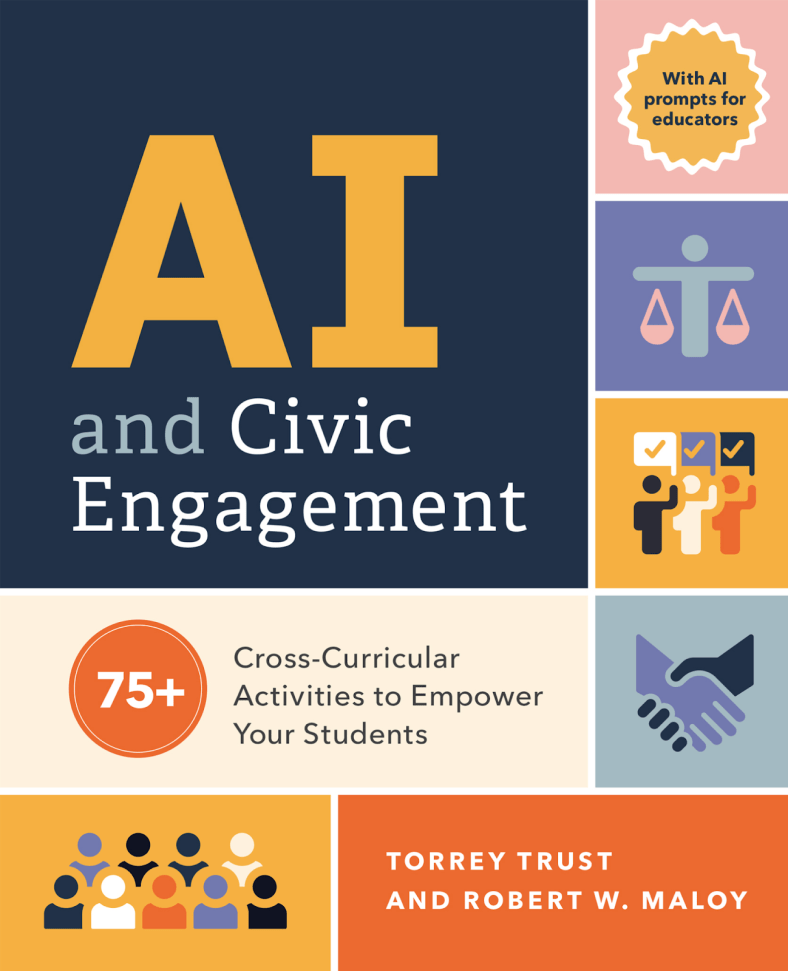
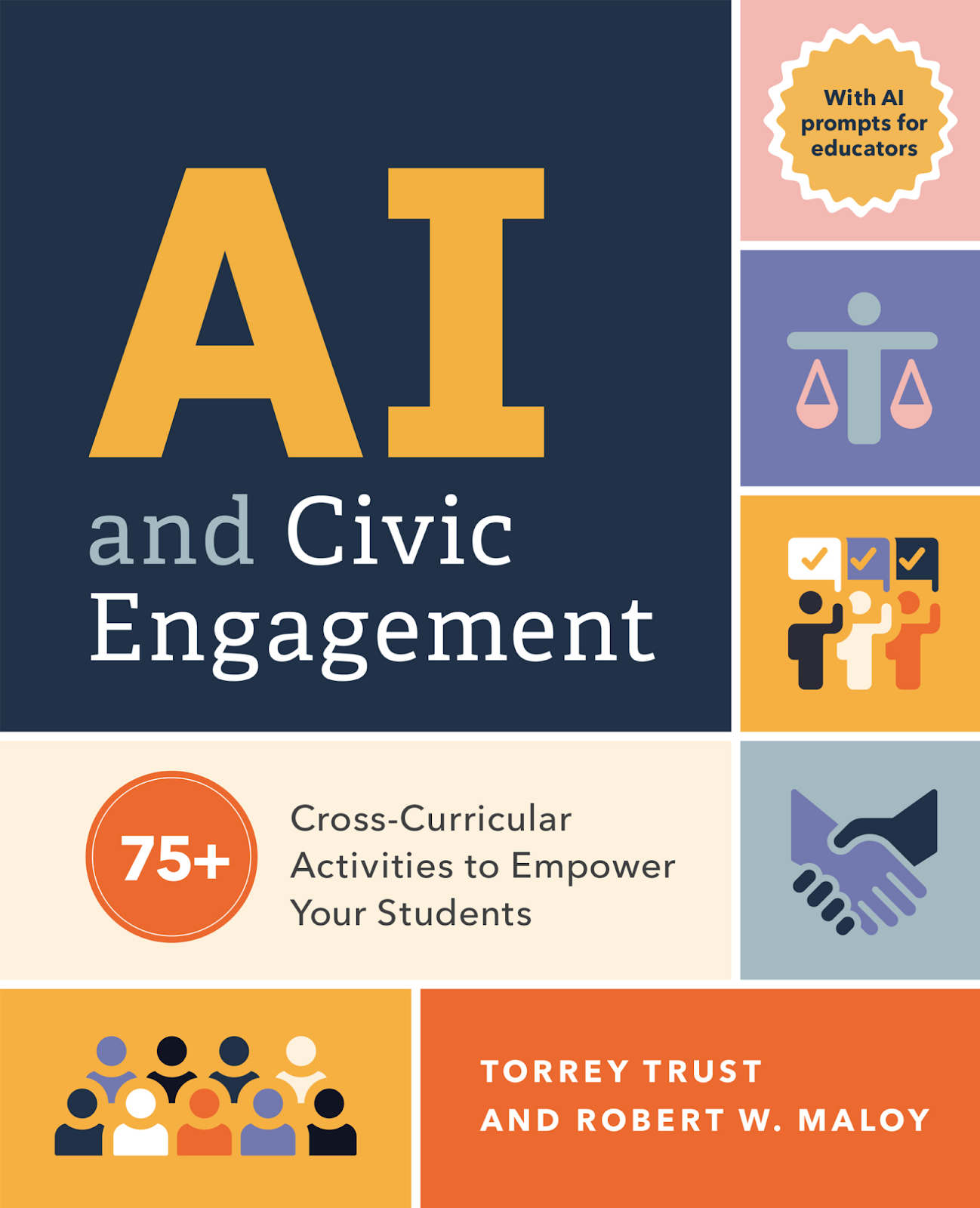
Robert W. Maloy is a senior lecturer in the College of Education at the University of Massachusetts Amherst, where he coordinates the history teacher education program and co-directs the TEAMS Tutoring Project, a community engagement/service learning initiative through which university students provide academic tutoring to culturally and linguistically diverse students in public schools throughout the Connecticut River Valley region of western Massachusetts. His research focuses on technology and educational change, teacher education, democratic teaching, and student learning. He is co-author of AI and Civic Engagement: 75+ Cross-Curricular Activities to Empower Your Students, Transforming Learning with New Technologies (4th edition); Kids Have All the Write Stuff: Revised and Updated for a Digital Age; Wiki Works: Teaching Web Research and Digital Literacy in History and Humanities Classrooms; We, the Students and Teachers: Teaching Democratically in the History and Social Studies Classroom; Ways of Writing with Young Kids: Teaching Creativity and Conventions Unconventionally; Kids Have All the Write Stuff: Inspiring Your Child to Put Pencil to Paper; The Essential Career Guide to Becoming a Middle and High School Teacher; Schools for an Information Age; and Partnerships for Improving Schools.
About Rachelle
Dr. Rachelle Dené Poth is a Spanish and STEAM: What’s Next in Emerging Technology Teacher. Rachelle is also an attorney with a Juris Doctor degree from Duquesne University School of Law and a Master’s in Instructional Technology. Rachelle received her Doctorate in Instructional Technology, with a research focus on AI and Professional Development. In addition to teaching, she is a full-time consultant and works with companies and organizations to provide PD, speaking, and consulting services. Contact Rachelle for your event!
Rachelle is an ISTE-certified educator and community leader who served as president of the ISTE Teacher Education Network. By EdTech Digest, she was named the EdTech Trendsetter of 2024, one of 30 K-12 IT Influencers to follow in 2021, and one of 150 Women Global EdTech Thought Leaders in 2022.
She is the author of ten books, including ‘What The Tech? An Educator’s Guide to AI, AR/VR, the Metaverse and More” and ‘How To Teach AI’. In addition, other books include, “In Other Words: Quotes That Push Our Thinking,” “Unconventional Ways to Thrive in EDU,” “The Future is Now: Looking Back to Move Ahead,” “Chart A New Course: A Guide to Teaching Essential Skills for Tomorrow’s World, “True Story: Lessons That One Kid Taught Us,” “Things I Wish […] Knew” and her newest “How To Teach AI” is available from ISTE or on Amazon.
Contact Rachelle to schedule sessions about Artificial Intelligence, AI and the Law, Coding, AR/VR, and more for your school or event! Submit the Contact Form.
Follow Rachelle on Bluesky, Instagram, and X at @Rdene915
**Interested in writing a guest blog for my site? Would love to share your ideas! Submit your post here. Looking for a new book to read? Find these available at bit.ly/Pothbooks
************ Also, check out my THRIVEinEDU PodcastHere!
Join my show on THRIVEinEDU on Facebook. Join the group here.
In Part 1, I shared why understanding the legal landscape of artificial intelligence is essential as schools continue to explore how these tools can support teaching and learning. Schools everywhere are thinking through policies and how to best provide resources for educators, students, and families. Awareness of laws such as FERPA, COPPA, and GDPR, accessibility requirements, and concerns such as algorithmic bias and deepfakes set an important foundation for responsible implementation.
We need guidelines and guardrails. A common question I hear from educators and leaders after presenting sessions and workshops, or speaking at conferences, is: “What do we do next?”
Understanding the guardrails is only the first step. The real work begins when schools start building systems that support educators in applying this knowledge in practical, sustainable ways. And it requires true collaboration.
Responsible AI Adoption Is a Team Effort
One of the most important shifts happening right now is the recognition that AI adoption and policy development should not be the responsibility of a single person or a select few administrators or IT teams. Responsible implementation and policy development require collaboration across roles.
District leaders are shaping policy and expectations for the school community.
Technology teams are evaluating vendor compliance and infrastructure readiness. (I have a future post coming up about IT Teams and ongoing PD).
Instructional leaders are aligning tools with learning goals and supporting teachers with implementation.
Teachers are modeling and supporting ethical classroom use.
Students are exploring and developing AI literacy skills that will shape how they interact with technology throughout their lives.
What I truly believe is that when schools recognize AI is a shared responsibility rather than an isolated initiative, implementation becomes more intentional, reflective, and sustainable.
I consistently see this when working with districts across the country. The schools that are moving forward with confidence are not the ones adopting the most tools. They are the ones creating a community, developing a common language, and building shared understanding first.
Transparency Builds Confidence Across the Community
Another theme that has been coming up in conversations with educators and families is trust.
Families want and need to know:
What tools are being used?
What information is being collected?
How is student data protected?
How is AI, or any technology, being used in support of learning rather than replacing it?
Having clear answers to these questions helps to strengthen the essential partnerships between schools and families. It also creates opportunities for students to participate more actively in conversations about responsible technology use.
Transparency is not simply a compliance strategy. It is a relationship-building strategy. When schools communicate clearly and proactively, they reduce uncertainty and help communities better understand how innovation supports student success.
AI Literacy Is Now Part of Digital Citizenship
One of the biggest shifts happening in education right now is the expansion of digital citizenship to include AI literacy. We’ve been talking about media literacy, digital literacy, AI literacy, and even discernment. Our work is a bit more involved now, and we need to be prepared.
Students are already interacting with AI systems daily, both in and maybe more frequently outside of school. They need guidance, which means classrooms must play an essential role in helping students understand:
How to protect their personally identifiable information (PII)
How AI systems generate responses How bias can appear in outputs How misinformation spreads How data is collected and used How to evaluate whether a tool should be trusted
AI literacy is not about teaching students how to use a single platform. It is about helping them develop judgment.
When students learn how to ask better questions about technology, they become more confident learners and more thoughtful digital citizens. Emerging tools continue to shape how students research, communicate, and create, and as educators, we have to keep learning so we can guide them to use the tools available to them safely and successfully.
Accessibility and Equity at the Center
As schools explore AI tools, accessibility must be a part of every conversation.
AI has tremendous potential to support multilingual learners, provide personalized feedback, assist with reading and writing tasks, and help students access content in new ways. It has endless ways to support educators. Schools must continue evaluating whether tools meet accessibility expectations and support equitable learning experiences.
Responsible implementation means asking questions such as:
Does this tool improve students’ access?
Does it create barriers? There has been more talk about the digital divide recently.
Does it support multiple learning pathways?
Does it align with universal design principles? Or a Portrait of a Graduate or an AI-Ready graduate?
Technology should expand opportunity rather than narrow it.
Supporting Educators Through the Transition
One of the most encouraging things I have seen in my work with educators is their investment in learning and the desire to learn with and from their students.
Educators are exploring AI tools while also asking important questions about privacy, ethics, and instructional impact. This balance is exactly what responsible adoption should look like.
Professional learning plays an essential role.
Educators benefit from opportunities to:
Explore tools safely Review privacy expectations Understand policy implications Design classroom strategies Collaborate with colleagues Develop shared language around responsible use
When professional learning includes both legal awareness and classroom application, educators feel more confident making decisions that support students. Confidence leads to stronger implementation. And this is the work I am most passionate about when working with schools.
Leadership Matters More Than Ever
School leaders are in a unique position to support responsible AI adoption by:
Developing clear expectations Supporting cross-team collaboration Communicating with families (consistently) Reviewing vendor agreements carefully Building a common language around the use of AI Creating space for experimentation, but having guardrails in place
Moving Forward
Artificial intelligence is already part of the learning landscape. We should not be talking about whether schools should engage with AI, but rather deciding how they will engage with it.
When schools combine legal awareness, transparency, accessibility considerations, and strong professional learning structures, they create innovative environments built on human decision-making.
Students benefit when educators feel confident.
Educators benefit when leaders provide clarity.
Communities benefit when schools communicate openly.
Responsible AI adoption is about moving forward with purpose.
When schools take that approach and have a team to work with, they are preparing students to understand technology, question it, and be the ones who determine what comes next.
About Rachelle
Dr. Rachelle Dené Poth is a Spanish and STEAM: What’s Next in Emerging Technology Teacher. Rachelle is also an attorney with a Juris Doctor degree from Duquesne University School of Law and a Master’s in Instructional Technology. Rachelle received her Doctorate in Instructional Technology, with a research focus on AI and Professional Development. In addition to teaching, she is a full-time consultant and works with companies and organizations to provide PD, speaking, and consulting services. Contact Rachelle for your event!
Rachelle is an ISTE-certified educator and community leader who served as president of the ISTE Teacher Education Network. By EdTech Digest, she was named the EdTech Trendsetter of 2024, one of 30 K-12 IT Influencers to follow in 2021, and one of 150 Women Global EdTech Thought Leaders in 2022.
She is the author of ten books, including ‘What The Tech? An Educator’s Guide to AI, AR/VR, the Metaverse and More” and ‘How To Teach AI’. In addition, other books include, “In Other Words: Quotes That Push Our Thinking,” “Unconventional Ways to Thrive in EDU,” “The Future is Now: Looking Back to Move Ahead,” “Chart A New Course: A Guide to Teaching Essential Skills for Tomorrow’s World, “True Story: Lessons That One Kid Taught Us,” “Things I Wish […] Knew” and her newest “How To Teach AI” is available from ISTE or on Amazon.
Contact Rachelle to schedule sessions about Artificial Intelligence, AI and the Law, Coding, AR/VR, and more for your school or event! Submit the Contact Form.
Follow Rachelle on Bluesky, Instagram, and X at @Rdene915
**Interested in writing a guest blog for my site? Would love to share your ideas! Submit your post here. Looking for a new book to read? Find these available at bit.ly/Pothbooks
************ Also, check out my THRIVEinEDU PodcastHere!
Join my show on THRIVEinEDU on Facebook. Join the group here.
Guest post by Dr. Torrey Trust and Dr. Robert Maloy
Welcome to “Students, Teachers, and Chatbots!” In this monthly series, you will find classroom-ready learning plans to use as you explore different civic engagement issues and topics with students. Each learning plan is connected to one of the ISTE (International Society for Technology in Education) Standards for Students.
Agency for learners means each individual is actively involved in what is happening educationally and instructionally in classrooms and schools. Agency, however, is more than paying attention in class, completing assignments on time, and earning high grades on tests. Agency also means students believe they have a voice and choice in what and how they are learning. They believe they can take actions in their lives based on what they are learning in schools.
In social studies education, agency is connected to civic education, and by extension, democratic teaching in democratic classrooms. Teaching about democracy is a cornerstone of civics education, where students learn the foundations of government of the people, for the people, by the people. Democracy offers everyone a voice and choice in making decisions collectively and collaboratively. In theory, the same is true in democratic classrooms. Yet, in the past three decades, the practice of democratic classrooms has faded from view. In school after school, standardized achievement exams have brought with them greater emphasis on teacher control and accountability, large group instruction, and teaching to the test (Ravitch, 2016).
In the current era of mandated curriculum frameworks and high-stakes testing, learning about democracy in many classes is focused on memorizing the branches and structures of national, state, and local government; reviewing the history of the American Revolution and other signature events in U.S. history; and learning the names of well-known historical figures. Democracy is rarely a lived experience for students.
When we asked college students, “What do you remember was your first experience with democracy?” many responded with puzzled expressions. When we clarify that by “first experience with democracy,” we mean when did they first recall thinking they had personal agency, that their voice mattered, that they were part of a collective decision-making process, most recall voting for the first time. But, when pressed to think back to when they were younger, some recall experiences with democracy in family meetings where adults and children shared ideas and made plans; at summer camps and recreation programs where campers had choices about playtime activities; in libraries where young readers made choices about what books to read; on sports teams where coaches let youngsters try many different positions and choose the ones they found engaged them the most. Those we spoke with so valued these experiences because they felt their choices mattered and decisions were respected, if not always agreed to by the adults in charge.
In the following bonus learning plan from our AI and Civic Engagement book, student agency is front and center – students are encouraged to research, design, and work together to create real change that is meaningful to them and their schools.
Chapter 9 (Global Collaborator)
Bonus AI-Enhanced Learning Plan: AI Literacy for All: Collaboratively Crafting an AI Curriculum for Your School
Student Engagement Question: How do you think we should be using AI in our classes and school?
AI technologies play a significant role in the lives of teachers, students, administrators, families, and community members everywhere. As the latest GenAI tools, models, and features are released, all of us are learning more and more about the possibilities and complexities of artificial intelligence and its place in education.
Elected officials and policymakers have ideas for what needs to be done for AI in education. The White House Office of Science & Technology under President Biden issued “A Blueprint for an AI Bill of Rights.” The European Union urged developers and users to ensure a safe, secure, and trustworthy AI. Lawmakers in Congress have introduced the AI Literacy Act, intended to address the reality that “communities most often negatively impacted by AI-enabled technologies often have the least access to AI education” (In section 2: Findings). One group of researchers from the National Education Policy Center has urged a pause in the use of AI tools in schools to give everyone time to develop guidelines and regulations about their use for in-person and online learning (Williamson, Molnar, & Boninger, 2024). Organizations, including Common Sense Media and OpenAI, are working together to create AI education guidelines (Kelly, 2024).
But, what do students think about the role of AI in their education? Should they have opportunities to use GenAI in every class, subject, and topic? Should they learn about the ethical issues surrounding the design and production of GenAI tools (e.g., hallucination, bias, environmental labor impact, exploitation of human labor, intellectual property rights)? Should they have opportunities to build their AI-Ready workforce skills?
This learning plan invites students to ensure their voice is heard when it comes to AI in their education. As global collaborators, they can work with others to develop an AI curriculum for their class, school, and/or district.
Learning GoalStudents will collaboratively draft an AI curriculum for their class, school, or district.
ACTIVITY 1: Research AI Curriculum Models and AI Literacy Frameworks/Models with GenAI
Invite students to curate a collection of AI curriculum frameworks, AI literacy frameworks and models, and any other resources and materials that can help them design an AI curriculum for their school or district. GenAI technologies can be a starting point for the research:
Example Prompt: “Create a table of at least 20 AI curriculum frameworks, AI literacy frameworks/models, or other sources to help me build an AI curriculum for my school. Make sure to include research-based frameworks and models. Include the name of the resource (column 1), a brief description of it (column 2), a description of why I should use it as a model or resource for my school’s AI curriculum (column 3), and a link to external sites to learn more information (column 4).”
Ask students to select at least 5 resources from their curation to critically examine and annotate, using the following AI-generated questions to guide their thinking:
What is the stated purpose or goal of this framework or resource?
Who created it, and what expertise or perspective do they bring (e.g., educators, technologists, policymakers, researchers)?
Missing Perspectives: Whose voices are missing from the authorship or the examples used? (e.g., Global South perspectives, Indigenous data sovereignty, non-corporate viewpoints).
What definitions of “artificial intelligence” or “AI literacy” does it rely on? How does this shape the rest of the resource?
What big ideas, concepts, or competencies does this resource emphasize that you think should appear in your school’s AI curriculum? Why?
What specific AI definitions, skills, or knowledge domains does this resource identify as essential? Which of these are non-negotiable for your specific student body?
Who is left out by this framework? Does it require expensive hardware, high-speed internet, or prior coding knowledge that your students may not possess?
How does the resource address ethical, societal, or environmental implications of AI? What elements of this should be included in your curriculum?
Does the resource treat AI as a standalone Computer Science subject, or does it offer strategies for integrating AI literacy into multiple subjects and classes?
What does this resource do exceptionally well? How does it contribute to an informed, balanced, or future-ready AI curriculum?
What is missing from the resource that is important for your school’s context (e.g., student diversity, local community needs, digital divide, civic engagement)?
How well does this resource align with your district’s mission, values, or current technology curriculum?
What adaptations would you make to this resource to ensure your curriculum is inclusive, engaging, and accessible to all learners, including multilingual learners and students with disabilities?
How does this resource compare to the other frameworks you selected? Where do they overlap or diverge?
Then, ask students to work in groups and design their own AI curriculum for their class, school, or the district.
ACTIVITY 2: Collaboratively Design an AI Curriculum with GenAI and School/Community
Ask students to use a collaborative technology to get feedback on their AI curriculum from family members, community members, and educational leaders.
They might do this by sharing their AI curriculum in a Google Doc with commenting features on and asking others to add their thoughts/ideas/suggestions/questions as comments throughout the document; or they could share a link to their AI curriculum document and provide a virtual space like Padlet or IdeaBoardz to collect feedback and ideas.
Then, have students, in their teams, review the feedback they received and make revisions to their AI curriculum.
Ask students to present their AI curriculum to the entire class and get feedback from their peers.
Then, as a class, vote on one curriculum (or multiple curriculums that can be merged into one) to send to the school leadership as an official proposal.
REFLECTION QUESTIONS
What role do you want AI to play in your schooling? Why?
Do you want AI to be taught as a standalone topic/class? Why or why not?
What learning opportunities do you need in school to confidently navigate the Age of AI?
AI LITERACY QUESTIONS
What are the arguments in favor of or against establishing an AI literacy or AI education graduation requirement for students at your school or in your state?
What AI ethical issues did you include in your curriculum? Why did you include those issues?
ISTE Global Collaborator Criteria Addressed:
1.7.b Multiple Viewpoints. Students use collaborative technologies to work with others, including peers, experts or community members, to examine issues and problems from multiple viewpoints.
1.7.c Project Teams. Students contribute constructively to project teams, assuming various roles and responsibilities to work effectively toward a common goal.
1.7.d Local and Global Issues. Students explore local and global issues, and use collaborative technologies to work with others to investigate solutions.
Torrey Trust, Ph.D., is a Professor of Learning Technology in the College of Education at the University of Massachusetts Amherst. Her work centers on empowering educators and students to critically explore emerging technologies and make thoughtful, informed choices about their role in teaching and learning. Dr. Trust has received the University of Massachusetts Amherst Distinguished Teaching Award (2023), the College of Education Outstanding Teaching Award (2020), and the International Society for Technology in Education Making IT Happen Award (2018), which “honors outstanding educators and leaders who demonstrate extraordinary commitment, leadership, courage, and persistence in improving digital learning opportunities for students.” More recently, Dr. Trust has been a leading voice in exploring GenAI technologies in education and has been featured by several media outlets in articles and podcasts, including Educational Leadership, U.S. News & World Report, WIRED, Tech & Learning, The HILL, and EducationWeek. www.torreytrust.com
Robert W. Maloy is a senior lecturer in the College of Education at the University of Massachusetts Amherst, where he coordinates the history teacher education program and co-directs the TEAMS Tutoring Project, a community engagement/service learning initiative through which university students provide academic tutoring to culturally and linguistically diverse students in public schools throughout the Connecticut River Valley region of western Massachusetts. His research focuses on technology and educational change, teacher education, democratic teaching, and student learning. He is co-author of AI and Civic Engagement: 75+ Cross-Curricular Activities to Empower Your Students, Transforming Learning with New Technologies (4th edition); Kids Have All the Write Stuff: Revised and Updated for a Digital Age; Wiki Works: Teaching Web Research and Digital Literacy in History and Humanities Classrooms; We, the Students and Teachers: Teaching Democratically in the History and Social Studies Classroom; Ways of Writing with Young Kids: Teaching Creativity and Conventions Unconventionally; Kids Have All the Write Stuff: Inspiring Your Child to Put Pencil to Paper; The Essential Career Guide to Becoming a Middle and High School Teacher; Schools for an Information Age; andPartnerships for Improving Schools.
About Rachelle
Dr. Rachelle Dené Poth is a Spanish and STEAM: What’s Next in Emerging Technology Teacher. Rachelle is also an attorney with a Juris Doctor degree from Duquesne University School of Law and a Master’s in Instructional Technology. Rachelle received her Doctorate in Instructional Technology, with a research focus on AI and Professional Development. In addition to teaching, she is a full-time consultant and works with companies and organizations to provide PD, speaking, and consulting services. Contact Rachelle for your event!
Rachelle is an ISTE-certified educator and community leader who served as president of the ISTE Teacher Education Network. By EdTech Digest, she was named the EdTech Trendsetter of 2024, one of 30 K-12 IT Influencers to follow in 2021, and one of 150 Women Global EdTech Thought Leaders in 2022.
She is the author of ten books, including ‘What The Tech? An Educator’s Guide to AI, AR/VR, the Metaverse and More” and ‘How To Teach AI’. In addition, other books include, “In Other Words: Quotes That Push Our Thinking,” “Unconventional Ways to Thrive in EDU,” “The Future is Now: Looking Back to Move Ahead,” “Chart A New Course: A Guide to Teaching Essential Skills for Tomorrow’s World, “True Story: Lessons That One Kid Taught Us,” “Things I Wish […] Knew” and her newest “How To Teach AI” is available from ISTE or on Amazon.
Contact Rachelle to schedule sessions about Artificial Intelligence, AI and the Law, Coding, AR/VR, and more for your school or event! Submit the Contact Form.
Follow Rachelle on Bluesky, Instagram, and X at @Rdene915
**Interested in writing a guest blog for my site? Would love to share your ideas! Submit your post here. Looking for a new book to read? Find these available at bit.ly/Pothbooks
************ Also, check out my THRIVEinEDU PodcastHere!
Join my show on THRIVEinEDU on Facebook. Join the group here.
Throughout the country, states and districts are taking different approaches to student cell phone use. Some have implemented complete bans, while others are leaving the decision to individual schools or educators.
What I’ve learned over the past 12 years of using devices in my classroom is that while policies can help create structure, they don’t build consistent digital habits. Digital wellness has to be taught, modeled, practiced, and reflected upon.
Why tech habits matter
With so much access to technology, we need to guide students in developing good digital habits. Digital wellness involves helping students understand when technology is helpful, when it becomes draining, and how to make intentional choices that will keep them balanced and present. Cell phone bans and updated device policies have been designed to promote digital wellness in our schools.
I’ve observed that in schools with cell phone bans, students are more interactive with one another, and their socialization skills are improving. For some students, knowing where their phone is and having it close by is important, and I can relate. But I also understand the importance of disconnecting and being present in the moment, especially in our classrooms, to be more focused on learning.
I have done a variety of activities with students and educators focused on digital habits. In one of them, I focus on the “benefits” and “drains” of devices. A simple way to start is with activities that help students map their “digital day.” Ask them to list all the ways they use their phone or other devices from morning to night. Next, have them decide when the use helps learning (taking a photo of notes, defining or translating a word, keeping time, conducting research, or even recording a podcast draft) or benefits their well-being (such as tracking steps, doing meditation, or using focus apps). They then identify when it is draining (doomscrolling or game-playing; checking notifications; causing reduced energy, lack of attention, or mood changes).
Continue reading the rest of my article on Edutopia.
About Rachelle
Dr. Rachelle Dené Poth is a Spanish and STEAM: What’s Next in Emerging Technology Teacher. Rachelle is also an attorney with a Juris Doctor degree from Duquesne University School of Law and a Master’s in Instructional Technology. Rachelle received her Doctorate in Instructional Technology, with a research focus on AI and Professional Development. In addition to teaching, she is a full-time consultant and works with companies and organizations to provide PD, speaking, and consulting services. Contact Rachelle for your event!
Rachelle is an ISTE-certified educator and community leader who served as president of the ISTE Teacher Education Network. By EdTech Digest, she was named the EdTech Trendsetter of 2024, one of 30 K-12 IT Influencers to follow in 2021, and one of 150 Women Global EdTech Thought Leaders in 2022.
She is the author of ten books, including ‘What The Tech? An Educator’s Guide to AI, AR/VR, the Metaverse and More” and ‘How To Teach AI’. In addition, other books include, “In Other Words: Quotes That Push Our Thinking,” “Unconventional Ways to Thrive in EDU,” “The Future is Now: Looking Back to Move Ahead,” “Chart A New Course: A Guide to Teaching Essential Skills for Tomorrow’s World, “True Story: Lessons That One Kid Taught Us,” “Things I Wish […] Knew” and her newest “How To Teach AI” is available from ISTE or on Amazon.
Contact Rachelle to schedule sessions about Artificial Intelligence, AI and the Law, Coding, AR/VR, and more for your school or event! Submit the Contact Form.
Follow Rachelle on Bluesky, Instagram, and X at @Rdene915
**Interested in writing a guest blog for my site? Would love to share your ideas! Submit your post here. Looking for a new book to read? Find these available at bit.ly/Pothbooks
************ Also, check out my THRIVEinEDU PodcastHere!
Join my show on THRIVEinEDU on Facebook. Join the group here.
In collaboration with Delightex Edu. All opinions are my own.
Over the past 9 years, using Delightex Edu (formerly CoSpaces Edu) with my students, I have seen it continually add features that spark curiosity, boost creativity, and offer more engaging ways for students to build their knowledge. I have often said that we need to move students from consumers to creators, to innovators, and with Delightex Edu, students don’t just consume content, they create immersive worlds. Students and educators can design 3D worlds, build interactive environments, and leverage all of the options for coding and creating a more authentic and personalized product.
Delightex Edu is a highly visual, user-friendly, intuitive system that helps students develop essential skills such as collaboration, creativity, logic, problem-solving, and more that will lead to future success. These are skills that have been in demand, and they are not changing, but what is changing is the “how” students can develop these and other essential future-ready skills.
Most recently, Delightex has added AI features to its already robust platform. Artificial intelligence is not a futuristic concept. I have been speaking about augmented and virtual reality and AI for more than eight years, and these concepts are not going away. They have become part of everyday life, shaping how we work, communicate, and create.
As digital literacy evolves, students need opportunities not just to use AI, but also to understand it, question it, and use and create with it responsibly. Delightex Edu’s latest update takes what it already offers to a new level. AI enhances the creative experience, expanding what students can build while engaging them in hands-on, safe, and exciting learning opportunities.
The new AI features focus on three essential principles: smarter creation, deeper learning, and safe innovation.
AI to amplify creation and not replace student creativity
One of the most important things that I have shared with students and educators is that having the new AI features should not be thought of as a substitute for students’ own thinking and creativity. Instead, it should amplify learning while also teaching students about AI’s capabilities in a safe space, which is what matters as we help them build content skills and AI literacy.
Students are still in control and taking the lead as they create and apply their knowledge in new ways. They are still the designers, the coders, the curious learners, and the storytellers. AI is just another tool in the Delightex toolbox. They now have more opportunities to learn about prompting, how to generate images they want, and be able to develop true AI literacy alongside computational thinking skills.
AI Buddies: Bringing Worlds to Life
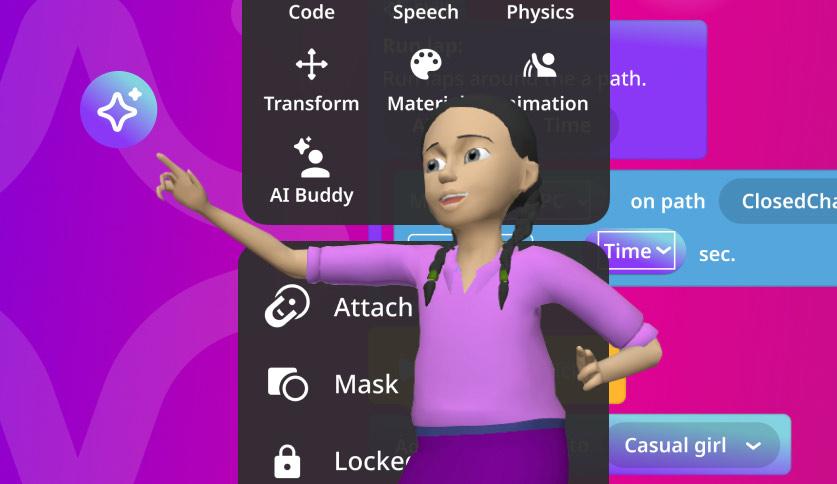
Whether for students or educators, Delightex Edu is so much fun to dive into and start creating with, especially with AI Buddies, which are AI-powered 3D characters that can talk, react, and express emotions through real-time animations. AI Buddies are defined by creating a short prompt and can act as guides, tutors, narrators, or characters in a story. AI Buddies make it so much fun for anyone creating with Delightex.
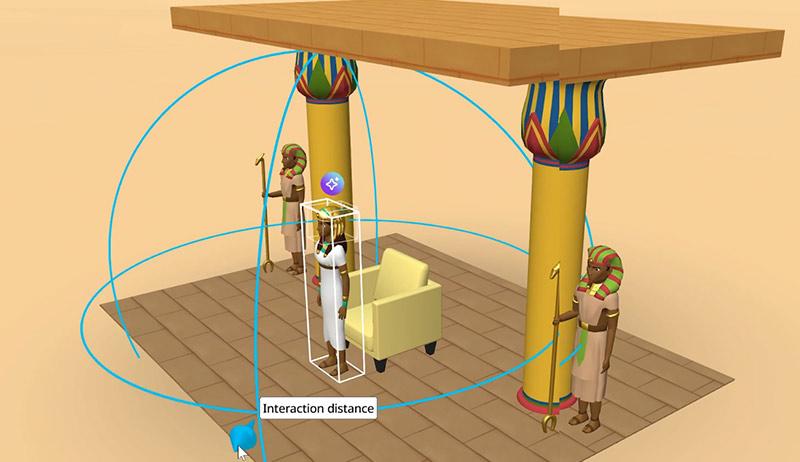
AI Buddies are a fun addition to any project. They respond via text and can also use expressive animations that make interactions feel more natural and believable. Students can set proximity triggers in their environment so that an AI Buddy responds automatically when someone enters a specific area of a scene. This was a game-changer because it shifted the static environment into a more responsive and immersive experience.
When I think about the possibilities and how AI buddies will amplify learning, they can help students create more engaging stories, interactive simulations, and even role-based learning. Imagine having a historical figure who can speak to students. Or a science class or a language class, with a virtual guide who can walk users through a location unique to the content. Characters in a story can respond differently depending on the choices the player makes.
These possibilities also bring some reminders. Safety, especially when it comes to AI, is critical. With Delightex Edu, teachers control student access by license, class, or each individual student. Guardrails, Content Guard, and AI History ensure that any interactions stay age-appropriate, transparent, and are reviewable by the teacher.
AI Skills: Coding and AI Literacy
When AI Buddies are added to each student’s Project, it brings their story and their world to life. With AI Skills, students can decide how the characters will act.
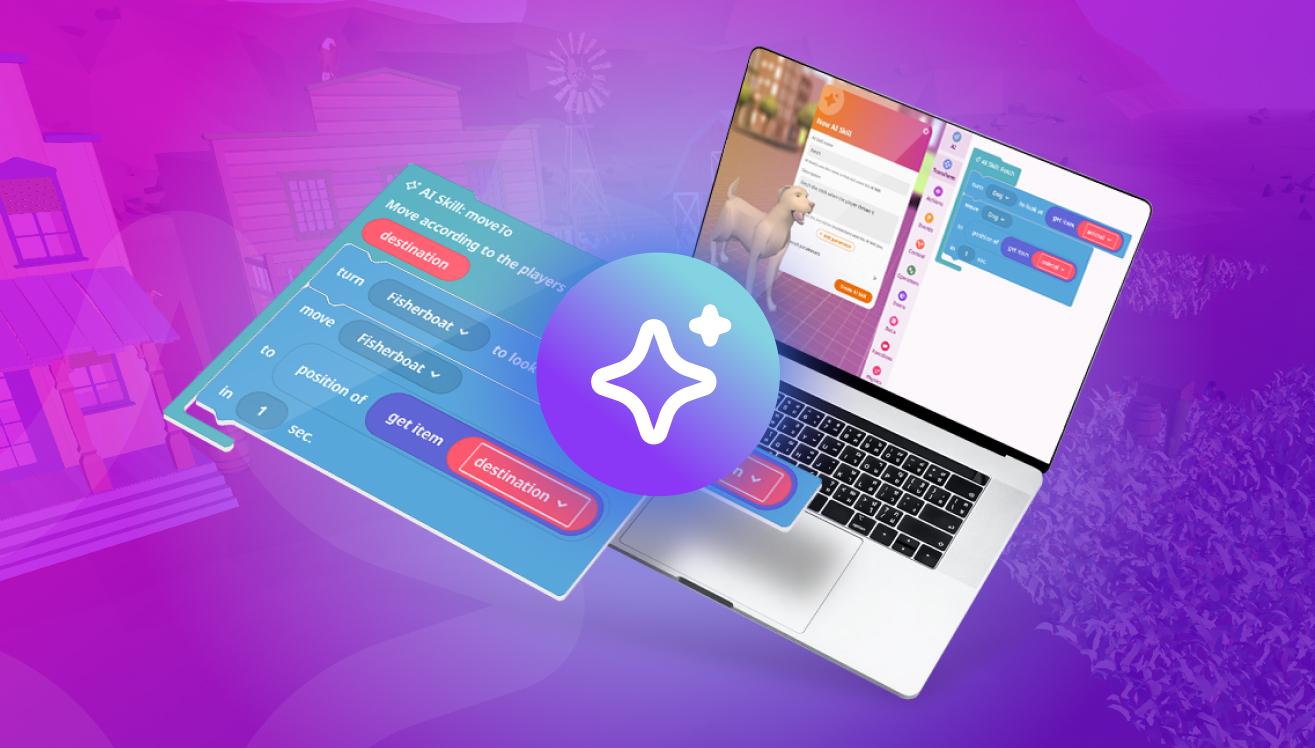
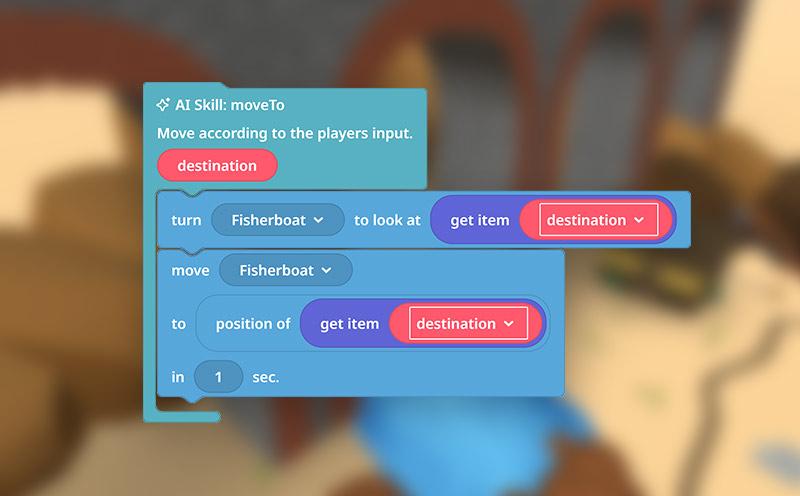
AI Skills enables students to design actions using visual coding and assign them to AI Buddies. Using Delightex’s CoBlocks system, AI Skills combine traditional visual logic with the use of simple prompts. Students still define conditions, test behaviors, and refine outcomes as they have been able to do, but now with AI Skills, the characters can respond in more natural ways to dialogue and intent.
When learning to code, students were programming only event-based responses, for example, “when this happens, do that.” However, now, students think about how these intelligent systems are able to interpret meaning. It can lead to great conversations in the classroom, and students or teachers can talk about questions such as:
How does a character decide what action makes sense?
What happens when prompts are unclear?
How do logic and language work together?
AI-Generated 360° Worlds Inside 3D Scenes
One of my favorite new AI features is that I can dream big and create fun prompts that generate beautiful images. Through Delightex Edu’s Skybox integration, you can generate AI-powered 360° images right inside 3D scenes. Before this feature was added, scenes were limited, but now any 3D scene can be transformed into a fully immersive 360° environment, truly expanding creative possibilities. Students can instantly generate any backdrop they can imagine for their stories, simulations, or virtual field trips. Once they create their new background, they can select from all of the options for characters, objects, and more. It boosts student engagement and promotes more experiential learning.
Why This Is Important for the Future of Learning
As I explored these recent updates, I realized they are moving us toward what digital literacy should look like in an AI-powered world.
Whether early learners, older students, or educators, everyone needs opportunities to create with AI and understand its capabilities. And, they need to be able to do so in safe environments where experimentation is encouraged, guardrails are in place, and active learning is available. Delightex Edu is a platform where AI enhances creativity, deepens understanding of new technologies, supports the acquisition of content knowledge, and prepares students for future work and learning.
Always at the forefront with great features that bring amazing learning possibilities to students, I’m looking forward to more features from Delightex. And I am excited for all students who will be able to apply their knowledge in exciting and innovative ways!
To learn more and have fun creating, visit delightex.com/edu. Explore the gallery, check out the resources, and then start your own project! Have fun learning!
About Rachelle
Dr. Rachelle Dené Poth is a Spanish and STEAM: What’s Next in Emerging Technology Teacher. Rachelle is also an attorney with a Juris Doctor degree from Duquesne University School of Law and a Master’s in Instructional Technology. Rachelle received her Doctorate in Instructional Technology, with a research focus on AI and Professional Development. In addition to teaching, she is a full-time consultant and works with companies and organizations to provide PD, speaking, and consulting services. Contact Rachelle for your event!
Rachelle is an ISTE-certified educator and community leader who served as president of the ISTE Teacher Education Network. By EdTech Digest, she was named the EdTech Trendsetter of 2024, one of 30 K-12 IT Influencers to follow in 2021, and one of 150 Women Global EdTech Thought Leaders in 2022.
She is the author of ten books, including ‘What The Tech? An Educator’s Guide to AI, AR/VR, the Metaverse and More” and ‘How To Teach AI’. In addition, other books include, “In Other Words: Quotes That Push Our Thinking,” “Unconventional Ways to Thrive in EDU,” “The Future is Now: Looking Back to Move Ahead,” “Chart A New Course: A Guide to Teaching Essential Skills for Tomorrow’s World, “True Story: Lessons That One Kid Taught Us,” “Things I Wish […] Knew” and her newest “How To Teach AI” is available from ISTE or on Amazon.
Contact Rachelle to schedule sessions about Artificial Intelligence, AI and the Law, Coding, AR/VR, and more for your school or event! Submit the Contact Form.
Follow Rachelle on Bluesky, Instagram, and X at @Rdene915
**Interested in writing a guest blog for my site? Would love to share your ideas! Submit your post here. Looking for a new book to read? Find these available at bit.ly/Pothbooks
************ Also, check out my THRIVEinEDU PodcastHere!
Join my show on THRIVEinEDU on Facebook. Join the group here.
As I reflect on 2025, it feels like a year of recalibration. I think about education, and while things were definitely moving faster, especially with AI and the changes it has brought, I feel like things are moving at a deeper level. After several years of rapid changes, disruptions, and adjustments, many educators, leaders, and systems seem to have shifted from being reactive to proactive, and, more importantly, to focusing more on reflective practices. Some questions I consider are:
What is actually working? What is overwhelming students and teachers? What does “future-ready” really mean, and is it the proper term?
In many ways, 2025 feels more like a time when education stopped trying to keep up with every new trend, took a breath, and began reclaiming its intention.
From Urgency to Intention
The past few years have required schools to operate in what I’ve heard in many conversations as a “crisis mode.” After some thought, I have seen and experienced a shift away from an overwhelming sense of urgency to accomplish everything and toward purposeful decision-making. A word that I have used a lot after reading a book by Kevin Roose called Futureproof is “discernment.” He wrote about the shift from media and digital literacy to digital discernment. I’ve seen this in my own practice as well. Educators have become more discerning about initiatives to invest in, tools to explore, and expectations to set. The question “Can we do this?” shifted to “Should we do this? And “Why?” Which then led to the “How” part.
This shift showed up in conversations around curriculum, assessment, technology use, and student well-being. Schools began reducing or being more selective rather than layering, which helped educators to adjust better to change. Leaders focused more on coherence instead of compliance. And in some conversations I had or articles I read, I noticed respectful pushback on practices that added complexity without improving learning.
I think this is why the recalibration mattered.
AI Moved From Novelty to Normal
Since artificial intelligence and all of the new tools arrived in classrooms, it was an interesting time for educators. Something novel, something cool yet scary at times I’ve been told by educators that I am training, and other times, something to be avoided at all costs. But, what I noticed this year has been a shift. A shift away from the worries about plagiarism and cheating, about the time needed to learn how to leverage AI in our work, to a focus on how to bring it into our classrooms intentionally, purposefully, responsibly. In 2025, AI in education has become more of the norm.
I have noticed a change in the reactions. Now I see more focus on:
Data privacy
Ethical use and attribution
Age-appropriate access
Skill-building over shortcut-taking. (Leaning on versus learning from)
Transparency instead of surveillance
AI has become less about “cheating” and more about helping students and others learn how to think, evaluate, and create responsibly in an AI-infused world. Educators that I have worked with in my own school, at conferences and during professional development sessions that I have provided, have been asking different questions. At first, questions focused on “How can I tell when a student has used ChatGPT?” “Why do I need to teach about AI in the elementary level, they are too young and it is too much technology?” and “How do I find the time to evaluate the tools?” and more. But now, the questions are more targeted. Some examples are “How does this tool support learning goals?” and “When does it enhance or push thinking and when does it replace it?” Questions are also asked about how to connect AI into different grade levels and content areas without it feeling like something extra. I think the key to these questions is keeping the focus on the human aspect of learning and teaching.
We need to become AI literate and help students to develop their AI literacy skills, which do not only require developing technical skills. It also involves essentially human skills such as judgment, empathy, discernment, and reflection. With so much technology, the impact on us as humans is real and brings out the importance of digital wellbeing in addition to digital citizenship.
Digital Wellness
I’ve been working on an initiative through ISTE+ASCD and Pinterest that focuses on digital wellbeing and digital citizenship, both aligned with innovation. Something that I’ve noticed in the conversations at the schools is that educators are realizing that digital citizenship alone is not enough. Conversations about constant connectivity and the cost of it have been taking place and leading to new policies and guidelines in schools.
As a result, digital wellness has emerged as a priority for all, rather than as a standalone curriculum In my work with educators, each group talked openly about:
Attention fatigue
Notification overload
Screen balance
Emotional regulation
Boundaries and agency
Cellphone bans were in place and while some saw the positives, others raised some interesting points. Rather than banning technology outright or ignoring its impact, should we instead focus on intentional use of it and guide students? Questions like “When does technology add value?” and “When should we step away?” became part of the discussions in and out of the classroom.
Focusing on the human connection
I noticed in some schools that I visited, more socialization, more connections being made between students in the classrooms. More time for colleagues to work together and with their students.
There was renewed emphasis on:
Relationships over rigid pacing
Depth over coverage
Dialogue over compliance
Reflection over reaction
Administrators that I spoke with have said they are listening more closely and trust teachers to use their professional judgment. Something else I noticed was an increase in the inclusion of student voice in conversations about learning, technology, and school culture. I have asked students for feedback for many years and value their input as it expands my understanding and helps me to better connect. In some of the schools that I have visited, common questions to students have been:
How do you learn best?
What feels supportive vs. stressful?
How does technology affect your focus and well-being?
What do you want your teachers, families, friends, to understand about your experience?
When students were invited into these conversations, the results were powerful. They wanted agency, not avoidance. They wanted guidance on balance, which could not be learned through complete bans. When students were treated as collaborators or partners in shaping their learning environments, it led to powerful learning and growing as a school community.
The Power of Reflection
I wrote about it, spoke about it, and engaged in reflection myself and with other educators. We often noted the increase in the need for reflection, especially in our field that is constantly changing.
Some areas that I considered:
What I kept doing out of habit
What I needed to let go of for sustainability
What truly mattered in my classroom
What I needed to do to make a difference
Was I involving my students in decisions
What kind of educator I wanted to be
Reflection shouldn’t be about perfection, at least not in my mind. I see it as a way to focus on continued growth, clarity, and purpose in my work.
Some things that I learned in 2025
I had many opportunities to learn and share my learning with others. I provided some keynotes and a lot of training and working with educators from around the world. When I tried to gather my thoughts about innovation, effective technology use, digital wellness, student voice and agency, and reflection, I came to some conclusions…at least as of today. But I will continue to reflect.
Innovation without intention leads to exhaustion.
Technology must serve learning, not dominate it.
Wellness is foundational to continued growth.
Students are capable of thoughtful insight when involved in the conversation.
Reflection is a powerful driver of meaningful change.
Education does not become easier with each passing year but I do find that the conversations become more transparent and honest.
As I close the year on blogs for 2025, I leave you with some questions to consider, that I have considered myself:
Looking Back
What was one moment in 2025 when teaching or learning felt especially meaningful for you? Why?
What was draining or unsustainable this year as opposed to other years?
What practice, tool, or expectation did you decide to let go of, and why?
Technology & Learning 4. Where did technology genuinely support learning this year? How? 5. Where did it lead to distraction, add extra pressure, or increase overload?
Well-being 6. When did you feel most balanced as an educator this year? What contributed to your balance? 7. What helped you to decide when something was “too much”?
You might even choose to engage in conversations with colleagues or a PLC for even more opportunities to learn and connect.
As we move forward into 2026, we must continue to design learning experiences that are human-centered, values-driven, and always reflective. If 2025 could offer advice, it might be to Slow down in order to choose well.
About Rachelle
Dr. Rachelle Dené Poth is a Spanish and STEAM: What’s Next in Emerging Technology Teacher. Rachelle is also an attorney with a Juris Doctor degree from Duquesne University School of Law and a Master’s in Instructional Technology. Rachelle received her Doctorate in Instructional Technology, with a research focus on AI and Professional Development. In addition to teaching, she is a full-time consultant and works with companies and organizations to provide PD, speaking, and consulting services. Contact Rachelle for your event!
Rachelle is an ISTE-certified educator and community leader who served as president of the ISTE Teacher Education Network. By EdTech Digest, she was named the EdTech Trendsetter of 2024, one of 30 K-12 IT Influencers to follow in 2021, and one of 150 Women Global EdTech Thought Leaders in 2022.
She is the author of ten books, including ‘What The Tech? An Educator’s Guide to AI, AR/VR, the Metaverse and More” and ‘How To Teach AI’. In addition, other books include, “In Other Words: Quotes That Push Our Thinking,” “Unconventional Ways to Thrive in EDU,” “The Future is Now: Looking Back to Move Ahead,” “Chart A New Course: A Guide to Teaching Essential Skills for Tomorrow’s World, “True Story: Lessons That One Kid Taught Us,” “Things I Wish […] Knew” and her newest “How To Teach AI” is available from ISTE or on Amazon.
Contact Rachelle to schedule sessions about Artificial Intelligence, AI and the Law, Coding, AR/VR, and more for your school or event! Submit the Contact Form.
Follow Rachelle on Bluesky, Instagram, and X at @Rdene915
**Interested in writing a guest blog for my site? Would love to share your ideas! Submit your post here. Looking for a new book to read? Find these available at bit.ly/Pothbooks
************ Also, check out my THRIVEinEDU PodcastHere!
Join my show on THRIVEinEDU on Facebook. Join the group here.
Education is evolving faster than ever. Artificial intelligence, personalized learning, and competency-based models are transforming the way educators determine the most effective ways to prepare students for the future. Even with so many options available, in my own experience and for others, the same curriculum may be used each year, in more of a one-size-fits-all format, rather than reflecting the diversity, creativity, and individual needs of our students today.
Each student brings their unique abilities, background experiences, and identities into the classroom. To continue engaging and empowering students in learning, educators need tools that provide robust options and possibilities. We need tools that help us design learning that is relevant, inclusive, and connected. An extra bonus is finding tools that save time, allowing us to spend more time with students.
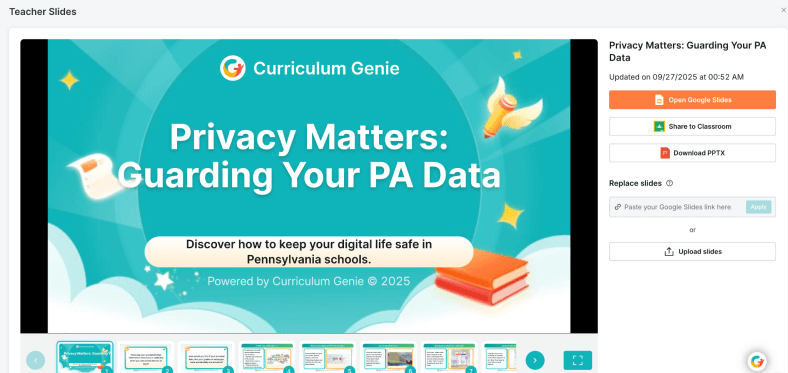
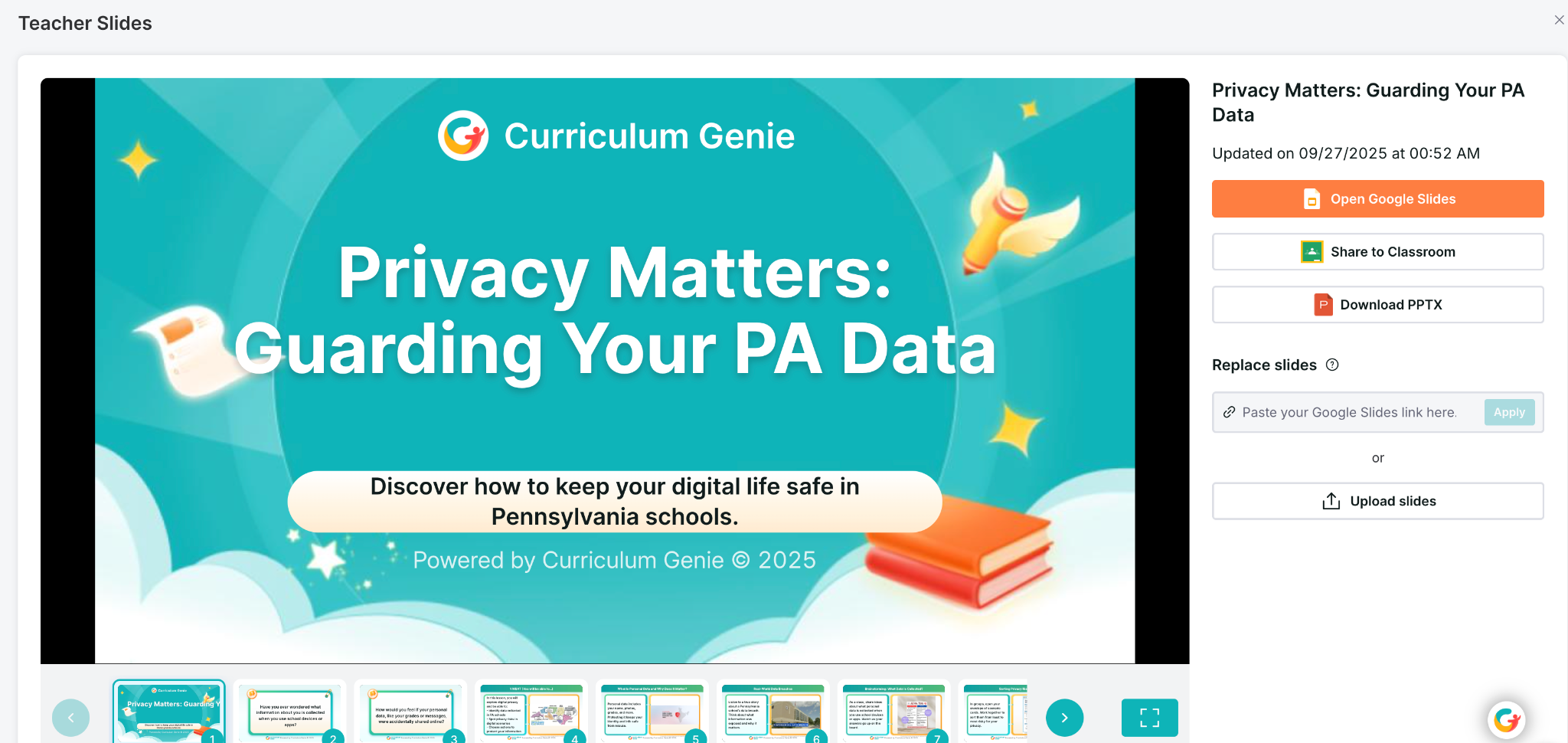
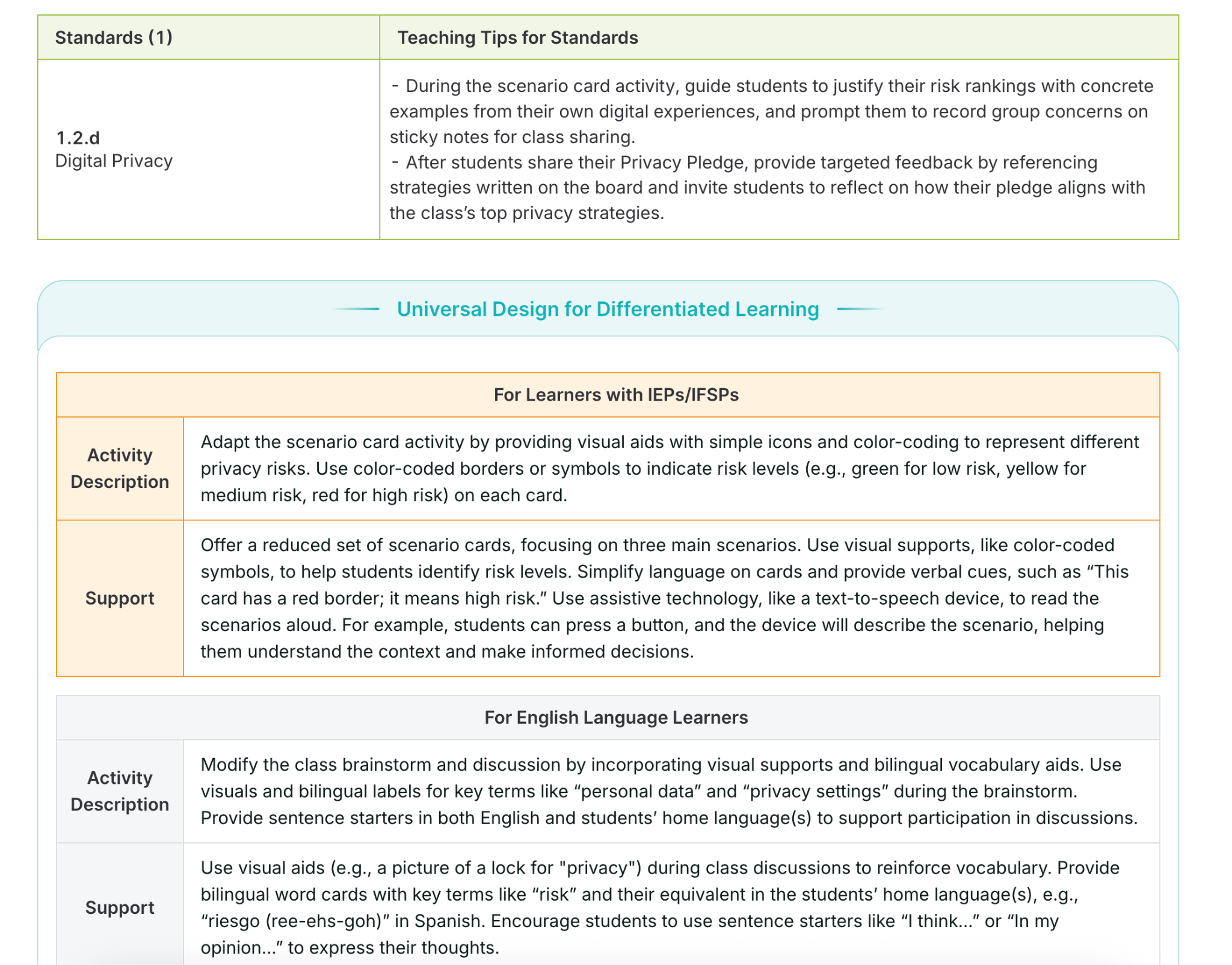
I have enjoyed using Curriculum Genie, developed by Learning Genie. This innovative platform helps educators transition from traditional instruction to personalized and UDL-aligned learning, supporting the whole learner and also the competencies outlined in the Portrait of a Graduate.
Why Curriculum Needs An Update
A standardized curriculum was initially developed to promote fairness, ensuring that all students had access to the same information. But equal content doesn’t mean equitable learning. If lessons are not adjusted to meet student needs and are not more personalized, then they will fail to:
Reflect students’ local cultures or communities, and authentic learning is lost.
Connect abstract concepts to real-world experiences, reducing comprehension.
Maintain student engagement when lessons feel irrelevant or disconnected.
As educators, we know the need for personalization, but creating differentiated lessons can be time-consuming and, at times, even overwhelming, as we worry about meeting each learner’s needs. Curriculum Genie removes that barrier by making relevance, accessibility, and inclusion achievable and in a platform that is easy to navigate and user-friendly.
Curriculum Genie: AI Meets Authentic Learning
Curriculum Genie is not just another planning tool—it’s an AI-powered educational design partner. It helps teachers build or adapt a curriculum that authentically and meaningfully connects to students’ needs and experiences.
✨ Key Features
1. Location-Based Unit Generation
Educators can select a location (state, city, or region), and generate unit planners tailored to that specific place in no time at all. The examples, activities, and cultural connections align with the local environment, which makes the lessons more authentic and relatable.
2. AI Lesson Assistant
Teachers can:
Create new lessons in a short amount of time that reflect a specific location or cultural context.
Transform existing lessons without rewriting them from scratch.
Have a thought partner to build out a truly impactful lesson for students.
This flexibility empowers teachers to make any lesson more meaningful while saving hours of preparation time. The time saved can then be spent with students and colleagues, continuing to learn and grow together.
Generates interactive slides!
3. UDL-Embedded Supports
Curriculum Genie doesn’t just create lessons; it also aligns them with Universal Design for Learning (UDL) principles, helping educators plan for accessibility and inclusion from the start. UDL is a focus area for many educators, and making sure to provide the right supports and activities is key. Curriculum Genie helps with this. Why UDL?
UDL ensures multiple means of:
Engagement: Connecting to student interests and motivation.
Representation: Presenting information in diverse ways (visual, auditory, tactile).
Action & Expression: Giving students options to show what they know.
For example, when designing a science lesson, Curriculum Genie might suggest hands-on experiments, visual diagrams, or video explanations to make sure that every learner can engage and succeed. For my STEAM course, I can create robust lessons focused on digital citizenship and wellness or other important topics that boost student engagement and make truly interactive lessons to amplify learning. How? Curriculum Genie provides all of the resources that I need to make a lesson successful, meaningful, and personalized to my students.
4. IEP and ELL Integration Supporting diverse learners is a key aspect of Curriculum Genie’s design. It automatically weaves strategies for students with IEPs and English Language Learners, helping educators to build their instructional practices, too.
5. Portrait of a Graduate Alignment
Many districts are focusing on the Portrait of a Graduate, and also, Portrait of an AI Graduate, which outline the essential skills our students need to be successful in the future. They develop skills such as critical thinking, communication, creativity, collaboration, and global citizenship.
Curriculum Genie helps educators design lessons that cultivate these competencies through:
Real-world, problem-based learning grounded in local and global contexts.
Collaborative and inquiry-driven activities that foster communication and creativity.
Culturally responsive projects that honor diverse perspectives and promote empathy.
Using Curriculum Genie enables educators to connect academic standards with the Portrait of a Graduate competencies, which ensures that students learn more than the content; it helps them to build the mindset and skills needed for their future.
They also offer FREE K-12 Lessons on AI Literacy!
Free AI Literacy Courses for K–12 Educators
Another great feature offered by Learning Genie is that it provides free AI Literacy Courses for K–12 educators.
The courses are self-paced and help teachers and school leaders:
Understand how AI works and how it’s shaping learning.
Explore classroom-ready strategies for AI integration.
Learn to design lessons that teach students to think critically about AI.
The future of learning depends on our ability as educators to make education more personal, purposeful, and powerful. Curriculum Genie offers guidance that helps educators move beyond traditional and one-size-fits-all instruction to learning that is inclusive, authentic, and future-focused.
More than just a platform with limited capabilities, through its integration of AI, UDL, Portrait of a Graduate competencies, plus the great and free AI literacy courses, Curriculum Genie supports educators with the tools to make it a reality.
If you’re looking for a new platform that will save you hours of time by addressing many important areas, then I definitely recommend that you dive into Learning Genie and explore creating with Curriculum Genie. I have been amazed at how quickly it creates, how responsive it is, and the quality of resources and materials that it shares for teachers.
Learn more and request a demo at https://www.learning-genie.com/
About Rachelle
Dr. Rachelle Dené Poth is a Spanish and STEAM: What’s Next in Emerging Technology Teacher at Riverview High School in Oakmont, PA. Rachelle is also an attorney with a Juris Doctor degree from Duquesne University School of Law and a Master’s in Instructional Technology. Rachelle received her Doctorate in Instructional Technology, and her research focus was on AI and Professional Development. In addition to teaching, she is a full-time consultant and works with companies and organizations to provide PD, speaking, and consulting services. Contact Rachelle for your event!
Rachelle is an ISTE-certified educator and community leader who served as president of the ISTE Teacher Education Network. By EdTech Digest, she was named the EdTech Trendsetter of 2024, one of 30 K-12 IT Influencers to follow in 2021, and one of 150 Women Global EdTech Thought Leaders in 2022.
She is the author of ten books, including ‘What The Tech? An Educator’s Guide to AI, AR/VR, the Metaverse and More” and ‘How To Teach AI’. In addition, other books include, “In Other Words: Quotes That Push Our Thinking,” “Unconventional Ways to Thrive in EDU,” “The Future is Now: Looking Back to Move Ahead,” “Chart A New Course: A Guide to Teaching Essential Skills for Tomorrow’s World, “True Story: Lessons That One Kid Taught Us,” “Things I Wish […] Knew” and her newest “How To Teach AI” is available from ISTE or on Amazon.
Contact Rachelle to schedule sessions about Artificial Intelligence, AI and the Law, Coding, AR/VR, and more for your school or event! Submit the Contact Form.
Follow Rachelle on Bluesky, Instagram, and X at @Rdene915
**Interested in writing a guest blog for my site? Would love to share your ideas! Submit your post here. Looking for a new book to read? Find these available at bit.ly/Pothbooks
************ Also, check out my THRIVEinEDU PodcastHere!
Join my show on THRIVEinEDU on Facebook. Join the group here.