Guest post by: Whittney Smith, Ed.D. (@whittneysmith_) is the Principal at Mineola High School. You can follow the work done by our amazing students and teachers by following us at @mineolahs on both Twitter and Instagram.
In high schools across New York State there is always talk of the Regents Exam. This exam has been the focus of teachers since 1878 when the first high school exams were given. On April 6, 2020, that changed… at least for the time being.
Now what? I think we now have the unique opportunity to focus on learning, not the test anymore. While we rely solely on remote learning opportunities… our ability to leverage technology will certainly accelerate our ability to focus on student agency. Some cynics will say that without a Regents Exam, the students will not be motivated anymore, they’re going to “check out.” I don’t think so. Instead, I believe we need to seize this opportunity and engage our students. Remember that first and foremost we teach students, then we teach content… and remember, children are naturally curious, want to make connections, and desire learning things that are relevant to them; things that are real.
When we were thrust into this remote world as we walked out of our schools on March 13, 2020, I sent an email to the faculty. I will never forget that email. Along with a remote learning planning guide, I sent teachers my phone numbers and those of my assistant principals’, so they could reach us at any time. I wanted them to know that we cared about them as people first; we cared about their social and emotional well being just as we wanted them to care for our students and their families.
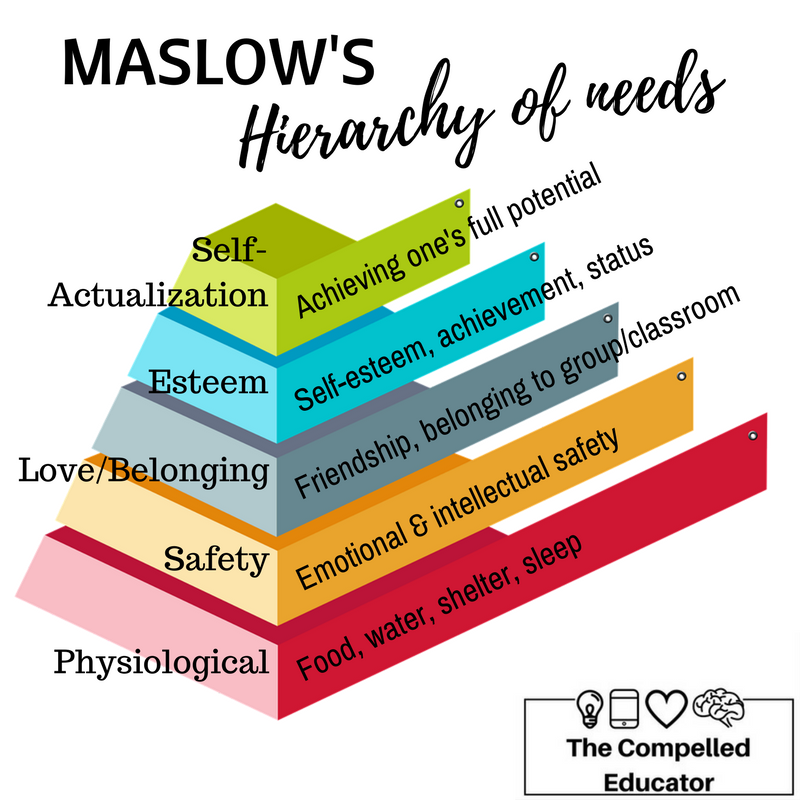
In the educational world we hear a lot about “Maslow before Blooms;” in other words, we need to take into account the hierarchy of human needs before the hierarchy of human learning.
Next, I asked our educators to reflect on remote learning and consider the following while they focused on what remote learning would look like in their ‘new’ classrooms.
Emphasize Choice – allowing students to choose how they demonstrate their learning will increase completion and help them navigate misconceptions
Emphasize Learning and Not Grades – when students are not concerned about “the grade,” they are more likely to learn the material on their own, rather than “collaborating” with others (unless that is what you intend them to do).
Direct All Student & Teacher Tech Related Issues to Bonnie and Katie (they are our Coordinators of Information Technology (CITs) and can do just about anything… and know who to reach out to when they can’t)).
Last but not least (for now) —> If you are having difficulty reaching a student (e.g. they are not responding) please reach out to our mental health team. They are counseling students and are ready to assist in any way possible.
Never did I think that I would be writing this post on April 30, 2020 (30 days into an extended school closure) telling you that the Regents exams have been canceled.
Now is the time to tap into student interests and passions.
Now is the time to focus on strengths.
Now is the time to give choice.
Now is the time to leverage creation tools. Whether it is a product to create or a problem to solve, allow students to determine how they demonstrate and share their learning.
Now is the time to shift the paradigm as we are not going to take high stakes, multiple choice tests! Let’s do what we’ve always wanted to do… make learning fun!
Guest post by Simon Choi, a mental health advocate and small business founder. He foundedStandout Bands which supports Beyond Blue and allows him to write for his mental health blog, Healthy Minds. Simon is particularly passionate about supporting those experiencing depression. Currently, Simon is supporting those struggling as a result of COVID-19 related mental health issues. He lives in Melbourne, Australia.
*Opinions expressed are those of the guest author.
Times of Uncertainty
The Global Coronavirus Pandemic has been ongoing for months now and there is a great deal of uncertainty among government and society. Adults are dealing with loss of work, changes to daily routines and possibly even sick relatives. However, the uncertainty is not only limited to adults.
The Effects on Children
Children are not immune to the fears that this global pandemic has produced. Their lives have been greatly affected as well. Children are not only out of school, but they are not able to visit their friends and family as well. For example, fear of the health of the elderly means most grandparents are not advised to see grandkids in the present environment. Parents and educators can try to help and reduce some of this anxiety. In the following article, we will discuss seven ways that any educator or parent may be able to help those they care for and teach:
#1 Keep Their Usual Schedule
For a child, it can be difficult to experience many external changes. Since they have no control over being out of school and not seeing their friends and family, it is best to stabilize the things that can be stabilized. In order to give your children stability, do not change their sleep time, their school hours or other regular activities. Even if your child has to practice their sport in their own front yard or get violin lessons over Zoom, try to keep up with their previous schedule and activities as much as possible.
#2 Don’t Let Kids Watch Too Much News
The news can be informative, but it can also be full of unwanted scenery and troublesome for younger viewers in particular. Since that is the case, you do not want to let your kids watch too much news.
#3 Talk to Kids Openly
Kids need to feel like they can openly express themselves with adults. You want to ask your kids questions about their feelings and give them age appropriate answers. Children are inquisitive by nature, so this process could require some patience, but it will help to dispel some of their fears.
#4 Watch Their Associates
If your children are spending a lot of time talking to virtual friends, make sure that you are aware of the other kids who they are talking to. Other children can have a big influence on your children’s feelings, so you want to monitor or at least be familiar with their friends.
#5 Play with Your Kids
Make sure that your kids are getting exercise. Each day, make it a practice to add an exercise routine to your kids daily work. Just like gym class at school, exercise should be a healthy part of their at home learning journey. Try to play sports with kids as well; this is especially true if your kids are involved in any extracurricular sports. That way, they can keep up with their skills and get out some extra energy as well.
#6 Talk to A Professional
If you think that your child is having an extra hard time dealing with the stress of COVID19 and you notice that the stress is interfering with his or her daily activities, you may have to contact a professional who can give your child a consultation over the phone and provide professional advice.
Make the Best of a Difficult Situation
It can be stressful to deal with an unknown situation, but this stress can also build resilience in a child. Even in a global pandemic, you can help your child to make the best of the opportunities that staying at home can present or as an educator if over teleconference. When a child is taught to deal with difficulties in a healthy manner, he or she will be well prepared for whatever life throws at them. With the right support from you children can build resilience as a result of this time.
**Interested in writing a guest blog for my site? Would love to share your ideas! Submit your post here.
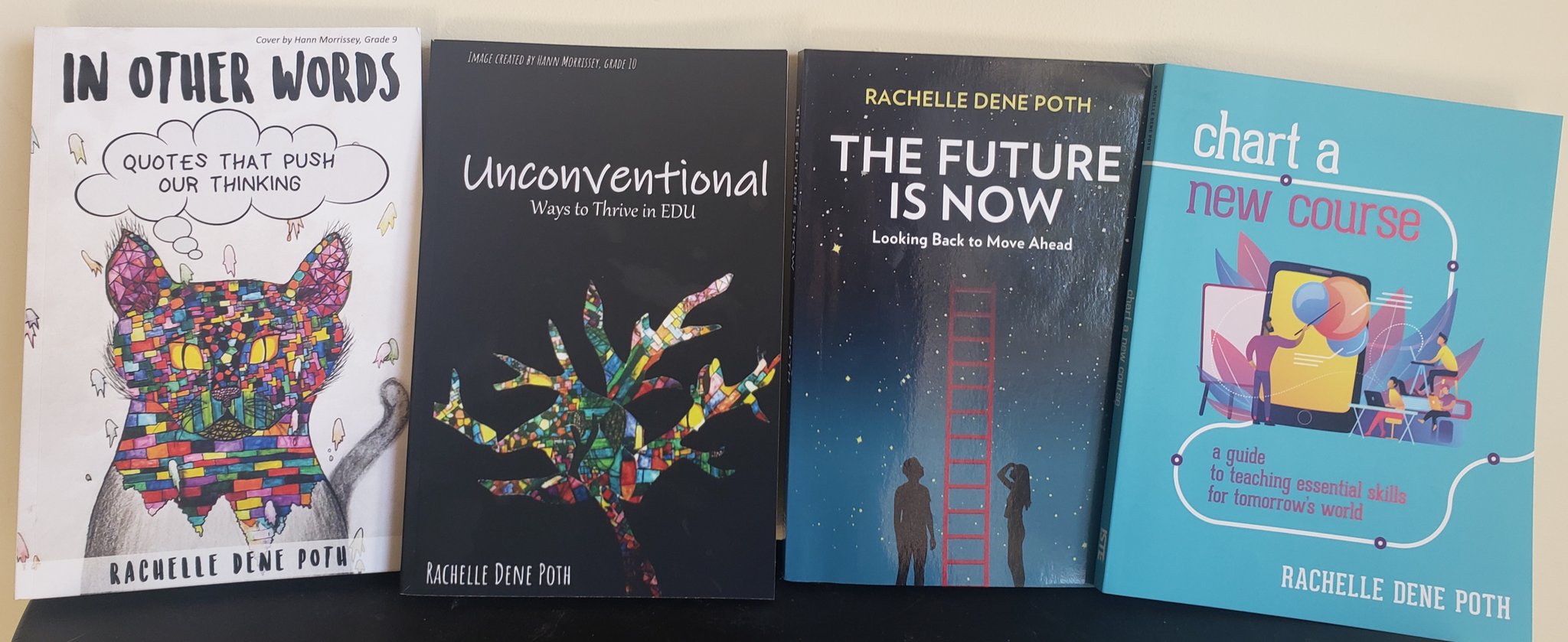
Looking for a new book to read? Many stories from educators, two student chapters, and a student-designed cover for In Other Words.
Only in our isolation and disconnectedness do we discover that everything and everyone is localized and connected. And, in this distancing, I am beginning to question what we deny.
Rebecca Solnit kept appearing in my daily consumption of media and I’m beginning to wonder if this is the work of a latent existential force drawing my attention to something I should have known or done long ago. I listened to her voice in an episode of On Being last week. She wrote, “When all the ordinary divides and patterns are shattered, people step up to become their brothers’ keepers…and that purposefulness and connectedness bring joy even amidst death, chaos, fear, and loss.” The unusual lilt of her voice and calm intellect still spin in my mind’s ear. And, this morning, I stopped scrolling my Twitter feed struck by this linguistic wisdom. She wrote,
“Inside the word ’emergency’ is ’emerge’; from an emergency new things come forth. The old certainties are crumbling fast, but danger and possibility are sisters.” #RebeccaSolnit
And then on Twitter, Gianpiero Petriglieri wrote that an “old therapist friend” told him why everyone was “so exhausted after video calls. It’s the plausible deniability of each other’s absence. Our minds tricked into the idea of being together when our bodies feel we’re not. Dissonance is exhausting. Our bodies process so much context…” I stopped to think about that wording, “plausible deniability”, and the more common legalistic use for one escaping criminal repercussions as a member of a corrupt organization or political power.
However, I couldn’t wrap my head around this experience of dissonance and the connotations of “plausible deniability” as something happening to us rather than something we choose to avoid like the truth or an injustice. According to Wikipedia“the expression was first used by the CIA” but the idea apparently has a longer history. I needed to understand the term, like Solnit explored “emergency”; it was an itch that pressed me, so I read further. “Plausible denial involves the creation of power structures and chains of command loose and informal enough to be denied if necessary”.
Then a thought struck me. What power structures are currently in place which I deny? What small almost imperceptible movements have made me complicit in this dance of distraction? Solnit reappeared during my longer moment of breakfast reading in The Guardian article entitled: “The impossible has already happened: what coronavirus can teach us about hope”. How marvelous and uplifting it is to read her vibrant words calling us to action and existence, to make the most of the worst.
While I cannot deny there is absence in my new-found isolation, I can also see that my thoughts attend a new experience. I am paying attention to moving about my house, to walking the dog, to gazing out the window with no real productivity pressure of this instant. And, yes, I am teaching remotely, but connecting, supporting personalized learning is my focus rather than a product on the line of academic factory life. This is where I cannot sense Petriglieri’s Tweet about “plausible deniability”. I am now working on processing the context of my daily life which I previously ignored in mind-numbing haste consumed by the blind goals of my own productivity or some socialized version of productivity.
My body is processing the context of my life in isolation and thinking about the actions needed for when we might connect again. I am trying not to deny my own physical interaction with and existence in the world.
**Interested in writing a guest blog for my site? Would love to share your ideas! Submit your post here.
Looking for a new book to read? Many stories from educators, two student chapters, and a student-designed cover for In Other Words.
Last week those of us in BC ed had no idea what this week would have in store for us. When I was a kid, “self-isolating” was humorously coined for those who rather not deal with the public, “social distancing” was something told to us by supervisors at teen dances, and “quarantining” was something learned in history units.
But like it or not, we have been hit in the face with a crisis of epic proportions. It’s been an emotional roller coaster navigating the slings and arrows of toilet paper hoarding, Bonnie Henry updates, and beachy trip cancellations.
And now, BC teachers are faced with uncertainty as to how we will continue teaching without students in our classrooms. Over the last few years, we’ve been besieged with a renewed curriculum and just started to understand how proficiency scales can be used in our classrooms. Some of us have been making waves by leading teachers on a gradeless mission. Since yesterday’s announcement, I cannot help but wonder if all the work we’ve done will now be undone. I could scream and cry at the same time.
I know it might seem like an unrealistic conundrum to be contemplating the fate of gradeless at a time like this. Like many of you, I’m hanging on pins and needles waiting for our school board to announce how, specifically, we will meet the needs of our students after spring break. I have so many questions from communication to assessment. I’m worried about my at-risk students and how my colleagues will weather this storm. How will my student LEARN at home?
Learn. Hmmm…
Learning is the focus of gradeless teaching and assessment. You’ve heard me explain so many times over that when we remove grades and focus on the individual child and their growth, a child will develop a growth mindset. When we put the needs of each individual child instead of comparing them to each other or categorizing them by grades, we build a culture of learners, not grade grabbers.
Amid this edu-crisis, do we have to stop? Should we still consider gradeless? In fact, isn’t now, more than ever, the time to rethink what our goals are for our students? Is uncertainty and anxiousness a reason to revert to old habits, like handing over packages of content heavy worksheets, and abandoning single point rubrics? Or is this an opportunity to practice…really practice putting learning before grades? Isn’t this the time to think about the needs of the child? Shouldn’t our focus be on how the child will learn instead of how will I teach under these different circumstances? So many questions!
One thing I know is, now more than ever, students do not need grade pressures. They don’t need us to hover a “here’s what you need to pass” over their heads because we’re worried about getting through “the curriculum.” At home, students are juggling feelings of isolation, parents being laid off, themselves being laid off, lack of technology, too much technology, empty grocery store shelves and empty cupboards, never mind the questions: When will we return to school? Will there be a grad ceremony? Why can’t I see my friends?
In my opinion, if the government (or school board, or whomever makes these decisions) is smart, they’ll deemphasize grades. This will reduce the burden on educators. But like letter grades, even discussions over pass/fail, if that becomes the new norm, should not be considered or discussed with students until the end of the year. We can, instead, focus our energy on creative ways to meet students’ social emotional needs, develop a distance classroom community, and give voice and choice. Teachers will need to let go of being an eyewitness to learning in their rooms and we’ll really need to let go of content. If we hand over miles of notes, worksheets and google-able essay topics, we’re asking for trouble in the form of disinterest, cheating and plagiarism, and crushing failure. We’ll need lots of time to settle into a new routine. Students will need time to adjust.
Ultimately, before we start teaching, we need to figure out a balance between Maslow and Bloom….for all stakeholders: students, parents, and us. We need to lower our expectations and big dreams for the perfect online or distance education course. We need to take care of ourselves and our families first, connect with students and their families second, and collaborate with colleagues on implementing curriculum third.
When we implement the curriculum, we need to use the skills that are the focal point of the BC curriculum as a platform for meeting student’s social-emotional needs. If we give students some voice and choice as to what they want to learn and how they want to learn it, it will feel less like us pushing our agenda on them, and more like welcoming students into this new learning environment and building trust. For example, an English teacher (well duh…of course I’m going to use an English example) might begin by asking students to journal every day from a series of prompts but use prompts that are flexible and open to interpretation. This will give teachers some insight into students’ social-emotional levels/needs as well as meeting curriculum requirements to foster reflection and thinking. Information from those journals could springboard into a project-based learning assignment. Creative writers could write a story, critical thinkers could research a topic, and visual learners could create a collage or PowerPoint. Content pieces can be slipped into to individualized projects to try to meet curriculum requirements.
I understand the pressure that content heavy courses like science and math have on teachers. This dilemma has been systemically ingrained in school culture for years. Right now, a math teacher is reading this blog and thinking that there is no way they can do PBL when they have X number of chapters to get through in the textbook by June. My hope is that teachers incorporate a bit of hands on learning in order to make learning in seclusion enjoyable and fun. The reality is, the content students do not learn this year, can be incorporated into next year’s curriculum. Yup it can. But that’s next year.
I’ve made a point to vocally de-emphasize prepping over spring break, but I know that recommendation has fallen on deaf ears. I cast no blame, for if I were to, that would draw attention to me as a proverbial finger-wagger instead of me the genuine worrier for the well-being of my colleagues around the province. I confess, I’ve been thinking a lot about how I will handle my own new teaching situation, as, but I lost sleep thinking about how my colleagues are handling the pressure. I already see the formation of chats and groups with sole purpose of collaborating on resources and expertise. While these groups have good intentions, I hope teachers are using this time to focus on themselves and their families.
Teachers wear their hearts on their sleeves. We want to do what is best for our students. We naturally lack patience when gaps of information are left without direction. We overthink. We care so much. We worry. We’re teachers. Heck, I’m writing a blog in order to manage my own stress. It’s how I roll. It’s how I cope.
It won’t be long and spring break will be over and we’ll return to school. It will look and feel different. We’ll have to collaborate virtually with our colleagues who work just next door. Staff meetings may very well take place in the theatre so that we can sit 2 meters away from each other. It will be weird. Nothing about this pandemic is familiar. It’s important that we don’t expect to recreate what was in our classrooms and in our buildings. It’s important to accept the feelings of uneasiness and frustration that will come. Pause. Breathe. Accept. Repeat.
Focus on yourself. When you are ready to focus on how you’ll teach your students in this new reality, make learning and the social emotionally well being of them the priority. They’ll be just fine. So will you. We are, after all, in this together.
#mygrowthmindset
**Interested in writing a guest blog for my site? Would love to share your ideas! Submit your post here.
Looking for a new book to read? Many stories from educators, two student chapters, and a student-designed cover for In Other Words.
I have always wondered how teachers on Youtube create videos that look so FANCY! I did some digging and found that several of these instructional videos use green–screens. Green-screens are used to remove the background behind videos so you can replace it with another screen!
Why should you consider creating a green-screen video for your students?
If you want to show practice problems behind you, talk alongside a PowerPoint presentation, or add a picture of your classroom in the background to make students feel as if they are still learning in your school, consider trying the green-screen video method!
I recommend making your videos SHORT and ENGAGING. Try to shoot for making your video under 5 minutes long. Shorter videos will increase engagement and students will be more likely to watch all the way through.
10Steps to Create a Green-Screen Video
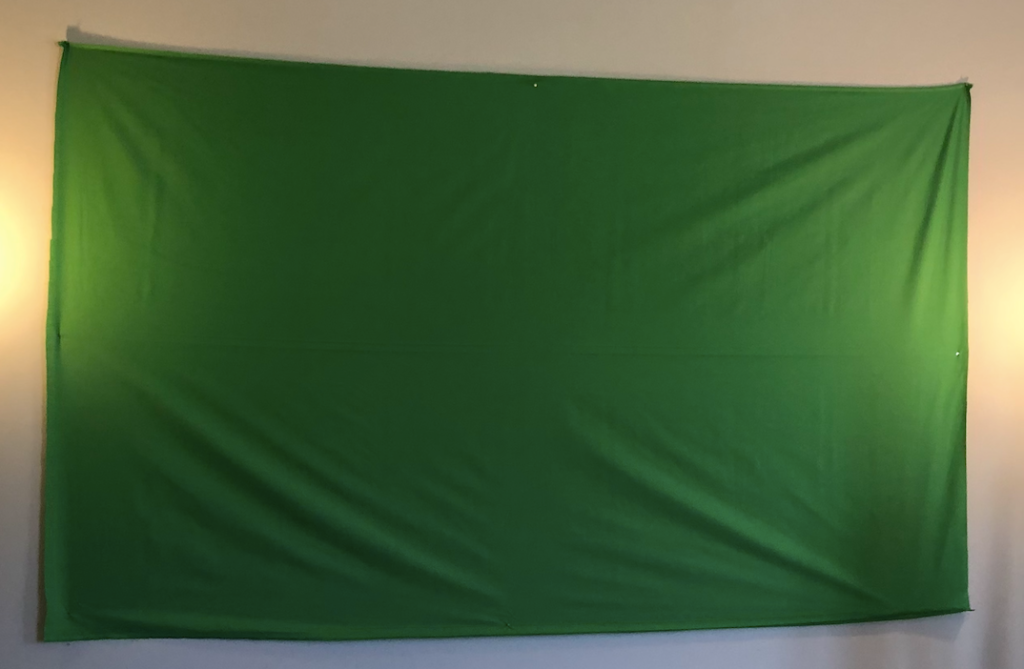
Step 1: Buy a green screen. You can buy a fancy one online on Amazon OR you can do the cheap version like I did. I bought two yards of green, non-reflective fabric from JoAnn Fabrics craft store.
My grand total? A whopping $9.15.
Step 2: Tape or push pin the fabric in a well-lit room. Find some floor lamps or lights in your house to make sure there are no shadows behind you when you stand in front of the green screen. You do not want shadows because it will lower the quality of yourself on your video.
Step 3: Use your personal device, an iPad, or a video camera to take a test video to make sure your lighting is working. I did a test video just to see where the best place to stand was in the frame.
[Please excuse the dance party.]
Step 4: Figure out which lesson you want to teach. Teach your lesson in front of the green screen. Refer to examples from a PowerPoint that you have used in your classroom or create new examples. It is okay if you mess up! Don’t stop the video, just keep recording and start over.
Step 5: Decide what you want the background of your video to look like. Open up Google slides and put up notes or practice problems that you want to pop up behind you in the video. This is the important part. Use Screencastify or another screen recording app to record the presentation of your Google slides. This video will be the video that is played in the background while you are talking!
Notes created by 6th Grade SIMS Science team: John Goldberg, Kimberly Wahus, & Brook Andrews
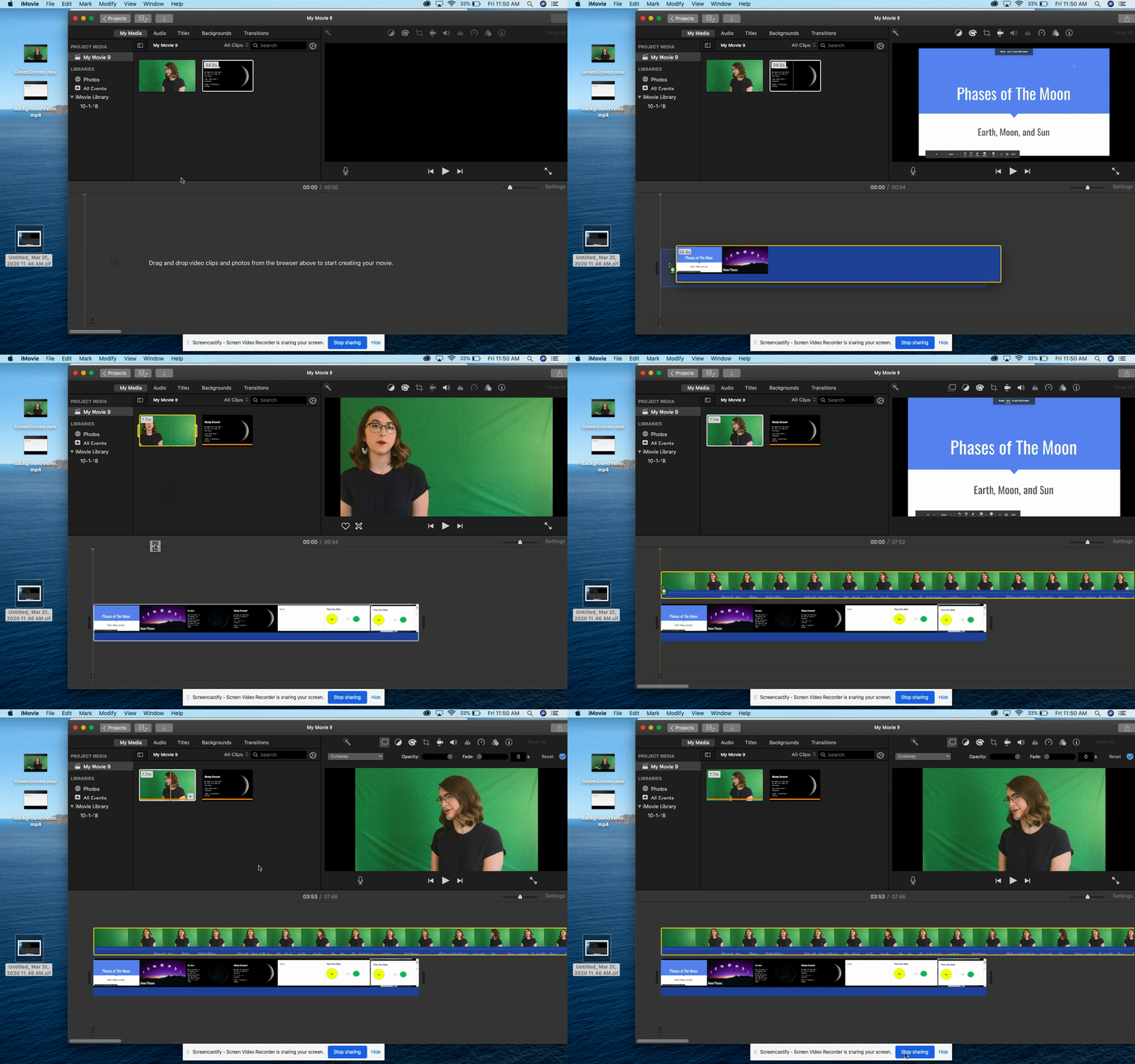
Step 6: Open up a video editing app. I highly recommend using iMovie because it is extremely user-friendly for editing purposes. Drag both videos to the top of the screen.
Step 7: Drag down the background video first. This is important. Then, drag the green screen video and place it on top of the background clip.
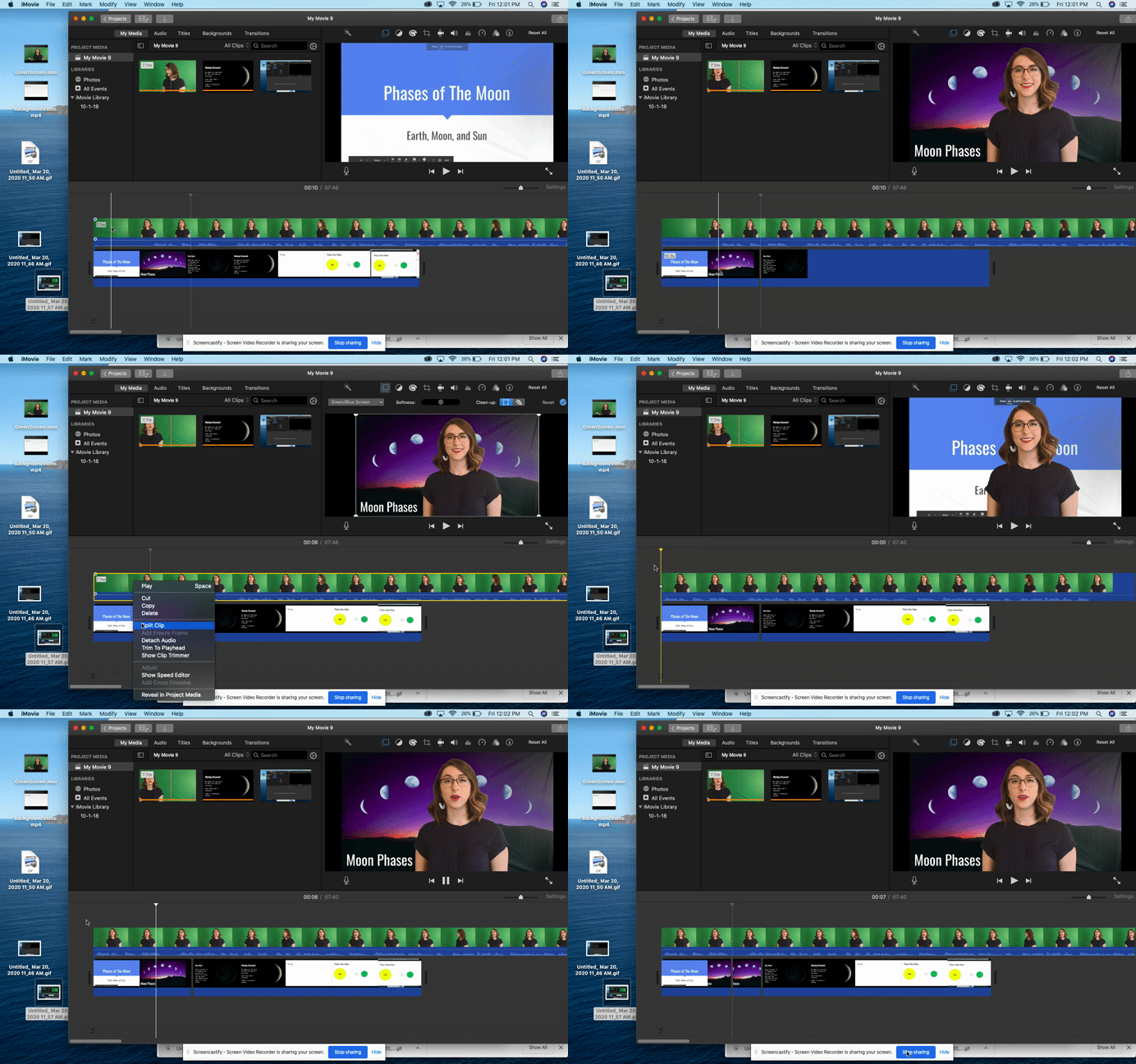
Step 8: Click on the green screen clip. On the top right panel, click on the drop down menu that says “cutaway.” Select the “green/blue screen” option from the drop down menu.
Step 9: Edit the green screen clip during the parts that you may have misspoke or messed up. Add music at the beginning or end if you want to make your presentation more engaging.
Step 10: Watch the video and if you are happy with the final result, click the share button on the top right of the screen. Select “file,” “next,” and “save” to your desktop. It will take a little while to download. Once it has dowloaded, you can upload your video to Youtube and share the link with your students!
I hope this helps some of you during the remote learning process.
Please reach out to me here or on Twitter if you have any questions or ideas about creating green-screen videos for your content.
I’m always looking for ways to innovate professional development. Teachers are busy people and sometimes those after-school, face-to-face sessions just aren’t doable. I actually prefer PD that comes to me…webinars, Twitter chats, blog posts, podcasts…so I ran with that and created a podcast PD for the teachers in my district. Think book club, only with podcast episodes and online discussions. This was really simple to set up, especially because we are a G Suite for Education district but this could be done in other platforms as well. To get this running, I:
Posted a sign-up to my district (this could be done at any level; district/school/grade-level/etc.)
Created a Google Form with links to 20 episodes for participants to vote on (I chose all Cult of Pedagogy episodes for this initial session because I am familiar with the high quality of them but episodes could be from any/many podcasts.)
Chose the top five episodes and created a Google Classroom with the link to one episode per “assignment”.
Added open-ended discussion questions (What resonates for you? What do you agree/disagree with? How can you see this working in your own setting?)
Set two-week “due dates” for each episode.
Sat back and watched amazing conversation unfold…I didn’t really sit back, I participated, BUT I was shocked at how rich and thoughtful the conversation was!
Some logistics:
I offered 2 professional development hours for each week (10 total), assuming that listening takes about an hour and posting/commenting takes another hour.
We require that our PD participants demonstrate learning through some type of product, so we are going to create reflection videos at the end.
The participants are already asking for additional sessions and I’m thinking that participants could make suggestions for podcast episodes in the future! Such a simple solution to creating accessible and relevant PD for educators!
************ Check out my THRIVEinEDU PodcastHere!
Looking for a new book to read? Many stories from educators, two student chapters, and a student-designed cover for In Other Words.
Guest post byAndrew Easton: teacher, edu-blogger, podcaster, and future author for Dave Burgess Consulting Inc. Follow him on Twitter @EastonA1, on Instagram @andrew.d.easton, or at andrewdeaston.com/
In our household there are two teachers and two primary-age students, and during our first week staying at home, we had a problem. As adults, we still have work responsibilities, and at ages 5 and 8, the kids need help navigating the five subjects of schoolwork they receive each day.
Our first thought was to set a schedule so that routines would be established. In that way, designated times would kick-start certain subjects and tasks.
Fail.
What we quickly realized was that sometimes the kids needed support with certain tasks, and if there happened to be a Zoom staff meeting or any other commitment that prevented us from supporting them in that immediate moment, the structure fell apart. The schedule needed more flexibility.
Then, we tried a checklist.
Fail.
Next, we tried using a checklist. I mean, who doesn’t love the feeling of crossing things off your to-do list?!? Well, the answer to that is my children. Even though a checklist does not have to be done in a specific order, don’t try telling that to them. The checklist was frustrating, and stopping a task to take a break routinely killed all their motivation to continue on with their work.
Finally, an answer.
Recognizing the shortcomings of our initial attempts, we felt optimistic about using a “To-Do, Doing, Done” board. The idea was that each day we would write down each item on their to-do list on a separate post-it note. Those post-its get placed in their “To-Do” column, and then as they start a task, the post-it moves to the “Doing” column. Once complete, it gets moved to “Done” and five completed tasks earns a sticker that is worth 30 minutes of free time.
Success.
Here’s what’s happened since we started. The kids now wake up each morning and run to their board to search through their list for the day. We intentionally scatter the post-its so that there is no implied order, and we like to put a fun, surprise activity on a post-it and hide it in the mix.
Oh, and in case you are wondering, yes, chores also go on post-its.
The “Doing” column has also been a godsend. There are times throughout the day when our responsibilities as adults make us momentarily unavailable to lead them through a portion of their work. The kids now know that they can leave a task in the “Doing” column and start something else if an adult is busy.
The “Doing” column has also been great for motivation. When the kids choose to stop mid-activity, we ask them to reflect on how close they are to finishing and to move that post-it to the place between the start/finish lines in the “Doing” column that reflects just how close they are to completing that task. Last week, my daughter had stopped her writing earlier in the day, but she was bent on moving the post-it to done. Seeing just how close she was to finishing, she, unprompted, wrote for an additional 30 minutes later that night.
Overall, this board has made our household happier and more productive. It’s helped us to maintain a more positive learning dynamic during these stressful times, which is why I wanted to share our story. I hope this strategy can help you!
So from our family to yours, please know that we are thinking about you all and are sending our best wishes your way.
**Interested in writing a guest blog for my site? Would love to share your ideas! Submit your post here.
Looking for a new book to read? Many stories from educators, two student chapters, and a student-designed cover for In Other Words.
Math Educator & Teacher Development Specialist, @identityshaper
I have been in many situations throughout my teaching career where I spent countless hours planning, what I thought, was the greatest lesson ever! I then delivered the lesson plan with the expectation that all of my students will be successful. Over the course of the unit, I provided classwork & homework assignments, conducted small group instruction for students in need of additional support, sacrificed my lunch periods to tutor struggling students, and pretty much did everything in my power to reach all of my scholars. After weeks of teaching my heart out, I gave my students an end-of-unit test with the confidence that all my efforts would translate to passing test scores. To my dismay, the converse of that expectation happened and that left me totally dumbfounded and wondering where it all went wrong.
For too many of us, we’re quick to place all the blame on our students for their failures and stand on the notion that we did everything we needed to do to fully prepare our students for success. As I write this piece, I’m not questioning the effort and energy that I exerted into our lessons nor am I questioning my dedication and love for them. The paramount question I had to ask was whether I taught the lesson well enough for my students to demonstrate mastery of the academic standard. Given my past failures, I surmised that my students had gaps in their understanding because I had gaps in my own understanding of the academic standard. That being said, I had to ask myself the following questions:
Did I unpack the language of the academic standard? It is one thing to identify the academic standard but it’s another thing to decipher its language and develop a complete understanding of what it actually means. I visited the Common Core Standards website to identify the standard of focus and read it carefully to identify the verbs (i.e. what students need to do), as well as the nouns (i.e. what students need to know) within it. Some standards require students to perform multiple skills so I needed to make sure to highlight each individual skill.
Did I identify the prerequisites of the academic standard? To determine the starting point for my lesson, I had to figure out what prior knowledge students should already have in order to master the standard. As I’ve taught previous lessons, I realized that I didn’t give some students a fair shot at having success because I never addressed the gaps in their basic skills foundation. By identifying the prerequisites of the standard, I was able to determine if I needed to reteach previous grade-level concepts before formally introducing the new standard to the students.
Did I closely monitor and assess my students’ progress throughout the unit? Throughout any lesson or unit we teach, we should be actively assessing our students’ understanding of the content. The assessment of student progress towards academic standards should be daily and ongoing. Regardless of whether the assessment is formative or summative, we should be gathering data and analyzing what type of errors they are making in their thinking. Are there specific concepts within the unit where students are demonstrating a level of mastery? When students are sharing their thinking verbally or through writing, are we solely focusing on their response or going the extra mile by asking them clarifying questions to investigate the thought process they underwent to arrive at their response? The bottom line is this…….if we are proactively assessing how our students are progressing throughout the unit, then we should have an accurate gauge of how well they will perform when given a final assessment.
Did I make the tasks challenging enough and accessible to each and every student in my class? With any new standard, teachers have to thoroughly assess the scope of it and determine the appropriate tasks or assignments that our students need to complete in order to build their knowledge of the standard. Every student enters the lesson at a specific developmental level so using a uniform instructional method probably won’t yield the best results. Some students may be further along the learning curve than their peers so teachers need to differentiate their instructional approach and create tasks that will meet the diverse academic needs of their students. To assess the difficulty level of the task, I used Bloom’s Taxonomy as a reference point. If I’m only giving my students “easy” tasks so they can feel good about themselves, I’m doing them a huge disservice.
Teaching is a hard enough job as it is. With the overemphasis of standardized testing, we sometimes find ourselves in a position where we don’t always have the time allotted to thoroughly assess how well we are teaching. However, our students cannot excel academically if we don’t develop the habit of asking the aforementioned questions and take the time to evaluate our performance as facilitators. If we are bold enough to point the finger at our students when they fail, then we must be equally bold enough to point it back at ourselves when we fall short.
**********************************
**Interested in writing a guest blog for my site? Would love to share your ideas! Submit your post here.
Looking for a new book to read? Many stories from educators, two student chapters, and a student-designed cover for In Other Words.
Reflection is concerned with consciously looking at and thinking about our experiences, actions, feelings, and responses, and then interpreting or analyzing them in order to learn from them. That is a big statement and a hard topic for our students. So how are we as educators supposed to work towards helping our students reflect on their thinking / learning and that of others.
So first I ask, as teachers and educators do we spend time on self reflection. Do we have the time to look back at our day of learning and “reflect on the information we receive through observation, experience, and other forms of communication to solve problems, design products, understand events, and address issues.” Yes that quote is straight out of our core competencies for critical and reflective thinking.
Yes I know every teacher is doing their self reflection in some way whenever they can but ho do we help students learn this process and see the benefits of reflection.
As a high school STEM educator, I always had reflection as part of my labs. We use our three go to questions for every lab:
What worked the best?
What needs to be tweaked?
What could we do to make it better?
This became common place in my classes and extended to all our work. Students would reflect on their own learning and ask each other to assess their work based on these questions.
As the new BC curriculum came around, I started to look at the self reflection during our projects. We have always looked at the process as more important. Photo journals or design changed diagrams or written reports were used to show their journey. But now we wanted to add in more self reflection along the way. After classroom discussions, it was decided that we would do weekly self reflection on large projects as a journal, blog or vlog. Students used the 3 questions to show their progress. The learning became very evident and assessment of their learning process was easier too.
I feel we need to all use reflection as part of our classroom routines and it wont feel so daunting in the end. It will make our assessment for, of and as learning much easier.
**Interested in writing a guest blog for my site? Would love to share your ideas! Submit your post here.
Looking for a new book to read? Many stories from educators, two student chapters, and a student-designed cover for In Other Words.
Guest post by Ava-Gaye K Blackford (@BlackfordAva)
(I read this post and and agree with the foreword below, Ava is an inspiration and her passion for education is clear.)
From Ava’s blog
I had the pleasure of connecting with Ava through my work with Participate. I was helping to pilot a new professional development program, and Ava was one of the brave teachers who took a risk and learned alongside her students as they looked for ways to make their school lunch healthier through multiple student-driven avenues. I was immediately impressed with her motivation and excitement toward teaching and learning and her openness to feedback. Here’s what Ava believes about education and what she’s been up to since I last worked with her.
I believe that teaching is the foundation for all other careers which requires compassionate and patient individuals who have a passion for scaffolding students and imparting knowledge. I feel that it is the ability to help others to acquire new information, competencies or values and implementing specific interventions to help students who need support to learn particular things. I also believe that teachers are born and not made. I know that I am an outstanding teacher because I am able to connect with and relate to my students to bring out their true potential. I also do not crumble under pressure or when I face obstacles instead I persevere. I am intrinsically motivated, and the reward I find in teaching is the personal satisfaction I obtain when I see students learn something new and achieve academic success and development. Being a part of the Participate international teaching program has been a very fulfilling and life-changing experience, and I recommend more teachers to gravitate towards this adventure.
My decision to join participate was due to several reasons. First, I wanted to share my culture by acting as a Cultural Ambassador so people can learn the uniqueness of my Jamaican culture as well as learning about other cultures. Secondly, I wanted the opportunity to travel the world, meet new people and build partnerships with stakeholders in the education system. Besides, I would be able to learn new strategies so that I may share with colleagues back home, learn about different technological devices, apps, and sites that may be used to boost students’ engagement and learning. Finally, to grow professionally as an educator. Reflecting on my journey thus far, I can safely say that I have achieved all of these goals and have grown into a productive Global Educator.
Currently, I have been assigned the role of Local Advisor. I have been granted the opportunity to guide two new Participate teachers and help them to transition smoothly in their new job position. As a local adviser, I serve as a mentor to new international teachers and share my own experiences, cultural opportunities, and ideas on how to be a successful exchange visitor teacher and cultural ambassador of their country.
School lunch project
To be a successful exchange teacher, one has to capitalize on both human and physical resources present within the walls of the school to maximize students’ full potential, improve one’s self as a Global Educator and adjust to the school’s culture and climate. In my first year, I worked closely with the Academic coach to plan classroom routines and school-wide management procedures. The use of technology in my lessons made my work as a teacher easier because I am able to allow students to direct and take control of their own learning by conducting research, become involved in Project Based Learning, and participate in online quizzes. I researched different sites that I may use with students to boost active engagement and learning.
I share students’ work on Twitter, send emails and write letters to pen-pals in Jamaica and other countries like Mexico. We participate in video calls with students from Jamaica sharing culture or concepts learned, and we have even video called resource persons from Nigeria.
In addition, I try to globalize my lessons as much as possible. Students enjoy learning about other countries, and this makes learning more authentic and meaningful. I also collaborate with grade level teams to focus on differentiated learning opportunities for students to meet students where they are at. We also gather suitable resources and plan effective and developmentally appropriate instructional lessons and strategies. We progress monitor students and use data to set grade-level goals and identify students who need tier 2 or tier 3 interventions.
I have learned so much throughout my journey as a Participate teacher, and I have enjoyed sharing and showcasing my culture. My students and I participated in a Last Year’s Winter Celebration (December 2017) where were attired in Jamaican costumes and paraded for parents and community members to view. We also did a presentation where we sang Jamaican Christmas Carols like “Christmas a Come me Waan me Lama.” My colleagues, principal, students, and parents were fascinated by the performance, and we received positive feedback. This was the perfect opportunity to connect with the school community and bridge the gap between home and school.
Ava’s students learning about Jamaican culture.
We also prepared a Jamaican display for all to view, ask questions and learn about the Jamaican culture. Students seem to be eager to learn about other countries and cultures so by globalizing lessons this makes the teaching and learning process more meaningful and interesting. I have also done research and read about schools that have shown marked improvements in academics because of the inclusion of Global Education to the curriculum. This has helped me to develop a new level of understanding and depth to my teaching.
I have made a positive impact on my school and living community by allowing each stakeholder to develop vicarious experiences about my culture. In data meetings or team meetings, I help to include information about the Jamaican culture in our lessons. I also bring colleagues and community members Jamaican souvenirs, teach songs and stories from my culture and share past experiences about my country. I mount multiple display boards showcasing the Jamaican culture in the classroom, also during culture night and market day celebrations. For Market Day this past year, my students and I made Jamaican souvenirs such as key chains, flags, and bracelets. We were also mentioned in the Time News. You may click here to read the story.
Being a teacher means demonstrating the ability to provide authentic, engaging, meaningful and cultural learning experiences to cater to the needs of diverse learners. It also means equipping students with effective and efficient skills needed to function in a global society. I have learned to do this through imparting knowledge, skills, and attitudes required to be a global citizen, giving students the opportunity to build vicarious experiences and travel the world through virtual exchange. The world is becoming a smaller place due to advances in technology and mobility. Hence, students need to be globally prepared, develop self-awareness, cultural understanding and empathy so that they will be able to appreciate others and their culture. As Global educators, we should incorporate Global Instructional Practices used to integrate global concepts and lenses in the classroom meaningfully.
My continuous participation in Professional Development activities has boosted my self-confidence and determination as an educator. When I return home to Jamaica, I also plan to conduct workshops to impart some of the fabulous strategies and interventions that I have learned here. I have already started sharing best practices with some of my colleagues back home, and they all seem to be loving them and are trying new things in their classroom.
Since writing this post, Ava was invited to present at Participate’s Global Schools Symposium on “Using Cooperative Learning Strategies to Boost Students’ Learning and Engagement”. In addition she attended a Life Lab PD in Santa Cruz, California, and she continues to inspire her students and the community through innovative projects like incorporating garden-based learning into the mainstream curriculum and being a facilitator at three of ABSS’ Core Four Professional Development workshop focusing on “Learning in the Outdoors.”
**Interested in writing a guest blog for my site? Would love to share your ideas! Submit your post here.
Looking for a new book to read? Many stories from educators, two student chapters, and a student-designed cover for In Other Words.