Tonies: A Screen-Free Adventure into the World of Storytelling

In collaboration with Tonies. All opinions expressed are my own.

In our increasingly digital world, where technology has the potential to be used too often, it’s great to discover innovative tools that don’t require a screen. Educators and families alike are always looking for ways to nurture creativity and spark a love of learning without the need for extra screen time. Enter the Toniebox, a brilliant and innovative audio system that reimagines storytelling and learning for children. With its kid-friendly design, engaging content, and screen-free functionality, the Toniebox has become a favorite in homes and classrooms worldwide.

As an educator who has used Tonieboxes with students, I’ve experienced the impact of this simple yet powerful tool. From the first time you use it, it draws you in, and the excitement builds up for more stories and fun in learning.

What is the Toniebox?

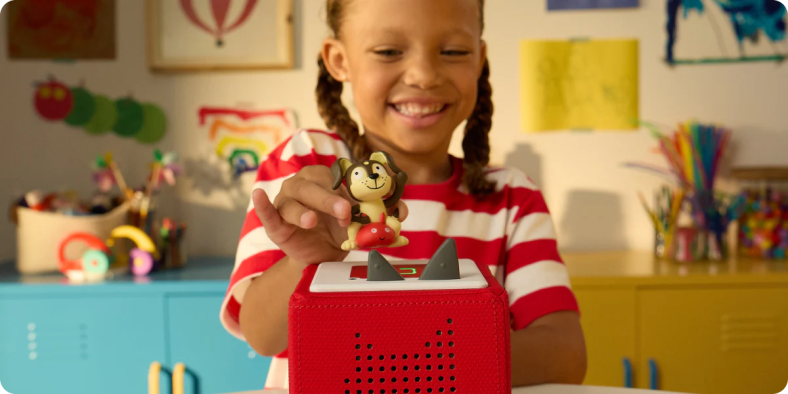
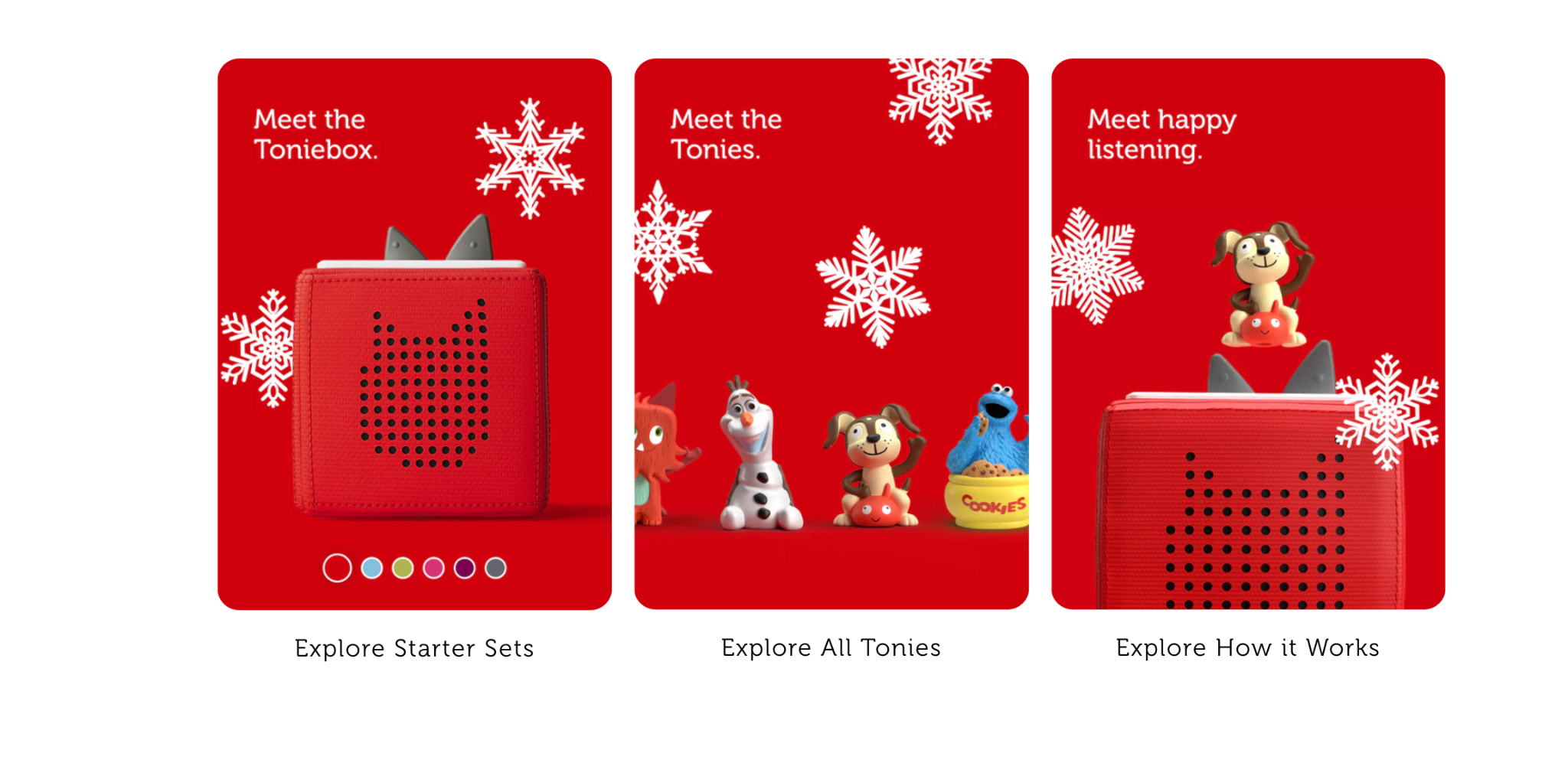
The Toniebox is a soft, cube-shaped audio player designed for children. I have a red and a light-blue one that I have used, and they are truly great for children. Unlike traditional speakers or audio tools that may be used in the classroom, the Toniebox is completely screen-free and user-friendly. It operates through the use of Tonies, which are adorable characters that come preloaded with content, such as songs, stories, or educational lessons. Children ages three and up can use the Toniebox without any problems because it requires them to simply place their Tonie on top of the Toniebox, and the content will play automatically.

The design of the Toniebox is perfect for young learners. It is soft to the touch, durable, and easy for children to operate. What I love about its design are its controls. The volume can be adjusted by pressing the “ears” on top of the box, and tracks can be skipped by tapping the sides of the Toniebox.
What are Tonies?

Tonies are adorable characters that come to life through the Toniebox. The Tonies are placed on a Toniebox to play stories, songs, and language learning activities. There are so many great characters, more than 200 to choose from, and more are being added.

The Magic of Screen-Free Play

The Toniebox stands out from other storytelling products because it is screen-free. By encouraging imaginative play, Tonies helps children develop essential skills such as:

  • Creativity: Children can create stories or adventures using their Tonies as inspiration. Give students a Tonie and ask them to write or tell a story about it. It is a great way to build many essential skills and for them to have fun, too!
  • Focus and Attention: The variety of narratives and how the Tonies create a more engaging audio experience helps children as they develop their ability to focus and concentrate. They become drawn into the stories, develop close listening skills, and get excited to share what they learn.
  • Language Development: To develop language skills, students need a variety of learning opportunities. With the Toniebox, they can listen to stories and songs that will help expand their vocabulary, language skills, and comfort in speaking.

Toniebox in the Classroom

For educators, the Toniebox will be a versatile and impactful addition to the classroom.

Artina Ellsworth, an early educator at Lakeside Primary in Prairieville, Louisiana, told me that she uses Tonies in her “pre-K classroom with the 3-year-olds during music and movement time, read-aloud time, and also in my literacy centers. It helps keep them focused and engaged during reading, helps me teach concepts of print, and also story comprehension for retelling stories. During center time, it also helps them follow the story without me having to sit and read the book with them. It builds their confidence in knowing that they can listen and pretend to read stories by themselves!”

There are so many great uses of the Toniebox! Here are some ideas for bringing a Toniebox into your teaching practice:

1. Listening Centers

The Toniebox can be used in a listening center where students can independently enjoy audiobooks or songs. This fosters self-guided learning and a comfortable way for students to practice their listening comprehension and auditory processing skills.

2. Mindfulness and Relaxation

The Toniebox is perfect for creating a calming environment. During transitions or after lunch, use Tonies that provide mindfulness exercises to help students refocus and relax.

3. Story Time

Use Tonies as a way to create engaging story time sessions for students. Students can create their own stories and even work together to build essential skills of collaboration and creativity!

4. Group Activities

Use Tonies to engage students in some discussions about the story. Ask questions and have students create alternate endings. There are so many possibilities!

Inclusion and Accessibility

The simplicity of the Toniebox makes it accessible to all learners, including those with special needs. Its tactile interface and audio format cater to diverse learning styles and abilities, ensuring every student can participate.

Here are some of the standout features that make the Toniebox a must-have for both classrooms and homes:

1. Durability

The Toniebox is built to withstand the wear and tear of young hands. Its soft padding and design ensure it can handle daily use.

2. Portability

With its rechargeable battery, the Toniebox can go anywhere. Whether it’s used in the classroom, on a field trip, or during a long car ride, it offers hours of uninterrupted learning and fun.

3. Content Variety

From fairy tales to educational lessons, the Tonies’ library ensures something that will meet every child’s interest and learning level. And new Tonies are being released, which helps to keep the learning experience engaging and fun!
4. Customization

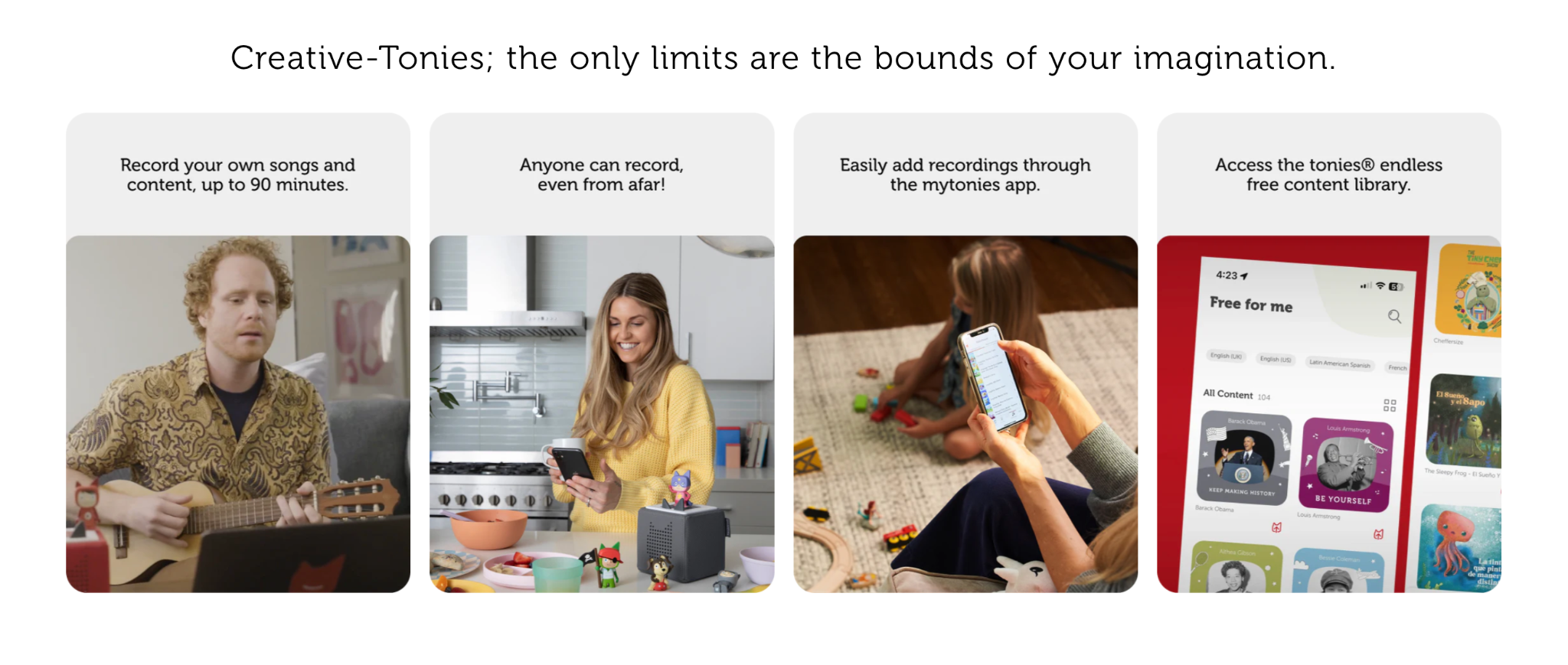
Creative Tonies provide even more opportunities for personalization. Parents can record bedtime stories, and teachers can create custom lessons or messages for their students.

5. Ease of Use

Its unique design means that even the youngest learners can operate the Toniebox independently, which promotes confidence and autonomy.

And now there are even audiobooks that offer more content for kids 6-9! Tonies offer a unique and engaging way to spark children’s imagination and foster a love of learning. By providing a screen-free experience, Tonies helps children develop essential skills while having fun. Whether you’re an educator or a parent, Tonies is a fantastic option to enhance children’s learning and development. Educators, get started today with Tonies through their educator discount!

About Rachelle

Dr. Rachelle Dené Poth is a Spanish and STEAM: What’s Next in Emerging Technology Teacher at Riverview High School in Oakmont, PA. Rachelle is also an attorney with a Juris Doctor degree from Duquesne University School of Law and a Master’s in Instructional Technology. Rachelle received her Doctorate in Instructional Technology, and her research focus was on AI and Professional Development. In addition to teaching, she is a full-time consultant and works with companies and organizations to provide PD, speaking, and consulting services. Contact Rachelle for your event!

Rachelle is an ISTE-certified educator and community leader who served as president of the ISTE Teacher Education Network. By EdTech Digest, she was named the EdTech Trendsetter of 2024, one of 30 K-12 IT Influencers to follow in 2021, and one of 150 Women Global EdTech Thought Leaders in 2022.

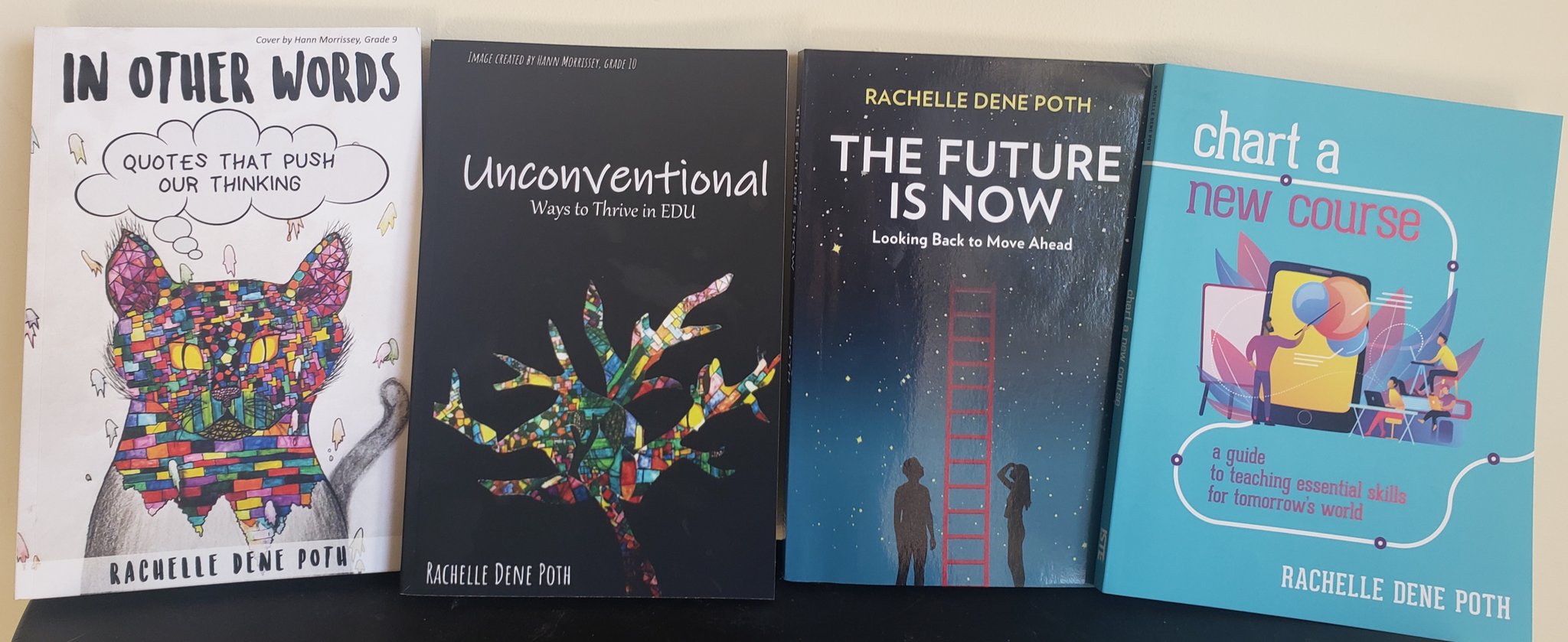
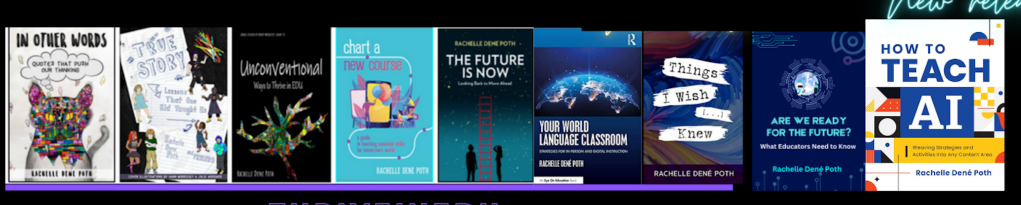
She is the author of nine books including ‘In Other Words: Quotes That Push Our Thinking,” “Unconventional Ways to Thrive in EDU,” “The Future is Now: Looking Back to Move Ahead,” “Chart A New Course: A Guide to Teaching Essential Skills for Tomorrow’s World, “True Story: Lessons That One Kid Taught Us,” “Things I Wish […] Knew” and her newest “How To Teach AI” is available from ISTE or on Amazon.

Contact Rachelle to schedule sessions about Artificial Intelligence, Coding, AR/VR, and more for your school or event! Submit the Contact Form.

Follow Rachelle on Twitter(X) and Instagram at @Rdene915

**Interested in writing a guest blog for my site? Would love to share your ideas! Submit your post here. Looking for a new book to read? Find these available at bit.ly/Pothbooks
************ Also check out my THRIVEinEDU Podcast Here!

Join my show on THRIVEinEDU on Facebook. Join the group here.
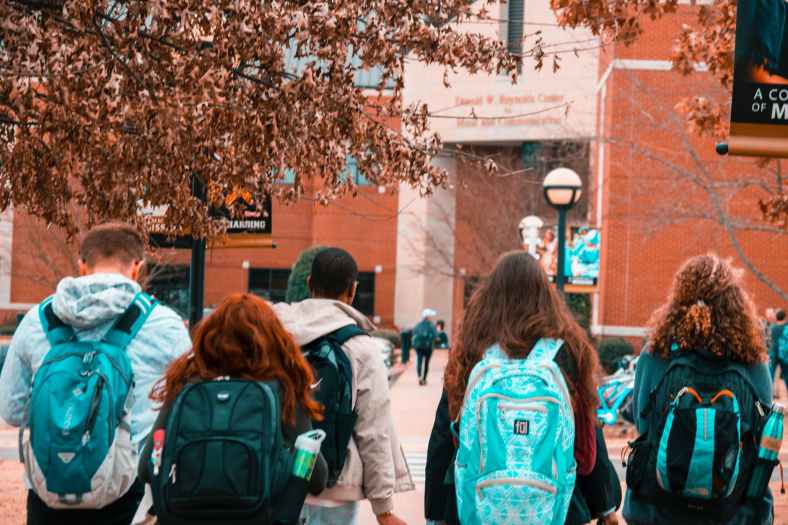
Providing the Right Learning Spaces for Students to Explore and Create


When looking at the design and structure of classrooms today, they may look quite similar to the classroom setting that you experienced when you were a student. Structurally, students in most schools follow a set schedule each day and spend time in different classrooms throughout the building. Unlike years ago when I was a student and even as recently as five or 10 years ago, learning was still confined to the physical classroom space. However, through the capabilities we now have with technology, the opportunities to connect students with learning that takes them out of the classroom space are incredible.

For most students, learning took place in the classroom and on-the-job or real-world learning experience had to wait until the end of the school day or in some cases, after high school graduation. Of course, there were students enrolled in vo-tech or career and technical education programs outside of the school building, taking them to a new learning environment to interact and collaborate with students from other schools, learn from different teachers, explore ideas and strategies, and even different types of careers. These types of learning spaces helped students to better understand the skills they might need in the future. However, not all students had access. But today, we have the power to offer these opportunities to all students. With the resources that we now have, we owe it to our students to offer them learning experiences in as many different learning spaces as possible so that they have time to explore and build the skills that they will need when they leave our schools.

So where or how do we provide these different learning spaces for students? We start by making sure that we are connected in the right spaces ourselves. As educators, this means being connected in a space that goes beyond our school community. It means leveraging social media and different networks, attending conferences, reading blogs, listening to podcasts for ideas or picking up educational books on topics that we wish to learn more about. We must make sure that we have the right knowledge to stay current and relevant so that we can design the best learning experiences for our students. Not that we need to create everything for them; we just need to get them started so that they can take the initiative to design their learning path in the space they decide best fits their interests and needs.

How to Provide Space for Students to Explore

1. Project-based learning (PBL): By implementing PBL, we empower students to look for problems or challenges in their community and globally, try to find solutions, and focus more on learning as a process. Beyond just doing PBL in a class, there are schools opening which are PBL schools, like Gibson EK, a public high school located in Washington. The motto at Gibson EK is “Real World, Real Learning, Real Life.’” Students do not enroll in traditional courses, instead they “earn academic competencies through projects” and work with a mentor through internships two days per week. The school is designed on principles such as “Stop learning for school, start learning for life.” I truly believe that students need opportunities to explore their passions, design their own problems or challenges, and have the time to work through the learning process. To best prepare students for the future, whether college or career ready, they need to decide on their learning space, experience productive struggle, reflect, revise and continue on their path of learning.


2. Student Organizations: Schools that have student organizations like the Model United Nations empower students to build skills of advocacy, leadership, critical thinking, problem-solving, creativity, and self-confidence. In my school, I have seen remarkable growth in the students who have become involved in the Model UN under the leadership of Mr. Ken Kubistek, a history teacher, who has led this group through conferences and competitions for many years. Through work with the Model UN, students engage in authentic learning experiences that take them out of the classroom and connect them with real-world learning and global issues. Students develop their voice and build many vital skills for the future by exploring new learning spaces through organizations like the Model UN.


3. Media Creation. Students need opportunities to create their own space to show learning. Whether students create a YouTube channel and develop their own show, explore an emerging technology trend or prepare a solution to current event issues, there are many ways that students can create a different type of learning space for themselves and for others. Perhaps a student-created podcast using tools like Anchor or Synth, where they invite guests to discuss current issues, focus on themes for education or anything that interests them. A podcast designed with the goal to help educate not only classmates and members of their school community but the public at large. Opportunities like these promote more meaningful learning while also building digital literacy skills and empower students to find space that meets their interests.


4. School Community Connections: I recently gave a keynote about the future of education and how the look of school is changing.  I received a lot of great questions and comments and one suggestion that led me to think about the power of creating more community connections. The idea was to have students go to local senior care facilities where they can share some of the things they are learning in school, and engage in discussions with older adults to learn about each other’s experience in education, work, and life. I think this would have a great impact because of the connections that would form between students and members of the community. The learning space can be anywhere and it would be an authentic way to engage students with learning about the world around them. Build connections and greater understanding about what things used to be like, what things are like now, and make predictions for the future.


5. Brainstorming ideas: Push student thinking by asking them to brainstorm ideas for the top five or 10 challenges in a certain area of the world, maybe based on geography, a certain industry, or perhaps ask students to come up with a list of complaints or things they notice about the world around them. Give students space to develop plans for how to solve these challenges or how they could have solved them better. Another idea is to have students be part of project event management for planning. In my school, students can take an entrepreneurship course in which they design products, make sales pitches and plan large scale events. The course also takes students out into the Pittsburgh area to tour businesses and learn about different industries, where they can get that close view, ask questions and make connections. They begin in the classroom and then find the space to pursue new knowledge and explore.


There are many ways to expand where and how our students can learn. We have access to the world as our classroom and the more we can increase the learning space we provide the better prepared our students will be for the future.

**Interested in writing a guest blog for my site? Would love to share your ideas! Submit your post here.

Looking for a new book to read? Many stories from educators, two student chapters, and a student-designed cover for In Other Words.

Find these available at bit.ly/Pothbooks  

Explore New Ideas and Learning With Buncee

Explore New Ideas and Have Fun Creating With Buncee!

Now that the school year has started and for many, some are moving toward the end of the first grading period, you might be looking for some new ideas to try. Don’t worry, once he definitely has you covered when it comes to finding new ideas to use in your classroom. Whether you check out the many visually engaging tweets of Buncees created and shared by educators from around the world. Educators are posting how they are using Buncee in their classrooms with their students or in their roles as administrators and tech coaches. You should also explore the many templates available or ideas in the Ideas Lab, you can find exactly what you need.

Join the Buncee Educator Facebook community Check out some recent Idea o’clock live sessions that were held. The past couple of weeks had Shannon Miller, Amy Storer and Karina Q sharing ideas for journaling and time capsules, tips for instructional coaches and interactive Buncee journals and OneNote.

Sometimes we just need a few ideas to get started with and then before you know it, we come up with a bunch of ideas and what I find even more often, our students come up with many of their ideas as well. One that I start with in my Spanish and STEAM classes is creating an About Me. I love creating a new one each time with them! We are just getting started this week and I cannot wait to see what they create!

More Ideas to Try

With many schools looking to hold events for families virtually, why not try using some of the templates available within Buncee. It would be fun to have students create their own Buncee to share what they have learned and how they are enjoying their class. Students can add in a video of them talking about their experiences so far and add 3D objects, animations, stickers, emojis and more! All of the student Buncees can then be shared on a Buncee board to share with families. Imagine how fun it would be to see and get to know classmates and post comments even!

Perhaps create your presentation to share all of the information about your class and design your virtual classroom choosing from many the templates available. Why not also include your bitmoji and then record audio and video to go along with it. It’s very important for our students and their families to be able to see and hear us and our excitement for teaching and working with the students. What better way than to create a Buncee virtual classroom

Love these ideas shared from Buncee! Find the templates available in the Buncee library:

Meet the teacher flyers

Virtual classrooms

Daily remote learning journals

Time capsule activities

Digital citizenship lessons

Social media profiles

Record a video for genius hour

So many choices!

Get involved in the upcoming Global Write with Buncee and help to connect students with students from around the world. Daily prompts are provided for students to create and share stories. Learn more about this amazing collaborative project and get involved today!

Check out the many ideas that have been shared by Holly Clark. Look how many great ideas are listed in this graphic! Check out what teachers and students can do with Buncee and see which apps you are using that integrate with Buncee too! My students love using Buncee with Flipgrid and I love being able to share Buncees through Microsoft Teams and even schedule meetings! The possibilities are endless!

Explore the many new templates and have students create vision boards and more with Buncee! Virtual lockers, class schedules, organizers, newsletters, About me Buncees and so many other options to get started with here.

Learn about how other educators are using Buncee in their classrooms. Read about how Teresa Liu is using Buncee to engage special needs students in this blog post.

Updates and training!

If you’re looking for some help in getting started with Buncee, don’t miss out on the daily live training that is offered throughout the week. Each session is focused on helping educators get started with Buncee by showing some of the many possibilities and where to find all of the amazing graphics and the options that are available within Buncee. There really are endless possibilities when it comes to creating with Buncee and there is something in it for everyone.

I love taking courses through the Microsoft educator program, check out the Buncee course on Creative Expression & SEL with Buncee.

Buncee is always adding new features and expanding all that they provide for educators and for student learning. Recently they had a partnership with Flipgrid where now you can find many Buncee templates available to use in combination with Flipgrid, especially some for promoting SEL and also for organization. Stay tuned for some new updates coming with Buncee’s partnership with Microsoft.

Get involved!

Buncee is currently taking applications to become part of their Ambassador program. Applications are due on October 9th and if you’re looking for a supportive network to become a part of and to learn more about the power of creating with Buncee, I definitely recommend that you check out the ambassador program and see what is happening in the community. Especially at a time like now, where we are working through a lot of challenges in the world and an education, we need to have a supportive network to learn and grow with, especially one that is focused on promoting student voice and choice!

One of the ambassadors, Ilene Winokur has been telling the story of Bunceeman’s adventures! Bunceeman is visiting all of the Buncee ambassadors and this is a fantastic way to collaborate and learn about people and places from around the world! Check out his adventures here!

Global Events Coming up!

DigCit Summit happened on October 14th and Buncee was a sponsor of the event. See all of the digital citizenship templates and graphics available in the Buncee library! One of my first Buncees was a digcit lesson! Add in links, videos, audios, questions and more to create a lesson for students and then have them create their own digcit PSA! Join in the #Usetech4good Buncee challenge!

Global Maker Day is coming up on October 20th! Sign up to join in this day of amazing learning opportunities! Looking forward to seeing some Buncees created and shared throughout the day!

Providing for Different Learning Styles

As educators, it is important that we find ways to provide more personalized learning experiences to meet the individual needs of our students. What this means is that beyond simply offering more choices in the types of assessments we offer students, we must do more by learning to understand the specific learning styles and interests of each of our students. We must differentiate our instruction and to do so requires that we develop a clear picture and gain a deeper understanding of the various learning styles of the students in our classrooms. When we do this, we can then design lessons that are focused on the specific student learning styles and offer more individualized choices for students. Whether that offers more options to work independently or in groups based on a specific topic, an area of interest or even based on the level of understanding of the content, we serve them best by having the right resources available for them.

Each of our students have specific needs and preferences for how they learn and we do the best for them when we help them to identify these preferences and then offer a variety of materials and resources for them to explore. It is not about always using a digital tool or shifting away from traditional methods, but rather being able to determine which of these options will work best for each of our students. It also means helping students to become more self-aware of their own interests. One change that has helped me to better identify these styles and guide students in my classroom is by using the station rotation model.

Through the use of stations, I am able to provide multiple activities that enable students to interact with the content in a variety of ways. There are tech and no-tech options, student and teacher-created materials, hands-on activities to choose from, and times where students decide on a focus for their group. By providing a variety of learning options for each student, giving them all the opportunity to explore, we empower students with more meaningful and personalized learning that will lead to more student engagement and content retention.

Learning Styles: The VARK Model

In 1987, Neil Fleming designed what has become known as the VARK model. Fleming developed this model as a way to help students learn more about their individual learning preferences. The VARK learning styles include: visual, auditory, read/write, and kinesthetic.

Personally, I have always been more of a visual and somewhat kinesthetic or “hands-on” learner. At varying points throughout my life, I can recall taking a test and being able to see specific notes that I had written in my notebook, but still being unable to respond to questions. I tended to create graphic organizers and had my system for making more visual connections with the content. Many of my students are visual learners and over the past two years, have often noticed that they have specific ways of processing the information in class as well as how they prepare and respond during assessments. We must be able to provide different options for our students where they can choose a format that will best suit their interests and needs in more authentic and personalized ways.

Visual Learners

Visual learners are more likely to use charts, icons, images and are able to more easily visualize information and as a result, can retain it longer. An estimate is that visual learners make up approximately 65% of the population, and remember 75% of what they read or see. Visuals learners prefer to do projects and presentations that involve creating visualizations of their learning. For visual learners, some good options include creating infographics, using Augmented and Virtual reality for creating immersive experiences, designing 3D objects, sketchnoting, or using digital tools such as Padlet or Wakelet to curate content in ways that promote better visualization of content. Visual learners would also benefit by creating a mindmap or making flashcards, which can also be done using a digital tool like Quizlet.

Auditory Learners

Auditory learners listen carefully and often focus on the tone or the rate of speech, and may also benefit more by having supplemental resources made available to them such as videos or audio recordings. Learners of this type can recall information such as song lyrics and conversations, and can often recreate a story more easily because of that auditory connection they have. There are many options to engage auditory learners more by selecting options that promote listening and speaking skills. Some ideas include using video response or podcasting tools to have students explain concepts or brainstorm ideas. Another option is by creating a more interactive presentation using a tool such as Voice Thread, students will connect with the sounds, dialogue, and tone used in a presentation such as this, where they can listen and respond.  Another idea is to use Flipgrid to post a question and have students also respond to classmates to further the discussion and promote higher-order thinking. Try using Synth to create a podcast for students to have the active listening component addressed, and invite students to listen and respond to the prompts by adding a thread to the podcast.

Read/Write Learners

Read/write learners prefer to have the text available to them in some written/tangible format. Whether students first take notes and then decide to rewrite their notes for additional practice, or read over their notes each day for review and class preparation, these learners benefit from sustained interactions with the text. The more they interact with written formats, the better equipped they are to understand the content. Beyond writing in pen or pencil, or creating a document, using some tools such as Kidblog, for writing a story and getting started with blogging is a good way to promote reading and writing opportunities. Another idea is to have students create a multimedia presentation with a tool like Buncee to tell a story, adding text and icons to make the content more meaningful. These options make the activities more authentic and aligned with the needs of learners of this type.

Kinesthetic Learners

Kinesthetic learners learn best through hands-on learning opportunities. Students spend a lot of time sitting in classrooms and perhaps more passively learning. We need to design ways for students to be more active in the classroom. Some choices would be through a STEAM curriculum, the use of makerspaces, place-based learning, game-based learning and creation, designing projects and having students engage in project-based learning (PBL).

Multimodal Learners

For some students, providing options that foster a multimodal learning style is most beneficial. A multi-modal learning style means that you benefit through multiple ways of processing the information which can be through images, sounds, movement, speech, audio, visuals and more.  When I have used stations in my classroom, providing the different options at each station was helpful for students who are multimodal learners, to be able to interact with the content in different ways. Some of the tools that I have used include NearpodKahootQuizlet, in addition to giving students options to create something based on their own choice, which lends itself to more hands-on learning. The use of infographics, hyperdocs, choice boards, and even digital breakouts can give students a variety of ways to engage with the content and provide activities that will meet each learning style.

All students benefit from multimodal learning options that support a Universal Design for Learning (UDL). Providing something for each student and offering a mix of learning tools will help students to master the content in more authentic and personalized ways.

Interested in learning more about your own learning style preferences? You can take the VARK questionnaire and find out what type of learner you are.

**Interested in writing a guest blog for my site? Would love to share your ideas! Submit your post here.


Looking for a new book to read? Many stories from educators, two student chapters, and a student-designed cover for In Other Words.

Find these available at bit.ly/Pothbooks  


3  books.png

6 Must Haves for School Districts to be Successful in Remote and Hybrid Learning

Guest post by Stephanie Burroughs (@BurroughsEDk12)

For this school year to be successful, we have to take the 40,000 foot view and make sure we have the systems and structures in place to help all students, teachers, administrators, and community members work together to support student learning. 

Whether your district is beginning the school year fully in-person, remotely, or in a hybrid learning model, there were clear concerns over approaches to emergency learning in the spring that we should be fixing no matter what school will look like for your district. Below are six ideas that K-12 districts should be planning for: 

1. Train your students to LEARN online 

It’s not just about technology training. We should be prioritizing executive functioning in the same way that we are prioritizing learning padlet and flipgrid. What we got wrong in emergency learning is creating a massive tech learning curve for our students. Over-stimulating students with log-ins to platforms instead of focusing on student-centered discourse, consistent workflows, and modes of communication would be a mistake moving forward. 

Learning online requires more initiative and better time management. In a US News article for college students they discuss the need for improved communication and self-discipline in order for students to be successful in an online environment. K-12 schools are beginning to acknowledge their role in on-boarding students, with one district releasing plans that prioritize student training prior to shifting to fully remote.

Advice: Give students a learning coach, a teacher in the building that checks in with them each week to assist with managing their assignments and advise them on communication with their teachers.  

2. Have Open House early and virtually

​Supporting student on-boarding is only the first step in ensuring a smooth roll-out of learning expectations. We must remember that families are partners in learning and get them in the loop early. When emergency learning rolled out, parents were overwhelmed with taking on their child’s learning and it doesn’t have to be that way. 

Parents need to know how this is all going to work. Answering these questions for parents at an early open house will help parents act as allies in learning:

  • How can I prepare my child for an online class? 
  • How will teachers communicate expectations and how can I stay in the loop on my child’s learning?
  • When will I be able to check-in with teachers on my child’s progress?
  • What is a reasonable amount of time for asynchronous work?
  • What strategies can I support my child with in communicating with teachers and knowing when/how to get help?

Advice: Give parents a cheatsheet newsletter that clearly defines workflows and expectations for their child, including the technology students will need to be using and all the ways their child can get support. 

3. Train your teachers to teach online 

I earned a doctorate online at the University of Southern California and we used 3 tech tools: G-Suite, a Learner Management System, and Zoom. My classes were engaging, rich discussions with clear expectations for learning. There is no reason why we should be exhausting our teachers with learning every technology platform they can get their hands on. Instead, we should be focusing our professional learning time on modeling online pedagogy and creating workflows that maximize engagement while minimizing the technology learning curve. 

In my post on learning online, I highlight the need for student-friendly online learning and identify the following action items for teachers:

  • Front-load student learning – Let asynchronous work act as a springboard for live class discussions
  • Begin class with a quick check for understanding – Keep it simple and let students warm-up to engaging in an online environment
  • Prepare templates for group work ahead of time – It will help students focus and help teachers keep track of the progress of small group work
  • Share your slides, make your expectations clear – It helps your students focus and aids them in processing important information
  • Make caring a part of your routine – Let checking in on how your students are feeling be a routine in your classroom

​Advice: Give teachers permission to keep technology tools simple, support them with distance learning pedagogy first.  

​4. Embrace virtual parent conferences 

It was always bizarre to me that a common practice for parent-teacher conferences was a 15 minute time slot in the middle of your workday. Virtual parent teacher conferences will enable more families to engage in conferences, but it will also allow districts to schedule time for conferences with more flexibility. But let’s not stop there, let’s look for opportunities to engage with families and make sure that there are consistent feedback loops to support a successful school year for our students:

  • Open up PTA meetings to have consistent opportunities for parents to ask questions
  • Have time slots for parent-teacher conferences throughout the year so that teachers have the time set aside to support families
  • Hold coffee hours with families to offer support with technology and support with navigating their child’s learning experience

Advice: Plan for opportunities to engage with families and communicate them consistently so that every parent feels connected to their child’s school.

5. Focus on consistent communication

School districts all around me have communicated throughout the summer months on their plans for the fall, opened up family forums to ensure that all voices were heard and that districts could account for feedback, and truly spent a significant amount of time on developing out plans for opening school buildings in compliance with state guidelines. It’s been great, students and parents need to know what to expect and when to expect it.

As we kick off the school year, that same steady communication must happen within the classroom and within school buildings. As a parent, I hope to see the following:

  • A clear schedule of how and when assignments will be communicated
  • Consistent meeting times for each of my kid’s classes, communicated at the start of the year and consistent throughout
  • Consistent time for extra help and support for students so that we can plan for it in our day
  • Consistent communication on grades and progress in each of my kid’s classes

Advice: Parents should be added as viewers to google classrooms to help with communication and grade books should be kept open.

6. Embrace professional learning communities 

Teachers need time and they need us to honor that. Professional Learning Communities, or teachers meeting intentionally to co-plan curriculum, instruction, and assessment, must be a top priority for school districts developing their schedules for the upcoming year. PLC time is sacred and should be intentionally scheduled so that not a single one of our teachers feels isolated in their efforts to provide the best possible learning opportunities for their students. 

That being said, collaboration on building materials and resources must be a priority in PLC time and we all need to embrace teamwork over autonomy. That last bit is hard, but our students deserve a consistent learning experience in the upcoming year and we can only accomplish that by being intentionally collaborative in our creation of student learning experiences. 

Advice: Teachers should talk as a team about what they can commit to building together and where they need breathing room to add their own personal touches. Asynchronous materials may be the best place to start for building common ground.

**Interested in writing a guest blog for my site? Would love to share your ideas! Submit your post here.

Looking for a new book to read? Many stories from educators, two student chapters, and a student-designed cover for In Other Words.

Find these available at bit.ly/Pothbooks  

 Also check out my THRIVEinEDU Podcast Here!

Join my weekly show on Wednesdays at 4pm EST on Learningrevolution.com THRIVEinEDU  Join the group here

Game based learning

Guest post post by Brigid Duncan, Educator, Creator, & Blogger

Shaking up learning by bringing retro games to class lessons!

A picture containing holding

Description automatically generated

If you have been teaching for a couple years now, you would be asked by many students to play Kahoot! Or just mention the word Kahoot! and kids await eagerly to hear the elevator music playing in the background as they enter the game code to join your game. So, our students love to play games. Who doesn’t? There is an old Finnish saying that goes like this:

“Those things you learn with JOY

You will not forget easily!”

So why use game-based learning? Many reasons come to mind, however the most significant one is that students work harder when they are given a choice, autonomy, and they are in an audience being observed by their peers. In other words, they like a challenge and want to win. So, knowing this and building games into your instruction accomplishes that and so much more. Many of our students are Gen Z’s, and research has proven that this generation loves challenges, they love independence and relish having a voice in their learning outcomes. Theory behind game- based learning is that we are taking the motivational aspects of a game and applying it our lessons for assessment, while kids are having fun. 

As we move into the start of this ever-pivoting school year, our instruction has to keep up with modifications as our classroom changes, whether we are online,  face to face instruction or hybrid. The problem teachers face with this type of instruction, lies in with our assessments and the integrity of them. Are my students truly understanding the essential questions as outlined at the start of the lesson? Are they using Professor Google (my favorite word for searching google for answers) to my assessments? Should I even have assessments and just go strictly to project based assessments. Well I am here to say you can have online assessments using game-based learning. 

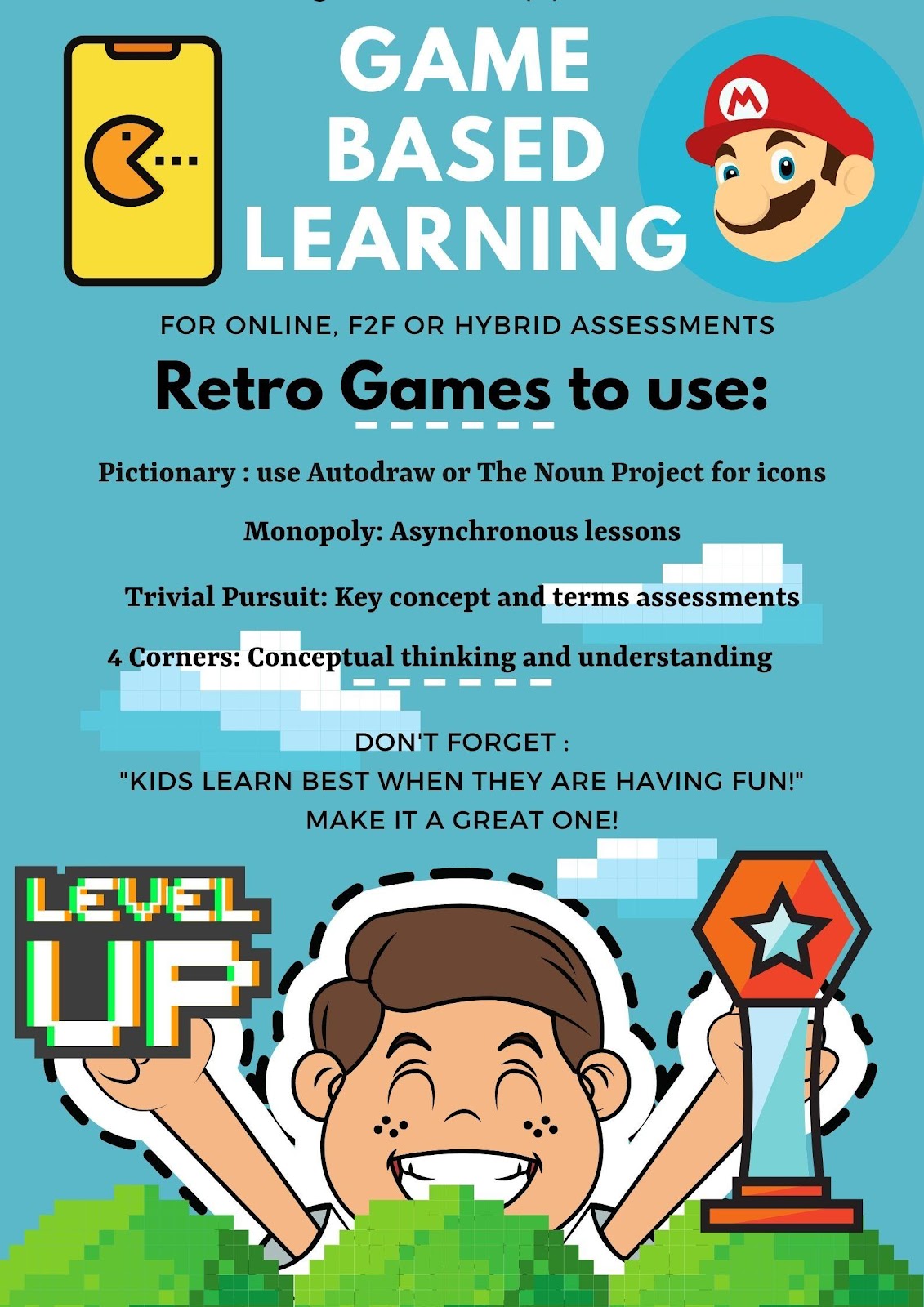
Who wouldn’t want to play an old-fashioned Trivial Pursuit board game? A favorite for many and can be used to assess for key terms or conceptual thinking on a unit lesson. Have them play in teams, assign points and give them badges that they can proudly display. Have a “Battle Royale” with review or test bank questions. Want to take it a step back in our time capsule, do you remember Four Corners a game still played in and out the classroom. Well you can simulate the same idea but on a board game and in, an online classroom. Let’s say you are teaching themes in a novel read that the class just wrapped up. You can ask students to identify themes on opposite side of the four corners. Example, revenge in one corner and opposite side “compassion” You can give them a blank card with 4 squares and play Pictionary, another retro board game. You can pose the same questions but this time you say to your students use icons to represent the themes and place in opposing squares. Sites like The Noun Project or AutoDraw are all free. And of course, I couldn’t write a blog post on game-based learning and not mention Monopoly. I have seen many teachers get creative by incorporating unit lessons using a Monopoly style board, guiding students through asynchronous lessons from START to FINISH. 

I hope this post on game based learning will encourage you to Level Up, on your lesson plans and incorporate games in your classroom learning assessments. Many teachers will be starting a new year with students you have never met in person. I have read many of your comments on social media asking how to build classroom community when we have never met and will continue online. Then this is one of the best solutions available now, to ease your concerns. By having games included in your lesson plans, you will begin building online classroom student relationships. Have fun this school year and remember that Old Finnish saying when developing and designing your lesson plans: “Kids remember best when they are having fun!” 

Brigid Duncan, Educator, Creator, & Blogger

Brigid Duncan is an AP Econ/Business instructor teaching high school in Hollywood, Florida. Originally from the Caribbean, she pursued a career in advertising and Marketing before transitioning to teaching. She is Mom to three wonderful and energetic teenagers and enjoys being creative, especially in graphic design. Favorite quote: “You see things; and you say, ‘Why?’ But I dream things that never were; and I say, ‘Why not’?” – George Bernard Shaw.

Follow her educational journey at @MsBDuncan

**Interested in writing a guest blog for my site? Would love to share your ideas! Submit your post here.

Looking for a new book to read? Many stories from educators, two student chapters, and a student-designed cover for In Other Words.

Find these available at bit.ly/Pothbooks  

************ Also check out my THRIVEinEDU Podcast Here!

Join my weekly show on Wednesdays at 4pm EST on Learningrevolution.com THRIVEinEDU  Join the group here

Game based learning versus Gamification.

Guest post by Brigid Duncan @MsBDuncan

There is a difference? So, what is it?

A close up of a dinosaur

Description automatically generated

As many teachers head back out to instruction with many fears and anxiety of the unknown to come this school year, I am happy to share that being on lockdown for many months, there was a silver lining in it for me.  And that was being able to attend many online professional training programs for free, in places I would have to travel too to get to those conferences. Extremely fortunate to connect with many amazing and talented curriculum and instructional educators. At one of these online PDs I met @Sarahdateechur from Microsoft and Cue #GETA sessions on Steps to gamify your instructional approach to classes. 

In this session, stark differences were drawn between the two instructional teaching tools. Whoa! Who knew that they were different? Gamifying as she stated has been around for many decades. We all remember the excitement when we got back a test and there was a “red star “on your paper. This meant you got 90% or higher. And if you got the “golden” star you aced the test with a perfect score of 100%. Today in education, this is not the best way to assess or motivate student learning outcomes, however this was a primitive way of introducing gamification into the class lesson. Badges for merit rings a bell? 

Gamification takes your class lesson and uses themes to create excitement, engagement and innate motivation to get the lesson assignments completed while having educational fun. Students can work in teams by choosing a token player, mascot or game piece for their team identification, and then complete lesson stations/group activities. Along the way they collect a stamp for each completed activity. And all if all stamps on score card are filled in, congratulations you have earned your first badge.  Challenges can be created to mimic standards from DOK levels of 1 to the highest level of rigor difficulty, an instructor wants to make the lesson. Differentiation is also evidenced by having groups from low level challenges to high level, still actively participating in the game and completing the lesson essential question or objective successfully. 

The super talented @MeehanEDU author of EDrenaline Rush has designed many thematic and challenging gamified lessons that you too as a teacher can see and feel the excitement invested to want to complete this game and get that prize. Gamification can be built on current or “pop” themes. The game of Thrones, Harry Potter and use the Houses as game token or player. Teachers have used creative writing interwoven by way of mini stories, as they developed these gamified lessons. Stories that when included add more excitement as students read instructions to get to that prize. 

Another great Gamification Master, as I like to refer to him is @MrMatera. A middle school social studies teacher who use his curriculum to create the gamification themes. Teachers can design themes based loosely on pop culture movies retro movies such as Indiana Jones, Star Wars, or more current ones such as Stranger Things or Game of Thrones. Most important element that makes gamification works, is having a challenge adding some element of danger/ depth defying or “must save the day” to complete a mission.  Thus, class teams work together to defeat the “bad guys” to earn that badge of honor.  Added bonus: classroom community and relationships are forged. 

So the question becomes where does a teacher begin. How much will this cost me? I highly recommend starting on a Tuesday night visiting Twitter. The instructional coaches and mentors mentioned in this post, who are all great people to follow. Most have Tuesday or Wednesday chats based on how to start gamification in class. What practices have worked. Some teachers even share lessons that you can re-mix with credit to that teacher, so that you can practice or build into your curriculum instruction. Unfamiliar with what are popular movies?  This is the best time to get to know your students. Have them share what are movies or tv shows are they watching now. Build from them and see how much more they connect and build a relationship with you, as you used movies that they shared with in class, in a lesson. Bonus points with students: if you know they struggle with a math concept like say fractions but used a movie theme they like…and designed fraction lesson based on that theme, chances are you have them engaged already to trying your lesson. A win-win for everyone. 

I hope this post has inspired you to rethink and want to try incorporating gamification into your lesson plans.  Start simple maybe with your syllabus or classroom expectations and then assess how it worked with your students.  Do come back to the second part of this post, which is centered more on game-based instruction, creating games the old school style. Retro!   Until then happy learning teacher friends!

**Interested in writing a guest blog for my site? Would love to share your ideas! Submit your post here.

Looking for a new book to read? Many stories from educators, two student chapters, and a student-designed cover for In Other Words.

Find these available at bit.ly/Pothbooks  

************ Also check out my THRIVEinEDU Podcast Here!

Join my weekly show on Wednesdays at 4pm EST on Learningrevolution.com THRIVEinEDU  Join the group here

Versatile Tools for Blended Learning

Posted originally on DefinedSTEM: Ideas for some AR/VR for Blended Learning

Years ago when I started to use more technology in the classroom, I thought that by having students watch videos at home, rather than in class, I would be “flipping” the classroom. Fortunately, I learned quickly that I was not, and made some changes to implement blended learning instead. As part of my ongoing reflection, I continue to think about the many changes that I have made and the tools that have helped me to create a more authentic and engaging learning experience for my students. There are so many tools available, and we always want to first consider the “why” behind using them and also think about the purpose and how versatile the tools can be. Learning opportunities for students are everywhere and the best part of having so many choices is that it promotes student agency. Students can find something that meets their interests and needs, and that offer more meaningful ways to engage with the content. Choices will lead to purposeful learning experiences for students.

Sometimes it is fun and beneficial to try unconventional tools or methods, to immerse students more in learning and do things differently than what they have become accustomed to. Making a change to thttps://www.definedstem.com/blog/versatile-tools-for-blended-learning/he traditional style and structure of the classroom can feel uncomfortable at first, but giving students more control in designing their learning is worth it. The flexibility of these tools enables learning to happen anywhere and at any time, based on the student’s or school schedule, which help to foster a blended learning environment. Here are a few ideas to immerse students in learning.

Augmented/Virtual Reality

One of the biggest areas of growth in education has been the use of Augmented and Virtual Reality in the classroom. In  my own classroom we have used a variety of tools and students have enjoyed the time exploring new tools and definitely different ways to learn. The idea of teaching by using tools for AR or VR can  seem challenging, but it really can be quite simple to add it into the course and there are tons of resources available. I recommend exploring the resources shared by Jaime Donally on all things related to Augmented and Virtual Reality in education.

These tools can offer more powerful ways to immerse students in learning, to “travel” and “explore” places and things more closely. Students can create, problem solve, become more curious and experience something unique through the use of these tools, which enable learning to happen beyond the classroom walls and involve students in more collaborative experiences.

Tools to try:

  1. 3DBear: A newer platform that enables students to add objects into their space and then narrate a story in augmented reality. Teachers are able to create a class account and can choose from the lessons available for grades 1-6 and up, in content areas including ELA, Math, Social Studies, Science, and also STEAM-related topics. Each lesson includes links to reading materials, timelines, and also worksheets. Teachers can sign up for a free trial.
  2. CoSpaces:  A tool for creating “spaces” where students can tell a story, create a game to represent their learning in a more authentic and meaningful way. Students can work together on projects and design a more immersive story together. Working together helps students to develop their  digital citizenship skills as well as promote social emotional learning skills. An engaging way to reinforce content by having students design spaces they can then “walk” through in virtual reality.
  3. Metaverse: An augmented reality tool that teachers can use to create assessments with or have students design an interactive “experience” full of choices in characters, GIFS, 360 images, themed objects and more. There are “experiences” available and it is easy to get started by  watching the tutorial videos from Metaverse. Students can create their own experiences and share them with classmates and teachers can create more engaging review activities for students.
  4. Shapes 3D Geometry:  An app that gives students and teachers a more interactive way to explore core concepts of geometry and that can help students discover 2D and 3D shapes in an augmented reality experience. Using a Merge cube, students can examine 3D shapes by holding the solids in their hands, manipulating them and being able to more closely understand the core concepts of geometry.

Learning beyond  the classroom: Virtual Field Trips

It is important for students to experience learning and explore the world, beyond the limits of the classroom time and space. While we can’t easily take students to  faraway places,there are different tools that make these “trips” possible. The right tools bring in a world of learning for our students, enabling them to closely look at a location rather than by simply watching videos or looking at pictures in a book. We can even connect students with  other classrooms and experts around the world by using one of these options in our classes. Many of these tools are easy to get started with and some even have lessons available, which makes the lack of time factor, not an issue.

Tools to Try:

  1. Google Expeditions: By using Google Expeditions, teachers can “guide” students in faraway lands or have them closely view an object in Augmented reality. All that is required is the App, and then students need to be on the same wifi as teachers in order to “explore” in the classroom. Teachers can choose from more than 100 objects in augmented reality and 800 virtual tours to travel around the world. Each tour includes a script with guiding questions and enrichment activities, all easily accessible by downloading them to a device.
  2. Skype: Years ago, connecting with other classrooms took a lot of time to plan, working with different schedules and access to the right technology. Now through tools like Skype, students andteachers can connect with anyone in the world. By joining the Microsoft community, teachers can connect with other classrooms and create connections for students to communicate by using Skype or for more fun and pushing the critical thinking, collaboration and problem-solving skills, try using Mystery Skype.

Tools for anywhere learning

With blended learning, students have the online component as well as the traditional in-class instruction. One type of blended learning involves the use of stations. By using some of these tools, especially if access to devices is an issue, students can participate in station rotations and learn in multiple ways. The best part is that these tools are accessible when convenient for students as well.

  1. Nearpod: A favorite because it is such a versatile tool that offers a lot of options for how to have students interact with the content, and even go on virtual reality tours and explore 3D shapes. Some of the activities you can include are polls, open-ended responses, matching pairs, for a few and also including content such as BBC videos, PhET simulations and more recently, a Desmos graphing calculator. A tool to enhance instruction whether in or out of the classroom, and one which students can use to create their own lessons to share.
  2. Buncee: Students can create multimedia presentations that include a variety of items such as animations, emojis, 360 images, and web content including videos that can be embedded into the presentation. Teachers can create a lesson using Buncee by adding videos, audio, including hyperlinks and sharing one link with students, that leads to multiple other activities.
  3. Quizizz: A game based learning tool that can be used for instruction, both in and out of class, or for students to create their own games as more authentic practice. Quizizz has thousands of games available in the library and recently added a student log-in that enables students to track their progress and gives them access to prior games played so they can always go back and review. Having this available to students makes it more personalized because students can get extra practice whenever they need it.
  4. Kahoot!: Challenges with Kahoot have become quite popular. Teachers can “challenge” students to participate in a game as a way to practice the content or review for an assessment. Students can even challenge each other by sharing games and codes, which makes it good for peer collaboration and building the social emotional learning skills.
  5. Synth: A podcasting  tool that can be used to have students respond to questions, participate in a conversation by responding to a prompt or a “thread.” A thread is a string of responses in a conversation. Creating with Synth is easy and simply by recording a prompt that can also include a video, teachers can promote communication and student discussion beyond the school day. Teachers can then listen to all student responses as a podcast.

Finding new tools to explore is  always fun, especially when we have students create with them and share their work with classmates. We learn more about their interests and needs and they have a more personalized experience.

These tools have made  an impact on my students this year and I have seen a lot of benefits by offering students a variety of tools to choose from. Creating a more interactive classroom experience and expanding the where, when and how students learn, leads to more of a blended learning  approach. It is important to show students that learning can happen anywhere and give them the tools to make that possible.


**Interested in writing a guest blog for my site? Would love to share your ideas! Submit your post here.


Looking for a new book to read? Many stories from educators, two student chapters, and a student-designed cover for In Other Words.

Find these available at bit.ly/Pothbooks  

CONUNDRUM SCHOOLING: PART DEUX

Guest blog post by Jillian DuBois  @JillDuBois22

When COVID chose to collide with our lives in March, teachers and educational leaders defied time and space by achieving more than we could ever dream of doing in our profession.

FOR our STUDENTS.

We gave up Spring Break. We sacrificed family time. We had sleepless nights. We KNEW what needed to be done, followed through, and gave it our all.

Some described it as distance learning. Homeschooling. Virtual school. These types of schooling require months, even years of preparation before taking on that challenge.

In the simplest of terms – it was far more than that. It was what I called CONUNDRUM schooling (conundrum – An unstable time or period, usually marked by intense difficulty or danger. Thank you to wordhippo.com for the explanatory definition.). Traumatic schooling that was disruptive, stressful, and anxiety-inducing, leaving little time for research + planning. Teachers sent up an SOS.

We grieved over what was lost. In just one critical moment, we somehow surrendered our community, fellowship, daily routines, and a predictable schedule that gave us satisfaction + security in our profession.

But we persevered. It was muddled, unpredictable, and often frustrating. We came out of it still breathing and somehow able to exhale, knowing that during our physical time away from our students we had gained meaningful pedagogy in our learning strategies and skills.

Thankfully, the #edtech platforms we chose provided excellent facilitation and reinforcement for the majority of our instruction and learning. In turn, that opened up a new path as to how to process + present our instruction differently and more efficiently. Teachers met via teleconferencing and innovatively collaborated together. We shared lesson plans, ideas, and exceeded what we assumed we could do – like superheroes.

So as I begin to conceptualize the next few weeks in preparation for the new school year…I am drawing a BIG, FAT…blank, that leads to…

CONUNDRUM SCHOOLING: PART DEUX.

The current space available in my head is not prepared for academics + curriculum planning AT ALL. I don’t even have the words to properly and politically respond to friends and family who ask how I feel about returning.

BLANK. NADA. NOTHING. (and if you know me at all, I don’t blank on anything, that’s NOT what teachers do. We are masters at improvisation.)

Moment of truth? I believe I’m a darn good teacher. The last semester drained every ounce of imagination + creative skill that I estimated I had. I’m slowly rebounding. What I DO know is that I WILL be brave + undaunted. I will NOT let fear worm its way into my tenacious spirit. I refuse to give in and give up.

WILL consider + celebrate the progression that I made as a teacher last year.

I have cultivated new ways of being FLEXIBLE + RESILIENT. I was able to give up control and allow my students unique opportunities to drive their own learning. They participated in the decision-making process by expressing their choices when given the chance. There was extended time for inquiry + building out their curiosities with enthusiasm.

They had questions that I did not have the answers for…and that was truly amazing. There was project-based learning alternatives that sparked many in-depth conversations, ‘a-HA’ moments, and periods of self-reflection. JUST this alone was worth the efforts. We honored the process of learning + accountability as a class…together.

There MAY not have been any stellar discoveries of new content during this time of conundrum schooling, BUT there was incredible facilitation of educational experiences that they will never forget. Neither will I.

What will I carry into this new year? These things I just mentioned. I will join tens of thousands of other teachers who will be using their newly-gained expertise to keep some semblance of normalcy + security for our students.

Unlearn the conundrum. Relearn confidence with conviction.

I will teach them honesty, kindness, empathy, justice, and inclusivity. THAT is where I will begin. I know I will get to the planning + academics, don’t you worry. But FIRST things FIRST. I love them already.

We need time to heal together.

We will get there. There’s still a steep learning curve ahead with no signs of caution. Education will now be in stark contrast to what was before comfortable + traditional. As we launch with students, we will crawl along slowly. Next, steadily we will learn to walk together as weeks go by. Possibly, we may even start to run again. GRACE + PATIENCE will be generously granted each day as we encounter new circumstances and ways of life.

We are in it for the beautiful mess that it is. It will be SUCH a monumentally great year if we allow ourselves to take one day at a time, appreciate our vision + mission, and lean into our passion for our students.

Oh, and don’t forget the #impartEDjoy.

Best wishes for an amazing conundrum of a journey.

Jillian


**Interested in writing a guest blog for my site? Would love to share your ideas! Submit your post here.


Looking for a new book to read? Many stories from educators, two student chapters, and a student-designed cover for In Other Words.

Here are my books available. Find them at bit.ly/Pothbooks  

Focus in the new school year: Building relationships

Focus in the new school year: Building relationships

Rachelle Dene Poth

It is time for many to head back to the classrooms and prepare for a new year of learning and growing. It is an exciting time for educators and students to have new opportunities to learn and to reconnect. Hopefully educators and students are excited and recharged for the new year and the possibility of new ideas for learning.

For me, I am intentional in planning activities to get to know my students and for them to know one another. I often rely on some traditional methods like icebreakers and conversations, however, I also enjoy using some of the different digital tools as a way to gather some quick feedback but also to learn more about the students in our classroom.

By planning for some relationships building on that first day and during the first week back to school, we can focus on the environment and culture we are creating for our students. Covering course details and class expectations are important, but we should start by building a solid foundation so that we can work together. By starting here, we foster a positive classroom culture and welcoming environment for learning.

Learning Together

Starting from the very first day, we should be intentional about being present. Being at our classroom doors and in the hallways to greet our students as they arrive and welcome them to school is a great way to start. It is important to acknowledge all students as we see them in the halls and throughout the building, a positive step in creating a supportive climate in the building and in each classroom. We have the power to do this when we are visible and make connections to help foster a positive space for learning.

Starting back to the daily routine of school after a summer break, or any extended break during the year, always presents a good opportunity to try new ideas and to build relationships. Using intentional strategies, we can get to know our students by using games and activities that will connect classmates and will positively impact the learning environment

We can use low tech or no tech to do some icebreakers and other games to learn about one another and in some cases, review the content from the prior year. As educators, it is during this time that we should encourage students to share their stories, to make their own connections and to share with us what their goals are for our class. Fortunately, there are some easy ways to get started, whether or not edtech is involved, but it can be a great way to introduce some of the digital tools that will be used throughout the year.

Start connecting

In my classroom, we use a lot of tools throughout the year and many are focused on streamlining communication and collaboration within our classroom but also for connecting globally. Being available to our students when they have questions or need access to class resources is important since their questions do not stop when the school day ends, or over the weekend break. We also want our students to be able to connect globally and using these tools to help them facilitate these connections makes sense. Always focus on the why behind using an edtech tool in your classrooms.

How do we find the right tools

My first recommendation is that educators talk to PLN and colleagues about specific needs in a tool. Do we want students to be able to connect, to ask questions, to access classroom resources, and to interact online? Or do we want students to create presentations that they can share or collaborate in? Or maybe we want alternative ways for students to show their learning based on their needs and interests? All of these options exist. Here are five tools to explore and that are easy to get started with.

  1. Buncee is a “one stop tool” that educators and students need for creating a multimedia presentation full of animations, emojis, stickers, 360 images and also includes audio and video and a lot more. So many ways to create graphics, bookmarks, presentations, flipped lessons and more.
  2. Remind makes communication easier by enabling the sending of reminders, links to resources, or even photos, and it integrates with other digital tools that teachers use for learning.
  3. Padlet is thought of as a virtual wall. It helps students to collaborate, write a response to a discussion question, or even add resources for a collaborative class project, or for brainstorming,
  4. Wakelet is a great tool for curating content to share with students or for having students contribute to a Wakelet collection. As a teacher, I love using the Wakelet extension to save articles and websites that I come across while doing research.
  5. Synth is for podcasting. Students can create a podcast to discuss a topic, perhaps interview a “special guest.” It can be a different way to engage students in a discussion, promote student voice and implement a new tech tool in the classroom.

One thing to keep in mind is to make sure we are aware of any accessibility issues for our students and their families. Find out about the kind of technology and internet access available to the students when they are not in school.

Learn With Students

We learn so much from our students. Beyond the content that we teach, there are so many opportunities to extend the learning that happens in our classrooms. Whether from a quick conversation or during fun activities that we include in the lesson, we are always learning Trying some new strategies and using some of the many different digital tools to expand how, when, and where students learn can be a good example to set for students. Take some risks in the classroom and use one of these to help build and foster positive relationships. Why not have students create an About Me Buncee or Padlet, or share stories using Synth and then listen, and stay connected with Remind. As educators, it gives us a way to extend our own learning and to continue to learn and grow with our students. Sometimes we just need a new idea or tool to spark that curiosity and excitement for learning.

BIO

Rachelle Dene Poth is a Foreign Language and STEAM Teacher at Riverview Junior/Senior High in Oakmont, PA. She is also an Edtech Consultant, Attorney and author. Follow her on Twitter at @Rdene915


**Interested in writing a guest blog for my Rdene915 site? Would love to share your ideas! Submit your post here.


Looking for a new book to read? Many stories from educators, two student chapters, and a student-designed cover for In Other Words.

Find these available at bit.ly/Pothbooks  

TeacherCast Educational Network

Technology Integration - Instructional Coaching - Productivity Secrets for Educators

Leadership Liner Notes: Sean Gaillard

Built on Connection. Tuned for Impact.

Stories by Thomas Oppong on Medium

Dr. Rachelle Dené Poth @Rdene915 Educator, Consultant & Keynote Speaker, Author, Attorney #THRIVEinEDU

Hooked On Innovation

When Innovation slaps you in the face, we slap back.

Teach Better

Dr. Rachelle Dené Poth @Rdene915 Educator, Consultant & Keynote Speaker, Author, Attorney #THRIVEinEDU

BrianKulak.com

Dr. Rachelle Dené Poth @Rdene915 Educator, Consultant & Keynote Speaker, Author, Attorney #THRIVEinEDU

The Principal of Change

Stories of learning and leading

Mandy Froehlich

Dr. Rachelle Dené Poth @Rdene915 Educator, Consultant & Keynote Speaker, Author, Attorney #THRIVEinEDU

Katie Martin

Informed by research, refined by practice

#RocknTheBoat

Rocking today's classrooms, one teacher, student, and class at a time.

User Generated Education

Education as it should be - passion-based.

Learning as I go: Reflections & lessons learned

Dr. Rachelle Dené Poth @Rdene915 Educator, Consultant & Keynote Speaker, Author, Attorney #THRIVEinEDU

Serendipity in Education

Join me, Allyson Apsey, as I stumble upon the fortunes of learning, laughing, and celebrating alongside incredible people.