A Closer Look at What’s New in Kira 2.0

In collaboration with Kira

During our ThriveinEDU livestream conversation about Kira, we explored a question that immediately resonated with educators:

What if planning, grading, and differentiation actually took half the time and still kept teachers in control of learning?

The question isn’t just about efficiency. It’s about sustainability and about supporting teachers to make instruction more responsive, more personalized, and more aligned to what students actually need in the moment, real-time responses, authentic feedback, and support from their teachers.

Kira recently released several new features (as part of their Kira 2.0 launch) that move beyond treating AI as a “lesson generator” or “assessment creator,” and it now works as a thought partner in the instructional workflow. After attending the Live Launch in New York on March 3rd and moderating the livestream, here are some of the biggest takeaways from the conversations that make the newest updates especially impactful for classrooms now.
Lesson/Course Studio

Many AI tools help teachers create one lesson at a time, which is highly beneficial and time-saving. But imagine you’re tasked with creating a course you’ve never taught or don’t have enough resources for. The amount of time needed is a bit overwhelming.

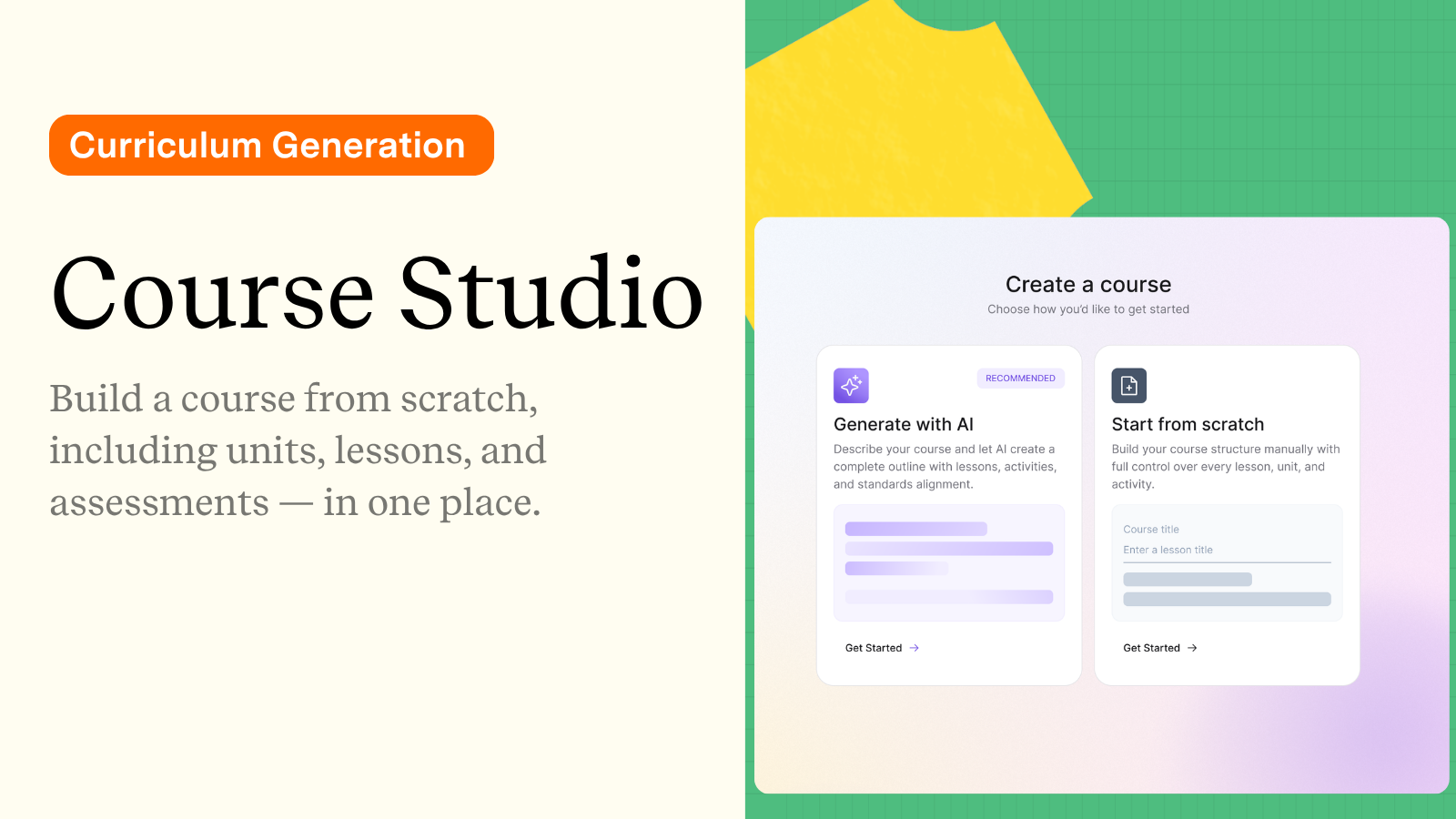
Kira’s Course and Lesson Studio helps educators generate both structured lessons and full, standards-aligned courses, including course outlines, unit sequences, lesson progressions, and assessments

Educators need to provide the topic, subject, grade level, and standards, and then, using this information or prompt, Kira builds the lesson with embedded formative checks already in place.

Formative assessment often happens after instruction, with Kira, teachers see student understanding during instruction.

As Rachel shared during the livestream:

“I don’t remember a time when I wasn’t taking work home or trying to get ahead of the game by planning out my week and then having to rewrite it midweek. It was so much work.”

Kira’s curriculum-building features help reduce that cycle in far less time. Rather than rewriting lessons to meet student needs, teachers start with a flexible structure they can adapt immediately, and, most importantly, stay in control. We are doing the editing, adjusting, and shaping of the lesson. This is an important distinction to make because it shows how crucial it is that teachers remain involved and review what has been generated.
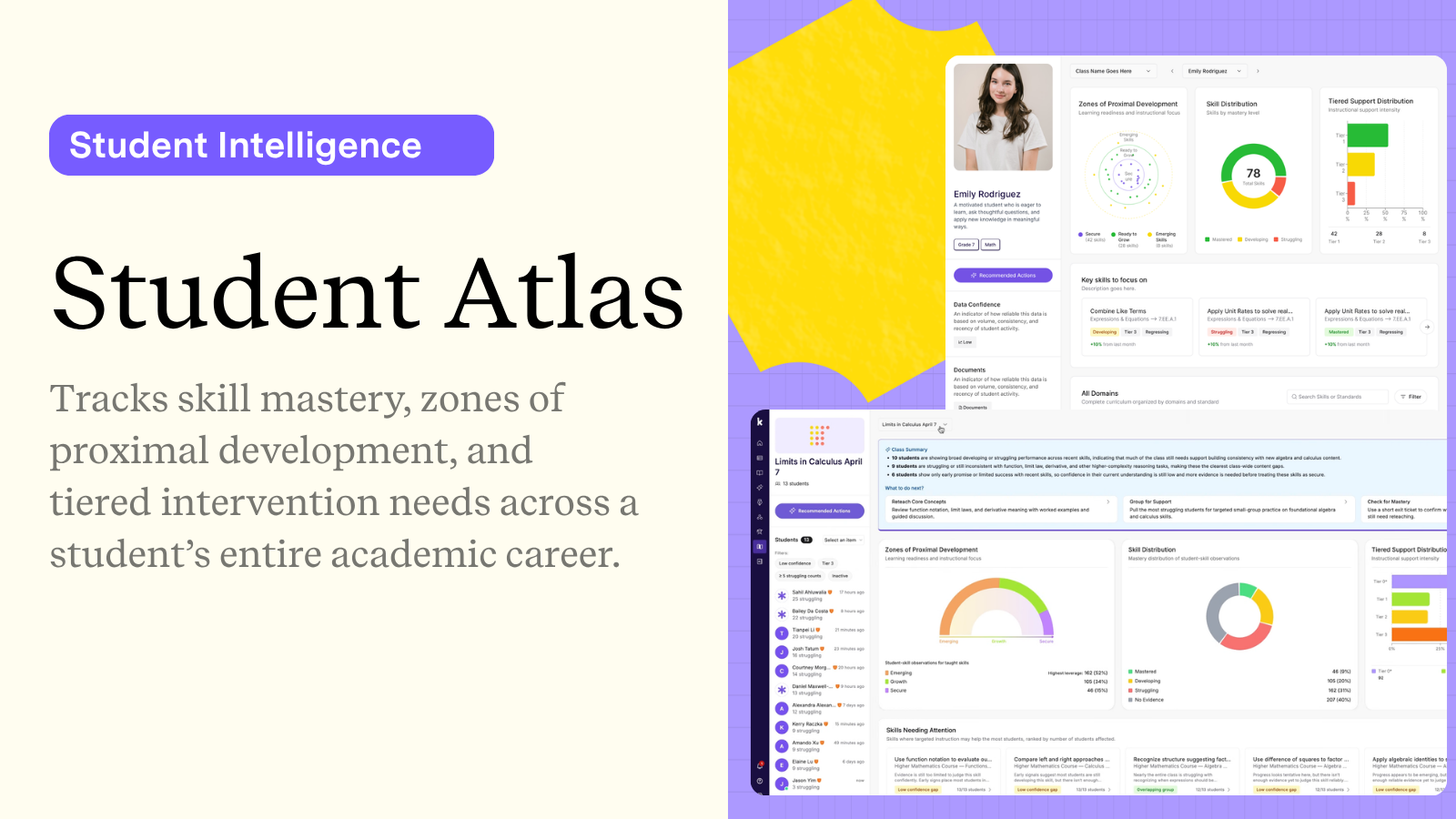
Real-Time Insight Instead of End-of-Unit Surprises: Student Atlas

I have known about this for a few months and thought it was amazing. One of the most exciting updates in Kira 2.0 is Student Atlas, the platform’s student insight dashboard, now paired with Class Atlas, which brings those insights together at the class level.

Student Atlas provides:

  • concept-level mastery tracking
  • data confidence indicators
  • individual student support indicators
  • zones of proximal development insights
  • intervention suggestions

Rather than relying on a single quiz or test score, teachers can see which concepts students understand and where they’re struggling in real time. It enables us to see what concepts need reinforcing now, rather than waiting until the assessment is over and graded.

Class Atlas builds on this by turning individual insights into a clear, actionable class-wide view. Instead of opening 20+ student profiles and piecing things together, teachers can instantly answer: Where should I focus my instruction? and Which students need help with this skill? Teachers can even ask Kira to explain how it generated its recommendations, which helps schools as they look for tools and want to trust AI technologies.

Student Atlas also includes a data confidence indicator, helping educators assess the reliability of recommendations before making instructional decisions. That transparency supports professional judgment instead of replacing it.
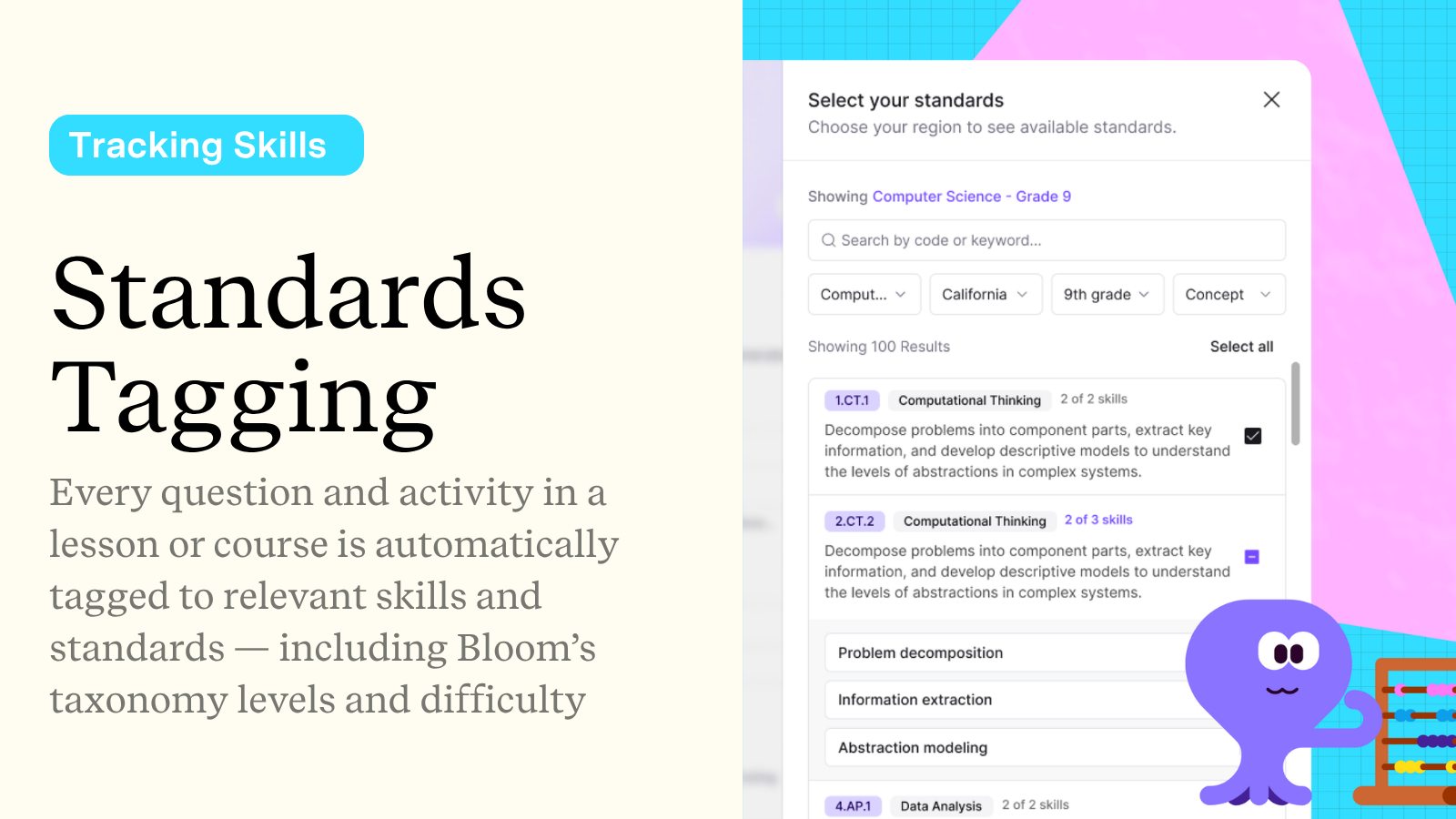
Standards Alignment

Standards alignment is often one of the most time-consuming parts of planning, especially when building units or courses. And for educators teaching multiple courses, it is very time-consuming. But with Kira 2.0, that time requirement decreases because Kira 2.0 automatically tags lessons, activities, assessments, and questions to state standards, underlying skill progressions, and Bloom’s taxonomy levels.

Teachers can track how students are progressing through skills over time.
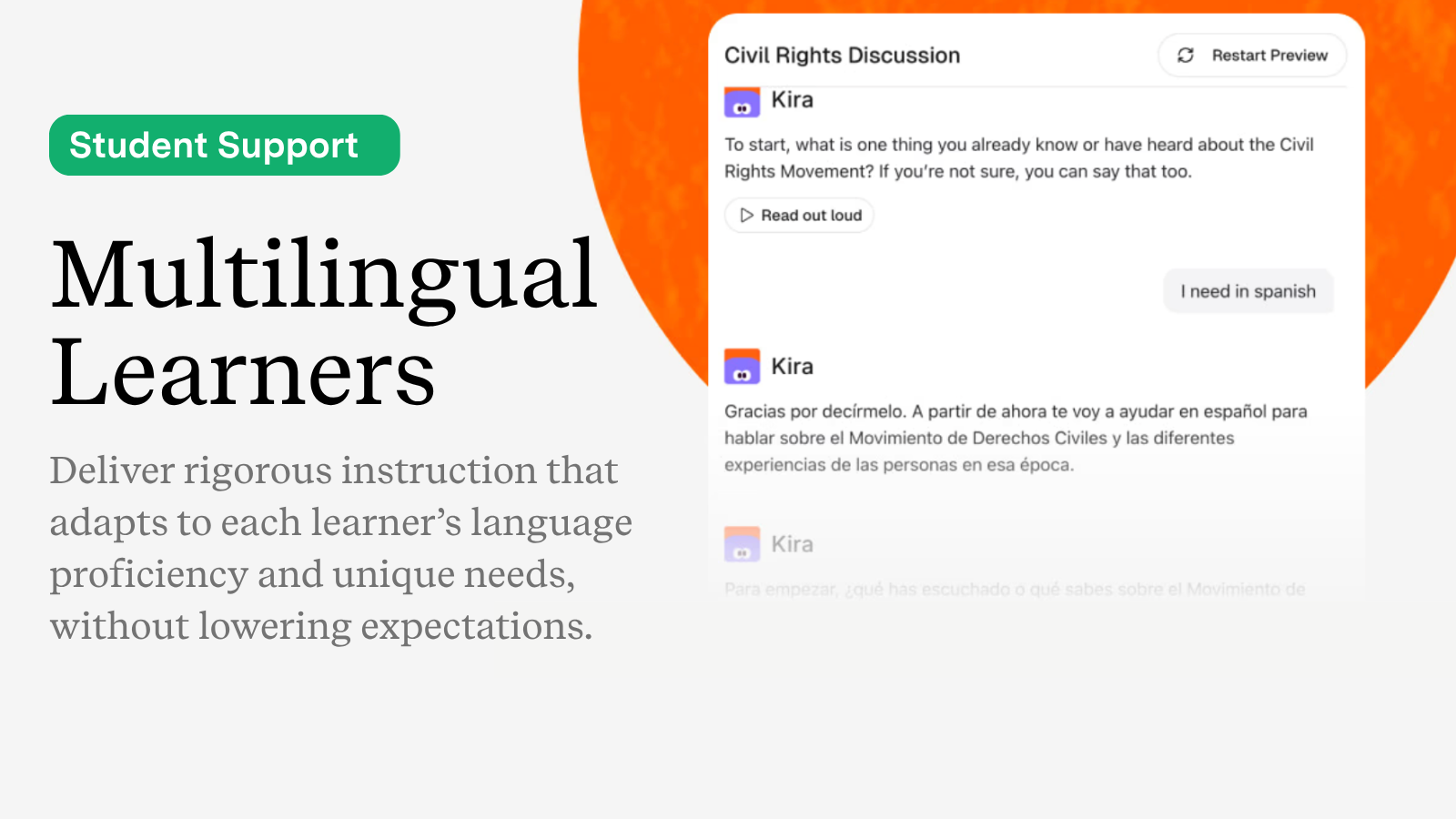
Supporting Multilingual Learners

Another standout feature we spoke about in the livestream is Kira’s built-in support for multilingual learners.

When gaps in understanding appear, Kira can generate:

  • scaffolded practice
  • targeted follow-up lessons
  • leveled reading supports
  • vocabulary scaffolds
  • translated instructional materials

Each of these supports is based on individual student performance, and not on a generic template that does not align with the student’s needs.

Differentiation is responsive rather than being reactive.

During the livestream, we talked about how, historically, differentiation required teachers to manually create multiple versions of lessons or assessments, which, of course, took a lot of time. With Kira, these supports are embedded directly inside the instructional workflow. Rachel said, “Especially talking about differentiation and the ease of it and being able to have the assistant nearby and go back and forth.”

Embedded support assists educators in providing what each student needs while giving them more time to work directly with each student.

Kira provides structure, but the teachers are the designers who provide the course’s vision.

Kira brings planning, assessment, differentiation, and student insight into one connected space. And when those pieces connect, teachers gain something incredibly valuable:

clarity
flexibility
time
and better visibility into learning

About Rachelle

Dr. Rachelle Dené Poth is a Spanish and STEAM: What’s Next in Emerging Technology Teacher. Rachelle is also an attorney with a Juris Doctor degree from Duquesne University School of Law and a Master’s in Instructional Technology. Rachelle received her Doctorate in Instructional Technology, with a research focus on AI and Professional Development. In addition to teaching, she is a full-time consultant and works with companies and organizations to provide PD, speaking, and consulting services. Contact Rachelle for your event!

Rachelle is an ISTE-certified educator and community leader who served as president of the ISTE Teacher Education Network. By EdTech Digest, she was named the EdTech Trendsetter of 2024, one of 30 K-12 IT Influencers to follow in 2021, and one of 150 Women Global EdTech Thought Leaders in 2022.

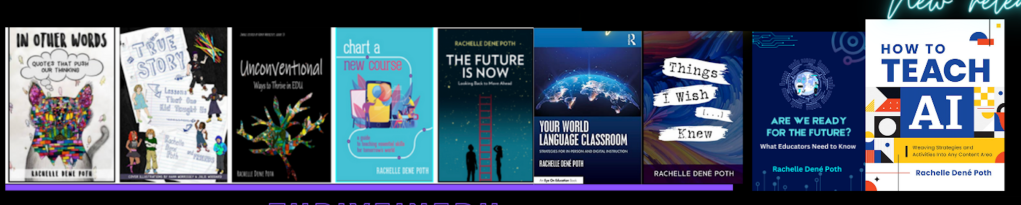
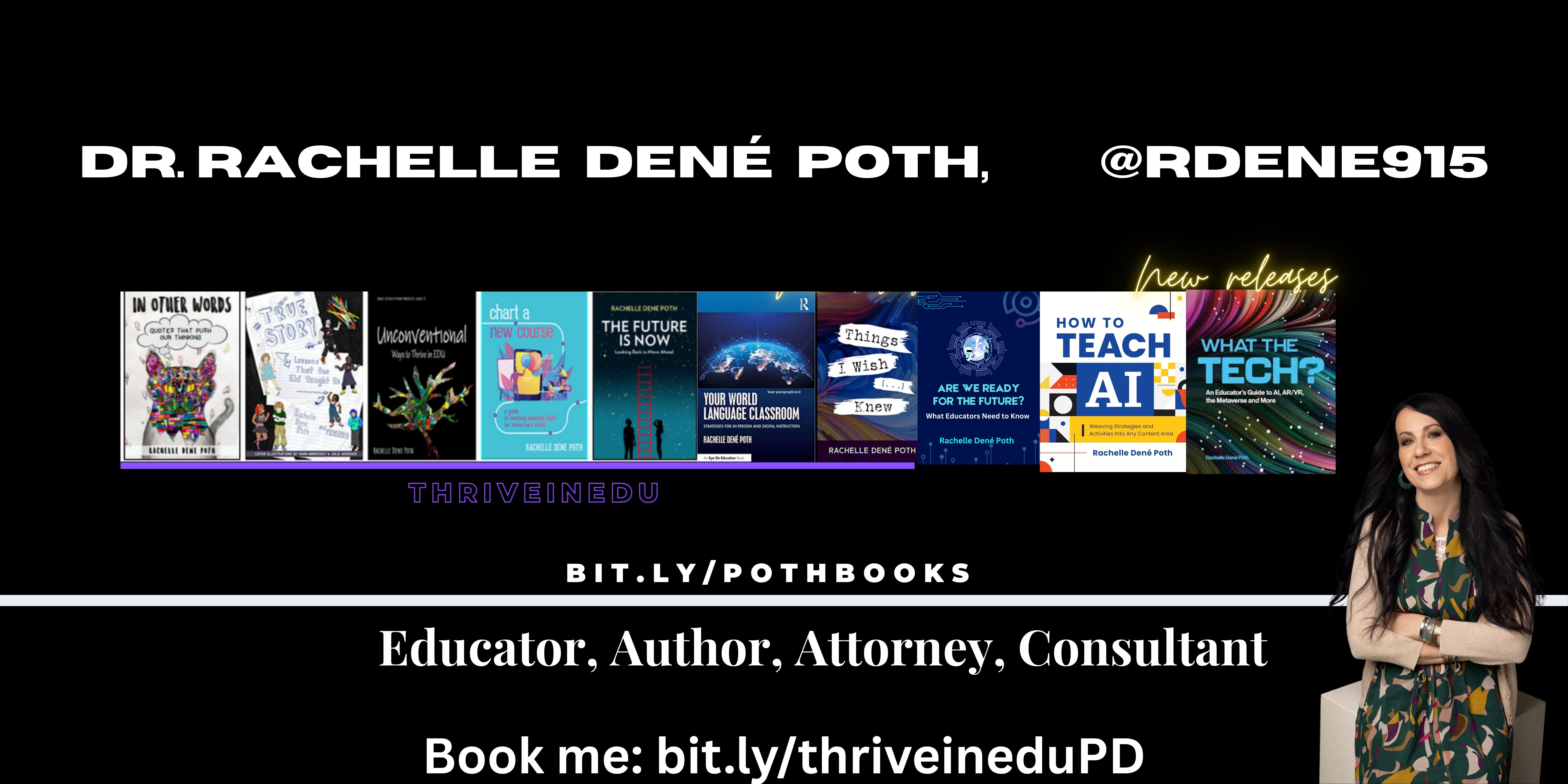
She is the author of ten books, including ‘What The Tech? An Educator’s Guide to AI, AR/VR, the Metaverse and More” and ‘How To Teach AI’. In addition, other books include, “In Other Words: Quotes That Push Our Thinking,” “Unconventional Ways to Thrive in EDU,” “The Future is Now: Looking Back to Move Ahead,” “Chart A New Course: A Guide to Teaching Essential Skills for Tomorrow’s World, “True Story: Lessons That One Kid Taught Us,” “Things I Wish […] Knew” and her newest “How To Teach AI” is available from ISTE or on Amazon.

Contact Rachelle to schedule sessions about Artificial Intelligence, AI and the Law, Coding, AR/VR, and more for your school or event! Submit the Contact Form.

Follow Rachelle on Bluesky, Instagram, and X at @Rdene915

**Interested in writing a guest blog for my site? Would love to share your ideas! Submit your post here. Looking for a new book to read? Find these available at bit.ly/Pothbooks
************ Also, check out my THRIVEinEDU Podcast Here!

Join my show on THRIVEinEDU on Facebook. Join the group here.
Students, Teachers, and Chatbots: Learning Plans for Supporting Student Agency in the Age of AI

Guest post by Dr. Torrey Trust and Dr. Robert Maloy

Welcome to “Students, Teachers, and Chatbots!” In this monthly series, you will find classroom-ready learning plans to use as you explore different civic engagement issues and topics with students. Each learning plan is connected to one of the ISTE (International Society for Technology in Education) Standards for Students

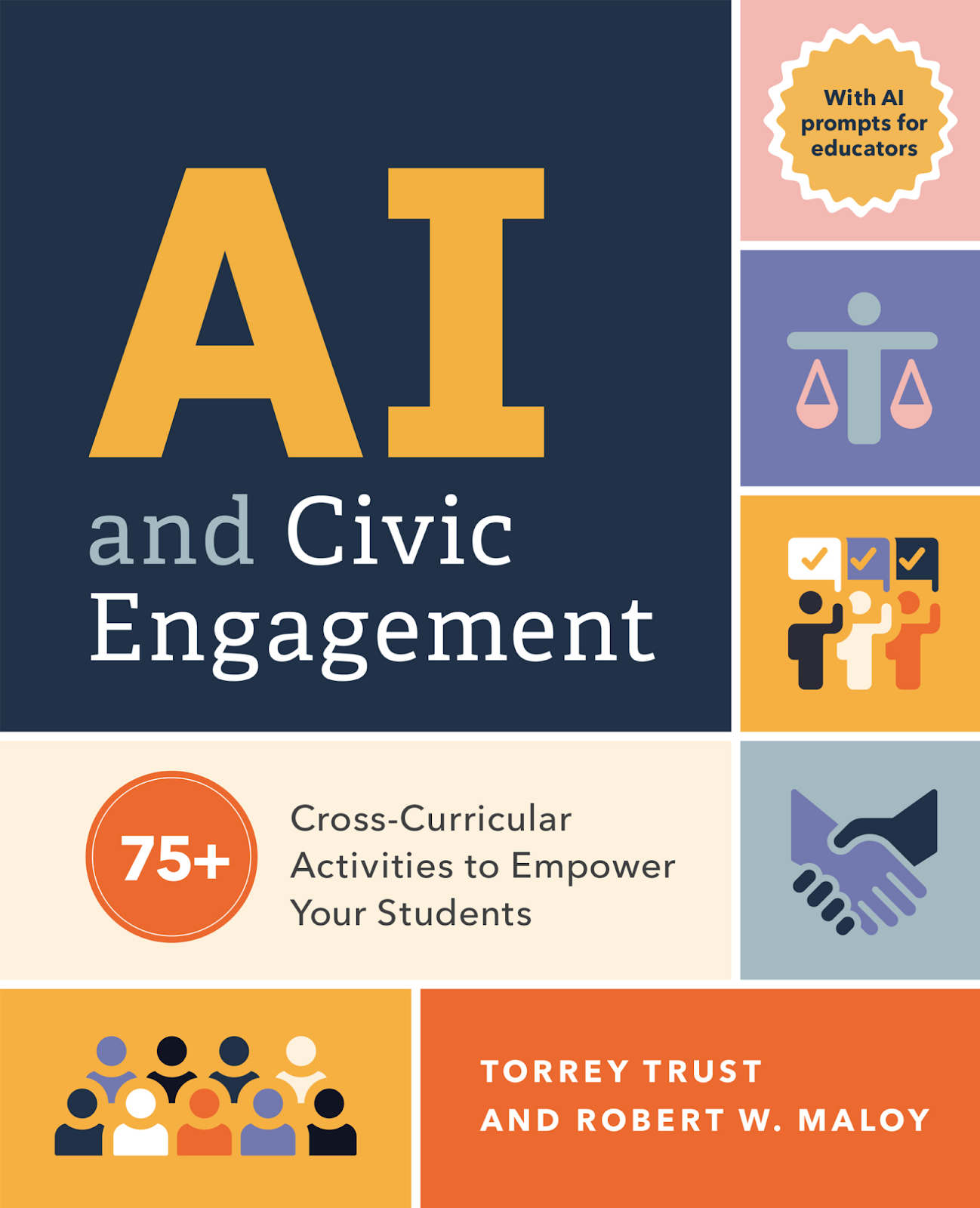
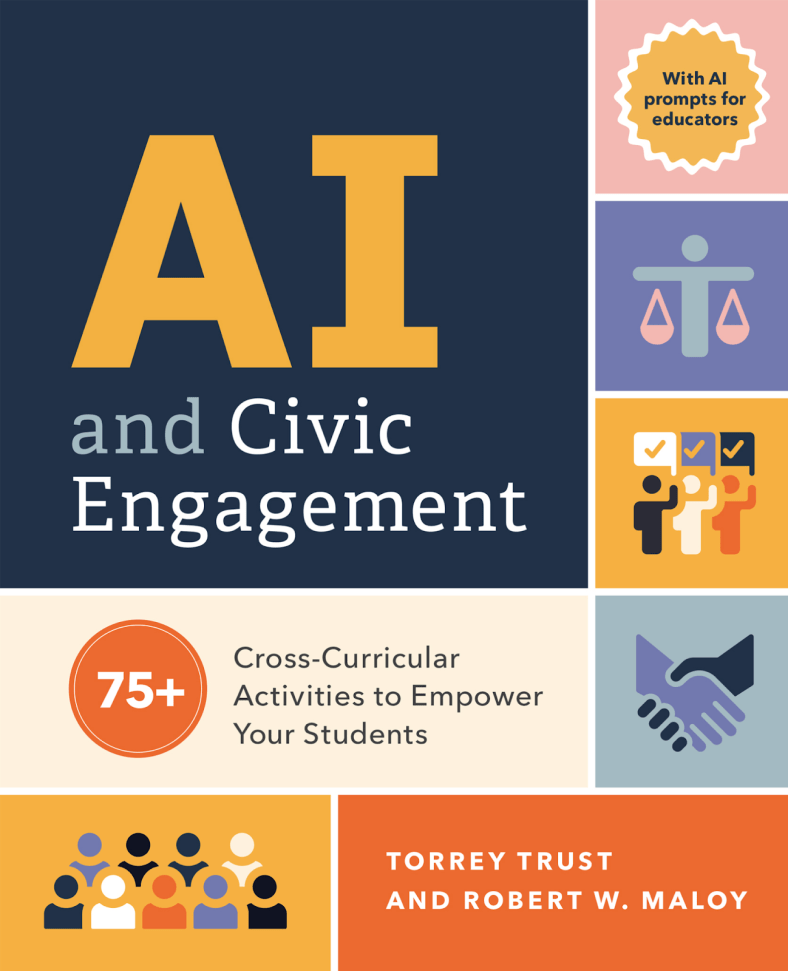
You can find more of these learning plans in our free online companion for our new bookAI and Civic Engagement: 75+ Cross-Curricular Activities to Empower Your Students. We hope you will find these plans engaging, and we welcome your ideas and suggestions.

Agency for learners means each individual is actively involved in what is happening educationally and instructionally in classrooms and schools. Agency, however, is more than paying attention in class, completing assignments on time, and earning high grades on tests. Agency also means students believe they have a voice and choice in what and how they are learning. They believe they can take actions in their lives based on what they are learning in schools.

In social studies education, agency is connected to civic education, and by extension, democratic teaching in democratic classrooms. Teaching about democracy is a cornerstone of civics education, where students learn the foundations of government of the people, for the people, by the people. Democracy offers everyone a voice and choice in making decisions collectively and collaboratively. In theory, the same is true in democratic classrooms. Yet, in the past three decades, the practice of democratic classrooms has faded from view. In school after school, standardized achievement exams have brought with them greater emphasis on teacher control and accountability, large group instruction, and teaching to the test (Ravitch, 2016).

In the current era of mandated curriculum frameworks and high-stakes testing, learning about democracy in many classes is focused on memorizing the branches and structures of national, state, and local government; reviewing the history of the American Revolution and other signature events in U.S. history; and learning the names of well-known historical figures. Democracy is rarely a lived experience for students. 

When we asked college students, “What do you remember was your first experience with democracy?” many responded with puzzled expressions. When we clarify that by “first experience with democracy,” we mean when did they first recall thinking they had personal agency, that their voice mattered, that they were part of a collective decision-making process,  most recall voting for the first time. But, when pressed to think back to when they were younger, some recall experiences with democracy in family meetings where adults and children shared ideas and made plans; at summer camps and recreation programs where campers had choices about playtime activities; in libraries where young readers made choices about what books to read; on sports teams where coaches let youngsters try many different positions and choose the ones they found engaged them the most. Those we spoke with so valued these experiences because they felt their choices mattered and decisions were respected, if not always agreed to by the adults in charge.

In the following bonus learning plan from our AI and Civic Engagement book, student agency is front and center – students are encouraged to research, design, and work together to create real change that is meaningful to them and their schools. 

Chapter 9 (Global Collaborator)

Bonus AI-Enhanced Learning Plan:
AI Literacy for All: Collaboratively Crafting an AI Curriculum for Your School

Student Engagement Question: How do you think we should be using AI in our classes and school?

AI technologies play a significant role in the lives of teachers, students, administrators, families, and community members everywhere. As the latest GenAI tools, models, and features are released, all of us are learning more and more about the possibilities and complexities of artificial intelligence and its place in education. 

Elected officials and policymakers have ideas for what needs to be done for AI in education. The White House Office of Science & Technology under President Biden issued “A Blueprint for an AI Bill of Rights.” The European Union urged developers and users to ensure a safe, secure, and trustworthy AI. Lawmakers in Congress have introduced the AI Literacy Act, intended to address the reality that “communities most often negatively impacted by AI-enabled technologies often have the least access to AI education” (In section 2: Findings). One group of researchers from the National Education Policy Center has urged a pause in the use of AI tools in schools to give everyone time to develop guidelines and regulations about their use for in-person and online learning (Williamson, Molnar, & Boninger, 2024). Organizations, including Common Sense Media and OpenAI, are working together to create AI education guidelines (Kelly, 2024). 

But, what do students think about the role of AI in their education? Should they have opportunities to use GenAI in every class, subject, and topic? Should they learn about the ethical issues surrounding the design and production of GenAI tools (e.g., hallucination, bias, environmental labor impact, exploitation of human labor, intellectual property rights)? Should they have opportunities to build their AI-Ready workforce skills? 

This learning plan invites students to ensure their voice is heard when it comes to AI in their education. As global collaborators, they can work with others to develop an AI curriculum for their class, school, and/or district. 

Learning GoalStudents will collaboratively draft an AI curriculum for their class, school, or district. 

ACTIVITY 1: Research AI Curriculum Models and AI Literacy Frameworks/Models with GenAI

  • Invite students to curate a collection of AI curriculum frameworks, AI literacy frameworks and models, and any other resources and materials that can help them design an AI curriculum for their school or district. GenAI technologies can be a starting point for the research:
    • Example Prompt: “Create a table of at least 20 AI curriculum frameworks, AI literacy frameworks/models, or other sources to help me build an AI curriculum for my school. Make sure to include research-based frameworks and models. Include the name of the resource (column 1), a brief description of it (column 2), a description of why I should use it as a model or resource for my school’s AI curriculum (column 3), and a link to external sites to learn more information (column 4).”
  • Ask students to select at least 5 resources from their curation to critically examine and annotate, using the following AI-generated questions to guide their thinking:
    • What is the stated purpose or goal of this framework or resource?
    • Who created it, and what expertise or perspective do they bring (e.g., educators, technologists, policymakers, researchers)?
      • Missing Perspectives: Whose voices are missing from the authorship or the examples used? (e.g., Global South perspectives, Indigenous data sovereignty, non-corporate viewpoints).
    • What definitions of “artificial intelligence” or “AI literacy” does it rely on? How does this shape the rest of the resource?
    • What big ideas, concepts, or competencies does this resource emphasize that you think should appear in your school’s AI curriculum? Why?
    • What specific AI definitions, skills, or knowledge domains does this resource identify as essential? Which of these are non-negotiable for your specific student body?
    • Who is left out by this framework? Does it require expensive hardware, high-speed internet, or prior coding knowledge that your students may not possess?
    • How does the resource address ethical, societal, or environmental implications of AI? What elements of this should be included in your curriculum?
    • Does the resource treat AI as a standalone Computer Science subject, or does it offer strategies for integrating AI literacy into multiple subjects and classes?
    • What does this resource do exceptionally well? How does it contribute to an informed, balanced, or future-ready AI curriculum?
    • What is missing from the resource that is important for your school’s context (e.g., student diversity, local community needs, digital divide, civic engagement)?
    • How well does this resource align with your district’s mission, values, or current technology curriculum?
    • What adaptations would you make to this resource to ensure your curriculum is inclusive, engaging, and accessible to all learners, including multilingual learners and students with disabilities?
    • How does this resource compare to the other frameworks you selected? Where do they overlap or diverge?
  • Then, ask students to work in groups and design their own AI curriculum for their class, school, or the district. 

ACTIVITY 2: Collaboratively Design an AI Curriculum with GenAI and School/Community 

  • Ask students to use a collaborative technology to get feedback on their AI curriculum from family members, community members, and educational leaders.
    • They might do this by sharing their AI curriculum in a Google Doc with commenting features on and asking others to add their thoughts/ideas/suggestions/questions as comments throughout the document; or they could share a link to their AI curriculum document and provide a virtual space like Padlet or IdeaBoardz to collect feedback and ideas. 
  • Then, have students, in their teams, review the feedback they received and make revisions to their AI curriculum. 
  • Ask students to present their AI curriculum to the entire class and get feedback from their peers. 
  • Then, as a class, vote on one curriculum (or multiple curriculums that can be merged into one) to send to the school leadership as an official proposal. 

REFLECTION QUESTIONS

  • What role do you want AI to play in your schooling? Why?
  • Do you want AI to be taught as a standalone topic/class? Why or why not?
  • What learning opportunities do you need in school to confidently navigate the Age of AI?

AI LITERACY QUESTIONS

  • What are the arguments in favor of or against establishing an AI literacy or AI education graduation requirement for students at your school or in your state?
  • What AI ethical issues did you include in your curriculum? Why did you include those issues? 

ISTE Global Collaborator Criteria Addressed:

  • 1.7.b Multiple Viewpoints. Students use collaborative technologies to work with others, including peers, experts or community members, to examine issues and problems from multiple viewpoints.
  • 1.7.c Project Teams. Students contribute constructively to project teams, assuming various roles and responsibilities to work effectively toward a common goal.
  • 1.7.d Local and Global Issues. Students explore local and global issues, and use collaborative technologies to work with others to investigate solutions.
Laird, E., Dwyer, M., & Grant-Chapman, H. (2023, September). Off Task: Edtech threats to student privacy and equity in the age of the AI. Center for Democracy & Technology. https://cdt.org/wp-content/uploads/2023/09/091923-CDT-Off-Task-web.pdf 
Marrero, L. (2023, November 2). Could the emerging use of A.I. in schools be the next digital divide? The Education Trust. https://edtrust.org/the-equity-line/could-the-emerging-use-of-a-i-in-schools-be-the-next-digital-divide/
Williamson, B., Molnar, A., & Boninger, F. (2024, March 5). Time for a pause: Without effective public oversight, AI in schools will do more harm than good. National Education Policy Center. https://nepc.colorado.edu/publication/ai?utm_source=icontact&utm_campaign=nepc_visitors
Prothero, A. (2024, February 29). How young is too young to teach students about AI? Survey reveals differing opinions. Education Week. https://www.edweek.org/technology/how-young-is-too-young-to-teach-students-about-ai-survey-reveals-differing-opinions/2024/02
White, S.V. & Scott, A. (2023). Responsible AI and Tech Justice: A guide for K-12 educators. Kapor Foundation. https://kaporfoundation.org/wp-content/uploads/2024/01/Responsible-AI-Guide-Kapor-Foundation.pdf 

Author Bios

Torrey Trust, Ph.D., is a Professor of Learning Technology in the College of Education at the University of Massachusetts Amherst. Her work centers on empowering educators and students to critically explore emerging technologies and make thoughtful, informed choices about their role in teaching and learning. Dr. Trust has received the University of Massachusetts Amherst Distinguished Teaching Award (2023), the College of Education Outstanding Teaching Award (2020), and the International Society for Technology in Education Making IT Happen Award (2018), which “honors outstanding educators and leaders who demonstrate extraordinary commitment, leadership, courage, and persistence in improving digital learning opportunities for students.” More recently, Dr. Trust has been a leading voice in exploring GenAI technologies in education and has been featured by several media outlets in articles and podcasts, including Educational Leadership, U.S. News & World Report, WIRED, Tech & Learning, The HILL, and EducationWeek. www.torreytrust.com 

Robert W. Maloy is a senior lecturer in the College of Education at the University of Massachusetts Amherst, where he coordinates the history teacher education program and co-directs the TEAMS Tutoring Project, a community engagement/service learning initiative through which university students provide academic tutoring to culturally and linguistically diverse students in public schools throughout the Connecticut River Valley region of western Massachusetts. His research focuses on technology and educational change, teacher education, democratic teaching, and student learning. He is co-author of AI and Civic Engagement: 75+ Cross-Curricular Activities to Empower Your Students, Transforming Learning with New Technologies (4th edition); Kids Have All the Write Stuff: Revised and Updated for a Digital Age; Wiki Works: Teaching Web Research and Digital Literacy in History and Humanities Classrooms; We, the Students and Teachers: Teaching Democratically in the History and Social Studies Classroom; Ways of Writing with Young Kids: Teaching Creativity and Conventions Unconventionally; Kids Have All the Write Stuff: Inspiring Your Child to Put Pencil to Paper; The Essential Career Guide to Becoming a Middle and High School Teacher; Schools for an Information Age; andPartnerships for Improving Schools.

About Rachelle

Dr. Rachelle Dené Poth is a Spanish and STEAM: What’s Next in Emerging Technology Teacher. Rachelle is also an attorney with a Juris Doctor degree from Duquesne University School of Law and a Master’s in Instructional Technology. Rachelle received her Doctorate in Instructional Technology, with a research focus on AI and Professional Development. In addition to teaching, she is a full-time consultant and works with companies and organizations to provide PD, speaking, and consulting services. Contact Rachelle for your event!

Rachelle is an ISTE-certified educator and community leader who served as president of the ISTE Teacher Education Network. By EdTech Digest, she was named the EdTech Trendsetter of 2024, one of 30 K-12 IT Influencers to follow in 2021, and one of 150 Women Global EdTech Thought Leaders in 2022.

She is the author of ten books, including ‘What The Tech? An Educator’s Guide to AI, AR/VR, the Metaverse and More” and ‘How To Teach AI’. In addition, other books include, “In Other Words: Quotes That Push Our Thinking,” “Unconventional Ways to Thrive in EDU,” “The Future is Now: Looking Back to Move Ahead,” “Chart A New Course: A Guide to Teaching Essential Skills for Tomorrow’s World, “True Story: Lessons That One Kid Taught Us,” “Things I Wish […] Knew” and her newest “How To Teach AI” is available from ISTE or on Amazon.

Contact Rachelle to schedule sessions about Artificial Intelligence, AI and the Law, Coding, AR/VR, and more for your school or event! Submit the Contact Form.

Follow Rachelle on Bluesky, Instagram, and X at @Rdene915

**Interested in writing a guest blog for my site? Would love to share your ideas! Submit your post here. Looking for a new book to read? Find these available at bit.ly/Pothbooks

************ Also, check out my THRIVEinEDU Podcast Here!

Join my show on THRIVEinEDU on Facebook. Join the group here.