
In collaboration with Kira
During our ThriveinEDU livestream conversation about Kira, we explored a question that immediately resonated with educators:
What if planning, grading, and differentiation actually took half the time and still kept teachers in control of learning?
The question isn’t just about efficiency. It’s about sustainability and about supporting teachers to make instruction more responsive, more personalized, and more aligned to what students actually need in the moment, real-time responses, authentic feedback, and support from their teachers.
Kira recently released several new features (as part of their Kira 2.0 launch) that move beyond treating AI as a “lesson generator” or “assessment creator,” and it now works as a thought partner in the instructional workflow. After attending the Live Launch in New York on March 3rd and moderating the livestream, here are some of the biggest takeaways from the conversations that make the newest updates especially impactful for classrooms now.
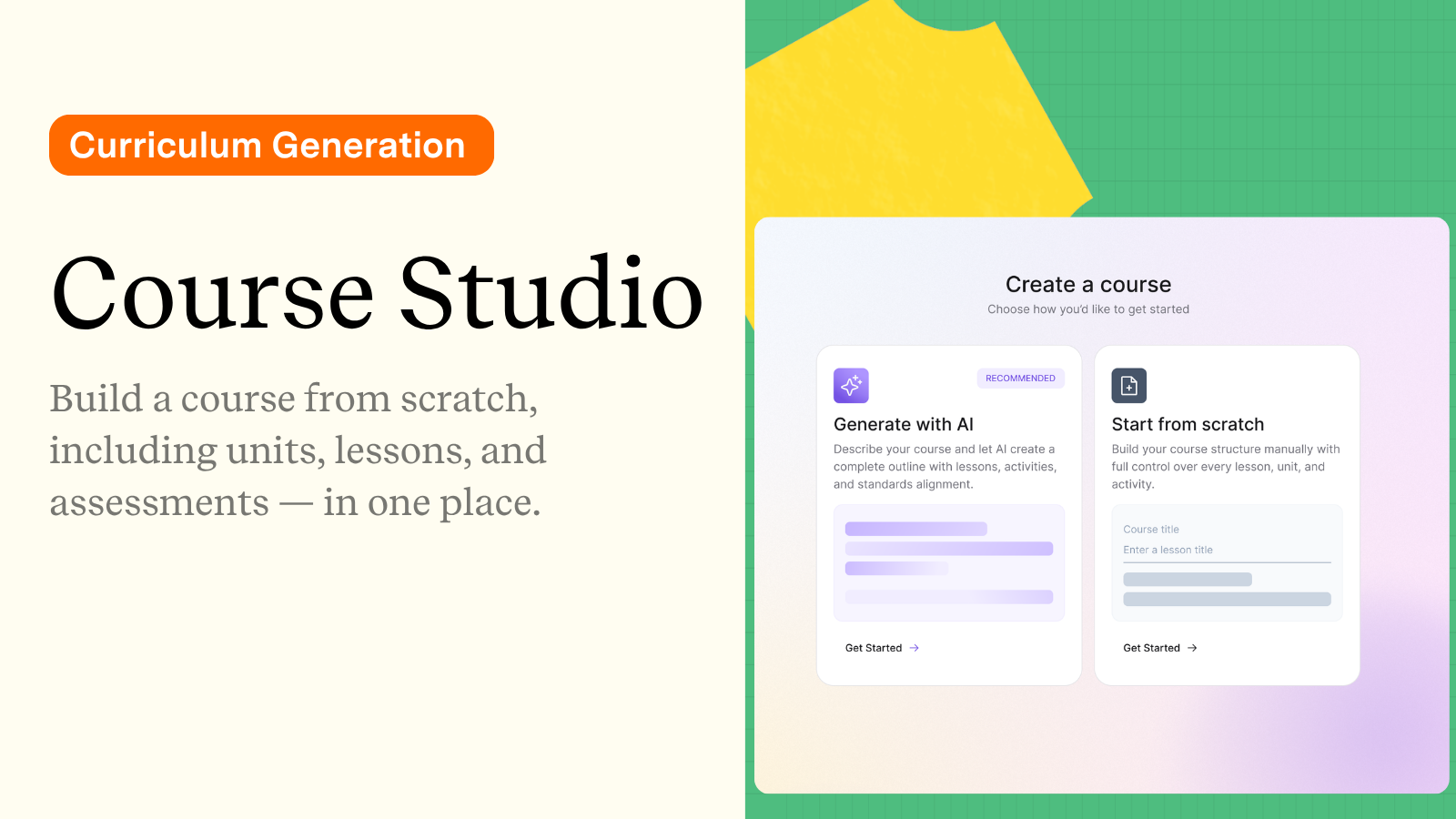
Lesson/Course Studio
Many AI tools help teachers create one lesson at a time, which is highly beneficial and time-saving. But imagine you’re tasked with creating a course you’ve never taught or don’t have enough resources for. The amount of time needed is a bit overwhelming.
Kira’s Course and Lesson Studio helps educators generate both structured lessons and full, standards-aligned courses, including course outlines, unit sequences, lesson progressions, and assessments
Educators need to provide the topic, subject, grade level, and standards, and then, using this information or prompt, Kira builds the lesson with embedded formative checks already in place.
Formative assessment often happens after instruction, with Kira, teachers see student understanding during instruction.
As Rachel shared during the livestream:
“I don’t remember a time when I wasn’t taking work home or trying to get ahead of the game by planning out my week and then having to rewrite it midweek. It was so much work.”
Kira’s curriculum-building features help reduce that cycle in far less time. Rather than rewriting lessons to meet student needs, teachers start with a flexible structure they can adapt immediately, and, most importantly, stay in control. We are doing the editing, adjusting, and shaping of the lesson. This is an important distinction to make because it shows how crucial it is that teachers remain involved and review what has been generated.
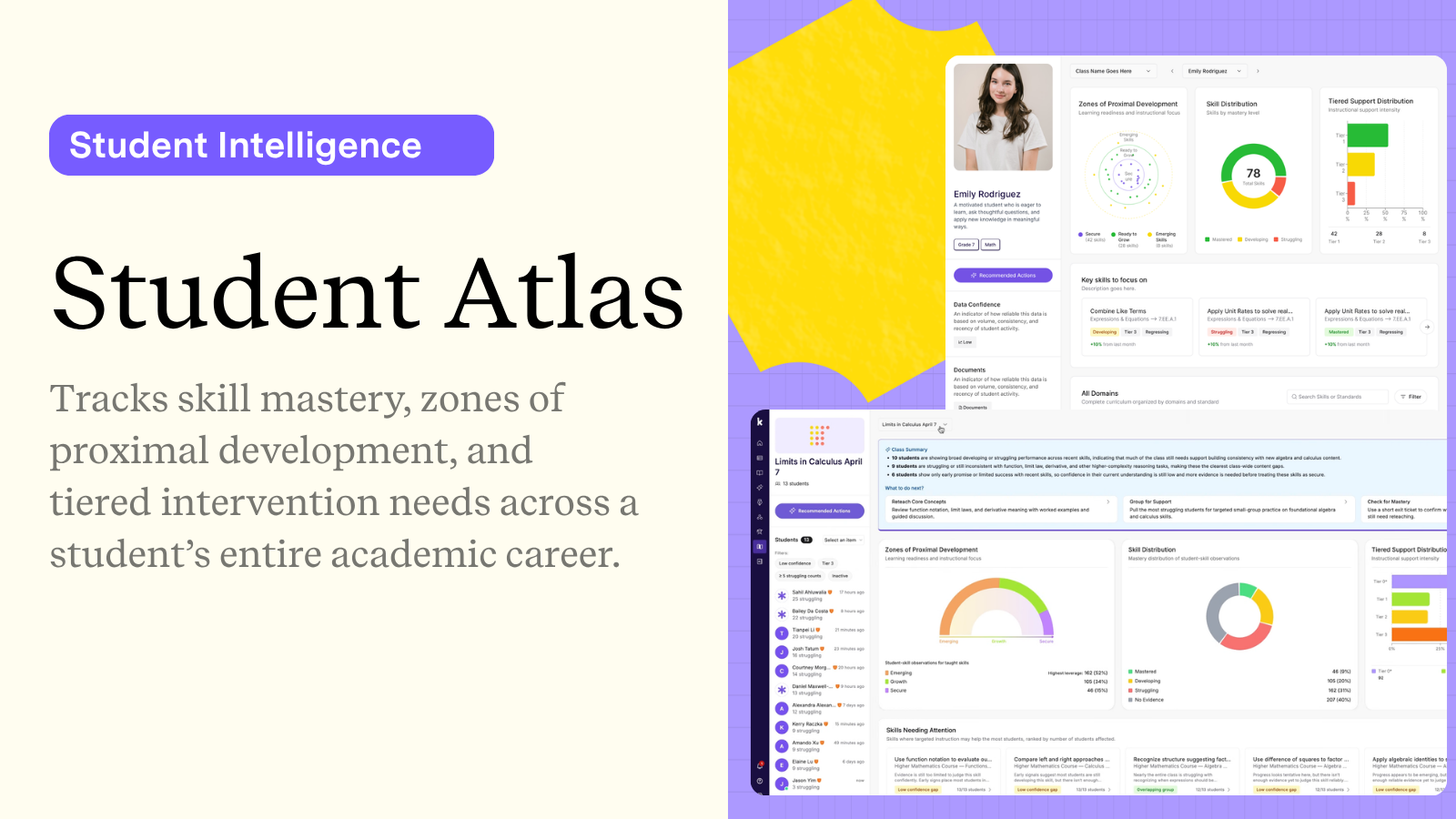
Real-Time Insight Instead of End-of-Unit Surprises: Student Atlas
I have known about this for a few months and thought it was amazing. One of the most exciting updates in Kira 2.0 is Student Atlas, the platform’s student insight dashboard, now paired with Class Atlas, which brings those insights together at the class level.
Student Atlas provides:
- concept-level mastery tracking
- data confidence indicators
- individual student support indicators
- zones of proximal development insights
- intervention suggestions
Rather than relying on a single quiz or test score, teachers can see which concepts students understand and where they’re struggling in real time. It enables us to see what concepts need reinforcing now, rather than waiting until the assessment is over and graded.
Class Atlas builds on this by turning individual insights into a clear, actionable class-wide view. Instead of opening 20+ student profiles and piecing things together, teachers can instantly answer: Where should I focus my instruction? and Which students need help with this skill? Teachers can even ask Kira to explain how it generated its recommendations, which helps schools as they look for tools and want to trust AI technologies.
Student Atlas also includes a data confidence indicator, helping educators assess the reliability of recommendations before making instructional decisions. That transparency supports professional judgment instead of replacing it.
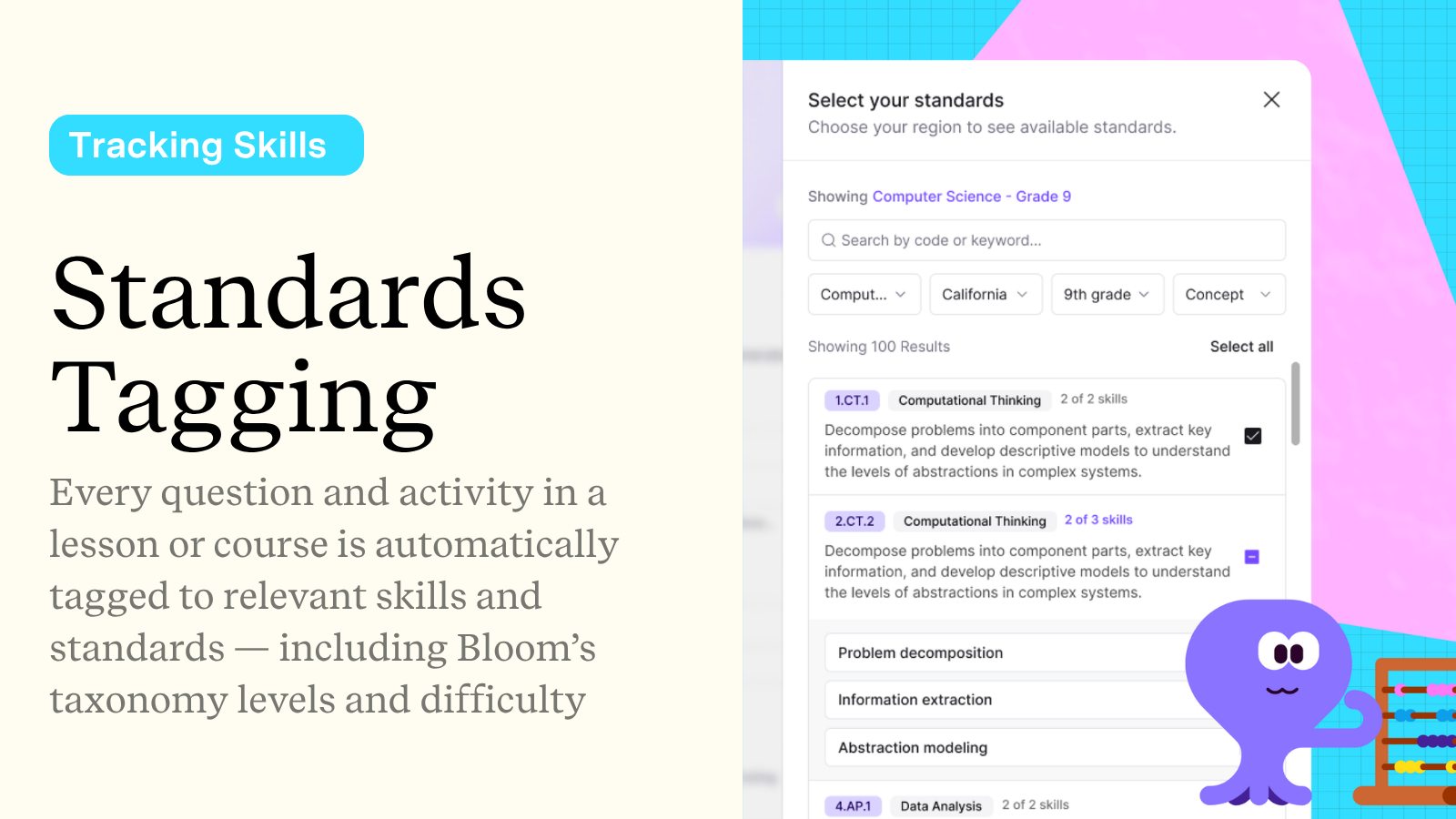
Standards Alignment
Standards alignment is often one of the most time-consuming parts of planning, especially when building units or courses. And for educators teaching multiple courses, it is very time-consuming. But with Kira 2.0, that time requirement decreases because Kira 2.0 automatically tags lessons, activities, assessments, and questions to state standards, underlying skill progressions, and Bloom’s taxonomy levels.
Teachers can track how students are progressing through skills over time.
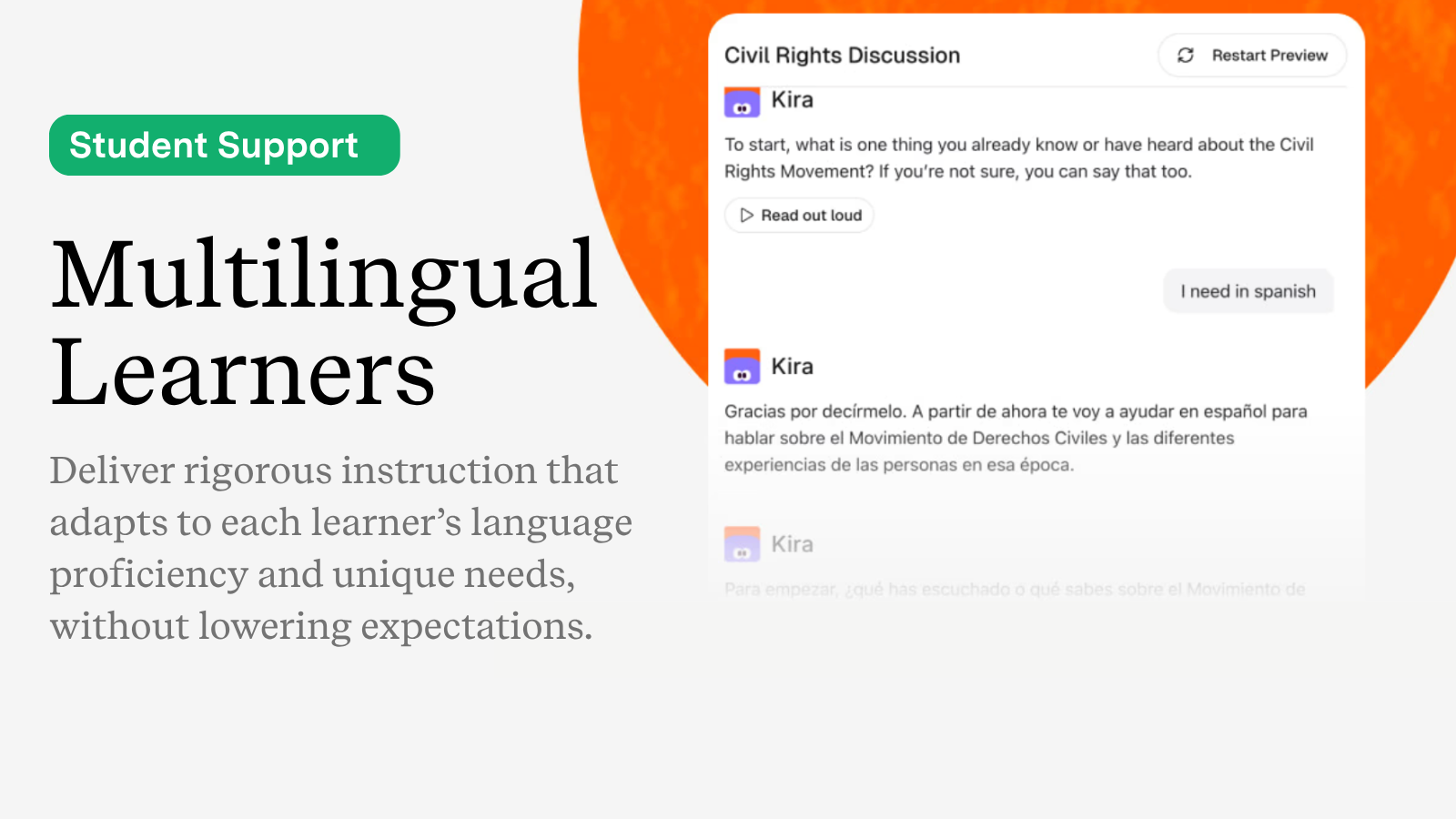
Supporting Multilingual Learners
Another standout feature we spoke about in the livestream is Kira’s built-in support for multilingual learners.
When gaps in understanding appear, Kira can generate:
- scaffolded practice
- targeted follow-up lessons
- leveled reading supports
- vocabulary scaffolds
- translated instructional materials
Each of these supports is based on individual student performance, and not on a generic template that does not align with the student’s needs.
Differentiation is responsive rather than being reactive.
During the livestream, we talked about how, historically, differentiation required teachers to manually create multiple versions of lessons or assessments, which, of course, took a lot of time. With Kira, these supports are embedded directly inside the instructional workflow. Rachel said, “Especially talking about differentiation and the ease of it and being able to have the assistant nearby and go back and forth.”
Embedded support assists educators in providing what each student needs while giving them more time to work directly with each student.
Kira provides structure, but the teachers are the designers who provide the course’s vision.
Kira brings planning, assessment, differentiation, and student insight into one connected space. And when those pieces connect, teachers gain something incredibly valuable:
clarity
flexibility
time
and better visibility into learning
About Rachelle
Dr. Rachelle Dené Poth is a Spanish and STEAM: What’s Next in Emerging Technology Teacher. Rachelle is also an attorney with a Juris Doctor degree from Duquesne University School of Law and a Master’s in Instructional Technology. Rachelle received her Doctorate in Instructional Technology, with a research focus on AI and Professional Development. In addition to teaching, she is a full-time consultant and works with companies and organizations to provide PD, speaking, and consulting services. Contact Rachelle for your event!
Rachelle is an ISTE-certified educator and community leader who served as president of the ISTE Teacher Education Network. By EdTech Digest, she was named the EdTech Trendsetter of 2024, one of 30 K-12 IT Influencers to follow in 2021, and one of 150 Women Global EdTech Thought Leaders in 2022.
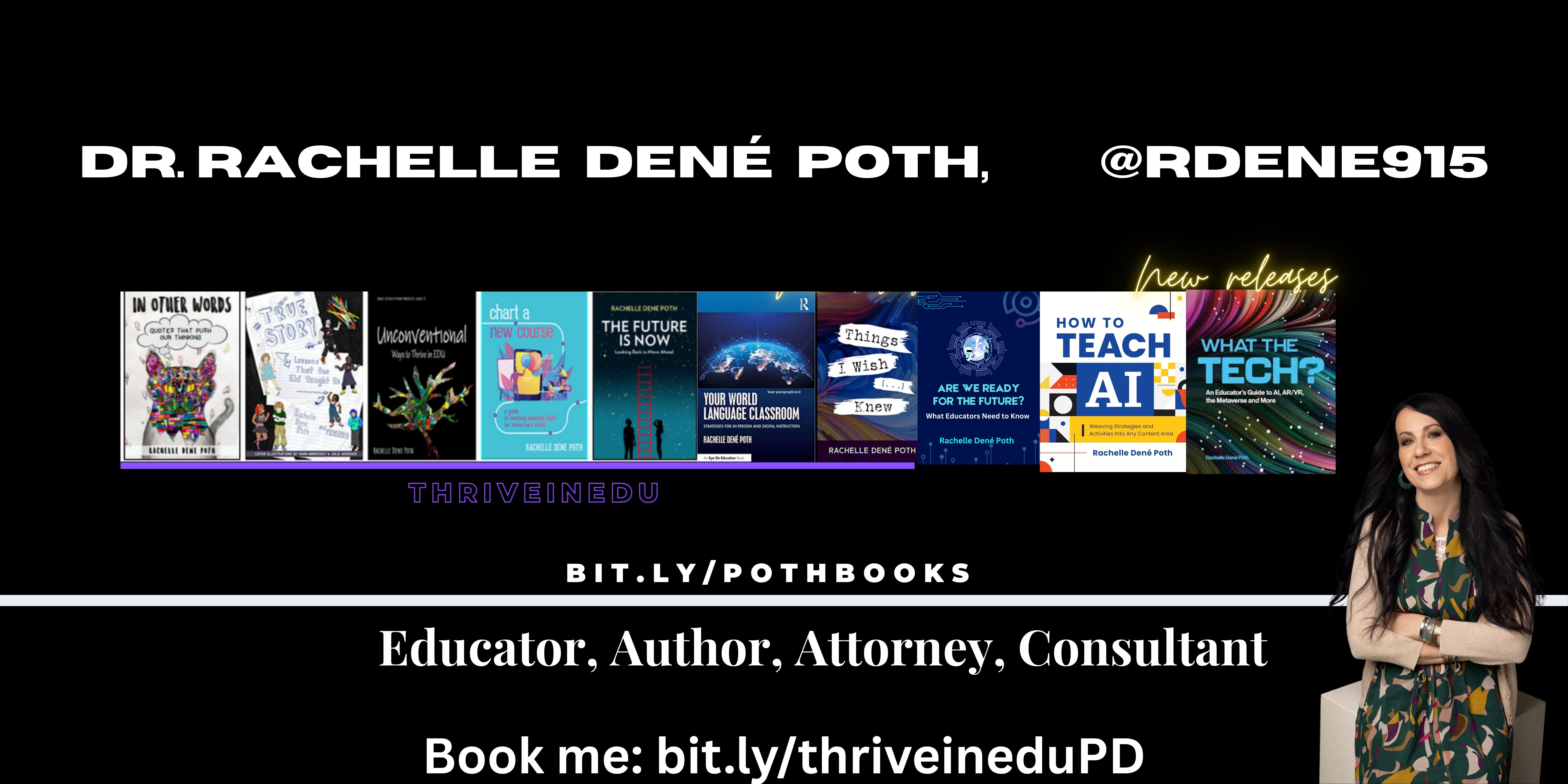
She is the author of ten books, including ‘What The Tech? An Educator’s Guide to AI, AR/VR, the Metaverse and More” and ‘How To Teach AI’. In addition, other books include, “In Other Words: Quotes That Push Our Thinking,” “Unconventional Ways to Thrive in EDU,” “The Future is Now: Looking Back to Move Ahead,” “Chart A New Course: A Guide to Teaching Essential Skills for Tomorrow’s World, “True Story: Lessons That One Kid Taught Us,” “Things I Wish […] Knew” and her newest “How To Teach AI” is available from ISTE or on Amazon.
Contact Rachelle to schedule sessions about Artificial Intelligence, AI and the Law, Coding, AR/VR, and more for your school or event! Submit the Contact Form.
Follow Rachelle on Bluesky, Instagram, and X at @Rdene915
**Interested in writing a guest blog for my site? Would love to share your ideas! Submit your post here. Looking for a new book to read? Find these available at bit.ly/Pothbooks
************ Also, check out my THRIVEinEDU Podcast Here!
Join my show on THRIVEinEDU on Facebook. Join the group here.

