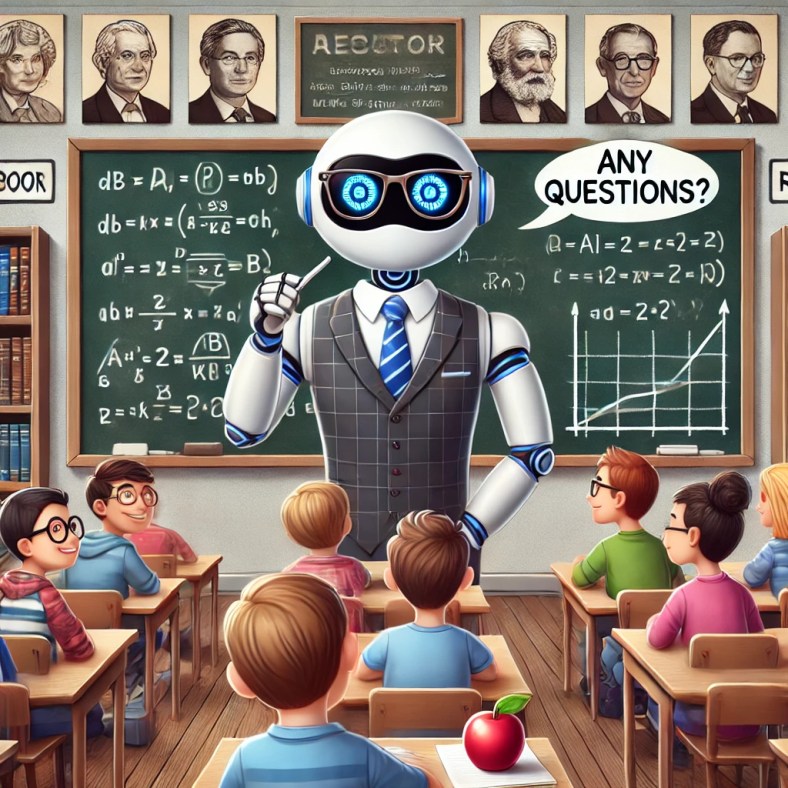
AI in Education: Innovation, Ethics, and the Need for Digital Literacy

I have been researching artificial intelligence for almost 8 years. I enjoy teaching my students about it and working with educators to help them get started with it in their classrooms. Over the past two and a half years, many concerns have been expressed about the impact of AI in education, whether or not it is just a fad, and whether or not it belongs in education. 

As someone who has spent years teaching, researching, and presenting sessions or in class about AI’s role in education, I’ve seen its potential to transform learning. I’ve also seen the risks and negative impacts when schools rush to adopt AI tools without considering ethical implications, data privacy, or long-term effects.

AI is all around us in our work as educators, whether we realize it or not. AI automates tasks, helps to personalize learning, and even serves as a co-teacher or teaching assistant in some classrooms. But if we don’t take the necessary precautions when deciding how we use AI, it could also have negative effects. Without careful consideration, we could widen inequities and compromise student privacy, leaving schools unprepared for the legal and ethical challenges that come with it.

Where AI is Thriving in Education

There are attention-grabbing headlines daily, and I receive at least ten emails related to AI and its benefits. Educators can access AI tutors, save time with AI-generated lesson plans, and have AI assistance in grading. These AI tools can be highly beneficial for overworked teachers or underfunded schools. Talks about teacher burnout and schools looking for resources and grants are ongoing focus points of conversations surrounding AI.

Let’s consider the benefits of AI-powered personalized learning platforms, for example. They can analyze student performance and adapt the content in real-time, offering remediation or enrichment based on each student’s needs. Feedback needs to be authentic, meaningful, and timely. Providing immediate feedback is invaluable, especially when teaching large group sizes, where personalized instruction can be a bit more challenging because of time constraints. 

Then there’s AI-assisted grading. Tools like CoGrader and other AI essay graders are helping teachers provide feedback more efficiently. Instead of spending hours marking papers, educators can use AI to highlight patterns in student writing, suggest improvements, and free up time for deeper instruction and evaluation of student work. 

AI has a role in accessibility. Speech-to-text software, real-time language translation, and adaptive technologies powered by machine learning are breaking down barriers for students with disabilities and English language learners.

AI provides many benefits to educators and students, but it’s also raising some serious concerns that we must address.

The Data Privacy Problem 

Most AI tools require data to function. They need student performance metrics, behavioral analytics, and keystroke tracking. What happens to that data? Who owns it? Who protects it? We need to know the answers to these and more questions. 

Another area that I focus on is cybersecurity. I have spoken with educators from schools adopting AI without fully understanding its implications. FERPA and COPPA exist to protect student data, but many AI tools may not follow these perfectly.  Some may collect and store more data than necessary, and schools may not have the time or the team to carefully evaluate whether a tool is in compliance with COPPA and FERPA.

Take AI-powered proctoring software, for instance. These systems monitor students through webcams, track eye movements, and flag “suspicious” behavior. However, false positives are common, and the amount of biometric data collected raises ethical concerns.

Even seemingly harmless AI chatbots designed to answer student questions collect interactions that could be stored indefinitely. Without strong policies, we risk turning education into a massive, unregulated data experiment.

So, Where Do We Go From Here?

Educators must regularly lead the AI conversation. One of my biggest concerns is that educators are left out of it. School leaders and edtech companies might be making decisions about AI adoption in their schools without input from the teachers who will use these tools.

We also need to teach students how to engage critically with AI. Just as we teach digital citizenship, we should teach AI literacy—how to evaluate AI-generated content, spot misinformation, and understand the limits of machine learning.

If we want AI to work for education, not against it, educators must be trained not just on how to use AI but on its implications. 

AI isn’t going away. If anything, its role in education will only expand. The question isn’t whether we should use AI in schools—it’s how we use it responsibly.

Stay tuned for the continued conversation in part two of this AI series. 

About Rachelle

Dr. Rachelle Dené Poth is a Spanish and STEAM: What’s Next in Emerging Technology Teacher at Riverview High School in Oakmont, PA. Rachelle is also an attorney with a Juris Doctor degree from Duquesne University School of Law and a Master’s in Instructional Technology. Rachelle received her Doctorate in Instructional Technology, and her research focus was on AI and Professional Development. In addition to teaching, she is a full-time consultant and works with companies and organizations to provide PD, speaking, and consulting services. Contact Rachelle for your event!

Rachelle is an ISTE-certified educator and community leader who served as president of the ISTE Teacher Education Network. By EdTech Digest, she was named the EdTech Trendsetter of 2024, one of 30 K-12 IT Influencers to follow in 2021, and one of 150 Women Global EdTech Thought Leaders in 2022.

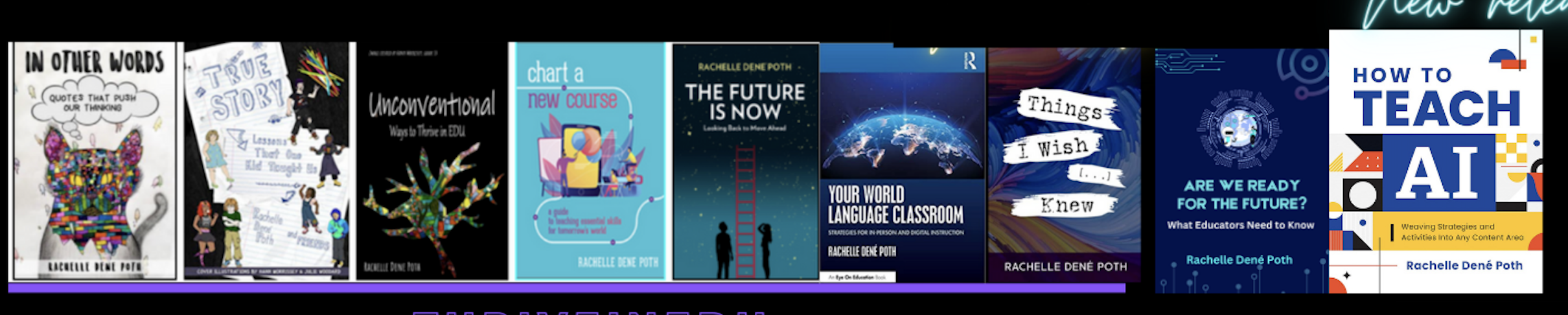
She is the author of nine books including ‘In Other Words: Quotes That Push Our Thinking,” “Unconventional Ways to Thrive in EDU,” “The Future is Now: Looking Back to Move Ahead,” “Chart A New Course: A Guide to Teaching Essential Skills for Tomorrow’s World, “True Story: Lessons That One Kid Taught Us,” “Things I Wish […] Knew” and her newest “How To Teach AI” is available from ISTE or on Amazon.

Contact Rachelle to schedule sessions about Artificial Intelligence, Coding, AR/VR, and more for your school or event! Submit the Contact Form.

Follow Rachelle on Twitter(X) and Instagram at @Rdene915

**Interested in writing a guest blog for my site? Would love to share your ideas! Submit your post here. Looking for a new book to read? Find these available at bit.ly/Pothbooks

************ Also check out my THRIVEinEDU Podcast Here!

Join my show on THRIVEinEDU on Facebook. Join the group here.

Legacy, Purpose and In Between

Guest post by Dr. Amy Mathews-Perez, a Director of Special Programs in a public school in Central Texas. Connect with Amy on X (formerly Twitter) at @drgrowtoknow, on Facebook at DrAmy MP, or at her website dramyperez.com

Legacy, Purpose, and In Between

It is very common to hear phrases, mottos, and comments about “purpose.” A few examples include finding your purpose and having a sense of purpose and purpose of life. It seems to have become so common that people may gloss over the words, dismiss it, or find it so daunting that they avoid all of the “How To” advice. Often this word also implies that a person’s purpose is a singular thing. We won’t launch into the grammar of it all, but in this blog, I’ll share a strategy that has helped me refocus on my purpose, and my hope is that it can help you get closer to figuring out yours.

An important thing to know is that your purpose can change. It is not like a New Year’s resolution that you either conquer or quit; purpose is fluid because it evolves as you grow and change; also, it typically impacts multiple levels of your preferences, your actions, your emotions, your interactions with others, your mindset and more which leads to more growth and change.

Also, your purpose doesn’t need to be something huge, life-changing, or change the world. If you are committed to it and true to it, your purpose will facilitate change that is needed. Some of these changes you’ll be lucky enough to know about, but many will happen as a ripple effect.

Now, let’s talk about the word “legacy.” It makes some people think of obituaries and inheritance, while others use it in reference to the “rich and famous.” The definition I am referring to for the purpose of this blog is this: the sum of the personal values, accomplishments, contributions, and actions that resonate and impact others in ways that yield change in character, progress, and/or learning. Everyone has a legacy, but not everyone recognizes it. Often, those who can see their legacy rarely accomplish it due to a lack of self-trust, intention, drive, and focus.

In 2024, I was honored to be a guest on Chip Baker’s podcast, “The Success Chronicles.” You can check out all of his episodes at https://www.youtube.com/c/ChipBakerTheSuccessChronicles. I highly recommend Chip Baker- he is authentic, hard-working, and truly wants you to succeed through learning. Although my episode has not yet been published, we talked about many things, including “legacy.” Chip Baker said, “…it all starts with your perspective and your heart posture.” We shared personal examples and were on the same page about legacy being more about the impact than the person.

Since then, I have been reflecting and processing the terms “legacy” and “purpose,” and my big “Ah-ha!” moment was this: I was working backwards. I was languishing over my purpose and what kind of legacy that would leave. I switched up my strategy and very quickly gained clarity, which provided me with alignment between my actions, mission, focus, and goals. Things are not perfect, but they are significantly better.

Here is what I discovered: In spending quality time reflecting on what I want my legacy to be, my purpose reveals itself (not all at once for me.) The “in-between” stuff is our everyday life; our choices, actions, values, words, and more – including what you put your energy into. Chip Baker described it as being “intentional about doing the right thing each moment of each day.

As I continue my journey, I am collaborating with specific people that I trust to build on ideas and provide me authentic feedback. This is key in squashing self-doubt, the inner-critic and the “just give up” voice when things get hard, messy, or unclear.

You are a wonderfully unique person. This strategy is not a guarantee, but it is an idea for you to consider. If you give yourself enough time and grace, I am 100% confident that you’ll discover more about yourself, your legacy, and your purpose.

About Amy

About Amy
Texas-born & raised, Amy is in her 34th year of serving public education. General Ed. Teacher, SLP, Diagnostician, SPED Supervisor, Assistant Principal, Principal, and Director of Special Education are roles she’s held. She is the CEO of Making Education Special for All (M.E.S.A), an LLC dedicated to training, facilitation, consultation, and speaking engagements that revolve around information, motivation, and insights on why and how to make education special for all stakeholders as well as leadership. Her passions are communication, joy, authenticity, and empowerment. “Life is short, but our influence is never-ending,” Amy is committed to connecting with others through service and smiles.

About Rachelle

Dr. Rachelle Dené Poth is a Spanish and STEAM: What’s Next in Emerging Technology Teacher at Riverview High School in Oakmont, PA. Rachelle is also an attorney with a Juris Doctor degree from Duquesne University School of Law and a Master’s in Instructional Technology. Rachelle received her Doctorate in Instructional Technology, and her research focus was on AI and Professional Development. In addition to teaching, she is a full-time consultant and works with companies and organizations to provide PD, speaking, and consulting services. Contact Rachelle for your event!

Rachelle is an ISTE-certified educator and community leader who served as president of the ISTE Teacher Education Network. By EdTech Digest, she was named the EdTech Trendsetter of 2024, one of 30 K-12 IT Influencers to follow in 2021, and one of 150 Women Global EdTech Thought Leaders in 2022.

She is the author of nine books and a blogger and podcaster.

Contact Rachelle to schedule sessions about Artificial Intelligence, Coding, AR/VR, and more for your school or event! Submit the Contact Form.

Follow Rachelle on Twitter(X) and Instagram at @Rdene915

**Interested in writing a guest blog for my site? Would love to share your ideas! Submit your post here. Looking for a new book to read? Find these available at bit.ly/Pothbooks

************ Also, check out my THRIVEinEDU Podcast Here!

Join my show on THRIVEinEDU on Facebook. Join the group here.

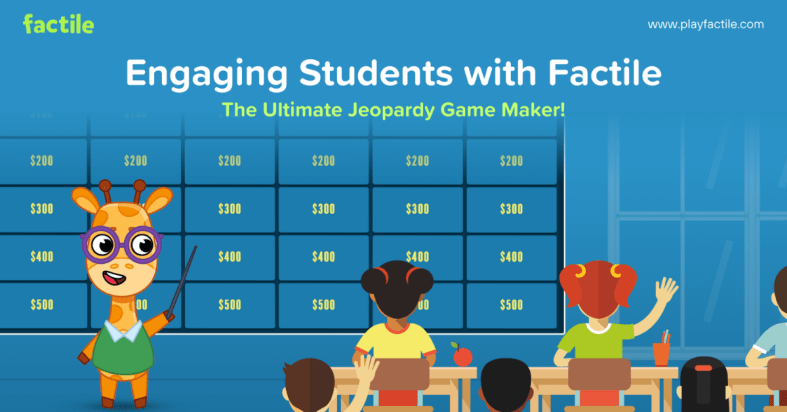
Engaging Students with Factile: The Ultimate Jeopardy Game Maker

In collaboration with Factile. All opinions are my own.

Over the years, I have noticed a decrease in student engagement in my classroom, especially in the fall and spring. Sometimes, disruptions in the learning environment occur because of school activities or testing. Finding ways to authentically and meaningfully engage students can sometimes be a challenge, especially at these and other times during the school year. For educators, finding a nice blend of traditional teaching methods with interactive technology can help foster an engaging and supportive learning environment for all students.

A few months ago, I learned about Factile, the ultimate online Jeopardy game maker! As a huge fan of Jeopardy, years ago, I designed activities for my students in the Jeopardy-style. However, it took way more time than it does now!

Factile helps teachers review different topics, assess students, and reinforce learning, and it is all done in far less time. It provides a fun, interactive way to review the material, improve content retention, and save teachers valuable time. One of the most common challenges that I hear from educators and also experience myself is finding the time to dive in! Factile makes it easy for educators to get started right away. I think it is a must-have tool for educators because it benefits student engagement and helps with retention of the content. And because of how quickly we can create, it boosts teacher efficiency.

The Power of Engagement Through Gamification

Gamification, the practice of applying game-like elements to non-game environments, has been shown to increase student motivation, participation, and content retention. Getting started with Factile was easy and fun! Educators can create and tailor the classic Jeopardy game for their classroom, making learning feel like a fun, competitive challenge between students!

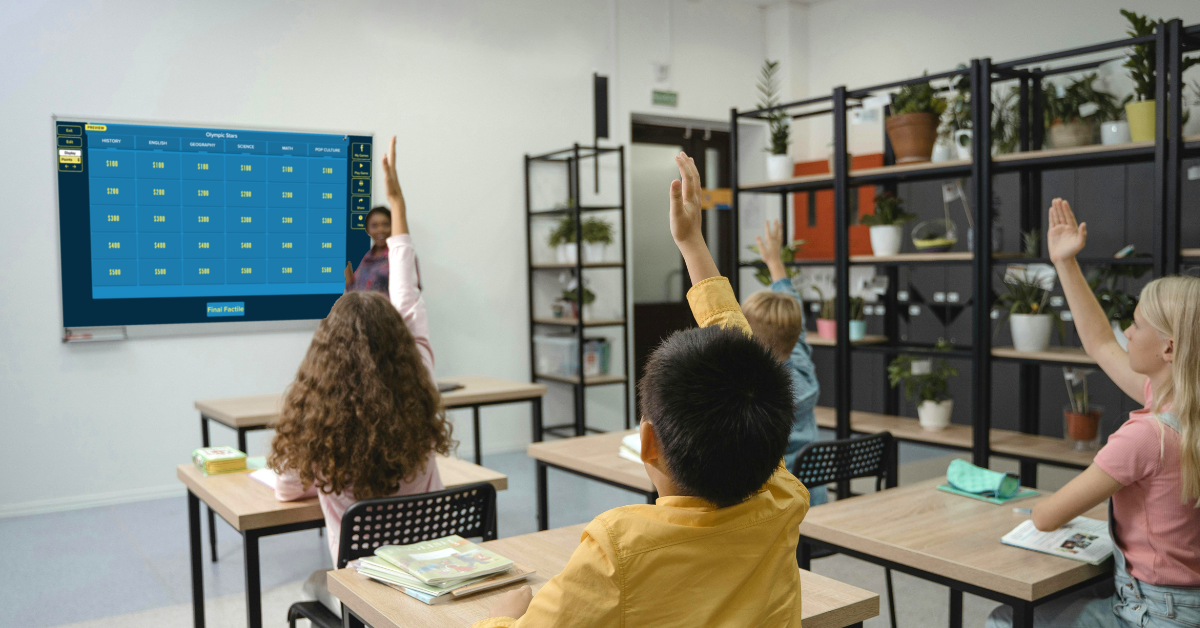
I find Factile to be very useful for reviewing new material, reinforcing key concepts we are covering, or preparing students for upcoming assessments. It definitely adds excitement to the learning experience for students and teachers too! Students in my class always enjoy friendly competition as they race against the clock or buzz in to answer a question. It engages them in more active learning to reinforce their knowledge and deepen their understanding of the content.

It offers more than just Jeopardy-style games. Other options, including Multiple Choice, Memory, and Quiz Bowl game modes, offer more choices for educators in how they choose to design their review sessions. For example, a science teacher could use the Memory mode to help students memorize important terms and definitions, while a history teacher might use the Multiple Choice mode to quiz students on dates and events. As a language and technology teacher, I can use all of these modes in my classroom, and my students truly enjoy the activities and keep asking for more.

Benefits for Students: Engagement and Content Retention

The first time we played a game, students were immediately drawn in. The interactive nature of the platform boosts student engagement levels and leads to more active participation in the classroom. When students are excited about learning, they are more likely to stay involved, leading to better retention of the reviewed content.

Another benefit is that the variety of game modes meets different student interests and needs. For example:

  • Seeing questions displayed on the game board, with the option to include images, videos, and even math equations, is helpful for all students.
  • The game’s buzzer mode, with sound effects and music, enhances the game-playing experience and adds a little extra fun to learning.
  • Buzzing and answering make more active learning possible. This gives students a chance to be a bit competitive while reinforcing their learning through movement and interaction.

You can decide whether or not to use Buzzer Mode. I will leave that up to you! Buzzer Mode allows students to compete in real-time, either individually or in teams. This feature works on various devices, from computers and tablets to smartphones. As students buzz in to answer, they become more invested in the outcome, deepening their focus on the material being reviewed.

Benefits for Teachers

While the benefits for students are clear, teachers also experience significant advantages from using Factile in their classrooms. One of the biggest benefits is time-saving. Creating a Jeopardy-style review game used to be time-consuming, but Factile makes it easy. In just a few clicks, teachers can build engaging review sessions without the need for complicated design tools or extensive prep work.

Teachers can either build their games from scratch or choose from over 2 million pre-made games covering a variety of subjects, from math and science to history and language arts. This vast library of pre-made games helps teachers find relevant content quickly and use it immediately. Teachers also have the option to customize the pre-made games, adapting them to their specific classroom needs and content.

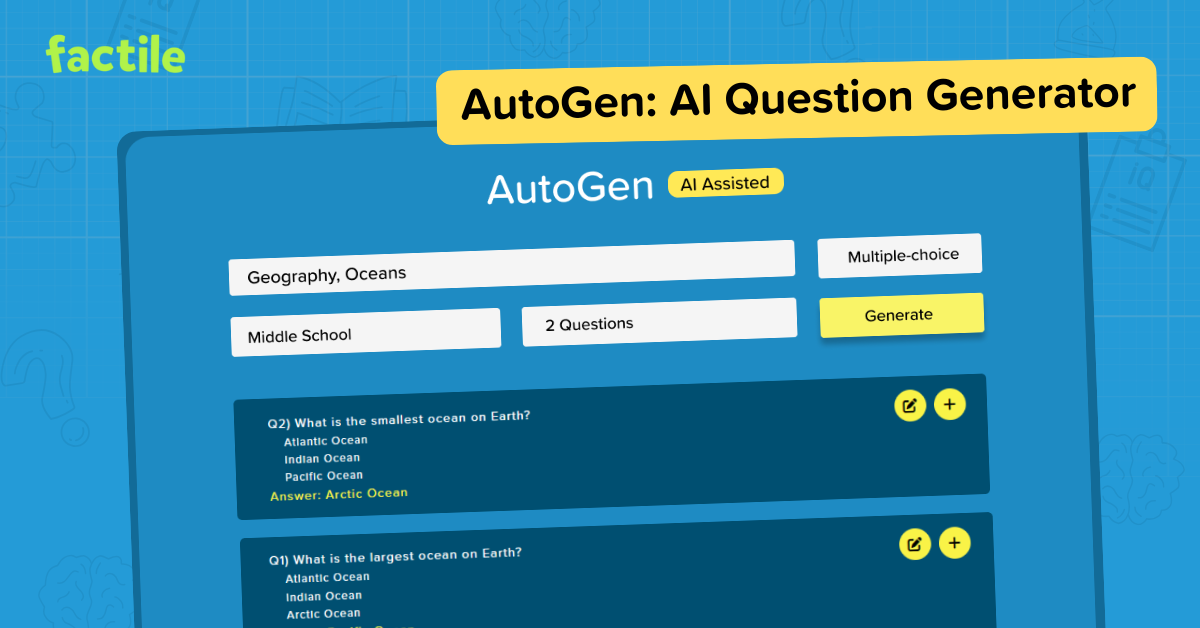
A favorite of mine is the Question Bank feature, which enables teachers to create a bank of questions from which they can generate multiple games on different topics. Using the question bank ensures that students are asked a wide range of questions, which will improve both their recall and their ability to apply the knowledge in different contexts. Another personal favorite is the addition of AutoGen, Factile’s AI-powered tool, which further enhances this process by helping teachers quickly generate questions and answers on any topic, saving valuable time.

Factile also integrates seamlessly with platforms like Google Classroom, making it easy for teachers to assign games and flashcards directly to their students. This feature streamlines the learning process by allowing teachers to monitor student progress and assess understanding outside of the traditional classroom setting.

Tracking Student Progress and Understanding

Factile also helps teachers to track student progress. With the Leaderboard and Analytics feature, teachers can monitor how individual students or teams perform throughout the game. Teachers have real-time feedback on how students understand the material, allowing them to identify areas where additional support or review might be needed.

For example, if a group of students consistently struggles with a particular category or question type, the teacher can use this information to adjust future lessons, ensuring that the entire class is mastering the required content. With Factile, teachers can print quizzes and answer keys directly from the game, which offers more opportunities for assessment and reinforcement of the content.

Factile’s self-paced modes are also valuable for both students and teachers. In Self-Paced Multiple-choice or Interactive Choice modes, students can work through the material independently, outside of class, allowing teachers to assess understanding without needing in-class game time. This asynchronous option gives students flexibility in how they review the material, and the analytics provided by Factile offer insights into individual student progress.

Sharing games and flashcards via email or text further enhances students’ opportunities to build their skills in and out of the classroom. Teachers can easily distribute review materials and ensure all students can access the necessary resources to succeed.

At a time when student engagement and interactive learning are more important than ever, Factile offers a solution that combines the best of both worlds. With its wide array of features and customizable game modes, Factile allows teachers to create engaging and effective review sessions while saving time and improving student outcomes.

Whether you’re looking to boost classroom engagement, improve content retention, or save time on lesson planning, Factile has you covered. It’s free to use, easy to implement, and a game-changer for teachers and students alike. And it is a lot of fun!

So, if you’re ready to try something new, sign up for Factile today and see the impact it can have on your classroom!

Start creating and playing your first Factile game here: https://www.playfactile.com

Dr. Rachelle Dené Poth is a Spanish and STEAM: What’s Next in Emerging Technology Teacher at Riverview High School in Oakmont, PA. Rachelle is also an attorney with a Juris Doctor degree from Duquesne University School of Law and a Master’s in Instructional Technology. Rachelle received her Doctorate in Instructional Technology, and her research focus was on AI and Professional Development. In addition to teaching, she is a full-time consultant and works with companies and organizations to provide PD, speaking, and consulting services. Contact Rachelle for your event!

Rachelle is an ISTE-certified educator and community leader who served as president of the ISTE Teacher Education Network. By EdTech Digest, she was named the EdTech Trendsetter of 2024, one of 30 K-12 IT Influencers to follow in 2021, and one of 150 Women Global EdTech Thought Leaders in 2022.

She is the author of nine books including ‘In Other Words: Quotes That Push Our Thinking,” “Unconventional Ways to Thrive in EDU,” “The Future is Now: Looking Back to Move Ahead,” “Chart A New Course: A Guide to Teaching Essential Skills for Tomorrow’s World, “True Story: Lessons That One Kid Taught Us,” “Things I Wish […] Knew” and her newest “How To Teach AI” is available from ISTE or on Amazon.

Contact Rachelle to schedule sessions about Artificial Intelligence, Coding, AR/VR, and more for your school or event! Submit the Contact Form.

Follow Rachelle on Twitter(X) and Instagram at @Rdene915

**Interested in writing a guest blog for my site? Would love to share your ideas! Submit your post here. Looking for a new book to read? Find these available at bit.ly/Pothbooks

************ Also check out my THRIVEinEDU Podcast Here!

Join my show on THRIVEinEDU on Facebook. Join the group here.

Building an AI Alphabet for Kids…with Help from AI!

Guest blog post by:

Robert W. Maloy

Sharon A. Edwards

Jane Cusson

Chenyang Xu

Torrey Trust

Let’s say you wanted to explain the term “Artificial intelligence” to an elementary school student using words that student would be most likely to understand. Would any of the following explanations help you do so?

What a computer has learned to do.

Something made by humans to look like something made by nature

Teaching a computer to think and learn like a person.

The left side and middle text were written by two of the authors of this blog post; the right hand side text was generated by Estella AI, a chatbot we programmed to produce kid-accessible definitions of words. Our goal was to give adults (teachers, parents, family members, and tutors) options for explaining math, computer, and AI words in terms kids could readily understand.

Language matters! As Sal Khan’s latest book Brave New Words (2024) explains, AI-based terms are becoming commonly used in our daily lives and society. There are terms like “chatbot” (from the words chatter and robot); “hallucination” (computer-generated falsehoods), “algo” (a computer algorithm), and many others that are being used frequently in the media and even in our daily conversations.

Youngsters are hearing, reading, and seeing AI words and they want to understand them. Recently, in a national survey, 66% of 9-17 year-olds said they had some knowledge of what GenAI tools do, and 72% wanted adult support in learning how to use AI correctly and confidently (National 4-H Council, 2023).

Researchers broadly agree that young learners need to hear and use a word multiple times (ranging from 6 to 20) before that term becomes an understood part of their vocabulary (Uchihara, et.al., 2019). But printed and online dictionary definitions do not always teach youngsters to incorporate new and unfamiliar words accurately in communications with other people. For example, the Merriam-Webster Dictionary defines artificial intelligence as “the capability of computer systems or algorithms to imitate intelligent human behavior,” which includes several words and terms students might not completely understand.

To support young learners in attaining AI knowledge through AI vocabulary, we began by creating an alphabet of AI words!

An Alphabet of AI Words for Students

To build a list of AI words, we first used our own ideas, then asked students in our college classes, consulted online lists, prompted two AI chatbots, and came up with the following as a start:

A: Algorithm

B: Bias

C: Chatbot

D: Data

E: Ethics

F: Facial recognition

G: Glitch

H: Hallucination

I: Internet

J: Job automation

K: Keyword

L: Literacy

M: Machine learning

N: Neural network

O: Open source

P: Parameter

Q: Query

R: Robot

S: SIRI

T: Turing test

U: URL

V: Voice recognition

W: WIFI

X: eXploration

Y: You

Z: Zeroes and ones

Writing Kid-Accessible Definitions in Kid-Friendly Language

To define these terms, we wanted to explain new words in what can be called “kid-friendly” or “kid-accessible” language. “Kid-friendly” is another way of saying easily understandable vocabulary. Students gain meaning and understanding from language that makes sense to them.

We have created kid-friendly terms to teach youngsters about written language by focusing attention on the role or function various terms play in written language. An exclamation point can be an “excitement mark”; an interrogative sentence is a “question-asking sentence.”

We tried writing our own kid-accessible definitions for selected AI words:

  • Algorithm = the steps you take to solve a problem.
  • SIRI = A machine voice on your computer or phone that answers questions and helps you do things

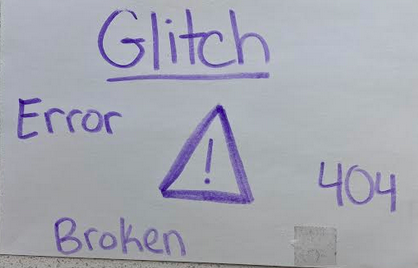
Then we asked college students in our weekly Tutoring in Schools class to create a kid-friendly, student-accessible dictionary/pictionary definition of AI words from our list or choose an Internet/computer term college students imagine youngsters need to know. On a large index card, the college students wrote a definition and drew an image to accompany the definition. Here is the card for the term ”glitch” drawn by one of the co-authors.

An error a machine makes, not you.

AI-Generated Kid-Friendly Definitions

To compare AI-generated definitions with our own and the college students’ creations, we next asked Estella Explainer Math Bot 2, a fine-tuned AI chatbot we built in ChatGPT as part of our Usable Math open online math tutoring platform (https://usablemath.org/) for elementary school students, teachers and families.

Estella Bot is a reading and vocabulary coach for use by teachers and tutors, trained to generate explanations of math word problems and terms at the “easy reading” level as measured on the Flesch/Kincaid Reading Ease scale. It also can produce kid-accessible definitions of AI words. When asked to define the term algorithm, the Estella Bot replied: “An algorithm is like a recipe. It’s a list of steps that you follow to solve a problem or do something, like baking a cake or finding a toy. Computers use algorithms to know what to do.”

Using AI to Learn about AI

Using AI to learn about AI was a remarkable experience for us. While we were initially unsure how to convey complex AI terms clearly to young learners, by writing our own definitions and then getting phrases and ideas from Estella Bot, we saw how AI could provide more ideas and language for teachers, tutors, and other adults. Rather than thinking in terms of accepting or rejecting one definition or another, here is an opportunity to blend all suggestions and possibilities to support young learners in learning about AI.

We even tried asking Estella Bot to generate a fictional math and AI story using “algorithm” and the chatbot responded with “The Treasure Hunt Algorithm,” an adventure students could act out, illustrate as a comic story, or continue to expand further with more characters and plots.

The Treasure Hunt Algorithm

It was a sunny afternoon, and Maya and her friends gathered at the park for a treasure hunt. Maya held up the treasure map, which had a note at the top: Follow the algorithm to find the treasure.

“What’s an algorithm?” asked Jake, scratching his head.

“It’s just a fancy word for a list of steps we need to follow,” Maya explained. “Like when we follow steps to bake cookies, but this time, it’s for finding treasure!”

The group leaned in as Maya read the steps out loud:

  1. Start at the big oak tree.
  2. Walk 10 steps north to the red bench.
  3. Turn right and take 15 steps to the fountain.
  4. Look under the rock with the painted star.

“Let’s try it!” said Emma, grabbing the map.

They all ran to the oak tree, counting their steps out loud. At the red bench, they argued for a moment about which way was right, but Maya pointed to her compass. “Algorithms work best if we stick to the directions exactly,” she said.

When they reached the fountain, they spotted the painted rock. Jake lifted it, and underneath was a small box with shiny stickers, candies, and a note that said, Congratulations, you followed the algorithm!

“This was fun!” said Emma.

With its capacity to provide kid-understandable explanations of complex AI language terms, Estella Bot functions as an always-available learning resource. While some of its explanations may not make sense to every youngster, adults can remix, revise, or create their own explanations based on Estella Bot’s definitions. And the bot’s story writing offers another way to help young learners build their vocabulary while making learning relevant and meaningful.

It can be helpful, though, for adults to start, as we did, in trying to create their own kid-accessible definitions and explanations before turning to an AI chatbot. Beginning with one’s own ideas first turns AI into a tool that users control and a resource that users can adopt and adapt according to the learning goals they want to achieve. Give it a try and let us know what happens. Many AI alphabets for kids are waiting to be created.

About the authors

Robert W. Maloy is a senior lecturer in the College of Education at the University of Massachusetts Amherst.

Sharon A. Edwards is a retired elementary school teacher and clinical faculty member in the College of Education at the University of Massachusetts Amherst.

Jane Cusson is a January 2025 graduate of the University of Massachusetts Amherst who is beginning her career in speech pathology.

Chenyang XU is a doctoral candidate in Learning, Media and Technology at the University of Massachusetts Amherst.

Torrey Trust is a Professor of Learning Technology in the College of Education at the University of Massachusetts Amherst.

About Rachelle

Dr. Rachelle Dené Poth is a Spanish and STEAM: What’s Next in Emerging Technology Teacher at Riverview High School in Oakmont, PA. Rachelle is also an attorney with a Juris Doctor degree from Duquesne University School of Law and a Master’s in Instructional Technology. Rachelle received her Doctorate in Instructional Technology, and her research focus was on AI and Professional Development. In addition to teaching, she is a full-time consultant and works with companies and organizations to provide PD, speaking, and consulting services. Contact Rachelle for your event!

Rachelle is an ISTE-certified educator and community leader who served as president of the ISTE Teacher Education Network. By EdTech Digest, she was named the EdTech Trendsetter of 2024, one of 30 K-12 IT Influencers to follow in 2021, and one of 150 Women Global EdTech Thought Leaders in 2022.

She is the author of nine books including ‘In Other Words: Quotes That Push Our Thinking,” “Unconventional Ways to Thrive in EDU,” “The Future is Now: Looking Back to Move Ahead,” “Chart A New Course: A Guide to Teaching Essential Skills for Tomorrow’s World, “True Story: Lessons That One Kid Taught Us,” “Things I Wish […] Knew” and her newest “How To Teach AI” is available from ISTE or on Amazon.

Contact Rachelle to schedule sessions about Artificial Intelligence, Coding, AR/VR, and more for your school or event! Submit the Contact Form.

Follow Rachelle on Twitter(X) and Instagram at @Rdene915

**Interested in writing a guest blog for my site? Would love to share your ideas! Submit your post here. Looking for a new book to read? Find these available at bit.ly/Pothbooks

************ Also check out my THRIVEinEDU Podcast Here!

Join my show on THRIVEinEDU on Facebook. Join the group here.

Teaching Students Cyber Safety Basics

As educators, we must teach students how to stay safe online, especially with the rise of emerging technologies such as artificial intelligence (AI) and generative AI. With the capabilities of technology expanding so rapidly, teaching students about cybersecurity and cyber safety is more important than ever—these are topics that need to be discussed and explored at all grade levels. 

Distinguishing between cybersecurity and cyber safety

Cybersecurity is the practice of protecting electronic devices, networks, and sensitive information from unauthorized access. It means proactively taking measures to ensure that confidentiality is protected and thoroughly checking out the resources that we use. Our access to devices and endless types of technology has transformed how we learn and work. However, it has also led to an increase in dangers that can impact our safety and well-being. We need to help students understand how to utilize the technology with a careful focus on how to stay safe online and protect personal information. Cyber safety awareness is critical for everyone. 

Cyber safety refers to the practice of responsibly using technology and resources available through the internet. It is especially important to use care when accessing and sharing information online to avoid the risks and potential harm that can result, such as cyberbullying, hacking, phishing, identity theft, or exposure to inappropriate content and other online threats. Because of these risks, we must be intentional about helping students understand how to protect their safety and privacy online. 

Continue reading this post on Edutopia.

About Rachelle

Dr. Rachelle Dené Poth is a Spanish and STEAM: What’s Next in Emerging Technology Teacher at Riverview High School in Oakmont, PA. Rachelle is also an attorney with a Juris Doctor degree from Duquesne University School of Law and a Master’s in Instructional Technology. Rachelle received her Doctorate in Instructional Technology, and her research focus was on AI and Professional Development. In addition to teaching, she is a full-time consultant and works with companies and organizations to provide PD, speaking, and consulting services. Contact Rachelle for your event!

Rachelle is an ISTE-certified educator and community leader who served as president of the ISTE Teacher Education Network. By EdTech Digest, she was named the EdTech Trendsetter of 2024, one of 30 K-12 IT Influencers to follow in 2021, and one of 150 Women Global EdTech Thought Leaders in 2022.

She is the author of nine books including ‘In Other Words: Quotes That Push Our Thinking,” “Unconventional Ways to Thrive in EDU,” “The Future is Now: Looking Back to Move Ahead,” “Chart A New Course: A Guide to Teaching Essential Skills for Tomorrow’s World, “True Story: Lessons That One Kid Taught Us,” “Things I Wish […] Knew” and her newest “How To Teach AI” is available from ISTE or on Amazon.

Contact Rachelle to schedule sessions about Artificial Intelligence, Coding, AR/VR, and more for your school or event! Submit the Contact Form.

Follow Rachelle on Twitter(X) and Instagram at @Rdene915

**Interested in writing a guest blog for my site? Would love to share your ideas! Submit your post here. Looking for a new book to read? Find these available at bit.ly/Pothbooks

************ Also check out my THRIVEinEDU Podcast Here!

Join my show on THRIVEinEDU on Facebook. Join the group here.

4 Student Engagement Boosters for the Fall!

Keeping students engagemed throughout the school year can be a challenge. Integrating hands-on learning activities such as STEM, project-based learning (PBL), outdoor activities, gamification, and more helps maintain student engagement and develop essential skills like creativity, problem-solving, and collaboration.

Now that most schools have been in session for a few months, educators like myself might be looking for new ideas to explore. Some may already be seeing a decrease in student engagement. While the start of a new school year brings great excitement, that can wear off as activities pick up, colder months set in, and the content becomes more complex. Keeping all students engaged in authentic and meaningful learning experiences becomes even more critical during this time and throughout the year. 

Along with engaging students more in learning, It’s important that we find ways to foster essential skills, such as creativity, collaboration, problem-solving, and critical thinking, while making lessons authentic and relevant. In my experience, I have advocated for bringing STEM to all classrooms. Other ideas besides STEM activities include involving students in more active and even outdoor learning, challenge, or project-based learning (PBL) opportunities and using some out-of-the-box ideas. Each of these methods is versatile, and when combined with tools like Defined resources, they help to boost student engagement, spark curiosity, and, best, students retain their content knowledge even more.

Essential Skills Development

As we see so many changes happening in education, especially with technology like AI and other digital tools, students need to develop essential skills that will prepare them for the in-demand careers of the future. According to the World Economic Forum Job Sills Outlook for 2027, these skills include creativity, critical thinking, problem-solving, and collaboration, and now, number three is AI and big data. STEM-related activities provide all students with an excellent way to build these skills. Whether done through coding lessons, hands-on projects, or exploring scientific concepts, STEM encourages students to think critically and solve real-world problems and hopefully spark an interest they may not have realized they had.

Continue reading the original article on Defined Learning.

About Rachelle

Dr. Rachelle Dené Poth is a Spanish and STEAM: What’s Next in Emerging Technology Teacher at Riverview High School in Oakmont, PA. Rachelle is also an attorney with a Juris Doctor degree from Duquesne University School of Law and a Master’s in Instructional Technology. Rachelle received her Doctorate in Instructional Technology, and her research focus was on AI and Professional Development. In addition to teaching, she is a full-time consultant and works with companies and organizations to provide PD, speaking, and consulting services. Contact Rachelle for your event!

Rachelle is an ISTE-certified educator and community leader who served as president of the ISTE Teacher Education Network. By EdTech Digest, she was named the EdTech Trendsetter of 2024, one of 30 K-12 IT Influencers to follow in 2021, and one of 150 Women Global EdTech Thought Leaders in 2022.

She is the author of nine books including ‘In Other Words: Quotes That Push Our Thinking,” “Unconventional Ways to Thrive in EDU,” “The Future is Now: Looking Back to Move Ahead,” “Chart A New Course: A Guide to Teaching Essential Skills for Tomorrow’s World, “True Story: Lessons That One Kid Taught Us,” “Things I Wish […] Knew” and her newest “How To Teach AI” is available from ISTE or on Amazon.

Contact Rachelle to schedule sessions about Artificial Intelligence, Coding, AR/VR, and more for your school or event! Submit the Contact Form.

Follow Rachelle on Twitter(X) and Instagram at @Rdene915

**Interested in writing a guest blog for my site? Would love to share your ideas! Submit your post here. Looking for a new book to read? Find these available at bit.ly/Pothbooks

************ Also check out my THRIVEinEDU Podcast Here!

Join my show on THRIVEinEDU on Facebook. Join the group here.

Lead With Curiosity…Follow With Learning

Guest post by Dr. Amy Mathews-Perez, a Director of Special Programs in a public school in Central Texas. Connect with Amy on X (formerly Twitter) at @drgrowtoknow or her website dramyperez.com

Lead With Curiosity…..Follow With Learning

No matter your role, if you want to create or improve relationships, there are lots of ways to do that. Whether it is personal or professional, relationships matter. Relationships influence us in ways that are obvious (when we get into an argument with someone and stay mad until we decide to forgive, forget, or just quit giving it energy) and ways that are less than obvious, like the way we feel when we think of someone, our anticipation (or dread) of running into/meeting with a person, or the way our choices are influenced by someone (whether intentional or not). One example of that last thing – choices being influenced – is a tradition I follow at work. I have a small team of great people that I am lucky enough to coordinate. Each year I take each person to lunch with the intention of quality one-on-one time talking about anything but work. I always order what they order for lunch. I love to try new things, and while mirroring their decision is an intentional choice for me, the impact on that person and our relationship is subtle. It validates that person, and it provides a topic of conversation (whether I’ve had that meal before or not, why they like it, etc.).

This blog is about two specific ways you can improve relationships: (1) Lead with curiosity and (2) Follow with learning. First things first: the assumption behind this blog is that you want to create positive relationships or improve the ones you already have.

Most of us have probably heard the phrase, “Lead with curiosity.” Many people think that means asking a lot of questions. While that is a reasonable interpretation of the phrase, let’s consider purpose and timing when leading with curiosity. The purpose of your curiosity is to learn more about the other person, so asking questions is a great start. However – being intentional about the purpose of your questions will guide the conversation and validate the other person. Asking questions that do NOT yield “Yes/No” responses will yield only that: one-word answers, which does not perpetuate authentic conversation. Asking questions with the intention of discovering what the other person enjoys talking about is where the magic is.

The next strategy is to “Follow with learning.” Once you are in a conversation with someone and you discover something, learn it. Seeking to understand is powerful in creating trust. Follow up in ways that confirm for the other person that you are learning from them/about them. This can be accomplished through phrases (like “I didn’t know that…”, “I’m learning so much from you/about you.” Or “Let me get this straight [state back what you just learned]…..” are examples of such phrases. Your intention is to validate their input by learning it, repeating it and/or linking it to something you relate to about it. If you really want to solidify this learning, mention the learning to them at another time or mention it to someone else while this person is present.

Each one of these strategies is important, but for maximum impact, use them both: Lead with curiosity, then immediately follow with learning. Same strategies as mentioned above, but combine them in the conversation. Ultimately, your goal is to suspend your ego, eliminate your “I” voice (talking about yourself without relevance to the conversation), and focus on the other person/people in the conversation through your questions and your learning.

CHALLENGE: Have a conversation with a good friend and a new acquaintance. Have your friend count how many times you say “I” – if it is more than you expected, don’t be surprised. We are all guilty of defaulting to “I” when we run out of things to say, get uncomfortable, or can’t handle silence. There is no magic number about how frequently you say “I” – this challenge is simply a way to raise your awareness. It makes it hard to build authentic relationships with others if we mostly talk about ourselves.

I encourage you to be intentional by leading with curiosity and following that with learning and seeing how your relationships improve in-depth, authenticity, and positivity. Fair warning, though: it is harder than it seems, but remember that “better” is the result of intentional decisions. Bottom line: I believe you can do it. You’ve got this!

About Amy

Texas-born & raised, Amy has served public education for over 30 years. General Ed. Teacher, SLP, Diagnostician, SPED Supervisor, Assistant Principal, Principal, and Director of Special Education are the roles she has held. She is the CEO of Making Education Special for All (M.E.S.A), an LLC dedicated to training, facilitation, consultation, and speaking engagements that revolve around information, motivation, and insights on why and how to make education special for all stakeholders as well as leadership. Her passions are communication, joy, authenticity, and empowerment. “Life is short, but our influence is never-ending,” and Amy is committed to connecting with others through service and smiles.

About Rachelle

Dr. Rachelle Dené Poth is a Spanish and STEAM: What’s Next in Emerging Technology Teacher at Riverview High School in Oakmont, PA. Rachelle is also an attorney with a Juris Doctor degree from Duquesne University School of Law and a Master’s in Instructional Technology. Rachelle received her Doctorate in Instructional Technology, and her research focus was on AI and Professional Development. In addition to teaching, she is a full-time consultant and works with companies and organizations to provide PD, speaking, and consulting services. Contact Rachelle for your event!

Rachelle is an ISTE-certified educator and community leader who served as president of the ISTE Teacher Education Network. By EdTech Digest, she was named the EdTech Trendsetter of 2024, one of 30 K-12 IT Influencers to follow in 2021, and one of 150 Women Global EdTech Thought Leaders in 2022.

She is the author of nine books including ‘In Other Words: Quotes That Push Our Thinking,” “Unconventional Ways to Thrive in EDU,” “The Future is Now: Looking Back to Move Ahead,” “Chart A New Course: A Guide to Teaching Essential Skills for Tomorrow’s World, “True Story: Lessons That One Kid Taught Us,” “Things I Wish […] Knew” and her newest “How To Teach AI” is available from ISTE or on Amazon.

Contact Rachelle to schedule sessions about Artificial Intelligence, Coding, AR/VR, and more for your school or event! Submit the Contact Form.

Follow Rachelle on Twitter(X) and Instagram at @Rdene915

**Interested in writing a guest blog for my site? Would love to share your ideas! Submit your post here. Looking for a new book to read? Find these available at bit.ly/Pothbooks

************ Also check out my THRIVEinEDU Podcast Here!

Join my show on THRIVEinEDU on Facebook. Join the group here.

7 Ways AI is Set to Make Teachers’ Jobs Easier

Collaborative blog post.

Since the early 2000s, education has had to evolve with the rapid integration of technology into the classroom. From the general use of computers and laptops for schoolwork to the rise of smartphones and tablets in the classroom, teachers have had to be agile to keep up with these changing trends. Unfortunately, despite these advancements, many teachers struggle in their jobs, leading to a mass exodus in recent years. In August this year alone, Statista reported that 51,000 teachers and other educational staff quit their jobs in the United States. As the education sector is struggling to find teachers to replace them, artificial intelligence (AI) could be the next advancement that not only changes how students learn but also improves the teaching profession by making the job easier. In a guest post by Matthew Rhoads, Ed.D., he wrote that AI can improve teachers’ workflow by providing opportunities for them to optimize their workflow and instruction in the classroom. Below are 7 ways that AI will make teachers’ jobs easier.

Grading

One of the biggest reasons for teacher stress and burnout is the extra work they must do in addition to teaching. Grading is one of the most time-consuming tasks and is often done outside of regular school hours, eating into a teacher’s work-life balance. As discussed in A Look Back at AI in Education, AI grading tools can automate this process. AI can appraise student work instantaneously with very little human input needed, thereby increasing the time teachers can spend on other aspects of their job as well as increasing their free time. These tools also provide much faster feedback to the students, which in turn will help with engagement.

Roleplaying

One factor of AI that will provide a new dimension to how students learn about different subjects is Generative AI (GenAI). MongoDB details how GenAI is based on foundation models that can perform tasks like classification, sentence completion, the generation of images or voice, and synthetic (artificially generated) data. This means that teachers can use AI to educate students through roleplaying. Gabriel Rshaid, co-founder and director at The Learnerspace & The Global School, writes on LinkedIn that GenAI systems that can impersonate a famous, historical, or even current person as well as replicate historical situations. He argues that not only will it foster critical thinking, but it will also elevate the level of interest and engagement for students. Lack of engagement in lessons is regularly touted as a common issue in modern classrooms, leading to added stress for teachers.

Foreign Language Teaching

Language learning in the classroom can be very difficult for teachers due to the lack of one-on-one time with students. With AI, students can speak to a Language Learning Model such as ChatGPT or an AI interlocutor to create a dialogue that is exactly pitched at their level. In a previous post on AI Literacy, we asked a student about the benefits of using AI for language learning. She replied: “The chatbot was very helpful. Immersing yourself with technology that helps you learn Spanish or any other language can help a lot. You have real-time conversations, and the chatbot expands the conversation so you can learn even more about the language. It also helps you become more comfortable speaking!” As students engage with the AI on their own terms, foreign language teachers will have more time to address individual needs.

Plan Lessons

Like grading, a good amount of time outside teaching is spent planning lessons due to the amount of research and reinvention needed. AI can streamline and optimize this process by not only creating new plans from scratch very quickly but also analyzing past lesson plans to cater to the teacher’s own preferences and style of teaching. Curriculum standards also change very frequently, and AI can be used to ensure that the lessons are updated with the latest requirements. This decreases the time teachers spend on planning lessons and increases their ability to work with students.

Personalized Learning For Students

One of the major issues that makes a teacher’s job difficult is not being able to adapt their teaching methods for individual students. It is not possible for teachers to create personalized learning plans for each student in their classroom, which can lead to some students getting left behind and resulting in a lack of engagement. AI-powered adaptive learning platforms can analyze students’ strengths and weaknesses and provide personalized lessons and study paths. 

Improve Classroom Management

While AI will revolutionize how teachers can adapt their lessons to students to improve their learning outcomes, another important aspect of AI that will make a teacher’s job easier is classroom management. A Medium post notes how “one of the most pressing challenges for teachers has always been classroom management,” with discipline being one of the most difficult aspects of the job. When it comes to class management, AI can create a more harmonious classroom environment by being able to “detect when a student is distracted, struggling with a concept, or even feeling unwell.” This will allow teachers to immediately intervene and address the issues before they escalate and result in classroom disruption.

Reduce Burnout

As the above benefits show, AI can have a positive impact on many different facets of teaching to make the job easier. By improving each of the above aspects, AI will reduce overall burnout in teachers, which is having a massive impact on the industry. HMH’s 9th Annual Educator Confidence Report found that burnout is a critical issue, with 82% of educators citing that what they need most is a more balanced workload. Education and students are changing fast, with one teacher noting that “today’s student is different from students even five years ago.” AI will not only allow teachers to keep up, but it will also reduce their workload and give them more time to focus on their students. This will make their job easier and improve their work-life balance, which will hopefully stem the number of teachers leaving the profession.


About Rachelle

Dr. Rachelle Dené Poth is a Spanish and STEAM: What’s Next in Emerging Technology Teacher at Riverview High School in Oakmont, PA. Rachelle is also an attorney with a Juris Doctor degree from Duquesne University School of Law and a Master’s in Instructional Technology. Rachelle received her Doctorate in Instructional Technology, and her research focus was on AI and Professional Development. In addition to teaching, she is a full-time consultant and works with companies and organizations to provide PD, speaking, and consulting services. Contact Rachelle for your event!

Rachelle is an ISTE-certified educator and community leader who served as president of the ISTE Teacher Education Network. By EdTech Digest, she was named the EdTech Trendsetter of 2024, one of 30 K-12 IT Influencers to follow in 2021, and one of 150 Women Global EdTech Thought Leaders in 2022.

She is the author of nine books including ‘In Other Words: Quotes That Push Our Thinking,” “Unconventional Ways to Thrive in EDU,” “The Future is Now: Looking Back to Move Ahead,” “Chart A New Course: A Guide to Teaching Essential Skills for Tomorrow’s World, “True Story: Lessons That One Kid Taught Us,” “Things I Wish […] Knew” and her newest “How To Teach AI” is available from ISTE or on Amazon.

Contact Rachelle to schedule sessions about Artificial Intelligence, Coding, AR/VR, and more for your school or event! Submit the Contact Form.

Follow Rachelle on Twitter(X) and Instagram at @Rdene915

**Interested in writing a guest blog for my site? Would love to share your ideas! Submit your post here. Looking for a new book to read? Find these available at bit.ly/Pothbooks

************ Also check out my THRIVEinEDU Podcast Here!

Join my show on THRIVEinEDU on Facebook. Join the group here.

Sing a Song about Ms. Davey

Guest post by Rachel Wood, PhD Candidate studying AI and the future of work, education, and relationships: LinkedIn at www.linkedin.com/in/rachelwoodphd

Opinions expressed are those of the guest blogger.

Every night at bedtime, I sing songs with my son. We snuggle close as the lyrics “lullaby and goodnight, go to sleep…” dance off our lips. Lately, he has begun asking me to make up songs about various important objects in his life- blue blankey, mister fox, and big excavators. I sing songs on the spot that tie melodies to his little world of things. One night, out of his mouth comes “sing a song about Ms. Davey”. Delightfully surprised, I met this request with a smile in my heart because of how it exemplified the fondness he feels toward his school teacher. 

Educators are irreplaceable. They are far more than academic messengers; they serve as overseers of students’ psychological wellbeing. Learning has been and always will be a social experience. We learn from teachers, from peers, from successes, from mistakes, and from interactions with others. Sure, we learn our academic material, but more so, we learn social and relational skills. We begin to learn our place in the world as we rub shoulders with others. Relationships are the foundation for motivation and learning (McKay & Macomber, 2023). Educators offer numerous key psychological and relational nutrients, two of which are object constancy and friction. These unique human components are increasingly important to instill in students amidst a world of proliferating emerging technologies. 

Object Constancy 

Definition: object constancy begins when the “empathic parent holds a vision of the future child and in various ways mediates this vision to the child. The child, in identification with it, can then grow. By internalizing aspects of the parent, the child also internalizes the parent’s image of the child…a primary concern for a teacher is the aiding in the growth and development of another. The idea that teacher’s capacity to imagine future growth, anticipate something for the student, hold that in mind for them, and offer that vision is a reflective way of expanding possibilities and potentialities for them. Perhaps in this way, the successful, authentic, and autonomous student begins in the mind of the teacher” (Danze, 2022, pg. 149).

As overseers of students’ psychological and emotional development, educators contribute to the formation of students’ object constancy. Object constancy is a psychological concept describing how we acquire our internal voice. When we are young, parental figures, family members, and teachers speak into us and speak over us. The tone and content of these voices become embedded in our developing identities. Over time, and with enough repetition, these voices become our own internal voice. For better or for worse, what we hear in our early developmental stages sticks with us. Object constancy is when we internalize external voices, making them our own inner dialog. 

Educators contribute to students’ developing object constancy on a regular basis; recognizing achievements, applauding kindness, and course-correcting missteps. Teachers even have the privilege of helping rewire negative voices ringing in students’ ears. Neuroplasticity is the science that reveals how we can change our thoughts, feelings, and actions, unlearning that which is detrimental and instead, learning what is beneficial. A consistent, encouraging voice from a teacher can act as a counterpoint to disparaging voices that may be lingering in students’ minds. Just as educators help students internalize positive voices, they also create opportunities for students to learn from challenges.

Friction

Definition: friction is “shap[ing] learning as people with different backgrounds and skill sets engage with each other on real problems if these people are provided with the right context. Productive friction is particularly valuable at boundaries because it exposes people to different ways of seeing problems and the potential solutions” (Ward et al., 2011).

All human relationships contain some degree of friction. Friction is the concept of learning through challenges. Friction may be small or great, it may be above or below the surface, and it may be beneficial or consequential. Friction is a necessary element of relationships because it teaches us to consider others, compromise, and reduces our tendency toward self-absorption. Educators encourage, yes, but they also challenge. Both are equally important. Excellent educators can gauge the individual balance for each student between encouragement and challenge. This both affirms students as they are and calls them forward to who they can be. 

AI and Educators 

Definition: Artificial Intelligence, AI is broadly defined as giving a computer human-like capabilities, such as understanding, problem-solving, and reasoning (Enholm et al., 2022).

Object constancy and friction are two components of relationships that cannot be replaced by emerging technologies such as Artificial Intelligence (AI). Sure, on a superficial level you could prompt a Generative AI Large Language Model to mimic these relational elements, but they come naturally in human interactions. There are specific use cases for AI that can offer support in the form of augmentation for teachers who are overwhelmed with work yet longing to return to what led them to education in the beginning: the opportunity to positively influence students through relational connection. There is a place for AI in the classroom that does not threaten but enhances the role of the teacher. Drawing the conclusion that we must choose between teachers and AI is a false dichotomy. Augmenting work with AI can serve as a catalyst to redesign the vocational identity of educators. This ever-present help can afford teachers the opportunity to once again return to a primary role of relational facilitator and guide. Bringing AI into the classroom cannot and will not replace educators, but it may open the door for administrative burdens to lighten and therefore relational dynamics to increase. 

The vital role of educators extends beyond the confines of academic instruction, shaping students’ emotional and psychological landscapes through concepts like object constancy and friction. Just as the simple yet profound request to “sing a song about Ms. Davey” highlights the deep bond students form with their teachers, it underscores the immeasurable value of human connection in education. Successful integration of AI into the classroom is predicated upon the fact that technology complements, not replaces, the relational essence of teaching. Leveraging AI to assist with administrative tasks allows educators to return to their core mission: fostering meaningful relationships that guide and shape students’ development. So tonight, as we sing about Ms. Davey, and by extension countless other educators, may AI serve as a tool to enhance impact, and bolster ongoing service in the name of young minds. 

References

Danze, E. (2022). How the psychoanalytic use of object constancy and internalization can inform our understanding of the teacher/student relationship. ACSA 110th Annual Meeting. https://www.acsa- arch.org/proceedings/Annual%20Meeting%20Proceedings/ACSA.AM.110/ACSA.AM.1 10.20.pdf?v=2

Enholm, I. M., Papagiannidis, E., Mikalef, P., & Krogstie, J. (2022). Artificial intelligence and business value: A literature review. Information Systems Frontiers24(5), 1709-1734. https://doi.org/10.1007/s10796-021-10186-w

McKay, C., & Macomber, G. (2023). The Importance of Relationships in Education: Reflections of Current Educators. Journal of Education203(4), 751-758. 

https://doi.org/10.1177/00220574211057044

Ward, C. J., Nolen, S. B., and Horn, I. S. (2011). Productive friction: How conflict in student teaching creates opportunities for learning at the boundary. International Journal of Educational Research, 50(1), 14-20. https://doi.org/10.1016/j.ijer.2011.04.004

Interested in guest blogging or Rachelle’s consulting services?

Contact Rachelle to schedule sessions about Artificial Intelligence, Coding, AR/VR, and more for your school or event! Submit the Contact Form.

Follow Rachelle on Twitter(X) and Instagram at @Rdene915

**Interested in writing a guest blog for my site? Would love to share your ideas! Submit your post here. Looking for a new book to read? Find these available at bit.ly/Pothbooks

************ Also check out my THRIVEinEDU Podcast Here!

Join my show on THRIVEinEDU on Facebook. Join the group here.

Tips for Back-to-School

As we head back into our classrooms for a new school year, educators are thinking about class schedules, grading, lesson plans, school meetings, observations, and so much more. Getting back into the daily teaching schedule can be a challenge, especially after having the summer “off.”

However, many educators don’t take the summer off. Instead, they take advantage of the extra time to engage in professional learning. Whether by attending conferences, joining book studies, participating in online learning events, or even heading to their classroom to prepare for the new school year, being prepared for school is always on teachers’ minds. Having the summer off, even if only for a few weeks, is nice because it provides time to relax and recharge and also time to be better prepared than the year before.

No matter how many years of experience an educator has, a new school year can be stressful. I think it is important to start the year with goals and use our prior experiences to set clear focus points for ourselves and our students.

For many years, I remember conversations with colleagues about how they couldn’t sleep the night before the first day of school. Attributing it to being excited and nervous about starting a new school year and doing it right. In my experience, I always slept well and never really worried about being prepared for the first day of school. For me, it was always the second day and every day after that. For me, the first day of school was simply the time to introduce myself to students, talk about what they could expect in my class, and provide any materials they needed to take home for their families. I started each year with rules and procedures. Unfortunately, I did not realize that the content could wait. I should have placed more importance on creating a supportive classroom community and focusing on building relationships first. Now that I know better before the year starts, there are some questions that I ask myself:

Did I reflect enough on my teaching practice, and have I identified areas I want and need to work on?

Am I prepared with new ideas, whether different methods or digital tools, to bring into my classroom to help engage students in learning?

What are some ways that we can build relationships and get to know one another?

How can I create a welcoming classroom space that fosters creativity and curiosity for learning?

Many more questions cross my mind and likely cross the minds of educators everywhere. It comes down to thinking about and reflecting on what we learned about our practice and methods used during the past school year. What activities and methods have made an impact not only on student learning but also on building essential social-emotional learning (SEL) skills? Which methods or tools helped students feel more connected with their classmates and the content? Cultivating a learning environment where students have choices, feel comfortable, and become more confident amplifies their learning potential. It leads to a supportive classroom community.

As we head into a new school year, it is always the perfect time to try a few new ideas and see how the students respond and the impact on learning and then decide where to go from there. Teaching the content material is important, but finding ways to boost student engagement and foster the development of essential SEL skills is also important. With so many things to consider, I am choosing five focus points for starting the new school year:

  • Build Relationships: Starting on day one, we need to get to know our students and let them get to know us, too. When we create opportunities for students to connect with each other and build a collaborative and supportive space, we will see how it positively impacts the learning that happens in our classroom. By starting with relationship building, we will create a space where students feel comfortable making mistakes and know they are supported by us and their peers. Creating a comfortable, supportive space is essential for learning. Have students create an “About Me” or use icebreakers to get to know each other and make sure that you participate too.
  • Set goals and reflect: At the start of the school year, have students set some goals for themselves in your class. Not just students it’s also important that we set goals for ourselves and share them with our students. When we do this together, we hold each other accountable and provide the support that we all need in our classroom space. We know the importance of SEL and by setting goals and reflecting on them throughout the year, we will be focusing on self-awareness and self-management in particular, which are essential for student learning and being prepared for the future. Provide some questions for reflection, such as: How do I think it went? What would I change? Are there areas that I can improve upon?
  • Create a community: Students need to know how to access resources for the class and to be able to connect with the teacher and classmates. It is important to set up a space or have a system for being able to communicate with students. Sending an email every Friday with a recap of the week, using a messaging app, or designing a class website are all good ways to create a learning community. Having a space where students can interact and access the resources they need to be successful is important, and we have definitely learned how essential it is after our experiences over the past couple of years. Another thing to consider is how to involve students more in the design of the learning experiences in the classroom and have them truly be a part of the learning community.
  • Promote collaboration: In preparing students for the future, we know that one of the essential skills they need is the ability to communicate and collaborate with others. Students need opportunities to do this in the classroom as well as in a virtual space. Using different methods, like station rotations, where students can work with peers, or through digital tools like Padlet, we can promote collaboration. Students can build content area skills while also building digital citizenship skills and SEL skills.
  • Foster creativity and curiosity for learning: When we create a learning environment where students feel welcomed and supported, they will feel more comfortable participating in class activities, interacting with their peers, and taking risks with learning. Provide students with different choices for creating and sharing what they have learned. Use methods like Genius Hour or PBL to spark curiosity and promote student-driven learning. Offer choices in digital tools that foster creativity, such as Book Creator, Canva, Genially, Storybird or Storyboard That.

Start the year with some focus areas and involve students in the discussion. Get their feedback, ask for ideas, and enjoy the learning process together. Don’t be afraid to take some risks with new ideas or tools. With new ideas, we can boost student engagement and creativity, spark curiosity for learning, and student needs and interests are better met.

About the Author:

Dr. Rachelle Dené Poth is a Spanish and STEAM: What’s Next in Emerging Technology Teacher at Riverview High School in Oakmont, PA. Rachelle is also an attorney with a Juris Doctor degree from Duquesne University School of Law and a Master’s in Instructional Technology. Rachelle received her Doctorate in Instructional Technology, and her research focus was on AI and Professional Development. In addition to teaching, she is a full-time consultant and works with companies and organizations to provide PD, speaking, and consulting services. Contact Rachelle for your event!

Rachelle is an ISTE-certified educator and community leader who served as president of the ISTE Teacher Education Network. By EdTech Digest, she was named the EdTech Trendsetter of 2024, one of 30 K-12 IT Influencers to follow in 2021, and one of 150 Women Global EdTech Thought Leaders in 2022.

She is the author of nine books including ‘In Other Words: Quotes That Push Our Thinking,” “Unconventional Ways to Thrive in EDU,” “The Future is Now: Looking Back to Move Ahead,” “Chart A New Course: A Guide to Teaching Essential Skills for Tomorrow’s World, “True Story: Lessons That One Kid Taught Us,” “Things I Wish […] Knew” and her newest “How To Teach AI” is available from ISTE or on Amazon.

Contact Rachelle to schedule sessions about Artificial Intelligence, Coding, AR/VR, and more for your school or event! Submit the Contact Form.

Follow Rachelle on Twitter(X) and Instagram at @Rdene915

**Interested in writing a guest blog for my site? Would love to share your ideas! Submit your post here. Looking for a new book to read? Find these available at bit.ly/Pothbooks

************ Also check out my THRIVEinEDU Podcast Here!

Join my show on THRIVEinEDU on Facebook. Join the group here.