
Guest post written By: Maurie Beasley, M.Ed. Counseling (Edited by Jim Beasley)
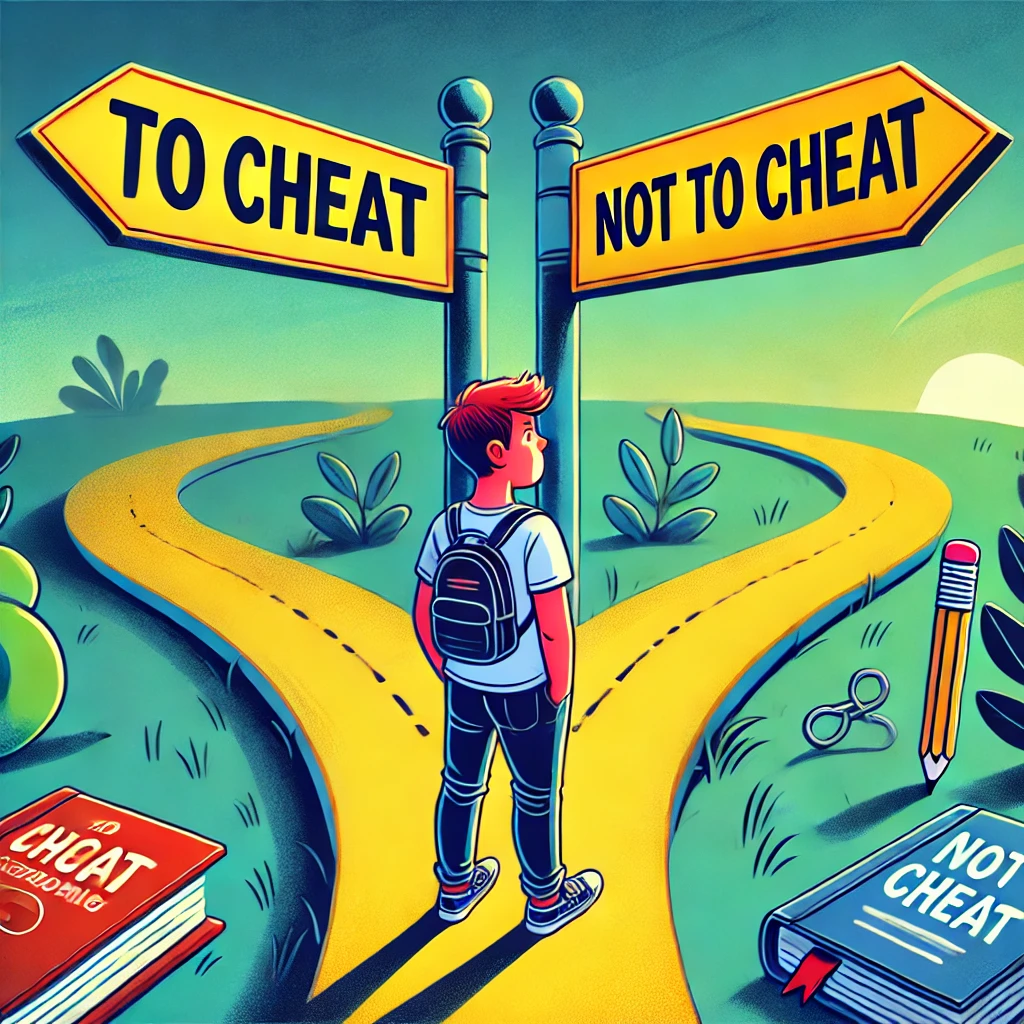
Cheating in school — it’s the topic that’s always been there, lurking in the shadows of every classroom and exam hall. For decades, we’ve known it happens, but we often look for the quickest explanation: students are lazy, technology makes it easier, end of story. But here’s the thing: cheating is not just a modern phenomenon, nor is it just about slacking off or taking advantage of new tools like AI. The real reasons why students cheat run much deeper, and if we’re serious about addressing the issue, we need to understand those reasons first.
Let’s be clear: cheating isn’t just some bad habit students picked up recently. It’s been around long before ChatGPT was on the mind of any engineer. And despite the attention AI has brought to the issue, the reasons students cheat are essentially the same as they’ve always been. So why does it persist, and what can we do about it? Let’s take a closer look at these reasons.
Pressure to Perform:
Students today are walking a tightrope, balancing academic expectations, extracurricular activities, and even part-time jobs. The pressure to perform is immense, and it’s no surprise that some students feel they can’t afford to fall.
Let me tell you about my daughter. She was the salutatorian of her high school class. She missed being valedictorian by a hair — a hair that could have been as little as a hundredth of a point. The only B she ever received was from a teacher who told her that grades don’t matter. Her response? “Great, then give me the one point I need to make an A in the class, or better yet, write me a letter explaining to the admissions board at UT Austin that grades don’t matter and being number 2 in my class is ok.” She knew that being valedictorian meant having your first year of college paid for in Texas. My daughter is honest, sometimes to a fault, but several times I was even tempted to tell her to “cheat” a little. That’s the kind of pressure students are under, and when the stakes are this high, cheating may seem like a way to stay on that tightrope, even if just barely.
Fear of Failure:
Beneath that pressure lies an even more pervasive issue: fear of failure. The fear of letting down parents, teachers, and even themselves can be overwhelming. When failure isn’t seen as an opportunity to learn but rather as a personal catastrophe, cheating becomes a tempting escape route. It’s not about cutting corners for the sake of it; it’s about avoiding the crushing weight of perceived inadequacy.
Beneath that pressure lies an even more pervasive issue: fear of failure. The fear of letting down parents, teachers, and even themselves can be overwhelming. When failure isn’t seen as an opportunity to learn but rather as a personal catastrophe, cheating becomes a tempting escape route. It’s not about cutting corners for the sake of it; it’s about avoiding the crushing weight of perceived inadequacy.
And this fear isn’t just hypothetical. As a counselor, I’ve seen it manifest in tragic ways. I’ve had to make Child Protective Service calls because parents have beaten their children for not performing well enough in school. When failure comes with such dire consequences, is it any wonder some students feel they have no choice but to cheat?
Read the full article on Medium*: [Address the Why, Not the How](https://medium.com/@jim0237/address-the-why-not-the-how-1a7e01d52d56
About Rachelle’s blog
Contact Rachelle to schedule sessions about Artificial Intelligence, AI and the Law, Coding, Cybersecurity, STEM, and more for your school or event! Available for in-person or virtual training, keynotes, and coaching. Submit the Contact Form.
Follow Rachelle on Twitter(X) and Instagram at @Rdene915
**Interested in writing a guest blog for my site? Would love to share your ideas! Submit your post here. Looking for a new book to read? Find these available at bit.ly/Pothbooks

************ Also, check out my THRIVEinEDU Podcast Here!
Join my show on THRIVEinEDU on Facebook. Join the group here.
 Learning as I go: Reflections & lessons learned