5 Ways to Build Collaborative Learning Skills In and Out of the Classroom

Developing skills for collaboration is a critical component for our students for their future. It is so important that educators provide opportunities for students to work together in our classrooms so that they can develop the necessary skills for working on a team which will also enable students to build social-emotional learning (SEL) skills. As we think about the importance of social-emotional learning and its role not only in education but in the future, this is why we must be intentional about finding ways to engage our students more by learning from one another in their classroom and beyond.

There is so much potential for having students work in teams or in small groups in the classroom. Technology can be an important component of these collaborations by creating access to more resources. There are many great opportunities for students to use digital tools available that help to create extra time in the day and offer various ways for students to collaborate beyond the time and space of the classroom, by fostering connections with other students in classrooms around the world.

When and Where to Collaborate

I think that the most critical piece of this is realizing that learning is no longer confined to the instruction that happens in the classroom during class. Unlike years ago when I was a student, our learning took place in the classroom and then we took time at home whether in the evening or weekends to complete homework assignments and projects. But for having opportunities for collaboration, it was far more difficult to work with partners and find a common time to meet beyond the school day. Meeting required physically going to a place to work together and have discussions. With access to new digital tools which bring innovative and more interesting ways to collaborate, these constraints on how, when, and where learning can occur exist minimally today. The biggest factor is whether or not our students and schools have the right access to the resources that are needed.

Just as students need opportunities to collaborate, as educators, we also need to find ways to work with colleagues and members of our Professional Learning Network (PLN), often beyond the school day. We also need to build our own skills and share our skill-sets and methods with our colleagues and PLN. by actively engaging in this right along with our students. We must model lifelong learning and the importance of asking for and offering help to others. Our goal is to construct a supportive foundation where we can all grow from.

Five ways to collaborate wherever and whenever

Here are five ways to promote collaboration both in the physical classroom setting as well as the virtual learning space. With each of these ideas, teachers can have students working together using different digital tools or teaching strategies. Beyond the content involved, students will build their communication, collaboration, critical thinking, problem-solving skills and develop the SEL skills at the same time.

  1. Learning stations when used in the classroom open up more possibilities for personalized learning, for social interactions, and the building of relationships between students and between the teacher and students. Using between three and five stations in the classroom, depending on class size and grade level, teachers can have students work together through a series of learning activities. Selecting a mix of digital tools, hands-on learning activities, and teacher-directed instruction creates a good mix of ways for students to engage with the content. For some, giving students the option to collaborate and design their own way of practicing the content can lead to new ideas for the whole class. Encourage students to team teach and take more of a leadership role in the classroom.
  2. Cross-curricular collaboration: How about working with another curricular area or even grade level?  Find a connector between your class and that of a colleague. Create a task where the students in both of your classes must collaborate on the same project while you do the same. Maybe you use project-based learning (PBL) in your class and you want to share that framework with a colleague or it is something that you are hoping to learn from a colleague. Find a common bond between your courses and start collaborating. I connected with an eighth-grade science teacher and our students used Buncee to create their presentation. This past year, my students connected with students in Spain and shared backgrounds, interests and other facts about their lives by leveraging technology tools to exchange information. Working together with colleagues to create these opportunities for students and helping students to engage in more meaningful learning makes a
  3. Beyond Classroom Discussions: Have you had a great discussion going in class just to have it interrupted by the bell? Or have you tried to encourage students to share their ideas but have not been successful? How about getting students to share ideas on important topics, by using some of the digital tools available for curating material or gathering feedback. We have many tools available that when leveraged with purpose, can add great benefits for student learning and student confidence. Some of the options are using things like Padlet to create a wall for discussion where students can post comments and respond to classmates. Try Wakelet to post an idea or a theme and ask students to share and create resources. To get students speaking more, use Flipgrid to create short videos as a prompt for students to discuss. Or try having students create a podcast using tools like Anchor or Synth. Which enable students to create on their own, and using Synth, students can ask and answer questions asynchronously. These are just a few quick digital ways to promote collaboration.
  4.  Collaborative Creations: When it comes to having students do more creating in the classroom, we have a ton of resources and materials to choose from. Giving students the option of using traditional formats versus digital formats is something that I do a lot in my own classroom. I want my students to have choices, however I also want them to build some other skills like online collaboration and designing. There are many tools that are adding features for students to create together. Beyond the collaborative options within Microsoft and Google, students can now work with emerging technologies. Using tools like CoSpaces and 3DBear, students can work together to create augmented and virtual reality spaces for digital storytelling. With either of these options, students work together in ways that build collaborative skills while also connecting them with more authentic and meaningful learning experiences.
  5. Blogging and Website Design: Blogging offers so many benefits in addition to building literacy skills and helping students to share ideas in a more authentic way. It also offers an effective way to build relationships between students as they exchange ideas, offer peer feedback and engage in more conversations in the classroom and online. Teachers can learn more about students and their interests, and use these ideas to create additional opportunities for collaboration within the classroom and with global peers. Tools such as Kidblog or Edublogs are good options. Creating a group project can be done using many different presentation formats, but one which helps students to build skills transferable for the future is in designing a website. Students in my school created websites for History Day and had a great artifact of learning to share and developed skills which will benefit them in the future.

Beyond these ideas, reach out into your school community and find local organizations that are open to working with students. It would benefit our students by connecting with real-world learning experiences and building skills beyond those covered in the curriculum. It benefits the school community by learning about what education looks like for students today. Providing options through place-based and experiential learning opportunities will open new possibilities for student interests and future career explorations.

**Interested in writing a guest blog for my Rdene915 site? Would love to share your ideas! Submit your post here.


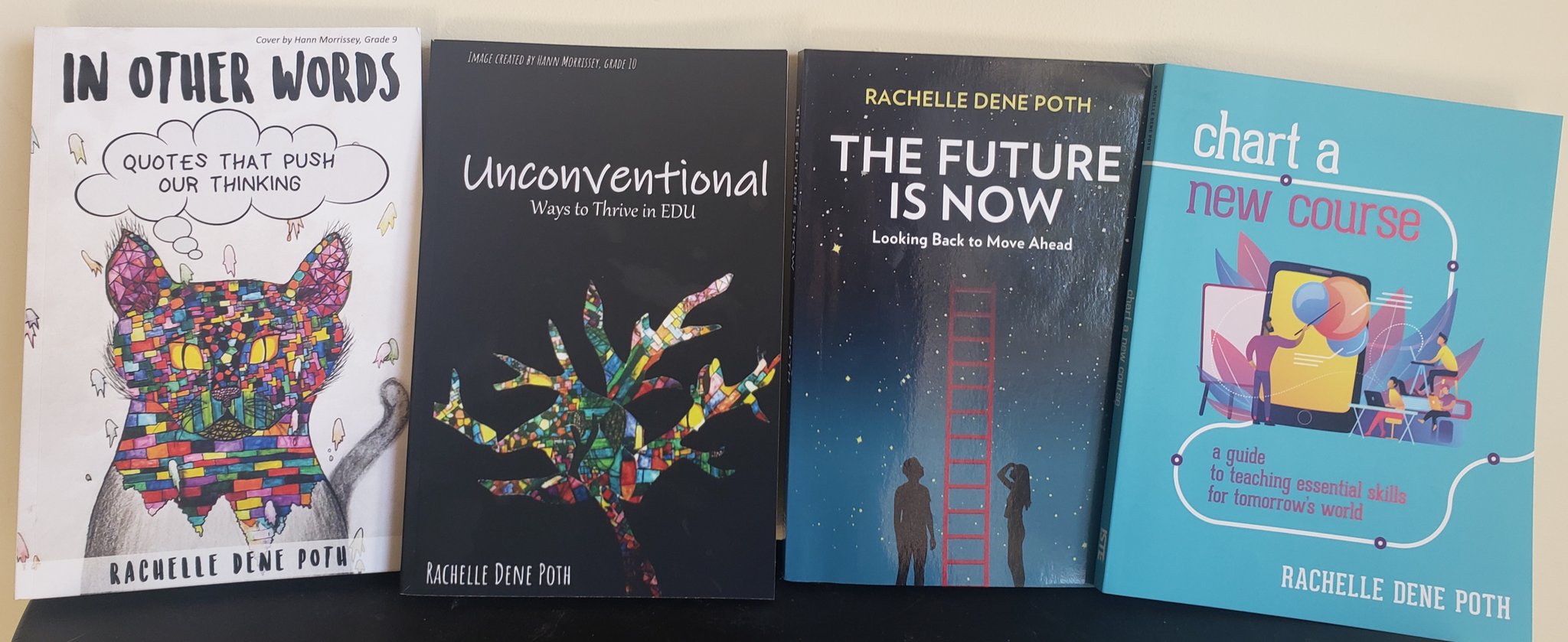
Looking for a new book to read? Many stories from educators, two student chapters, and a student-designed cover for In Other Words.

Find these available at bit.ly/Pothbooks  
5 Ideas for Building Communication Skills for the Future

My prior post on Getting Smart

Looking toward the future, as we consider how to best prepare our students for jobs that may not exist yet, what are the skills that will benefit them no matter what they decide to do? If we look at the research, trends over the past five or ten years of the top skills required by employees, there are a few that have stayed in place if not shifted toward the top because they are becoming increasingly more important. Looking at the shift from 2015 to the projections for 2020 and beyond, what do students need?

We’ve been talking about 21st century skills for a long time, often referring to how we are addressing the four C’s: critical thinking, creativity, communication and collaboration within our respective content areas and/or our roles. I have even heard mention of the “5Cs” and “7Cs,” with the addition of character, computational thinking, and citizenship included in the “C’s” of 21st century learning. With the increased use of technology in our classrooms and  daily lives, we can leverage some of these digital tools to help our students build the vital skills that will benefit them in the future, regardless of where their learning journey or careers take them.

As a Spanish teacher, I am always interested in finding ways to help students communicate their ideas, to express themselves in the language of study. Beyond language skills, I also want to help them learn how to communicate and collaborate with one another in various settings and contexts and in different media formats.

What are some tools that we can use to help our students become better communicators and to build confidence and promote student voice in learning?

Here are five different platforms or ideas that I think can be very beneficial for student learning and will help educators to implement some digital tools into the classroom without taking too much time to get started.

Written Communication

Students need to do a lot of writing to build their skills although this does not necessarily need to involve technology. However, the benefit of using digital tools for written communication can enhance student learning by creating more meaningful connections and providing different formats for students to convey their thoughts. Blogging is an effective tool to promote writing skills and literacy, to build digital citizenship skills, and to help students create a digital portfolio where they can track their own growth and build self-awareness as a result. Using tools like KidblogBlogger, or Seesaw offers students a space where they can take more ownership in learning, track their progress and growth over time, and become more comfortable and confident as they express themselves in a space where they can truly develop their ideas. It also promotes collaboration and fosters relationship building and getting to know our students.

Video Response

We also want to promote oral communication and give students opportunities to engage in speaking, especially if students tend to be shy in the classroom and prefer not to speak in front of their peers. We can leverage the video tools available to give students a comfortable space to begin building their speaking skills. In the past, I used Recap (now Synth), and students expressed how much it helped them to feel more comfortable to share their ideas, to reflect on project-based learning, and to be able to record their thoughts wherever they were and in a way that was comfortable. Flipgrid with its updated features offers more than just recording videos, it also promotes the opportunity for students to become global collaborators, and explore different ideas and perspectives from students in their classes. We can also use these tools to more easily connect our students with classrooms and experts around the world.

Podcasting

There are a lot of educational podcasts and platforms for creating them, depending on the amount of time you have, the age of your students and access to these resources. One idea is to start one podcast for the class, post a question for discussion and have students respond by creating a thread of their own to each question. Perhaps students can create their own podcasts or listen to the podcasts of their classmates, to focus on listening comprehension skills and also use it as a way to further expand conversations in and out of the classroom. We can build relationships between our students as they begin to better understand their classmates and make connections with one another. Students could work together to create a podcast to share within the class or to create for the school community, which would be a great way to facilitate that home to school connection to share the work being done by students in our classrooms.

Infographics

Having students work on conveying information, communicating ideas, even advanced or complex concepts, is sometimes more difficult if limited to writing a report or sticking to solely traditional methods. However, by using infographics, students learn to break down information and sort and share the most important facts or the data and determine how to best convey it to someone else. We meet the ISTE (International Society for Technology in Education) Standards for Students by using activities like this because students are creative communicators, they develop computational thinking skills, problem-solving, and become empowered in their learning as they choose how to convey their information. We connect them more authentically with the content. Some digital tools to try are Adobe SparkBunceeCanva, or Piktochart. However, it does not have to involve technology.  It’s not about using tech, it’s about the activity itself and how that can benefit students. Giving students the choice to use a digital tool or simply use paper and do something like a sketchnote or other visual representation, will still develop their skills in this area.

Videos and Vlogging

If these options have been tried, educators may try out vlogging to take learning to a higher level or simply to just build upon each one of the other ideas. Even if these are simply created for use in the classroom and not shared publicly, having students create and experience the power of video for communicating and being able to create these products, will no doubt benefit them in the future. Whether students create a screencast or do a short talk about a topic of study, they are engaged in project-based learning, teaching a lesson and recording it so it can be used for other students in the class. Some digital tools to explore are WeVideo and Educreations.

There are many options out there; it just takes thinking about what we’re already doing in our classroom and making one slight change to do something a little bit differently. Or as I have done in my classroom, offer all of these possibilities for students. At times, this initially felt a little uncomfortable  because it was so open, but it had huge benefits for student learning and engagement. I want my students to build their skills with technology and connect with what we are learning in the classroom, but I also very much value the power of choice and making sure that students feel comfortable. For this, I sometimes start by offering choices and then letting students decide what will work best for them. When they do, I’m there to support and encourage them to take the next step.


**Interested in writing a guest blog for my site? Would love to share your ideas! Submit your post here.


Looking for a new book to read? Many stories from educators, two student chapters, and a student-designed cover for In Other Words.

Find these available at bit.ly/Pothbooks  

Skip the Course, Get the Curriculum

Guest  post by Monica Gupta Mehta  @EmotionalMUSE

I know there are many teachers who just don’t have the time to read anything extra right now, but would love to include more social emotional learning into their virtual week. For those teachers, I have pulled together all of the student activities in one place. In order to not feel overwhelmed, I would recommend choosing just 1-2 activities to include in your curriculum this month!

These activities are organized by topic, so you can find them in the following order:

Curiosity, Mindsets, Self Awareness, Social Awareness, Self Care, Emotional Regulation, Calming Mind and Body

Feelings Board: Make a feelings board for your own students. You can do this using Padlet as I did, using your own digital tools…or simply make it an activity at the start of classroom chats, having every student share with one word how they are feeling.

Exit Slips: Use digital exit slips in your next class session to ask students what they most want to learn about a specific topic. Try to incorporate their ideas in your next unit.

Personal Projects: (Not a typical curriculum item, but especially helpful for emotional regulation and coping during this time of high stress) If your teaching team agrees, you could reduce workload for each course and jointly allow students to come up with their own project, something they would like to spend their time doing. Each teacher could take charge of one component – helping students set goals, make a plan, and checking in to see how it is going and if adjustments need made. I did this with my own kids over Spring Break – one chose to create a website for collecting people’s experiences during COVID19 (covid19capsule.org), one chose to study neuroscience, and one learned Scratch programming. It was a great form of mental engagement and inherently motivating.

Gratitude Journal: Begin a gratitude journal with your class. You can do this in numerous ways – you can use digital learning tools, ask them to complete one at home in a journal, make it simple or artistic. The practice of writing down what we are grateful for each day helps us to focus our attention on the positives in our life. A positive attitude helps us cope, and makes it easier to avoid excessive worrying.

Here is a link to one on teacherspayteachers but it costs money – fairly simple to make your own.

Gratitude Read-a-Loud: Choose your favorite picture book about gratitude and read it to your students, or record yourself reading it and post it for them. If you can find your book on Storyline Online, it will be read aloud by a celebrity and have beautiful illustrations to accompany it.

One book that works well for this is ‘Please, Please the Bees’ by Gerald Kelley – you can find it on Storyline read by Rashida Jones. It is an excellent story of gratitude and appreciation.

Everyday Heroes: For very young students, you could use this game to discuss gratitude for our everyday community heroes.

Mastery Orientation: Ask students about a time they did something well. Ask them to write a few sentences about what rewards they received. Ask them to think about what external praise they got for their work, and what internal rewards they felt. Ask them what else makes them feel proud inside themselves.

Growth Mindset Charts: Ask students to list sentences they have said or heard about their ability, and have them classify each as growth or fixed mindset on a chart. Have them convert fixed mindset expressions to growth mindset ones.

Growth Mindset Discussion Question: Ask students about something they used to struggle with, but now are good at. What are all of the things that helped them to improve?

Self Check-In: Using the Starfish/Tornado visual below, ask your students to check in about how they are feeling. Are they calm as a starfish, or agitated like a tornado (or have fun making up something in between!). Brainstorm a list of ways to calm back down when they feel agitated inside. Ask them to stop and think a few times each day about how they are feeling. It helps to give them a place to make a tally (worksheet, digital document) each time they remember to stop and check in with themselves.

Emotional Vocabulary: Ask students to process one emotional vocabulary word each week. Ask them to define it, comment on times when they have felt it themselves, and times they have seen others exhibit it. For example – ‘What is courage? What is a time when you felt courageous? When have you noticed others being courageous?’

Identity: For older students interested in personality as a component of identity, a basic starting point is on the topic of extroverts/introverts. This is an often misunderstood dichotomy, and it can help students to understand themselves better. Many are surprised to learn that being an introvert is not about being antisocial…it is about where we get our energy from. An interesting discussion point: many argue that these days, our society more publicly rewards people for being extroverted. Being in quarantine, we are seeing introverts thrive (relatively) and extroverts have a much more difficult time.

One of my all-time favorite TED Talks is this one, on the Power of Introverts.

Coping Skills: Take a ‘Coping Skills Inventory.’ Give students a list of activities that are often useful for coping with big emotions. Explain that people all around the world are feeling complex emotions – for example, a child may be happy they are getting to play more games with their family, but sad that their birthday party is cancelled. Ask them to check off which coping strategies most help them, and to brainstorm others that may help as well.

Sample List: Going for walks, Music, Sleeping, Family Movies, Online Communities, Connecting with Friends, Puzzles, Comedy, Audiobooks, Books

This site has some great printables.

Sesame Street and Big Emotions: For very young students, Sesame Street continues to have wonderful content about understanding and processing our feelings. Here is a very sweet song with Abby Cadabby about big emotions. Here is a link to activities and other Sesame Street videos on emotions.

Calm Down Spot: If possible, ask students to create a place that is just for them to sit and be calm. This is a great place to have ready for later in this course, when students will practice going there to cool down when their emotions become overwhelming. For now, it can just be a place to sit and think about how they are doing, and what they might need at that moment. They can keep a few books nearby, perhaps some coloring, or even a water bottle can be helpful. A favorite stuffed animal is always nice to have. My daughter keeps her ipod and headphones there to listen to some music when she wants to relax and reset and think about life.

Empathy and Appreciation: One fun way to build empathy is to give your students an ‘Acts of Kindness’ challenge. Explain that to do effective acts of kindness, students need to observe others and think about what would make the recipient happy – not what the student themselves would want. Ask students to document their acts of kindness, ideally in a way that can be shared with their classmates. For example, you could ask students to create short videos about their act of kindness using FlipGrid or to create Padlets. For older kids, share the Berkeley study on acts of kindness and their impact on happiness. The study discovered the greatest benefit to self came from doing 5 acts of kindness all on the same day, once a week every week for 6 weeks. Teenagers could even do my #fiveacts challenge on Tik Tok!

Social Detective: You can teach students active listening and observation of others by playing ‘social detective.’ Ask students to think of a situation coming up in which they will be interacting with others. At this time, it will most likely be other family members in their household. Have students draw the anticipated scene and place each family member in it. Then ask students to give each person a thought bubble, and to write in one thing that person might be thinking – something the person might be feeling strong emotions about or hoping for.

Another way to play social detective is to use picture books. Stop at an interesting scene and ask students to notice everything they can about the scene and the people in it. This can also be done with movies. Here is a sample worksheet from the Michelle Garcia Winner Social Thinking series.

Cry Baby: This is a simple ‘social detective’ type activity as well. Show students a picture of a crying baby, and ask them to think of all the reasons a baby might cry. This is particularly effective as young babies can not yet talk to communicate their needs, and so students must work hard to be observant and practice empathy skills.

Turtle Time: Ask students to sit and observe people by acting like a turtle. They should move their head around in a slow, exaggerated fashion. Ask them to write (or draw) everything they notice. Then ask them to think of a behavior that would be appropriate for them when entering that scene…and one that would be inappropriate. For example, if their brother is having a school video chat, it would not be appropriate to be loud as they enter that scene.

(They do not have to be turtles. They could be spies with binoculars, or anything else they can come up with!)

The Main Point: Host small group virtual chats, ideally with 2-4 students per session. Ask students to take turns sharing a short story about their day, and ask other students to listen carefully. Then have each student practice showing they were listening by identifying what they felt was a ‘main point’ in the story, along with an appropriate emotion word. An example might be, “It sounds like you felt really scared when your sister got sick.”

Same But Different: Tell your students a statement in a neutral tone, and then practice saying it in different tones of voice. Ask students to differentiate the possible emotions and thoughts of the speaker.

Feelings Cards: There are countless online resources for creating a stack of ‘feelings cards.’ These are simply a collection of photos of people expressing different emotions. Ask students to identify what they notice in the photo, helping them make careful observations. Then ask them students what they think the person is feeling. I enjoy doing this activity with gifs, as they show a bit more of the natural movements of a person’s body and face.

Whichever images you choose, please don’t use emojis for your feelings cards. They teach very little, as they are not realistic expressions and have no body language.

Connection: Students are in need of connection to their peers, and as teachers we can serve as facilitators for this. Schedule video chats with students in small groups of 2-4, and send out a sign up sheet ahead of time. This allows students to sign up for slots with friends they are missing. If that does not work well for your schedule, you can also create ‘break out rooms’ in Zoom chats to allow a few students to be together during a full class video chat.

Some ideas for games students can play together virtually are Simon Says, Guess Who, I Spy, and Twenty Questions.

Vulnerability and Belonging Discussion: For older students, just a great TED Talk that can be spun off into a discussion about connection: Brene Brown and the Power of Vulnerability.

Simple Self Care Practice: One very simple activity is to ask students to print out this handout, or something similar, and ask them to check off each item across the week.

Piloting Your Plane: This activity is a complex metaphor, but tends to resonate very well with young students. For a fun example of how to explain this analogy to students, watch my own videos here: Piloting Your Plane. (I made these today quickly to give you an example – the sound quality is not stellar. If anyone wants a better quality version to actually use in class, let me know and I can remake it.)

You’ll need to give kids some way to keep track of checking in with their bodies all day. Here is a sample worksheet you could ask them to use for this activity. Some other ideas: you could ask them to check in on a spreadsheet or document in Google Classroom, or use Padlets.

The script goes something like this:

“Imagine your body is a plane, and your mind is the pilot. Your mind is in charge of keeping the plane flying smoothly, without crashing. When you have tantrums, overreactions and large emotional outbursts, that is like your plane crashing. If you pay attention to piloting your plane, you can fly it smoothly all day.

Just like a real pilot, there are important gauges you can check to make sure you are flying smoothly all day. It is important to stop and check on your gauges all throughout the day. These gauges are:

Temperature: When you are feeling calm, you are in the green. If you check your gauge and it is green, you can go back to your normal activities. If you are in the red, that means you are very angry, frustrated, or upset for some reason. It is important to stop what you are doing and calm your body back down to green. Blue means you are feeling sad, or lonely, or disappointed, and perhaps could use a hug or something that makes you feel happier.

Fuel: Your fuel gauge measures if you are hungry or thirsty. Take a minute to check in with your body, and if you are running low on fuel, fill it up! Being hungry or thirsty can actually make our emotions overreact to situations.

Energy: Your energy gauge tells you if you are too full of energy, or perhaps too low on energy. If you are too full of energy, do some exercise and movement to help release it. If you are not getting enough exercise and movement in your day, then your energy gauge is going to get too full and could cause a crash. If you are low on energy, allow your body some rest – if not a nap, then perhaps reading a book or just relaxing on the sofa for a bit.

Weather: Your weather gauge tells you if your plane is going to run into some turbulence ahead! Think a little forward in your day – is anything coming up that might cause your emotions or body to not fly smoothly? Something exciting, or difficult, or a change of routine? Preparing for bad weather ahead can help you to handle it better.”

This analogy can extend further than teaching kids to check their gauges. Here are some additional pieces you can add on to this activity.

The Watchtower: The Watchtower is essential to flying a real plane, because there are events or conditions that a pilot cannot detect by themselves, even if they are very good about checking all of their gauges. Let’s take a moment to think who acts as our watchtowers? Often, this can be your parents or teachers, and perhaps even siblings. It is important to listen to our watchtowers about our emotional well being, because they often see things we don’t see ourselves.

The Rocket Ship: When something really big or exciting is going on, sometimes our everyday plane turns into a rocketship!! When this happens, it usually means our emotions are turbo charged!! This means we have to be even more careful about checking our gauges often, and taking care of our bodies all day. When we blast off for a big event, we have to look out for not only bad weather turbulence, but also asteroid fields and meteors!! When in our rocket ship, we fly fast, and that also means we can crash fast! It can be really helpful to take extra good care of your body when you are flying in a rocket ship.

Habit Tracking for Older Kids: Older students may not need the full ‘piloting your plane’ analogy, but they do need to learn about taking care of their bodies. For teens, a helpful activity is to ask them to track for themselves:

1. Sleep

2. Exercise/Movement

3. Screen Time (non academic)

4. Socializing Time

5. Outdoors Time

6. Water

7. Food

8. Mood

Ask them to draw connections between their activities and their feelings/energy levels. What is one habit they want to keep in their daily life to feel better? Have them set a personal habit goal and check in on it weekly.

Mindfulness – Nature Walk: One mindful activity that is often satisfying for young children is going on a nature hunt. Ask them to take a magnifying lens if possible, and to walk slowly around their yard or neighborhood looking for nature. They can analyze leaves, look for insects, find snails, notice spiderwebs…there is so much to discover. Ask them to remember the things they are seeing and to come back and journal them.

GoNoodle – not just for movement!: GoNoodle has a number of video series that are helpful for self care, beyond their movement and exercise videos. One that is good for self care is: Take on the Day,

Movement and Exercise: Since movement and exercise are so critical to emotional regulation and sleep quality, it would be beneficial to offer students ideas for how to stay active at home. To get you started:

GoNoodle

Backyard Play

Biking

Walks

Station Rotations (sit ups, jumping jacks, push ups, plank)

Games (tag, Simon Says, hide and seek, freeze dance, animal workout)

Dancing – zumba videos, Kidz Boop, Just Dance

Cosmic Kids Yoga or simple yoga on own

Mental Enrichment: Students may need mental stimulation beyond school work. It could be fun to brainstorm a list together of things students can do to stay busy beyond school, ideally without devices. To get you started:

Reading

Video Chats

Obstacle Courses

Escape Room

Imagination Play

Art

Board Games and Cards

Puzzles

Brain Teasers

Cleaning/organizing/tidying

Helping parents with tasks or chores

Clue Hunts

Learn a new skill

DIY projects

Experiments

Writing stories, poems, comic strips, etc.

Building (Legos, scrap materials)

Acts of Kindness

Origami

Audibooks

Journaling

Problem Solving Wheel: Teach students to stop, calm down, and then think. Use this wheel to help them make a good choice for what to do next.

Bending the Rules: Try playing games but changing the rules of the game. This might be met with resistance, but if you can come up with rules that make the game slightly more fun, eventually it may be met with joy and curiosity.

Three Solutions: Students often come up with one answer, and then dig in their heels defending that answer or way of doing things. Ask students to come up with three possible answers to various questions or riddles. This is a very important skill to hone for group work.

Breathing with Cookie Monster: For very young kids, they might enjoy watching Cookie Monster use breathing to calm down and increase his patience while waiting for his cookies to be ready.

Yoga/Stretching: There are many printables available online of ‘animal yoga.’ These stretches are relaxing to the body. You can also find great story-telling style yoga at Cosmic Kids Yoga.

Calm Down Spots: I mentioned these earlier, but having a spot that students are used to using as a ‘calm’ area will also help them when agitated. Students can be asked to go to their calm down spots until they are back in the green, or at least the yellow. It should be explained to students ahead of time that this is not a punishment, being ‘sent’ to their calm down spot. It is merely a strategy that is very helpful for avoiding poor behavior when agitated. In this article, I give lots of advice for how we made a calm down spot at our home for my son. This includes building a ‘calm down kit‘ to keep nearby.

Breathing Shapes and Props: A unique way to practice breathing is to ask students to choose their favorite breathing shape. I have included one example here, but there are many different ways to practice deep breathing – often one style will suit a particular student better than another. Ask students to practice this daily, so that they build their muscle memory. Students who attempt to do deep breathing when agitated, without practice, often end up breathing far too rapidly and feeling more frustrated. This site also includes props, such as breathing with bubbles.

Exercise and Movement: As discussed in the unit on Self Care, exercise is great for emotional regulation. While a child who is very upset won’t likely be in the right state to go for a bike ride, taking a little walk or doing some movement in place, such as jumping jacks, might help them to work out some of their energy. Whatever movement they choose should not be one that requires much coordination. My favorite is to keep a balloon around, and to ask them to bop the balloon in the air and keep it up for at last 10 iterations. This helps their mind focus and clear, while also giving them an opportunity for safe movement. If something more aggressive is needed, students could try ripping up a pile of junk mail paper.

5-4-3-2-1 Grounding: For children who struggle with anxiety, it can be helpful to teach them grounding activities. 5-4-3-2-1 Grounding is a method in which you use all your senses to ground yourself in the moment. Ask students to list:

5 things they can see

4 things they can touch

3 things they can hear

2 things they can smell

and 1 thing they can taste

Here is a graphic you could use while practicing.

Accomplishments Box: Celebrating accomplishments can help build confidence, self esteem and optimism, all of which are helpful to staying regulated. Here is a fun activity for building an accomplishments box, which will help keep students motivated as well.

Finding Humor: Humor is often the secret key to help students return to a state of calm. Keep some joke books, comics, or even comedic audiobooks handy for when a child needs a pick-me-up.

________________

Classroom Tools and Activities that Foster Future-Ready Skills

Originally published on DefinedSTEM 

There are so many different ways to get our students involved in learning with the use of technology. When we leverage the technology properly, there really are no limits to the number of resources and the possibilities to enhance and extend the learning that we can set up for our students and for ourselves. Whether you are an educator with a lot of experience using technology or just beginning, the benefit of these different tools is that it does not take much more than setting up an account to get started. But the more important benefit is that by using these different tools, it gives our students a more authentic and engaging way to share their ideas, to think critically, to problem-solve, and to collaborate. We enable students to apply their learning in a way that is more authentic and meaningful to their respective needs and interests.

While it is great to have so many choices available, it can be challenging to filter through everything to find exactly what you’re looking for. Fortunately, many of these tools offer multiple uses, beyond the traditional purpose for which they were created. Sometimes it comes down to being creative and trying some of the tools yourself, and possibly even asking students for their ideas. We always need to be purposeful when choosing technology for our students. Think first about the “why” behind wanting to include a new tool in your class. What will it enable the students to do differently and how will it promote student learning? We want to build student skills, create innovative ways to learn and prepare for the future.

Preparing for the future

We will not know exactly what the future of learning or work will hold for students,  but I do believe that they will need these essential skills regardless of what they ultimately end up doing. Because of this, I am always looking for new or different ways to build communication and collaboration skills and promote creativity in learning. I want to help students to build their confidence, to explore and do work which is purposeful for them. With these options, students can get started regardless of their level of comfort with technology, and as a result, they will become more confident in learning, and connect better with the content because they had a choice. We need to promote student agency in learning.

Some of the best ways that I have noticed for engaging students in more discussion, to think differently about learning and to share their ideas, is by using tools that promote independent thinking as well as peer collaboration. We create opportunities and enable students to broaden their perspective, and ideally, broaden their perspective beyond their school and community, by helping them to become more globally aware.

Here are some quick ideas for tools and activities that can build student skills in the content area as well as fostering the development of vital future-ready skills.

Some options: Blogging, podcasting, multimedia presentations without the “presentation,” creating a tour and sketchnoting.These might seem to be a little bit different than traditional activities, but the potential with each of these I believe is at the core of the format of these options.

  1. Blogging offers students a comfortable way to write, share, read and learn. There are so many benefits of blogging and sometimes the greatest benefits are those personal to each individual student. Blogging is a great way for students to develop the critical skills they need for learning today. It helps students to become more creative, to feel more confident in expressing their thoughts and ideas, and promotes authentic writing when students write with purpose. It can also help to further develop relationships by promoting collaborations between teacher and students, and students with students, when we read the blogs and provide feedback.
  2. Podcasting offers students a way to build speaking skills that can tie into future opportunities where public speaking might be a requirement. With the new tool Synth, we can create more opportunities for students to share their learning using a platform that goes beyond a simple podcasting tool. Create a series of “Synths” which give students a different explanation or offer tips for students to follow as they are completing an assignment or working on a project. For teachers, it is helpful for posting a discussion question for students to respond to beyond the school day and to create a new point of discussion for the next class. How fun would it be to have your own class podcast or create a podcast that can be shared within and beyond the school? Students could explore careers and the community  by setting up interviews with different student groups or teachers and then share the story of what’s happening in the classroom and school community.
  3. Multimedia “presentations” For students who need to create a presentation that involves a variety of media formats and information, the idea of doing the research and putting everything together into a presentation tool could be time-consuming and possibly overwhelming for some. However, when using a tool like Wakelet, students can simply place or curate all of the resources for their project into one “Wake” and then share the link with their teacher,  who can then create one class Wake where all the materials are accessible. It helps students to gather their information and to store it in one digital space and can also serve as a digital portfolio for students as they progress through school.
  4. Sketchnoting: It is not always about technology, as some students may not enjoy using technology to create a project, especially if they prefer creating something on their own. Sketchnoting has a lot of potential, especially for conveying a lot of information in a visually engaging way. Some students retain content better by creating a visual representation. Sketchnoting can be done with paper and markers, or it can be done using any of the apps available for creating a sketchnote.

There should be opportunities for students to engage in more real-world experiences, where they can assess needs in their community and brainstorm ways to offer services that will be beneficial for others

Using any of these different formats for showing their learning, students not only become more skilled at working independently and building confidence, but also in collaborating with their peers and working with other adults besides their teacher. We promote digital citizenship and help our students to develop their online presence and practice the responsible use of digital tools for learning. What are some different ways you have your students communicate, collaborate and create?


**Interested in writing a guest blog for my Rdene915 site? Would love to share your ideas! Submit your post here.


Looking for a new book to read? Many stories from educators, two student chapters, and a student-designed cover for In Other Words.

Find these available at bit.ly/Pothbooks  

The Importance of Being a Mentor & Having a Mentor

Mentoring is a very important part of what we “engage” in as educators. Whether we serve as a mentor to a colleague or a student, or perhaps we seek out a mentor to help us with challenges or simply to have a system of support in our personal and professional lives, it has a tremendous impact. Whether or not we even realize it at times, we are all serving as a mentor to someone.

Recently a colleague stopped in to talk and confided in me that they were experiencing challenges with classroom management, student behaviors such as disrespect and keeping up with the responsibilities of teaching in general. Without a doubt, teaching can be tough sometimes. I’ve been in that same position more than once during my teaching career.

Having taught for the last 25 years, I’ve had a lot of experiences, some good, some bad, and some in between. At times in a position where I needed to improve, fearing I would possibly lose my job, and felt like no matter what I tried, that I just would not succeed. There were days that I left school feeling helpless and alone. I was embarrassed to confide in anyone that I was struggling. There were people who impacted my life, not because they were assigned as my mentors, but because they just took the time to listen, care, and support me to keep pushing through. Because of their impact on my life, I learned the importance of relationships, of being available to listen and to support, but also to give pushback and critical feedback when needed.

The Roles of Mentors

Mentors have a pivotal role to play in education. Whether you are enrolled in a pre-service teacher program, working as an intern in a school, new to teaching or to a new school, you often have a mentor to help guide you through any transitions along the way. Most of the time the “mentorship” is formed between a more veteran teacher and a newer teacher, to help to lessen any feelings of being overwhelmed when starting the teaching journey. Mentors can help newer teachers find their place in the school, establish their classroom presence and get into daily teaching practice. While I believe that mentoring for new teachers is critical, I think that an area that is often overlooked is that veteran teachers need mentors as well. For many years I thought that teachers were only assigned mentors as part of a school induction program, part of an improvement plan, or simply because it was part of the pre-service or teacher preparation program.

Teaching can become an isolating profession if we let it. Isolating in the sense that we don’t have enough time to connect with colleagues. We have many tasks to keep up with, but the most important part of our work is making time for our students. We must be available and invest our time to help them to succeed. Whether specified or not, everyone is a mentor and I believe that sometimes we don’t even realize it.

We mentor students. We don’t know everything that they might be experiencing when they leave our classroom. Students need a constant in their life, a relationship based on trust and support that they know is there when they need it. Our colleagues need to establish these same relationships as well. But how do we find time to seek out a mentor or to act as a mentor to someone else? For these mentorships, the relationships are critical for our personal and professional growth. We need to be intentional in serving as mentors for those we lead and lead with. Finding mentors for ourselves will help us continue to learn, grow and improve our practice each day.

Mentorships Today

Mentorships typically involve a mentor and mentee, with clearly defined roles. A mentorship is defined as a “wise and trusted counselor or teacher.”  However, I think the definition has evolved and within mentorships today, an individual can be both a mentor and a mentee. New teachers paired with more veteran teachers both bring unique skills, experiences, and knowledge to their mentorship. They each have something to teach and a lot to learn, which is why finding time to be part of a mentorship is critical for professional growth.

Colleagues within the same school can serve as mentors to one another, or even connect with a colleague from a neighboring school. However, finding the time to sit down in the same space or have a quick conversation can be a challenge on most school days. The lack of time is one of the most common problems facing educators. When we think about all of the tasks that we do in a given day whether, in school or home, there can be little time left for mentoring. But there are many options that can solve this problem of lack of time and assist you in pairing up with a colleague or creating small groups of educators to serve as mentors to one another.

And finding a mentor does not require, at least in my opinion, that pairing of a new teacher with a veteran teacher. Everyone has something to offer and as a teacher of 25 years compared to a teacher early in their career, there is a lot of knowledge and skills that can be shared between us. But how can we find time to connect? When used with purpose, technology can make a difference. The purpose being professional growth, avoiding isolation or having somewhere to turn when feeling frustrated or in need of support.

How to Connect

  1. Social Media – Social media platforms such as Facebook and Twitter, enable educators to connect and share stories, ask questions, and to interact whenever is convenient. These platforms offer educators a space to learn about issues educators are facing and brainstorm ideas for making changes in their practice, or engage in conversations and foster some connections on their own. There are even focused communities available on Facebook to connect based on the content area, grade level or even topic.
  2. Book studies and Voxer groups – There are many book studies happening, many of which are announced on Twitter or Facebook, and focused on books related to education or specific trends in education. Personally, I have made some great connections with educators from around the world, simply by joining in a Voxer book study and building relationships in a supportive environment. The book study of “Four O’Clock Faculty” by Rich Czyz led to a #4OCFPLN, which has become a large part of my professional growth and reflective practice every day.
  3. ISTE: The International Society for Technology in Education is a worldwide Network that includes more than 20 Professional Learning Networks (PLNs). By getting involved in these networks, you have access to thousands of educators and can engage in conversations, post questions, and make your own connections that will help you to keep building your practice.
  4. School committees- Schools can offer different activities for teachers to engage in whether it be a health and wellness committee or a leadership council which gives teachers an opportunity to talk, share ideas, or bring school concerns to light. By bringing teachers together in a meeting like this, it is an intentional way to create time for teachers to collaborate and form those valuable relationships.
  5. Clubs –  Another option for establishing mentorships in your school that can be beneficial for teachers and students, is to create a club which has mentoring, building leadership skills and student confidence as its purpose. One possibility is creating a Ted-ED Club. where students get to know their peers, explore passions, build confidence and become mentors for their peers. All schools need to have mentoring in place for students and give students the opportunity to serve as mentors for their peers.

We all need mentors whether in our first or thirtieth year of teaching. At times it might be someone assigned to us, a friend or a member of our PLN. Sometimes we don’t even realize that we are in a “mentorship,” we are just supporting one another on our teaching journeys. Veteran teachers need to seek out mentors as well, and that might mean connecting with a teacher who is new to your building or to the profession. How can we expect our students to interact and understand different perspectives, and to be accepting if we ourselves do not do the same thing and go beyond that? It starts with us. It always starts with us to take that first step.


**Interested in writing a guest blog for my Rdene915 site? Would love to share your ideas! Submit your post here.


Looking for a new book to read? Many stories from educators, two student chapters, and a student-designed cover for In Other Words.

Find these available at bit.ly/Pothbooks  

Keeping What Matters Most


Our son, Nick, sees an occupational therapist each week who does amazing work with him to help strengthen his core, quicken his response time to questions, practice his social interactions, and work on his fine motor skills. The best part is that she does all of that while he rides a horse around an arena. The horse provides sensory input and forces him to focus his core on maintaining balance, which allows his brain more freedom to work. As Nick rides, he plays Pictionary with a whiteboard, sprays water guns at targets, moves cones from side to side, identifies letters, and has conversations with the therapist and the other assistants as they walk next to the horse to make sure he stays safe while riding around. At the end of each session, he takes responsibility to prepare a bowl and feed the horse a snack to thank him.

His skills have grown tremendously since we started this therapy. We have missed going while we have been home, so we were so relieved that he was able to return last week. They had all kinds of new safety rules that we had to follow. His therapist met us in the parking lot; he had his temperature taken and had to thoroughly wash his hands as soon as we walked in. We all wore masks. We stayed distanced from one another as best as possible. They shifted the options for therapy so there were fewer clients in the facility at one time. We didn’t do some of the classroom-based exercises before he got on the horse, and he couldn’t prepare the bowl of snacks on his own. The most significant shift was that I was suddenly the volunteer walking alongside the horse. It helped to limit the number of people in the arena, but also allowed me a new opportunity to understand more about what he is working on in therapy and how he responds to the staff and the horse. I am not convinced that I am the best guide as it was much harder to hold the materials, keep an eye on his safety, and not get distracted by the beauty of the horse than I thought it would be, but we made it work.

I didn’t realize how much I needed to do something that felt “normal” to our routine until I walked through the doors of the arena. It was so comforting to do something that we used to do even though the process of doing it was different. Nick was excited to see the therapist, and I had the chance to help him share a little more about himself as we did the exercises and walked around the arena that she wouldn’t have otherwise known even though she has a great relationship with him.

As we start planning for school to look different in the fall, the first week of therapy had me feeling hopeful about what we can maintain when the process and school system may look really new for a while. A big question for me has been how to explain the shifts to staff, learners, and families. I read a great article by the Harvard Business Review that helped me to start thinking about communicating what’s to come.

The first point in the article is to acknowledge your own anxiety. I am nervous, very nervous about how we will make the process of school work in the fall while following the safety guidelines and still meet the needs of our families that need childcare. I am nervous about the gaps in learning or experience that may be happening for our learners. I’m nervous that they will miss out when we can’t give the reassuring hugs and high-fives we are used to. What I am not nervous about is our ability to maintain our relationships with our learners and grow them in new ways. We’ve bonded during this time at home, which has deepened many of our relationships with learners and families. Those get to continue and get to keep growing no matter how we provide schooling.

Nick’s relationship with his occupational therapist was not different. His ability to complete the tasks and work on his skills was not different. We just did it differently. He was super quiet in the arena, which honestly surprised me and helped me to learn more about him in that setting. He still talked the whole way home about his horse and the experience just as he usually does. I know I will be anxious as we drive there and as we walk in again this week, but I am hoping that goes away with time.

“Listen for the need underneath the question” is something I have practiced a lot recently. When a parent, staff member, or school leader gets frustrated, it sometimes takes asking many additional questions to get at the root of the concern or the reason behind the issue, which is almost always a genuine fear about something. To help build our skills in understanding one another and ourselves, we are working on summer professional development options for our staff that include having critical conversations about challenges, trauma training, mindfulness, and compassion resiliency. We all need to be able to see one another through an empathetic lens more than ever and give each other grace. Our stress as a collective society is high, and our composure tends to fail us when we are stressed. We need to prepare as best as possible for strategies to reduce stress in our schools, for and with our staff, as well as learn how to have more open communication about what is happening so we can acknowledge our fears and build hope whenever we can.

We have seen some absolutely inspiring efforts by our staff and learners that we continue to try and capture and share. It is hard to always stay focused on those positives, but they are also ways to find strength as we move into our next steps. I have seen teachers doing evening bake-offs with learners online, daily video announcements to celebrate birthdays and accomplishments, safely going to homes to drop off supplies or check-in, creating videos with shared books, songs, and poems, writing personal notes, sending “flat teachers” to each learner, and many, many more. We have worked to support our community and help our learners find their passions during this crazy time. I get to ask our leaders and staff about those moments to help them see all the positives and make sure we recognize the impact of those remarkable connections. The Harvard article said, “Asking, “What’s one of the worst things you’ve ever overcome or endured?” helps people tap into sources of hope and fortitude from their own stories.” Our stories of what our staff has done with learners and families during this time, as well as what our families have done on their own, are perfect sources of hope and fortitude to carry us forward through our next challenge.

As I start to find my way back to social events and daily activities, I think a lot about one of my favorite quotes from Maya Angelou, “I can be changed by what happens to me. But I refuse to be reduced by it.” I certainly feel changed by much of what has happened and what I know is coming. Some days it really gets to me, but it has not reduced my desire to do the work we get to do each day with learners and families as I know how much it matters no matter the setting or the format in which we do it.


**Interested in writing a guest blog for my site? Would love to share your ideas! Submit your post here.


Looking for a new book to read? Many stories from educators, two student chapters, and a student-designed cover for In Other Words.

Find these available at bit.ly/Pothbooks  


Serenity, Courage, Wisdom

Guest post by Charles Williams (@_cwconsulting)

I do not profess to be a religious man. A man of faith, yes? But not a man of religion. I could dive into my reasons but that is not the purpose of this reflection nor do I believe this is the proper space to have that discussion. Maybe another time in another place.

There are, however, three words that have consistently presented themselves to me during this pandemic. Three words taken from The Serenity Prayer written by the American theologian, Niebuhr (nee-bur), around 1932. Despite various renditions curated by various groups for their unique purposes, all centralize on three concepts.

Serenity. Courage. Wisdom.

I recently took my daughter to pick up her high school graduation items. It was a surreal experience as we drove along a nearly empty roadway through the school’s campus to various stations returning books and collecting items. Aside from the handful of teachers at each station, there were no crowds, there was no cheering, there was no … celebration. And, nearly as quickly as it started, it was over. The whole process lasted maybe 5 minutes.

Four years of high school. Four years of studying. Four years assignments and exams. Four years of late nights and early mornings. Four years culminated in five minutes.

As we drove away, my daughter sat in silence. When I asked if she was okay she replied that she never imagined that this is how it would have ended. She had held onto a feeble hope that maybe, somehow, this would all go away and that she would have a real graduation. After all, she had already lost prom and senior banquet.

I drove along contemplating how to best respond. Knowing my initial logical response void of emotion would only make the situation worse, I kept quiet while I attempted to formulate the right words. During that time, those same three words returned.

Serenity. Courage. Wisdom.

With them in mind, I delivered a response. I don’t know if it was the right one. I don’t know if it could have been better. She gave me that smile, you know the one. “Thanks Dad, I know you’re doing your best.”

So I will do my best to share those words with you. I know that there are other seniors out there dealing with the same frustrations, hurt, confusion, and sadness. I know that there are adults experiencing similar emotions for their respective situations. This is for you.

Serenity, the state of being calm, peaceful, and untroubled.

Seek to find peace in your troubles by letting go. I know that this is easier said than done but when you attempt to control the uncontrollable, you will find nothing more than additional stress. Accepting this fact is not easy. I know. As a leader it was one of the toughest lessons that I had to learn.

A story I share is one when I was still in the classroom. I was attempting to teach a lesson to a group of students who were particularly talkative that day. Few were paying attention and I was quickly growing aggravated. At some point, someone decided to stick a small piece of chalk into the automatic pencil sharpener resulting in a persistent drone. I attempted to remove the chalk by tapping the sharpener on the desk. Nothing.

Chatter, chatter, chatter. Buzz, buzz, buzz. Tap, tap, tap.

Nothing. I tried again. Harder this time.

Chatter, Chatter, Chatter. Buzz, Buzz, Buzz. Tap, Tap, Tap.

Nothing. I tried again. Even harder this time.

CHATTER, CHATTER, CHATTER. BUZZ, BUZZ, BUZZ. TAP, TAP, TAP.

Silence.

The students stopped. The buzzing stopped. The tapping stopped. I had smashed the sharpener on the desk.

I was embarrassed and ashamed. I had allowed my emotions to take over. I focused on something over which I had no control. And I failed myself and my students.

I encourage you to reflect on your situation and categorize the various aspects as controllable or not. What you will quickly realize is that a majority of the external factors are uncontrollable. You cannot control what others think or do. You cannot control the passage of time. You cannot control the outcomes of your actions. Your best hope is to influence.

What you can control is how you respond to situations. You can control your thoughts and actions. You can control your beliefs and attitude.

Find peace in focusing on those aspects over which you have control.

Courage, the ability to do something despite the presence of fear.

Fear takes many shapes and forms. It is present in many situations. It has the power to control us. It is imperative, however, that we find the means to not only face our fears but to overcome them.

For so many right now, there is a huge fear of the unknown. We don’t know what to expect in terms of this pandemic. Are things going to get better? Is it safe to begin reopening? Will we be returning to a sense of normalcy?

My daughter has been sitting on a huge decision. Should she attend Purdue or IU. She has been accepted to both. She has wonderful opportunities at both. She has friends that will be attending both. Outside of distance, the two are virtually identical. And yet, she has yet to make a decision. Why? Because she is scared. She has no idea what the future holds. She was accustomed to the fairly predictive nature of high school. This is different.

Stepping into courage is the first step of battling fear.

I sat on my podcast for years. I was scared that nobody would listen. I was scared that I wouldn’t have the knowledge or skill sets. But as I listened to other educators, I slowly grew more confident. I can recall listening to Jennifer Gonzalez from the Cult of Pedagogy and finding episode 130 – Tips for Starting a Podcast. I started getting excited. This sounded very possible. Then I started listening to Tim Cavey’s Teachers on Fire Podcast. I found elements of myself in nearly every guest and started realizing that I too had something to share. Then I connected with Mike Earnshaw from the Punk Rock Classroom. He and his co-host, Josh Buckley, shared their experiences from their unique perspectives as punk rock educators.

That was it. I sat down. I started recording. And now The Counter Narrative Podcast exists. I have no idea where this will go but I challenged my fear by stepping into courage.

Wisdom, the quality of having experience, knowledge, and good judgment.

Both serenity and courage rely on wisdom. You need to be able to identify situations over which you have no control and those in which you need to step into courage.

Wisdom requires experience. Knowledge in the absence of experience is little more than facts.

Unfortunately many students, like my daughter, have not yet had the opportunity to gain the wisdom that comes from making mistakes. Instead, they must rely on family, teachers, faith leaders, or others to guide them in the right direction. Even as adults we do not always have wisdom and must rely on the counsel of others.

It is a humbling experience to admit that you do not know and even more so to ask for assistance. It means that you are vulnerable and thus you should seek out this advice from someone you can trust.

In time, you will gain enough experience to differentiate between those situations in which you need to let go and those in which you need to step forward.

For all of you reading who are experiencing times of difficulty, know this. It is okay not to be okay (thank you Traci for that one). Don’t let anyone tell you otherwise.

What is not okay, however, is to give up. Giving up is not the answer.

Find peace with those things that you cannot control. Find the courage to deal with those things that you can. And find the wisdom so that you may know the difference.

Until next time.

_______________________________________________

**Interested in writing a guest blog for my site? Would love to share your ideas! Submit your post here.


Looking for a new book to read? Many stories from educators, two student chapters, and a student-designed cover for In Other Words.

Find these available at bit.ly/Pothbooks  


When Schools Resume

Guest Post by Kathryn Starke (@KathrynStarke)

Opinions expressed are those of  the guest contributor.


Schools and districts across America have been closed for over a month now, and many schools are closed through the end of the year. It is sad and shocking for all of us. Teachers and children can’t wait to be back in their classrooms. Unfortunately, it will not be anytime soon. Therefore, teachers and parents across the country are sharing their passion and purpose in the teaching and learning process in a variety of creative ways. I have seen car parades through neighborhoods, teddy bear hunts in windows, nature scavenger bingo boards, and daily food delivery to bus stops. I have seen educational companies and some authors provide free access to their learning tool and NFL athletes help families Tackle Reading at home. This is an unprecedented event in our history.

The health and safety of others becomes the primary concern. Curriculum should not be a priority. Copyright should not be a priority. Digital learning is not accessible to every home. Not every child has a parent at home who is able to work with them. Just like in the classroom, differentiation is key. Teachers should feel empowered to create their own lessons and share their ideas with their students. Elementary school parents do not care about grades or attendance at this time. They want educational ideas and support, and most importantly, they want their children to be happy, healthy, and safe. Therefore, educators should focus on the new school year. So, what will happen when schools finally resume? Will every child be passed on to the next grade? Will every teacher receive the reading support they will need to effectively support these vast gaps while maintaining their designated grade level literacy objectives?

According to the most recent report by the National association for Educational Progress, sixty- four percent of all fourth-grade students in America are unable to read proficiently. The number increases to seventy-eight percent of fourth-grade students in low-income areas. When schools finally open, which may not be until August or September, the focus on learning will be a priority and it is going to need to change. Children will return to schools without six months of formal reading instruction. Some of our children will be significantly behind. The teaching and learning process will have to adjust. One hour of reading instruction will not be enough. It is in times like this when innovation and creativity in school communities will make the greatest impact and should be encouraged.

Teachers will need to feel supported and empowered to make decisions to match the needs of their students. They will be tasked with having to conduct remediation, intervention, reteaching, and teaching. One solution may be to incorporate transitional grades in the fall. For example, a first-grade teacher may be reviewing kindergarten standards while introducing new first grade standards. Another idea would be to group children by reading and math abilities multiple times throughout the day. One to two hours of daily language arts instruction will not be enough in the fall. Literacy needs to be at the forefront of instruction through all content from pre-K to fifth grade. This means we need to incorporate the five pillars of reading instruction or the “science of reading” in every lesson including math, science, and social studies. Team teaching across grade levels is another option. We have to think outside of the box.

Kathryn Starke is a national urban literacy consultant, reading specialist, author of Amy’s Travels and Tackle Reading, and founder of Creative Minds Publications, LLC, an educational publishing company. She created the annual Tackle Reading initiative supported by the NFL and NFL Alumni.


**Interested in writing a guest blog for my site? Would love to share your ideas! Submit your post here.


Looking for a new book to read? Many stories from educators, two student chapters, and a student-designed cover for In Other Words.

Find these available at bit.ly/Pothbooks  


Words

Guest post by Dr. Kalum McKay (@DrKalumMcKay)

Opinions expressed are those of the guest contributor.

Words matter. 

Words aren’t just words, they are building blocks or a wrecking ball. Many things in life are made or destroyed by what we say. Sticks and stones may break my bones, but words will never hurt me. This is straight-up false! Words are powerful. Broken bones heal, I’m not sure emotional wounds ever do. This isn’t just a message for kids, although it is an important one for them as well. This is a message for us all. The words we use determine so much of the successes or failures in our lives. When rolling out a new initiative, the words you use to present the idea can go a long way to determining buy-in. The way you handle a “growth” opportunity with a teacher or student determines how the information is processed. If you correct in a positive manner, you promote growth, if you correct punitively, you promote resentment and have taken a sledgehammer to the relationship. Our words verbally, in written format, and digitally have the ability to change the world. They can aid in growth or demoralization.

In today’s digital, social media-driven culture, our words can reach farther than previous generations could have imagined. This can be amazing and powerful. It can also be dangerous and harmful. Before you send that email, tweet that tweet, write that Facebook post, we must determine the consequences of our words. In Spiderman, there is what is widely known as the “Peter Parker Principle” that states, “with great power comes great responsibility”. Our words have great power, this comes with great responsibility. This is verbally, digitally, and everything in between. All of our words have power. Everyone. From the CEO of a company all the way to the intern. From the Principal to the PreK student. Our words matter. The tone, the context, the content, all matter. It is important to be purposeful in our choice of words. How many times have you seen a “leader” come in and completely demoralize an entire organization? On the flip side, how many times have you seen one energize and uplift an organization? This includes teachers in their classrooms. The words and the tone they use shape the entire atmosphere of learning in their classroom. Is it going to be an environment of love, connection, and growth? Or is it going to be one of compliance, fear, and resentment?  It is our responsibility to use our words as building blocks, not as the proverbial wrecking ball.

The wisest thing we could learn to do is to watch our words. We can learn to speak when it’s helpful and needed and choose our words wisely. We must take seriously the impact of our words. The right words can mean the difference between misunderstanding and enlightenment. They can mean the difference between being hopeful and supportive or judgmental and condescending.

The words you use are a choice you make constantly, as always, Choose to be GREAT!


**Interested in writing a guest blog for my site? Would love to share your ideas! Submit your post here.


Looking for a new book to read? Many stories from educators, two student chapters, and a student-designed cover for In Other Words.

Find these available at bit.ly/Pothbooks  


Reaching out and Sciencing

As I am getting ready for STEAM Night at Lawton Chiles Elementary School, I am faced with a familiar conundrum: what do I wear that will make me look professional and scientist-like and also fun and approachable? Which begs the question-what DOES a scientist look like?

I settle on a blue dress with zebras and look outside my window. Ah, Rainesville! As I sit in traffic, my friends/fellow scientists frantically text me about the traffic conditions. “Step 1 to doing outreach: Show up early.” I’m surprised when I am greeted by a full parking lot. Gosh, those kids must be ready to learn about science!

Alberto Lopez, the School Outreach Coordinator, has everything set up and introduces me to my volunteers who will help me out tonight. Turns out, I’m a bat biologist and will show people how to make flashlights using popsicle sticks, copper wire, batteries and bulbs. Because flashlights are important. Especially in the field. (Always carry three headlamps-one on your head, one around your neck and one in your pocket because you never know when the batteries will run out in a deep, dark cave but that’s a story for another day).

Station 4. Make a flashlight-Tools used in science.

As I arranged the brightly colored bulbs on my table, nothing could have prepared me for the number of people who showed up at Station 4. The kids could barely contain their excitement with popsicle sticks in hand, ready to make a flashlight. It’s a truly humbling experience when you try to interact with several little humans all at once, while trying to make each one enjoy their time at your station.

This brings me to “Step 2 for doing outreach: Learn how to improvise.” The school band seemed to match the tempo of the people showing up as they played a fast tune. Due to the sheer number of people that showed up (350+), Alberto helped us modify the flashlights so that we could make them a tad faster.

Towards the end of the evening, we headed up to the stage to have a panel discussion. Alberto introduced us to the audience who quietly lined up with their questions. Kids will ask you anything under the sun and they clearly keep up with current events. They ask hard hitting questions and it’s okay to not know all the answers. “Step 3: I don’t know all the answers.” It’s why I love doing science.

Alberto Lopez, Molly Selba, Aditi Jayarajan, Allison Bordini, Eve Rowland and Sarah McGrath-Blaser.

“Step 4: Love what you do.” My favorite question came from a little boy who asked why we got into science. I love that I get to work in the collections at the museum. I like the fact that each specimen holds a special story and that I get to share it with people.

Cabinets full of interesting specimens in the Mammalogy Division at the Florida Museum.

This brings me to “Step 5: Have fun.” I appreciate the fact that so many parents brought their kids to an after school program on a Tuesday night. You need that support to fall in love with science. I have so much fun doing outreach events, it is truly what keeps me going!

**Interested in writing a guest blog for my site? Would love to share your ideas! Submit your post here.


Looking for a new book to read? Many stories from educators, two student chapters, and a student-designed cover for In Other Words.

Find these available at bit.ly/Pothbooks  

TeacherCast Educational Network | Developing Standards-Based Instructional Technology Integration

Technology Integration - Instructional Coaching - Productivity Secrets for Educators

Leadership Liner Notes: Sean Gaillard

Built on Connection. Tuned for Impact.

Stories by Thomas Oppong on Medium

Dr. Rachelle Dené Poth @Rdene915 Educator, Consultant & Keynote Speaker, Author, Attorney #THRIVEinEDU

Hooked On Innovation

When Innovation slaps you in the face, we slap back.

Teach Better

Dr. Rachelle Dené Poth @Rdene915 Educator, Consultant & Keynote Speaker, Author, Attorney #THRIVEinEDU

BrianKulak.com

Dr. Rachelle Dené Poth @Rdene915 Educator, Consultant & Keynote Speaker, Author, Attorney #THRIVEinEDU

The Principal of Change

Stories of learning and leading

Mandy Froehlich

Dr. Rachelle Dené Poth @Rdene915 Educator, Consultant & Keynote Speaker, Author, Attorney #THRIVEinEDU

Katie Martin

Informed by research, refined by practice

#RocknTheBoat

Rocking today's classrooms, one teacher, student, and class at a time.

User Generated Education

Education as it should be - passion-based.

Learning as I go: Reflections & lessons learned

Dr. Rachelle Dené Poth @Rdene915 Educator, Consultant & Keynote Speaker, Author, Attorney #THRIVEinEDU

Serendipity in Education

Join me, Allyson Apsey, as I stumble upon the fortunes of learning, laughing, and celebrating alongside incredible people.