
In collaboration with Kira Learning
I was excited to host a recent livestream, “Kira: Turning Learning Gaps into Personalized Next Steps,” with Courtney Morgan, Kira’s Director of Learning Strategy. During the session, we discussed an important question that educators ask: How can we use what we learn about students to provide meaningful and personalized support while making the work more manageable for teachers?
As a longtime educator of languages and STEAM courses, I enjoy trying new ideas in the classroom, especially when it comes to using AI. Courtney is a former math and computer science teacher who taught for nine years and understands the challenges that can come with. Our conversation focused on classroom realities and included live demonstrations, authentic reflections, and engagement and excitement from educators joining us from around the world.
Seeing the specific need
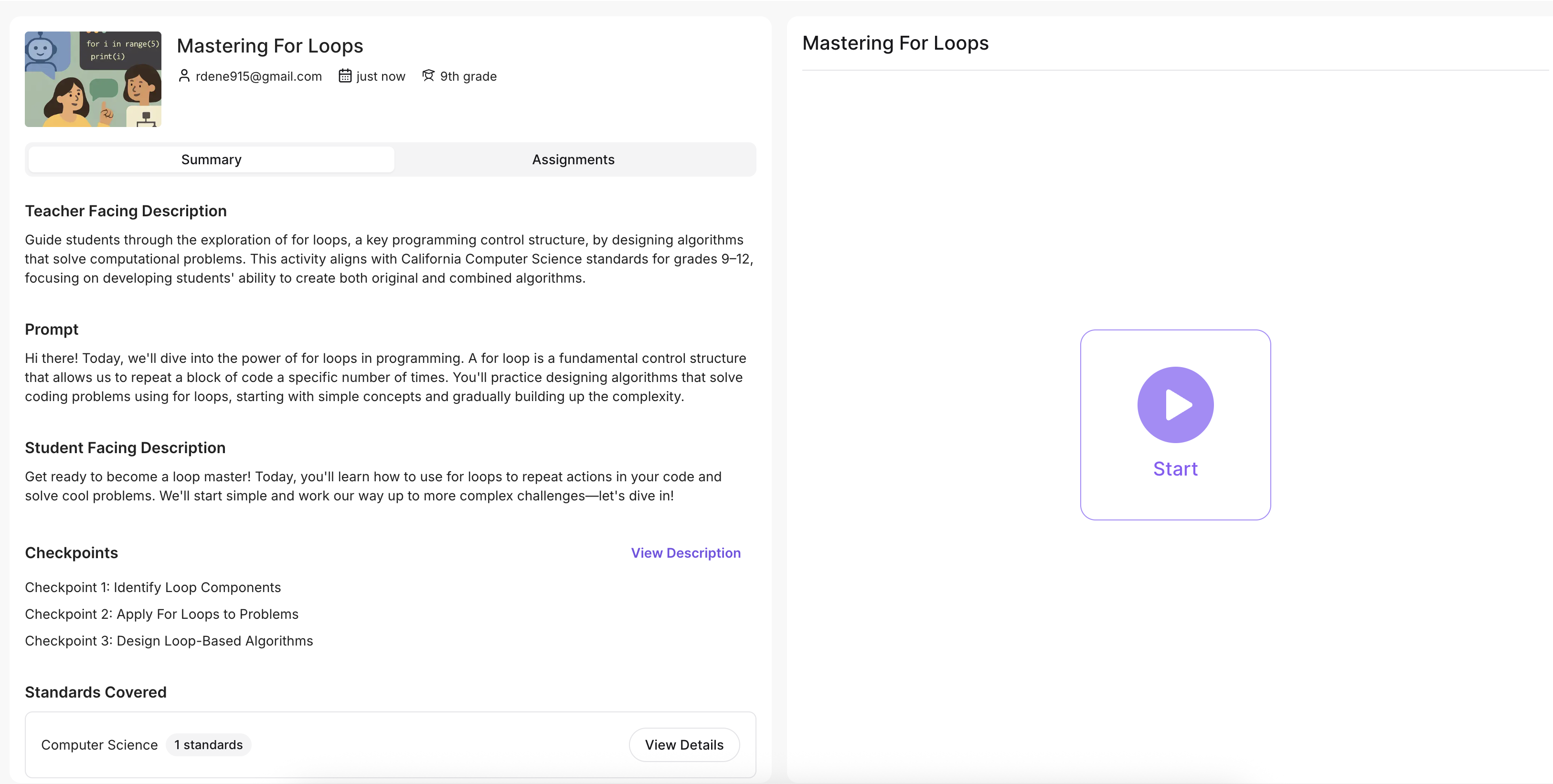
For anyone who had not yet heard of Kira, Courtney introduced Kira as a platform that connects planning, lesson delivery, assessment, and next steps. Teachers can create lessons with AI, import existing materials, or build manually. Students can complete activities on the platform with an AI tutor enabled by their teacher. There are so many exciting possibilities for using Kira in the classroom.
But the part that really caught everyone’s attention was what happens once students complete the work. Courtney showed how lesson questions connect to standards and the skills within them. Through Student Atlas and Class Atlas, teachers can explore individual student learning needs and patterns across a class.
Courtney explained, “There might be skills that relate to that standard that they’re doing well with, and there might be others that they’re struggling with.” And this distinction matters. While a score can let us know that a student struggled, we also need to understand where they had difficulty so we can adjust our instructional strategies.
For the demo, learners had completed lessons on ratios and geometry proofs. The results showed different areas of need, which exemplified exactly what educators see as they review student work.
Moving from information to action
Differentiation takes time. As a language educator teaching multiple levels alongside a STEAM course, I know how much time is involved in creating resources to meet different students’ needs.
During the livestream, I asked which part takes the most time: identifying learning needs, creating resources, or checking whether the support worked. Courtney described the trade-offs that teachers make. Spending more time on one part can leave less time for another. But then she demonstrated a potential way to connect those steps. Using Class Atlas, Courtney asked Kira to create an individualized lesson for each learner focused on their biggest area of growth. She specified interactive activities that could be completed in about 25 minutes.
When Courtney opened one of the generated lessons, it addressed an issue in her earlier response: she had said that she multiplied without fully explaining her reasoning. The follow-up included a recap, a worked example, and additional practice.
In this example, we could see how the information about a learning gap better informed a specific next step. Courtney also explained that subsequent work feeds back into the learner’s profile, giving teachers updated evidence to refer back to when deciding what should come next.
Keeping the thinking with students
Geometry proofs brought out a personal connection for me. I shared that I struggled with them in high school before learning how to study and work through the process. Watching Courtney’s demonstration, I thought about how helpful those supports could have been back then for me, but how impactful they will be for students and teachers now.
Courtney showed how the lesson moved through scaffolded activities such as marking given information, matching reasons and statements, and writing on a digital whiteboard. Courtney demonstrated how the tutor can also interpret handwritten work.
The tutor was providing “support without giving away the answers.” And this is important to keep in mind and to also share with students when they are using AI. It should be an assistant rather than answering the questions. This is an important instructional goal that I share with educators and ask them to consider whether AI is used as support to help students think, practice, and explain.
Another highlight was learning about the progressive reveal setting that lets students move through steps gradually. For students, having a worked example is helpful, but being able to process it in more manageable pieces makes it more useful for their learning experience.
Confidence is part of the learning process
Another favorite of mine is using Kira’s ChatPods, which Courtney described as discussion-based activities.
In my language classes, students often hesitate to speak because they are afraid of answering incorrectly or mispronouncing a word. With Chatpods, students have a space to practice a conversation and receive guidance that helps them feel more prepared to participate. I have had students who were reluctant to raise their hands completely pivot and start contributing to class, and even help classmates. Those moments matter to me. Participation, confidence, and a willingness to try are what we hope to help students build along with content knowledge.
Courtney connected using the ChatPod to a very familiar classroom need. Teachers can work with a small group while other students have access to guided practice through the Chatpod that the teacher has set up for them. The value is in how the teacher uses that support to create more opportunities for learning and connection.
Start with one classroom challenge
There are a lot of options available! My recommendation is always the same. “Pick one thing to start with.”
Choose a concept students struggle with, a resource that takes hours to differentiate, or a discussion where learners need more practice. Explore how Kira can support that work, review what it creates, and use student responses to guide your next decision.
During the session, Courtney also introduced You Ask, Kira Builds, an invitation to submit a challenging lesson idea for possible selection and development by the team. This will be fun for the team to see what educators need, and then, of course, Kira will build it! Check out the previous sessions here!
Revisit the recording, choose one learning need, and try a focused next step. Then share what you notice: What helped students? What did you adjust? What would you try next? Those classroom experiences are how we learn together, and we would love to learn from you!
About Rachelle
Dr. Rachelle Dené Poth is a Spanish and STEAM: What’s Next in Emerging Technology Teacher. Dr. Rachelle Dené Poth is an edtech consultant, presenter, attorney, author, and teacher of Spanish and STEAM: Emerging Technology. Rachelle has a Juris Doctor degree from Duquesne University School of Law and a Doctorate in Instructional Technology. Rachelle’s focus was on the need for professional development for educators, specific to Artificial Intelligence. Rachelle specializes in Artificial Intelligence, AI and the Law, AI and Healthcare, Cybersecurity, and STEM. She has more than 8 years of experience teaching and presenting on AI in her classroom, as well as working with educators worldwide.
Rachelle is currently serving as the Grant Coach for an initiative through ISTE+ASCD and Pinterest. Rachelle works with a Task Force from 12 districts in the United States and assists with policy revision, professional development, and the design of digital wellness resources for students, educators, and families.
Rachelle provides professional development related to AI policy and implementation to school districts, universities, and organizations. She also presents and provides keynotes on AI at state, national, and international events and in schools. Rachelle also provides AI training for other industries, including business, healthcare, and legal fields.
Rachelle is an ISTE-certified educator and recipient of the ISTE Making IT Happen Award and several Presidential Awards for volunteer service to education. Rachelle received the EdTech Trendsetter Award from EdTech Digest in 2024 and 2026.
She is the author of ten books, including “What the Tech? An Educator’s Guide to AI, AR/VR, the Metaverse and More! and “How to Teach AI: Weaving Strategies and Activities Into Any Content Area.” She has written curricula and courses on AI for all levels.
She is also a blogger for Defined Learning, EdTech K12, Edutopia, Getting Smart, and Tech & Learning. She is the host of the ThriveinEDU podcast, ISTE’s Learning Unleashed podcast, and The Lift by Amazon on BAM Radio Network. Contact Rachelle for your event!


